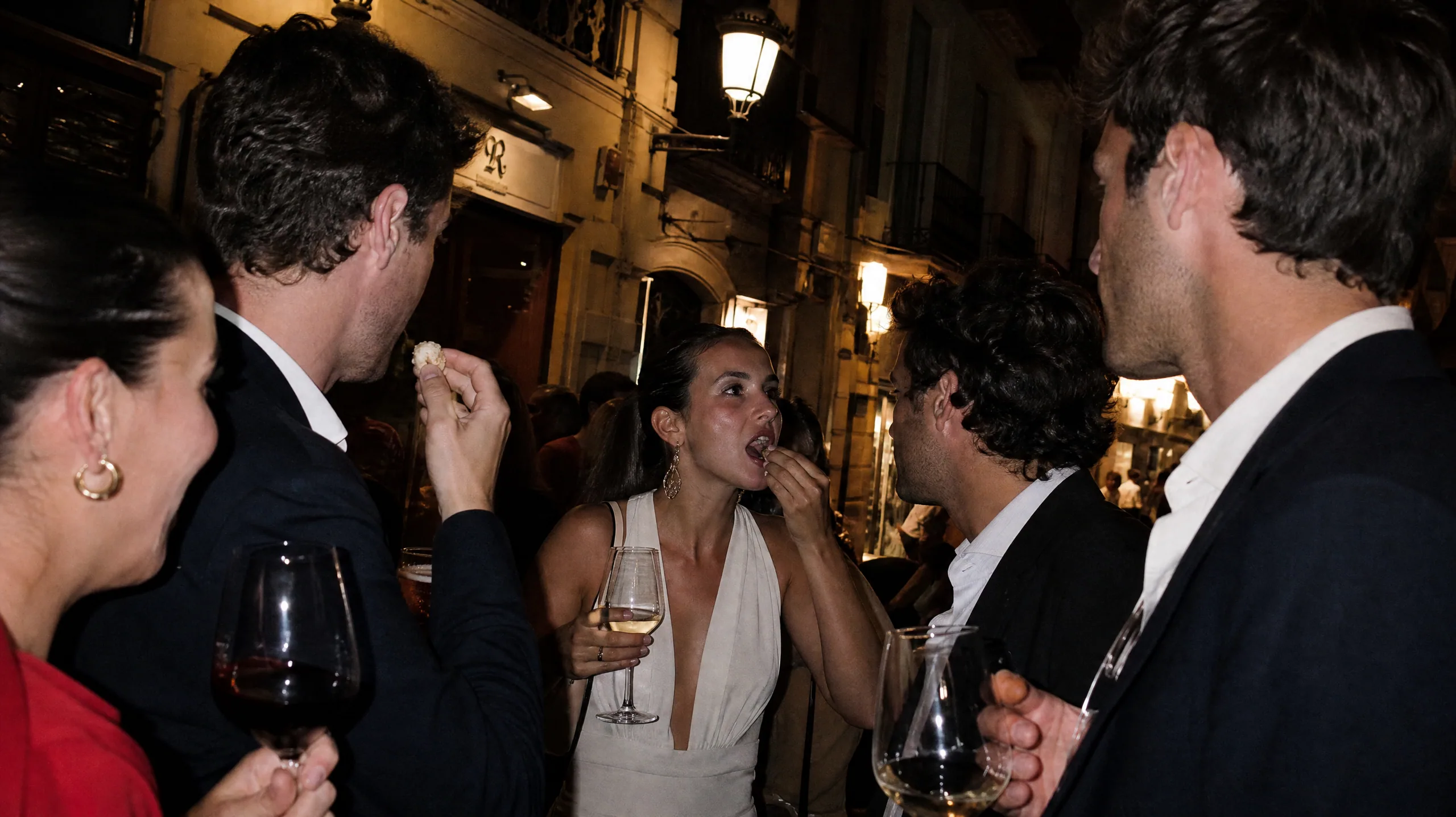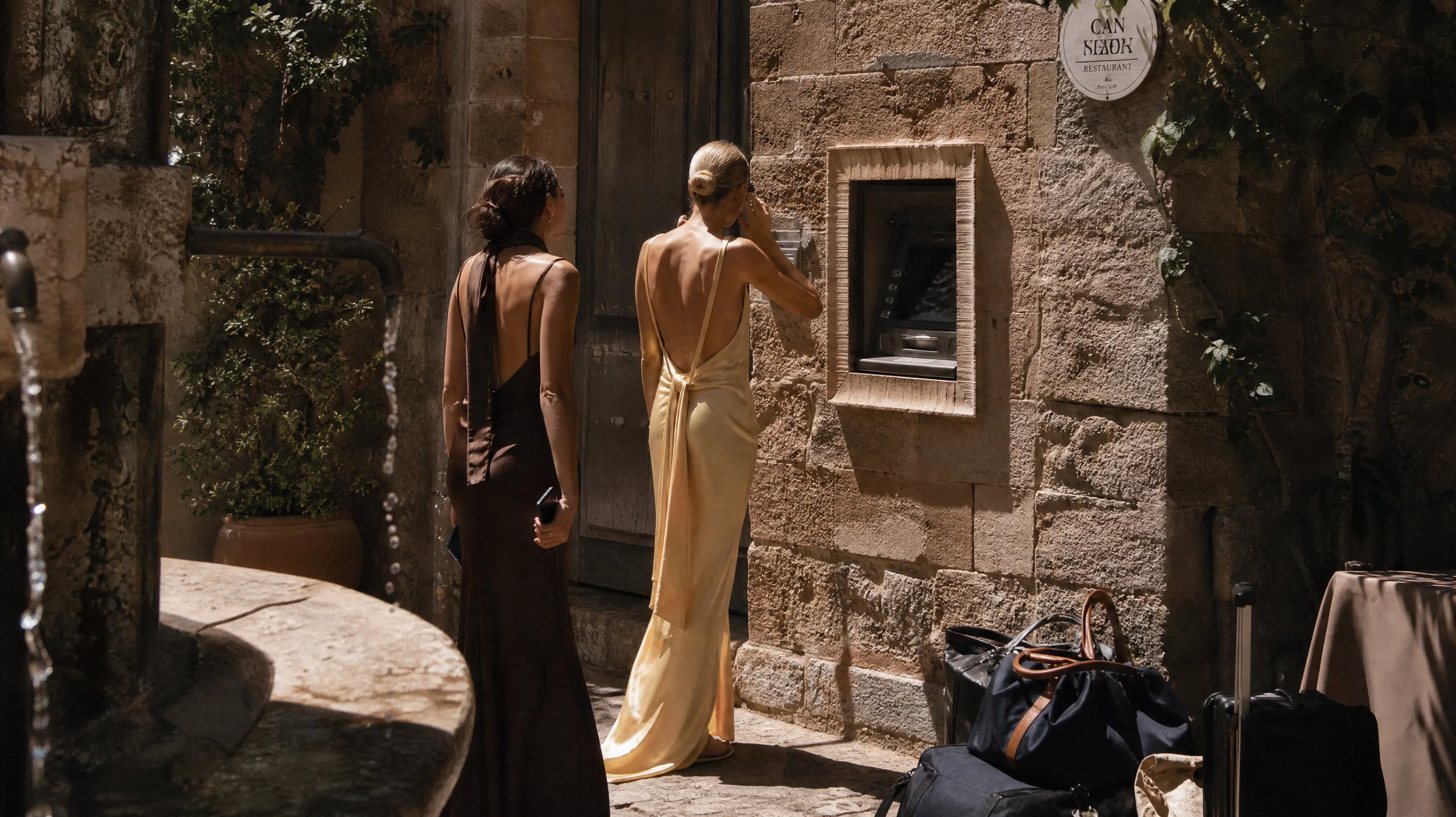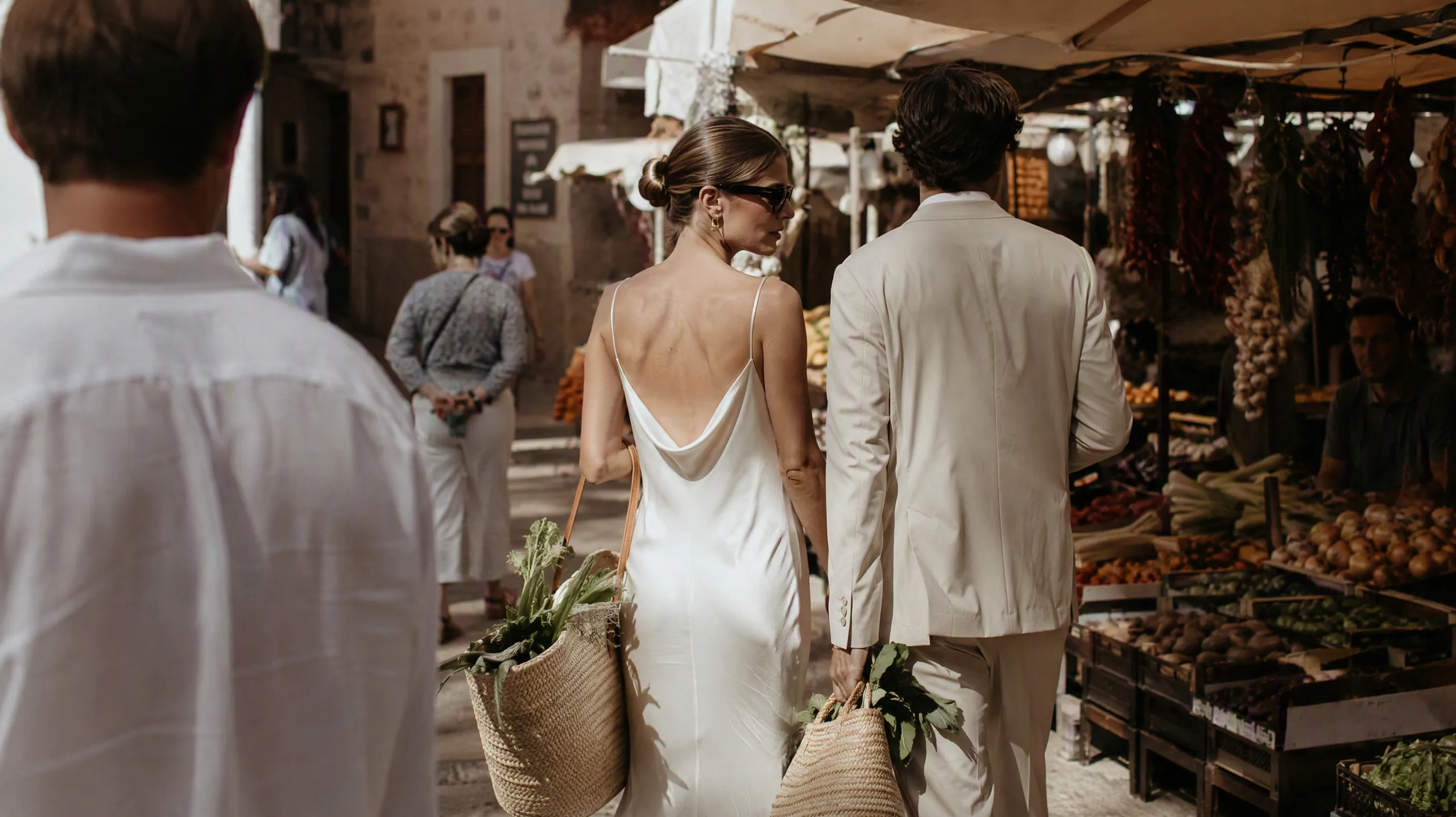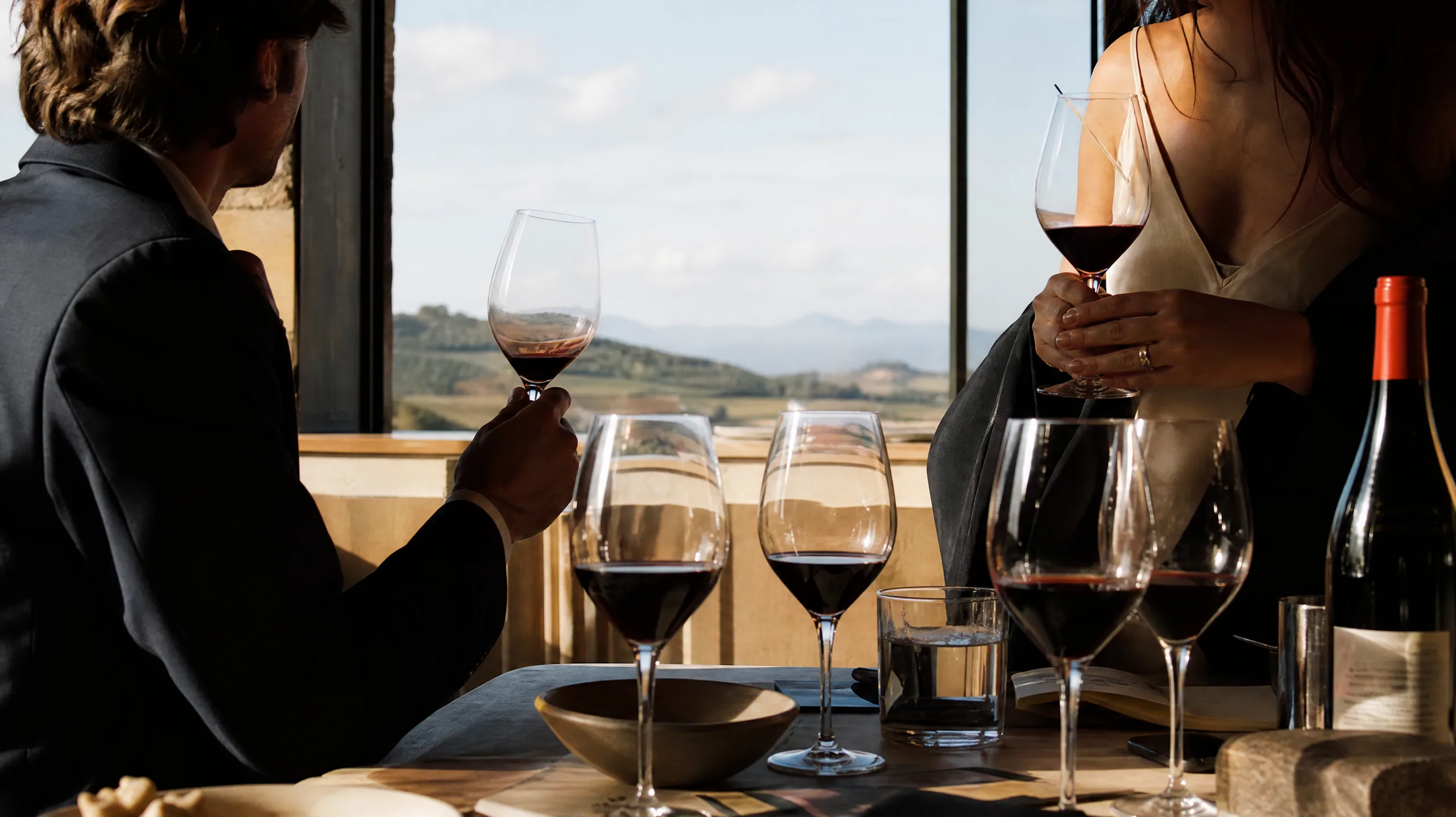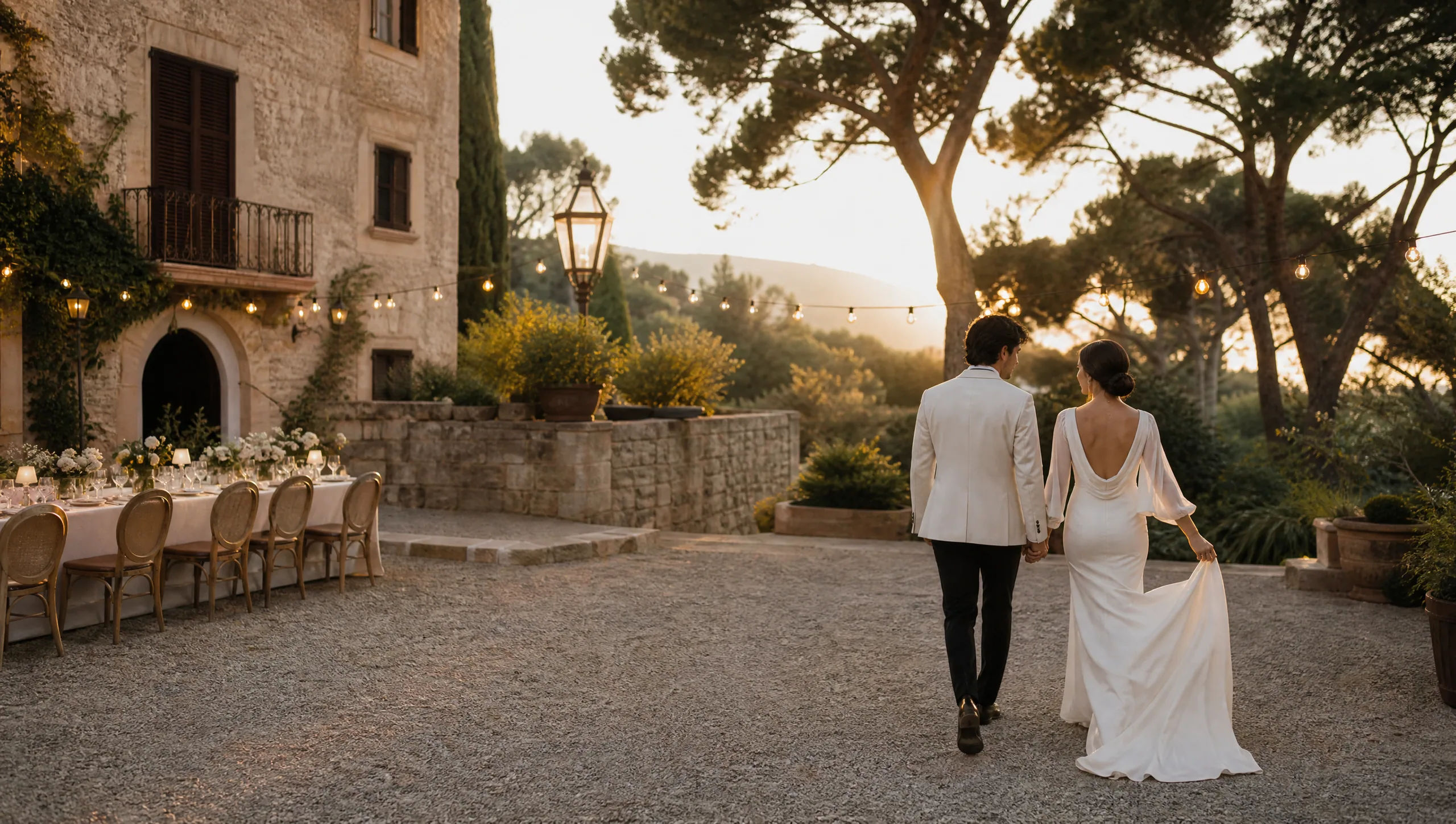
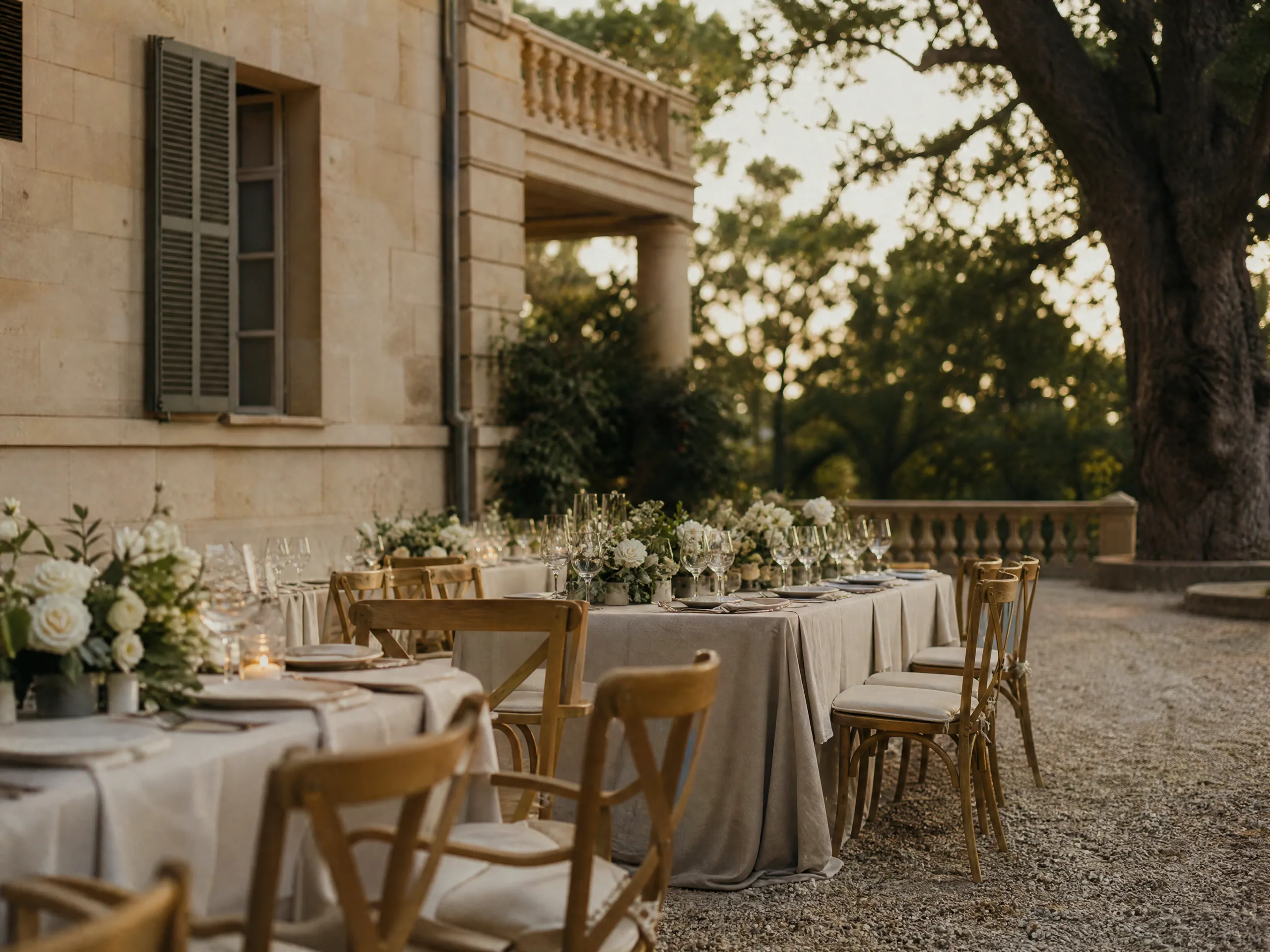
Spanish outdoor weddings often look soft and effortless in photos until the sun drops and the courtyard turns into a patchwork of dark corners, blown-out phone flashes, and cables taped across guest paths. Evening lighting is not decoration last. It is guest safety, atmosphere, and how your film will read after golden hour.
This guide helps international couples planning a destination wedding in Spain decide what lighting you actually need, how to coordinate power and load-in with Spanish venues, and how to keep the look romantic without creating trip hazards, noise-curfew conflicts, or unflattering mixed color temperatures on camera.
Start With Where Guests Will Be After Sunset
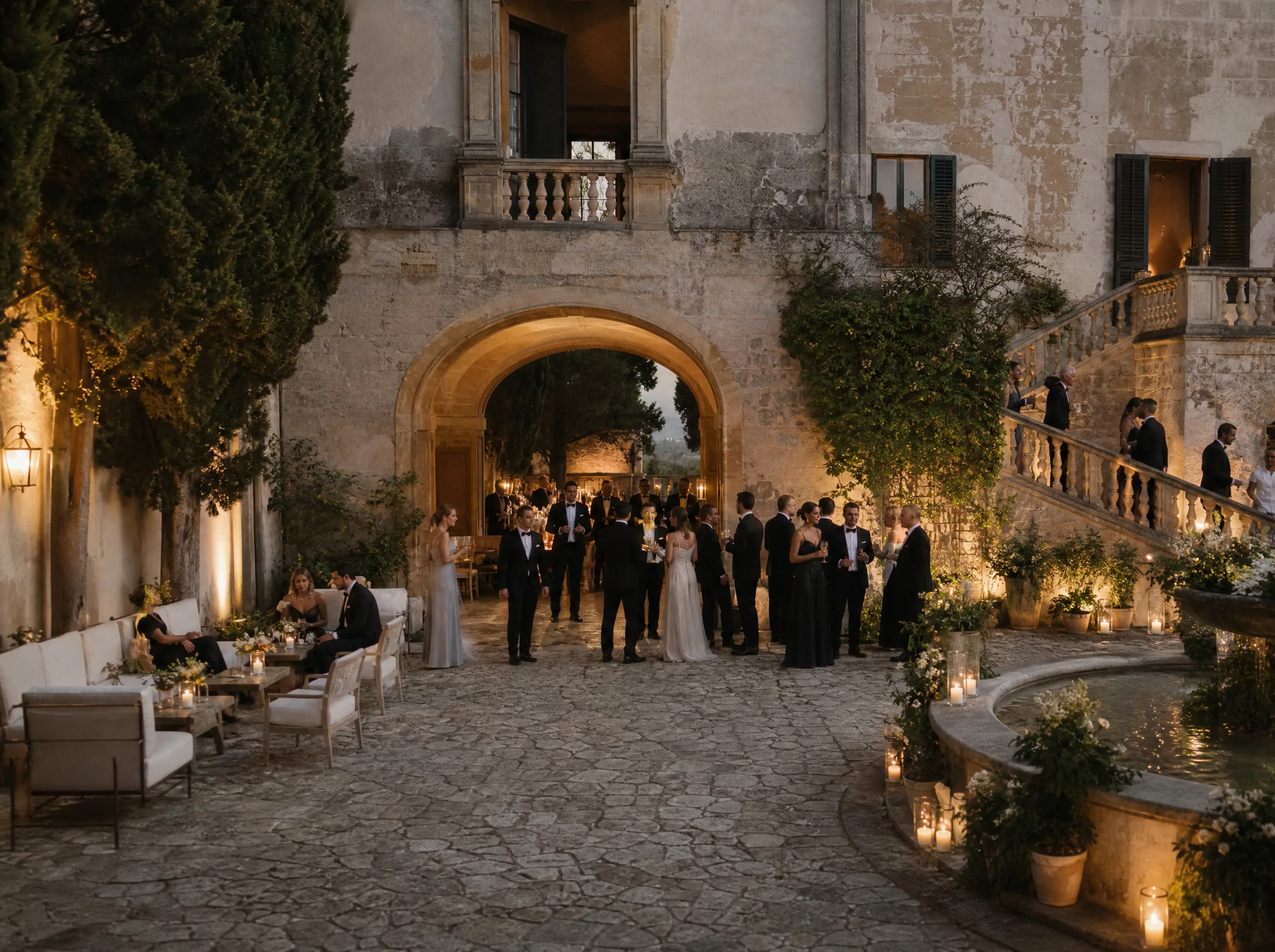
Before you choose string lights or chandeliers, map the evening: ceremony exit, cocktail hour, dinner, speeches, first dance, and late dancing. Many Spanish fincas and coastal venues shift guests between two or three zones after dark. Each zone needs a different light level.
Walk the site virtually or in person at dusk if you can. Note stairs, gravel paths, pool edges, olive-grove aisles, and bathroom routes. If a path is essential and unlit, budget practical path lighting before you spend on decorative draping lights over the sweetheart table.
Build Lighting in Layers, Not One Pretty Fixture
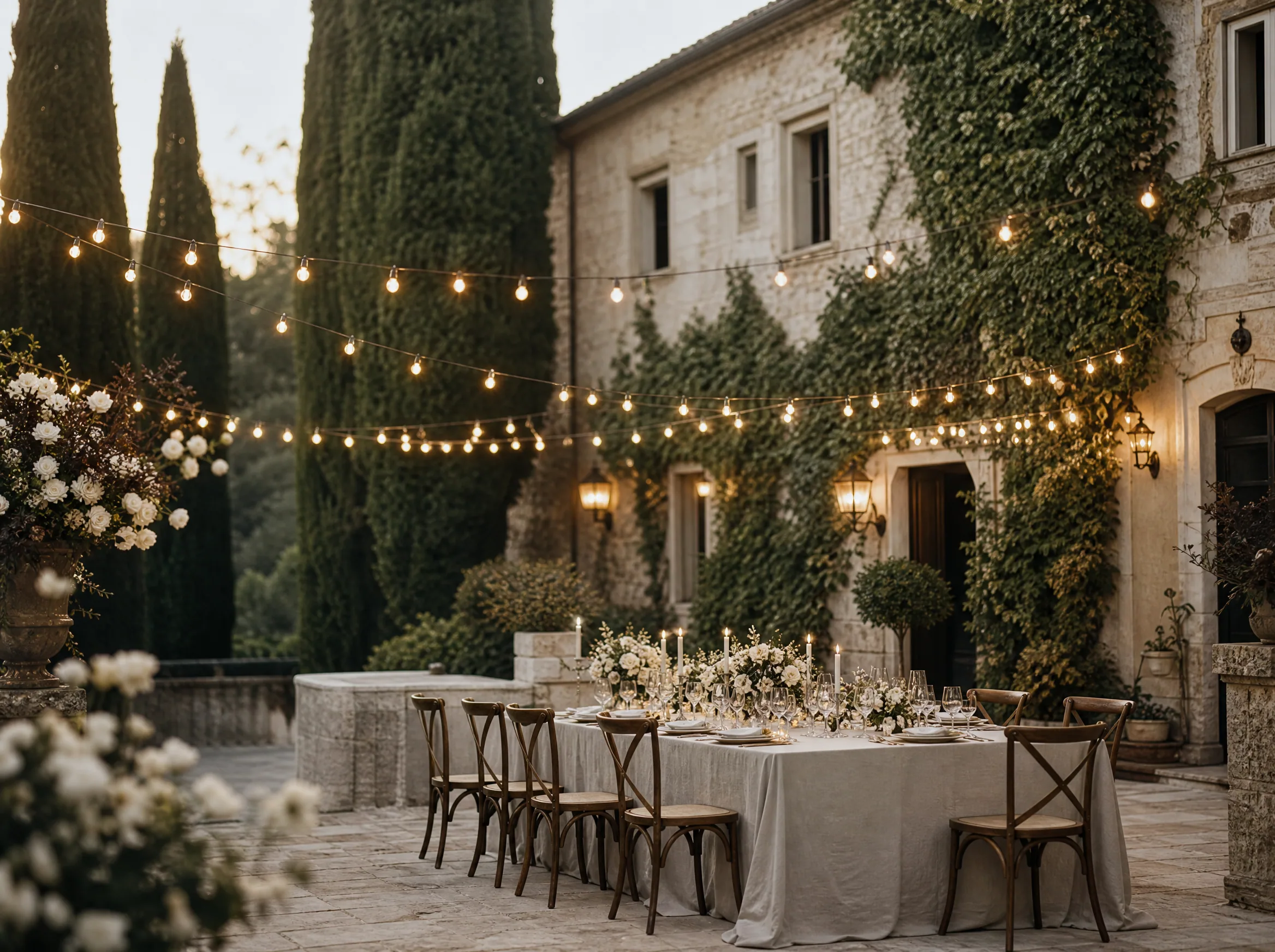
Strong outdoor plans usually combine three layers: practical light for walking and service, ambient light for mood, and accent light for architecture or tables. One long run of festoon bulbs can look charming and still leave dinner plates in shadow or make speeches hard to film.
Ask your planner or lighting rental for a simple plot: entrance, bars, tables, dance floor, restrooms, and any photo moments you care about. For destination couples booking from abroad, a marked site plan with fixture counts is more useful than mood-board screenshots alone.
Confirm Venue Rules Before You Rent Anything
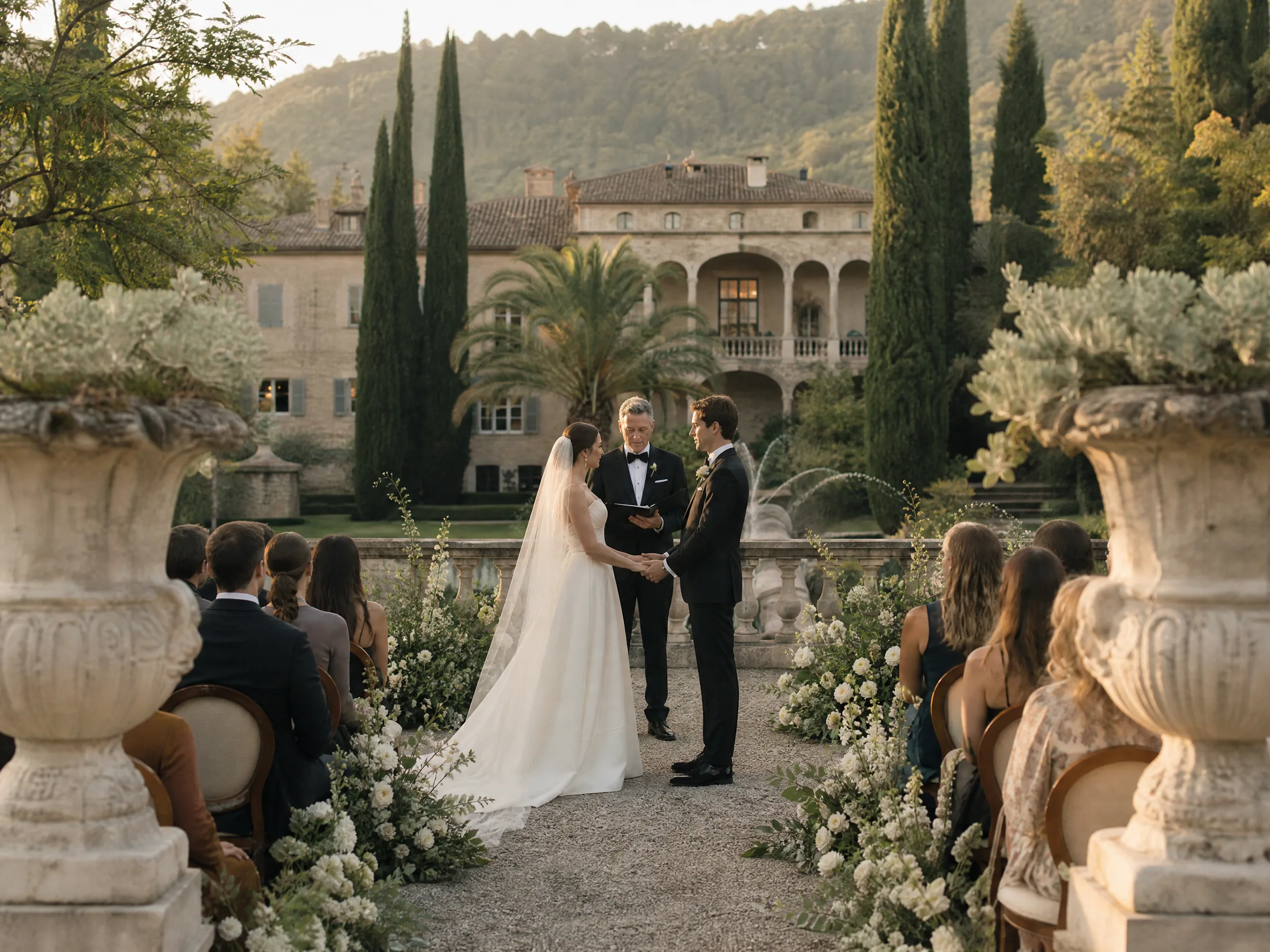
Spanish venues vary widely on what you can hang, stake, or plug in. Some masías allow festoon lines between trees; others forbid nails, clamps on historic beams, or open flames near dry vegetation. Coastal properties may restrict tall stands in wind. Urban courtyards may have neighbor-facing glare rules after a certain hour.
Get written answers on hanging points, generator placement, quiet hours, candle or flame policies, and whether the venue electrician must supervise connections. Do this before deposits. Replacing an entire lighting concept two weeks out is expensive when gear is already reserved for peak season weekends.
Treat Power, Cable Runs, and Generator Noise as One Plan
Pretty lights fail when power is an afterthought. Confirm available circuits, outdoor-rated distribution, and cable routes that do not cross guest walkways or service lanes. If you need a generator, place it for both capacity and sound—especially near ceremony seating or late dancing when guests notice hum more than you expect.
Coordinate lighting power with catering fridges, DJ, photo booth, and any climate equipment. Rural Spanish venues often look like they have “enough sockets” until every vendor arrives on the same afternoon. Your lighting plan should list wattage estimates, not just fixture photos.
Choose Color Temperature That Still Looks Good on Film
Mixed lighting is a common destination-wedding problem: warm festoon bulbs, cool LED uplights, phone flash, and leftover daylight all fighting in the same frame. Decide on a dominant warmth early—usually soft warm white for dinner and dancing—and keep accent colors intentional and limited.
Tell your videographer and photographer the lighting plan before the weekend. They can advise on whether speeches need a dedicated key light, whether the dance floor should be brighter than dinner, and how to avoid muddy skin tones under cheap RGB washes. Film-friendly lighting is part of the creative brief, not a day-of surprise.
Plan Safety, Wind, and Weather Contingencies
Coastal Mallorca wind, sudden Catalan showers, and dusty inland courtyards all change what is safe. Weighted bases, proper outdoor-rated cabling, and secure hanging spans matter more than Instagram symmetry. Candles and open flames need extra scrutiny near dry grass, draping, or tents.
Build a Plan B: if wind kills candlelight, what replaces table glow? If rain moves dinner under a porch, which fixtures move with you? If a string-light run fails, which zone gets priority power? Couples planning from abroad should ask who on site owns these decisions during cocktail hour, not after guests are seated.
Align Load-In Timing With Ceremony and Cocktail Flow
Lighting installs take longer than most couples expect, especially with trees, uneven stone, and multi-zone plots. Confirm whether installers can work the morning of, the day before, or only after another event clears. Ask how testing happens without spoiling a late-afternoon ceremony look.
If guests arrive while final focusing is still happening, hide work lights and cable teams from entrance sightlines. Share the lighting call sheet with planner, venue, caterer, and film team so nobody schedules speeches in a half-lit courtyard or starts dinner before ambient layers are on.
Budget the Invisible Costs Early
International couples often price the fixtures they see online and miss labor, delivery to rural sites, generator fuel, dimmers, spare bulbs, overnight security for gear, and overtime if the party runs long. Spanish peak-season weekends can also mean limited backup inventory if something fails.
Ask for a line-item quote: design or site visit, rental, install/strike, power distribution, transport, and contingency. Clarify whether tips or vendor meals are expected for the lighting crew on a long wedding day. Clear numbers from abroad prevent awkward day-before upgrades.
What to Confirm From Abroad Before You Approve the Plot
Before you sign off, collect a marked lighting plan, fixture list with color temperatures, power and generator notes, venue approval email, install/strike times, rain and wind alternatives, and who controls cues for speeches and first dance. Share the same packet with your photographer and videographer.
If you cannot visit the venue, request dusk reference photos from a recent wedding at the same site, or a short video walkthrough of paths after sunset. Outdoor evening lighting should feel inevitable when guests arrive—not like a last-minute string of bulbs hoping for atmosphere.