Airport transfers get the planning attention. Train arrivals often get a Slack message and a hope. For destination weddings in Spain, that imbalance shows up fast: a cousin landing at Barcelona Sants with two suitcases, a heat-soaked platform, and no clear meet point while the airport van is already halfway to the finca.
This guide is for couples whose guest list mixes flights with AVE high-speed rail, Renfe regional trains, and the occasional Eurostar-to-Spain itinerary—especially when the venue sits outside the city and “just take a taxi” is not a real plan.
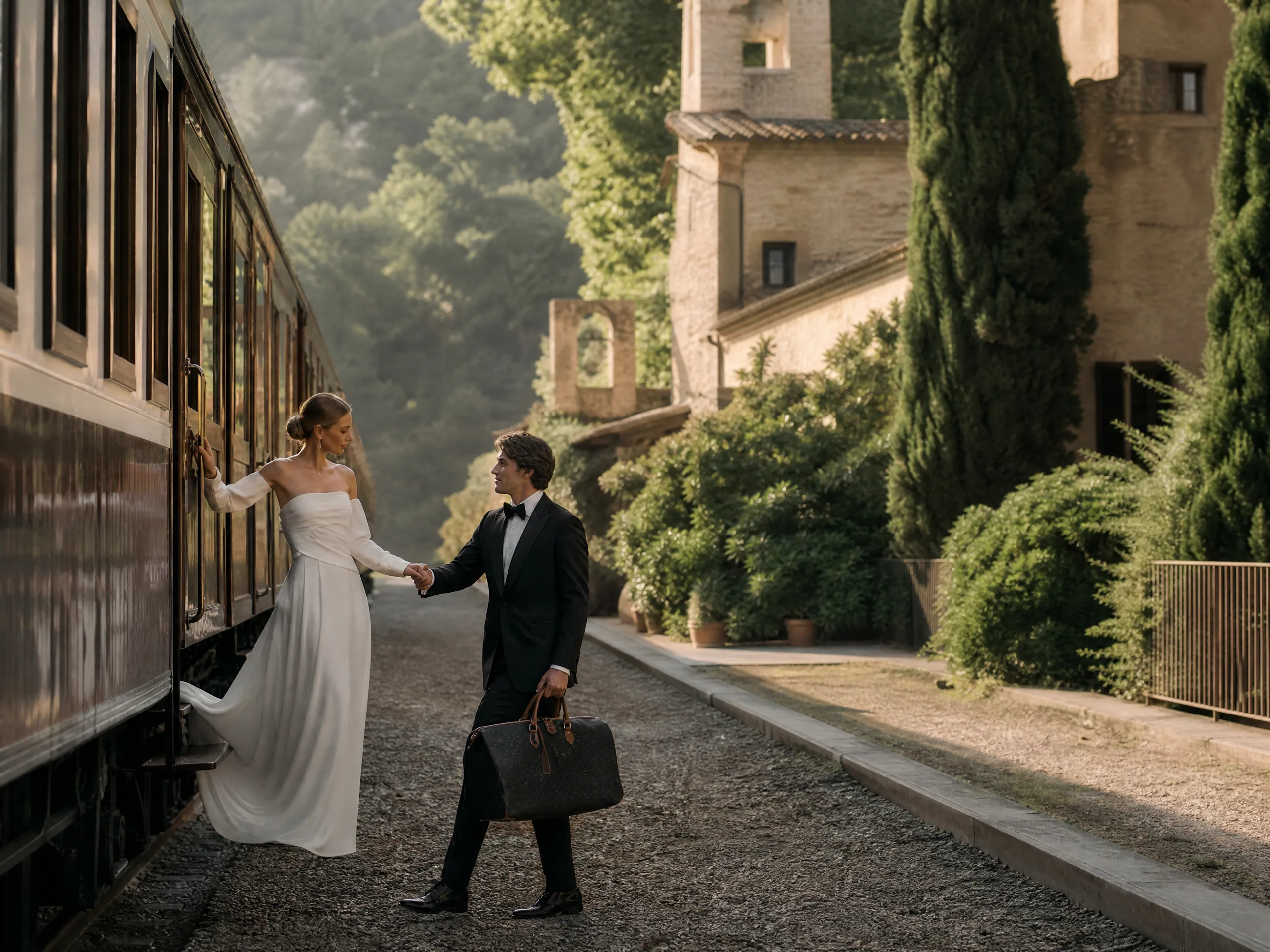
Map which guests are actually arriving by rail
Ask for arrival mode in your RSVP or travel form, not only flight details. Many UK and Northern European guests prefer train for climate reasons, city-center convenience, or because they are already touring Spain before the wedding. You cannot design station logistics from flight manifests alone.
Group rail guests by station and arrival window the same way you group airport waves. One shared spreadsheet column for “mode + station + ETA” prevents the last-minute scramble of discovering three people arriving at Valencia Joaquín Sorolla while everyone else is at the airport.

Name the exact station—and the exact meet point
Spanish cities often have more than one relevant station. “Meet me at the train station” fails in Barcelona (Sants vs. França), Madrid (Atocha vs. Chamartín), and Valencia. Publish the full station name, the terminal or hall if relevant, and a photo-friendly landmark: a specific exit, café, or taxi rank.
For large stations, assign a human or a driver with a small sign using the couple’s names—not a cryptic hashtag. Jet-lagged and heat-tired guests scan for words they recognize, not clever branding.


Budget real time for luggage and platform exits
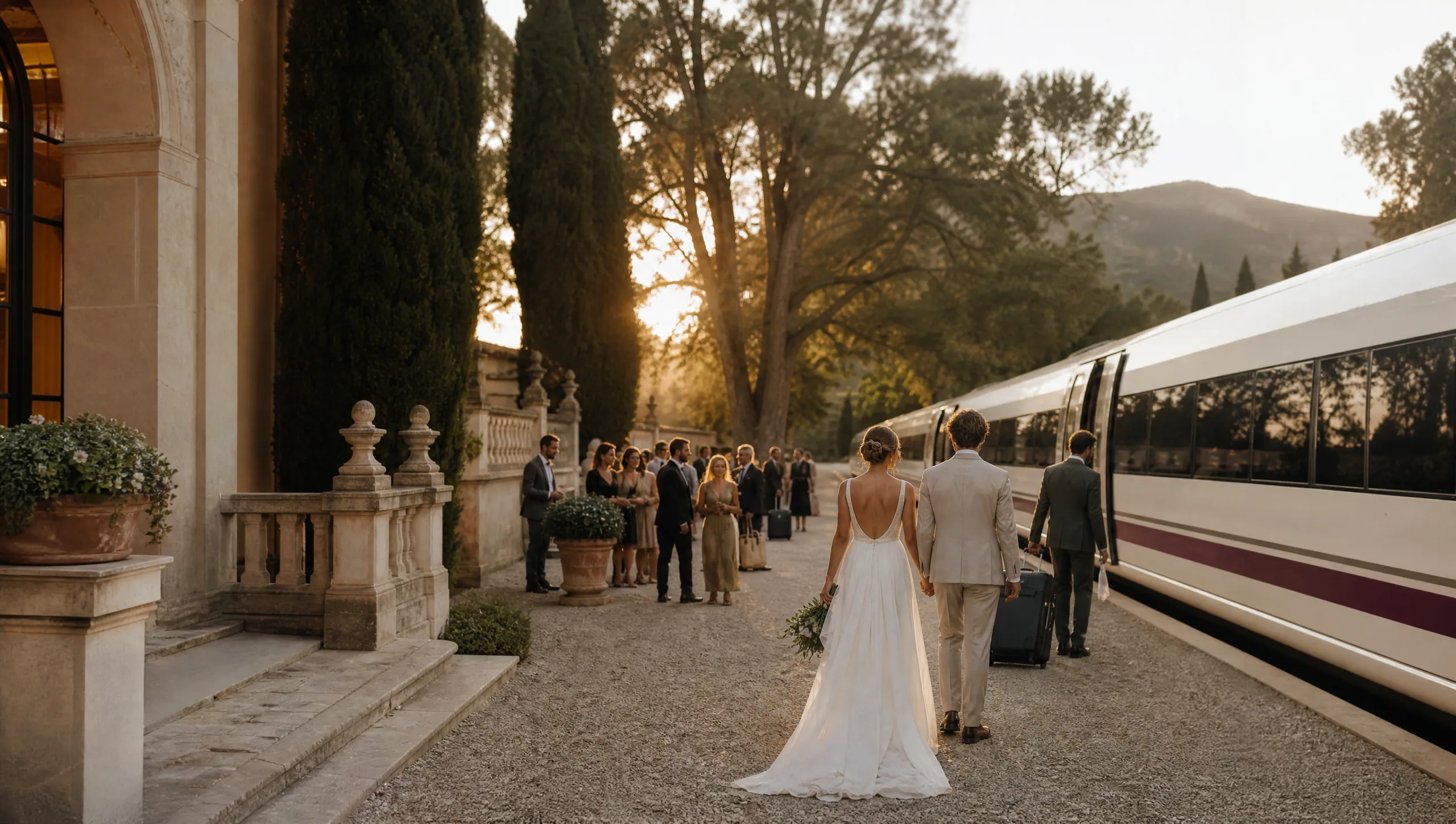
AVE arrivals look efficient on paper and messy in practice: reserved seat cars, stairs or elevators with hard-shell cases, and the slow walk from platform to street. Build a 20–40 minute buffer between scheduled arrival and vehicle departure, especially with elderly guests or anyone carrying wedding attire.
If your transfer is a shared shuttle, never schedule it to leave “on the train’s arrival minute.” Either hold the vehicle with a clear wait window or run a second pickup. Missing a rail guest because the van left for the airport is a hospitality failure guests remember.
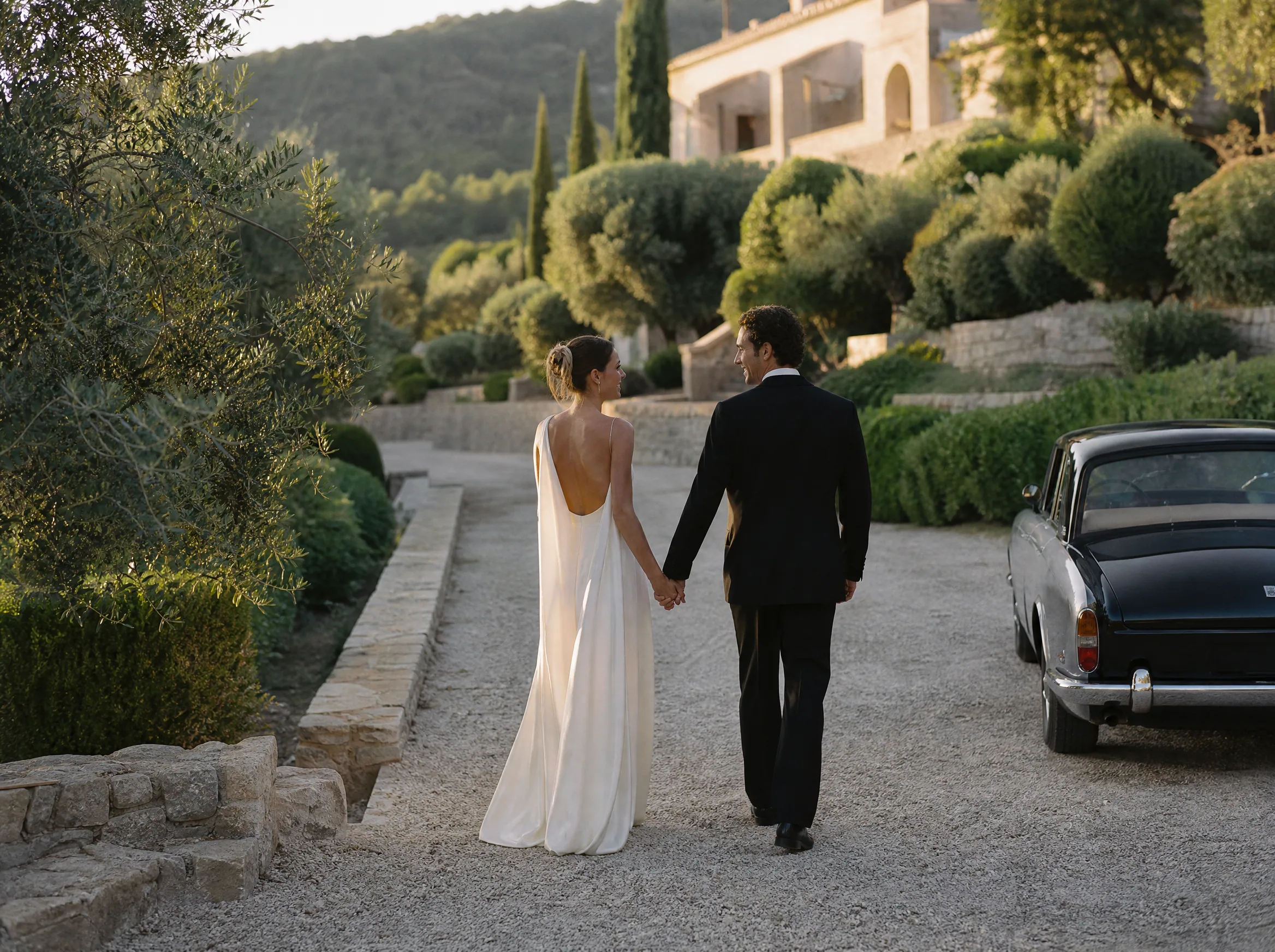
Decide taxi vs. pre-booked transfer by venue reality
City hotels near Sants or Atocha can often use official taxi ranks successfully. Rural estates, coastal towns with thin taxi fleets, and late Sunday arrivals usually need pre-booked private transfers. Do not leave international guests to negotiate Spanish taxi apps on a rural platform with limited signal.
When taxis are viable, still send the destination in Spanish, the venue’s Plus Code or pin, and a backup phone number. Rail guests who speak limited Spanish should not be improvising directions to a private estate gate.
Align train schedules with Spanish weekend rhythm
AVE frequency drops on certain routes in evenings and on major holidays. If your welcome dinner is the same night as a long rail day, protect guests with an earlier seating option or a soft arrival meal at the villa. A 21:30 dinner after a delayed Madrid–Málaga connection is not romantic—it is survival mode.
Also check local fiestas and strike notices in the week before the wedding. Rail disruptions are rarer than flight chaos, but when they hit, they hit whole cars of travelers at once. Have a Plan B driver contact ready.
Write rail instructions as clearly as flight instructions
Your guest travel note should include: recommended train if you have a preference, ticket tips (advance AVE fares, seat reservations), station name, meet point, transfer method, travel time to venue, and what to do if they miss the connection. Put the same block in the WhatsApp group pinned message.
If some guests arrive by air and others by rail on the same afternoon, say so openly. People feel neglected when they discover the “group transfer” only covered the airport cohort.
Coordinate wedding attire and fragile luggage on trains
Garment bags on AVE overhead racks are normal; giant hard cases in crowded corridors are not. Encourage guests shipping or carrying ceremony shoes and dresses to keep a soft “priority” bag with them rather than checking everything into a station locker fantasy that does not exist at every stop.
For the couple and wedding party, treat train travel day like a mini production move: confirm who holds rings, documents, and outfits, and avoid splitting critical items across people on different rail legs.
Build a missed-connection protocol before anyone needs it
Publish one escalation path: who to message, how long to wait at the station, and whether a backup car can be dispatched. Rail delays are usually visible in the Renfe app—ask a local coordinator or planner to monitor the day’s key arrivals the way they would monitor flight boards.
A calm protocol turns a ninety-minute delay into a solved logistics problem instead of a group-chat spiral during getting-ready hair.
Treat rail guests as a first-class arrival channel
Spain’s train network is one of the best tools international guests have for arriving rested and city-smart. When you plan station meet points, luggage buffers, and transfers with the same seriousness as airport vans, rail guests feel hosted—not improvised.
If you are designing the full arrival system for a Spain destination weekend, pair this rail plan with your airport transfer sheet and one shared timeline. Two arrival modes, one standard of care.