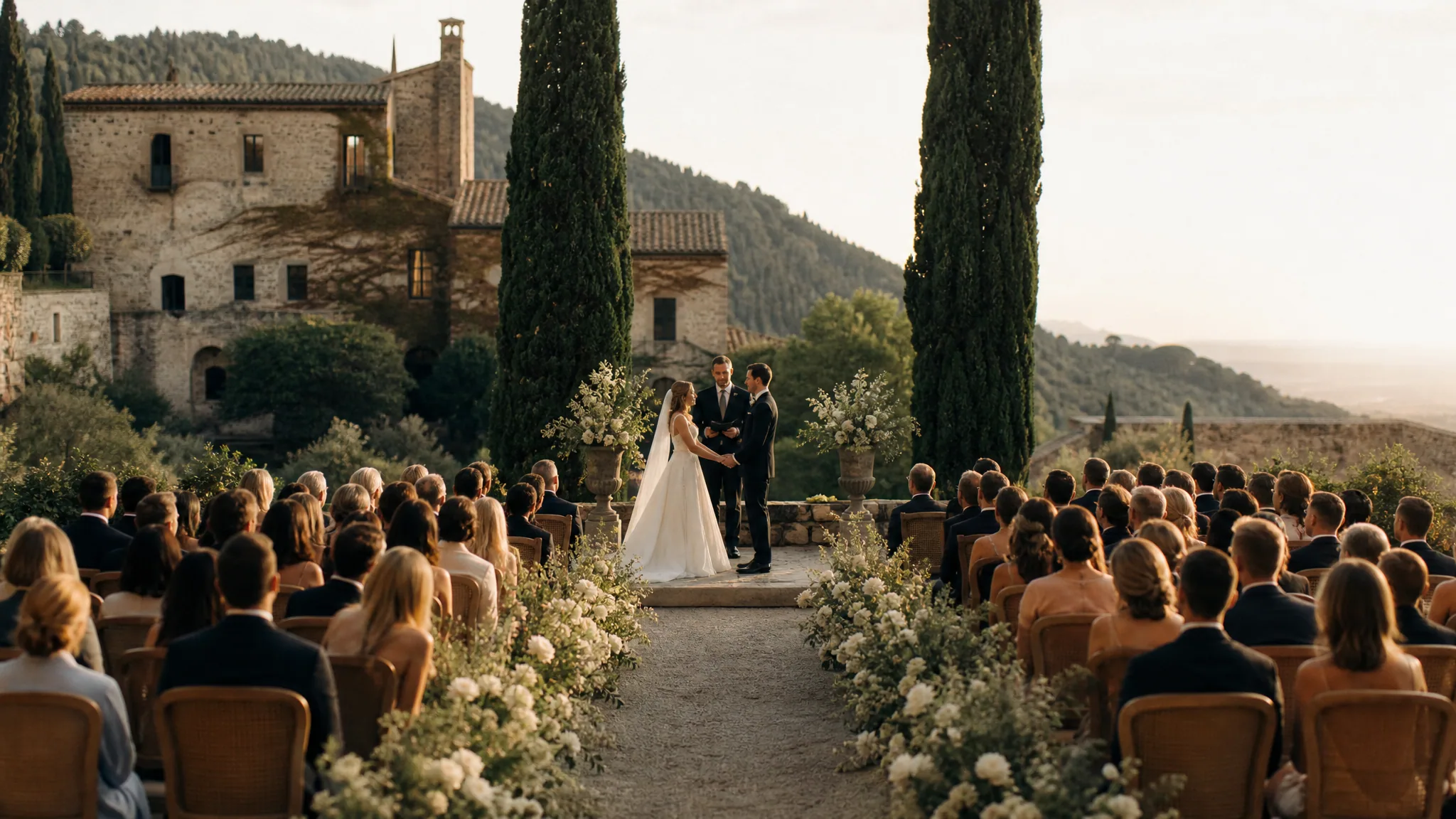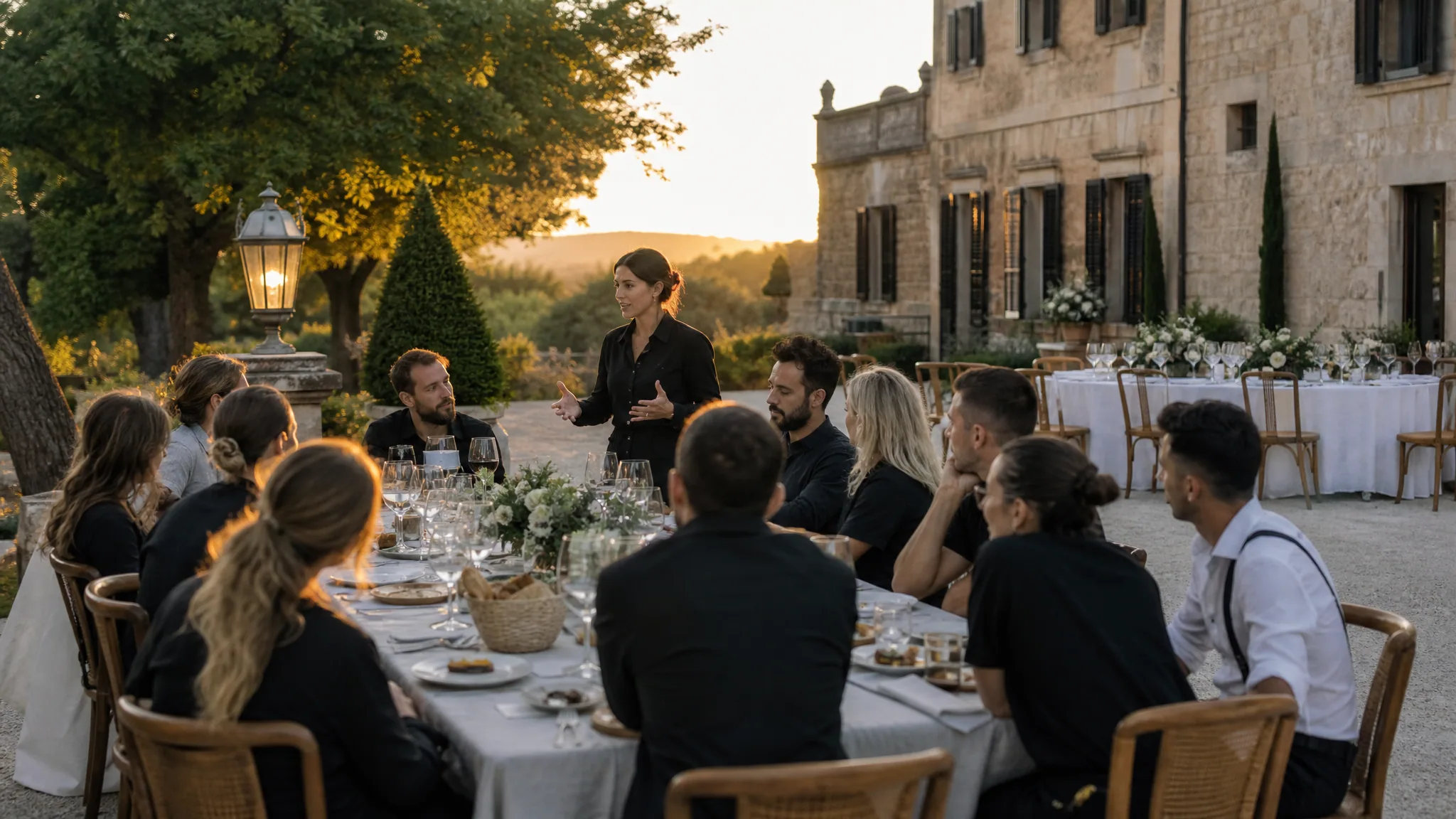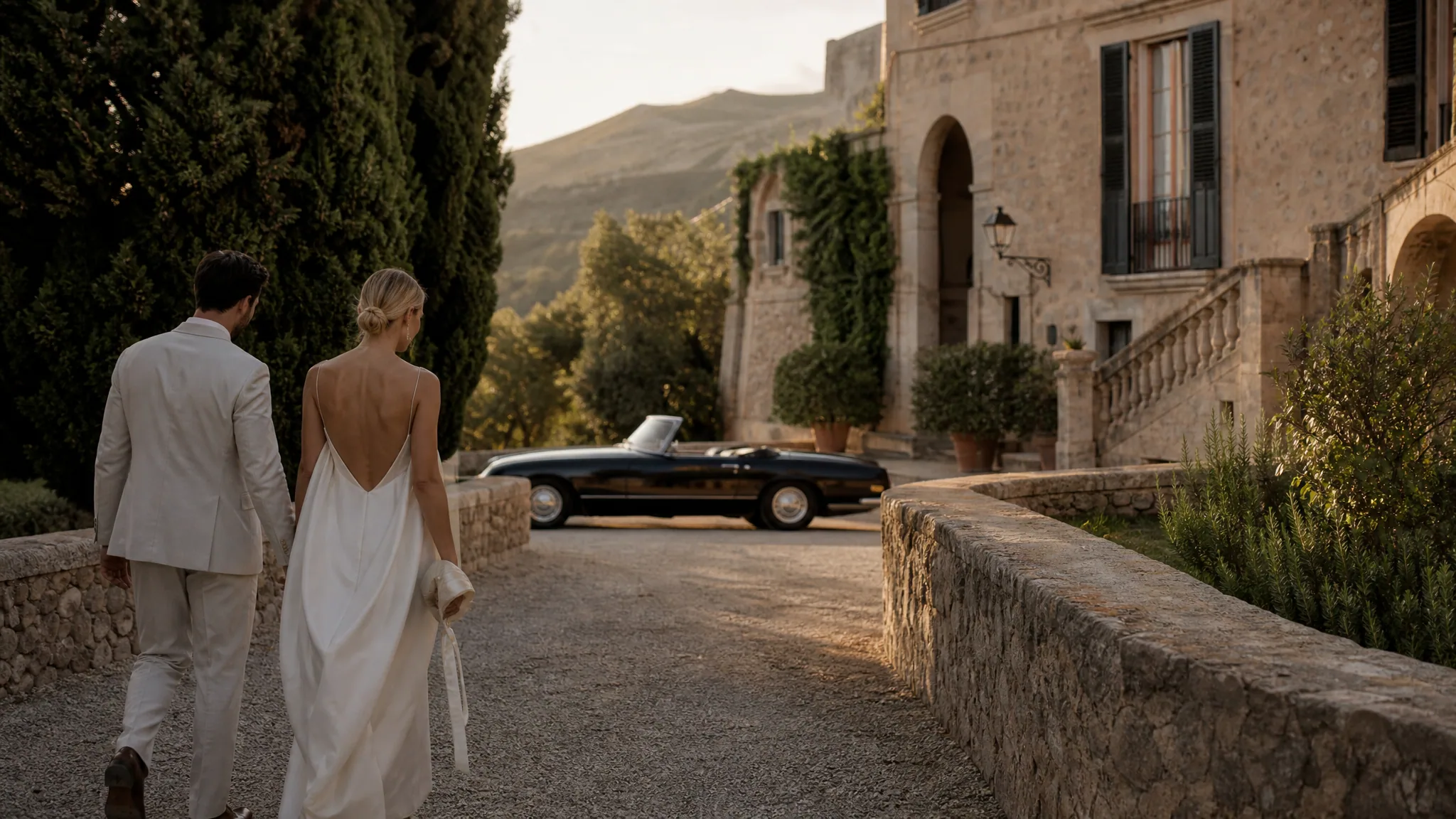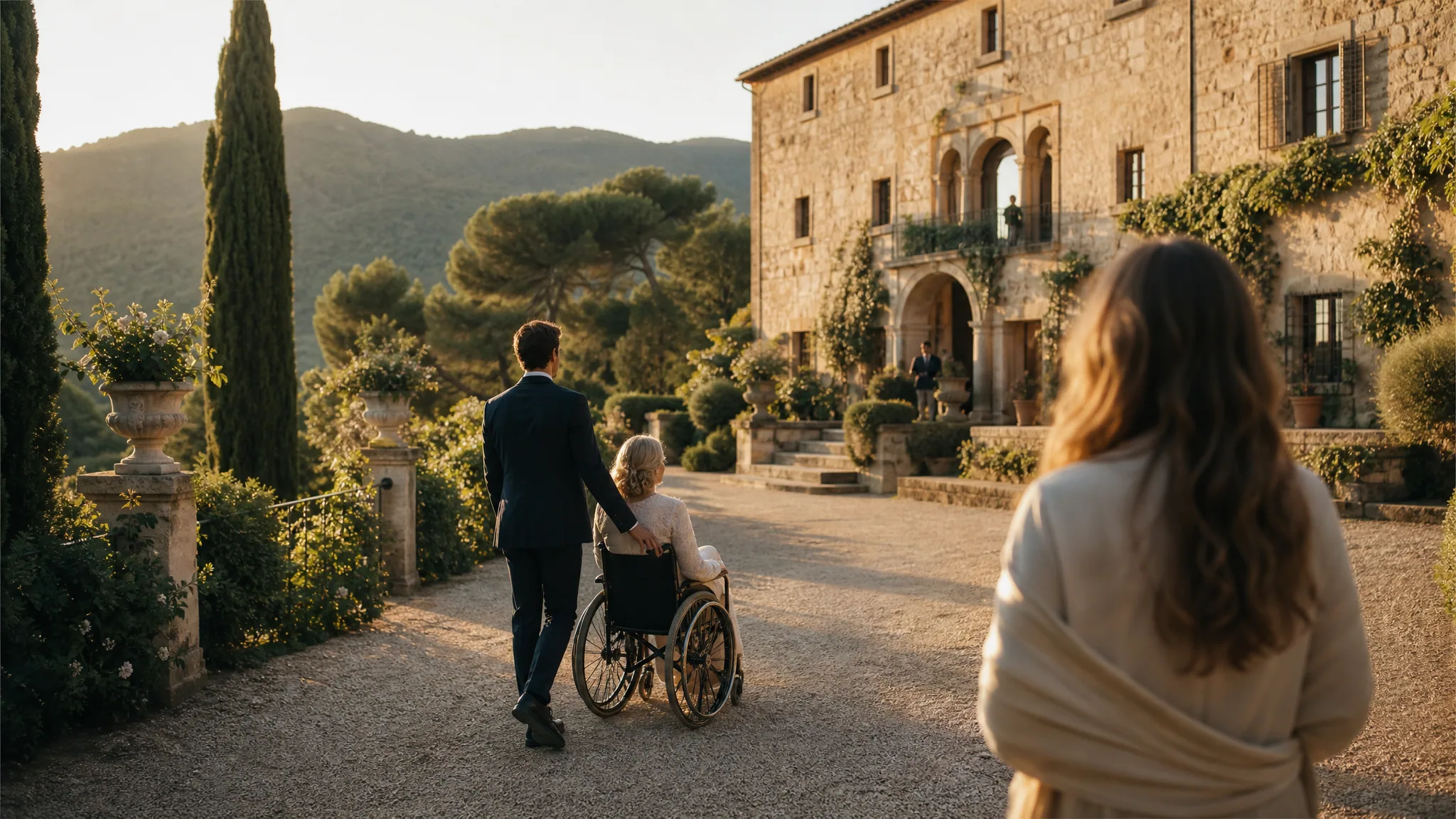
Destination weddings in Spain often move guests between city hotels, rural estates, coastal restaurants, and late-night afterparties. Airport transfers get most of the planning attention; shuttle boarding and headcount control on the wedding weekend itself are where delays quietly start. International guests arrive jet-lagged, speak different languages, and may not recognize Spanish place names on a WhatsApp pin. A clear boarding system—pickup maps, departure windows, bilingual signs, and a simple headcount ritual—keeps the weekend feeling effortless instead of rushed.
Why shuttle logistics break on Spanish wedding weekends
Rural Andalusian fincas, Catalan masías, and hilltop venues rarely have continuous taxi coverage after midnight. Guests staying in two or three hotels need staggered pickups. Ceremony-to-reception moves may only be a short walk on paper, but gravel lanes, heels, heat, and grandparents change that math. When boarding is informal—“everyone meet at the lobby”—you lose ten minutes finding stragglers and another ten recounting seats. Build the shuttle plan as a timed operation, not a suggestion.
Map every pickup point before save-the-dates go out
List each hotel or villa cluster with a precise meeting spot: lobby door, porte-cochère, side street away from taxi queues, or a named plaza. Share a pin plus a photo of the landmark in the guest WhatsApp or weekend guide. Spanish hotels sometimes have multiple entrances; guests who enter through a garden gate will miss a lobby call. Confirm with the concierge that a coach or minibus can wait without blocking deliveries.
Use departure windows instead of a single impossible time
Publish a window—“boarding 16:40–16:55, wheels rolling 17:00”—so early guests are not standing in sun while late guests scramble. For multi-hotel routes, assign each property its own window and stick to the order even if one lobby is incomplete; a chasing shuttle creates worse delays than a planned second wave. Print the windows on pocket itineraries and repeat them the morning of in the group chat.
Run a calm boarding headcount every time
Appoint one person—coordinator, planner, or trusted friend—as boarding lead. They hold a simple manifest: hotel name, expected headcount, wheelchair or child-seat notes, and a checkbox. Count once before doors close and once after seating. Do not rely on “looks full.” For large parties, QR boarding passes or a shared digital checklist beat handwritten tallies under stress. Leave two spare seats when elders or last-minute plus-ones are still in flux.
Design bilingual signage guests can spot in five seconds
Coach windows and handheld paddles should show the couple’s names, event segment (ceremony / dinner / return), and hotel nickname in English and Spanish. Avoid tiny serif type. At night, add a small light or reflective strip so guests leaving a dark courtyard can find the right vehicle among vendor vans. Place a second sign at the estate gate if the parking apron is confusing.
Plan ceremony, dinner, and late-night return as separate legs
One all-day coach rarely matches real guest behavior. Some people want an early return after dinner; others stay for dancing until 3 a.m. Book return waves—for example 00:30 and 02:15—and communicate them as firmly as outbound times. Confirm driver overtime and local quiet-hour rules for rural estates so late departures do not create neighbor friction. If boats or golf carts feed into the main shuttle, sync those feeder times first.
Build buffers for Spanish roads, not spreadsheet minutes
Coastal traffic on summer Fridays, village fiestas, narrow olive-grove lanes, and sudden rain on gravel all eat transfer time. Add fifteen to twenty-five minutes beyond Google Maps for rural legs, and more if guests are in formalwear. Brief drivers on the exact gate code or guard name. Share a single emergency contact who can authorize a backup taxi wave if a vehicle is delayed.
Brief hotels, drivers, and guests in one shared script
Give concierges the boarding window, meeting point photo, and planner phone number the day before. Give drivers a one-page run sheet with addresses in Spanish, gate notes, and passenger counts. Give guests three lines only: where to stand, when boarding opens, and when the vehicle leaves. Consistency across those three audiences prevents the classic “hotel said lobby / driver waited on the side street” mismatch.
Test the plan on paper the week before
Walk through the weekend chronologically: welcome dinner pickup, ceremony arrival, cocktail move, late returns, and farewell-brunch transfers if needed. Check seat totals against RSVPs minus known self-drivers. Confirm child seats, accessibility steps, and luggage rules if any leg includes overnight bags. A thirty-minute tabletop rehearsal with your coordinator catches more problems than a last-minute lobby improvisation.
Strong shuttle boarding is invisible hospitality. When international guests know exactly where to stand, when doors open, and that someone is counting with care, the Spanish landscape stays the story—not the transfer. Kudrya Studio plans destination weekends in Spain with the same precision we bring to design: clear cues, calm timing, and logistics that protect the joy of the day.