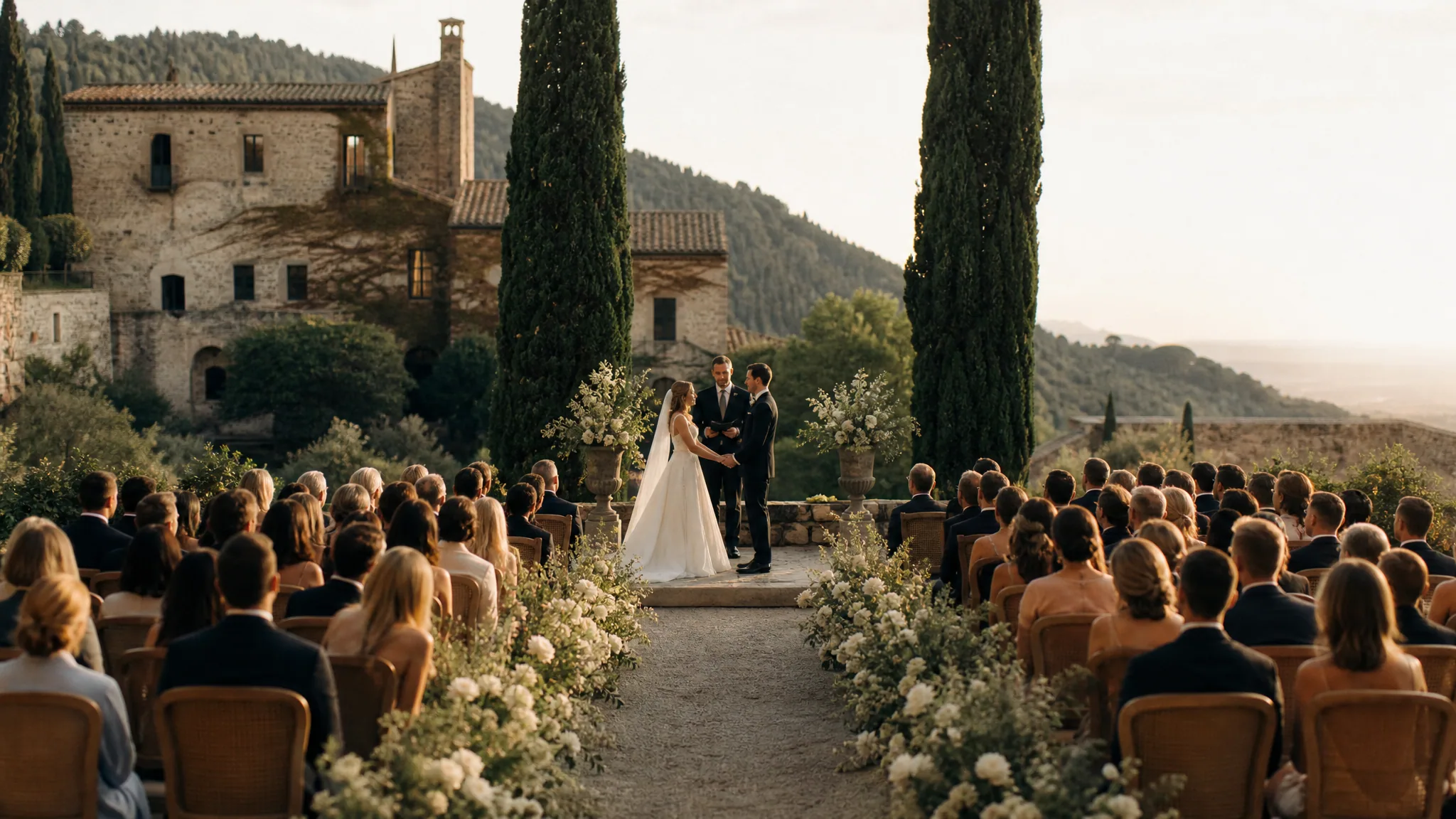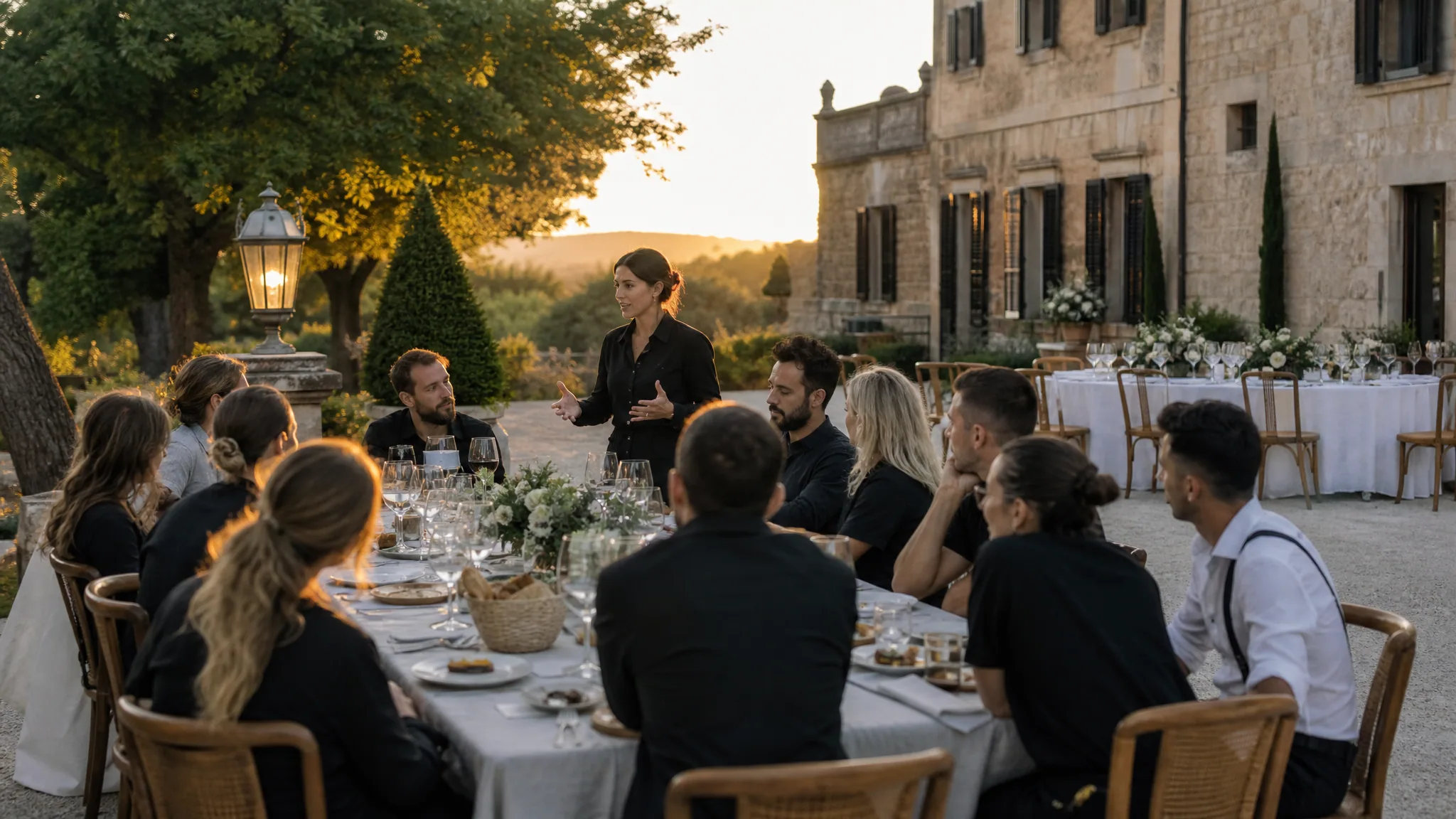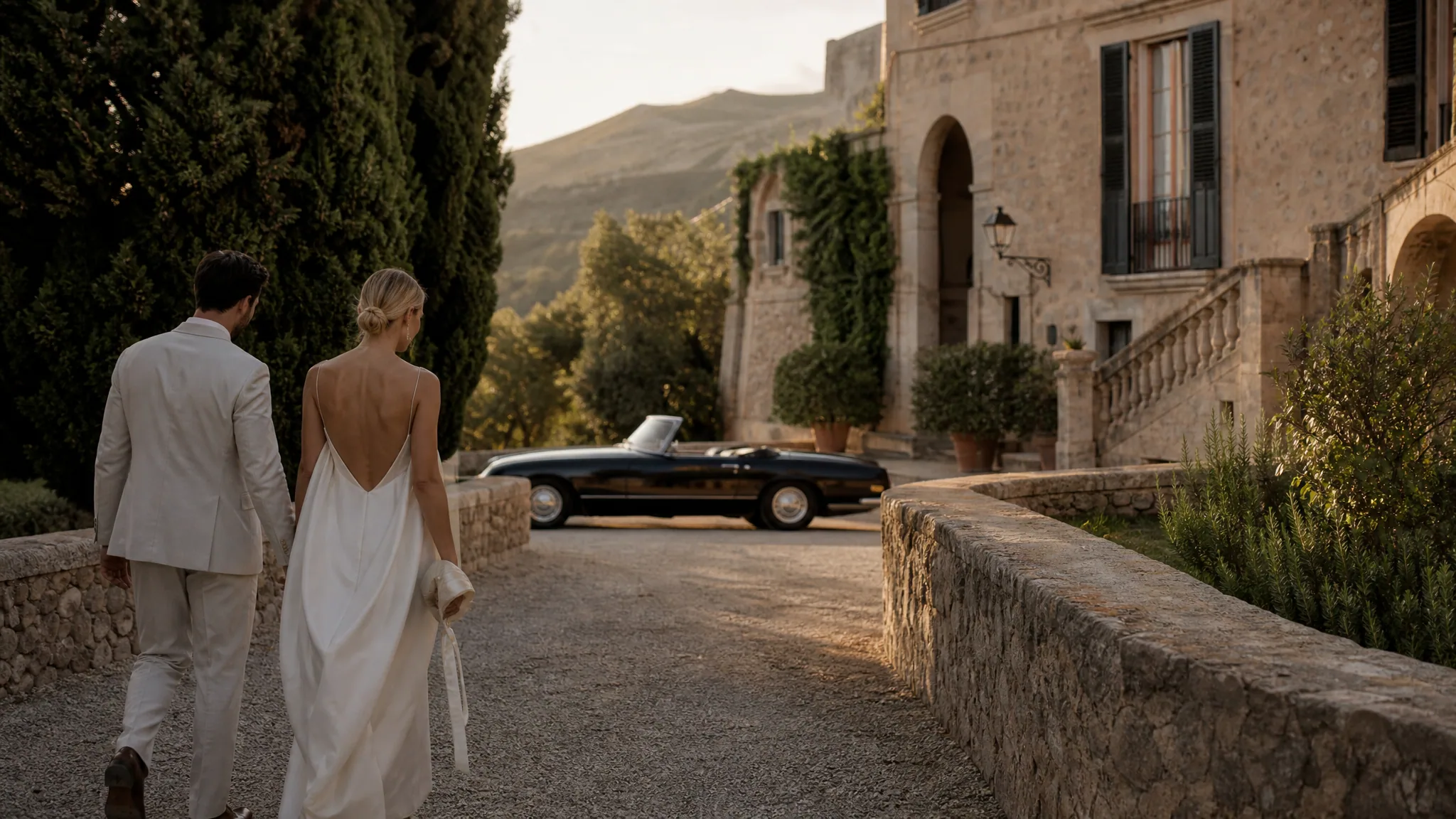
Spanish destination wedding weekends run on a different clock than most international guests expect. Lunches stretch, evenings start late, and the hottest hours of the day are not the moment to stack a vineyard tour, hair trial, and cocktail photos without a break. Building deliberate siesta windows and afternoon rest gaps into the timeline is not laziness—it is guest hospitality that protects energy, mood, and the evening you actually care about.
Why afternoon rest is a planning decision, not a soft suggestion
Jet-lagged guests who power through midday heat arrive at golden-hour portraits and dinner already depleted. Children melt down, elders disappear early, and the dance floor thins before midnight. A named rest window—published like any other event—gives permission to nap, shower, change, or simply sit in shade without feeling they are missing a mandatory activity. Treat it as infrastructure, the same way you treat transfers and meal times.
Map the heat, dinner hour, and ceremony light before you fill the day
List Friday, Saturday, and Sunday against local temperature peaks, Spanish lunch and dinner norms, and your ceremony or cocktail light goals. If dinner is at 21:00 and dancing runs past midnight, an open afternoon is not empty—it is recovery. Avoid packing “fun” between 14:00 and 17:30 in summer inland or coastal heat unless the activity is shaded, short, and optional. The calendar should breathe where the climate demands it.
Choose the rest model that matches lodging and guest mix
Hotel room blocks make classic siestas easy: guests return to blackout curtains and air conditioning. Villa and Airbnb groups need a designated quiet wing, sofa rooms, or outdoor shade that is not also the kids’ splash zone. Mixed lodging means you cannot assume everyone can “just go upstairs”—budget quiet lounges, a courtesy shuttle back to hotels, or a longer gap so villa guests are not trapped in shared living rooms with no privacy.
Protect the window from optional activities that become mandatory
Welcome brunches, group boat rides, and “casual” wine tastings often slide into the siesta block because they look harmless on a spreadsheet. If you schedule anything between lunch and evening call time, label it truly optional, keep it under ninety minutes, and never make it the only transfer of the afternoon. One stacked activity turns the rest window into another obligation and undoes the point of the gap.
Align hotel housekeeping, check-out, and quiet-hour policies
Tell hotels when guests will return for rest so housekeeping does not knock mid-nap, and confirm quiet floors for wedding blocks when possible. On wedding day, if check-out conflicts with the afternoon gap, solve luggage storage and late check-out before guests land—not during the siesta they need. A rest window that ends with a frantic room clear is not a rest window.
Time the reopen to getting-ready, transfers, and golden hour
End the siesta early enough for showers, attire changes, and the first shuttle—not five minutes before call time. For wedding-day getting-ready parties, separate “quiet rest for most guests” from “hair and makeup already underway” so the two groups do not collide in the same suite. Publish hard edges: “Rest window 15:00–17:30; coaches depart hotels at 17:50 for the estate.” Soft language creates soft arrivals.
Brief the WhatsApp group, pocket itineraries, and on-site hosts the same way
Write one sentence that travels everywhere: what the window is for, where guests should be, and when the next meet point begins. Hosts and ushers should redirect FOMO, not invent bonus tours. If elders or guests with mobility needs need a quiet lounge instead of a hotel return, name that location so they are not left improvising in a hot courtyard.
Shade, water, and cooling are part of the rest plan
Even guests who will not sleep still need cool air, water, and somewhere to sit out of direct sun. Stock villa fridges, confirm hotel pool towel access does not become a second event, and keep any outdoor lounge truly shaded at 15:00—not only at noon. Pair the rest gap with the same hydration and heat logic you already use for ceremony comfort.
Smoke-test the afternoon on the real property clock
Walk the timing two days out: lunch end, transfer back, room access, and the evening load-in that might create noise outside guest windows. If vendors will be drilling or testing sound during the siesta, relocate guests or shift the vendor window. A calm afternoon is one of the highest-leverage hospitality moves on a Spanish destination wedding weekend—protect it like ceremony time.