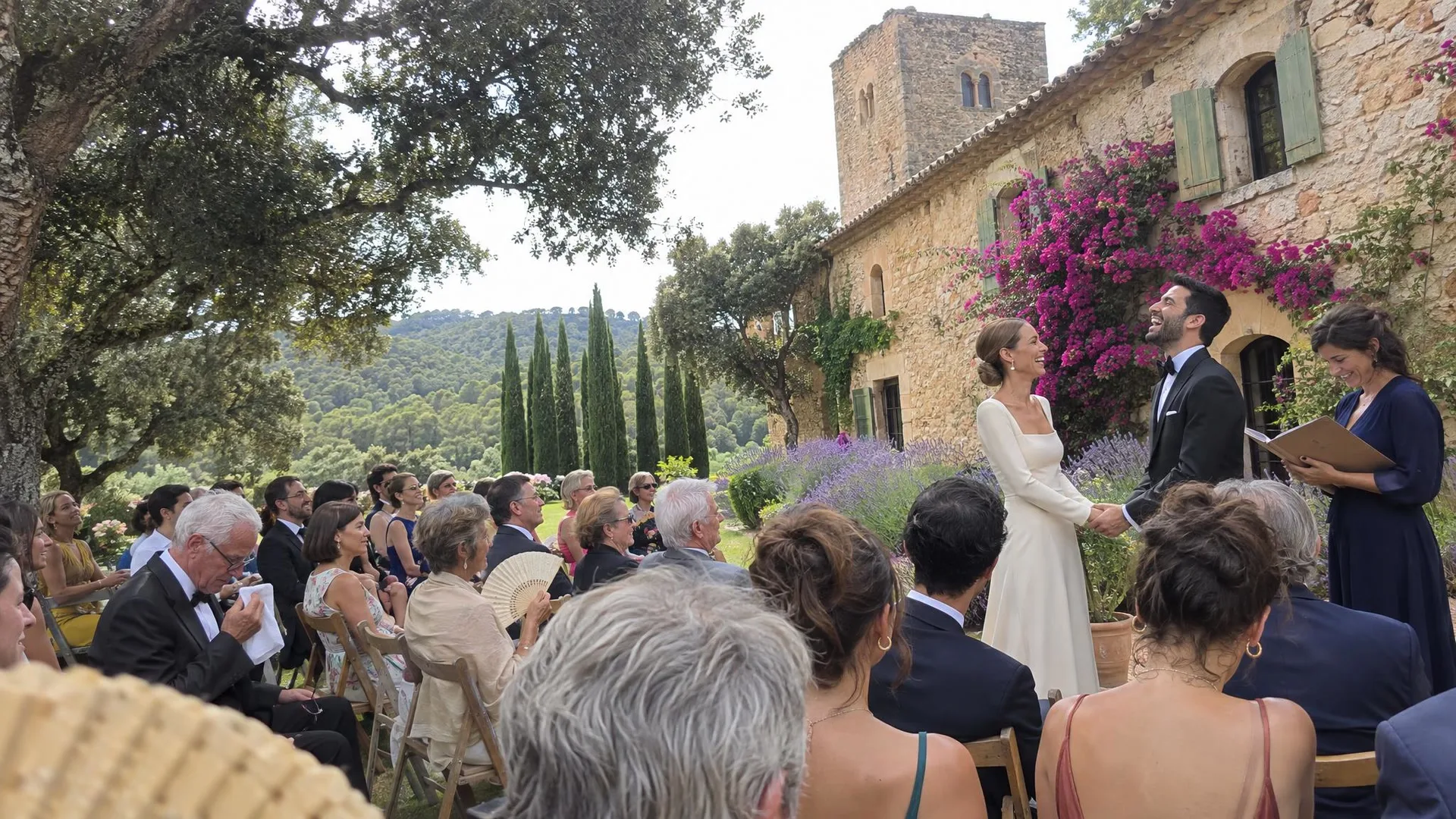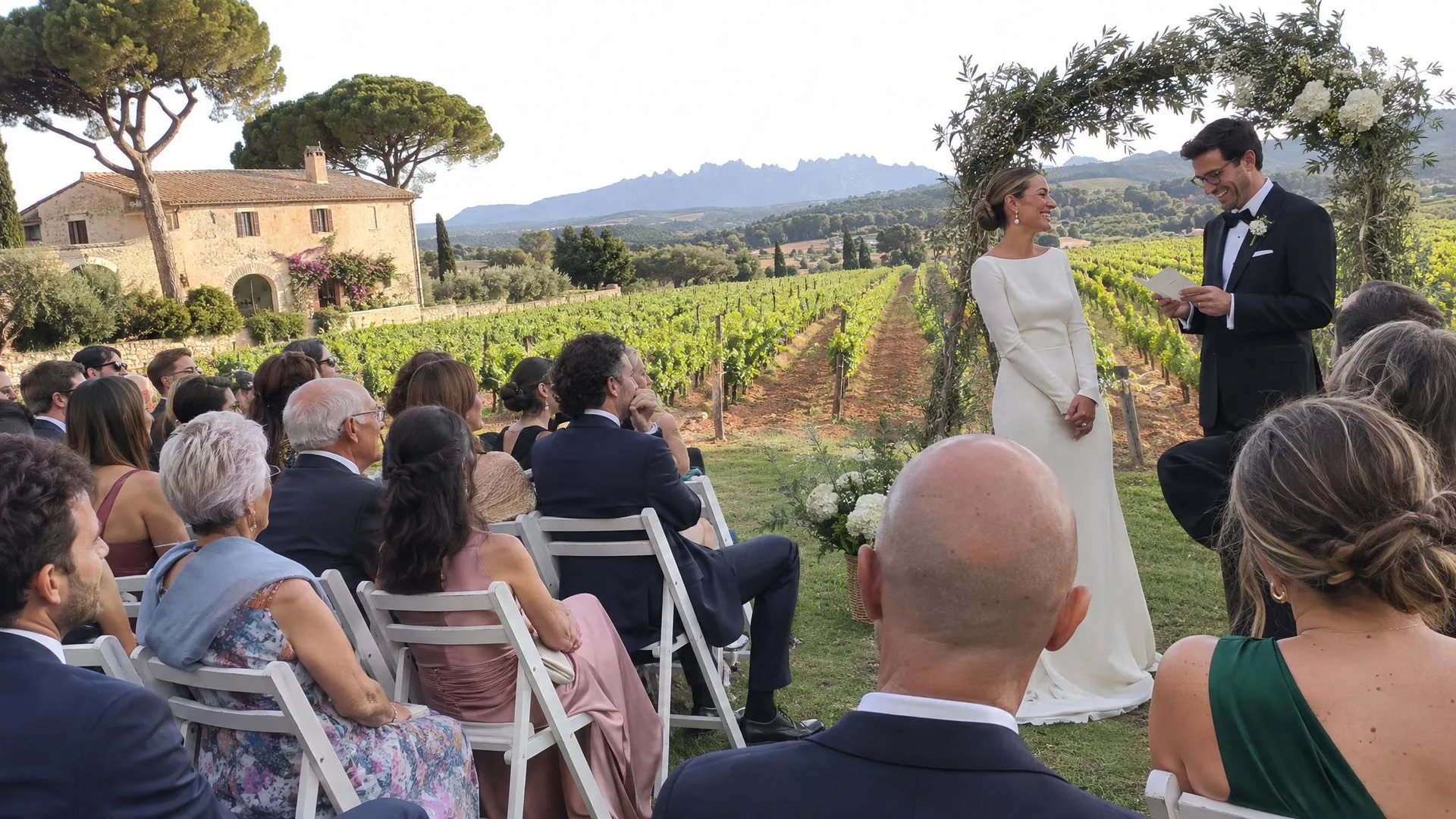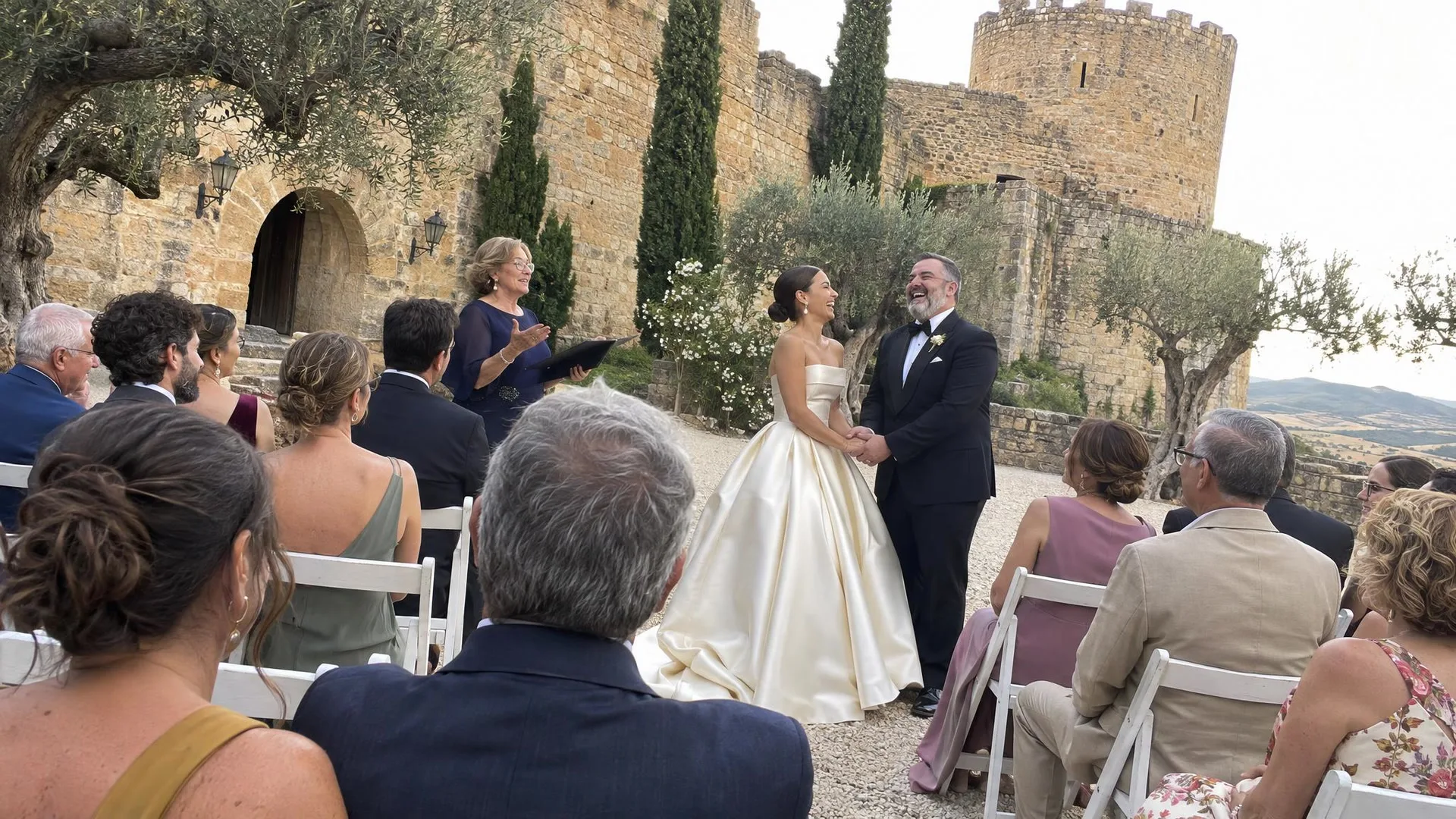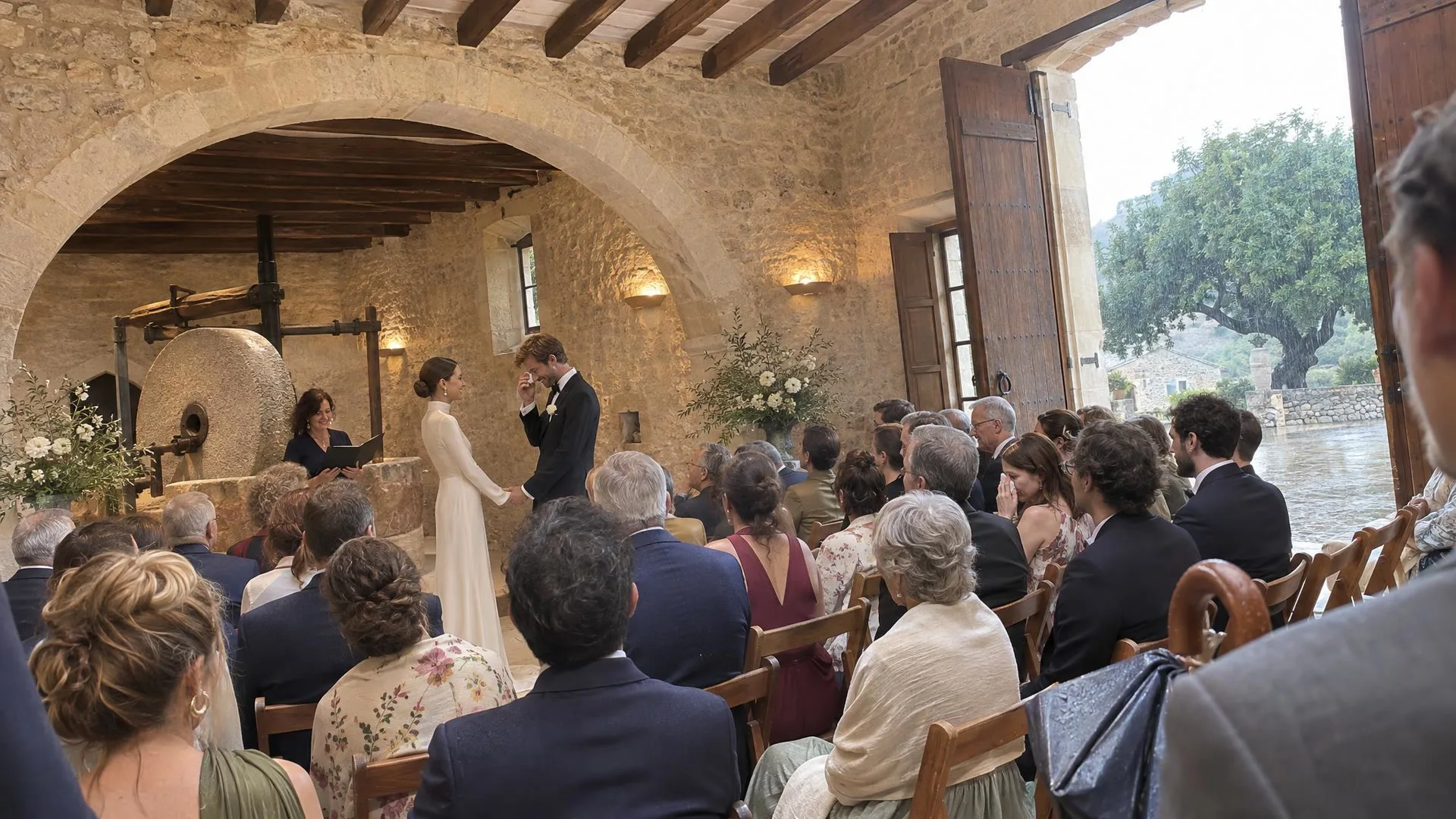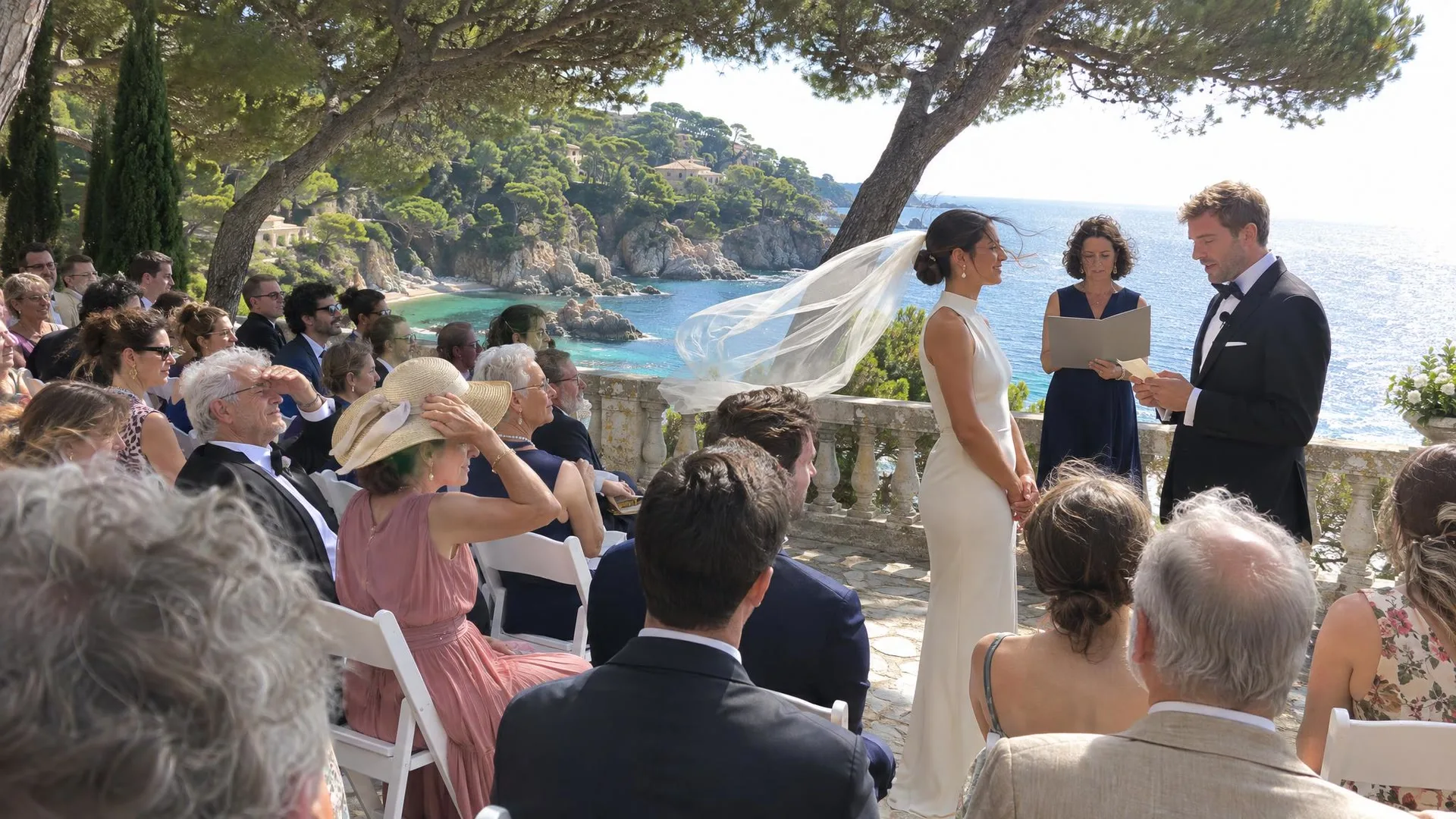
A beach wedding in Spain is the picture many couples start with: bare feet, turquoise water, a ceremony a few steps from the sea. It can be wonderful. It can also be the day your guests remember for the wrong reasons, because the wind carried away every word of the vows and half the guests spent the ceremony shaking sand out of their shoes.
A recent discussion that started as an "unpopular opinion" about beach ceremonies drew dozens of replies, and it turned out to be less unpopular than its author expected. Guests, officiants and couples who had married on the sand all listed the same problems. A few defended beach weddings, but even they agreed that most of the trouble comes down to location and planning. Around the same time, a couple from Germany asked a destination wedding forum for a European beach venue with a ceremony spot, dinner and dancing in one place. Spain was their first idea, yet they had not found anything that felt right.
This guide puts those threads together and adds what changes when the beach is in Spain.
What people actually complained about
Wind, first and last. Hair, veils and dresses blowing in one direction in every photo. Officiants who could not be heard past the third row. One person who had married on a beach said the wind ruined the audio of their whole wedding video: you cannot hear the music, you cannot hear the vows. Everyone still had a great time, but the film never recovered.
Sand. It gets into shoes, hems, food and bags. One guest said a lace dress she wore to a beach wedding years ago still drops sand when she shakes it. Long trains come out of a beach ceremony grey.
Mobility. The point almost nobody disputed. Older guests, anyone with a cane and anyone in heels struggles on soft sand, and wheelchairs simply do not work there. Several replies mentioned guests who quietly skipped the ceremony or needed an arm all the way to their seat.
The public. Swimmers, sunbathers and beach walkers in the background of your photos, or standing at the back watching.
Heat and no shade. A beach at four in the afternoon in July is not a comfortable place in black tie.
The defenders had good answers: choose the season and hour when the wind is usually light, put down a walkway, pick a beach where the walk is short, tell guests in advance so they dress for it. That is the right attitude. In Spain you need one more thing on the list.
The Spain rule nobody mentions: there are no private beaches
Under the Spanish Coastal Law (Ley 22/1988, de Costas), the sand, the dunes and the shore belong to the public domain. Beaches cannot be private, so nobody can rent you one or close a stretch for your guests. Walking, swimming or simply standing on the beach is free. Putting chairs, an arch or a platform on the sand is different: it needs prior authorisation.
In practice that means:
- An occupation permit from Costas (the provincial coastal authority, or the regional government in places that manage it themselves, such as the Canary Islands and Galicia). The town council is asked for a report. In the state procedure the maximum time to answer is four months, and no answer means no.
- The council's own rules on noise, cleaning, beach hours and fees, which vary from town to town.
- A legal officiant willing to come to the sand. A civil wedding in Spain is performed by the mayor, a councillor or a notary, and many councils only marry couples in the town hall.
That is why most international couples sign the legal part at home or at a registry beforehand and hold a symbolic ceremony by the sea. Even then, if you set anything up on the sand, the permit still applies. Ask the council before you book anyone else, and get the answer in writing.
Better options: by the beach, not on it
The good news is that Spain is full of venues that give you the sea without the sand. Most of the beach weddings that look effortless in photos are actually one of these.
Cliff gardens and terraces above a cove. On the Costa Brava the coast is rocky, with small coves below pine-covered headlands. The Marimurtra Botanical Garden in Blanes, where we have filmed, holds ceremonies at the Linnaeus Pavilion, right above the cove of Sa Forcanera, and its backup plan is a marquee installed at the pavilion itself. You get the view, a stone floor under your shoes and a plan B in the same spot.
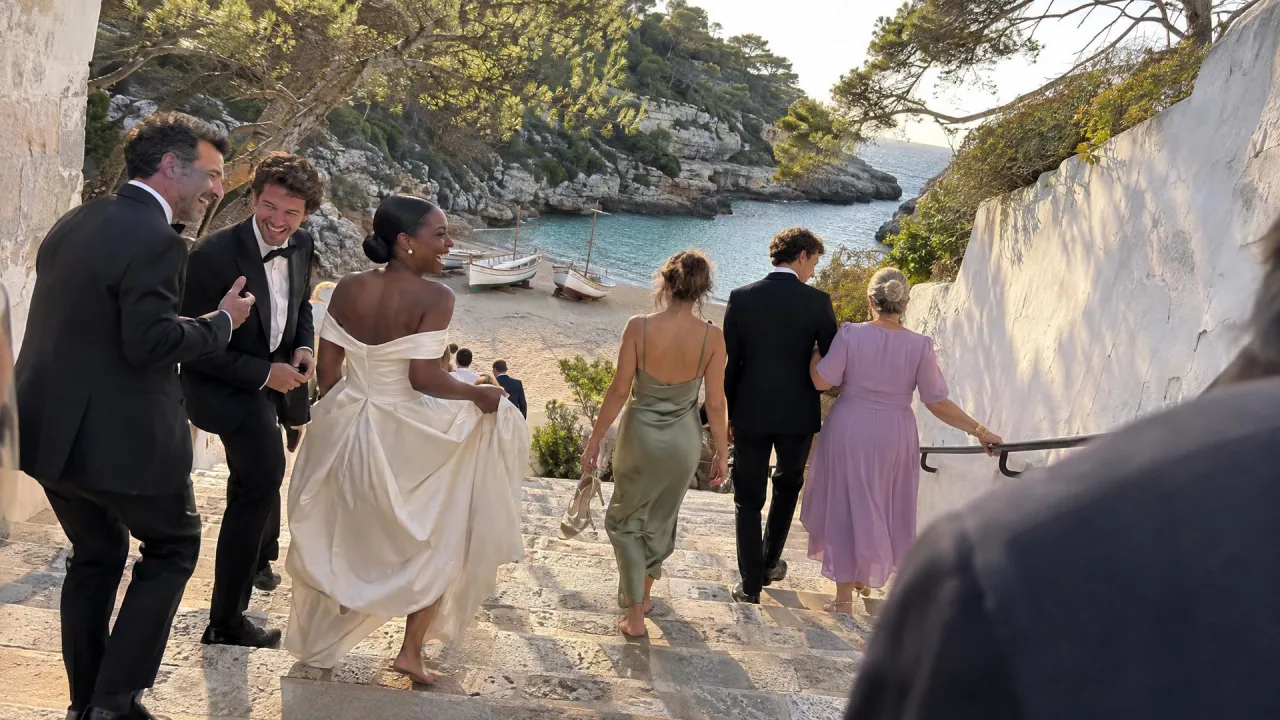
Estates next to the beach. On the Costa de la Luz, Trafalgar Polo Club in El Palmar de Vejer (Cádiz) is a useful example of how a venue handles this honestly. Its own site says the ceremony always takes place on the estate, in an outdoor area with sea views, never on the sand. La Mangueta beach is a one-minute walk away and is used for couple photos in the last light. If the weather turns, there is an air-conditioned indoor hall, and guests can stay in apartments on the estate.
Beach restaurants and hotels with a terrace. On Mallorca, Menorca and the southern coasts, many weddings use a wooden deck or terrace at the edge of the beach for the aperitif and keep the ceremony somewhere sheltered. Ask exactly where the line between their terrace and the public beach is, because the sand in front of them is still public.

Wind in Spain: plan for it, do not hope
Each coast has its own wind. The Costa Brava and Menorca know the tramuntana, a north wind that can blow hard for a day or more. Around Tarifa and the Strait the levante is famous. In summer, many Mediterranean beaches get a sea breeze that builds through the afternoon and often eases towards sunset. None of this is a reason to give up on the coast. It is a reason to:
- Visit the spot at the same hour and month as your ceremony, ideally twice.
- Ask the venue where they move the ceremony when it is windy, and go and look at that place too.
- Choose a sheltered terrace, garden or courtyard over an exposed point.
- Skip loose petals, candles and light decorations.
- Pick a veil and hairstyle that can handle a gust, or plan to take the veil off after the ceremony.
For your guests, our note on coastal wind, seating and what to wear is worth sending with the invitation.
Sound: the part you only notice in the film
The thread's most painful comment was the one about a wedding video without vows. Wind across a microphone sounds like a roar, and waves add a constant wash. A single handheld mic passed between the officiant and the couple is the weakest setup there is.
What works better: a small lapel microphone on the officiant and on one of you, a separate audio recorder, and the speakers for guests facing away from the wind. Do a sound check at the spot at ceremony time. We record vows with lapel microphones and a separate audio recorder for exactly this reason, and on the coast it matters even more. There is more on this in our guide to outdoor ceremony sound and microphones.
What a coastal venue gives your film
From behind the camera, the coast is one of the best places in Spain to make a wedding film. Documentary and cinematic wedding films on the Spanish coast live on small, real moments: guests carrying their shoes down stone steps to a cove, the light going soft over the water, a breeze in the veil that you did not plan. The ceremony itself works best on stable ground with good sound. The sand can come later, for a walk at sunset when only the two of you and the camera are there.
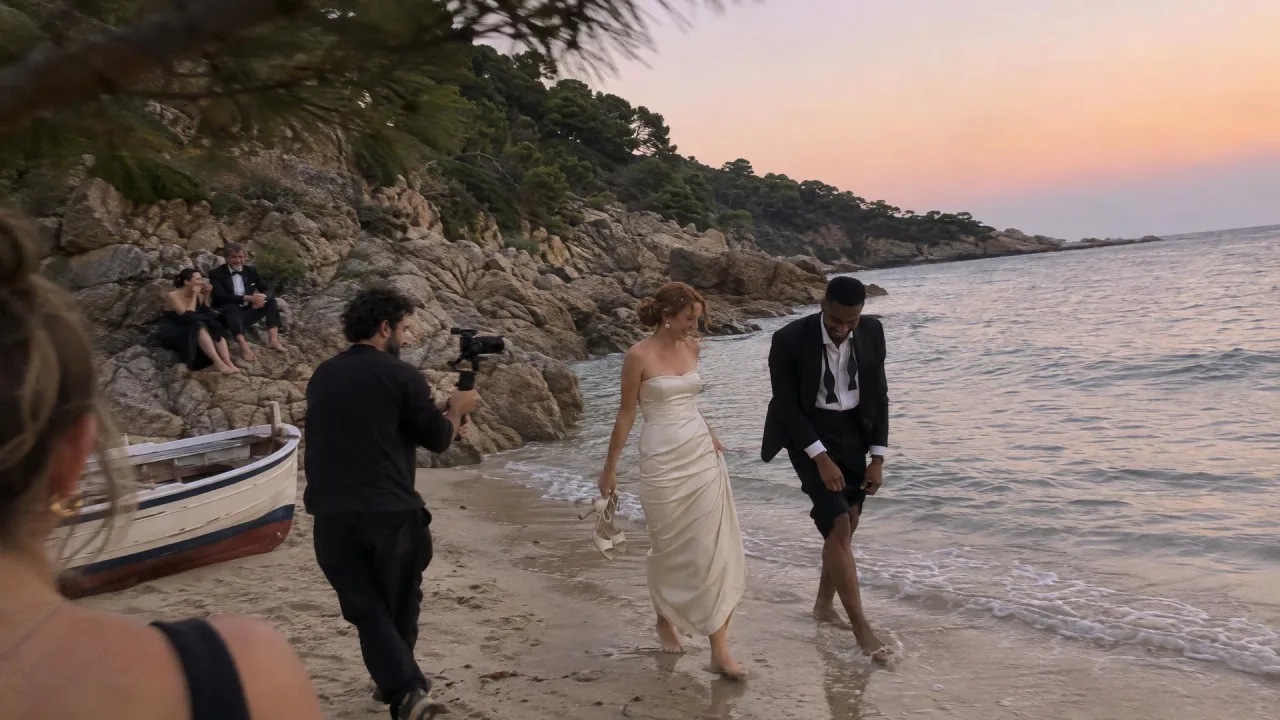
If you are marrying on the islands, our page for a wedding videographer in Mallorca shows how we work there.
Seven questions to ask a beach venue
- Is the ceremony spot on the public beach or on your own property?
- Who applies for the Costas permit, and how far ahead?
- Where does the ceremony move if it is windy or wet, and can we see that space?
- How do older guests or a wheelchair user get from the car to their seat?
- Is there shade for guests in the afternoon?
- What are the music and noise limits on the terrace and on the beach?
- Can we do couple photos and film on the beach after the ceremony, and at what time is it quietest?
For the wider shortlist, see how to choose a wedding venue in Spain, and if your coast is Mallorca, our Mallorca rain plan covers the indoor options.
The short version
A beach wedding in Spain works best when the sea is the view, not the floor. Marry on a terrace, in a garden or on an estate by the water, keep a covered plan B in the same place, mic the vows properly and save the sand for a sunset walk. If you have a coastal venue in mind and want to talk about filming the day, send us your date and venue.