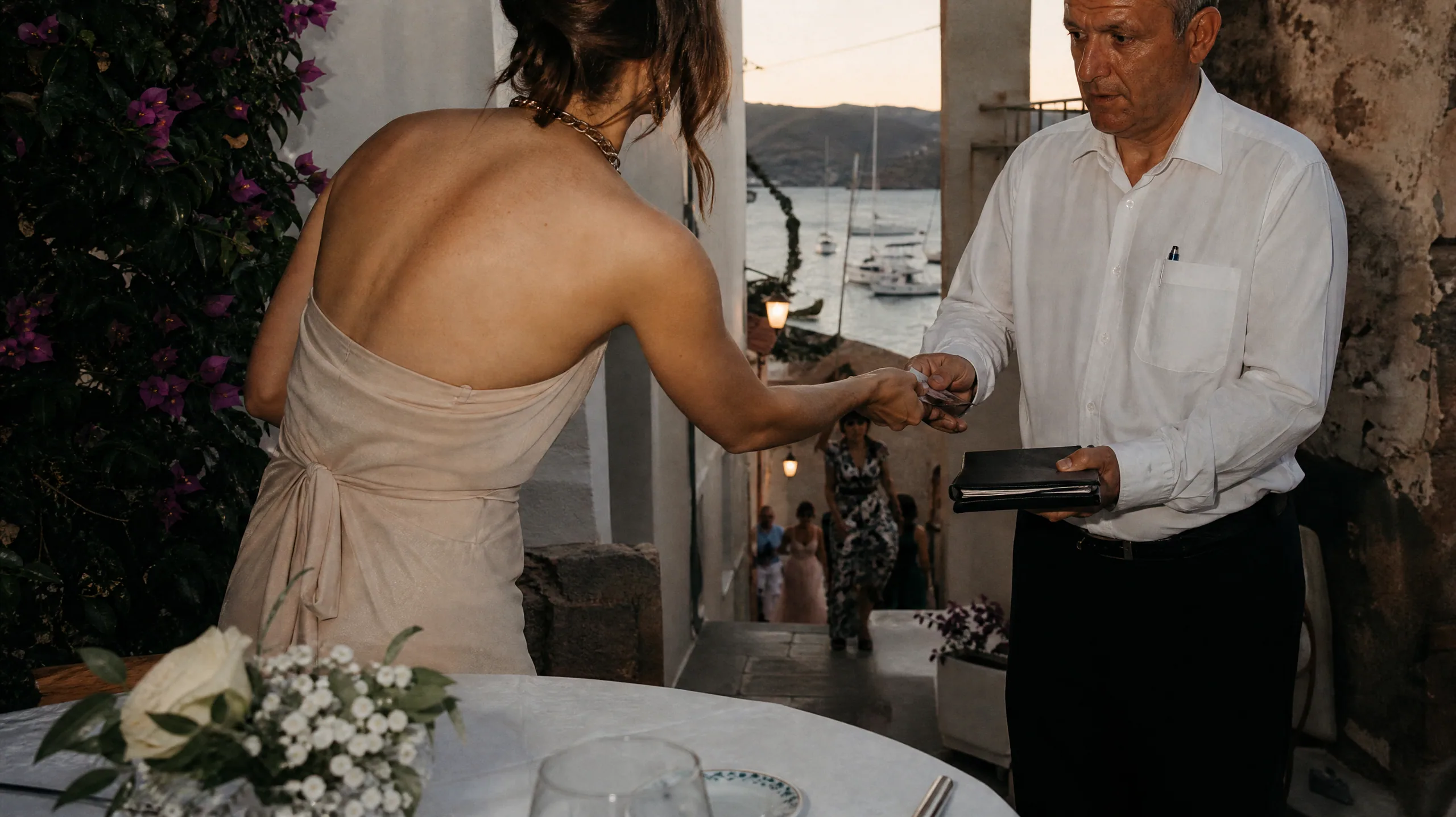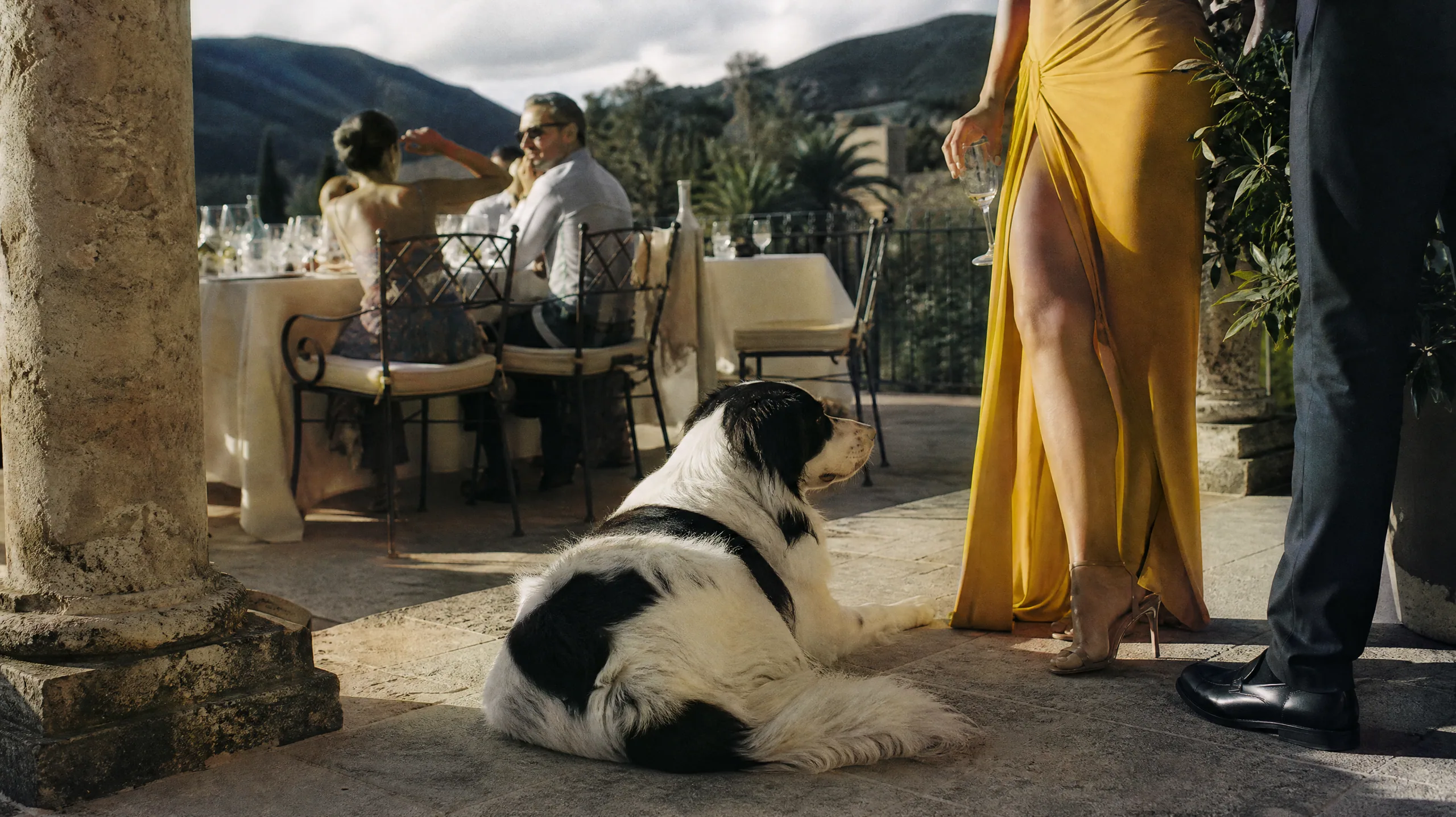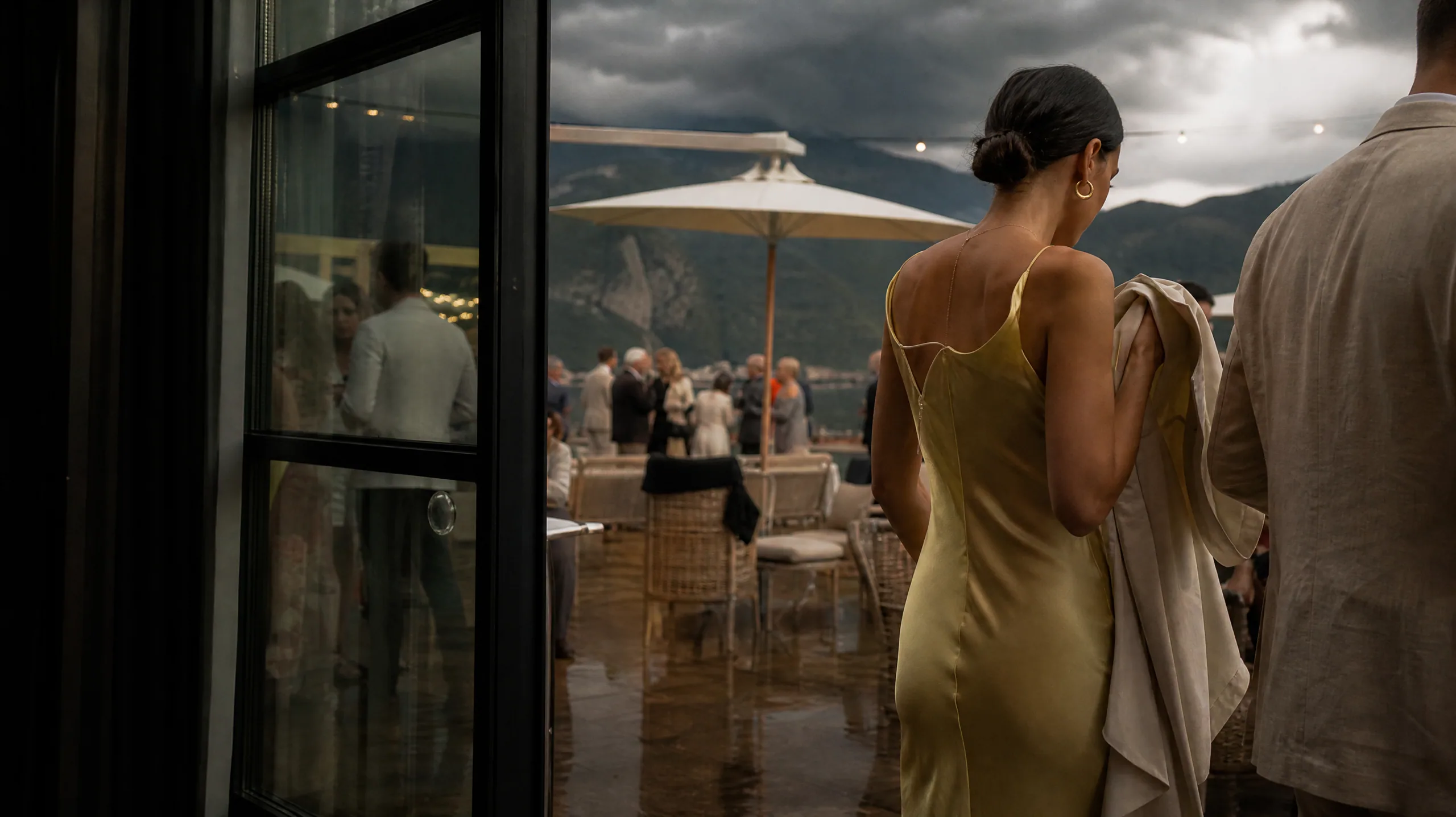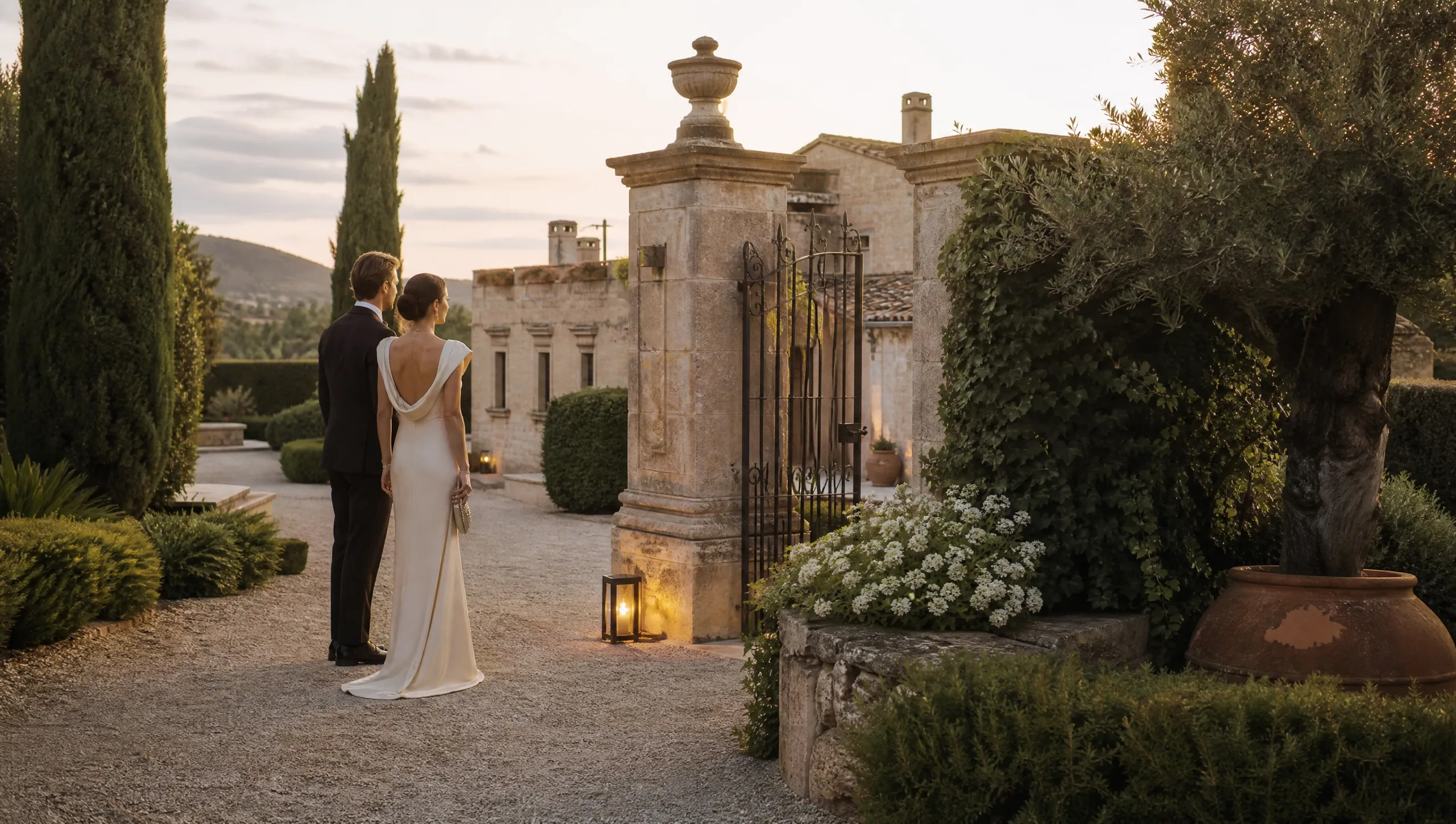
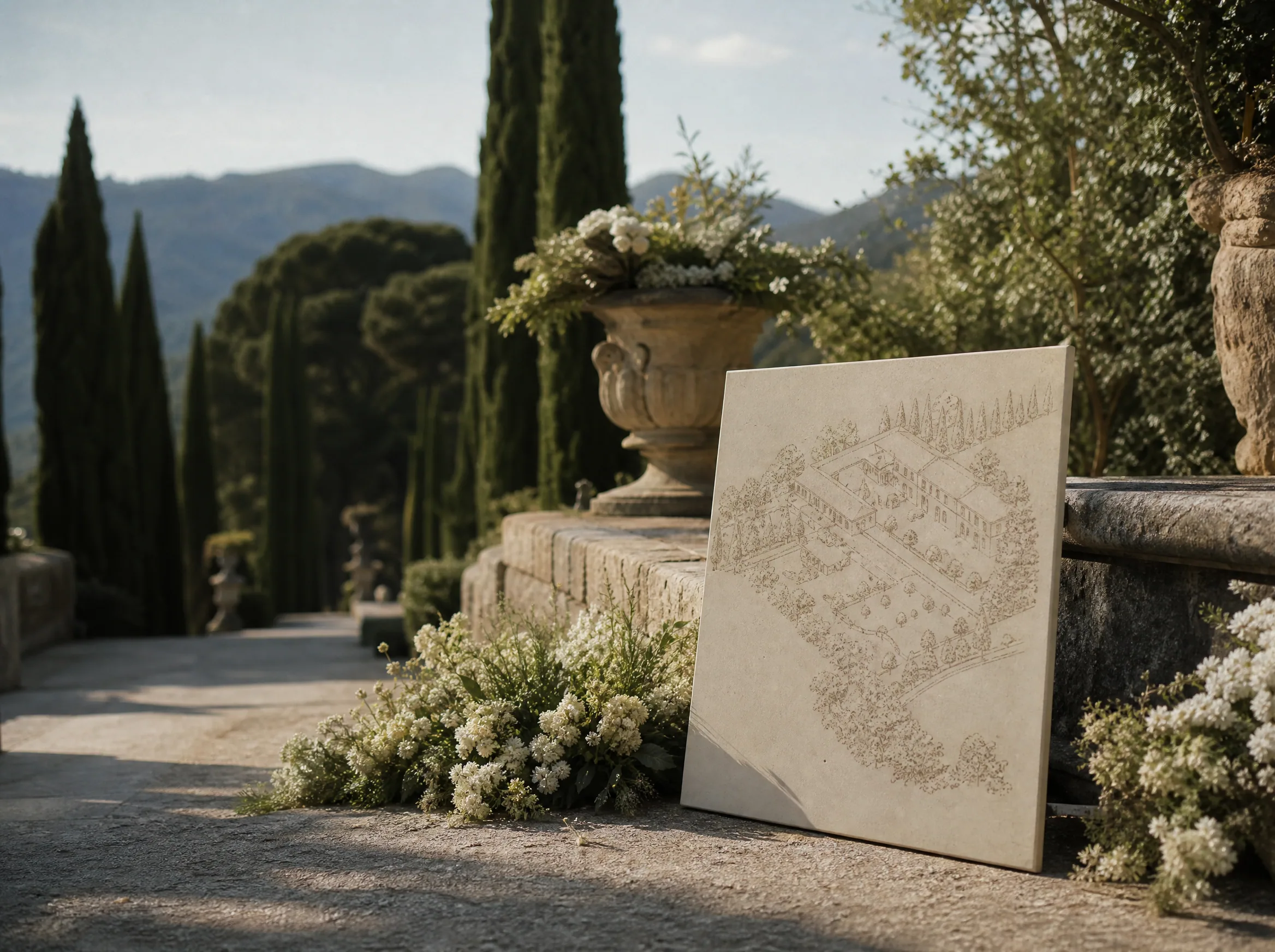
Spanish wedding venues are often beautiful before they are obvious. A masia down a gravel lane, a castle behind olive groves, a finca with three possible entrances—these places photograph like a dream and navigate like a puzzle for guests who landed yesterday and do not speak Spanish. When your celebration is a destination wedding, wayfinding is not décor. It is hospitality infrastructure.
This guide covers how international couples can plan estate signage and guest wayfinding in Spain: what to mark, how bilingual signs should read, where parking and ceremony paths fail, how evening light changes everything, and how to brief vendors so guests never have to guess which dusty turn leads to the welcome drink.
Why Wayfinding Matters More at Spanish Estate Venues
City hotels put elevators and lobbies between guests and the party. Rural Spanish estates put olive trees, service roads, and unnamed turns between the taxi drop-off and the ceremony lawn. Guests arriving from different airports, at different times, with different drivers will not share the same mental map—even if you sent a pin in the WhatsApp group.
Clear wayfinding reduces late arrivals, wrong-field parking, and the stressed cousin who calls you five minutes before the processional. It also protects the mood you hired a planner and videographer to capture: calm arrivals look better on film than confused ones.
Map the Guest Journey From Arrival to Last Dance
Before you design a single sign, walk—or virtually walk—the guest path in order: approach road, first visible gate, parking or shuttle drop, welcome area, ceremony seats, cocktail zone, dinner, restrooms, after-party, and exit. Note every decision point where a guest could turn the wrong way.
Spanish estates often have a “pretty” entrance for photos and a practical entrance for vans. Guests need the practical path marked as clearly as the romantic one. Build a simple journey map and share it with your planner, venue contact, transport lead, and rentals team so every vendor is designing toward the same routes.
Design Bilingual Signs Without Cluttering the Aesthetic
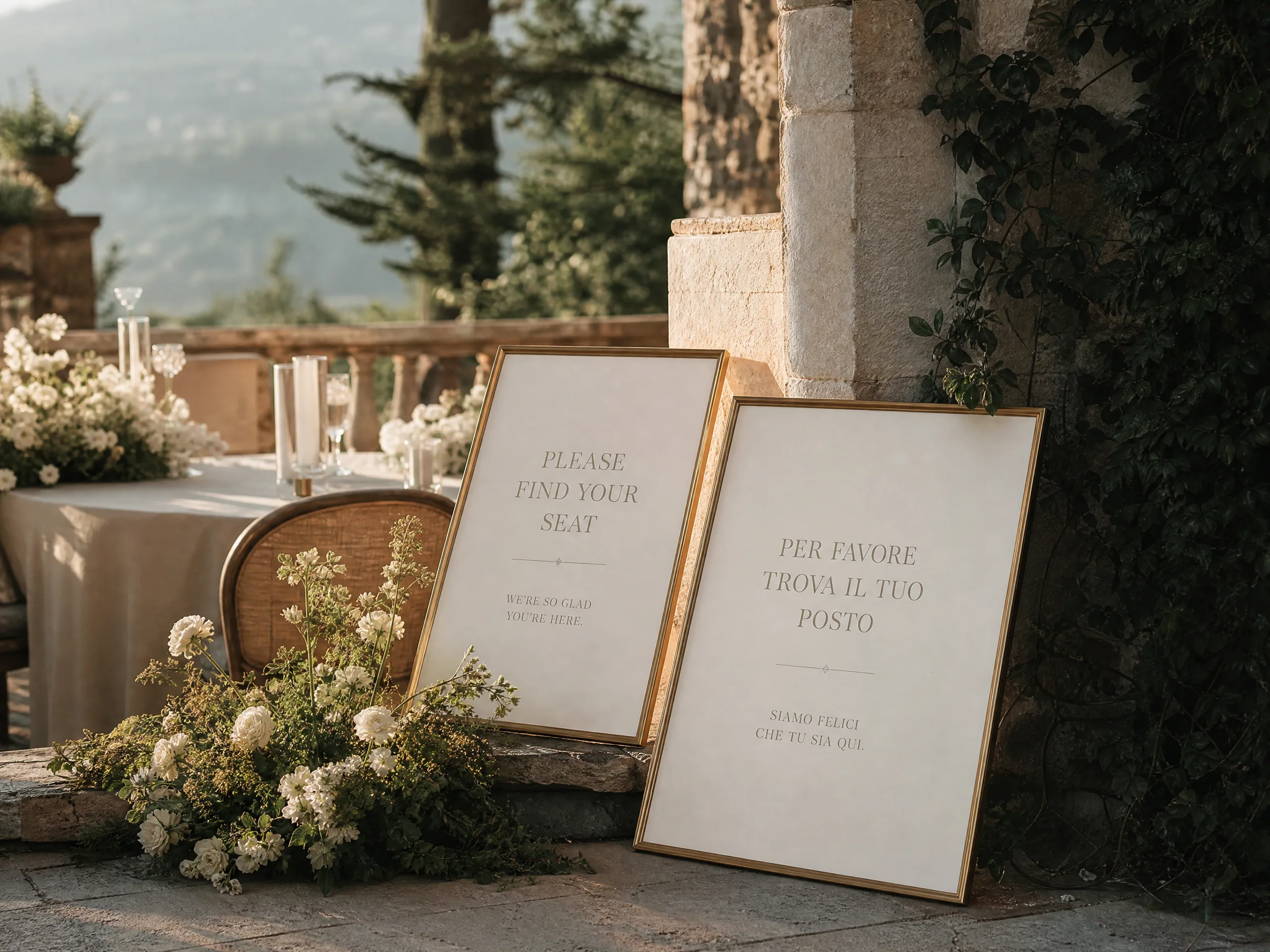
International guest lists benefit from bilingual markers—English plus Spanish is the usual baseline, and a third language only if a large share of your guests need it. Keep wording short: “Parking,” “Ceremony,” “Restrooms,” “Cocktail hour,” “Dinner,” “Exit.” Long poetic sentences belong on the welcome board, not on a stake at a fork in the road.
Match materials to the venue mood—wood, linen, metal, stone—but prioritize contrast and letter size over Instagram subtlety. Soft taupe lettering on soft taupe wood looks elegant in midday sun and disappears at dusk. Ask your stationery or rentals partner for a mockup photographed outdoors, not only on a white studio background.
Place Parking, Ceremony, and Restroom Markers Where Guests Actually Look
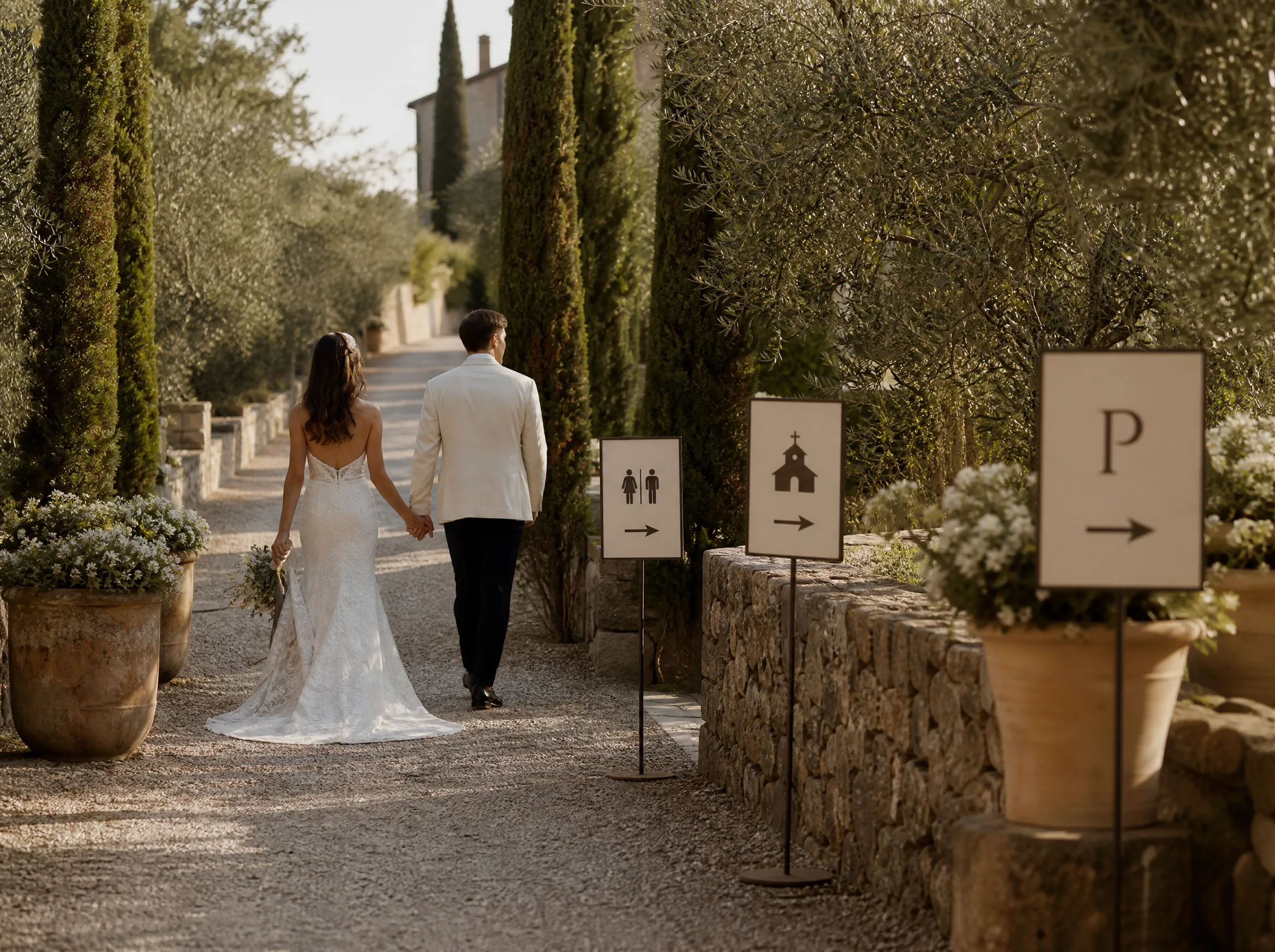
Put the first parking or shuttle sign before the confusing turn, not after guests have already committed to the wrong lane. Mark ceremony approaches from both parking and any secondary drop-off. Restroom signs should appear near cocktail and dinner zones and again along the path for guests who leave their seats mid-meal.
Avoid clustering five boards at the main gate while leaving the orchard path unmarked. One clear sign at each decision point beats a beautiful sign forest that nobody can parse under time pressure. If your venue allows temporary stakes, confirm soil rules and irrigation lines before install day.
Coordinate Signage With Lighting for Evening Transitions
Destination weddings in Spain often move from bright afternoon ceremonies into long outdoor nights. Signs that work at 5 p.m. can vanish at 10 p.m. Plan path lighting and sign lighting together: lanterns, uplights, or small spotlights aimed at critical markers for parking exit, restrooms, and after-party transitions.
Tell your lighting designer which signs are operational, not decorative. A glowing floral welcome is lovely; a lit arrow to the bathrooms during dinner is what keeps guests comfortable. If open flame is restricted, use battery lanterns or electric options and confirm placement with the venue.
Plan Temporary Install and Strike With Your Rentals Team
Wayfinding is a rentals and staffing problem as much as a design one. Confirm who prints or builds the signs, who installs them, what time stakes go in relative to guest arrival, and who strikes them overnight or the next morning. Rural venues may require soft ground protection or specific install windows tied to other vendor load-ins.
Include weather backup: wind clips for coastal Mallorca, waterproof sleeves for Catalonia spring rain, and a spare set of critical arrows if one stake fails. Put signage on the same run-of-show as florals and lounge furniture so it is not left to a well-meaning family member with a hammer and no map.
Brief Staff and Drivers So Signs Are Not the Only Guide
Even excellent signage needs human backup. Brief shuttle drivers, parking attendants, and welcome-table hosts on the same route names you printed. Give them a one-page map with gate names the venue actually uses—not only the romantic names on your invitation suite.
If guests arrive by taxi or rideshare, send drivers a pin plus a short Spanish instruction for the preferred entrance. Many estates have a service road that looks unofficial but is the correct guest access. Your planner or day-of coordinator should know which entrance to protect for ceremony photography quiet and which to keep open for late cars.
Accessibility and Clarity for Older Guests and First-Time Visitors
Wayfinding should serve guests who move slowly, guests with low vision, and guests who have never been to a Spanish countryside property. Prefer high-contrast type, avoid cursive on directional stakes, and mark step-free routes when the pretty path is a gravel slope.
If ceremony and dinner sit at different elevations, add mid-path confirmation signs—“Ceremony ahead / Ceremonia”—so people are not guessing halfway up a hill. Pair signage with a short weekend itinerary note that explains arrival timing, dress for terrain, and where to ask for help if they feel turned around.
A Pre-Wedding Wayfinding and Signage Checklist
Two to four weeks out: finalize the guest journey map, bilingual wording list, materials, and install owner. One week out: confirm lighting for night markers, spare stakes, driver brief, and venue rules for temporary signs. Wedding-weekend morning: walk the route as a first-time guest would, fix missing turns, and photograph the final layout for your coordinator’s run-of-show.
When wayfinding is planned with the same care as florals and dinner, international guests feel hosted from the first dusty turn. That calm arrival is part of the story KUDRYASTUDIO captures—and part of why Spanish estate weddings feel magical instead of stressful once everyone is in the right place.