International guests rarely arrive at a Spanish wedding the way they arrive at a city hotel. Many of the most beautiful venues sit behind private roads, agricultural gates, numbered finca entrances, or staffed barriers that look simple until the first taxi cannot find the turn, a vendor truck arrives early, or Uncle Mark lands two hours late with a dead phone battery. Gate access is not a side detail. It is the first operational system of the weekend, and when it fails, everything behind it starts late.
For couples planning from abroad, the goal is calm control: enough structure that the right people get in, enough flexibility that late flights and language gaps do not create a scene at the entrance, and enough discretion that guests feel welcomed rather than screened. Kudrya Studio sees this pattern constantly in Catalonia, Mallorca, and countryside estates across Spain—gorgeous properties with access rules that only work if someone owns them early.
Why Spanish private estates need an access plan
Hotel weddings absorb arrival chaos in a lobby. Private estates do not. A single narrow lane, a locked agricultural gate, a shared neighbor driveway, or a code pad with no English labels can stop an entire shuttle line. Add mixed transportation—rental cars, pre-booked vans, local taxis that have never been to the property—and the entrance becomes the bottleneck of the day.
Build the access plan before you finalize welcome-party timing. Know who controls the gate, whether codes change daily, whether the venue allows a temporary host at the entrance, and what happens after midnight when the party is still going and the gate is set to auto-lock.

Build one master access list, not five versions
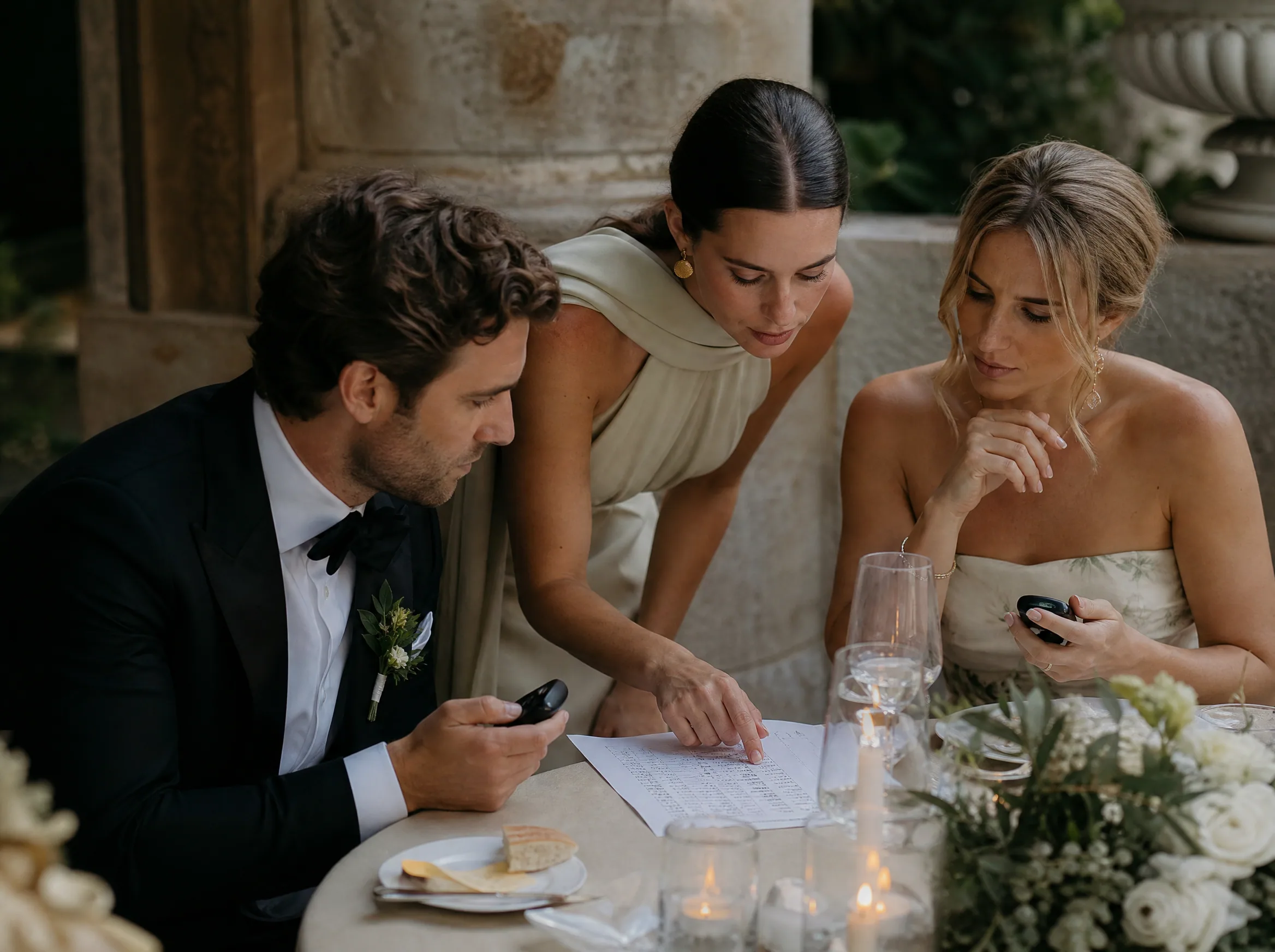
Create a single living document with every person or vehicle that needs entry: overnight guests, day guests, planners, florists, catering vans, photo and film teams, DJ load-in, beauty teams, and any family members arriving separately from the group transfer. Include full names as they appear on IDs or ride bookings, approximate arrival windows, and whether they need the overnight code or only event-day access.
Share one canonical version with the venue coordinator, day-of team, and any gate host. Do not let WhatsApp threads become the access system. When a cousin forwards an old code from Tuesday into Friday’s group chat, someone will be stranded at the wrong entrance with no signal.
Decide how codes, buzzers, and paper lists will work
Ask the venue exactly how entry works in practice. Some estates use a static code for the whole rental. Others rotate codes, require a call box, keep a printed guest list with a guard, or expect a staff member to open for every car. Each model needs different preparation.
If the property uses a code, print it on a small arrival card and also store it in the digital itinerary guests already have offline. If it uses a buzzer, assign a bilingual host number that actually answers. If it uses a paper list, give the gate contact a phonetic cheat sheet for international names and a clear rule for plus-ones, children, and drivers waiting outside.
Separate guest access from vendor load-in
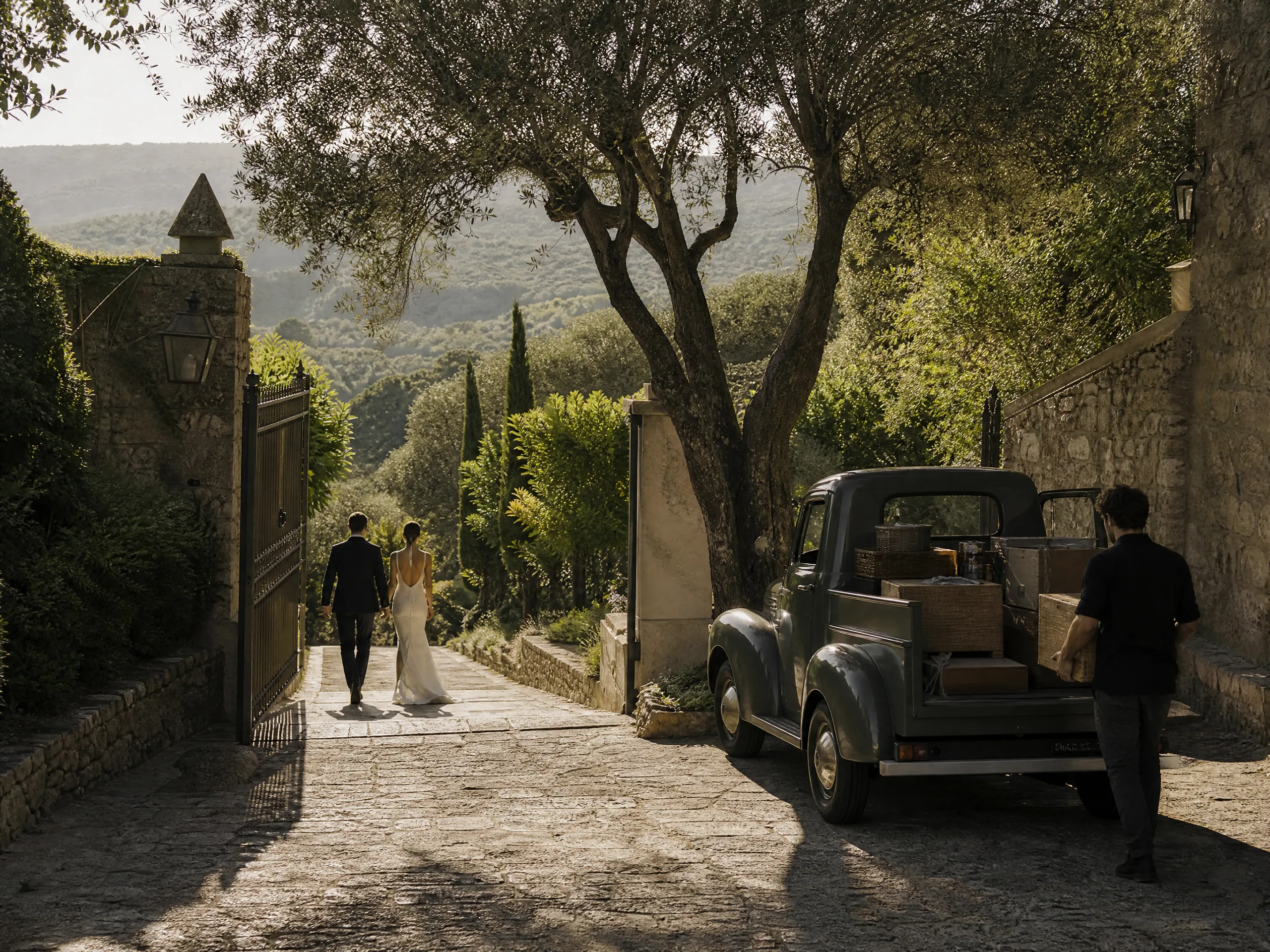
Vendors and guests should not compete for the same gate minute. Confirm load-in windows, which entrance trucks must use, where vans can stage without blocking taxis, and who opens the gate before the first guest car. Rural Spanish properties often have one practical entrance and limited turning space; a florist van parked badly can delay half the welcome-party arrivals.
Give vendors their own access instructions, contact name, and backup phone. Do not assume the same PDF you sent guests is enough for a catering team arriving at 09:30 with a refrigerated truck and a hard setup deadline.
Plan for late planes, lost taxis, and no phone signal
Destination weekends almost guarantee staggered arrivals. Keep a late-arrival protocol: a working after-hours contact, a secondary meeting point if the gate is unmanned, and a rule for taxis that cannot complete the last kilometer of a private road. In low-signal areas, do not rely on live WhatsApp pin drops alone.
For guests landing after dinner, tell them in advance whether the gate code still works, whether a host will wait, and where to go if they miss the last shuttle. A clear late-night sentence in the itinerary prevents twenty anxious messages to the couple during speeches.
Brief the couple’s hosts without turning the gate into security theater
Someone needs ownership, but it should not be the couple in outfits five minutes before cocktail hour. Assign a planner, coordinator, or trusted host to the access channel. Give them authority to approve obvious legitimate arrivals and a short escalation path for anything unclear.
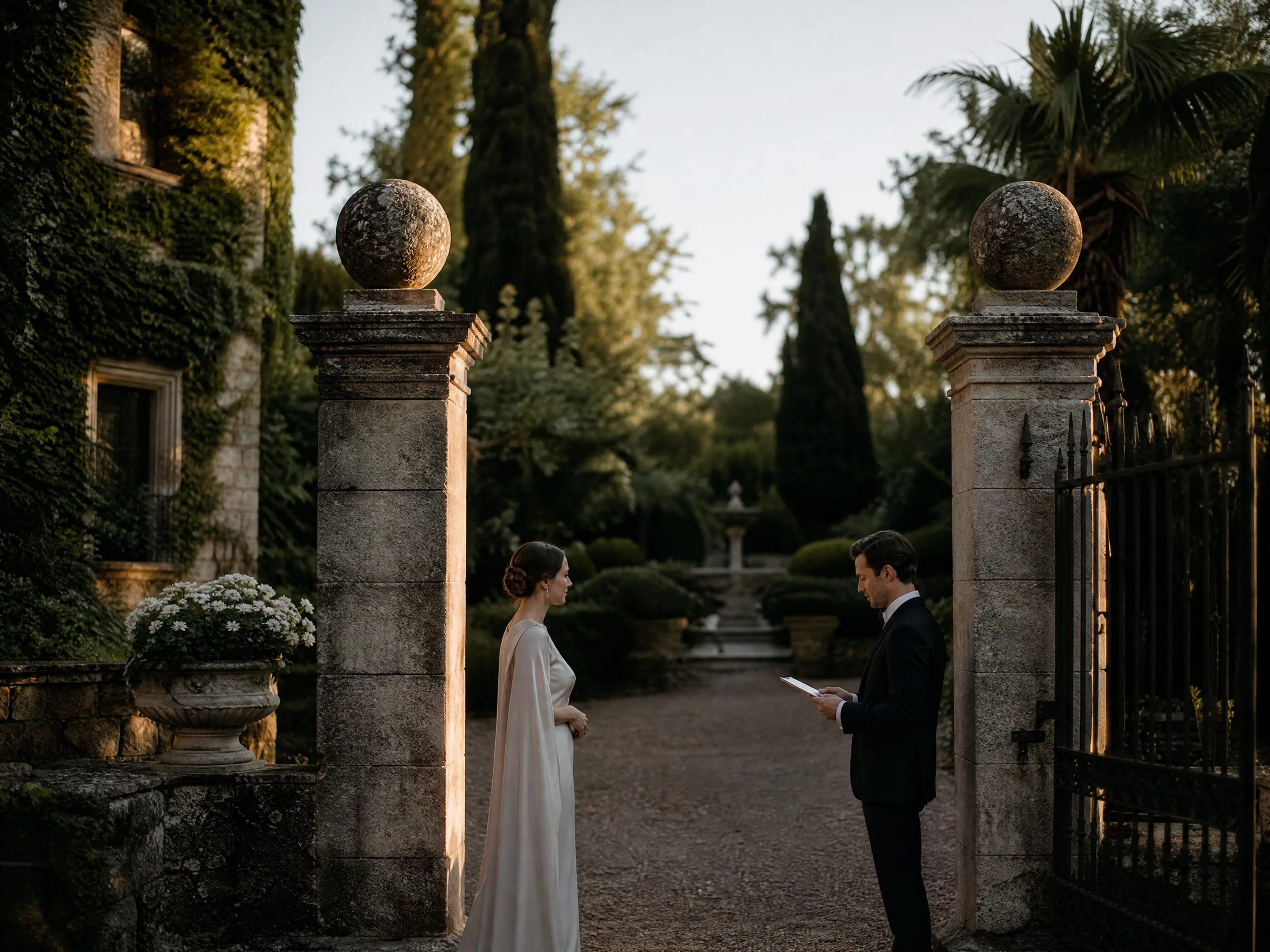
Tone matters. Guests should meet warmth and orientation first—shade, water, the right turn into parking—not an interrogation. The best access systems are almost invisible when they work: the right car is expected, the host already has the name, and nobody feels policed at a celebration.
Communicate access details the way international guests actually read
Put gate instructions in three places: the digital weekend guide, a downloadable offline note, and a short message 24 hours before the first event. Include the estate name as it appears on maps, any local nickname locals use, GPS coordinates, the final landmark before the turn, and what the entrance looks like.
If guests are using Spanish taxis or Uber-style services where available, give them a copy-paste address block in Spanish. Drivers often navigate by local references that do not match the romantic venue name on the invitation.
Coordinate neighbors, noise windows, and overnight re-entry
Private estates often sit near working farms, residential neighbors, or shared access roads. Confirm whether late re-entry is allowed, whether cars must be walked in after a certain hour, and whether a second code is needed after the event gate closes. Also confirm whether vendors may return the next morning for strike without a new authorization.
If the property is sensitive about traffic, stagger shuttle drops and ask rideshares to use a designated turnaround instead of idling at the gate with headlights in a neighbor’s bedroom window.
What to lock in with the venue before guests book flights
Before the guest list goes wide, get written answers on access hours, code changes, staffed versus unstaffed entry, vendor gate rules, taxi limitations, parking capacity near the entrance, and emergency vehicle access. If the venue cannot support unmanaged late arrivals, design the transportation plan around that reality instead of hoping guests will “just figure it out.”
A Spain destination wedding feels effortless when the first gate opens on time for the right people. Treat access as hospitality infrastructure, not an afterthought, and the rest of the weekend has room to feel as beautiful as the estate promised.