Destination wedding guests often pack once for three or four days of Spanish sun, late dinners, and coastal humidity. By Saturday, the linen shirt that looked perfect at check-in is creased from suitcase compression, a cocktail dress has a splash of vermouth, and someone needs black trousers for the ceremony that were meant for Sunday brunch. Clothing care is not glamorous planning—but it is one of the quiet systems that keeps a multi-day celebration looking intentional.
At Kudrya Studio, we treat laundry and steaming as weekend infrastructure: something you set up early so guests never have to hunt for an iron in a rural masia at midnight. This guide covers how to plan guest laundry, steaming, and emergency clothing care for destination weddings in Spain without turning your welcome desk into a dry cleaner.

Why clothing care becomes critical on Spanish wedding weekends
Spain’s climate and celebration style create specific wardrobe stress. Guests fly with carry-on limits, then face heat that encourages linen and silk—fabrics that wrinkle and spot easily. Evenings cool quickly on hilltop estates, so layers get packed, unpacked, and tossed over chairs. Welcome parties, boat days, and late dinners stack looks back-to-back with little recovery time between events.
International guests also underestimate hotel laundry cutoffs and rural venue distance from town services. A Barcelona hotel may return shirts in 24 hours; a countryside finca may have no on-site laundry at all. Planning assumes the slowest realistic turnaround, not the best-case city hotel brochure.
Map the weekend looks before you promise solutions
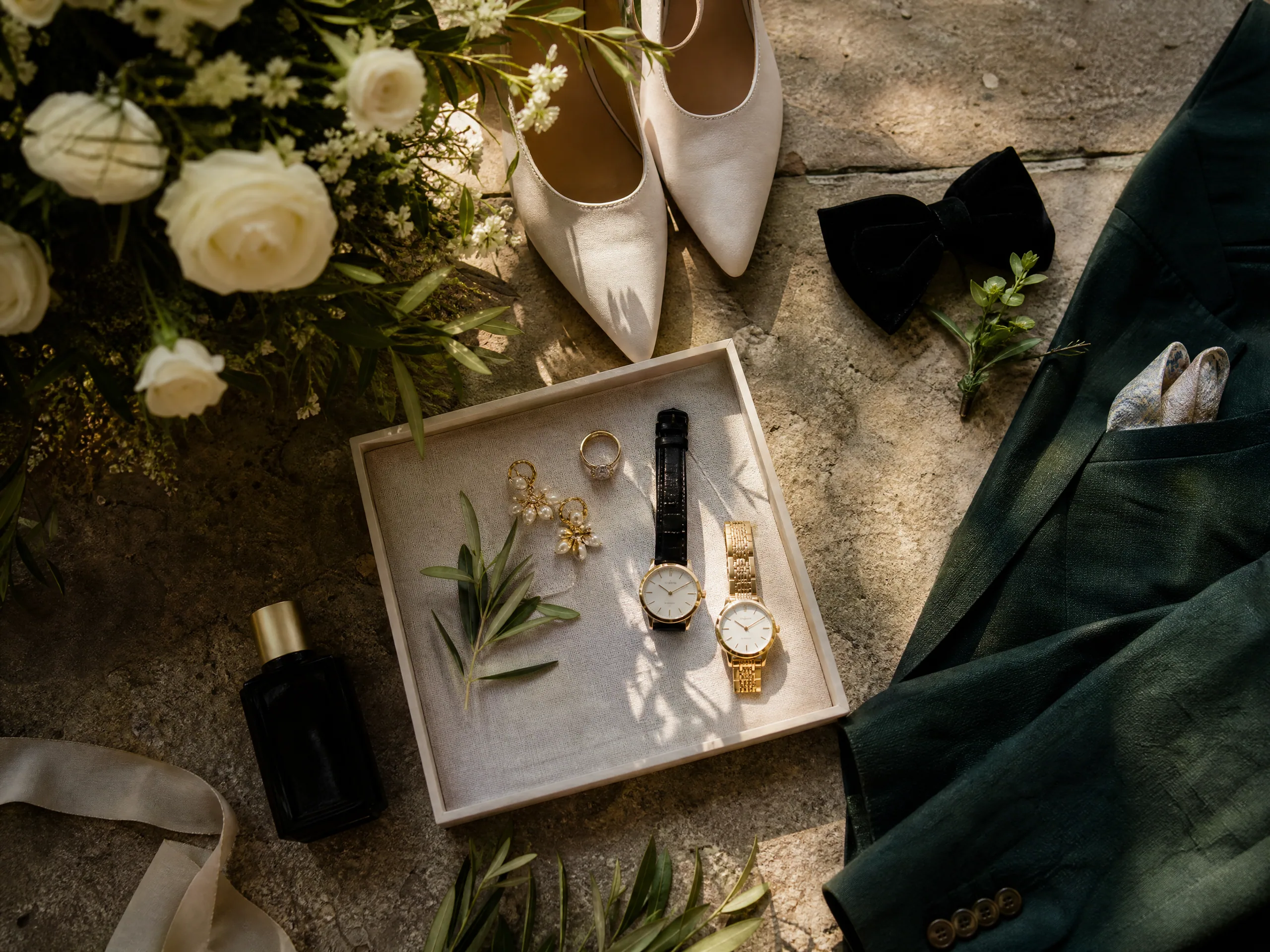
Start with the itinerary, not the steamer. List each hosted event and the expected dress code: welcome drinks, ceremony, reception, after-party, farewell brunch. Note fabrics guests are likely to wear—linen, cotton, silk, light wool—and which nights create the highest risk of spills or outdoor dust.
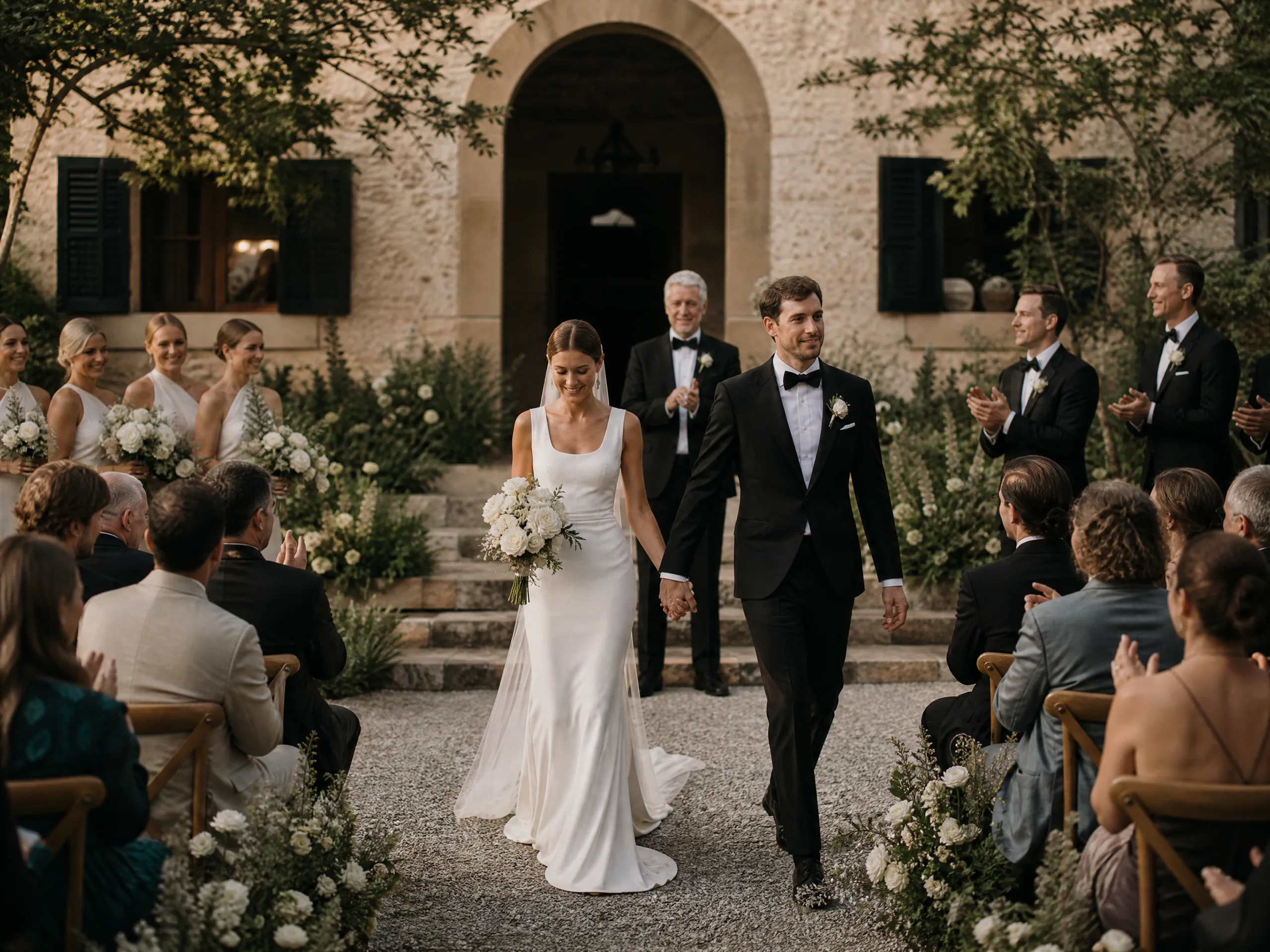
Share that map with your planner and hotel contacts. When you know Friday is white linen on a dusty terrace and Saturday is formal black-tie under olive trees, you can stage the right care tools in the right places instead of improvising mid-weekend.
Hotel laundry, pressing, and express options
If the majority of guests are in one or two hotels, negotiate clothing care into the room block conversation. Ask specifically about same-day pressing, express laundry cutoffs, weekend staffing, and whether the hotel will accept garments for guests who are not overnighting there. Get answers in writing with turnaround times in hours, not vague “usually quick” language.
For rural venue clusters where hotels are boutique or limited, identify one reliable city or town service within a realistic drive. Confirm Saturday pickup windows before guests arrive—many Spanish dry cleaners close early or do not offer Sunday service. Your day-of coordinator should know the phone number, address, and last drop-off time as clearly as they know the florist’s call time.

On-site steaming stations that guests will actually use
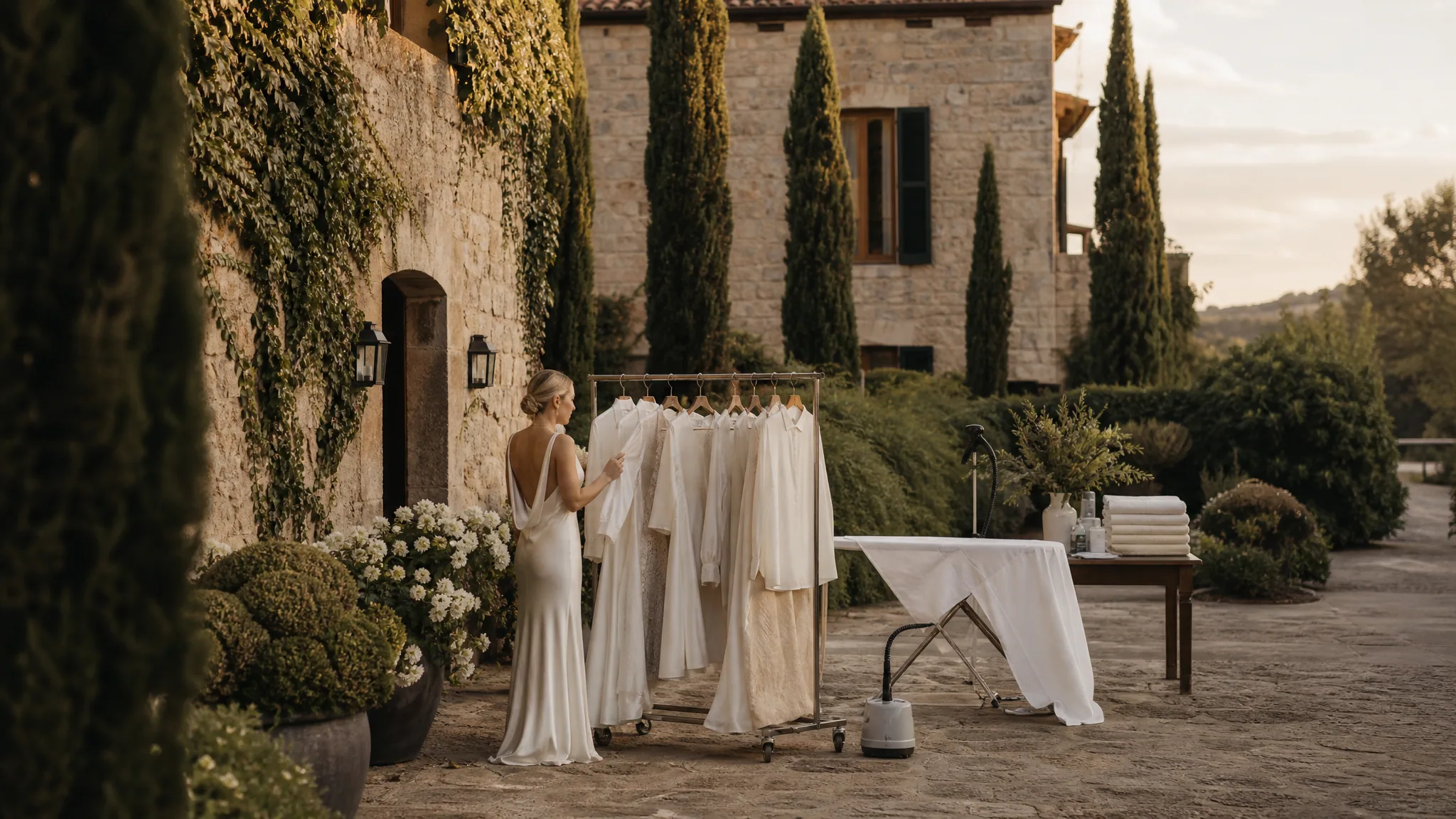
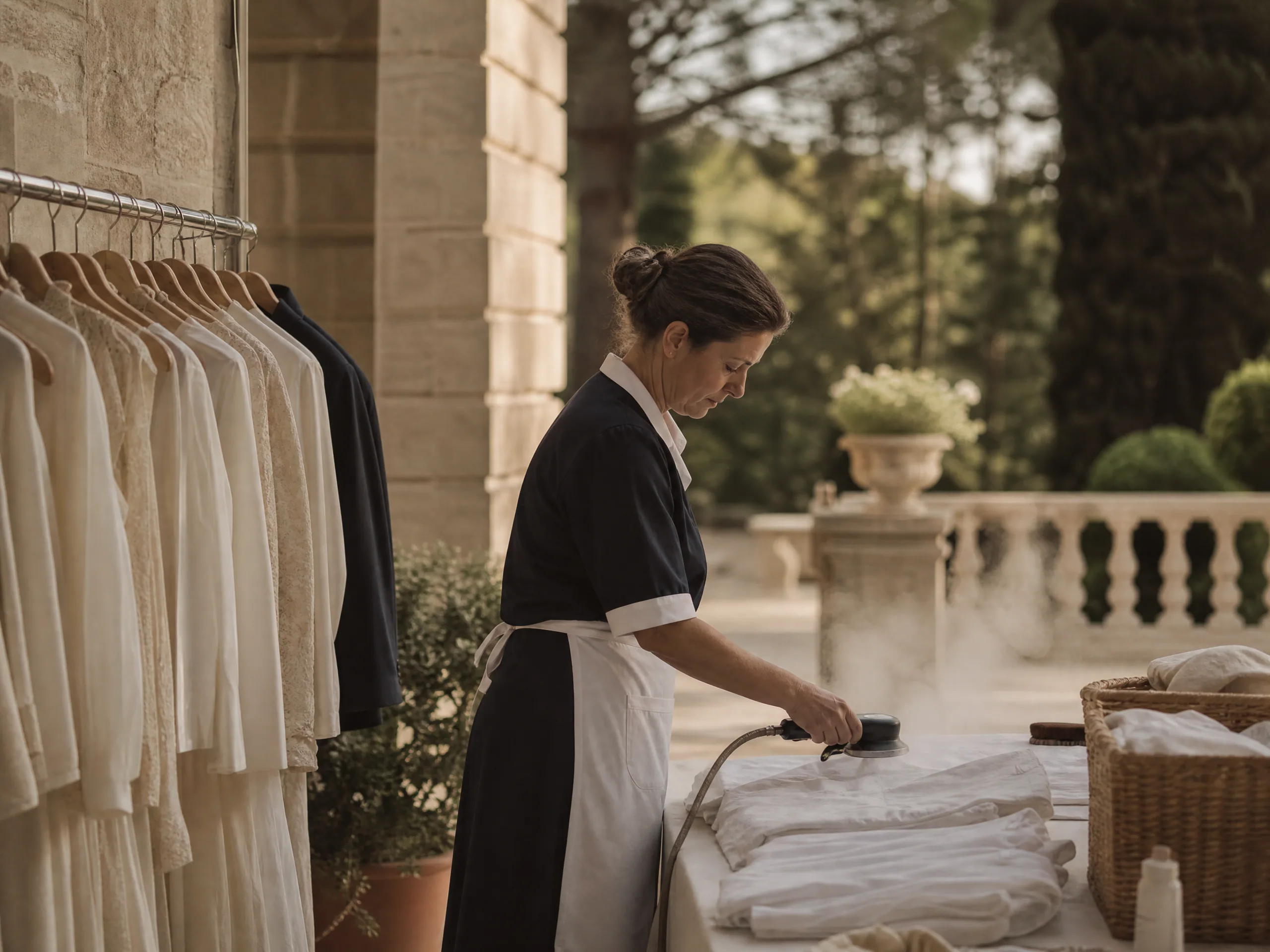
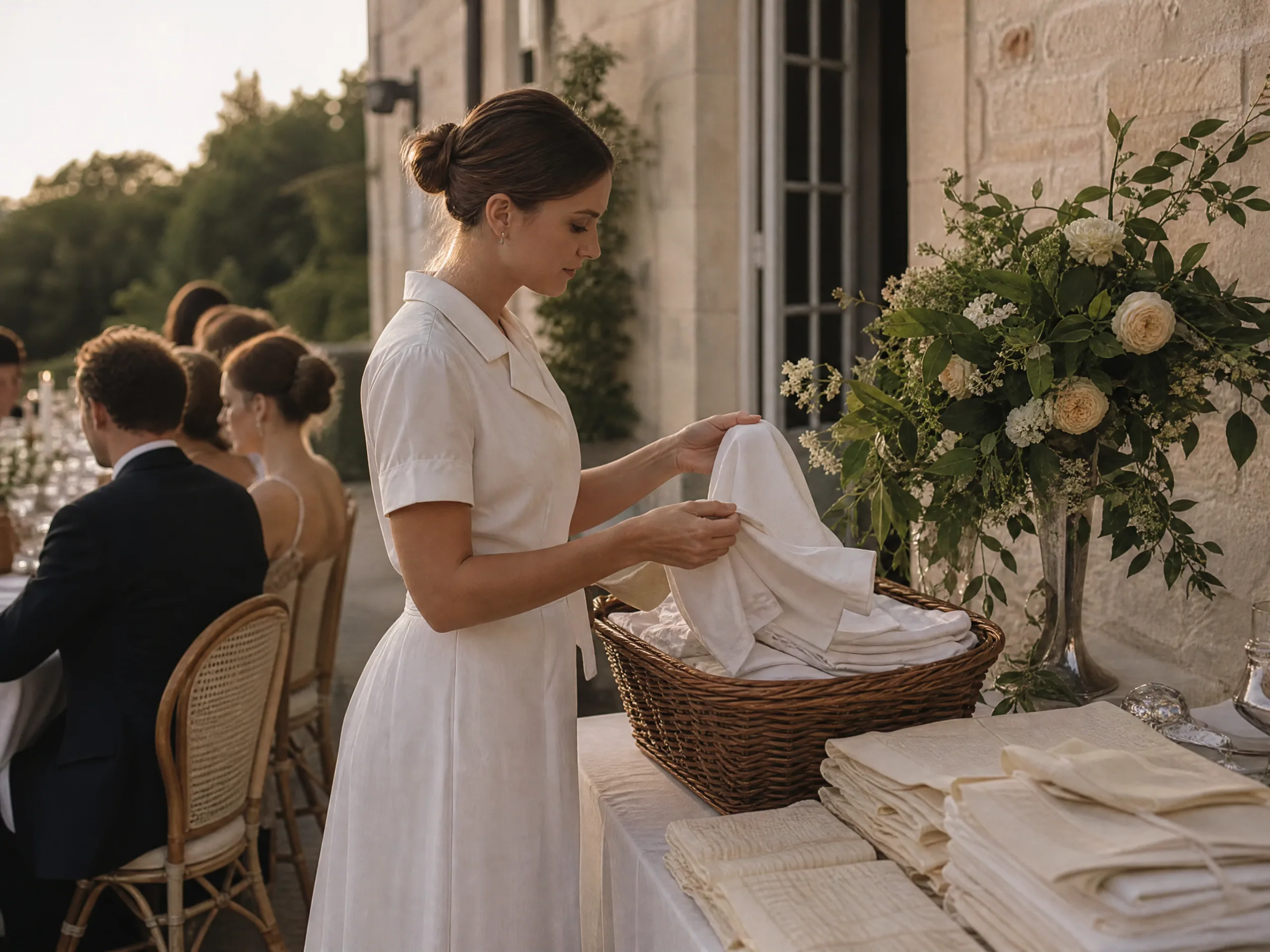
A single hotel iron hidden in a cupboard does not scale. For multi-day destination weddings, set up discreet steaming access where people already gather: a suite assigned to the couple’s parents, a planner’s production room, or a staffed welcome desk with clear hours. Provide at least one reliable garment steamer, a stable hanging rack, distilled or clean water for the steamer, and a simple laminated card with safe fabrics and a “please don’t steam sequins/vinyl unattended” note.
If the venue restricts open heat tools in guest rooms, keep steaming in a supervised production space. Assign a runner or coordinator window—for example, late morning before ceremony prep and late afternoon before cocktail hour—so guests are not interrupting hair and makeup.
Build a compact emergency clothing-care kit
Beyond steaming, pack a small kit that solves the problems that actually appear in Spain: fashion tape, stain pens safe for light fabrics, mini sewing kit with dark and light thread, safety pins, lint rollers, shoe wipes for dusty gravel paths, blot cloths, and a spare pair of simple black dress socks and nude/black straps if your guest list is large. Keep the kit with the planner or welcome desk, not in an unmarked box in a storage closet.
Decide in advance who may use it and how. Guests should not raid production supplies unsupervised. A calm “ask the welcome desk” policy prevents missing tools when the couple needs them most.
Communicate wardrobe care without sounding like a packing lecture
International guests appreciate practical notes framed as hospitality, not rules. In the wedding website or welcome message, include a short clothing-care paragraph: hotel laundry cutoffs, where steaming help is available, and a reminder that linen loves a morning steam after travel. Suggest packing one versatile backup piece and travel-size stain rescue rather than an entire duplicate wardrobe.
Avoid overloading the note with product brand lists. One clear sentence—“Express pressing is available at Hotel X until 10:00; weekend steaming help is at the welcome desk 16:00–18:00”—is more useful than a long packing essay.
Coordinate bridal party and VIP needs separately
The couple, wedding party, and immediate family usually have more looks and less margin for error. Schedule their pressing or steaming on a timeline that does not collide with hair, makeup, or first-look photography. If ceremony attire arrives via suitcase the day before, build a mandatory steam window into the rehearsal-day schedule instead of hoping garments “hang out” overnight in humidity.
For heirloom or high-value pieces, prefer professional hotel pressing over guest-room experiments. Confirm who transports garments to and from the service so nothing is left in a lobby during peak check-in.
Plan for outdoor dust, humidity, and coastal salt air
Finca gravel, vineyard dust, and sea air all leave residue. Put lint rollers and soft brushes near shuttle drop-off or the getting-ready suite. For coastal weddings, warn guests that silk and fine wool can feel damp by evening; a quick steam before photos often restores shape better than aggressive ironing.
If your welcome event is beach or boat based, assume at least one formal piece will need attention before the ceremony. That expectation alone justifies a Friday evening or Saturday morning care window on the run of show.
Budget, staffing, and who owns the problem
Decide who pays for emergency dry cleaning: the couple’s hospitality budget, individual guests, or a hybrid with a soft cap. Put a small float with the coordinator for true emergencies—ripped hem before ceremony, wine on a parent’s jacket—so decisions are not stalled by payment apps mid-crisis.
Ownership matters. Name one person (usually the planner or day-of coordinator) as clothing-care lead. Vendors should know where to send a guest with a stain instead of improvising with kitchen napkins behind the bar.
A simple weekend checklist that keeps everyone calm
Two weeks out: confirm hotel laundry hours and one backup town service. One week out: assemble the emergency kit and steamer supplies. Arrival day: post care hours at the welcome desk and test the steamer. Ceremony morning: complete VIP steaming before photography starts. Evening: restock stain pens and check whether any garments need overnight hotel pressing for brunch.
When clothing care is planned like transport or catering, guests feel looked after without noticing the system. That is the standard for a polished multi-day destination wedding in Spain: fewer wardrobe emergencies, clearer communication, and a celebration that still looks composed from welcome drinks to the last cortado on Sunday.