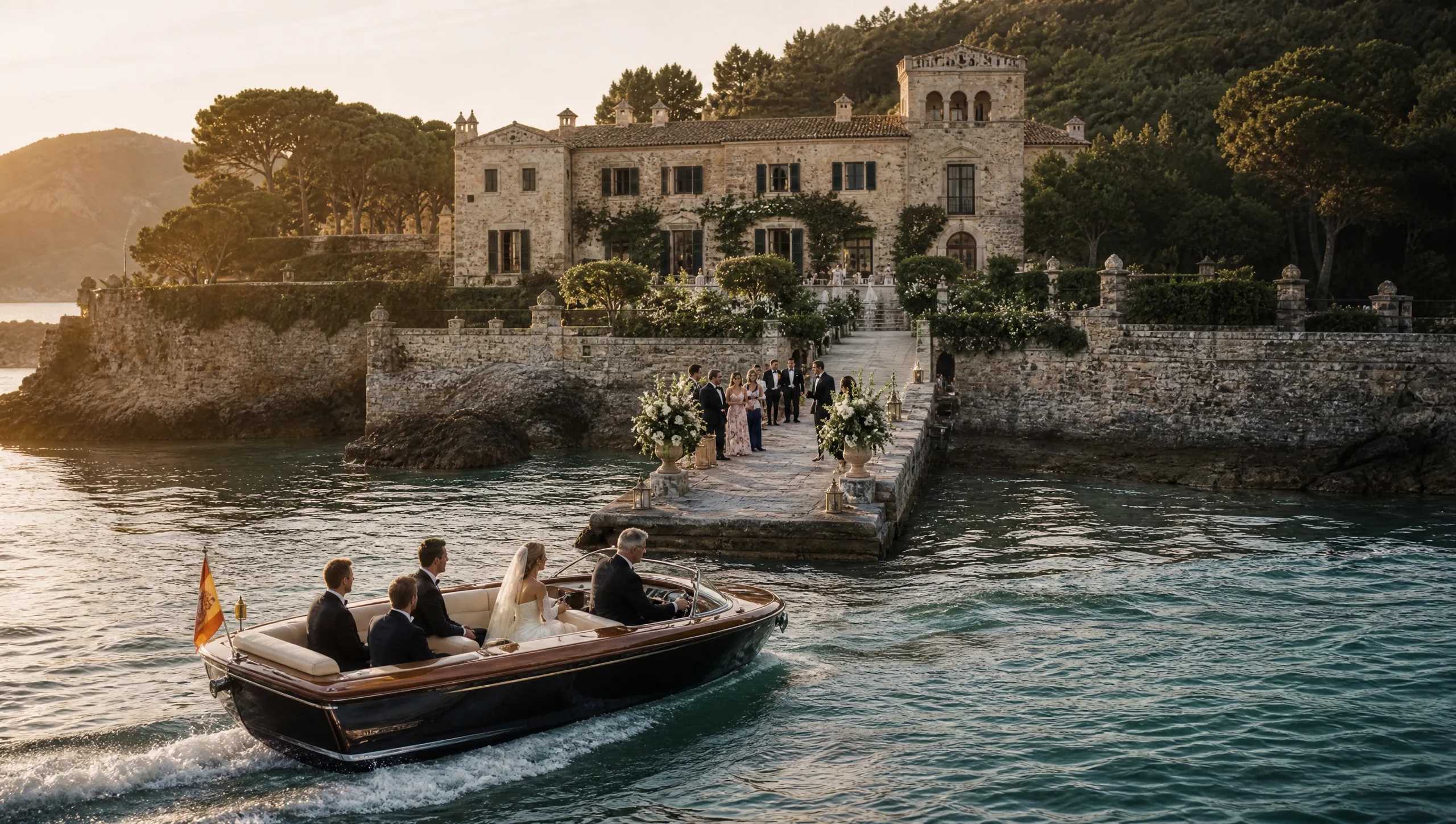
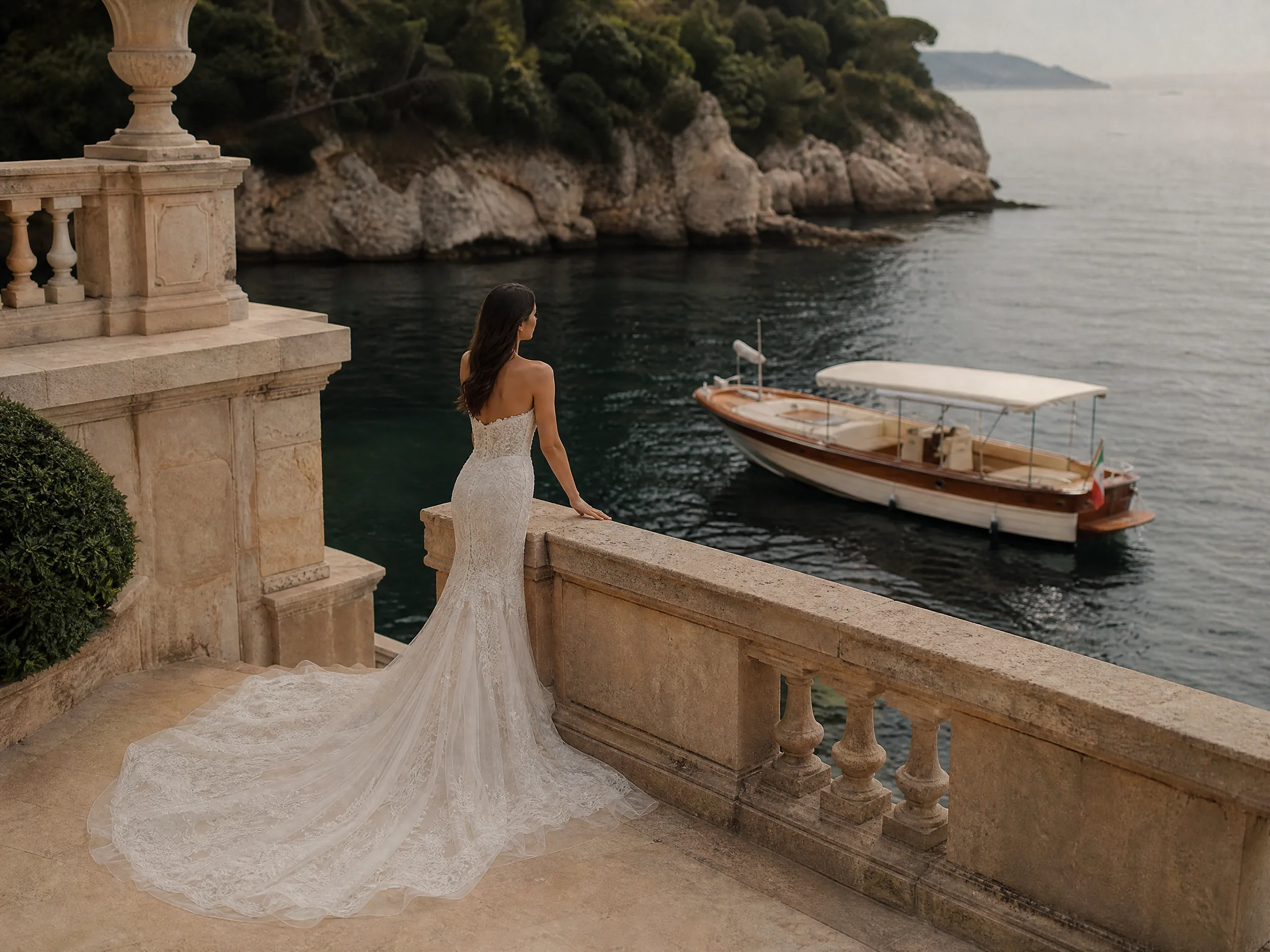
Spain’s coastline is one of the reasons couples travel here to marry: cliffside terraces, island fincas, marina clubs, and private coves that feel unreachable by ordinary coach. That beauty comes with a logistics truth. If the last stretch is water, your guest transport plan has to treat boats like a scheduled venue transfer—not a scenic afterthought.
For international couples planning from abroad, boat and water-taxi logistics are easy to underestimate. Capacity is fixed, weather can close a route, boarding takes longer in formalwear, and one late shuttle can cascade into ceremony delays. The good news: when you plan boarding windows, seating, luggage rules, and a land backup early, coastal arrivals become part of the weekend’s calm choreography.

Confirm whether water is the only practical last mile
Start with the venue’s real access map, not Instagram. Ask whether guests can arrive entirely by road, or whether a pier, marina, or private dock is required for the final approach. Some Costa Brava estates and Mallorca waterfront venues are road-accessible for vendors but prefer guest arrivals by boat for atmosphere and parking relief. Others have no realistic coach drop-off at all.
Write down three answers in your planning notes: (1) Can elderly or mobility-limited guests avoid the boat? (2) Can vendors load in by road while guests arrive by water? (3) What happens if the sea is rough at ceremony time? If the venue cannot answer clearly, involve a local planner or day-of coordinator before you sell the boat arrival as a highlight.

Choose the right vessel type for wedding timing
Not every “boat transfer” is the same. A covered water taxi works well for staggered hotel pickups. A larger charter boat can move a whole guest block together and double as a welcome-drink moment. A private RIB is fast but windy, splashy, and poorly suited to gowns, hats, and grandparents. Match vessel type to your guest mix, not just to photos.
Ask operators for seated capacity (not standing summer-party capacity), shade or cabin cover, restroom availability on longer hops, and whether music/PA is allowed if you want a soft welcome toast onboard. For multi-hotel guest groups, two medium boats on a timed loop often beat one oversized charter that leaves stragglers behind.

Build boarding windows into the wedding-day timeline
Coastal transfers fail when the timeline assumes airport-style “show up and go.” Guests need a clear call time at the pier or hotel dock, a buffer for photos and restrooms, and a hard push-off that still protects ceremony start. Work backward from the moment you want the last guest seated, then add boat duration, docking, a short walk or golf-cart shuttle from pier to ceremony, and a contingency gap for one delayed boat.
Publish the plan in the weekend itinerary with exact pier names, map pins, and what to do if someone misses the boat. Assign one bilingual host or coordinator at the departure point with a guest list. A printed boarding order—family formals first, then general guests, then wedding party—keeps docks from turning into a crowd.

Brief guests on attire, shoes, and motion comfort
Spanish coastal breezes and wet pier stones change how people dress and walk. Tell guests in advance: low, grippy shoes for boarding; a light layer for wind; and a small crossbody instead of oversized clutches that need two hands on a gangway. If your dress code is formal, still prioritize practical footwear for the transfer and offer a shoe-change moment on arrival.
Seasickness is a real planning item on choppier Mallorca or open-coast hops. Keep transfers as short as the route allows, schedule them in calmer morning or early-evening windows when possible, and stock discreet remedies with the boat host. Guests who are anxious about water should be offered the land route without drama.
Separate guest boarding from luggage and vendor load-in
Do not mix suitcase logistics with ceremony arrivals unless you have no alternative. If guests are changing hotels or moving to a coastal villa after the wedding, schedule luggage by road van while people travel light by boat. If the boat is the only option, enforce a clear bag rule: small day bags only, no hard-shell suitcases on a dressed passenger transfer.
Vendors should almost always use the road or freight access the venue designates. Floral towers, speakers, and catering cases do not belong on the same passenger water taxi as grandparents in linen. Confirm dock load-in permissions, tide constraints, and whether the venue requires a specific marine supplier for heavy gear.
Plan weather, tide, and cancellation triggers in writing
Coastal Spain can shift from glassy water to unworkable swell quickly. Ask your boat operator and venue for objective cancel criteria: wind speed, wave height, captain discretion, and how much notice you will receive. Then pre-decide the backup: coach via the coastal road, delayed boarding, relocated welcome drinks onshore, or a ceremony-start hold with guest communication templates ready in English and Spanish.
Tide and pier height matter more than couples expect. Some private docks are awkward or unsafe at certain tides, especially for guests with mobility needs. Have the operator confirm docking windows for your date, and walk the pier route in advance if you can—or ask your coordinator for a phone video of the exact boarding path.
Handle capacity, seating, and VIP priorities without awkwardness
Boats create visible scarcity. If one vessel cannot take everyone at once, publish waves (Boat 1 / Boat 2) with names or hotel groups rather than leaving it to first-come boarding. Reserve stable, shaded seats for older guests, pregnant guests, and anyone who requested assistance. Keep the couple and wedding party on a timed boat that protects portraits and ceremony cues.
Children need life jackets that fit and an adult assigned per child before departure. If your celebration includes pets or service animals, confirm operator policy early; many small water taxis cannot accommodate them. Clarity prevents dockside negotiations while the captain is trying to cast off.
Coordinate hotels, piers, and return journeys as one system
Outbound romance fails if the midnight return is improvisation. Spanish dinners run late, and coastal night transfers can be colder, darker, and more limited in operator availability. Book return boats or a land shuttle before guests arrive in Spain. State whether after-party transport is boat, van, or guest-by-guest taxi, and where the reliable pickup point is after curfew.
If guests are split across Palma, a coastal town, and a rural finca, design routes by cluster rather than promising one magical boat for everyone. A simple transport card in the welcome bag—departure point, boarding time, return option, emergency coordinator number—reduces WhatsApp chaos on the day.
Put boat logistics into your vendor and planner pack
Treat the marine transfer like any other wedding vendor: written quote, deposit terms, cancellation policy, insurance confirmation, captain contact, passenger manifest deadline, and rain/sea backup clause. Share the final plan with photographer and videographer so arrival coverage is intentional rather than rushed, and so no one blocks the only gangway during guest disembarkation.
For couples abroad, this is also a trust exercise with local partners. A planner or coordinator who already works your coastline will know which operators are punctual, which piers get congested on summer Saturdays, and which “shortcut by sea” actually saves time. When boat transfers are designed early, guests remember the coastline—not the scramble to find a dock.