

Spain has become one of Europe's most sought-after wedding destinations, and for good reason. The combination of year-round sunshine, diverse venues from medieval castles to beachfront resorts, relatively straightforward legal processes, and excellent infrastructure makes it accessible for international couples. After filming weddings across Spain for years, I've seen couples successfully navigate the planning process from countries as far as Australia and the United States.
The key to a smooth destination wedding in Spain lies in understanding the timeline, legal requirements, and knowing which vendors to prioritize early in your planning process. This guide breaks down everything you need to know to plan your Spanish wedding from abroad, including common pitfalls I've watched couples encounter and how to avoid them.
Why Spain Works Perfectly for International Destination Weddings
Spain offers international couples several distinct advantages over other European wedding destinations. The country's excellent flight connections mean guests can reach major cities like Barcelona, Madrid, or Mallorca from most international hubs with just one connection. The infrastructure is modern and reliable, with high-speed internet making vendor communication seamless during planning.
The legal framework for civil ceremonies is straightforward compared to countries like Italy or France. Spain recognizes marriages performed by civil registrars, and the paperwork, while requiring advance preparation, follows a clear process. The cultural approach to weddings here also aligns well with international expectations – Spanish vendors are accustomed to working with foreign couples and often speak multiple languages.
From a practical standpoint, Spain's diverse regions offer something for every couple. Mediterranean coastal areas provide the classic beach wedding setting, while inland regions like Andalusia offer historic venues and cultural richness. The Balearic Islands combine island charm with easy accessibility, and northern regions like the Basque Country provide dramatic landscapes and unique cuisine.

The 12-18 Month Planning Timeline: What to Book When
Starting your planning 12-18 months in advance gives you the best venue selection and vendor availability. Here's the timeline I recommend based on watching successful international weddings come together:
18-15 Months Before
- Choose your region and research venue options
- Set your budget and guest count
- Begin the legal paperwork process (more on this below)
- Book your venue – popular locations fill up quickly
15-12 Months Before
- Secure key vendors: photographer, videographer, and wedding planner if using one
- Book guest accommodations, especially for peak season weddings
- Send save-the-dates to international guests
- Finalize ceremony location and officiant
I always recommend couples prioritize their wedding videographer during this phase. Your wedding film becomes even more precious when family and friends have traveled internationally to celebrate with you, and the best videographers book up early, particularly for summer weddings in popular destinations like Mallorca.
12-9 Months Before
- Book remaining vendors: florist, caterer, music/entertainment
- Finalize menu and dietary requirements
- Arrange group transportation for guests
- Complete legal documentation and submit to Spanish authorities
9-6 Months Before
- Send formal invitations
- Finalize ceremony details and readings
- Arrange rehearsal dinner venue
- Coordinate with vendors on timeline and logistics
6-3 Months Before
- Confirm final guest count and seating arrangements
- Complete final venue walkthrough (virtually or in person)
- Arrange marriage license pickup
- Finalize day-of timeline with all vendors
Legal Requirements and Civil Ceremony Paperwork
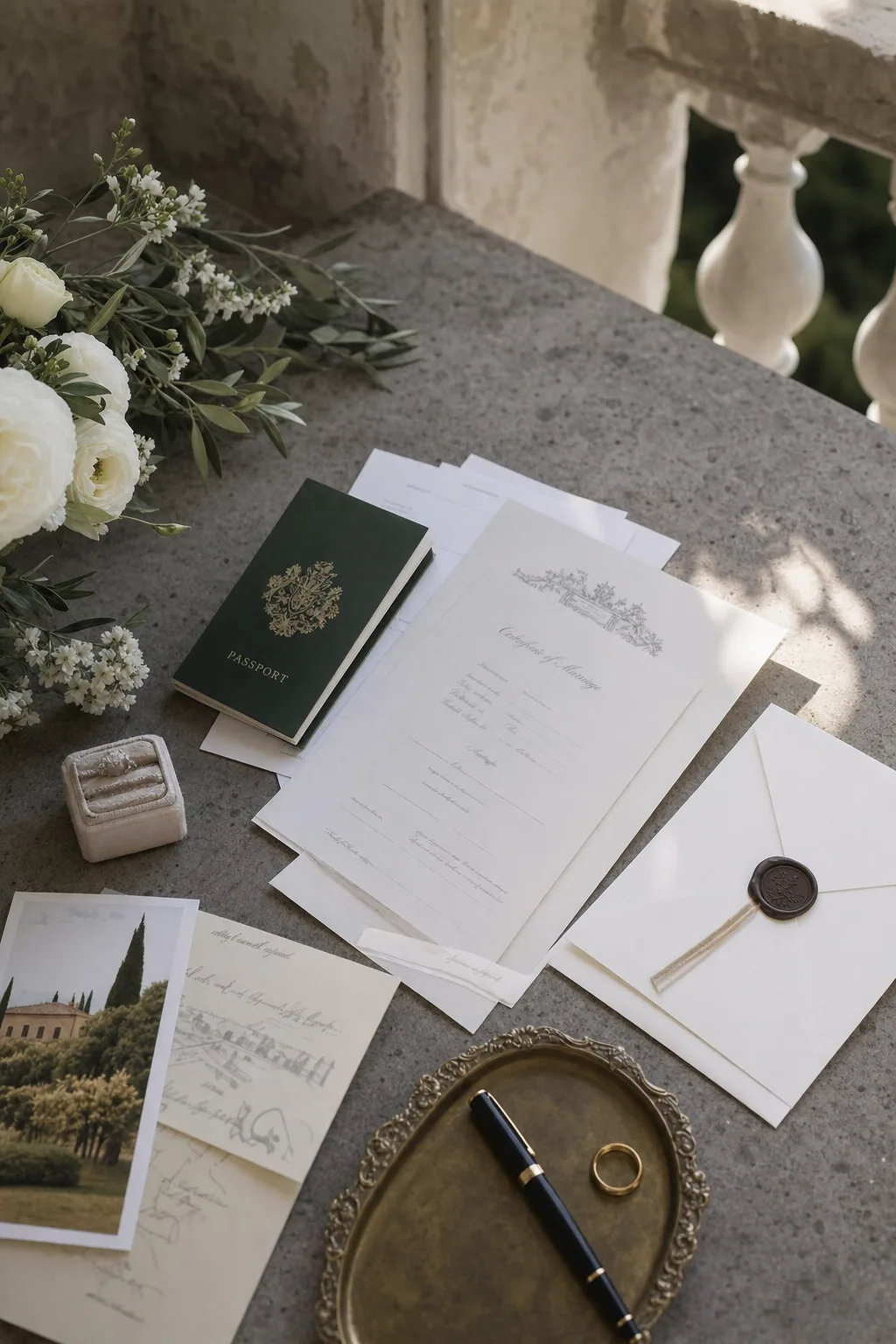
The legal aspect of marrying in Spain requires advance planning but follows a clear process. Both partners must provide a Certificate of No Impediment (CNI) from their home country, which confirms you're free to marry. This document must be apostilled and translated into Spanish by an official translator.
You'll also need birth certificates, passports, and if either partner was previously married, divorce decrees or death certificates. All documents require apostille certification and official Spanish translation. The process typically takes 2-3 months, so start early.
For the ceremony itself, you have several options. Civil ceremonies can be performed by a judge, mayor, or civil registrar at approved venues. Many couples choose a symbolic ceremony at their dream location followed by the legal ceremony at a registry office, which offers more flexibility in venue choice.
Religious ceremonies are also possible, but require additional documentation and coordination with Spanish religious authorities. The Catholic Church in Spain has specific requirements for international couples, including pre-marriage courses that may need to be completed in advance.
Budget Planning and Vendor Coordination from Abroad
Spanish destination wedding budgets vary dramatically based on location, season, and guest count. Coastal locations and islands typically command premium pricing, while inland venues often offer better value. Summer months (June-September) are peak season with corresponding price increases.
When coordinating with vendors from abroad, establish clear communication preferences early. Many Spanish vendors prefer WhatsApp for quick communications, while email works better for detailed planning documents. Video calls are essential for final planning meetings – I recommend scheduling these during Spanish business hours when possible.
Payment terms vary among Spanish vendors. Many require 50% deposits to secure dates, with final payments due 30-60 days before the wedding. International bank transfers are standard, but factor in transfer fees and exchange rate fluctuations when budgeting.
Consider hiring a local wedding planner if your budget allows. They handle vendor coordination, timeline management, and day-of logistics, which becomes invaluable when you're planning from another time zone. Even partial planning services can help with vendor recommendations and contract negotiations.


Guest Travel, Accommodation, and Communication Strategy
International guests need more advance notice and detailed information than domestic weddings require. Send save-the-dates 8-10 months in advance, including suggested accommodation options and travel information. Create a wedding website with detailed logistics, local recommendations, and contact information for key vendors.
Block hotel rooms early, especially for popular destinations and peak season dates. Many Spanish hotels offer group rates for 10+ rooms and will hold blocks without deposits. Provide guests with multiple accommodation options at different price points – luxury resorts, mid-range hotels, and vacation rental alternatives.
Consider the travel logistics carefully. If your wedding is in a smaller town or island location, factor in connection times and transportation from airports. Arrange group transportation for the wedding day, as Spanish taxis may not be readily available in rural venues, and ride-sharing services are limited outside major cities.
Create a detailed guest information packet including local customs, appropriate attire for Spanish venues (many have dress codes), weather expectations, and emergency contact information. Include your wedding planner's contact details and local emergency numbers.
Common Planning Mistakes and How to Avoid Them
The biggest mistake I see international couples make is underestimating the importance of timing. Spanish businesses often close for lunch (2-5 PM) and have different holiday schedules than other countries. Plan vendor communications accordingly and build buffer time into your timeline for document processing and vendor responses.
Another common error is not considering seasonal weather patterns. While Spain enjoys excellent weather year-round, each region has distinct seasons. Mallorca's weather, for example, can be unpredictable in late spring, while Andalusia experiences intense summer heat that affects outdoor ceremony timing.
Many couples also overlook the importance of backup plans. Spanish venues, especially outdoor locations, should always have weather contingencies. Discuss backup options during venue selection, not as an afterthought.
Don't assume all vendors speak English fluently. While many do, having key documents translated and using translation apps for complex discussions prevents misunderstandings. When possible, work with vendors who have experience with international weddings.
Your Essential Spain Destination Wedding Checklist
Here's your complete checklist for planning a destination wedding in Spain from abroad:
Legal and Documentation (Start 12+ months ahead)
- Obtain Certificate of No Impediment from home country
- Get apostille certification on all required documents
- Arrange official Spanish translations
- Submit paperwork to Spanish civil registry
- Confirm ceremony officiant and legal requirements
Venue and Vendors (12-18 months ahead)
- Book ceremony and reception venues
- Secure photographer and videographer
- Arrange catering and bar service
- Book florist and decoration services
- Confirm music/entertainment options
Guest Logistics (8-10 months ahead)
- Send save-the-dates with travel information
- Block hotel accommodations
- Research group transportation options
- Create wedding website with detailed information
- Arrange welcome events and activities
Final Coordination (3-6 months ahead)
- Confirm final guest count and dietary needs
- Complete venue walkthrough and timeline review
- Arrange marriage license pickup
- Coordinate with all vendors on final details
- Prepare emergency contact information for guests
Planning a destination wedding in Spain from abroad requires organization and early preparation, but the result – celebrating your marriage in one of Europe's most beautiful countries surrounded by loved ones – makes every detail worthwhile. The key is starting early, communicating clearly with vendors, and building buffer time into your timeline for the unexpected. With proper planning, your Spanish destination wedding will exceed every expectation.