Spanish rental villas from Extremadura and inland Andalusia to Castilla-La Mancha, Catalonia’s dry hills, Mallorca’s interior, and the Costa Blanca hinterland often keep an encina—holm oak (Quercus ilex)—as a driveway, courtyard, or open-finca specimen with dark evergreen foliage and autumn–winter acorn drop. Guests confuse it with olivo or ciprés, let children climb for “acorn souvenirs,” or snap low branches for rustic décor before ceremony photos. It is not an olivo, not a ciprés, not a madroño, not a leylandii hedge block, and not a grove like an olivar. A short briefing on acorns underfoot, evergreen shade, and caretaker-only pruning protects the tree through the wedding weekend.
Why Encina Belongs in the Guest Briefing
Holm oaks define large stretches of Spanish landscape: dense, almost black-green canopies, tough leaves with pale undersides, and a silhouette that reads as “Spain” in aerials and golden-hour stills. Destination-wedding houses use mature encinas as shade over gravel courts, parking bays, welcome-drink stations, or ceremony approaches—and as quiet green backdrops once paths are cleared of acorns. International visitors often assume any evergreen is fair game for climbing, hammock ropes, or DIY foliage cuttings. Say who owns the tree, whether acorns may be collected as keepsakes, and who may prune or hang décor—before the first guest Instagram reel, not after the caretaker finds stripped limbs and rope scars on the trunk.
What Guests Are Looking At (And What It Is Not)
Encina (also called carrasca in some regions) is the everyday Spanish name; botanically you are looking at Quercus ilex, the holm oak or holly oak. Expect a broad evergreen canopy, small hard leaves that can feel almost holly-like, and acorns (bellotas) that drop in waves from autumn into winter depending on rainfall and region. It is not an olivo (olive with silvery foliage and fruit oil culture), not a ciprés (narrow columnar cypress used as a vertical accent), not a madroño (strawberry tree with red berries and peeling bark), not a tejo (yew), and not a formal hedge like leylandii or arizónica. If the “berries” are hard brown acorns in cups and the leaves stay dark green year-round, guests are almost certainly under an encina.
Where It Usually Grows on Wedding Villas
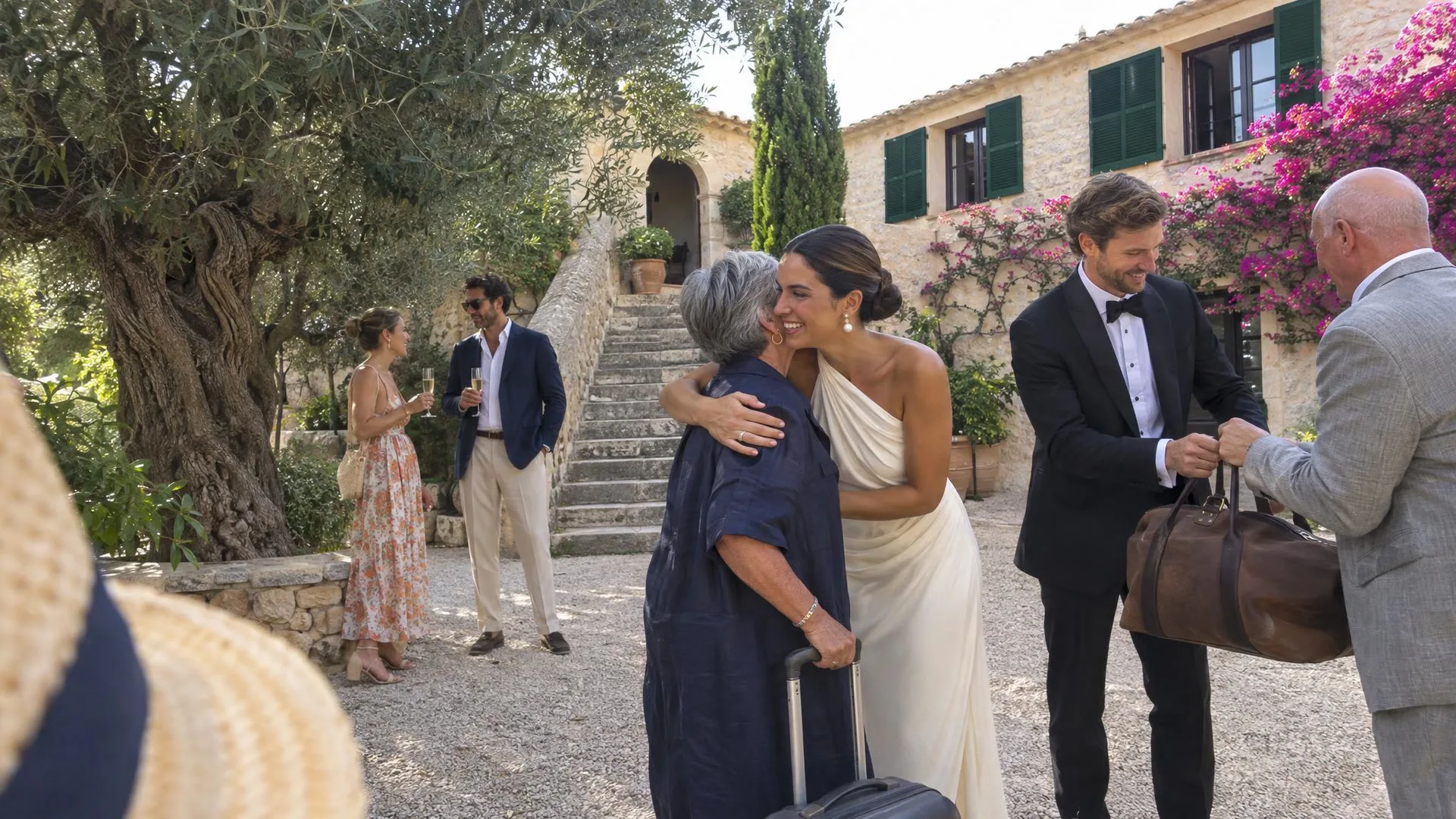
On Spanish wedding rentals, encinas commonly sit beside the long drive from the street gate, as a single specimen over a gravel sitting area, along a stone wall that marks the plot edge, or as leftover dehesa trees when a finca was subdivided into a villa garden. Older rural properties planted or kept them for shade, firewood tradition, and Iberian-pig landscape memory; newer villas sometimes inherited one when the plot was cleared around the house. Ask the property manager which tree is protected landscape infrastructure versus decorative specimen. If the canopy overhangs the ceremony lawn, the path to the pool bathrooms, or guest parking, flag it on the guest map so arrivals do not pause for “acorn collecting” with luggage still in hand.
Acorn Drop, Path Safety, and Footwear
Acorns roll underfoot on stone, gravel, and terracotta—ankle twists for heels and kids’ scooters are more common than guests expect. Caps and crushed nuts also stain pale limestone when wet and attract wildlife overnight. Brief guests to walk carefully on acorn carpets, wipe soles on outdoor mats before entering the house, and never leave garment bags or white dresses on benches under a heavily dropping canopy. For evening events, ask the caretaker to sweep high-traffic paths the morning of the wedding and again before golden-hour portraits—rolling acorns photograph as clutter and feel worse under ceremony shoes.
Kids, Climbing, and Why DIY Harvest Is Off-Limits
Holm oaks look climbable: low limbs, sturdy forks, and a “treehouse” vibe that children notice immediately. Bark scrapes, broken branch tips, and guests stuck mid-canopy become a pre-ceremony crisis faster than any floral delay. Acorns are not snack food for wedding guests—raw oak acorns are bitter and traditionally need processing; unsupervised kids should not pocket handfuls or throw them at the pool. Default rule for destination weekends: a fallen acorn the caretaker has cleared as a keepsake is one thing; climbing, shaking, or stripping limbs is caretaker-only unless the hosts explicitly open a supervised moment. Put that sentence in the WhatsApp guest channel the day before arrivals.
Shade, Film Backdrops, and Branch Etiquette
A mature encina throws dense, cool shade that holds through midsummer heat—ideal for welcome drinks, kid downtime, and portrait backdrops that stay green when lawns brown. Do not screw cup hooks into the trunk, wrap fairy lights so tight they girdle bark, or cut “rustic oak foliage” for table runners without the gardener. Encina wood and foliage are slow to recover; one afternoon of DIY décor can leave scars visible for years of future rentals. Tell the videography and photography teams which canopy is fair for hanging a reflector clamp versus which is off-limits—and keep drone takeoffs clear of the outer crown on windy afternoons.
Water, Roots, and Shared Courtyard Rules
Holm oaks are drought-tough once established, but villa guests still damage them by parking cars over the drip line, dumping ice and soft-drink melt against the root flare, or blocking the gardener’s access with loungers under the canopy. Do not dig decorative trenches for cable runs through the root zone, and do not “help” by flooding the base after every hot day. Shared courtyards and urbanización edges mean neighbor watering and pruning schedules still apply: keep late-night speakers away from bedrooms that open onto that patio, and leave any scheduled crown reduction to the property’s arborist—not the ushers with borrowed shears.
Season, Checkout, and Neighbor Courtesy
Heavy acorn drop often coincides with autumn and early-winter weddings in inland Spain, while summer weekends bring denser shade demand and climbing temptation. Plan a quick sweep into the day-of timeline rather than hoping guests will “just be careful.” At checkout, report any broken limbs, rope marks, or scooters left under the canopy instead of leaving damage for the next rental party to discover. If the encina overhangs a shared urbanización path or a neighbor’s wall, keep cleanup and décor on your plot; do not send guests collecting acorns over the fence.
One-Paragraph Guest Note You Can Paste
Please treat the villa encina (holm oak / Quercus ilex) as shared garden and landscape infrastructure, not a climbable play structure or free décor source: do not climb, prune, hang ropes, or harvest without the caretaker; walk carefully on acorn drop so you do not twist ankles or track mess indoors; keep kids and garment bags out from under heavy fall zones; and leave foliage cuttings to the hosts and gardener. Thank you for helping us keep the courtyard and drive photo-ready through the wedding weekend.