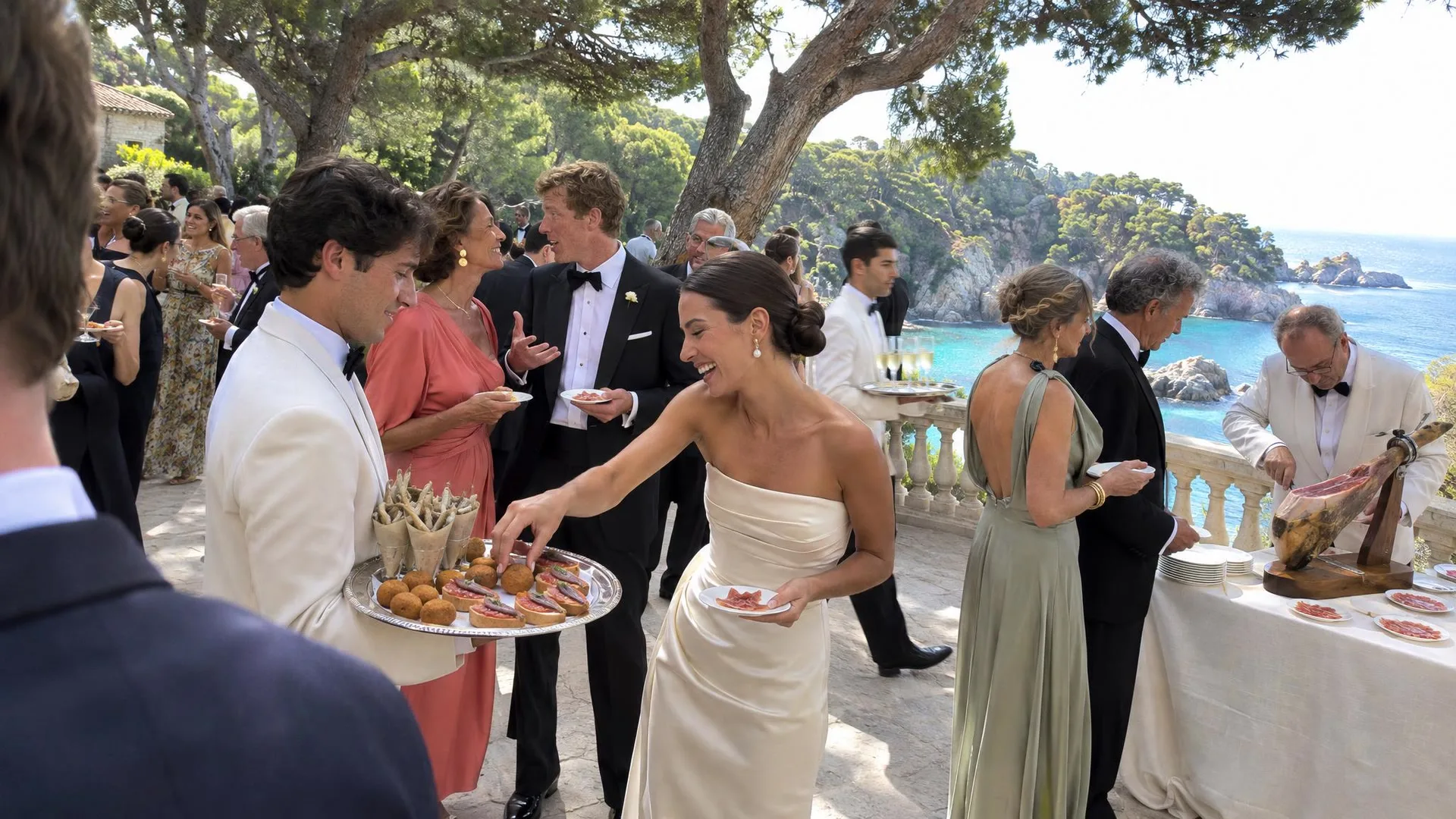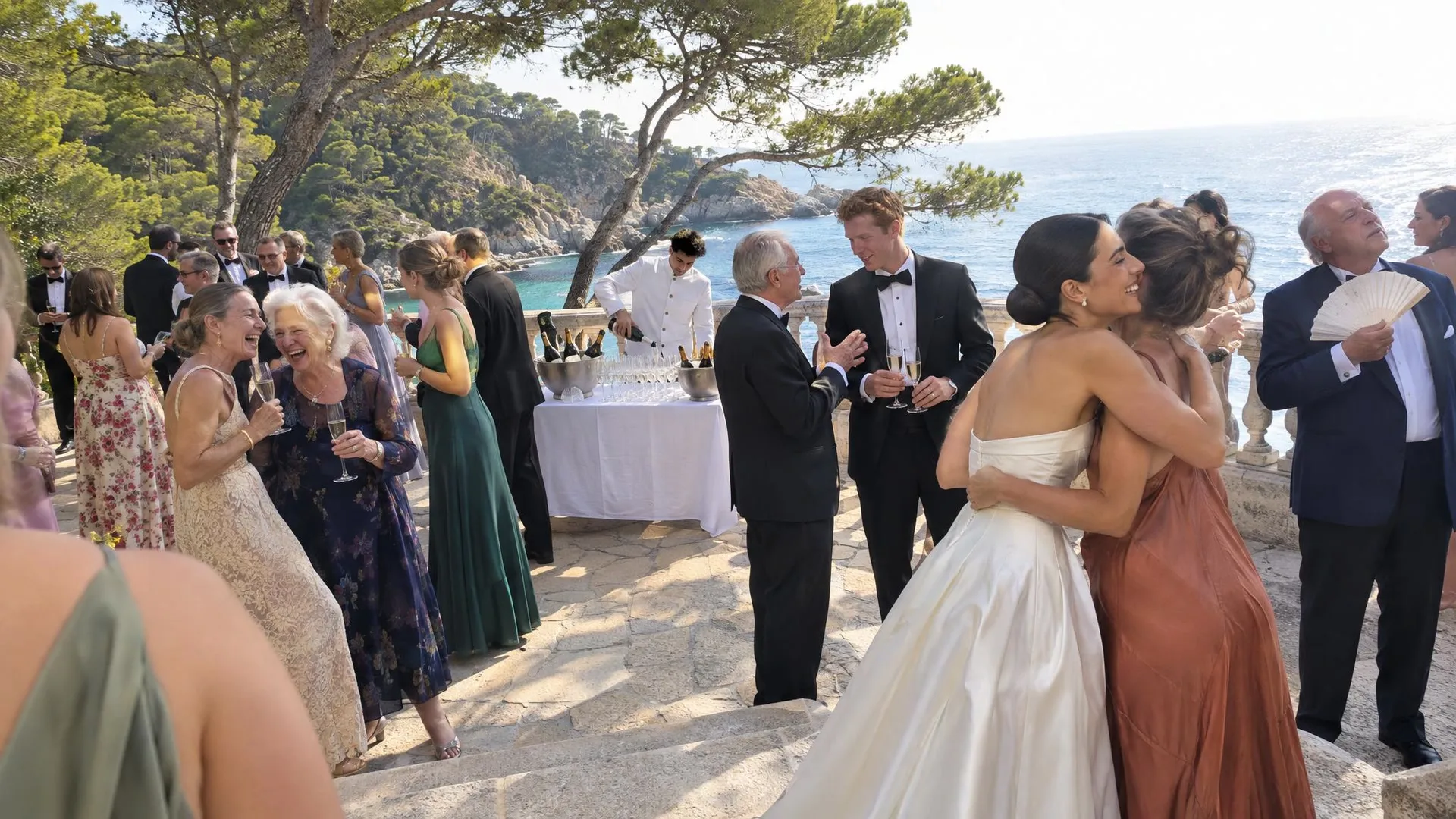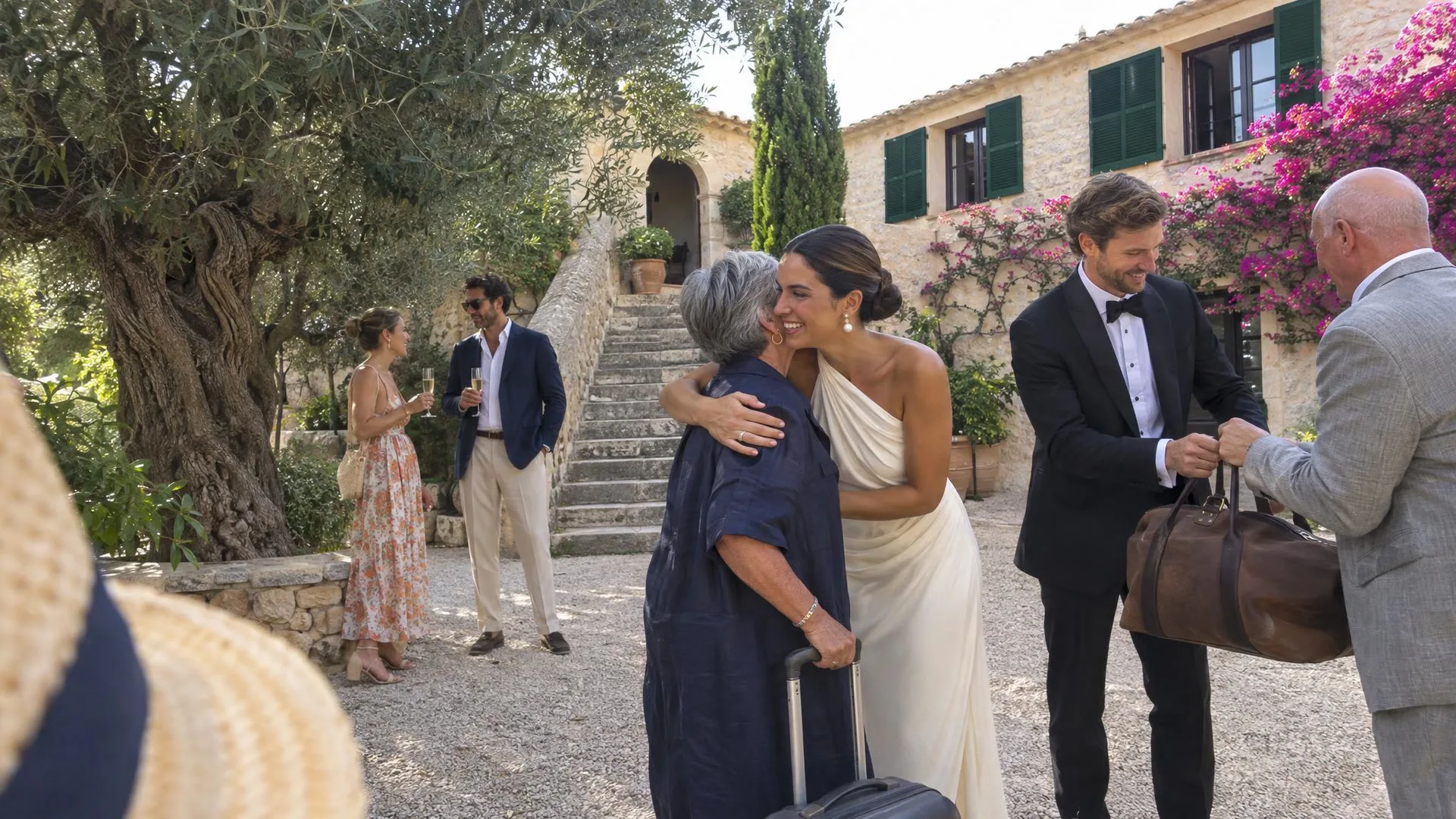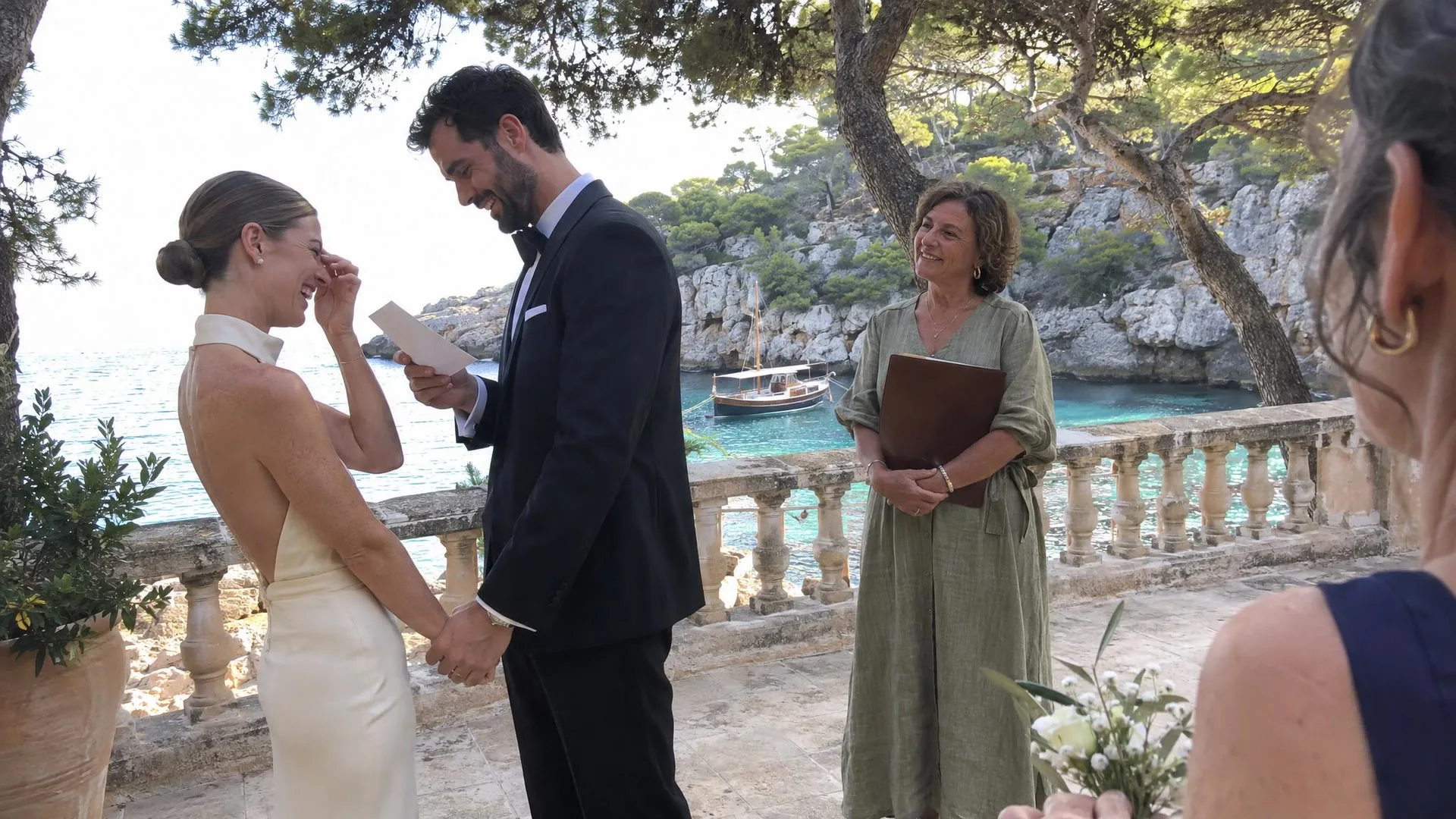
Many Spanish rental villas from the Costa Blanca and Valencia to Andalusia, Catalonia, and the Balearics keep an árbol de la seda—Albizia julibrissin—beside the pool terrace, along the drive, or as a soft canopy over outdoor dining. Guests see the pink powder-puff blooms, assume it is the winter mimosa from other guest notes, sit under falling stamens in pale clothes, or treat every low branch as a free floral prop. It is not mimosa / Acacia dealbata, not falsa acacia / Robinia, and not a cut-and-come-again florist shrub. A short briefing on blooms, shade etiquette, litter, and look-alike names keeps the tree—and guest outfits—comfortable through the wedding weekend.
Why Árbol de la Seda Belongs in the Guest Briefing
Albizia is classic warm-season Mediterranean softscape: feathery bipinnate leaves that fold at dusk, a wide umbrella canopy that cools pool terraces in July heat, and sudden pink silk flower heads that photograph like soft fireworks against white villa walls. Destination-wedding houses use mature specimens as a cocktail-hour canopy, a morning-coffee shade marker, or a fragrant edge to the parking court. International visitors often assume every feathery yellow-or-pink “acacia-looking” tree is the same plant, that the silk tufts are fair game for boutonnières, or that the tree named “seda” somehow relates to indoor décor silk. Clarify the Spanish garden name early so guests treat the albizia as living estate planting—not a DIY flower market or a second mimosa note.
What Guests Are Looking At (And What It Is Not)
Spanish villa árbol de la seda usually means Albizia julibrissin: soft fern-like leaves, flat pink powder-puff flower heads with long stamens in summer, and a spreading canopy that can shade an entire table. It is not winter-blooming mimosa / Acacia dealbata (yellow pompons, cooler months), not falsa acacia / Robinia pseudoacacia (white hanging clusters, often thorny), not jazmín climbers, and not tropical plumeria. If the guest notes already mention mimosa from an earlier season or another villa planting, add one line: the pink summer silk tree is árbol de la seda / Albizia—different plant, different colour, different months, different rules.
Pink Silk Blooms, Season, and Photo Timing
Peak bloom often lands in high summer into early autumn—exactly when many destination weekends book long Spanish evenings. The pink tufts look bridal and irresistible in phone photos, especially against blue sky or terracotta. Brief guests to enjoy the colour from the terrace edge rather than climbing into the crown, and to schedule couple portraits under the canopy when petals are dry—after dew or a midday irrigation cycle the stamens cling to veils, dark suits, and light linen. Golden-hour under the silk tree is beautiful; just keep heels off wet irrigation rings and ask the planner which side of the trunk is the designated photo pocket.
Shade, Leaf Fold, and Evening Ceremony Comfort
Albizia’s canopy is one of the villa’s best natural cooling tools on hot wedding days. Leaves often fold partially at dusk—the “sleep movement” that surprises guests who think the tree is wilting. Reassure them it is normal, not a water emergency. For evening ceremonies or welcome drinks, place a few chairs under the canopy only if the host allows furniture on that root zone; otherwise use the shade for standing canapés and keep heavy tables on the paved terrace. Remind guests that deep shade can hide uneven roots and fallen seed pods—watch footing when carrying drinks or phones.
Fallen Stamens, Seed Pods, and Outfit Logistics
Silk-tree blooms shed long stamens and fine litter that stick to wool, chiffon, and wet swimwear. Brief the bridal party: pale shoes and trains parked under full bloom may pick up pink flecks before the aisle walk. Seed pods later in the season can be slippery on pool decks after wind. Ask guests not to sweep litter into the pool skimmer with brooms from the plant room, and not to hose stamens toward outdoor sockets or the cuadro eléctrico. A quick lint-roller station by the terrace door is more useful than improvised branch shaking before vows.
Cutting, Climbing, and Driveway Etiquette
Do not cut Albizia branches for centrepieces unless the couple’s florist or villa manager has approved a specific prune. Low limbs are not climbing frames for kids during the welcome barbecue, and driveway overhangs are not drone parking. Guests arriving by rental car should avoid brushing roof racks into the canopy; sticky sap and flower litter travel badly onto pale vehicle paint before airport returns. If the tree hangs over a shared urbanización lane, keep music speakers and generators clear of the trunk flare so roots and bark stay undamaged for the next booking.
Fragrance, Pollen Sensitivity, and Seating Plans
Albizia scent is usually lighter than night-blooming jasmine or dama de noche, but pollen and fine floral dust still bother sensitive guests in peak bloom. Offer a seating choice: some relatives will want the romantic pink canopy; others need a clearer breeze line farther from the drip line. Coordinate with the planner so allergy-prone speakers are not stationed directly under heavy flower clusters for long toasts. This is guest comfort logistics—not a reason to ban the tree from photos.
How It Differs From Mimosa and Other “Acacia” Names
English-speaking guests often call several feathery trees “acacia.” On Spanish villa weekends you may meet winter yellow mimosa (Acacia dealbata), summer pink árbol de la seda (Albizia), and roadside falsa acacia (Robinia) with white racemes. Put the distinctions in one guest-note sentence: yellow winter pompons = mimosa; pink summer silk puffs = árbol de la seda; white hanging clusters with thorns risk = falsa acacia—do not harvest any of them without host approval. That single clarification prevents three confused WhatsApp threads and keeps floral DIY from stripping the wrong tree the morning of the film.
What To Put On The Villa WhatsApp Note
Keep the message short: “Pink summer silk tree by the pool is árbol de la seda (Albizia)—enjoy shade and photos from the terrace, watch fallen stamens on pale clothes, no climbing or cutting branches, and it is not the yellow winter mimosa.” Add the photo pocket side of the trunk if the planner has one, plus a reminder to keep rental cars clear of overhanging limbs on arrival night. One clear note beats a weekend of guesswork—and leaves the canopy intact for vows, canapés, and the wedding film.