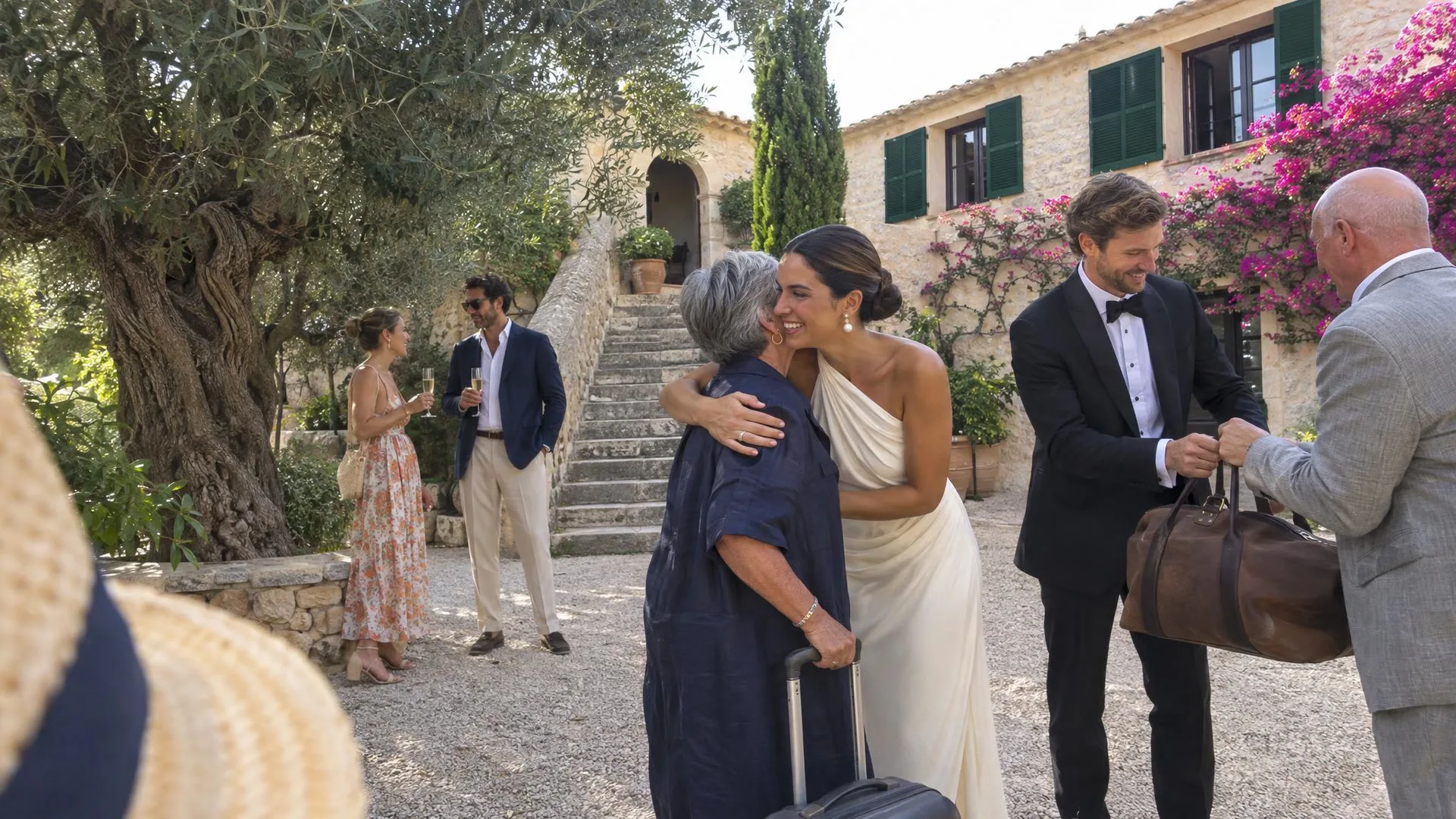
Many Spanish rental villas from the Costa Blanca and Valencia to Andalusia, Catalonia, and the Balearics keep a falsa acacia—Robinia pseudoacacia, also called black locust—along the drive, above a parking court, or as a roadside tree just outside the gate. Guests see white hanging flower chains, assume it is the winter mimosa or the pink árbol de la seda from other guest notes, lean into thorny stems in pale clothes, or treat every fragrant branch as a free floral prop. It is not mimosa / Acacia dealbata, not árbol de la seda / Albizia julibrissin, and not a soft florist shrub. A short briefing on blooms, thorns, litter, and look-alike names keeps the tree—and guest outfits—comfortable through the wedding weekend.
Why Falsa Acacia Belongs in the Guest Briefing
Robinia is classic Mediterranean softscape and Spanish countryside planting: compound leaves, clusters of white pea-like flowers that hang in fragrant racemes, and tough wood that thrives in heat and poor soil. Destination-wedding houses use mature specimens as a driveway shade line, a morning-coffee marker near the gate, or a fragrant edge to the parking court in late spring. International visitors often assume every “acacia-looking” tree is the same plant, that the white chains are fair game for boutonnières, or that “falsa” somehow means the tree is harmless decoration. Clarify the Spanish garden name early so guests know what they are standing under—and what not to grab.
What Guests Are Looking At (And What It Is Not)
In Spanish garden talk, falsa acacia almost always means Robinia pseudoacacia: upright to spreading canopy, pinnate leaves, and white hanging flower racemes that look nothing like yellow mimosa pompons or pink albizia silk tufts. Guests confuse the names because English “acacia,” French “acacia,” and Spanish mimosa / falsa acacia / árbol de la seda get mixed in WhatsApp threads. Put the Latin name once in the villa note. If the property also has mimosa or albizia elsewhere on the plot, say so in one line so guests stop treating three different trees as one Instagram prop.
White Racemes, Season, and Photo Timing
Peak bloom is typically late spring into early summer—often May into June depending on altitude and coast vs inland—when the white hanging chains scent the evening air and photograph beautifully against stone walls and terracotta. For ceremony or cocktail frames, Robinia is a soft background layer, not a cut-flower station. Ask guests not to strip racemes for hairpieces or table scatter; the tree looks fuller on film when left intact, and stolen blooms wilt fast in Spanish heat. If you want white florals in guest hands, brief the florist separately rather than improvising from the driveway tree.
Thorns, Branches, and Driveway Etiquette
Many Robinia specimens carry sharp spines on twigs and young stems. Guests in linen, silk, or bare shoulders discover this the hard way when they lean in for a close-up or park a convertible under low branches. Mark overhangs on the arrival map, keep tall vans and open-top cars away from the densest thorn lines, and remind guests that climbing for “better photos” is off-limits. Children should not treat the tree as a play structure. A one-sentence warning prevents torn outfits and scratched skin before the welcome drinks.
Fallen Flowers, Seed Pods, and Outfit Logistics
After bloom, spent flowers and later flat seed pods litter terraces, pool decks, and dark shoes. Pale dresses and navy suits pick up sticky petal residue and crushed pods faster than guests expect. Sweep high-traffic paths before group photos, place a small mat or brush by the main door, and warn guests that sitting under a flowering Robinia in white linen may mean a mid-afternoon change. Seed pods are not confetti—leave them on the ground and out of pockets.
Fragrance, Pollen Sensitivity, and Seating Plans
Robinia flowers can be strongly sweet. Guests with pollen sensitivity or fragrance headaches may prefer seating and cocktail zones away from the densest bloom line, especially on still evenings. Offer an alternate shaded terrace if the main courtyard sits under a flowering canopy. Couples do not need a medical lecture—just a courtesy line in the guest note and a second seating option marked on the villa map.
Cutting, Climbing, and Florist Temptation
Destination weekends create a familiar temptation: someone decides the driveway tree is free floristry. Robinia stems are not soft garden roses; cutting them damages the tree, risks thorn injuries, and rarely lasts in water. Tell the wedding party in advance that greenery and blooms come only from the florist or approved villa cuttings list. If the venue allows limited pruning for the ceremony aisle, schedule it with the house manager—never as a guest DIY hour.
How It Differs From Mimosa and Árbol de la Seda
Mimosa / Acacia dealbata brings winter–early-spring yellow pompons and softer, silvery foliage—not white hanging pea flowers. Árbol de la seda / Albizia julibrissin brings summer pink powder-puff stamens and a dusk-folding bipinnate canopy—not thorny Robinia racemes. If your guest notes already mention those plants, add one contrast sentence: white hanging falsa acacia ≠ yellow mimosa ≠ pink silk tree. Guests stop over-picking and your film keeps the garden looking intentional.
What To Put On The Villa WhatsApp Note
Keep it short: “The white hanging flowers by the gate are falsa acacia (Robinia)—fragrant, sometimes thorny, lovely in photos, please don’t cut or climb. Not the same as mimosa or the pink silk tree. Watch low branches when parking, and shake petals off shoes before indoor floors.” Add the house manager’s contact for parking questions. That one message covers etiquette, safety, and the look-alike confusion that usually fills the group chat on arrival day.