

Many destination wedding plans look complete on a mood board and still fall apart at the table count. In Spain, what a venue “includes” and what you must rent are rarely obvious from abroad. Tables, chairs, linens, glassware, and service pieces determine guest comfort, photography sightlines, and whether dinner starts on time.
This guide is for international couples planning a wedding in Spain remotely who want rental coordination to feel intentional — not like a last-minute scramble between a WhatsApp thread and a delivery truck on a rural road.

Start With What the Venue Actually Owns
Before you rent anything, ask for a written inventory: tables (sizes and shapes), chair types and quantities, basic linens if any, glassware, flatware, and serving pieces. Spanish masías, castles, and boutique hotels vary widely. Some provide banquet basics for a seated dinner; others are essentially beautiful empty shells where almost everything is rented.
Request photos of the actual stock, not catalog renders. A “cross-back chair” in one region may look different from another rental house’s version, and that difference shows up in detail photos and guest comfort. Confirm whether inventory is exclusive to your date or shared across overlapping events.

Build One Master Count Before You Shop Styles
Style decisions are easier after the numbers are honest. Create a single spreadsheet that includes ceremony seating, cocktail seating if any, dinner seating, kids’ tables, vendor meals, and a buffer for last-minute plus-ones. Add head-table or sweetheart-table requirements separately so they are not absorbed into the general count by mistake.
For glassware, count by course and service style: water, wine, cava or champagne, and any specialty cocktail glass. Outdoor Spanish evenings often mean longer cocktail hours; under-counting glassware creates washing bottlenecks mid-service. Your caterer should validate these numbers, not only the rental company.

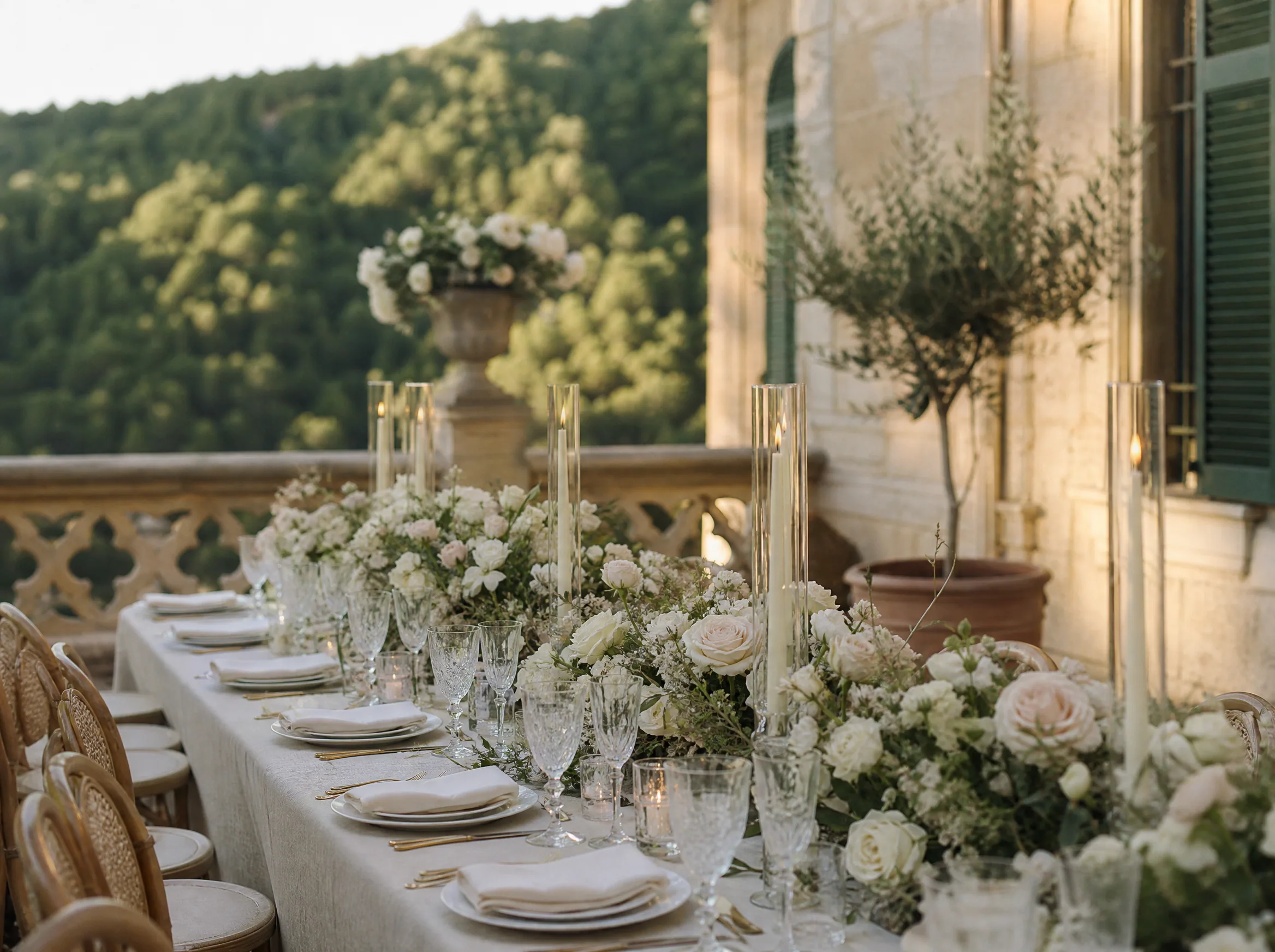
Translate Aesthetic Choices Into Spanish Rental Reality
Pinterest boards travel well; specialized inventory does not always. If you want colored glassware, specialty chargers, or a particular linen weave, ask early which houses in your venue’s region can supply them — and what the substitution policy is if a piece arrives damaged or short.
When planning from abroad, approve a primary look and a backup look in writing. That protects you if a colorway is unavailable in peak season. Keep the backup close enough that florals, stationery, and attire still feel coherent if you have to switch.

Map Delivery, Setup, and Pickup to the Real Venue Day
Rural and historic venues often have limited truck access, narrow gates, or quiet-hour restrictions. Ask your planner or venue contact for the earliest delivery window, where trucks unload, who carries items to the terrace or courtyard, and whether setup staff are included with the rental quote.
Build your day-of timeline around those constraints. If tables cannot arrive until early afternoon, ceremony styling and dinner flip need clear ownership. If pickup is the next morning, confirm overnight security and whether linens can stay bagged for laundry pickup without blocking brunch or guest checkout flow.
Align Rentals With Catering, Floor Plans, and Guest Flow
Rentals are not a separate aesthetic layer; they are infrastructure. Table diameter affects floral scale, place settings, and whether guests can converse across the table. Chair spacing affects aisle width, mobility access, and how quickly a room can turn from ceremony to dinner.
Share one floor plan with the venue, caterer, rental house, florist, and entertainment. Version-control it. When international couples plan remotely, conflicting PDFs are one of the most common causes of day-of friction — especially when one vendor is still working from an older guest count.
Plan for Weather Without Double-Paying Blindly
Outdoor celebrations in Spain need a weather-aware rental plan: weighted linens, clip options, umbrella or parasol inventory if relevant, and a clear list of what moves indoors if wind or rain arrives. Decide in advance which pieces are ceremony-only and which must survive a full flip into dinner.
Ask whether your weather backup location needs a second full rental set or whether the same inventory can be relocated in time. Relocation labor is often the hidden cost. Confirm who decides, by what clock time, and how guests are informed without panic.
Use Buffers for Breakage, No-Shows, and Service Reality
Always rent above the exact guest count. A practical starting point is a small percentage buffer on chairs and place settings, plus extra glassware for cocktail service. Confirm the rental house’s damage waiver, security deposit, and how missing pieces are priced after the event.
Also plan for vendor meals and staff water stations so those needs do not silently cannibalize guest inventory. Long Spanish wedding days with late dinners make this especially important; service teams need functional setups that do not collide with guest photography moments.
Assign One Owner for Remote Decision-Making
When you are abroad, rentals fail in the gaps between vendors. Designate one on-the-ground owner — planner, coordinator, or trusted local lead — who can approve substitutions, count deliveries against the packing list, and escalate shortages before guests arrive.
Give that person authority thresholds in writing: what they can swap without you, what requires a quick photo approval, and what is non-negotiable. Fast decisions on delivery day protect the evening more than perfect remote control.
Brief Photography and Videography Around the Finished Room
Rental choices shape how the celebration reads on camera: chair backs in ceremony aisles, linen texture in detail frames, glassware catchlights during toasts, and the cleanliness of table resets between courses. Share your rental lookbook with your photo and film team so they know which details are intentional and worth covering before cocktail traffic arrives.
If you care about flat-lays or empty-room portraits, protect a short window after final setup and before guest entry. That window is easy to lose when delivery runs late — another reason rental timing belongs in the master timeline, not in a side note.
Close the Loop With a Pre-Event Checklist
One week out, reconcile: final guest count, dietary-driven place settings if relevant, confirmed delivery window, setup crew names, floor-plan version, weather trigger time, and pickup plan. On delivery day, count boxes against the order before the truck leaves whenever possible.
After the wedding, keep notes on what ran short, what looked better than expected, and which pieces slowed service. Those notes help if you host a second celebration, and they help future couples planning Spain weddings from abroad avoid the same blind spots.