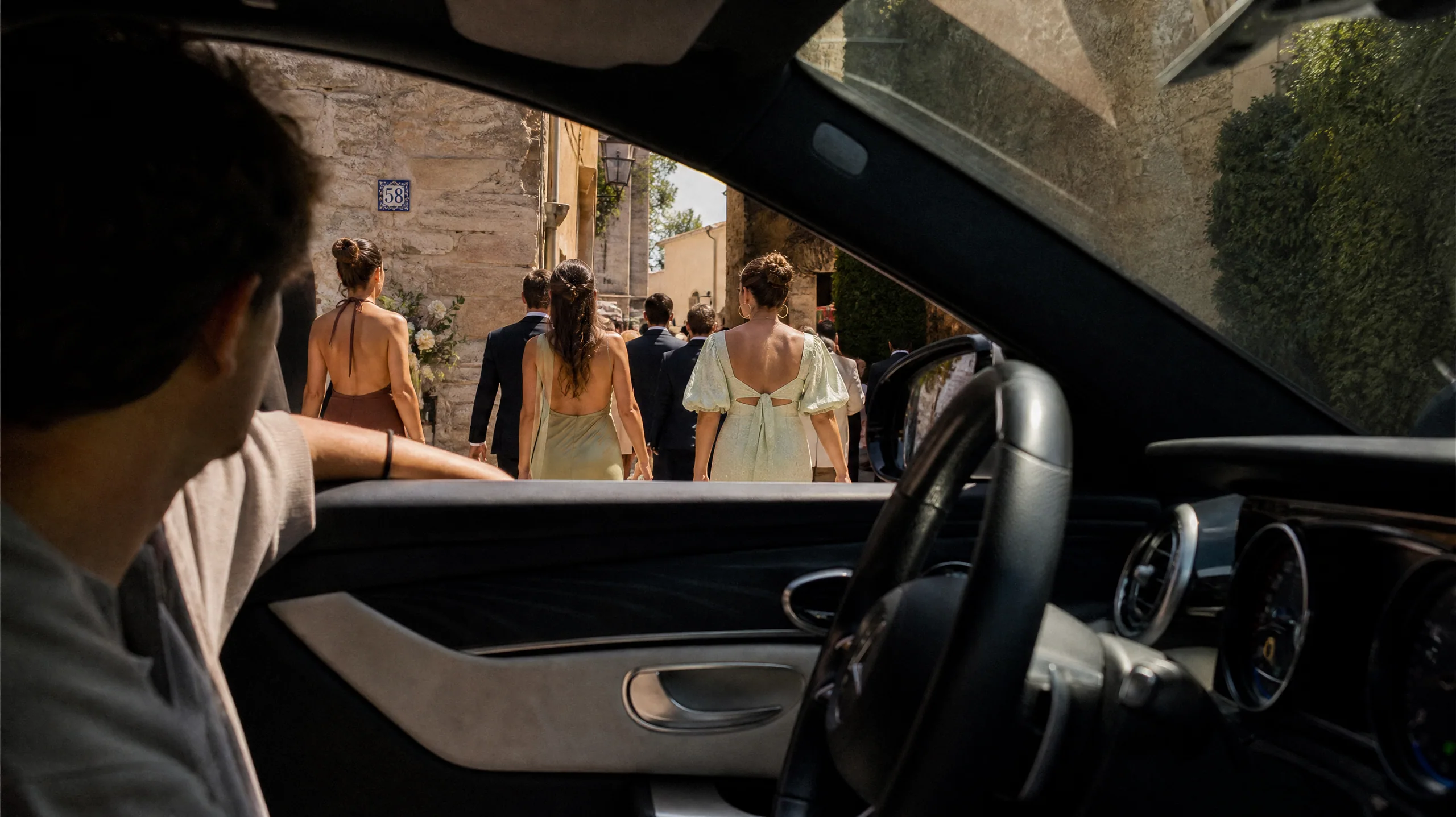

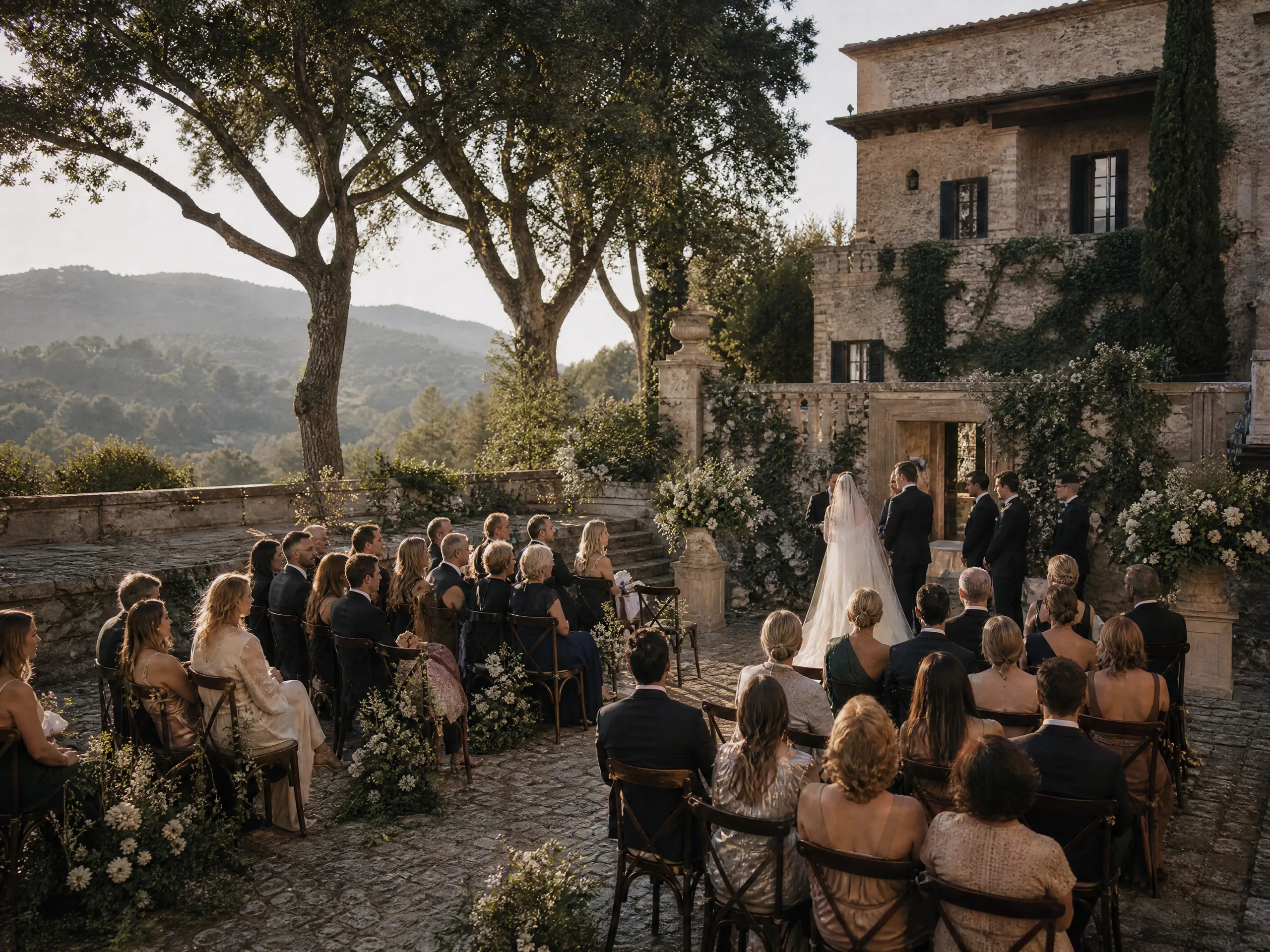
Many of the most memorable destination weddings in Spain split the day: a ceremony in a chapel, garden, or cliffside overlook, then a reception at a finca, masia, or hotel estate a short drive away. That choice looks cinematic in photos. Operationally, it creates a transfer window that has to work for guests who do not know the roads, vendors who need load-out time, and a couple who still wants unhurried portraits.
This guide is for international couples planning from abroad who want two locations without a stressful gap, a stranded shuttle, or a cocktail hour that starts before anyone arrives.

Decide Whether Two Venues Are Worth the Transfer
Separate ceremony and reception spaces can solve real design problems: a sacred or scenic vow setting that cannot host dinner, a hotel with strong guest rooms but a flat ceremony lawn, or a reception estate that photographs better at golden hour than at noon. The question is not whether two venues are romantic. It is whether the drive, parking, and guest communication are simple enough for travelers who just landed in Spain.
If the transfer is under twenty minutes on a reliable road, with clear pickup points and a cocktail buffer waiting at the second location, the day usually feels intentional. If the route depends on weekend traffic, a ferry, a steep single-lane track, or multiple hotel pickups, treat the logistics as a core planning workstream, not a footnote.

Map the Guest Journey Before You Book Either Venue
Before you fall in love with two spaces, walk the guest journey in writing: hotel departure, ceremony arrival, ceremony exit, shuttle boarding, reception entrance, late-night return. Note stairs, gravel, dress codes, heat exposure, and whether older guests or anyone with mobility needs can move comfortably between cars and courtyards.
Ask each venue for a site plan that shows coach access, drop-off loops, and overflow parking. Rural Spanish estates can look spacious on Instagram and still have one narrow gate that cannot turn a full-size bus. If coaches cannot enter, plan smaller vans or a walking transfer from a safe roadside stop, and communicate that clearly in advance.

Build a Cocktail-Hour Buffer Into the Timeline
The transfer itself is rarely the full gap. Guests need time to stand up after the ceremony, find their group, board vehicles, travel, disembark, and orient themselves at the second venue. A realistic buffer is often forty-five to ninety minutes from the last ceremony moment to a settled cocktail hour, depending on distance and vehicle count.
Use that window deliberately. Soft drinks, shade, bathrooms, and a clear arrival host at the reception venue prevent the awkward feeling of guests wandering an empty estate. Meanwhile, you can take portraits near the ceremony site, change outfits if needed, or travel separately without making the room wait for you to open the bar.

Choose Shuttle Strategy Over Ad Hoc Carpooling
Destination guests should not have to invent their own transport between venues. A coordinated shuttle plan protects timing, reduces parking pressure, and keeps people who have been tasting cava from navigating unfamiliar roads. Decide whether everyone rides together, whether VIPs leave earlier for portraits, and whether local guests with cars are encouraged to leave vehicles at the hotel.
Confirm vehicle type, passenger count with formalwear, luggage rules if anyone is changing, air conditioning, and the exact boarding language for drivers. Spanish suppliers are often excellent once briefed, but they need a run-of-show in one document: pickup time, address pins, contact person on site, and what to do if one guest is late.
Align Vendor Move-Out With Ceremony Exit
Two venues mean two load-ins and at least one partial move-out. Florists may need to strike ceremony pieces and rebuild them at dinner. Musicians, sound, and seating teams need clear end times. If your ceremony site has a hard exit for the next booking or noise rules, put those constraints in the shared timeline before anyone designs an aisle that takes forty minutes to dismantle.
Ask who transports ceremony rental items to the reception, who has keys or gate codes, and whether the same team is responsible for both installs. International couples often assume the planner or venue manager will simply handle it. In Spain, the responsible party should be named in writing so nothing elegant is left leaning against a chapel wall.
Protect Photo and Film Windows During the Gap
The transfer window can be one of the best storytelling stretches of the day: empty ceremony chairs in late light, the couple leaving in a classic car, guests spilling into a courtyard with drinks already waiting. It can also become dead time if everyone is stuck in a dusty parking lane waiting for a missing van.
Brief your photo and film team on the route, the couple's transport, and whether you want guest candids during boarding or only at the reception arrival. If portraits happen at the ceremony location after guests leave, give yourselves a hard departure time so cocktail hour does not collapse into dinner before you arrive.
Communicate the Plan Like Travel Logistics, Not Fine Print
Your wedding website should explain the day the way a good travel day is explained: where to be, what time to leave, what to wear for the terrain, and whether guests need anything in hand for the second venue. Do not bury transfer details in a PDF attachment sent the night before.
Include map pins, shuttle boarding points, estimated ride time, and what happens for guests who miss the group departure. If the reception has a dress-code shift, hillside shoes warning, or a later welcome drink, say so early. Travelers relax when the next step is obvious.
Plan the Late-Night Return Before Guests Are Tired
The morning transfer gets attention because it sits next to the ceremony. The midnight return often decides whether guests remember the night as joyful or chaotic. Confirm last-shuttle timing, whether taxis are realistic in that area, and how hotel staff will receive late arrivals.
In the Spanish countryside, ride apps can be unreliable after a long wedding. If the reception ends after local taxi supply fades, keep a reserved return fleet or extend venue-arranged coaches. Publish the final departure time so nobody assumes cars will idle forever while speeches stretch.
What to Confirm From Abroad Before You Approve Two Venues
Before you commit, collect answers in one shared checklist: drive time at ceremony hour, coach access at both gates, ceremony hard exit, reception earliest guest arrival, shuttle company capacity, parking plan, florist and rental move plan, couple transport, photo window, cocktail staffing at arrival, and late-night return. If any answer is vague, keep asking until a person owns it.
Two Spanish venues can create a day that feels expansive and cinematic. They work best when the transfer is treated as hospitality design, not leftover logistics. Get the route, buffers, and guest communication right, and the move between spaces becomes part of the celebration instead of the stress that guests remember.