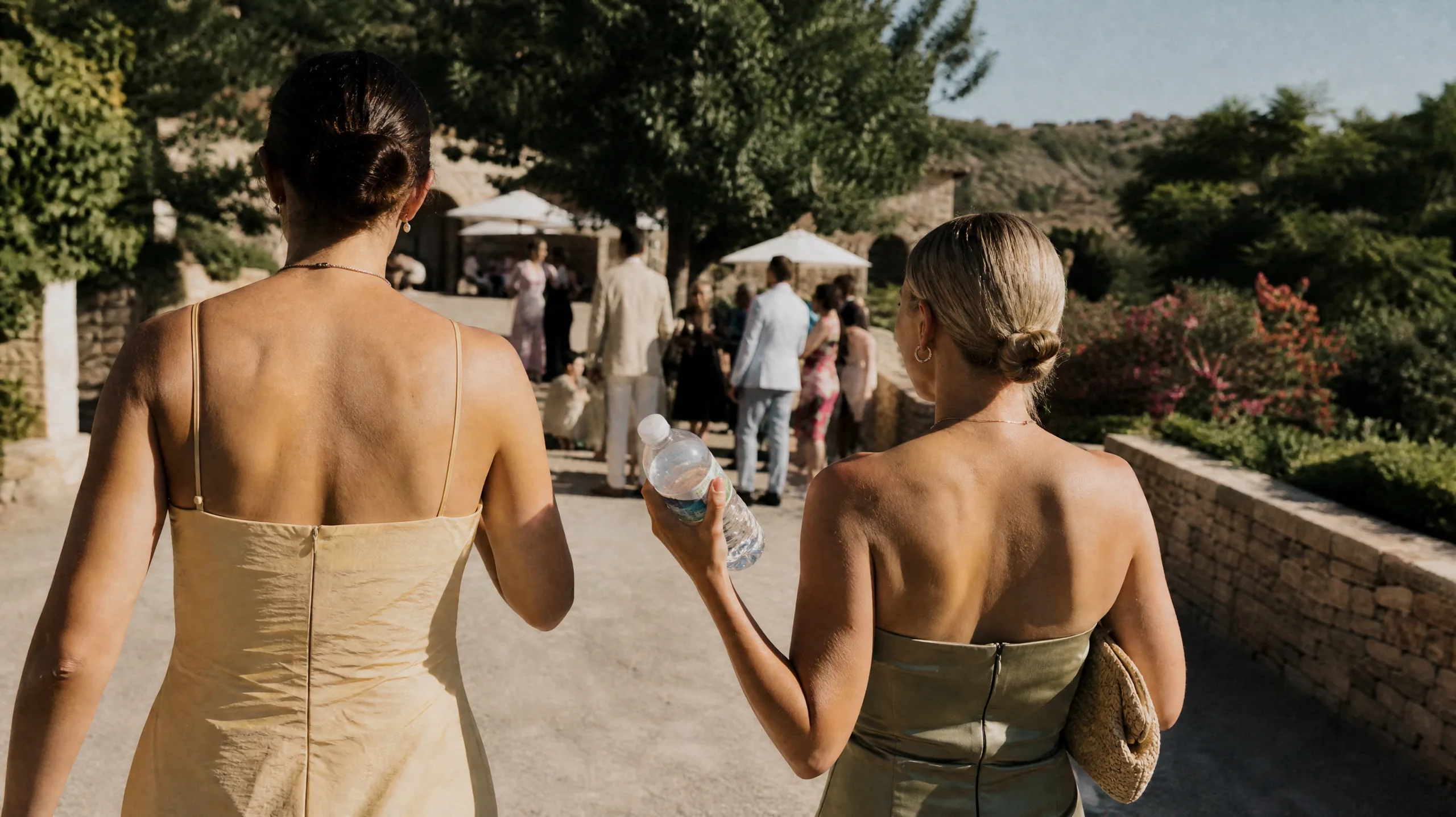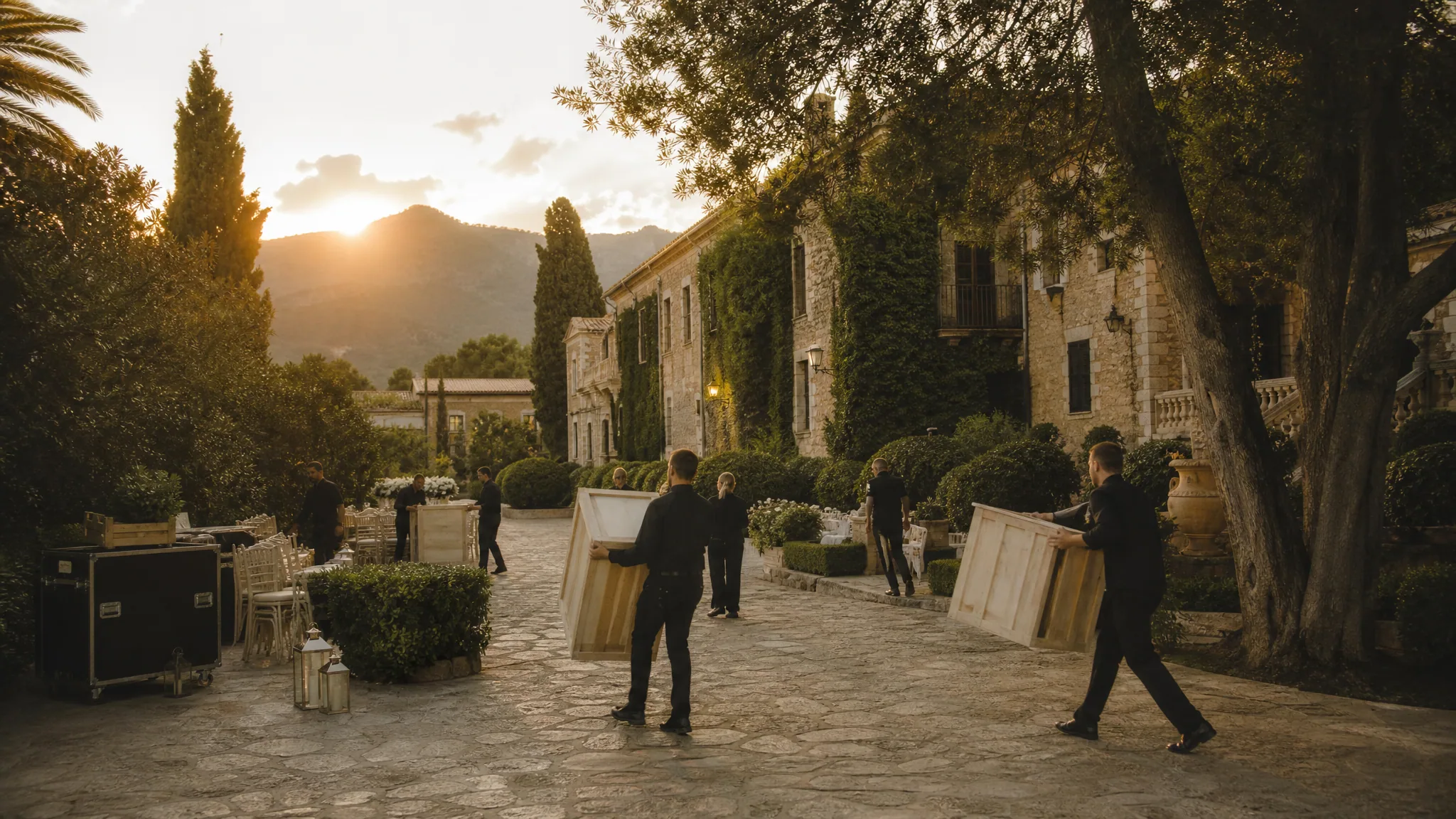

Destination weddings in Spain often look effortless on camera: soft morning light, an unhurried ceremony, and a reception that feels completely settled before the first guest arrives. Behind that calm is a production schedule most couples never see—load-in windows, vehicle access rules, shared pathways, and a load-out plan that respects curfews and neighbors.
If you are planning from abroad, vendor access is easy to underestimate. A florist, rental company, caterer, lighting team, and entertainment crew may all need the same courtyard, elevator, or gravel driveway within a short afternoon. The couples who protect the guest experience are the ones who treat load-in and load-out as design decisions, not afterthoughts.
Why Load-In Windows Matter More at Spanish Estates Than Hotel Ballrooms
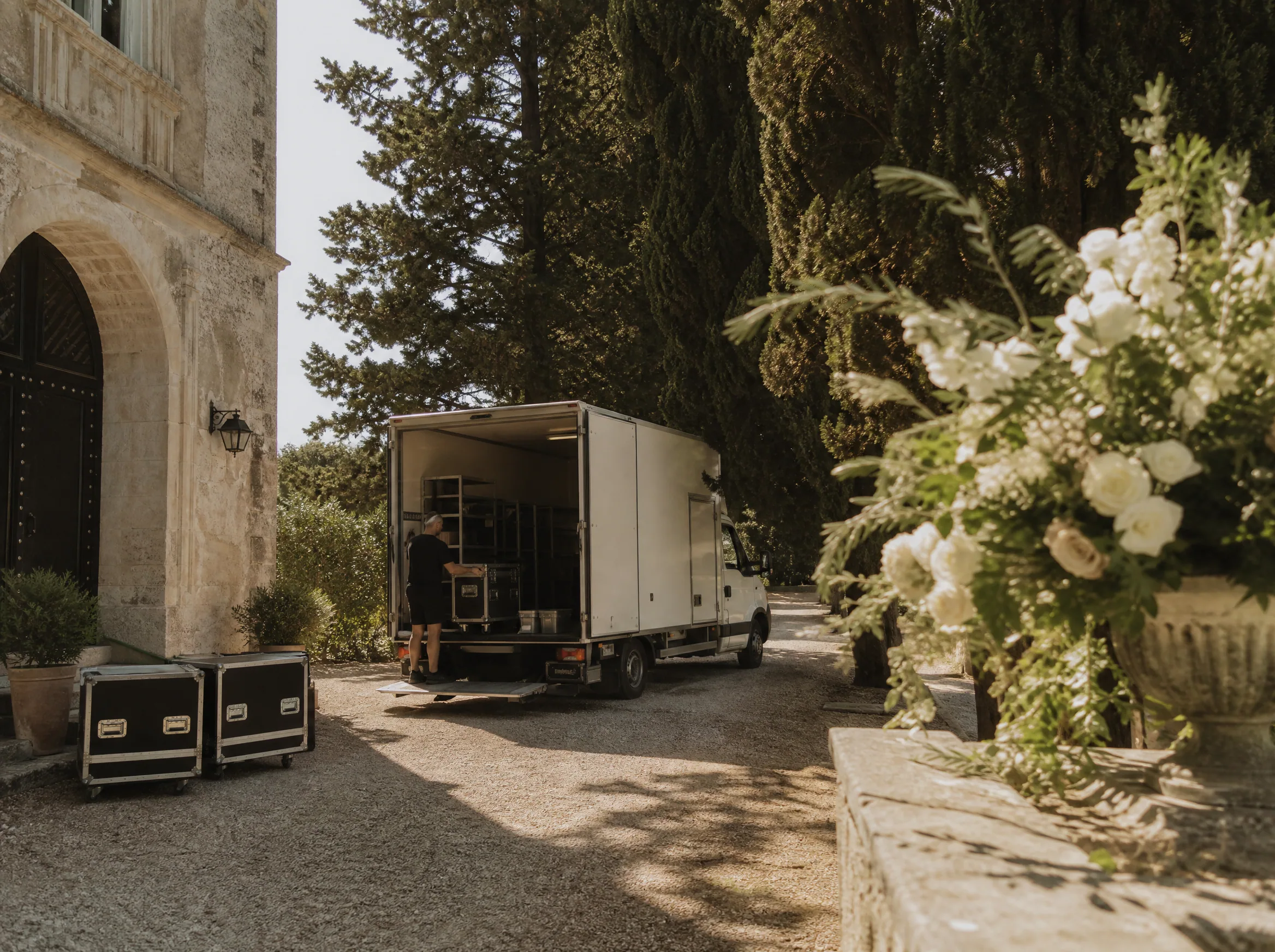
Many Spanish wedding venues are living estates, working masias, historic properties, or rural houses with limited service corridors. They are not blank ballrooms with loading docks and freight elevators. Delivery vans may share the same entrance guests will later walk through. Setup teams may need to cross lawns, climb stairs, or stage gear in a courtyard that becomes cocktail hour.
That architecture creates bottlenecks. When two vendors arrive at once without a sequence, boxes pile up in the ceremony aisle, power cables cross footpaths, and photography timelines compress. A clear access window protects both hospitality and the visual story of the day.

Ask for Access Rules Before You Finalize the Vendor List
Before locking rentals, décor, or catering logistics, ask the venue for written access details: earliest load-in time, latest load-out time, overnight storage permissions, maximum vehicle size, parking locations, and whether Sunday or local-fiesta restrictions apply. Some properties allow partial setup the day before; others open the gates only on the wedding morning.
Share those rules with every vendor before contracts are fully confirmed. A lighting plan that needs six hours of rigging cannot survive a two-hour morning window. A cake delivery that assumes hotel-style kitchen access may fail at a hillside estate. Access constraints should shape vendor selection, not appear as a surprise in the final week.

Map Every Vendor's Arrival Against Shared Power, Parking, and Pathways
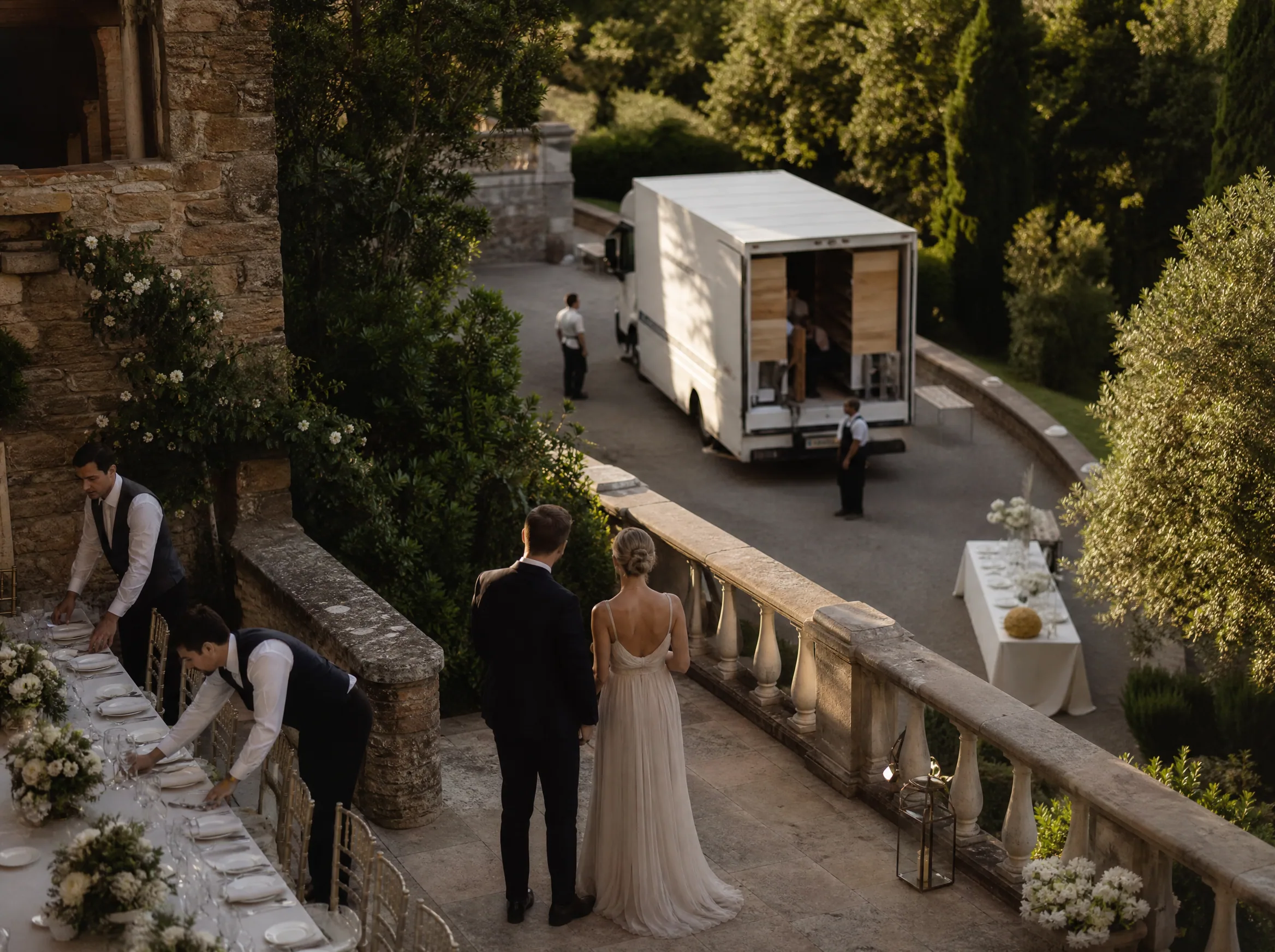
Create one shared access map, even if it is a simple annotated photo of the property. Mark where vans stop, where carts can roll, where guest drop-off happens, and which rooms or terraces become active first. Then sequence vendors so early teams clear the main path before later teams arrive.
Typical pressure points include generator placement, restroom trailer positioning, dance-floor build, floral install near ceremony sightlines, and catering staging near kitchen or prep tents. If two heavy items need the same narrow gate, schedule them apart. Remote couples can still own this logic by asking their planner or day-of coordinator for a one-page access map and arrival order.

Build a Load-In Schedule International Couples Can Approve Remotely
You do not need to stand in the driveway to approve a good schedule. You need a clear run of show: who arrives when, what they are installing, where they stage, and who confirms completion. Ask for arrival windows rather than vague morning blocks, and include buffers for rural roads, ferry timing on islands, and summer heat that slows physical setup.
A practical pattern for many Spain destination weekends: day-before structural setup where allowed (tents, flooring, restrooms, major lighting), early wedding-day floral and table work, mid-morning AV and ceremony sound checks, and a hard “guest-facing zones clear” deadline before hair-and-makeup or first-look photography begins. Put the clear-by time in writing so the ceremony lawn is not still a warehouse when guests start arriving.
Plan for Historic Venues, Cobblestones, Stairs, and Restricted Vehicle Access
Historic courtyards, village streets, and elevated terraces change what “delivery” means. Large trucks may stop at the property edge while teams hand-carry or cart items across cobblestones. Some venues ban vehicles beyond a certain point to protect stonework, gardens, or neighbor access.
Ask vendors whether they bring their own carts, how many crew members they send for carry-in, and whether décor pieces can be modular enough for stairs and narrow doors. Fragile installations, oversized bars, and dense lounge furniture need extra time in these settings. Budget that time into the schedule instead of hoping the venue’s charm will somehow make logistics easier.
Coordinate Overnight Holds, Partial Setups, and Weather-Sensitive Décor
If the venue allows overnight holds, decide exactly what stays and who is responsible for security, wind, humidity, and animal or insect exposure. Dance floors, bars, and structural lighting often benefit from early placement. Fresh florals, candles, paper goods, and delicate textiles usually need wedding-day timing or protected indoor storage.
Weather changes the equation quickly on coastal and hilltop sites. Confirm whether tents can be dressed early, whether linens should wait until wind drops, and who monitors overnight forecasts. An elegant partial setup is only useful if someone owns the contingency when conditions shift before morning.
Design a Clean Load-Out That Respects Curfews and Neighbor Relations
Load-out is where tired teams, noise rules, and neighbor goodwill collide. Many Spanish venues sit near residential areas, working farms, or quiet village streets. Late-night breakdown can be restricted even when the party is still ending. Ask whether soft strike is required first—clearing guest areas quietly—before full vehicle load-out the next morning.
Assign responsibility for rentals, floral removal, leftover alcohol, gift collection, and trash. Destination couples often leave for a hotel or honeymoon night and assume everything disappears. Without owners and timing, items get left in the wrong room, charged as missing rentals, or rushed out through the same door guests are still using.
Assign On-Site Owners So Remote Couples Are Not the Bottleneck
If you are not local, do not make yourself the only person who can answer “Where can the van park?” Give one coordinator or trusted lead authority over access decisions on the day. Vendors should know who can approve a gate change, a delayed arrival, or a setup swap without calling you out of getting ready.
That single point of contact protects the emotional timeline of the wedding. Couples should be in hair and makeup, with family, or walking the grounds for portraits—not mediating a driveway conflict. Good load-in leadership is invisible in the final film, which is exactly the point.
A Practical Load-In and Load-Out Checklist for Spain Destination Weddings
Collect written venue access rules before finalizing heavy vendors. Build one shared arrival order with parking, pathway, and clear-by times. Confirm what can be set the day before, what must wait for the wedding morning, and what needs weather protection overnight. Put load-out owners, curfew limits, and next-morning strike plans in the same document as the ceremony timeline. Share the plan with every vendor in English and, when useful, in Spanish so on-site teams are aligned.
When access is planned with the same care as the guest journey, the celebration feels composed from the first frame. The venue is ready, the team is calm, and the day can unfold as hospitality—not as a race against the gate closing.