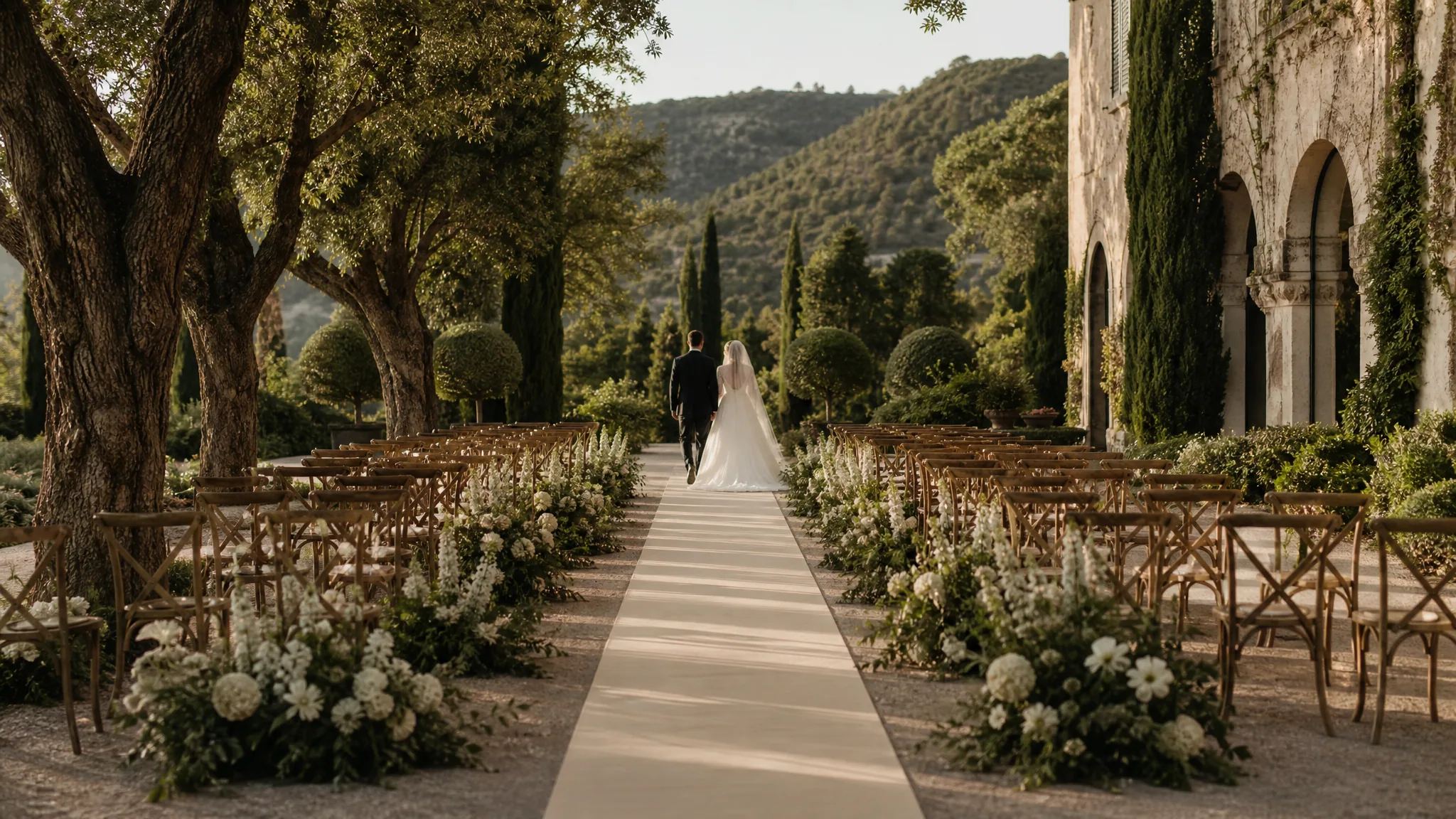
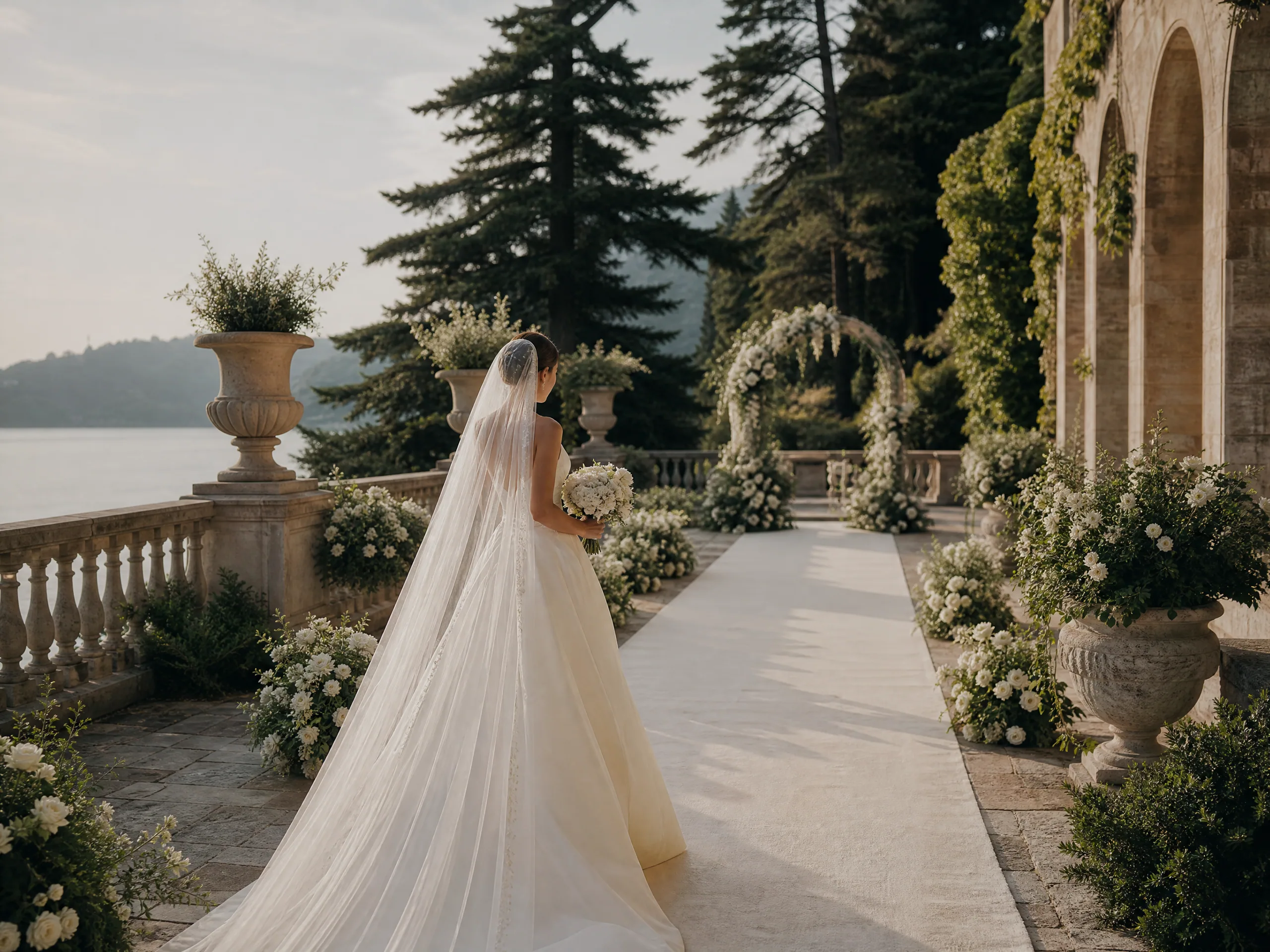
Spanish outdoor ceremonies sell the view: olive groves, gravel courtyards, cliff-edge stone terraces, lawns that look perfect at golden hour. What guests feel underfoot is another story. Heels sink, gravel rolls, grass stains hems, and a last-minute DIY runner that lifts in the breeze becomes the only thing anyone remembers from the processional.
Aisle runners and temporary walkways are not décor fluff. They are guest-safety and camera-continuity tools. Plan them like AV: surface, wind, length, install window, and who owns the fix if something shifts five minutes before vows.
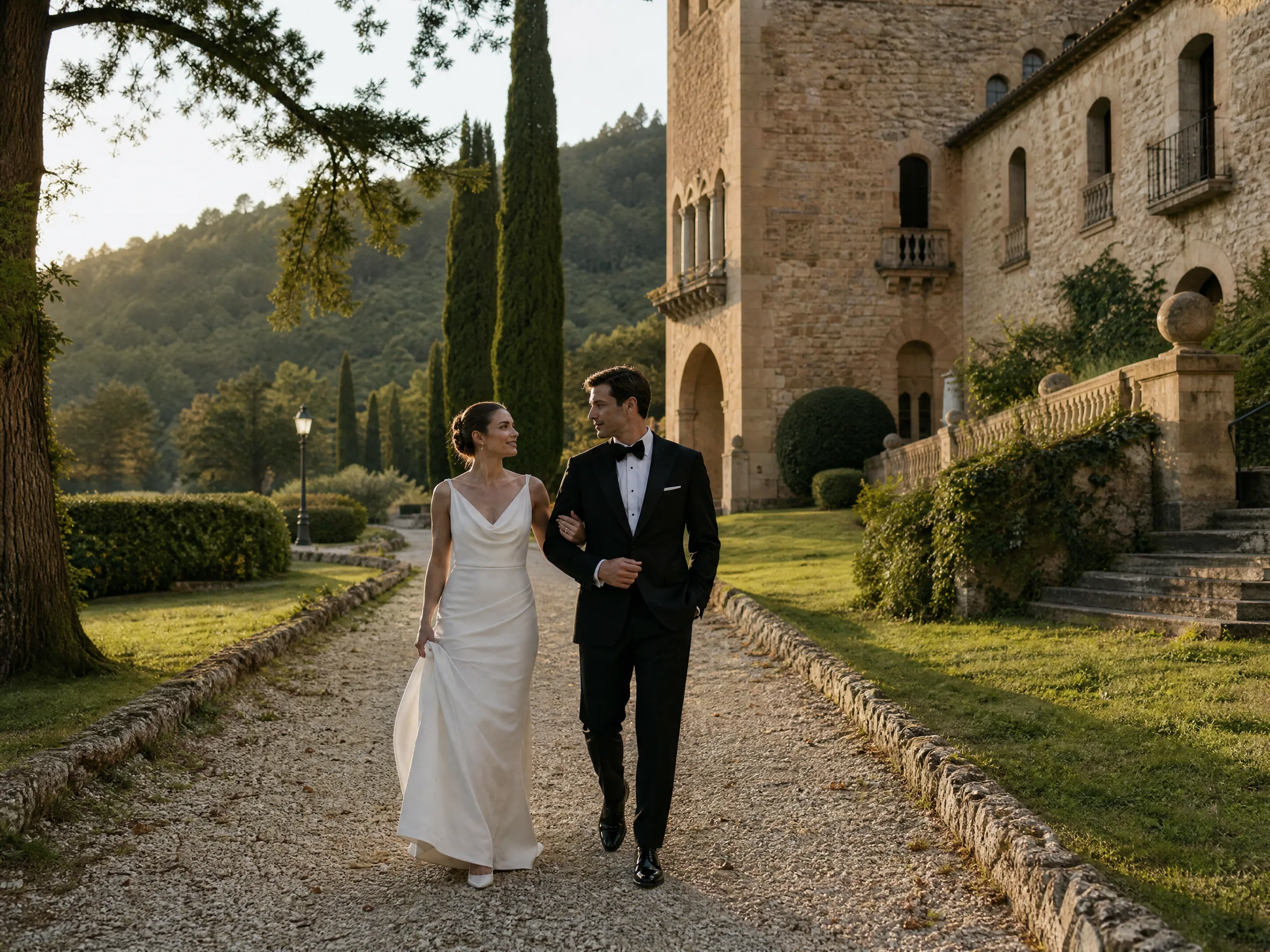
Walk the exact processional path before you shop fabric
Do not order a runner from a Pinterest measurement. Walk the route the couple and wedding party will actually take—from last holding point to altar marks—on the same surface guests will use. Note slope, drainage dips, tree roots, irrigation heads, and where chairs pinch the width.
Measure usable width as well as length. A narrow runner on a wide lawn can look elegant; the same strip on a gravel drive may leave guests straddling fabric and stones. If elders or mobility aids are in the party, plan a continuous firm path, not a decorative ribbon that ends at soft ground.
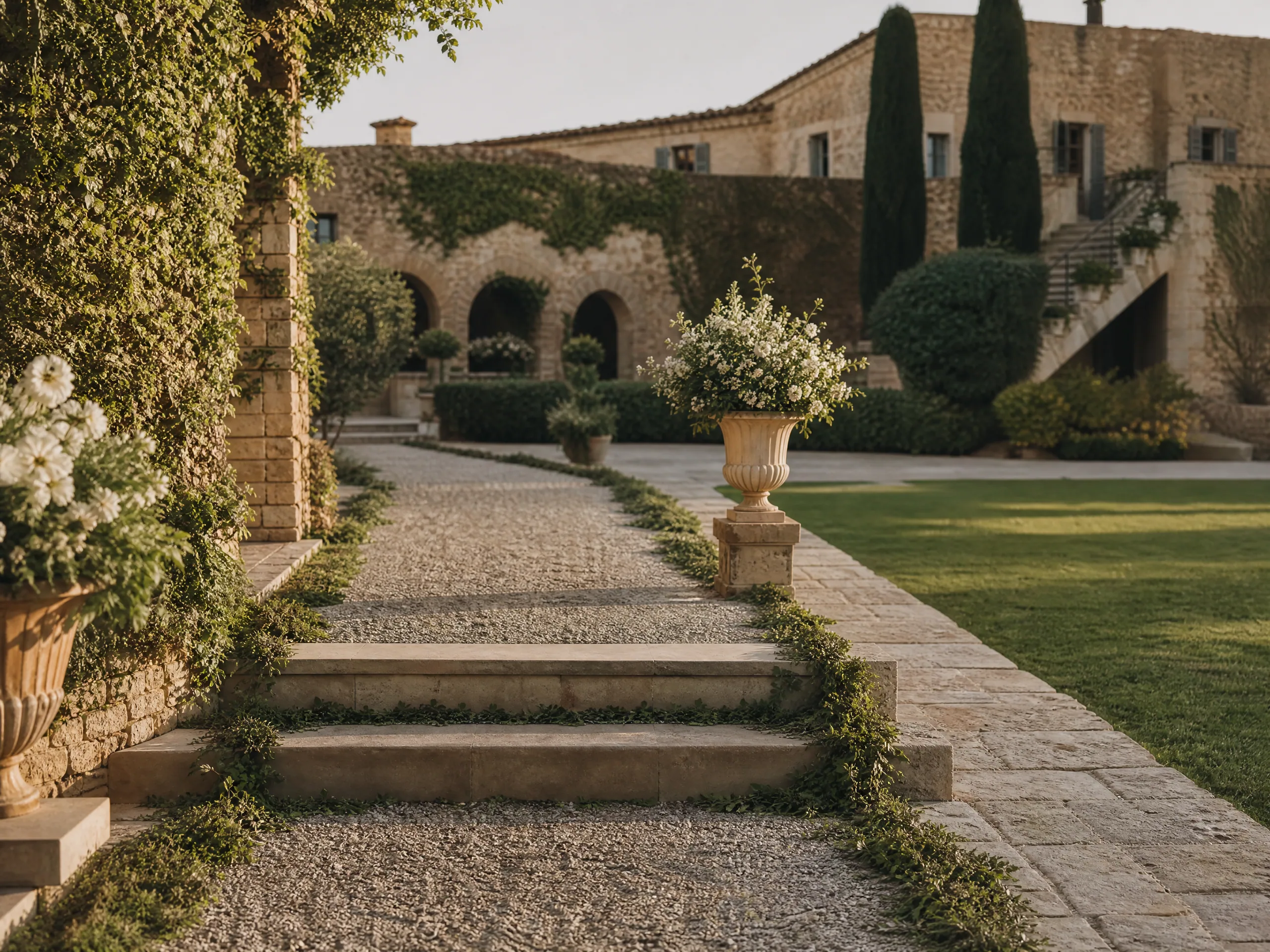
Match runner and walkway materials to grass, gravel, and stone
Grass needs something that stays put without smothering the lawn into mud if the weekend turns damp. Lightweight fabric alone often fails; many planners pair a low-profile temporary aisle board or dense carpet runner with discreet stakes or weights. Gravel wants a boardwalk, interlocking tiles, or a heavy runner with a non-slip underside—pretty chiffon will migrate. Stone and tile need anti-slip consideration more than sink-prevention; polished courtyard stone can be slick after misting or evening dew.
Ask the venue what they allow. Some estates ban stakes in historic lawns or refuse adhesives on stone. Others already rent aisle platforms for ceremonies on rough ground. Local knowledge beats importing a fragile look that cannot legally be fixed in place.
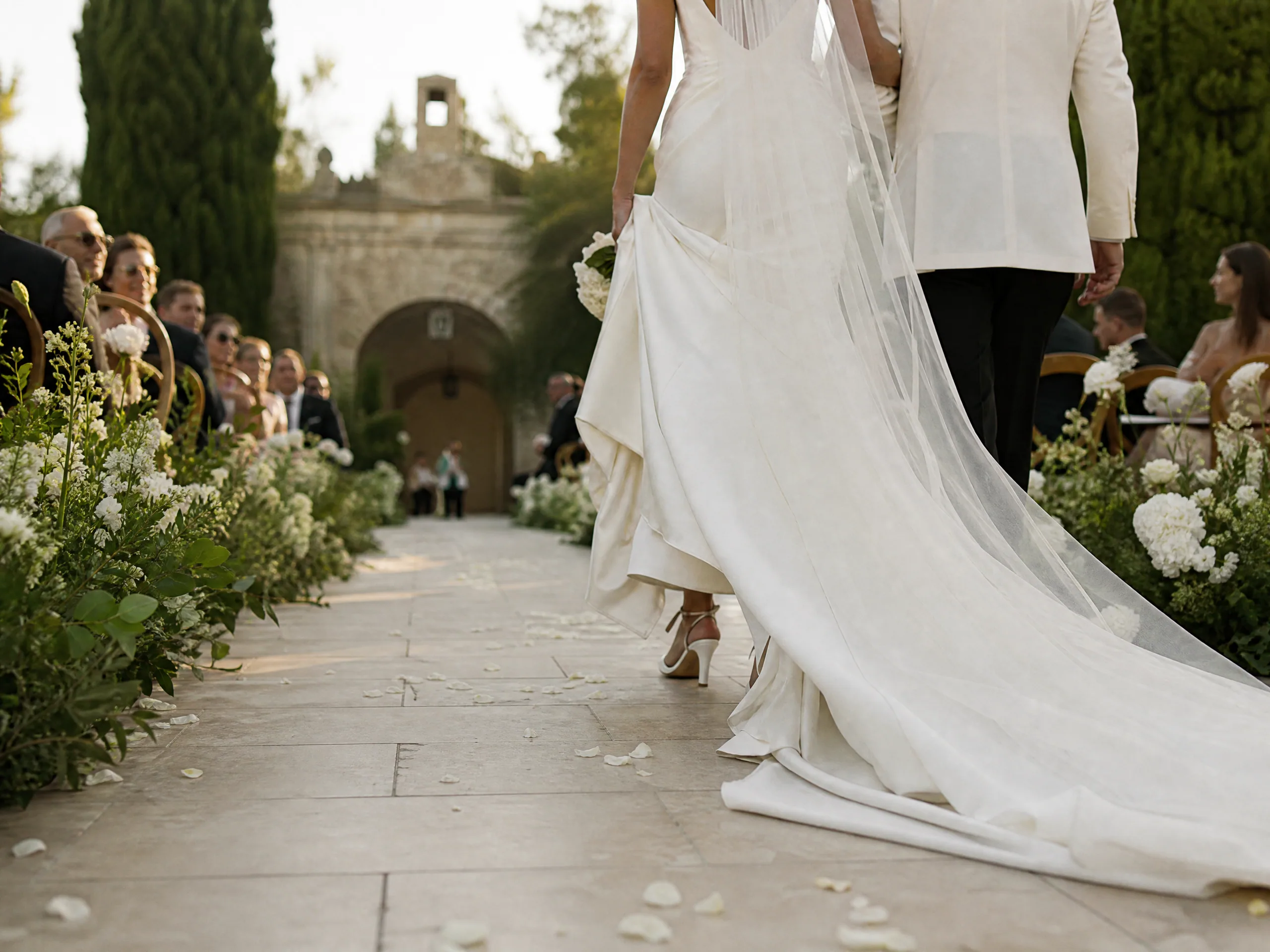
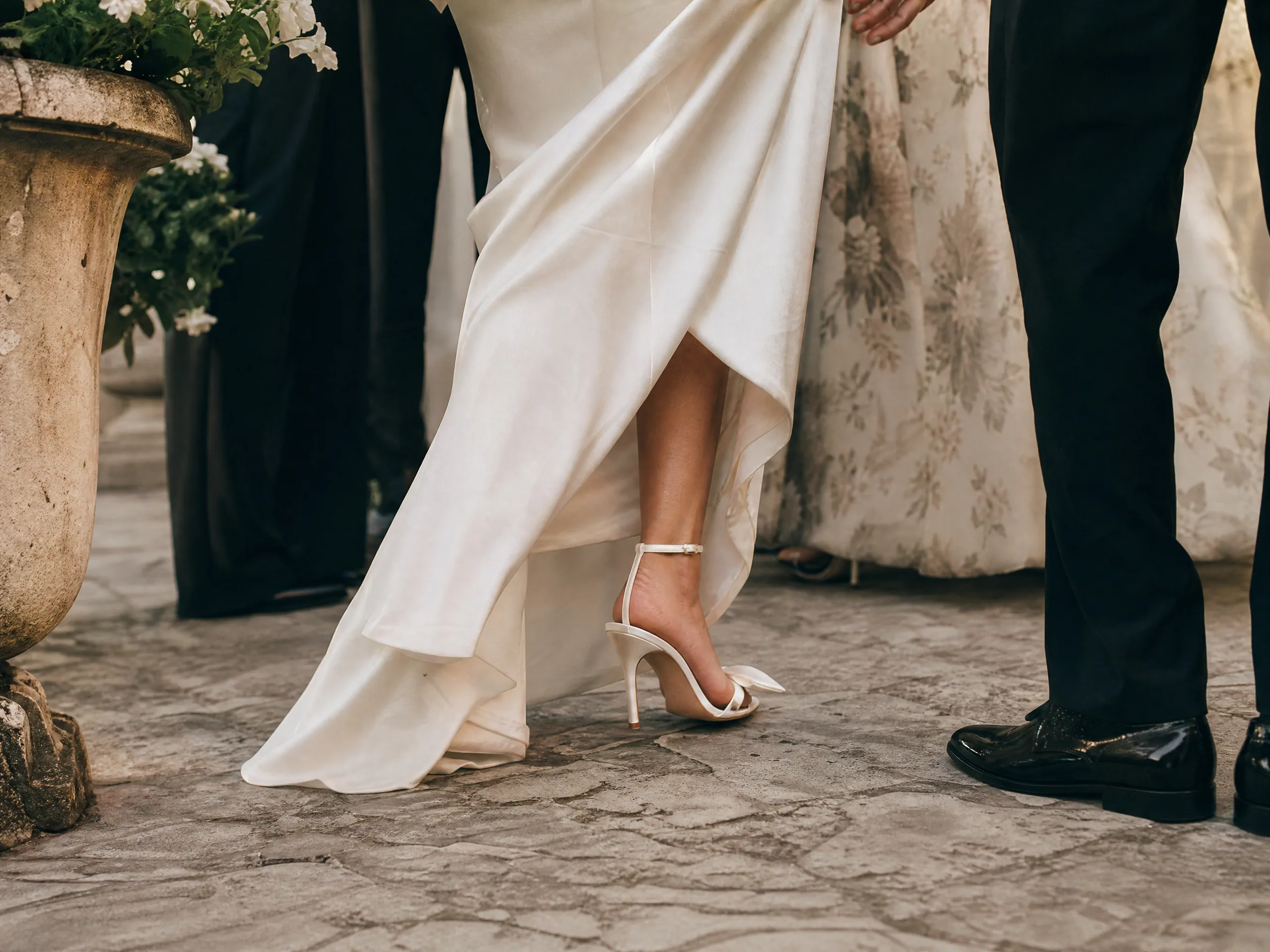
Design for heels, hems, and the camera’s low angle
International guests often pack dress shoes that were never meant for Mediterranean terrain. Your runner should give them a predictable strip—not a surprise transition every three meters. Avoid high seams, curled edges, and shiny fabrics that glare in midday sun and look noisy on film.
Videographers shoot processions low and wide. Wrinkles, tape Xs, and flapping corners read loudly on camera even when guests barely notice them. Choose a matte finish, steam or roll the runner correctly, and keep branding logos off anything in frame unless you want product placement in the film.
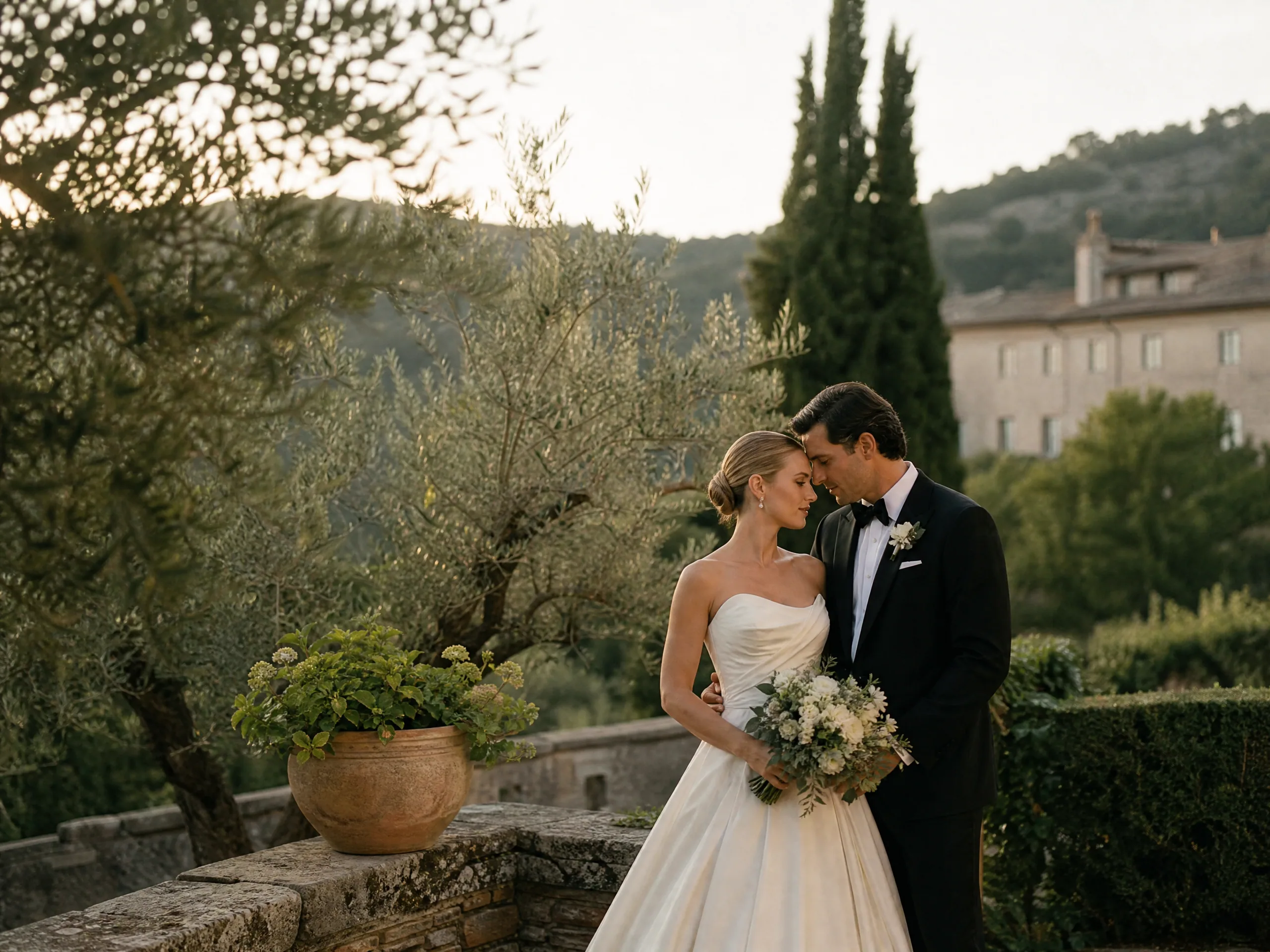
Plan wind and weather like you plan the mic
Coastal and hilltop Spanish venues punish light fabric. If your ceremony site is exposed, budget for weighted edges, sandbags disguised in florals, or a denser material that does not sail. A runner that lifts mid-processional is a safety issue and a timeline stop.
Have a rain call that includes the aisle. If you move under a covered terrace or tent, confirm whether the same runner still fits, or whether you need a shorter indoor length staged and ready. Do not discover the mismatch while guests are seated.
Build an install and strike window into the vendor schedule
Runners go down late so foot traffic, florists, and sound checks do not destroy them—and early enough that the couple is not waiting while someone unrolls 20 meters of fabric. Put a named owner on install: planner, décor lead, or venue staff. Include tape, weights, scissors, a spare section, and a brush for gravel that migrates onto the path.
Strike matters too. Evening wind, dancing guests cutting across the lawn, and candle décor can turn an abandoned runner into a trip hazard after cocktail hour. Decide whether it stays for photos, moves for the reception reset, or comes up immediately after the recessional.
Connect the aisle to parking, seating, and accessibility routes
The prettiest center aisle fails if guests approach from a steep gravel spur with no temporary walkway of their own. Extend the thinking beyond the camera path: welcome path from cars, path to seating for guests who will not process, and a firm route for anyone who cannot navigate grass. One continuous plan looks intentional; a glamorous aisle with hazardous approaches looks unfinished.
If ushers will seat guests from multiple directions, mark which side of the runner is sacred until the processional ends. Nothing ruins a clean shot like cousins crossing the aisle to say hello.
Brief the wedding party on pace, pauses, and edges
Tell attendants where the runner begins, where to pause for photos, and how to step if an edge lifts. Flower children and pets (if allowed) need a short rehearsal on the real surface, not only on hotel carpet. The couple should know whether they walk side by side the full length or meet at a mark—so nobody drifts onto soft ground for the hero frame.
Share one photo of the installed path in the morning-of group chat so remote planners and parents stop inventing last-minute “improvements.”
Budget the unglamorous spares that save the processional
Pack spare weights, double-sided outdoor tape approved by the venue, a small broom, blotting cloths for damp spots, and a backup shorter runner if wind forces a covered-plan B. Confirm who can authorize a surface change if the lawn is sodden the morning of. A €30 kit prevents a €3,000 visual problem.
If you are planning from abroad, ask your Spain planner or coordinator to send a phone video of the dry-fit the day before—not only a flat-lay of fabric still folded in a box.
Close with a guest note that prevents improvisation
A single line in the welcome note or weekend itinerary—“ceremony on lawn; block heels or wedges recommended; aisle path provided”—cuts down on panic packing and mid-aisle shoe removals. Guests would rather adjust footwear than invent a workaround that damages the setup.
When the runner, walkway, wind plan, and install owner are locked, the processional feels calm. That calm is what shows up in the film—and what international guests quietly thank you for when they reach their seats without sinking.