

Many of the most photogenic wedding venues in Spain begin the same way: a long gravel drive, olive trees, a stone house appearing at the end of the lane. That approach is part of the romance. It is also where white hems, suede shoes, rental cars, and golden-hour portraits quietly get ruined if nobody planned for dust.
Dust logistics are not about sterilizing a rural estate. They are about deciding where gravel ends and ceremony readiness begins—so international guests can enjoy the countryside without spending the cocktail hour brushing beige powder off their outfits.

Map every gravel approach before the first white dress arrives
Walk the property the way a guest in heels will walk it. Note every unpaved stretch between parking, villas, ceremony lawn, cocktail terrace, and restrooms. Ask the venue which lanes get watered, which stay dry and powdery in summer, and which turn muddy after an afternoon storm.
Put the map in writing for your coordinator and photographer. If the only path from getting-ready suites to the ceremony crosses fifty meters of loose gravel, that is not a styling detail—it is a transfer problem you solve with shoes, carts, timing, or a temporary runner.
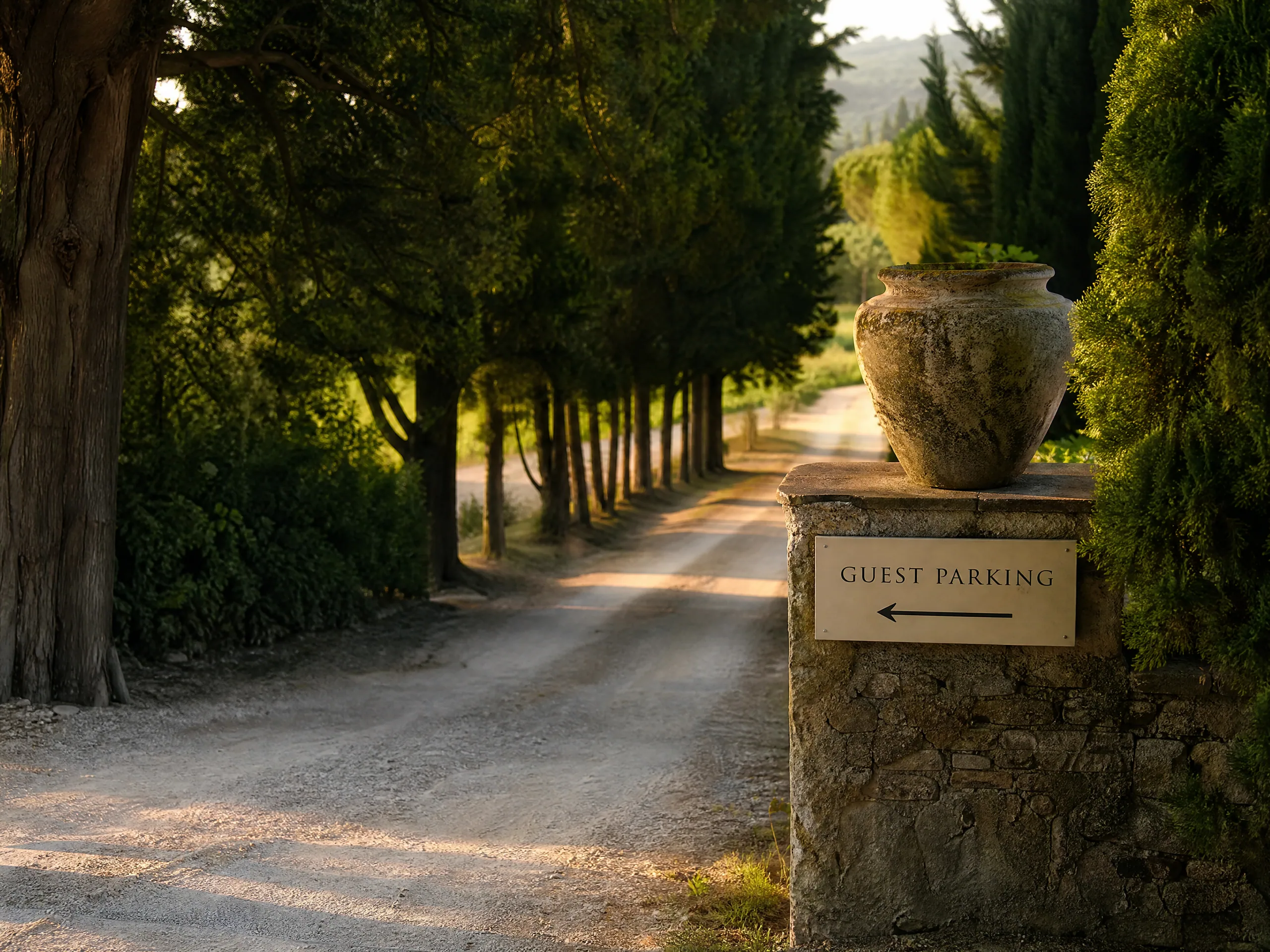
Separate guest parking from the last dusty stretch
Whenever possible, keep cars off the final approach. A line of rental vehicles kicking up dust twenty minutes before the processional can undo every water truck and broom the venue just deployed. Prefer a firmer parking pad or shaded lot, then a short escorted walk or golf-cart hop to the polished zone.
If guests must park on gravel, stage arrivals earlier and ask drivers to idle less and crawl slower. One well-briefed welcome-desk volunteer with a simple “please drive gently—dust settles on dresses” line prevents more damage than a dozen after-the-fact apologies.
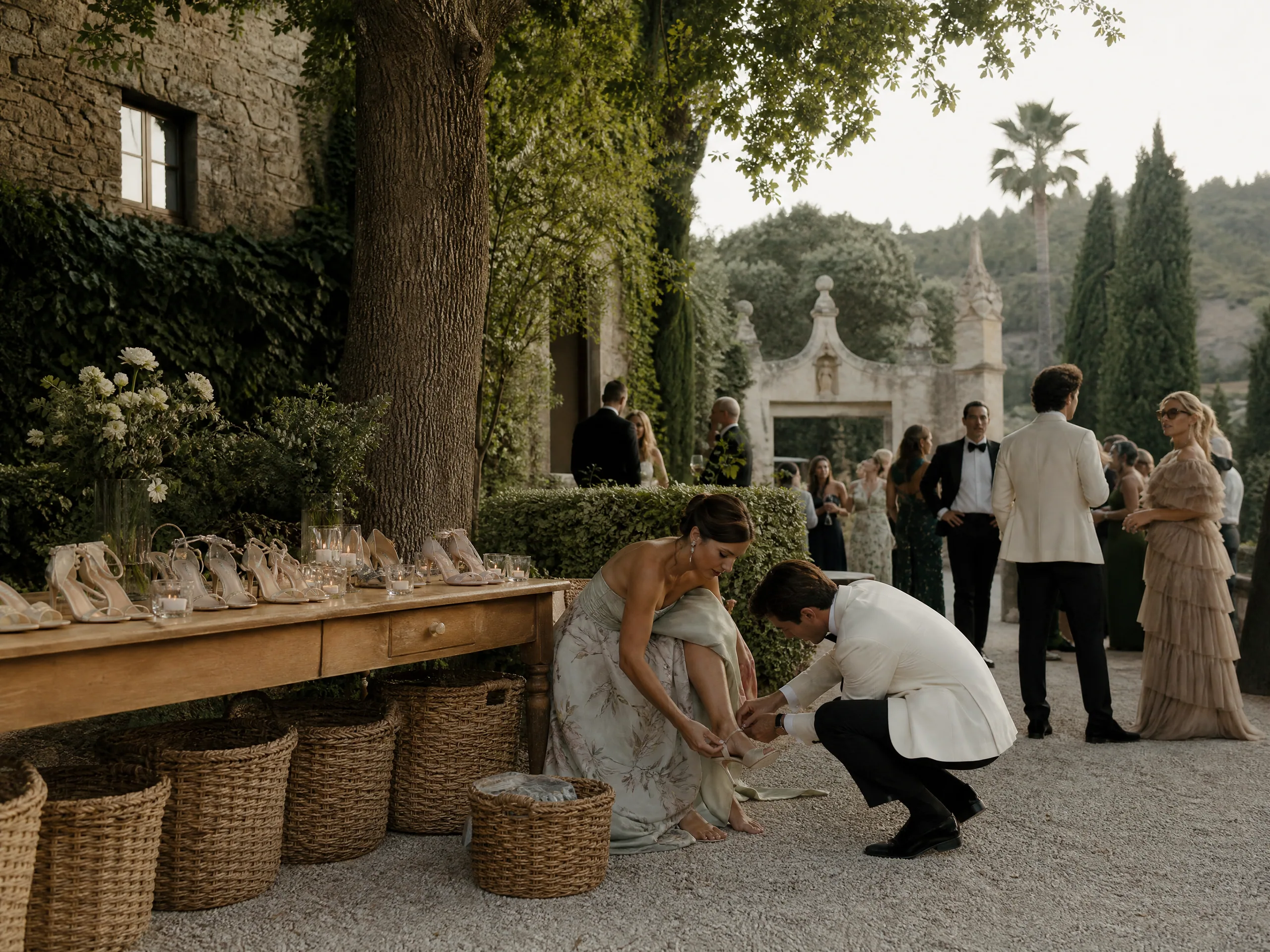

Build a footwear and hem station that guests will actually use
Place it where the gravel stops: clean mats, spare heel protectors, soft brushes, lint rollers, stain sticks, and a small stool. For ceremony looks, add a covered basket for dusty walk-in shoes and a labeled rack for the dress shoes guests change into.
Announce the station in the weekend WhatsApp or printed welcome note. Guests will ignore a hidden “emergency kit” in a bathroom. They will use a clearly signed stop that feels intentional, not improvised.

Protect cars, rental vans, and vendor trucks from the same dust
Attire is only half the story. White linens in open van doors, cake boxes, floral installations, and camera bags all hate fine Spanish summer dust. Give vendors a load-in window when the lane is dampened, a covered drop zone, and a rule that heavy truck traffic pauses once styling surfaces are live.
If the estate waters the drive, confirm timing with catering and florals so you are not creating mud for dollies while trying to control dust. The goal is a controlled surface, not a surprise slurry.
Time outdoor portraits around wind and unpaved roads
Wind turns dust into atmosphere—and into ruined close-ups. Ask your photographer where the lane sits relative to prevailing breeze, and schedule couple portraits either before peak traffic or after the approach has been reset.
Avoid “quick” roadside portraits on the gravel entrance while guests are still arriving. The cinematic shot is rarely worth a hemline full of grit five minutes before vows.
Brief the bridal party on transfer timing between dusty zones
Getting-ready villas, first-look spots, and ceremony lawns are often separated by the dustiest meters on the property. Decide in advance whether the couple travels by cart, changes shoes at a midpoint, or uses a temporary walkway. Assign one person to carry the dress train plan—literally—so it is not improvised by five well-meaning friends.
For groomsmen in dark suede or light linen, the same briefing applies. Dust shows differently by fabric, but it shows.
Stock practical rescue kits (not just aesthetic props)
Beyond brushes and rollers, pack: baby wipes safe for skin, microfiber cloths, a mini steamer if power allows, clear heel tips, fashion tape, and a spare pair of walkable flats in common sizes. Keep one kit near getting-ready rooms and one at the guest transition point.
Tell the coordinator what is for guests versus what is reserved for the couple. A shared free-for-all kit disappears before the people who need it most arrive.
Write dust rules into the weekend guest note
A short, calm note works better than a long lecture: which shoes to pack, where to change, why arrivals should not race the gravel lane, and where the brush station lives. International guests often pack for heat and beaches—they rarely pack for unpaved estate roads unless you say so.
If children are attending, mention stroller wheels and dusty hands before ceremony hugs. Small logistics prevent large stains.
Reset the estate before sunset photos and dinner
After arrivals and vendor load-in, schedule a quiet reset: water or sweep the visible approach, clear mats, restock the station, and move trucks out of frame. Sunset light on a freshly calmed lane looks intentional. Sunset light on a churned gravel parking strip looks like an accident your film cannot edit out.
Dust will always be part of rural Spain. With a map, a transition zone, and a few well-placed kits, it stays atmosphere—not the unexpected theme of the wedding day.