Spanish rental villas and rural fincas rarely behave like a hotel with endless on-demand hot water for twelve guests at once. Many houses run on a calentador—a gas, electric, or tankless heater with a finite recovery window—so the first morning of the wedding weekend can turn into cold showers, delayed hair-and-makeup call times, and a tense WhatsApp thread. A short guest briefing on how Spanish agua caliente actually works keeps the house party calm and the timeline intact.
Why Hot Water Becomes a Wedding-Weekend Bottleneck
Destination weeks in Spain often pack welcome dinners, early ceremony call times, and multi-bathroom villas that look spacious on the listing photos. Capacity is not the same as simultaneous supply. When six people start long showers at 08:00 because the shuttle leaves at 09:30, a modest calentador empties or throttles, and the last rooms scramble. Treat hot water as a shared resource with a schedule, not as an infinite hotel amenity.

Calentador, Termo, and Instantáneo: What Guests Are Looking At
Spanish homes use a few common setups. A termo eléctrico stores heated water in a tank and needs recovery time after heavy use. A gas calentador or calentador instantáneo heats on demand but can struggle when several bathrooms run at once, especially if water pressure drops. Some modern villas mix systems floor by floor. Guests do not need the engineering manual—they need to know whether the house prefers staggered showers or short, high-efficiency rinses before big event blocks.


How to Spot the Heater and What Not to Touch
Walk the property on arrival and point out the cupboard, terrace box, or utility closet that holds the calentador. Note whether it is electric, butane/propane, or natural gas, and whether a pilot light or digital panel is visible. Tell guests not to “fix” unexplained switches, gas taps, or temperature dials unless the host has already briefed a designated house captain. Accidental shutdowns mid-weekend are harder to reverse than a five-minute orientation on day one.
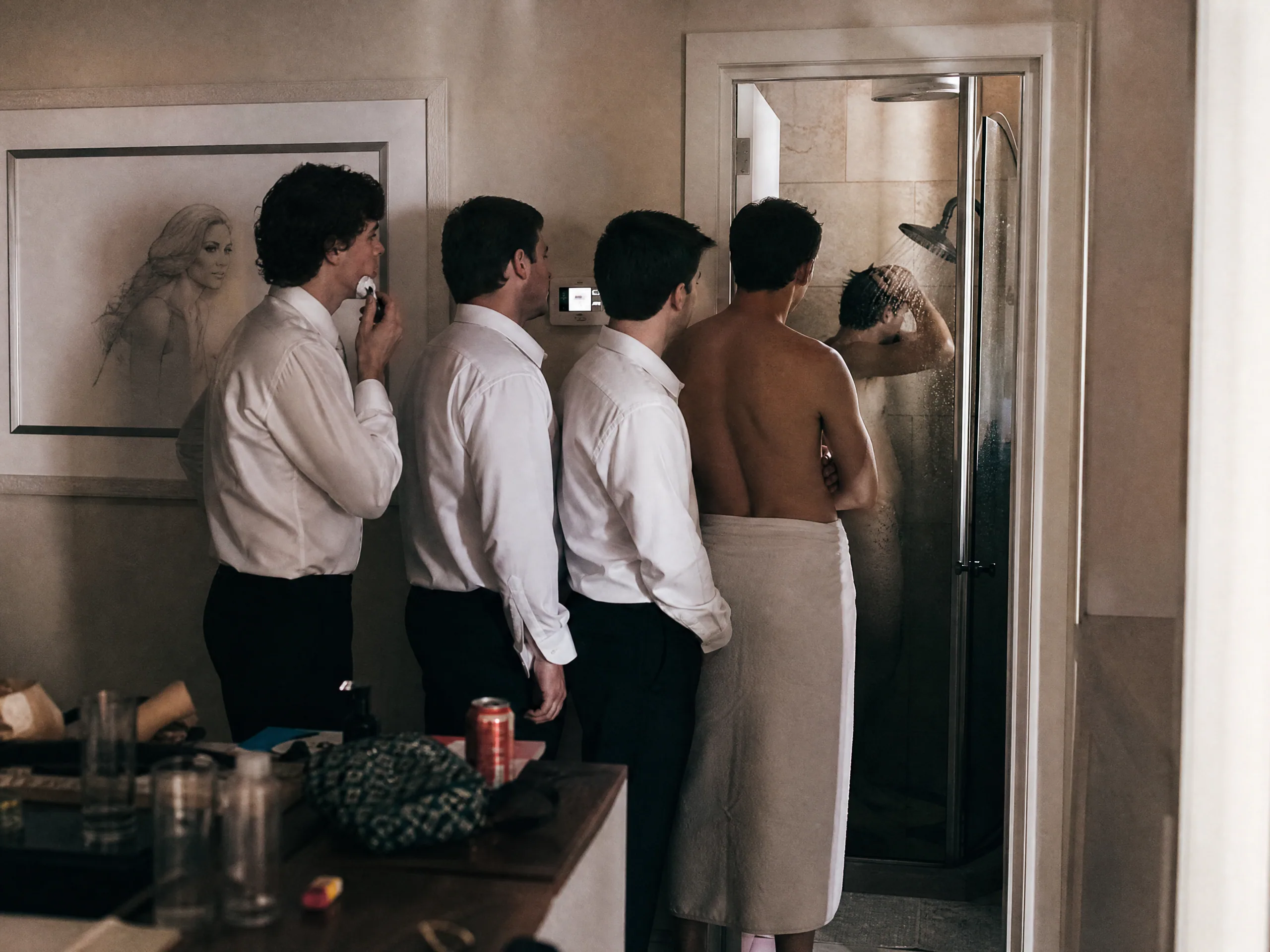
Morning Shower Queues Before Ceremony Call Times
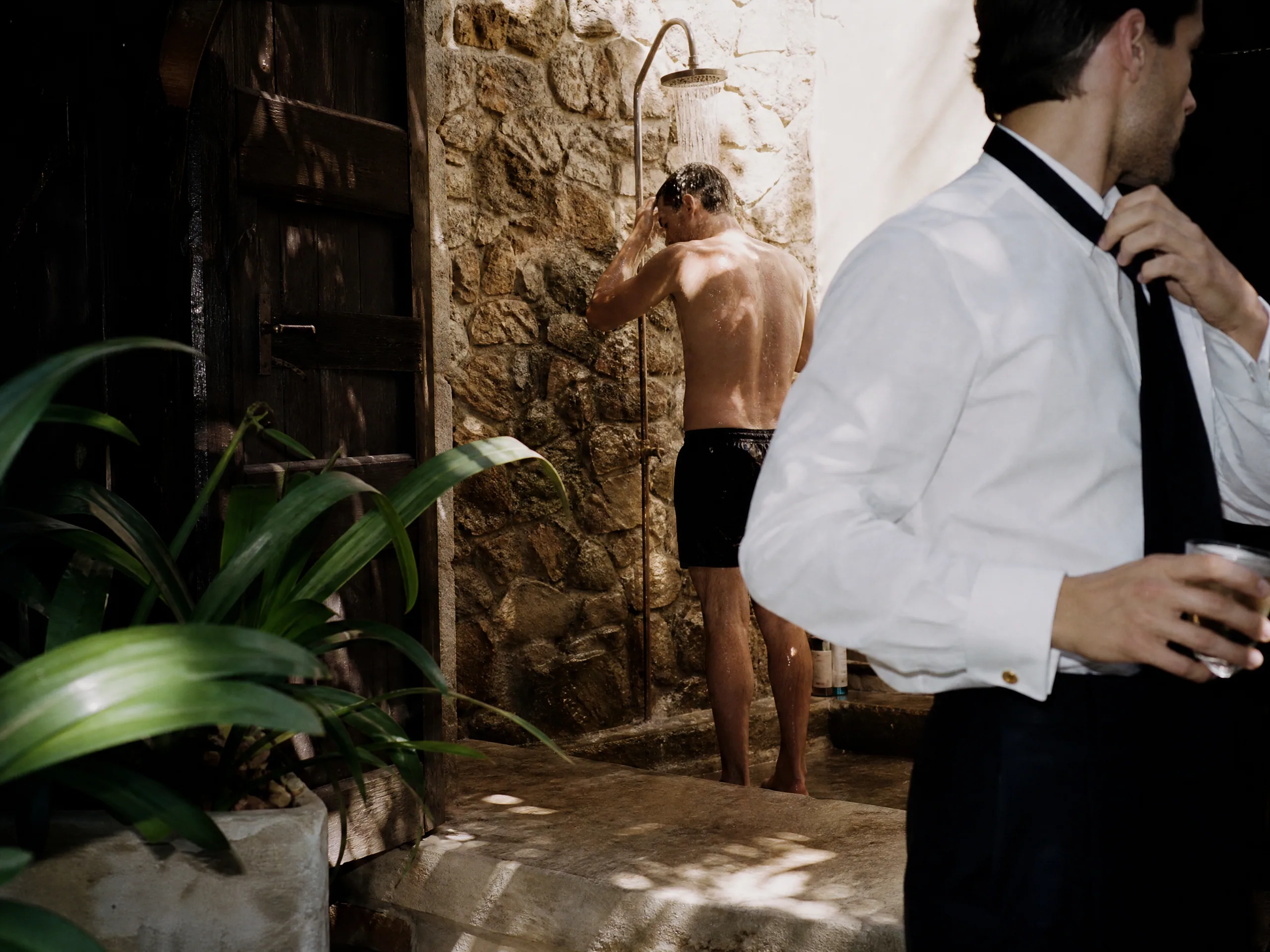
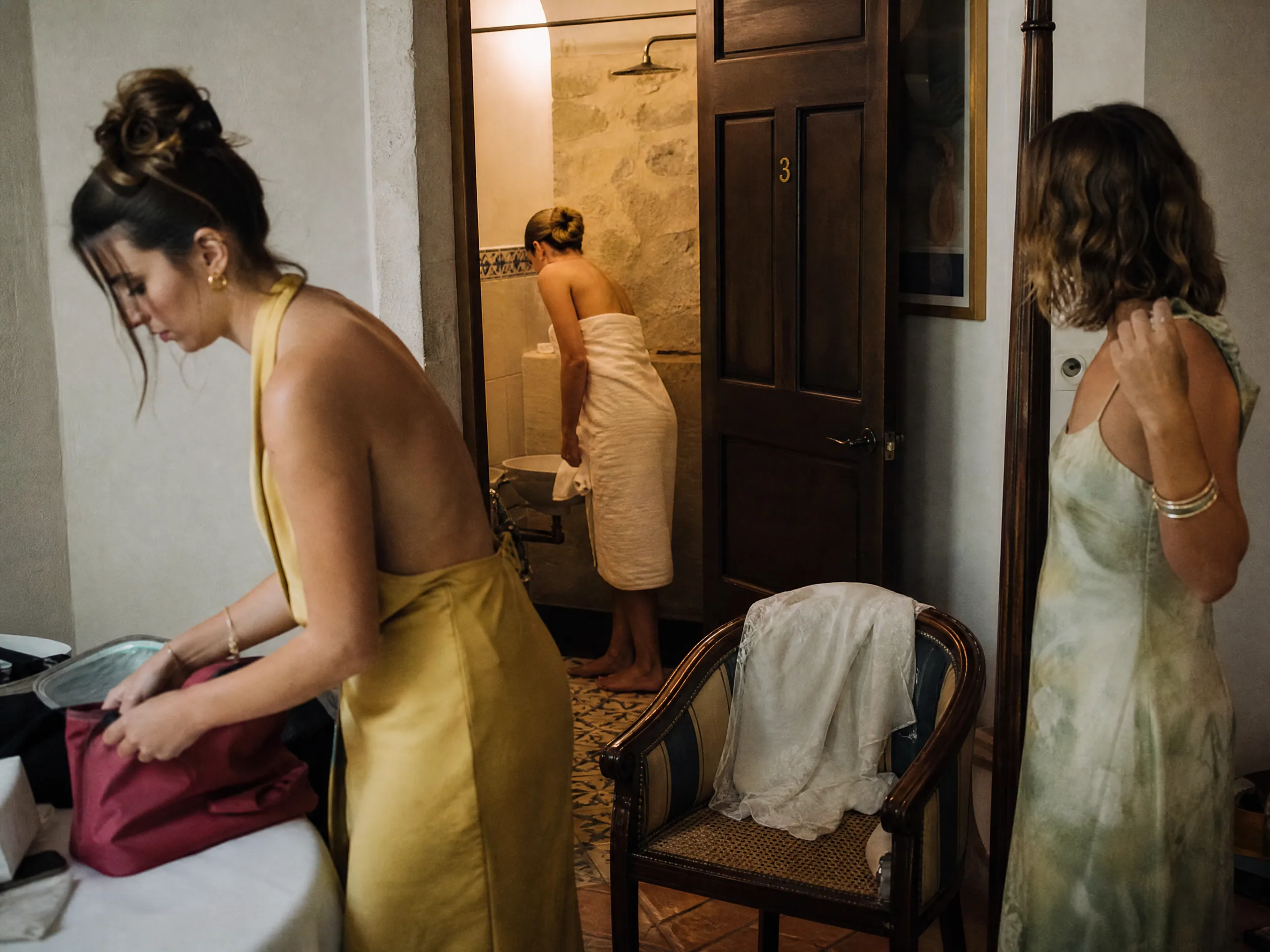
Publish a simple bathroom rota for hair-and-makeup mornings: who showers first, who can wait until after the first transfer, and which bathrooms share the same heater loop. Cap shower length for peak hours and nudge guests toward rinsing rather than spa sessions. If the villa has an outdoor shower or a secondary bathroom on a quieter line, assign late sleepers there so the bridal party keeps priority without drama.
Hair Tools, Makeup Desks, and Competing Water Draws
Hot-water demand spikes when showers overlap with someone filling a basin for makeup sponges, steaming garments, or hand-washing delicate fabrics. On ceremony morning, keep non-shower water draws short and cold where possible. Move steamer and sink tasks to a kitchen or laundry room if that line is separate. A one-line reminder—“ceremony morning: showers only in assigned bathrooms”—prevents accidental competition for the same heater.
Evening Recovery After Beach Days and Welcome Parties
After pool hours, beach clubs, or a dusty countryside transfer, everyone wants a hot rinse before dinner. Spanish heaters may still be recovering from afternoon housekeeper cycles or dishwasher runs. Stagger evening showers in twenty-minute waves, or send half the house to rinse earlier while the other half holds the aperitivo. Guests understand the rule when you frame it as protecting everyone’s evening comfort, not as policing water.
Kids, Older Relatives, and Accessibility Windows
Families with small children and older relatives need predictable warm water outside the bridal party’s rush. Reserve an early or late window for them, and keep one bathroom’s schedule quieter. If anyone has mobility needs, confirm which shower runs hottest longest and whether a seat or handheld head is available—then protect that bathroom from peak simultaneous use so temperature and pressure stay stable.
Dishwashers, Washing Machines, and Hidden Hot-Water Thieves
Villa self-catering weekends often run the lavavajillas or a laundry cycle right before guests expect hot showers. Those appliances can steal recovery capacity at the worst moment. Assign appliance windows away from ceremony mornings and large departure blocks. If the house has only one heater feeding kitchen and baths, treat the dishwasher like another shower occupying the system.
What to Put on the Wedding Website and WhatsApp Pin
Add a short “Villa water” note beside transfer times: heater type in plain language, peak shower windows, bathroom assignments for ceremony morning, and who to message if water runs cold. Pin the same note in the guest WhatsApp so late arrivals see it without hunting. Clear, kind logistics protect the mood better than last-minute hallway negotiations—and they keep your Spanish destination weekend feeling hosted, not improvised.