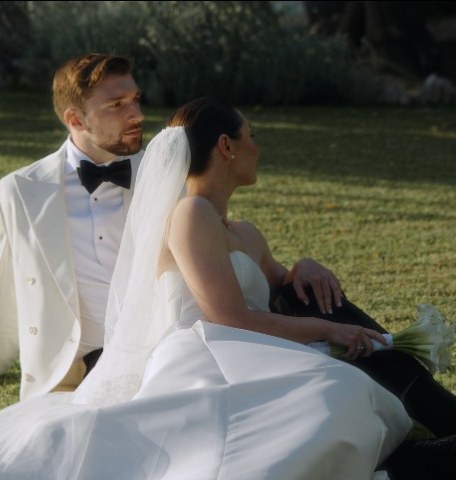
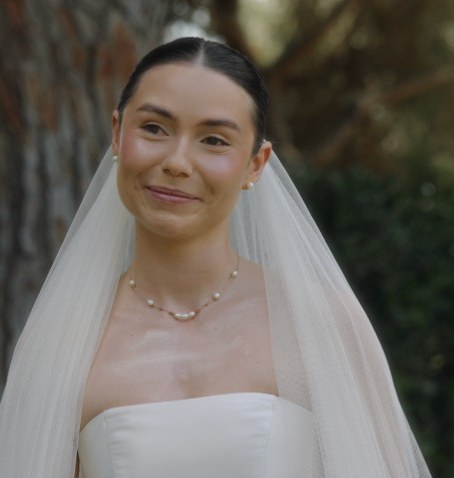
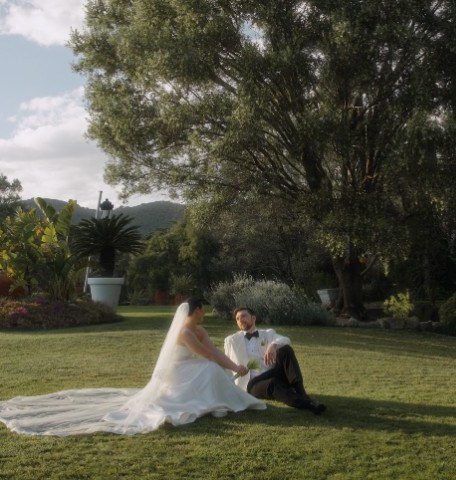
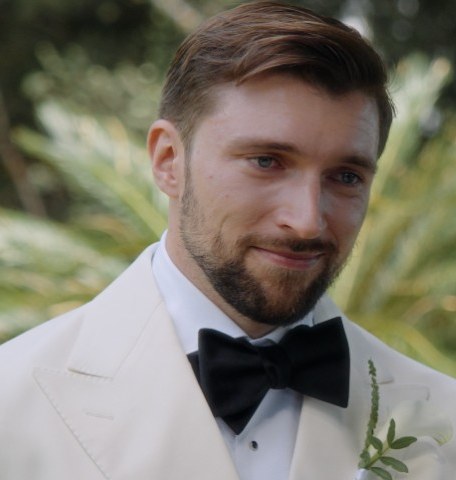
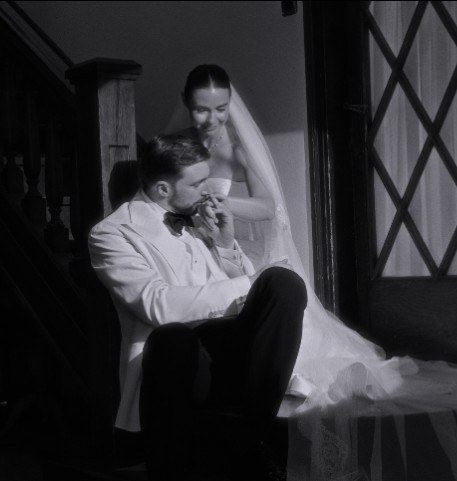
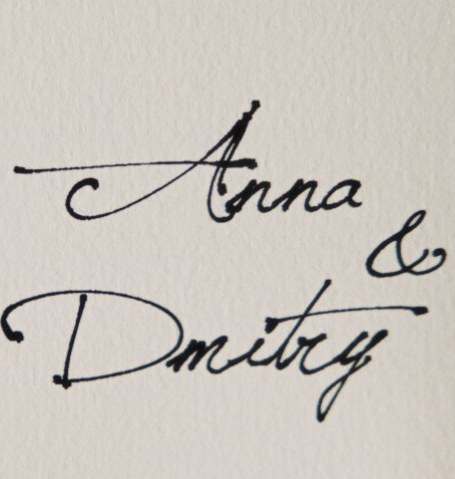
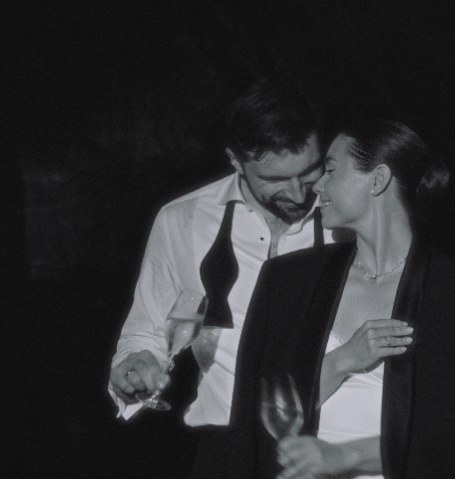
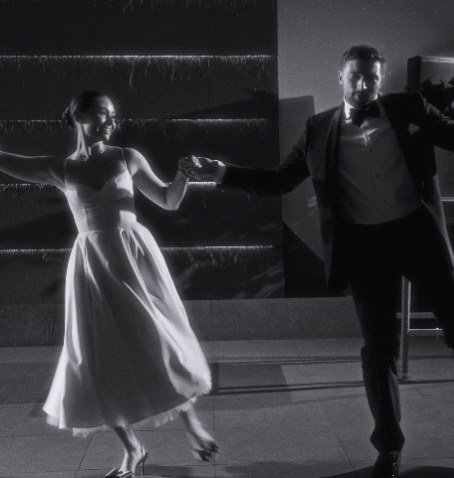
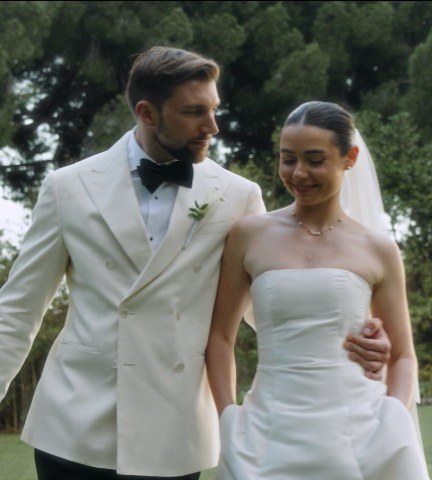
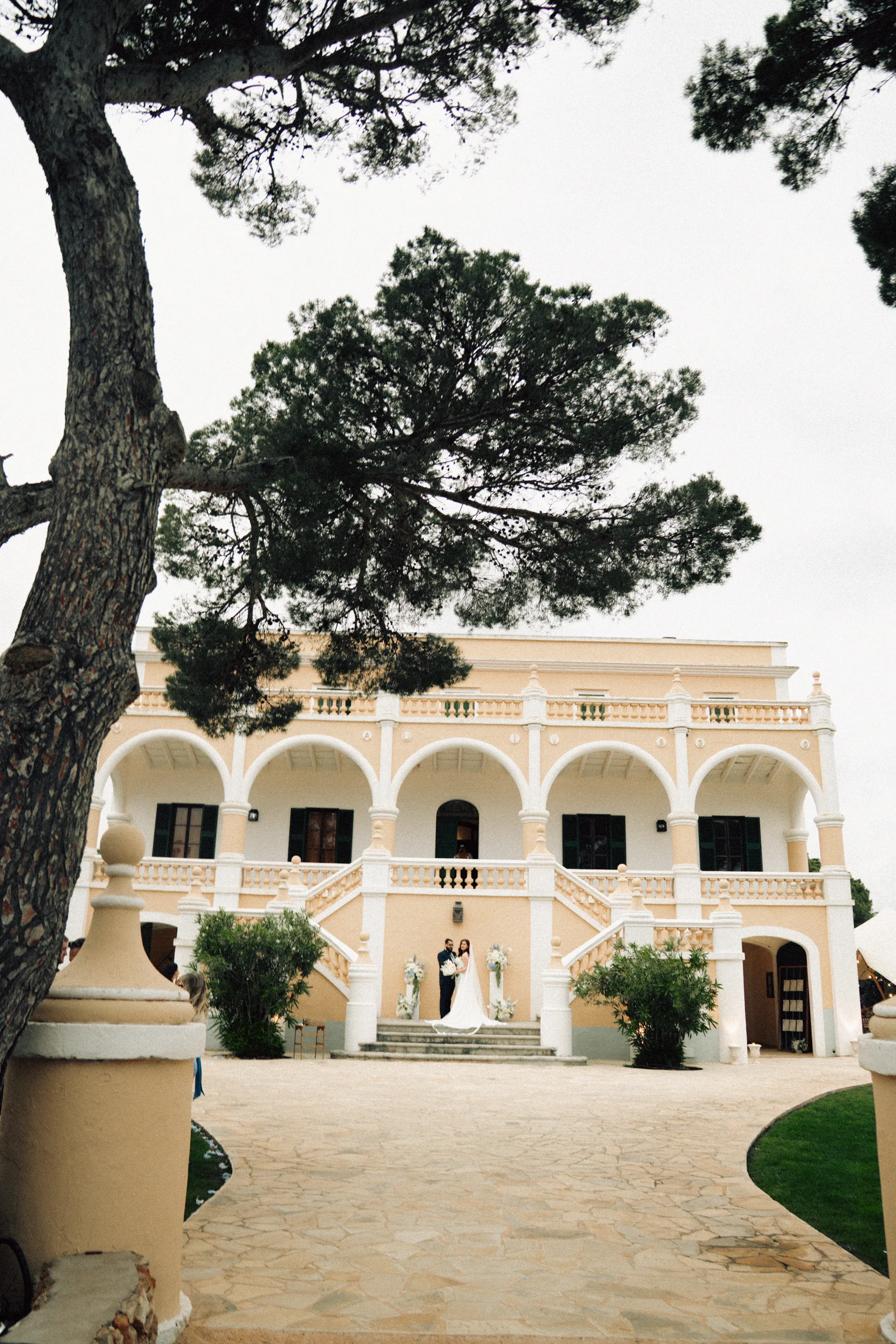
The film would be thinner if only Dmitry and Anna spoke. Friends and family remember the details the couple skip, and they will say the admiring thing out loud. Alisa cut the speeches into the same narrative as the private story. A memory opens the next passage. A joke shows a personality. A look backward turns into a promise about what comes next.
Years later the clothes matter less than the voices: how a name was pronounced, or a sentence that stalls because the speaker is trying not to cry. Those details fade first. They are the ones we most want the film to hold.
Side A. The story
The wedding film is the longer piece. Five chapters carry it.
- Back to 2014
- She Was Leaving
- An Entire Language
- Choosing You, Again
- Twelve Years in the Making
It opens in the year they met. Then Anna leaving, and the chance this would remain a brief story. Then the language Dmitry learned, and what that kind of effort looks like from the outside. Then the slower fact that staying is a series of decisions. The wedding day is the last chapter. It holds only if the earlier ones have been heard.
Side B. The love
The teaser shares the story and moves at another pace. Shorter, made of fragments, closer to the feeling than to the explanation. Memory, conversation, the wedding day, and Barcelona passing through as atmosphere.
- Cariño
- The Little Things
- Silly Jokes
- Wherever in the World
- Always Feel Like Home
Cariño is affection that already sounds domestic. The little things are what a schedule never lists. The silly jokes are a private language. The address can change. The teaser still ends on the same thought as the longer film: home is the person next to you.
The imperfect moment
A wedding film can be smoothed until the couple no longer recognize the day. People laugh because they are nervous. They cry in the middle of a sentence. They interrupt each other. The moment nobody planned is often the one they ask about later.
We left the roughness in where it belonged to them. The film is shaped, and the conversations are still unfinished, the way real ones are. Dmitry and Anna should be able to watch it and find themselves.
Given the time it asked for
The cut did not settle on the first pass. Sequences were opened again. Different beginnings were tried. Some scenes needed more air, some needed to go, including scenes we were fond of. The ending had to carry the years, not only the last hour of the party.
We stayed with it because the story was worth the attention. Alisa kept a plain question nearby: what will these two want to hear in twenty years, when they sit down and press play? From that came the smaller decisions. A look held a little longer. Music entering later than expected. A quiet reaction kept, where a more spectacular image was available. A line spoken on the wedding day set against a memory from 2014.
Choosing each other, again
In 2014 they could not have listed the next twelve years. What the film makes visible is the ordinary material of those years: difficult days, distance, laughter, the work of staying. By the wedding, they know the life they are agreeing to. They agree to it again.
What remains
Weddings take a day. After that the flowers are gone, the music has stopped, and the guests are on their way home. Memory keeps the mood and mislays the wording. A film can hold the wording, the laugh, and the detail nobody thought to write down.
We don’t make wedding films just to remember what happened. We make them to remember what it meant.