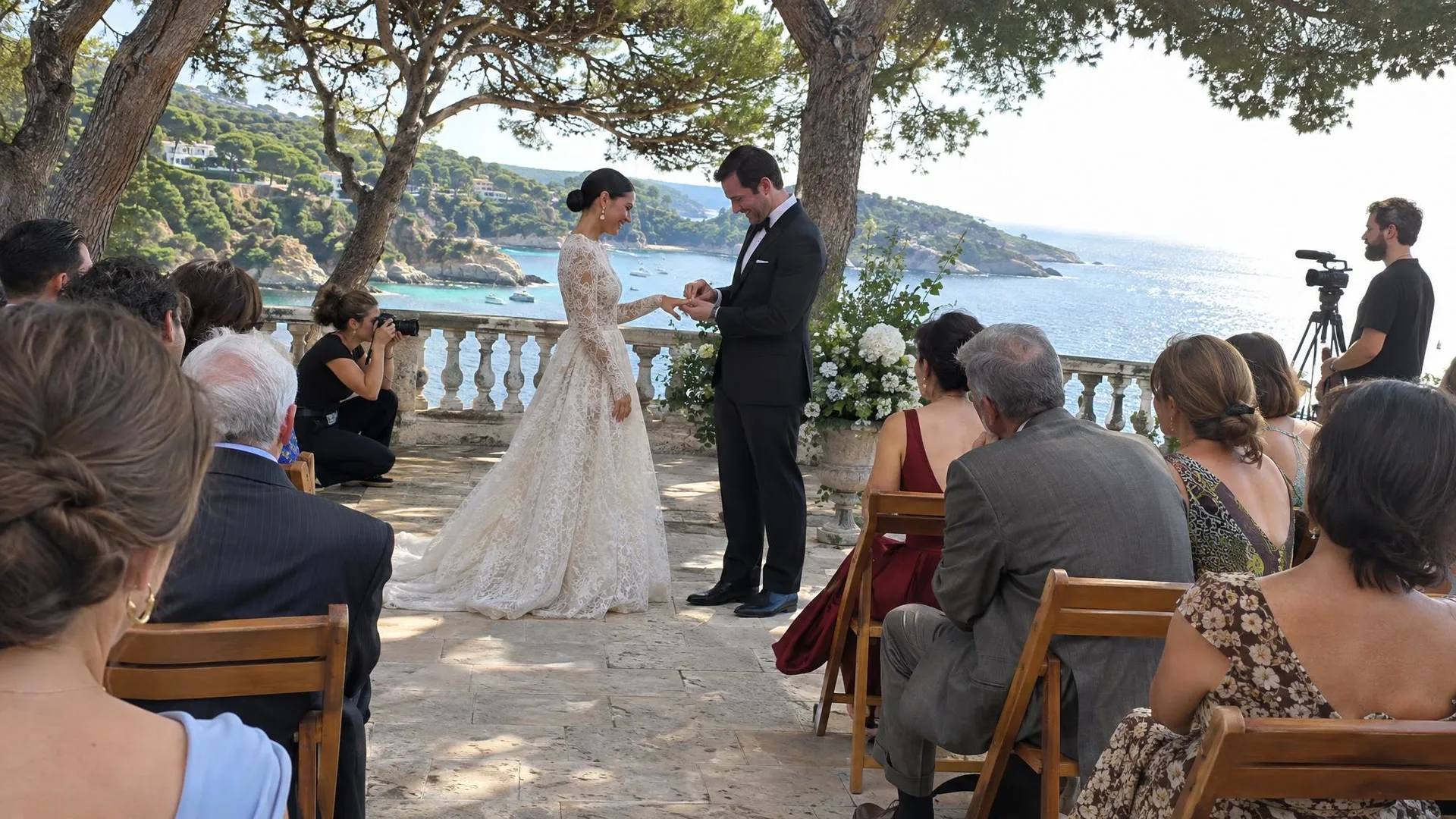
Most couples who hire both a wedding photographer and a videographer worry about the same thing: two people with cameras chasing the same few seconds. The first kiss, the walk back down the aisle, the father's speech. Will they get in each other's way? Will one of them end up in every frame of the other's work?
The worry is not imaginary. A recent discussion among wedding filmmakers, with more than sixty replies, started from an awkward situation: after a wedding, the photographer asked the videographer to cut her out of the film. She had stood behind the couple for the processional, the kiss, the exit and the grand entrance, so she was in the background of nearly every key moment. The filmmaker refused to remove those moments, because the film belongs to the couple, not to the vendors. Most replies agreed, and many added the same point: this should have been settled with one short conversation before the wedding, not in messages afterwards.
Another thread, this one written by a photographer, described the opposite problem. A videographer left a tripod in the middle of the aisle, put a large light over a candlelit dinner and blocked the groom's mother during the speeches. When she asked him to move, he told her she would remember the moment from the video. Hundreds of people upvoted it, and not because it was a photo-versus-video fight. It was a reminder that the people with cameras work for the guests' experience as well as for the archive.
The good news: when both teams are experienced and briefed, this rarely goes wrong. Here is how to set it up.
Same team or two separate vendors?
Both options work. What matters is who actually turns up on the day and whether they talk to each other.
One studio for photo and video can mean a shared timeline, one contact person and a matching look. It can also mean a company that sends whichever freelancers are free that weekend. Ask for the names of the people who will be there, and whether they have worked weddings together before.
Two separate specialists is very common and often gives you the strongest work in each medium, because you choose each person for their style. The trade-off is coordination, which falls partly on you. It is less work than it sounds.
One person doing both is the option to be most careful with. Photo and video need different positions, settings and attention at the same moment. If budget forces it, decide which one matters more to you and accept that the other will be secondary.
Introduce them before the wedding
The simplest fix, mentioned again and again by couples and vendors: share contacts and ask them to talk a few weeks before the wedding. A fifteen-minute call covers most of what goes wrong. They can agree on:
- Ceremony positions. Who takes the centre aisle and when, who works from the side, where any fixed camera stands, and that nobody stands behind the couple during the vows and the kiss unless both have agreed.
- The processional and the exit. These are the busiest seconds of the day for both. Usually one person walks backwards in front of the couple and the other shoots from the side or from behind the guests, and they swap at an agreed point.
- Couple session time. Photographers often direct this part. Video needs a few minutes of natural movement rather than still poses. Ask for both inside the same block of time, not two separate sessions.
- Speeches and first dance. Where a camera on a tripod can stand without blocking anyone's view, and what light, if any, is needed.
If you are using a planner or a venue coordinator, include them in the call, or at least send them the result.
The ceremony: share the aisle, protect the view
Most clashes happen during the ceremony, because nobody can ask the couple to repeat a moment. A few things help:
- Keep fixed cameras low and to the side. A small camera on a short tripod at the edge of the front row does the job without a tripod sitting in the aisle.
- Agree a "no-go" zone behind the couple for the vows and the kiss. Anyone standing there will be in the background of every frame from the front.
- Microphones solve most problems quietly. Clear vows depend on audio, not on someone standing a metre from your face. Lavalier microphones and a separate audio recorder mean the videographer can stay back. Our guide to ceremony audio for vows and speeches explains what to ask for.
- Tell your guests too. A row of phones held up in the aisle causes more trouble for both photo and video than the two vendors ever do. A short request from the officiant helps; see our note on guest photography and unplugged ceremonies.
Couple session and golden hour
In Spain the best evening light is short, especially in spring and autumn. If the photographer and the videographer each want twenty minutes, you lose the light and half of your cocktail hour.
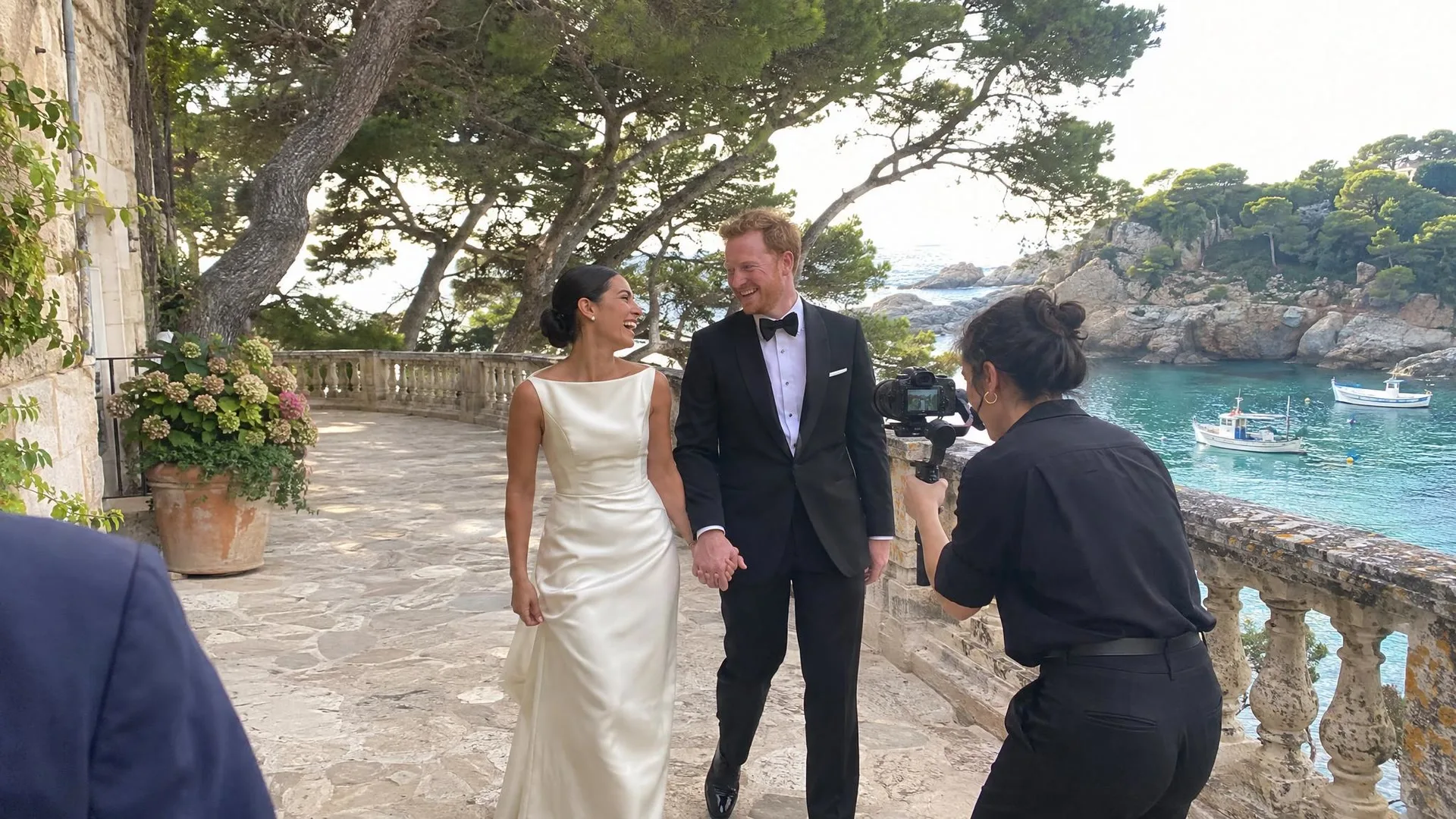
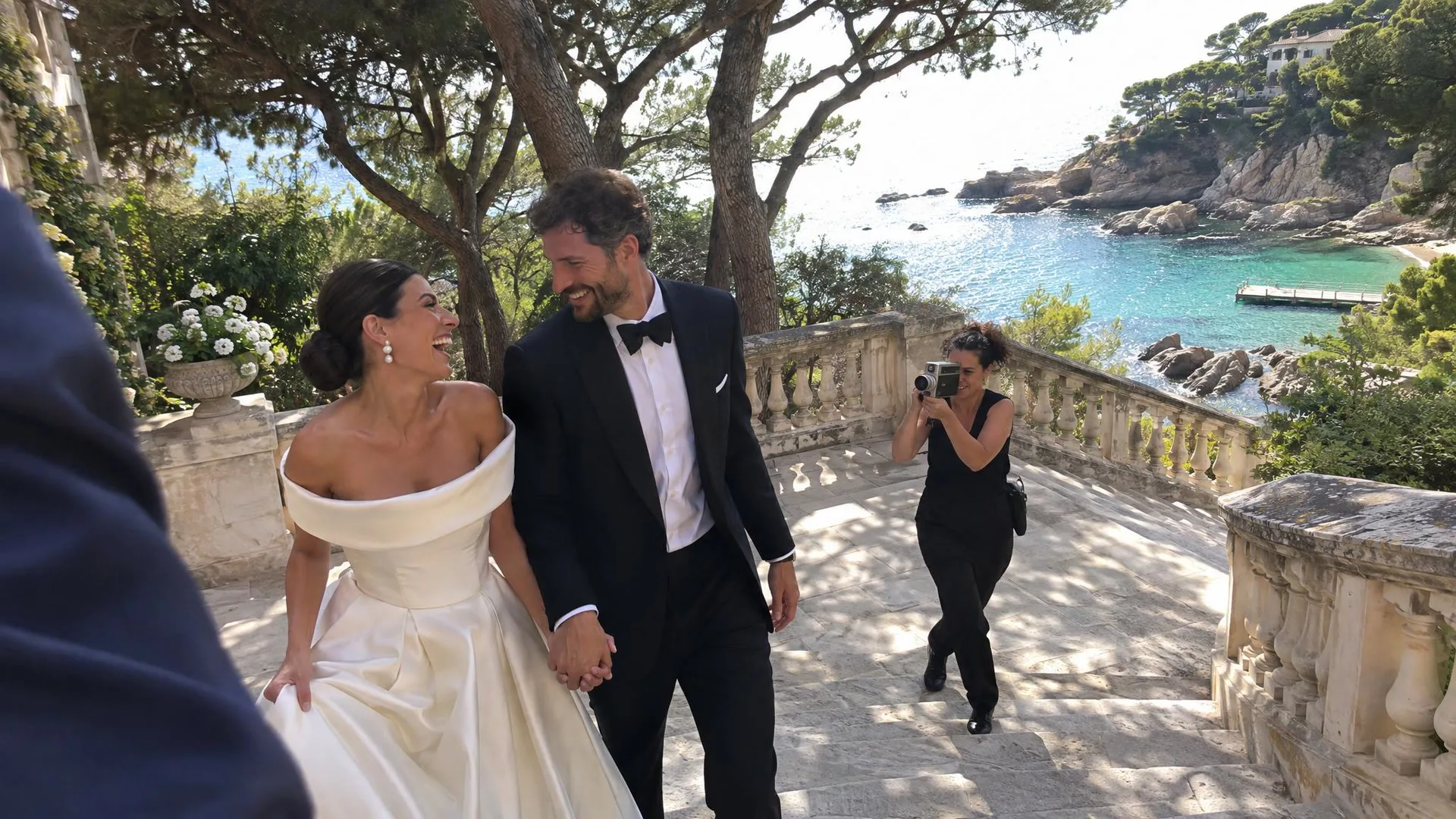
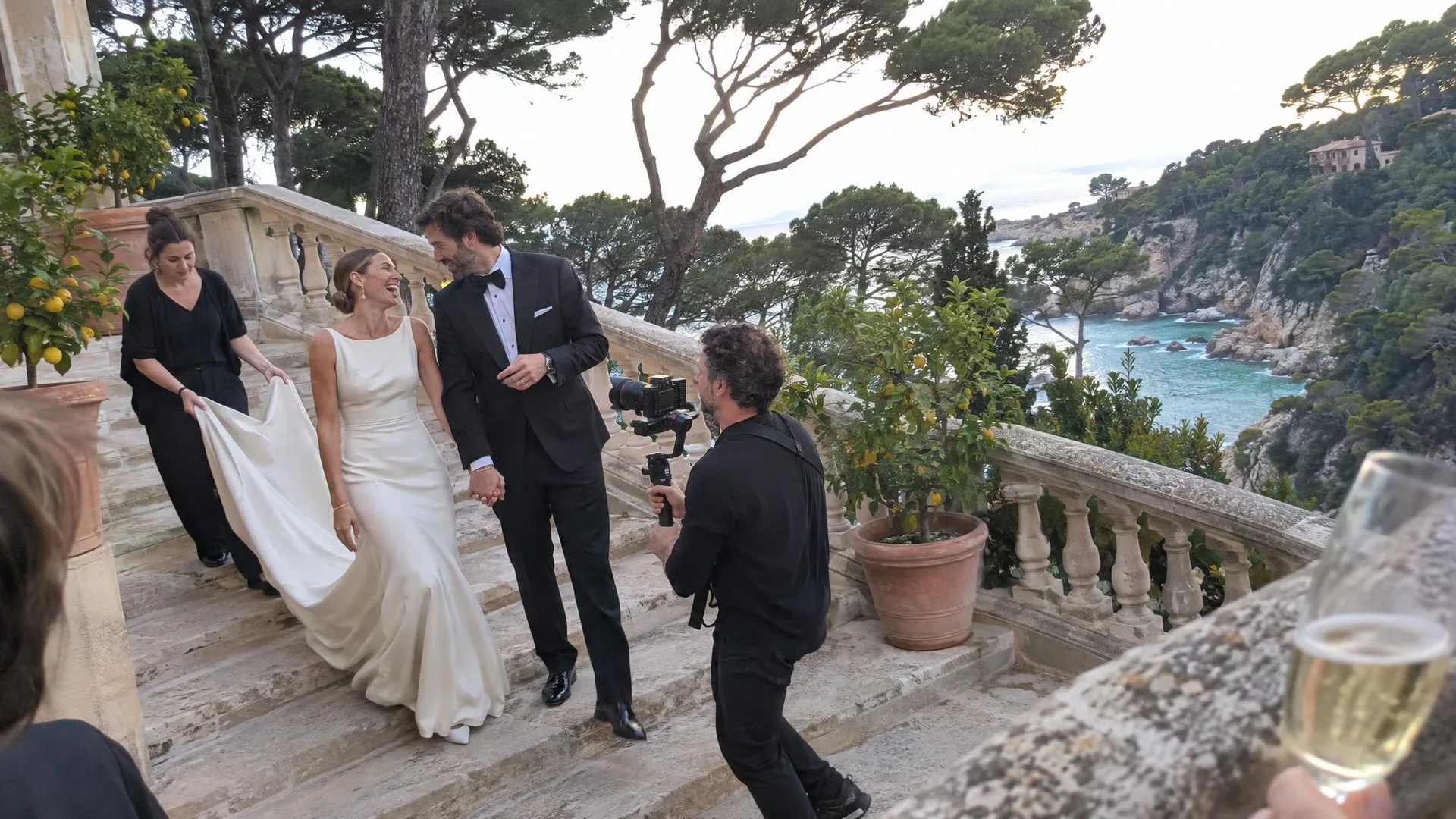
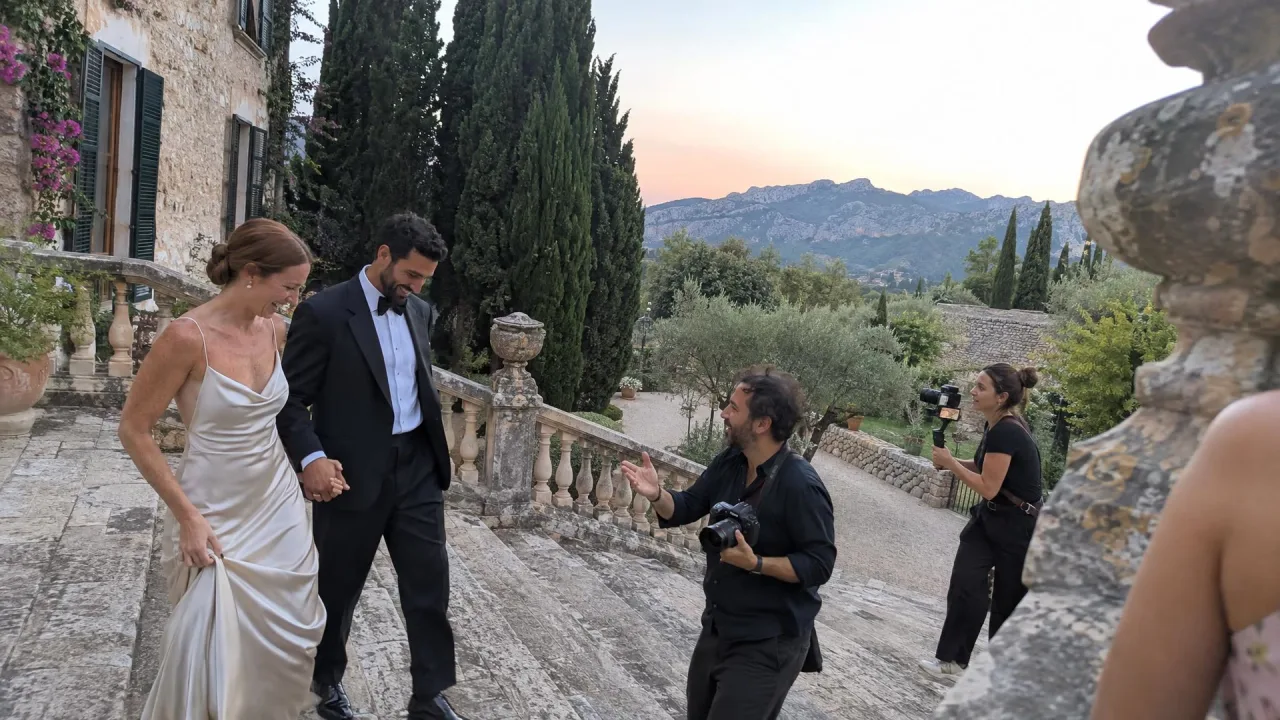
A better pattern is one walk to one or two places near the venue: a stone staircase, a terrace above the sea, a row of cypresses. The photographer sets up a few frames; the videographer films the walk between them, the laughter after a pose, the moment you stop thinking about cameras. Video often finds its most natural moments in those in-between seconds, so it costs you almost no extra time.
Ask both of them how long they need, and put the total in the timeline. If you want a longer, separate session for photos or film, schedule it for another day.
A simple example for a September wedding near Barcelona, when the sun sets around 19:40:
- 17:00, ceremony: shared, positions agreed in advance.
- 17:40, group photos with family: photographer; video films a few wide shots.
- 18:00, cocktail with guests: both, moving separately.
- 19:05, 20-minute couple walk: photographer sets frames, video films the walk.
- 19:30, back to the terrace for the last light: both.
- 20:30, dinner and speeches: video on a fixed camera, photographer roaming.
In June, move the couple walk later: sunset in Barcelona is closer to 21:30, and in Mallorca and Menorca it is a few minutes earlier.
Speeches, dinner and dancing
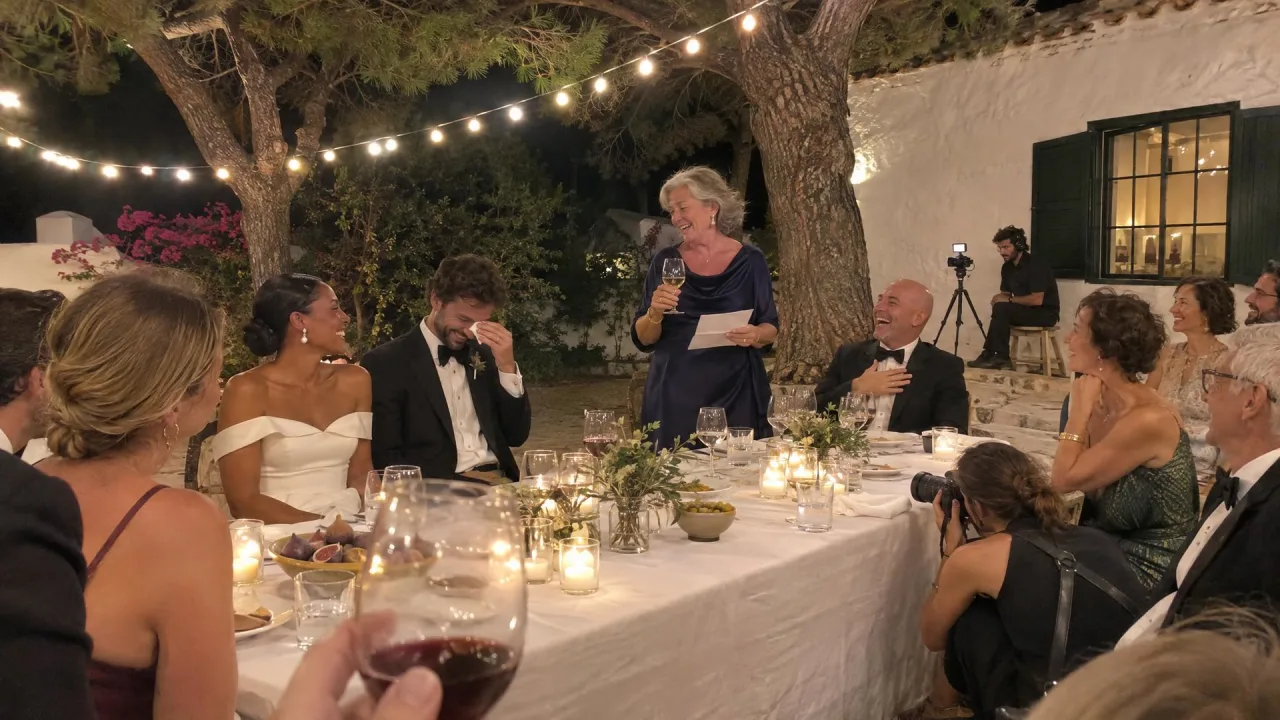
This is where guest experience matters most. Dinner under pines or strings of lights in a Menorca or Mallorca garden looks beautiful because it is dim. Large lights and big stands change the mood for everyone.
Ask your videographer how they handle low light at dinner. A small, soft light placed with care is normal; a big studio light in front of the head table is not. Ask where the tripod for the speeches will stand, and make sure no older relative ends up looking at the back of it. A good camera position is usually against a wall, to one side, aimed at the speaker.
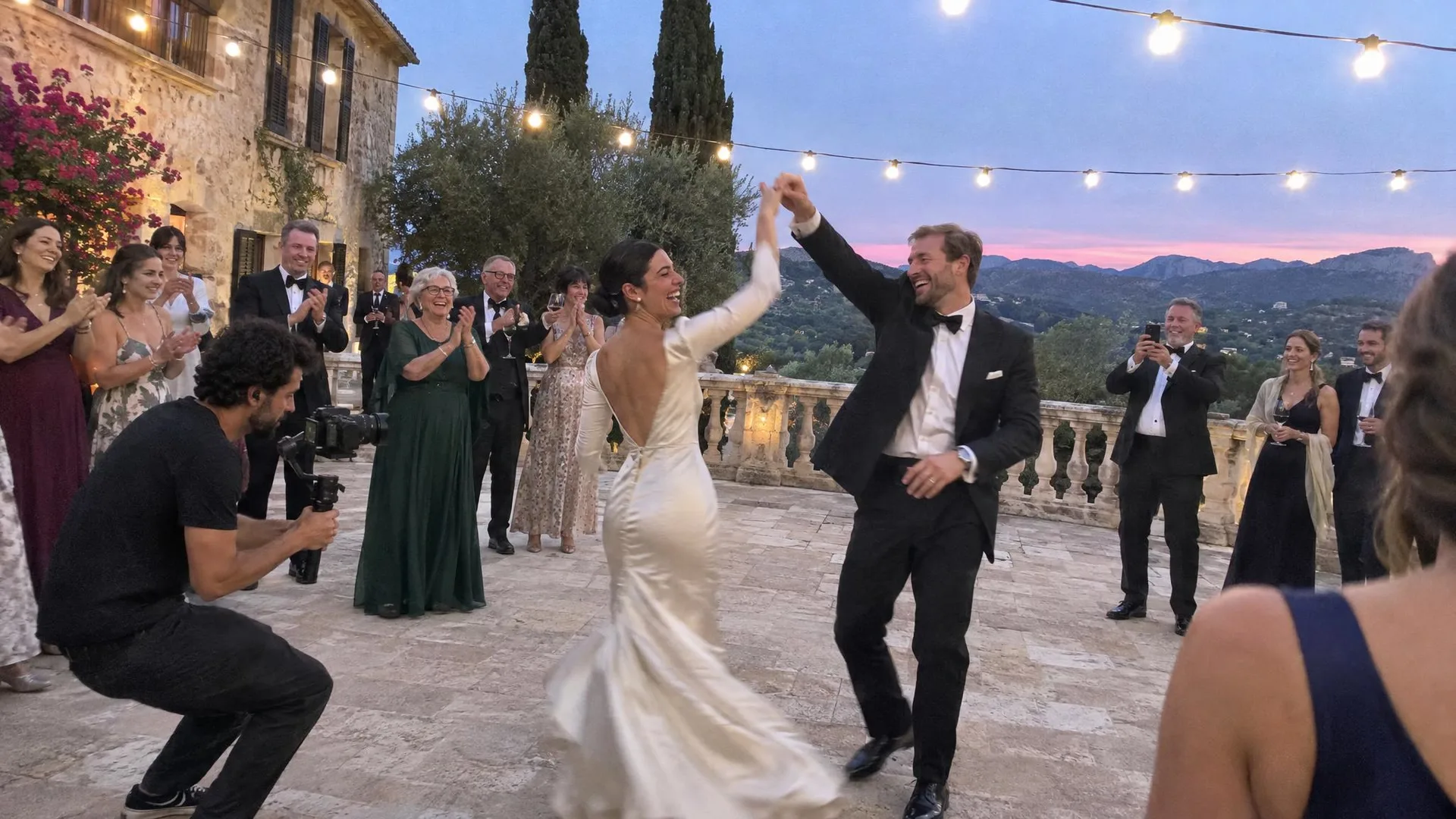
For the first dance, the photographer and the videographer usually work from opposite sides of the dance floor so they can see each other and stay out of each other's frame.
What to put in writing
You do not need a long contract clause, just a short note sent to both teams:
- Names and phone numbers of both teams, and of your planner.
- The timeline, with the minutes set aside for the couple session.
- Ceremony positions and the "no-go" zone behind you.
- Any guest who must not be filmed or photographed, and anything you do not want shared online.
- Who has priority at each key moment if there is a conflict (usually, whoever has the better position at that second).
If you are still choosing a videographer, our questions to ask a wedding videographer before a Spain destination wedding include a few about working with photographers.
How we work alongside photographers
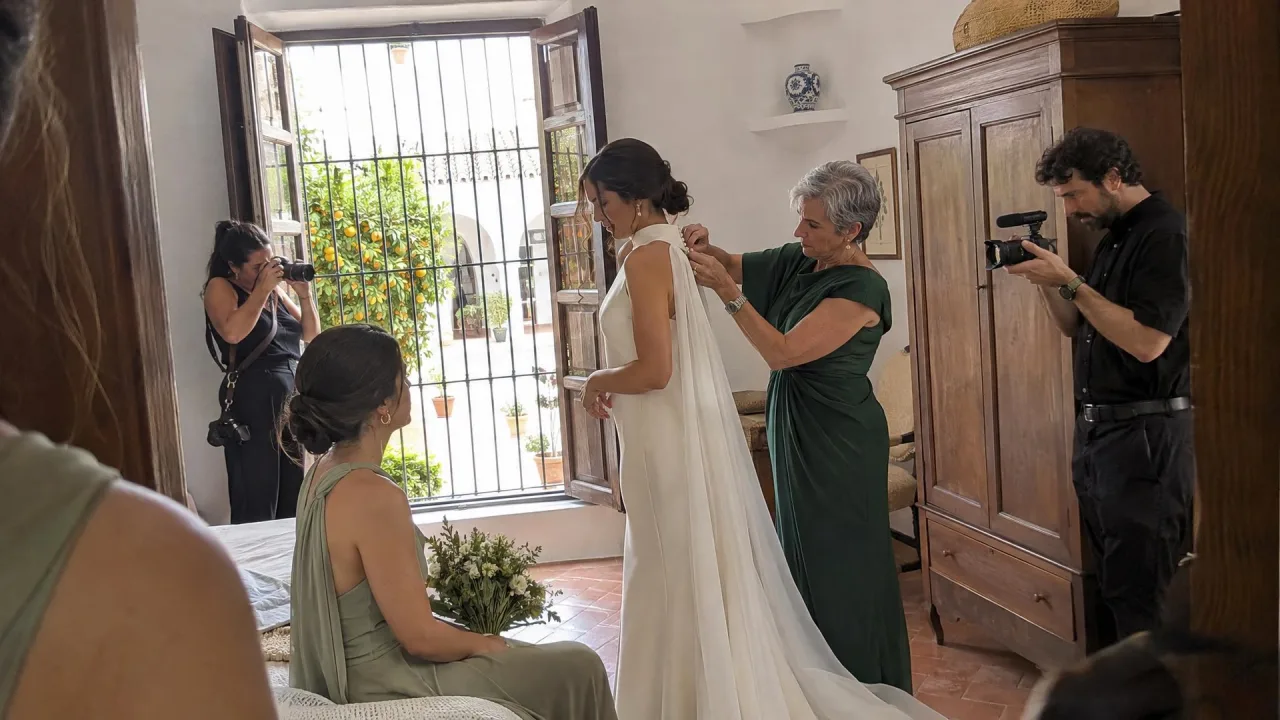
We are Sam and Alisa, and we make documentary and cinematic wedding films in Spain: Barcelona, the Costa Brava, Mallorca, Menorca and Andalusia. We only make films, so on almost every wedding there is a photographer we work next to. Our approach is documentary first: we do not stage moments, so we rarely need to stop the day for video, and we keep our distance during the ceremony and the speeches, with lavalier microphones and a separate audio recorder doing the close work.
Our Mini package has one cinematographer; Medium, Full and Full+ have two, which makes it easier to stay out of the photographer's way. Before the wedding we like to agree positions and the couple session with your photographer, and we are happy to join a call with your planner. If you are planning a wedding in or near the city, you can see how we film it on our page about documentary and cinematic wedding films in Barcelona.
The short version
A photographer and a videographer can share a wedding without either of them showing up in the other's best frames. Introduce them early, agree on the ceremony positions and the couple session, keep tripods and lights out of the guests' way, and write the key points in one short note. Then forget about cameras and enjoy your day.
If you would like to talk about your wedding and how we would film it next to your photographer, write to us.