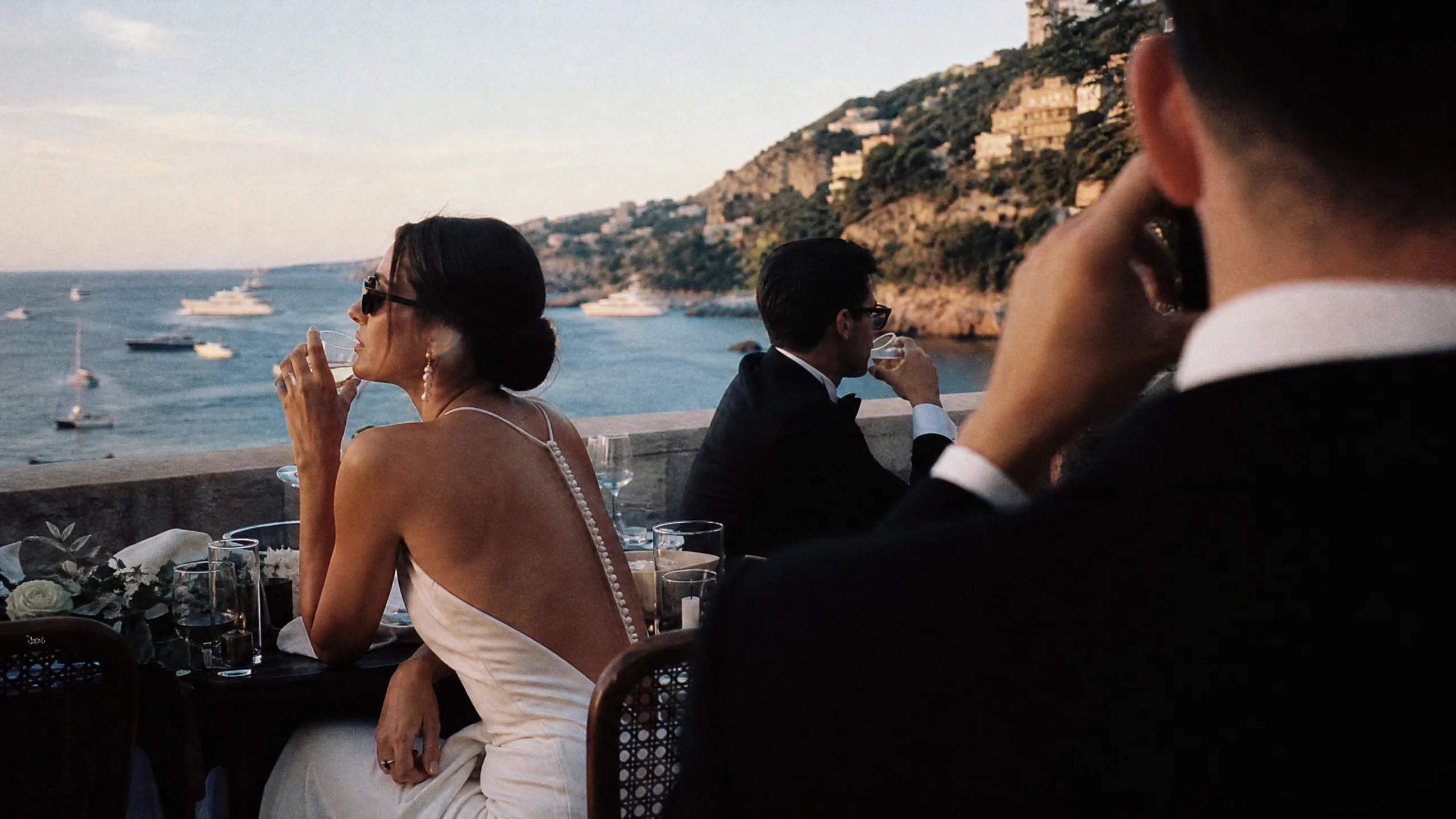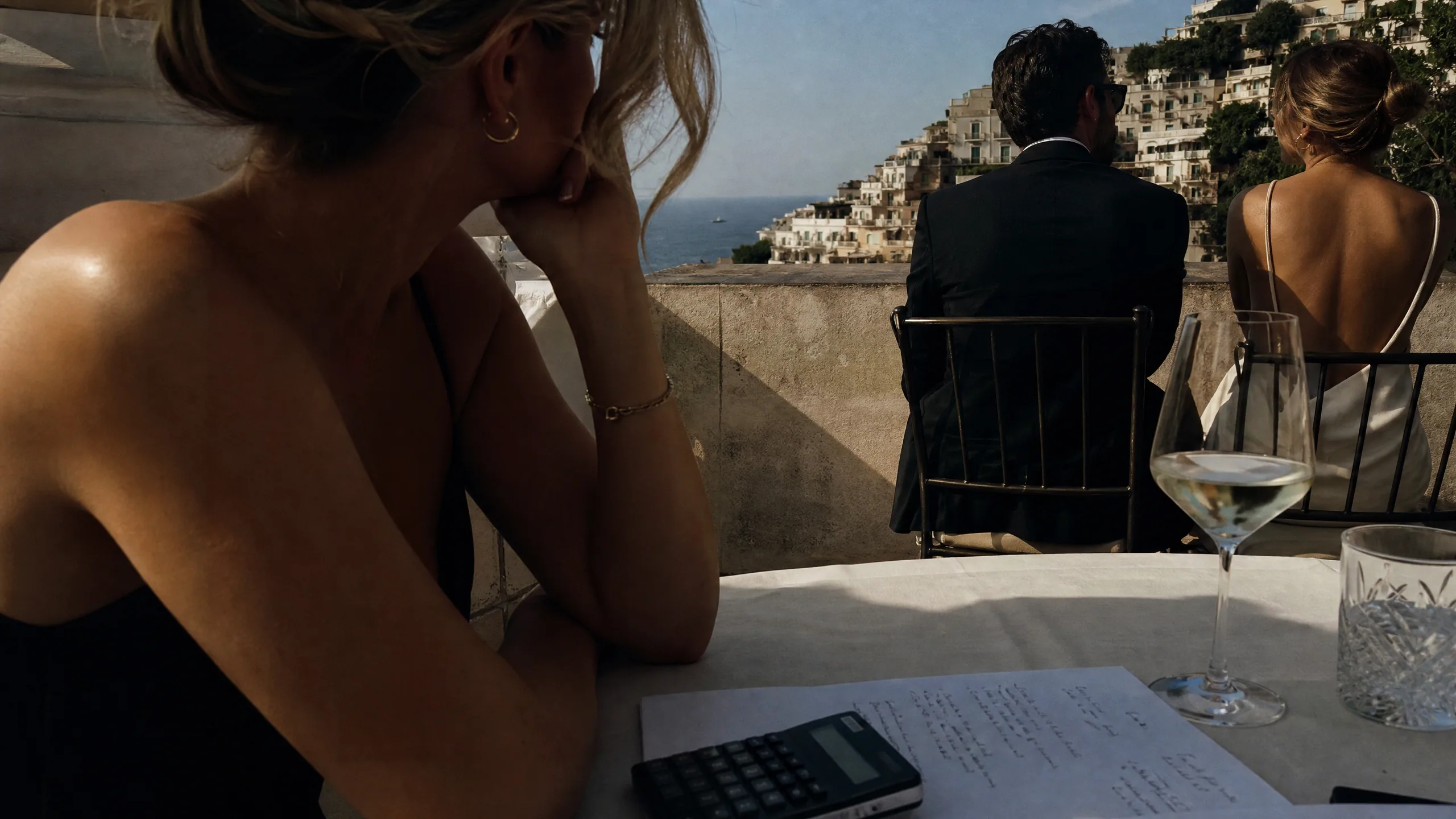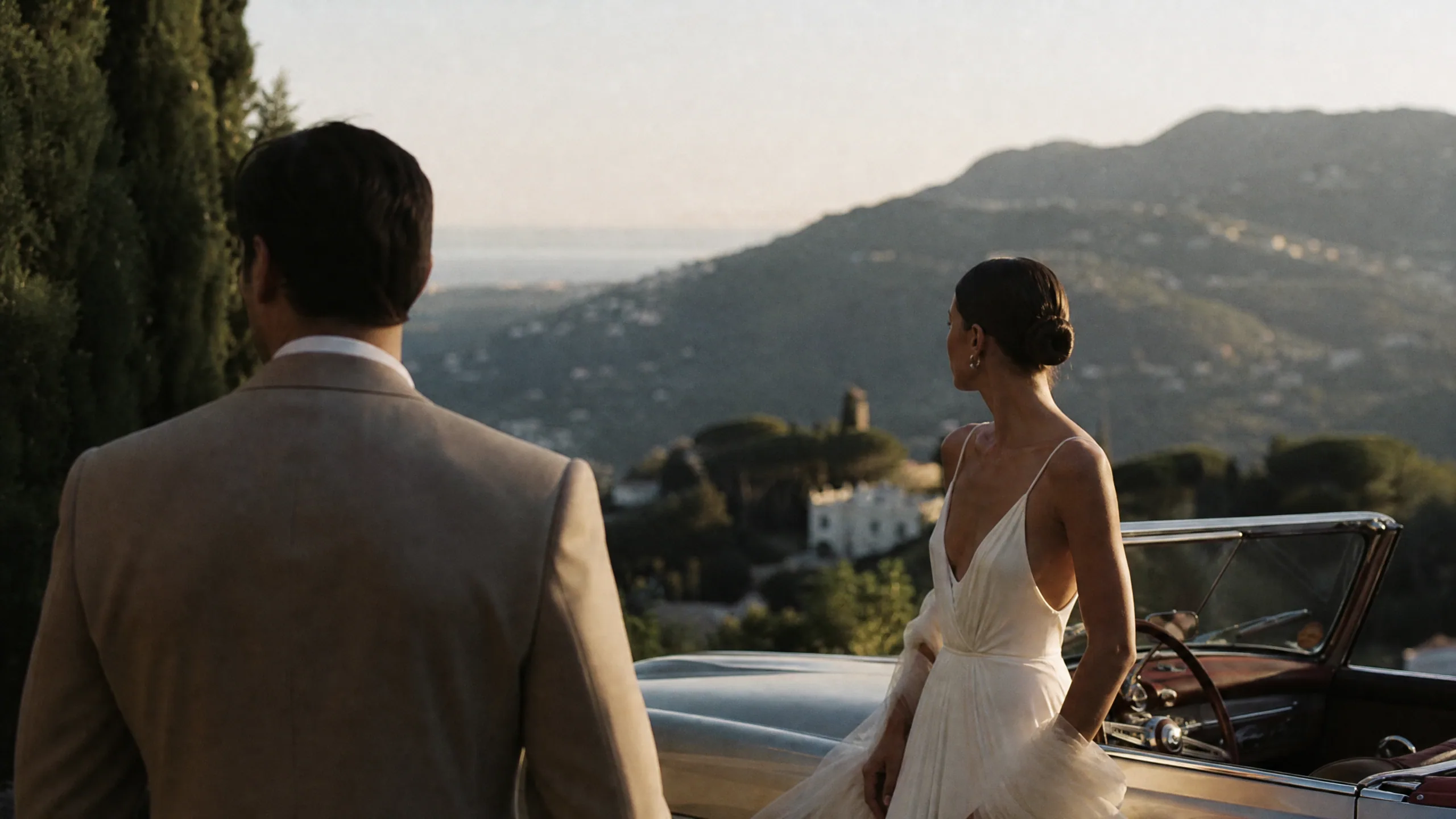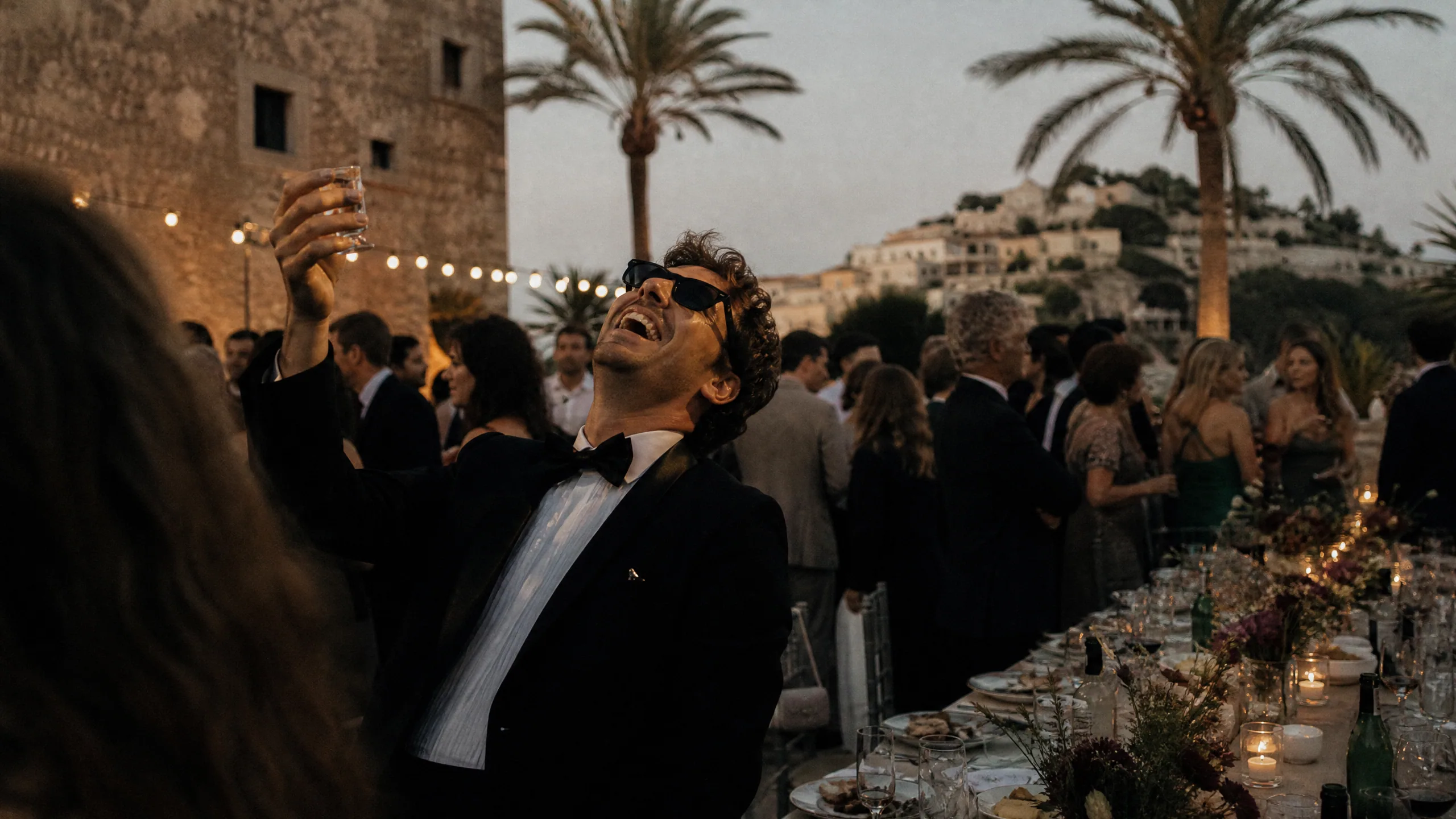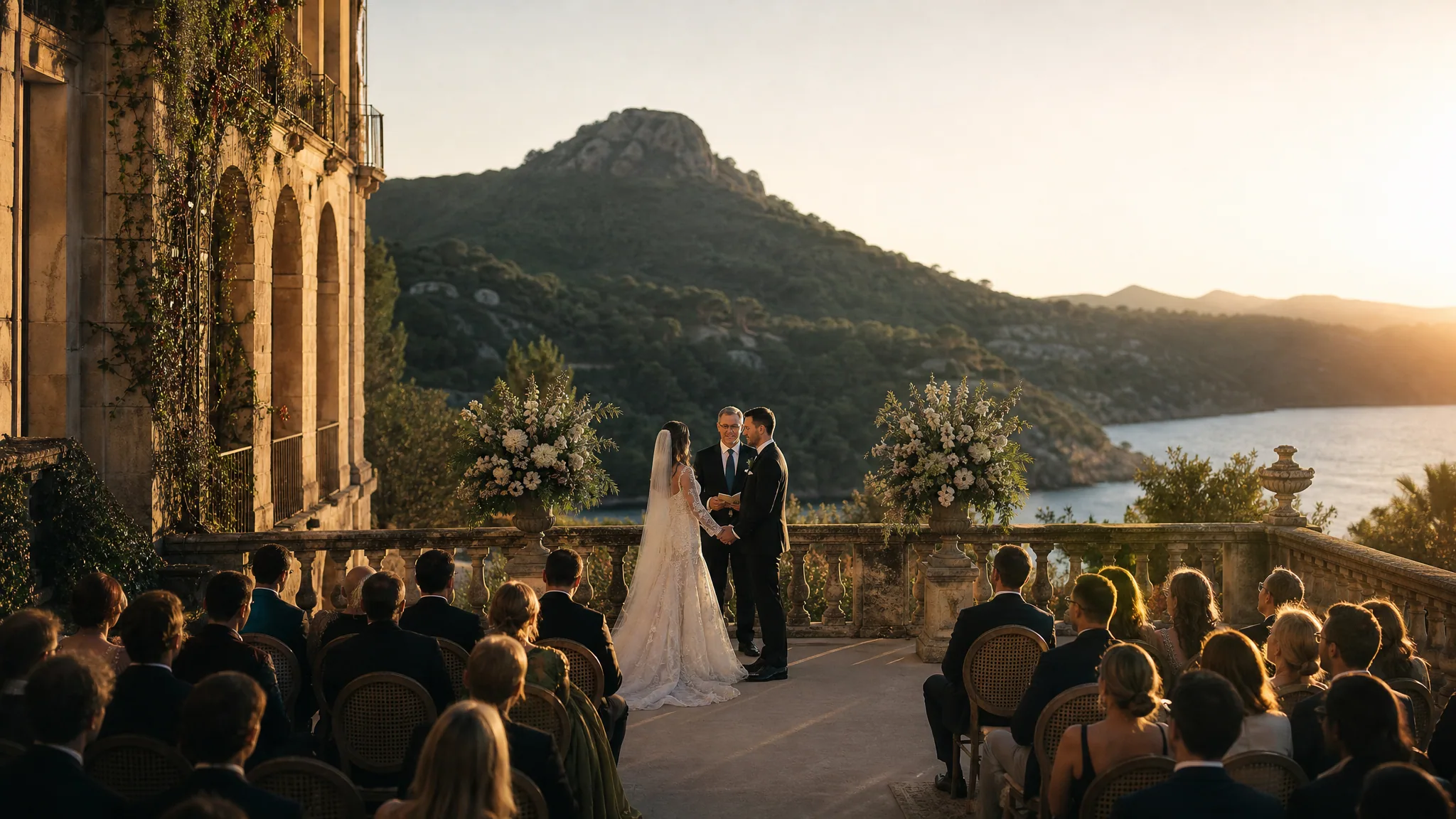
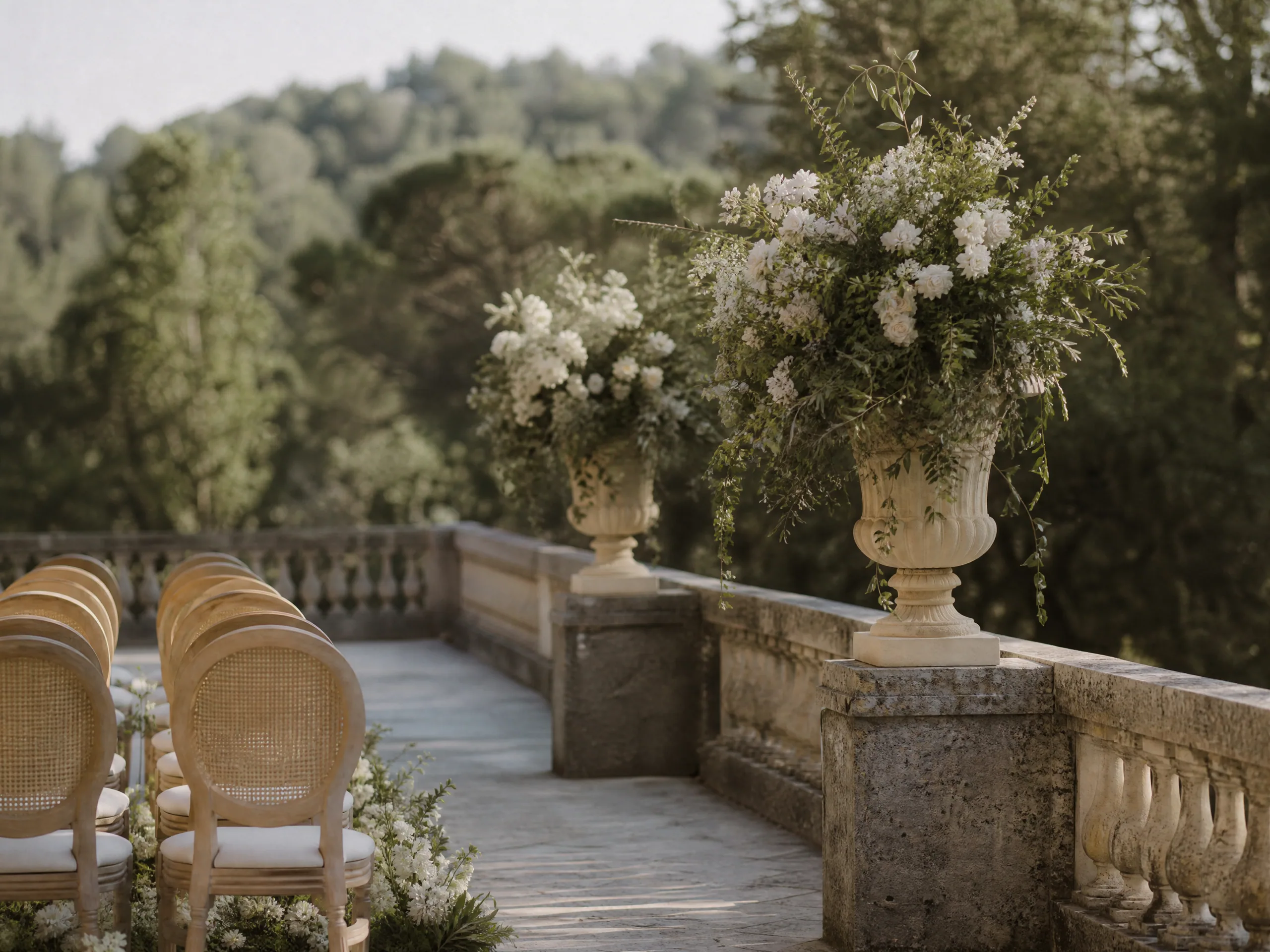
A destination wedding in Spain often brings together more than one language in the same room. Parents who flew from another country. Friends who understand the atmosphere but not every word. A couple who want their vows to feel intimate — and still want everyone present to feel included.
That is the real work of a bilingual wedding ceremony in Spain: not translating every sentence, but designing a ceremony where meaning travels clearly without losing emotion.
After filming international weddings across Barcelona, Mallorca, Madrid, and coastal Spain, we have seen what helps ceremonies feel calm and what makes them feel fragmented. This guide is practical. It is written for couples who want structure without turning the most personal part of the day into a scripted broadcast.
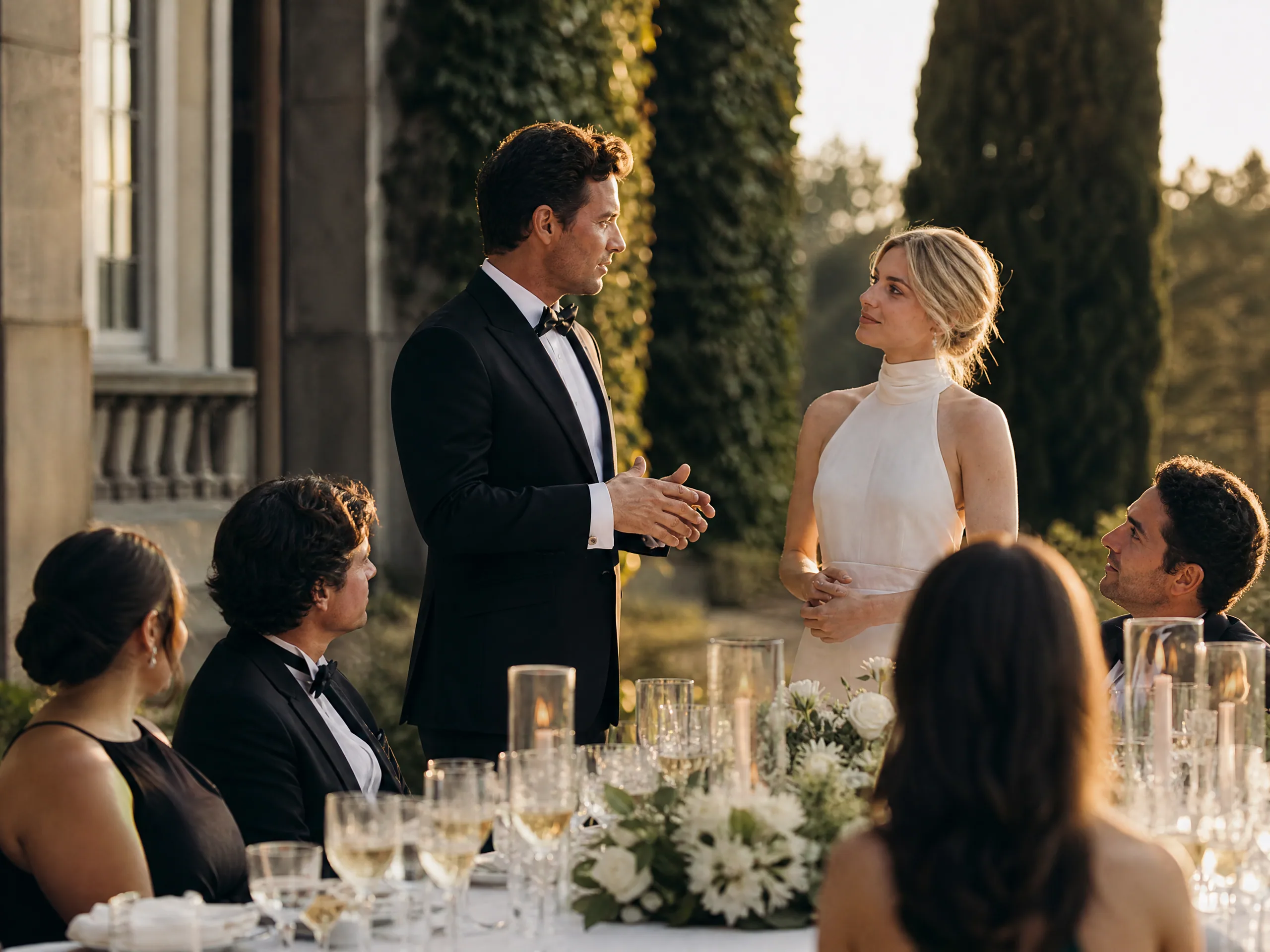
Decide What Must Be Understood by Everyone
Start with a simple question: which moments need full comprehension for every guest, and which moments can stay private between the two of you?
Most international ceremonies work best when these parts are accessible in both languages:
- Welcome and brief context of the ceremony
- Legal or formal declarations, if any are spoken aloud
- Key ritual explanations (why a reading, ring exchange, or cultural tradition is included)
- Closing words and practical next steps for guests
Vows can remain in one language if that is where the emotion lives. Guests usually understand love even when they do not understand every sentence. What they need is orientation — so they know when to stand, when to listen, and why a moment matters.
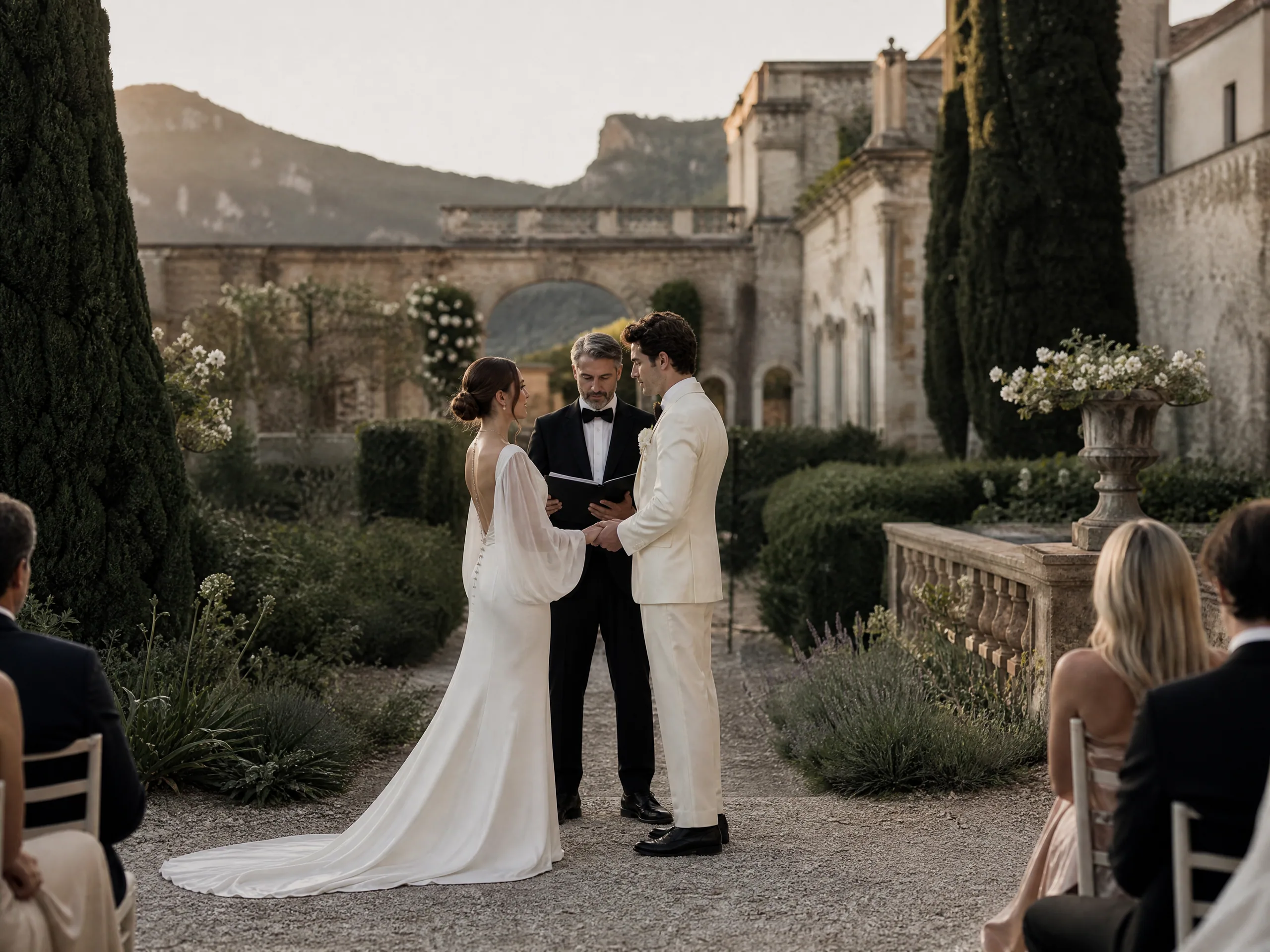
Choose a Ceremony Language Structure That Feels Natural
There is no single correct format. The strongest bilingual ceremonies usually follow one clear pattern instead of switching languages every few lines.
Common structures that work well in Spain:
- Primary language + summary: Ceremony led in one language, with short summaries in the second language after major sections.
- Alternating sections: Welcome in Language A, readings split across languages, vows in the couple's preferred language, closing in Language B.
- Dual officiant model: Two speakers share the ceremony, each leading in one language, with carefully timed handoffs.
What rarely works is constant line-by-line translation. It doubles length, breaks rhythm, and can make vows feel less intimate on camera and in the room.
Work With an Officiant Who Understands Pace
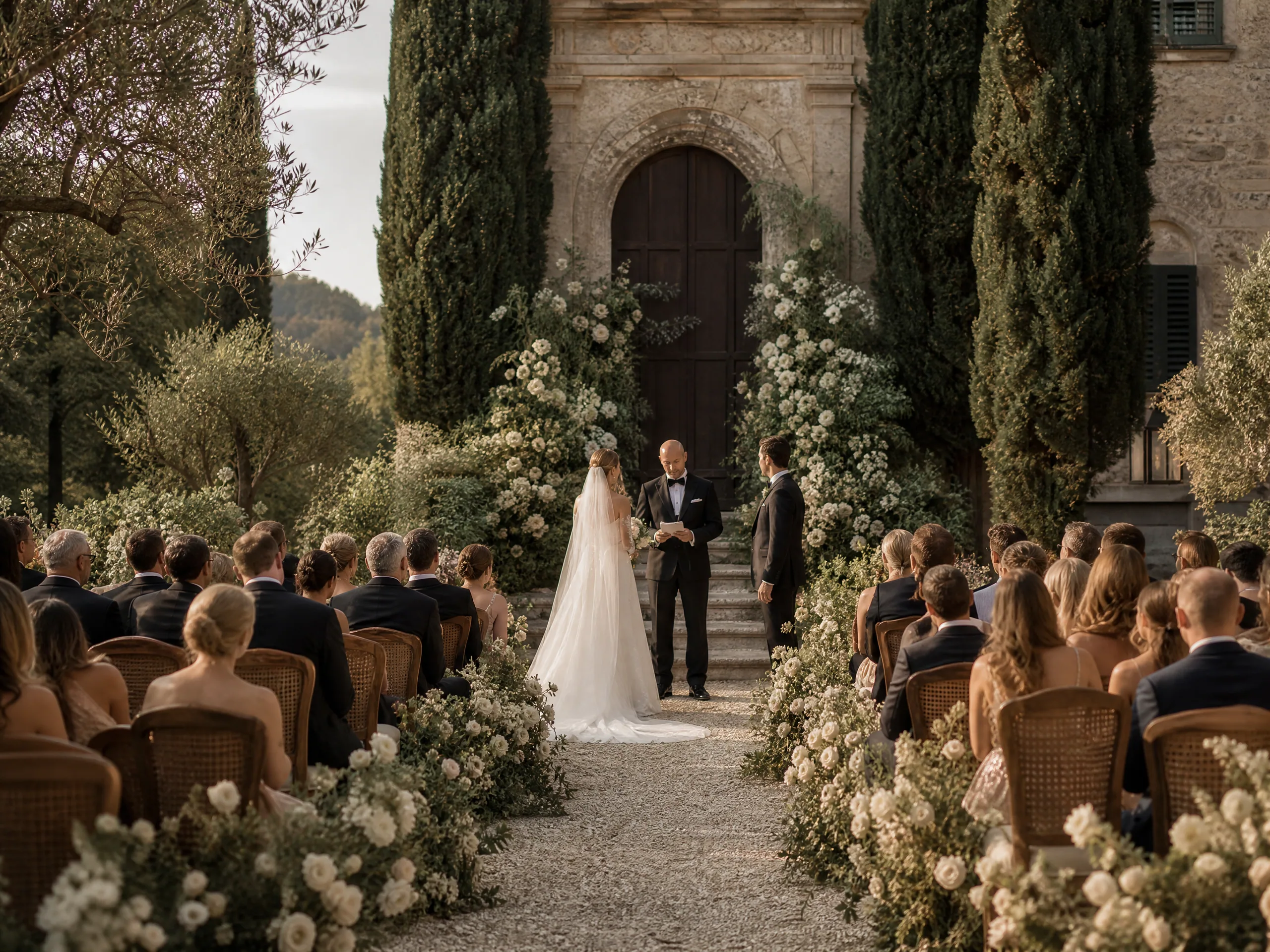
For destination weddings, the officiant is not only a speaker — they are the conductor of attention. A bilingual ceremony needs someone who can hold silence, manage transitions, and avoid rushing through translation as if it were an administrative task.
Ask potential officiants:
- Have they led bilingual or multilingual ceremonies before?
- Will they write the full ceremony script in both languages in advance?
- How long do they expect the ceremony to run with translation included?
- Can they keep legal requirements clear without making the ceremony feel like paperwork?
If your legal marriage happens separately at a registry office, your symbolic ceremony has more creative freedom. Many international couples in Spain separate the legal act from the celebration day, which often produces a calmer, more cinematic ceremony.
Write Scripts for the Ear, Not the Page
A bilingual ceremony script should be readable aloud in open air, wind, and emotion — not only elegant on paper. Short sentences travel better. So do concrete images.
Practical writing tips:
- Keep each translated summary to 2–4 sentences
- Avoid idioms that collapse in translation
- Place names, family names, and ritual cues should be phonetically clear for both speakers
- Mark pauses explicitly where guests may clap, stand, or need a breath
If you are writing personal vows in one language, consider a one-sentence translation afterward for guests — not a full second vow. That preserves intimacy while offering inclusion.
Design the Guest Experience Beyond Words
Language is only one access point. Guests also understand through sequence, gesture, and printed guidance.
Helpful inclusions for international ceremonies in Spain:
- A bilingual ceremony program with order of events
- A short note explaining any cultural ritual before it begins
- Clear seating guidance for family groups who may not share a language
- One designated person who can quietly help guests who look lost
These details reduce anxiety. When guests feel oriented, they relax — and that emotional ease is visible in wedding films, photographs, and the atmosphere of the day.
Timing, Sound, and Outdoor Realities in Spain
Bilingual ceremonies are longer. Outdoor Spanish venues add wind, ambient sound, and shifting light. Build the timeline accordingly.
Plan for:
- A ceremony length that includes translation without compressing vows
- A microphone setup that remains clear for both speakers
- Shade and seating comfort if the ceremony runs past 25–35 minutes
- A rehearsal with both language tracks, not only the primary one
From a videography perspective, clean audio matters as much as beautiful light. If vows and translations compete with wind or distant music, the emotional continuity of the film suffers. Ask your AV or venue team to test levels during rehearsal with both speakers at full voice.
Coordinate Vendors Around Language Transitions
Your planner, photographer, videographer, and musicians all need the same map of the ceremony. Language transitions are not only linguistic — they are visual and logistical cues.
Share a marked script that shows:
- Where each language block begins and ends
- Where ring exchange, kiss, and recessional happen
- Where musicians should hold silence versus enter softly
- Where family members speak, read, or present a ritual object
When the creative team knows the structure, they can anticipate reaction shots, parent emotions, and quiet details instead of chasing the ceremony after the fact.
Cultural Sensitivity Without Performance
International couples sometimes feel pressure to represent every heritage equally inside one ceremony. Balance matters more than symmetry.
A meaningful approach is to choose a few authentic elements and give them enough space to breathe. One carefully explained ritual in a family's language can land more deeply than five abbreviated gestures that guests cannot follow.
If religious or cultural leaders are involved, confirm terminology and sequencing early. Spain-based venue teams are accustomed to international celebrations, but clarity still prevents awkward mid-ceremony corrections.
A Simple Planning Checklist
Use this as a working list in the weeks before your wedding:
- Confirm legal ceremony location and whether the celebration ceremony is symbolic
- Choose one bilingual structure and commit to it
- Finalize officiant script in both languages
- Decide which parts of vows will be translated
- Prepare bilingual programs for guests
- Schedule a full bilingual rehearsal with audio
- Share the marked ceremony timeline with all vendors
- Assign one hospitality lead for multilingual guest support
A bilingual wedding ceremony in Spain does not need to be complicated to be inclusive. It needs intention, pacing, and respect for the people in the room — including the two of you at the center of it.
If you are planning a destination wedding and want the ceremony filmed with the same sensitivity you bring to language and family, we would be glad to talk through how your day can feel both personal and shared.