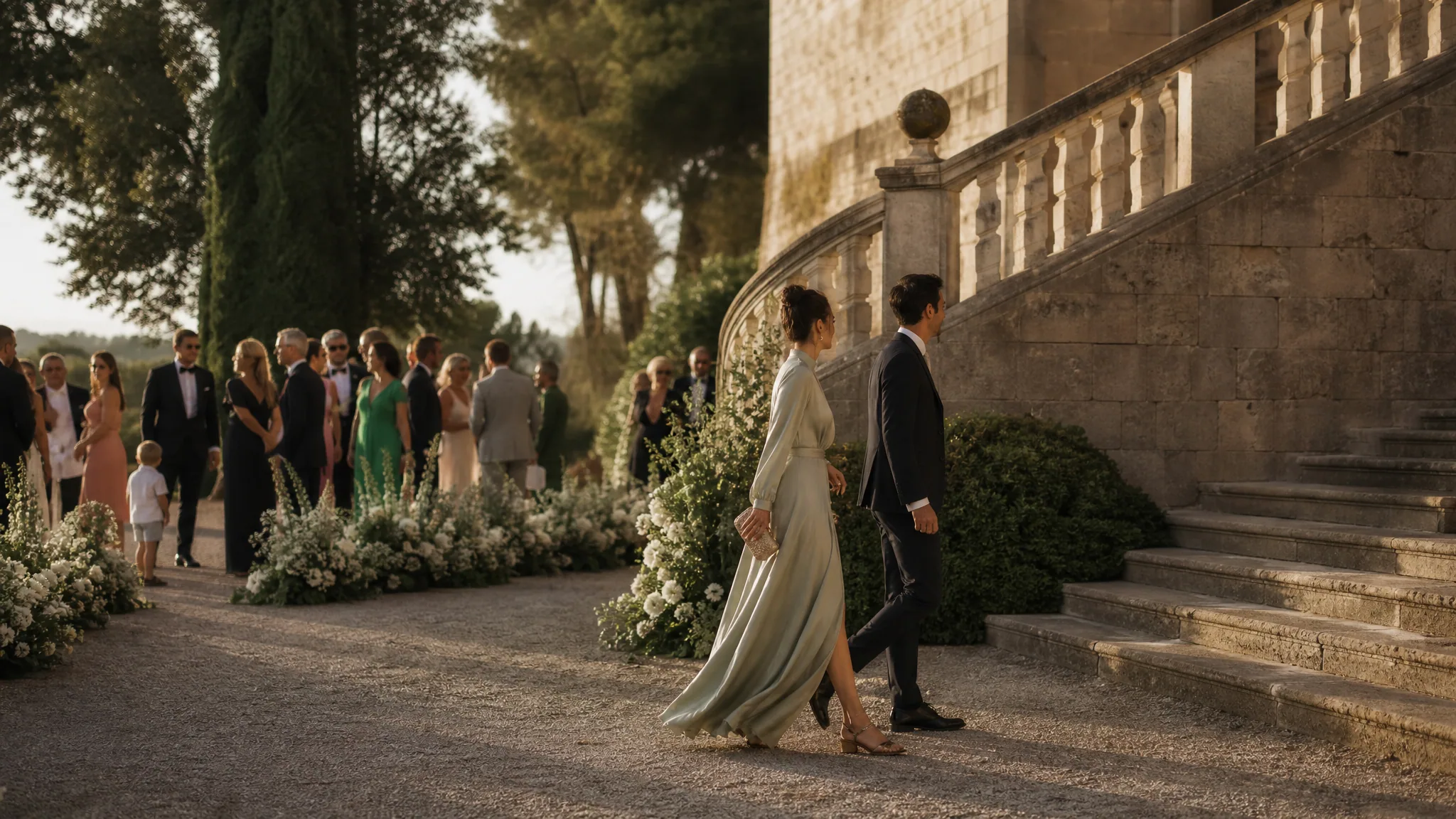
Spain’s most memorable wedding settings are rarely smooth indoor floors from arrival to last dance. Guests move across cobbled village streets, gravel courtyard drives, soft lawns, stone terraces, vineyard rows, and estate paths that change level without warning. For international guests arriving in dress shoes chosen for a city hotel ballroom, that terrain becomes the first real logistics test of the weekend.
This guide helps destination couples brief guests clearly, plan practical shoe-change moments, and keep ceremony, cocktail hour, and dancing comfortable—without turning the invitation into a lecture. Good footwear planning is not about policing style. It is about protecting guest energy, procession confidence, and the calm documentary rhythm of the day.
Why Terrain Changes the Guest Experience at Spanish Wedding Venues
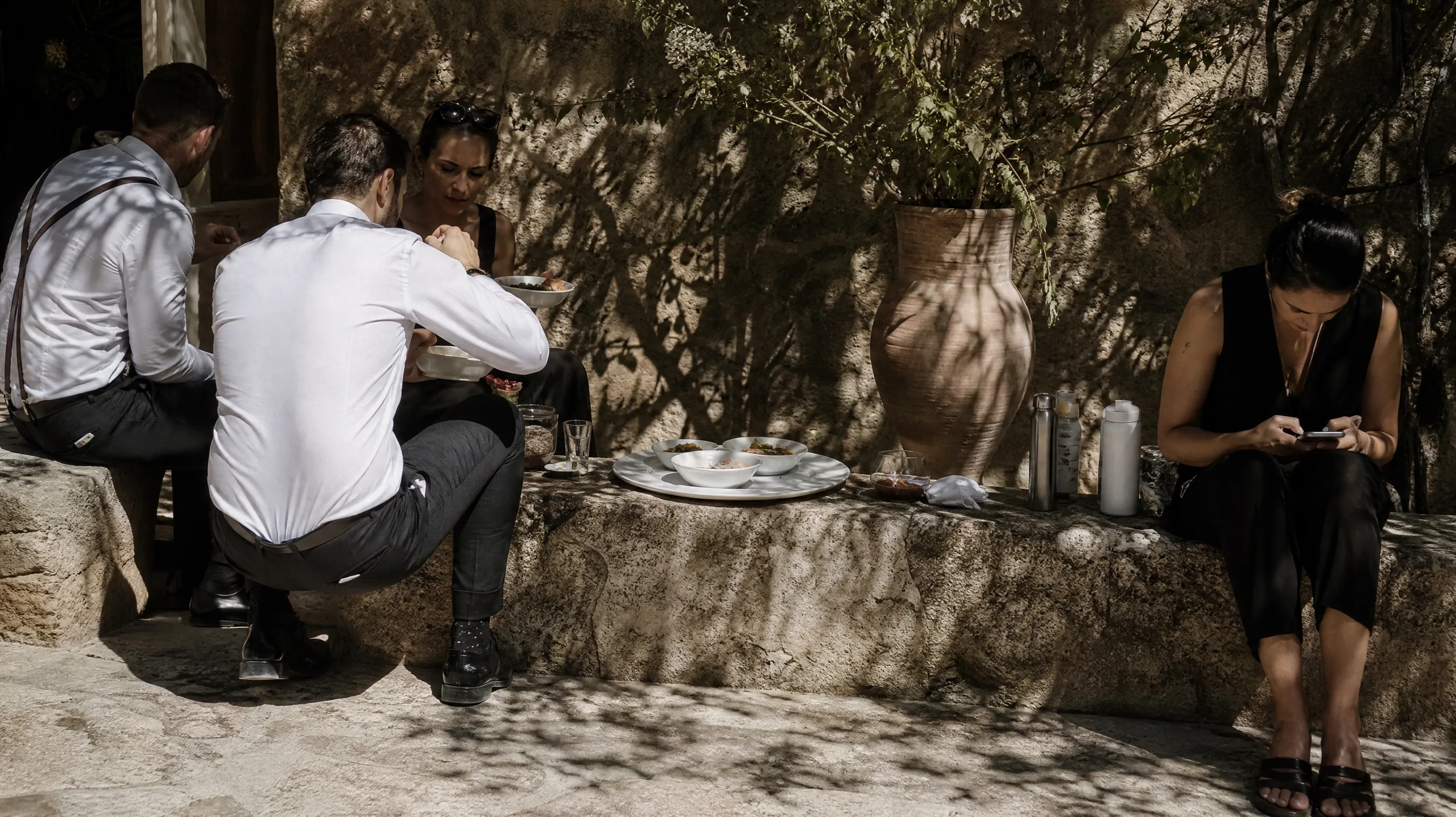
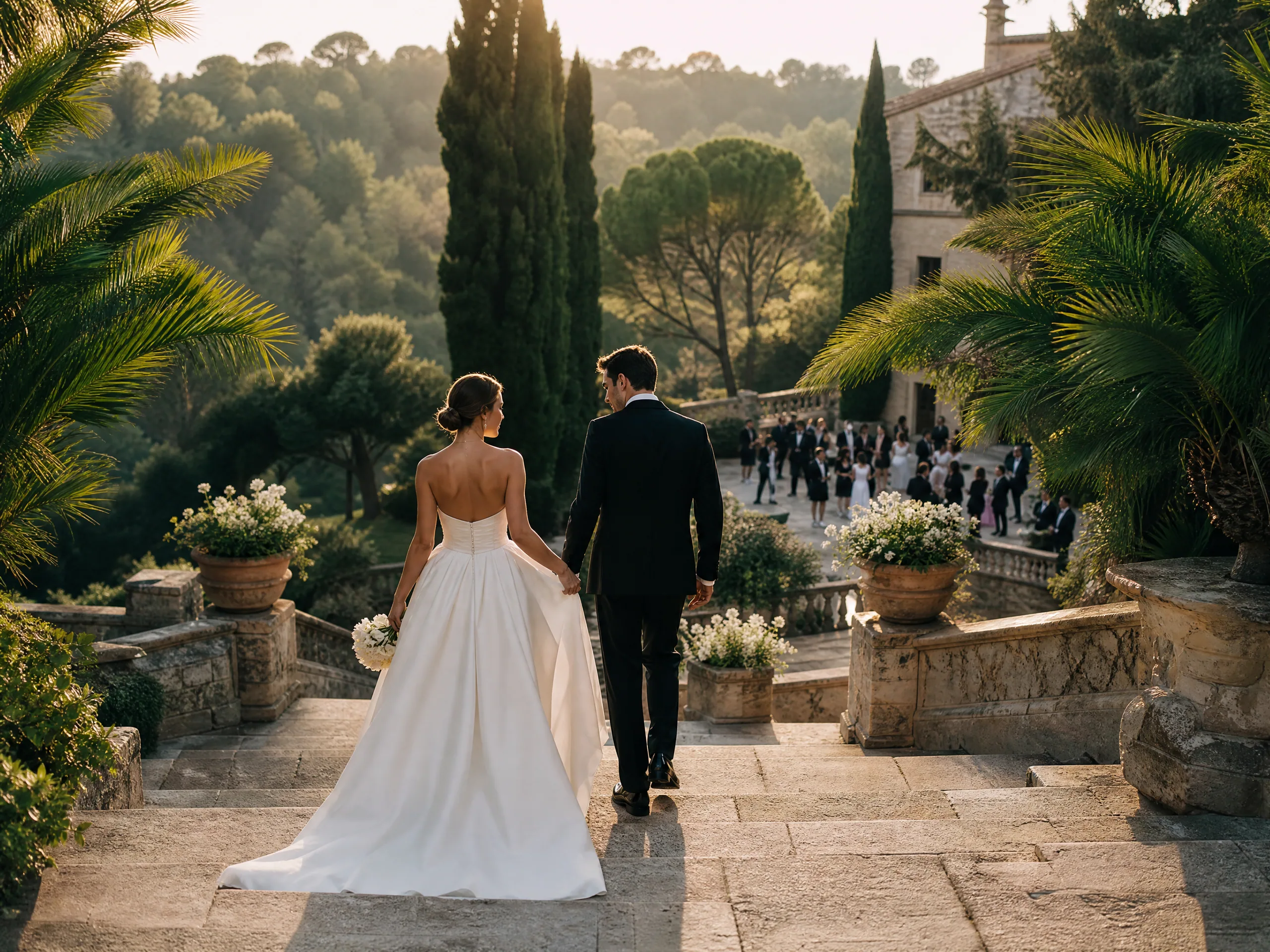
Many Spanish venues were built as working estates, hillside homes, or historic properties long before they hosted destination weddings. Beauty and uneven ground often travel together: textured stone, compacted gravel, grass that softens after irrigation, and narrow transitions between courtyard and garden.
When footwear fights the ground, guests shorten their stride, clutch partners for balance, avoid lawn photos, and arrive at vows already distracted. Those micro-stresses show up in body language, timing, and how freely people move through cocktail hour. Treat terrain as part of guest hospitality, not a last-minute dress-code footnote.
Map the Guest Journey Before You Write the Dress Code
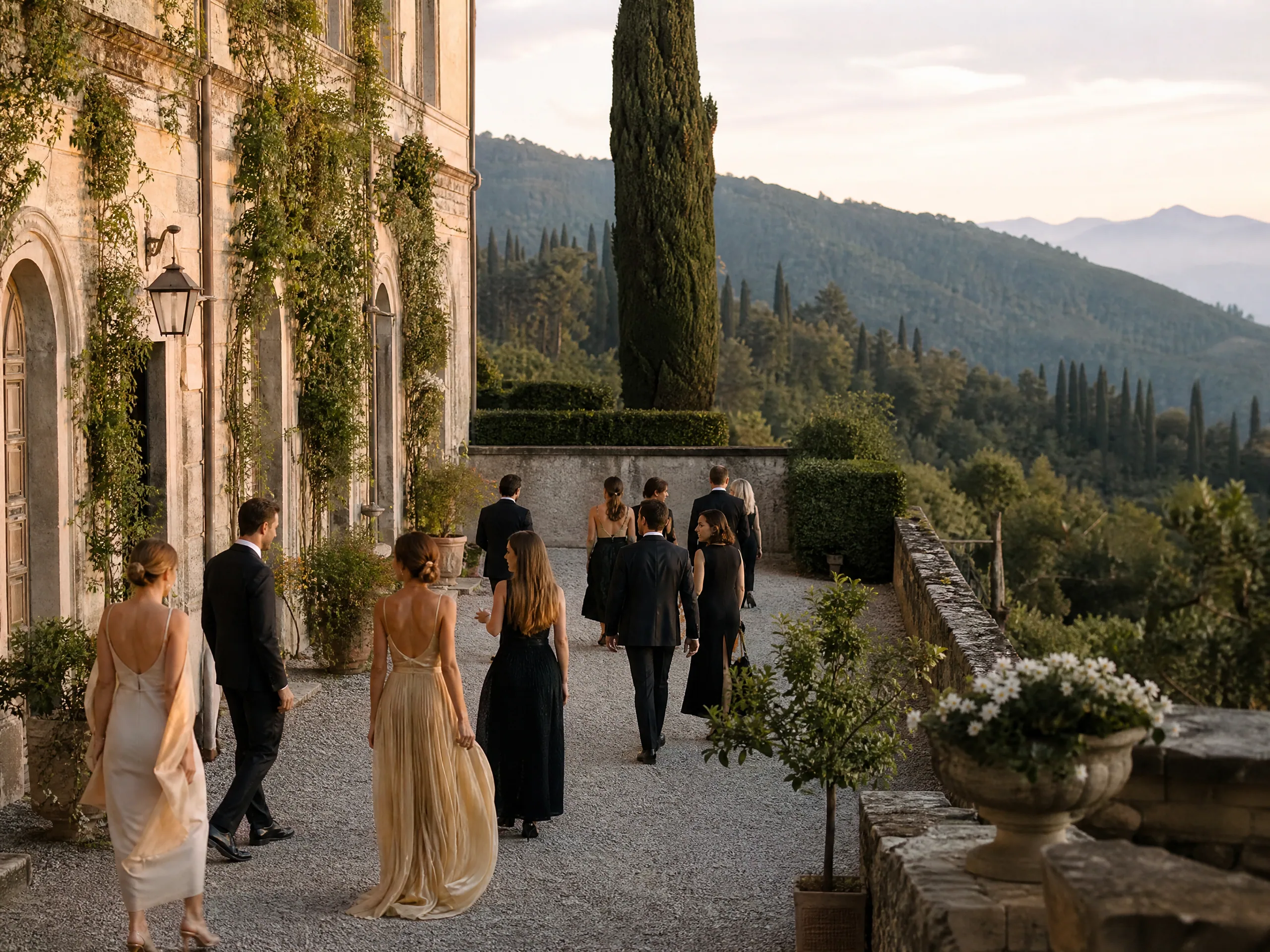
Walk the day the way a guest will walk it. From parking or shuttle drop-off to ceremony seating. From ceremony exit to cocktail hour. From dinner terrace to dance floor. From late-night send-off back to transport. Note surfaces, slopes, step counts, and any long outdoor crossings in heels or dress shoes.
Ask the venue for photos or a short phone walkthrough of those transitions if you cannot visit in person. A planner or day-of coordinator on site can measure whether a “short stroll” is actually three minutes over loose gravel after sunset. Your footwear guidance should describe the journey, not only the ceremony lawn.
Cobblestones, Gravel, Grass, and Stone: What to Tell Guests
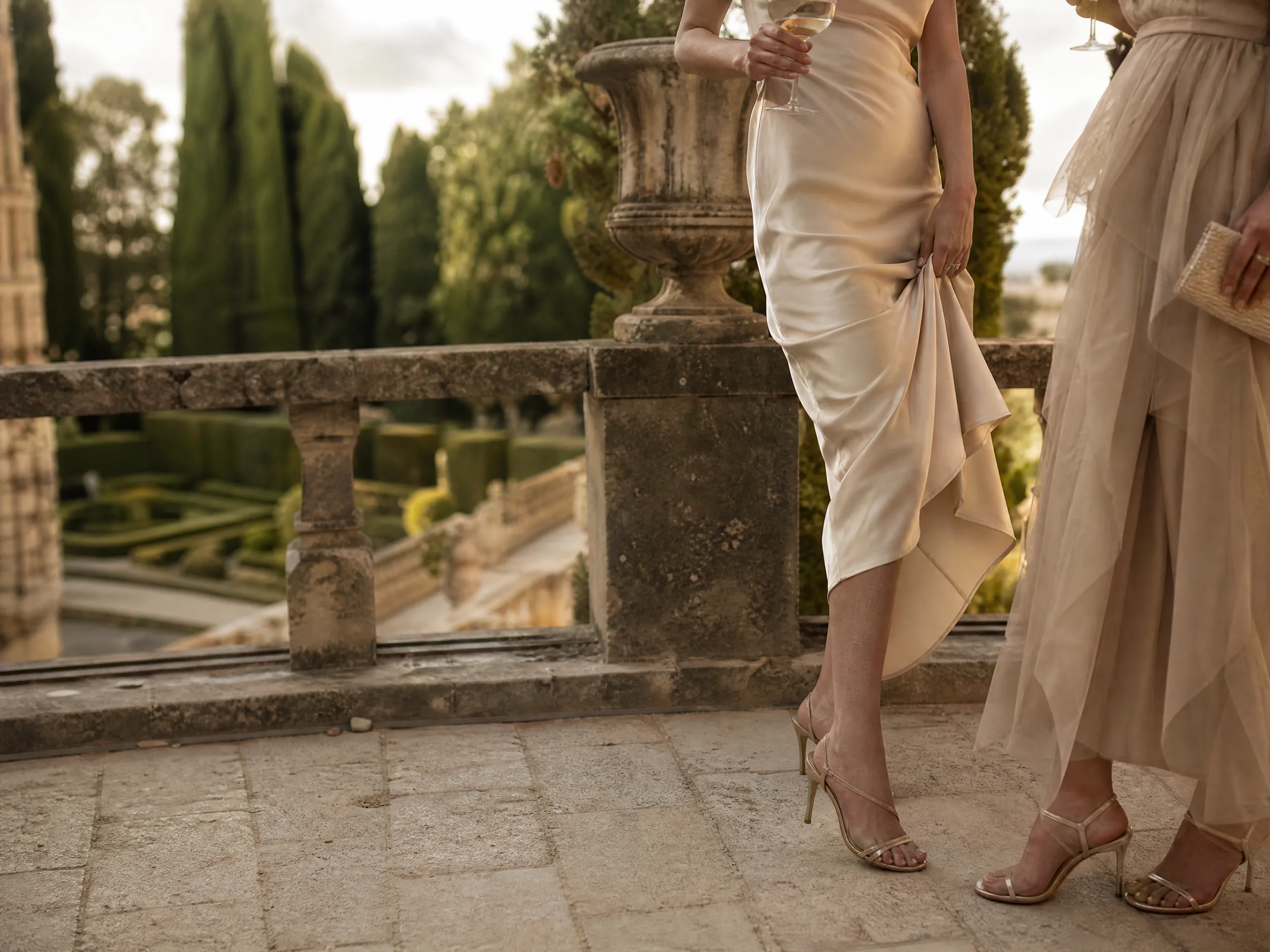
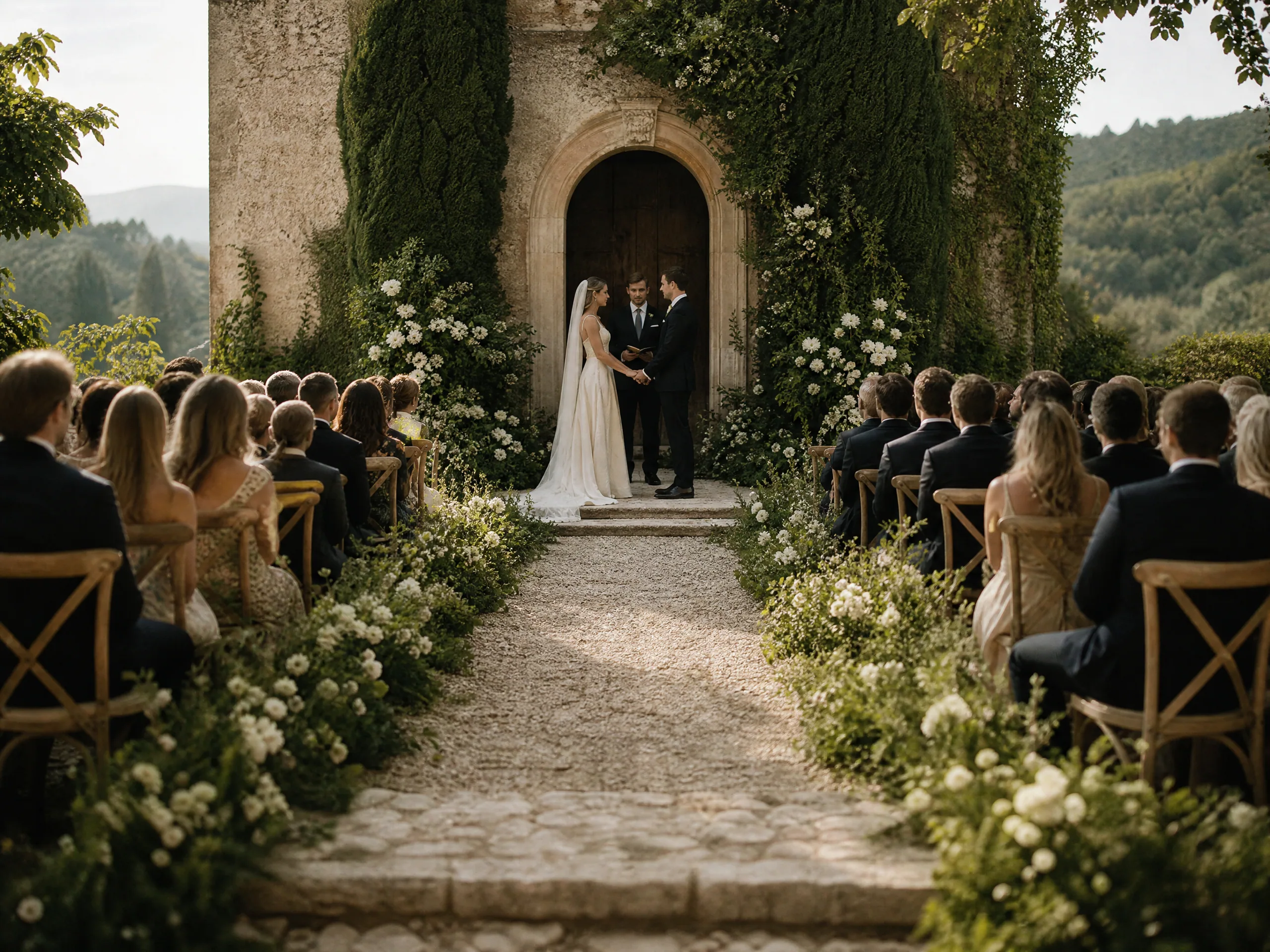
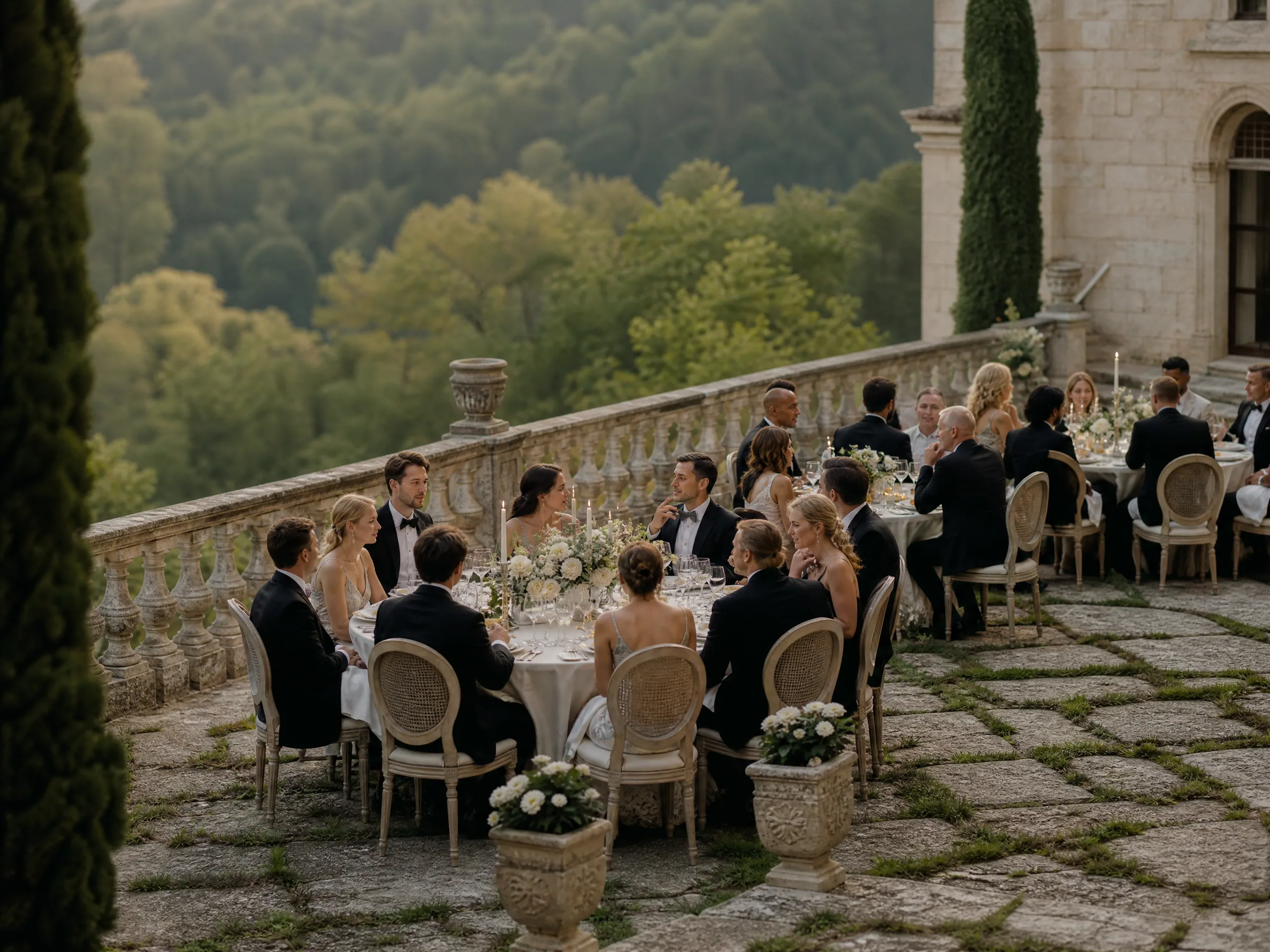
Be specific. “Comfortable shoes” is vague. “The estate has gravel drives and uneven stone courtyard paths before you reach the lawn ceremony” gives guests a usable decision. Cobblestones punish thin stilettos. Loose gravel swallows narrow heels. Soft grass tips anyone in stilettos forward. Polished stone can be slick when misted by evening irrigation or sea air.
Offer options rather than bans: block heels, wedges, elegant flats, sturdy dress sneakers for travel days, and heel protectors where appropriate. For multi-day celebrations, distinguish welcome-party terrain from ceremony terrain so guests pack with intention instead of guessing.
Ceremony Processions, Aisles, and Bridal Party Confidence
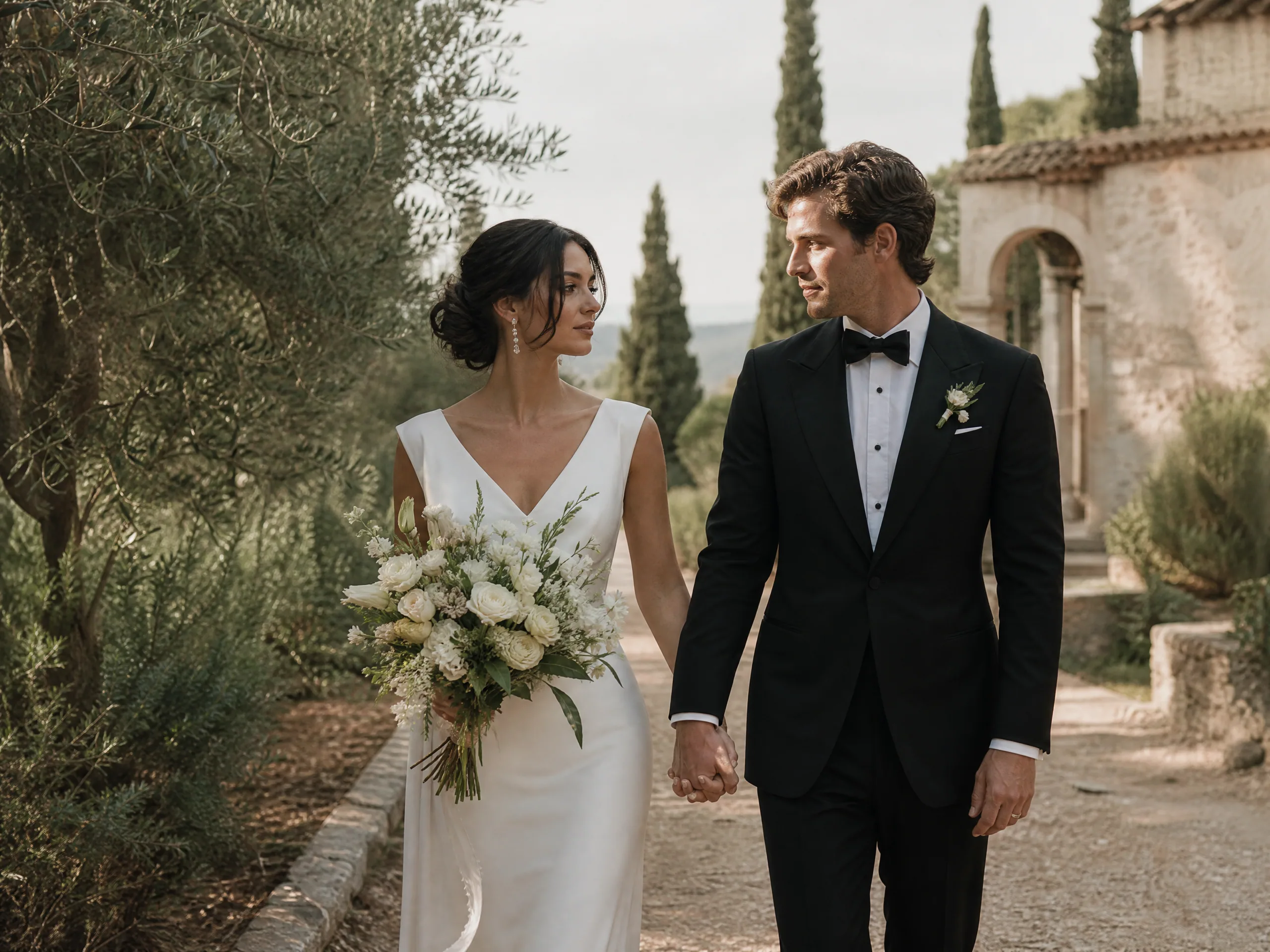
Processions amplify footwear risk because people walk slowly, in line, on camera, often on the least compact part of a lawn or garden path. Bridal party members who have not rehearsed on that surface may shorten steps or look down instead of out.
Test the aisle surface during rehearsal. If the lawn is soft, discuss temporary aisle runners, firmer side paths, or a shorter processional route with your planner. Give the couple and wedding party permission to process in stable shoes and change later if needed—especially when portraits and dancing happen on different ground than the vow space.
Shoe-Change Stations Without Making It Awkward
The smoothest destination weddings plan a discreet transition: a basket or labeled tote for ceremony heels, clear cues for when flats or dancing shoes appear, and a staffed or signposted spot near restrooms or the cocktail threshold. Guests should never have to abandon expensive shoes in unmarked piles on damp grass.
If elders or mobility-sensitive guests are attending, place seating and a firmer standing zone near the ceremony entrance so they are not forced across the softest ground. Small hospitality details prevent the “everyone is struggling quietly” energy that can flatten cocktail hour.
Attire Notes, Invitations, and Pre-Arrival Guest Communication
Put terrain language where guests actually read it: wedding website logistics page, travel WhatsApp group, and a short line on the invitation or details card. Pair it with dress-code tone so the message feels caring, not corrective. Example: “Garden and gravel estate—block heels, wedges, or stylish flats recommended.”
For international guests shopping before they fly, earlier guidance matters more than a reminder two days out. Include one photo of the key outdoor surface if possible. Visual context reduces overthinking and packing mistakes more effectively than adjectives alone.
Photography, Videography, and Movement Across Mixed Surfaces
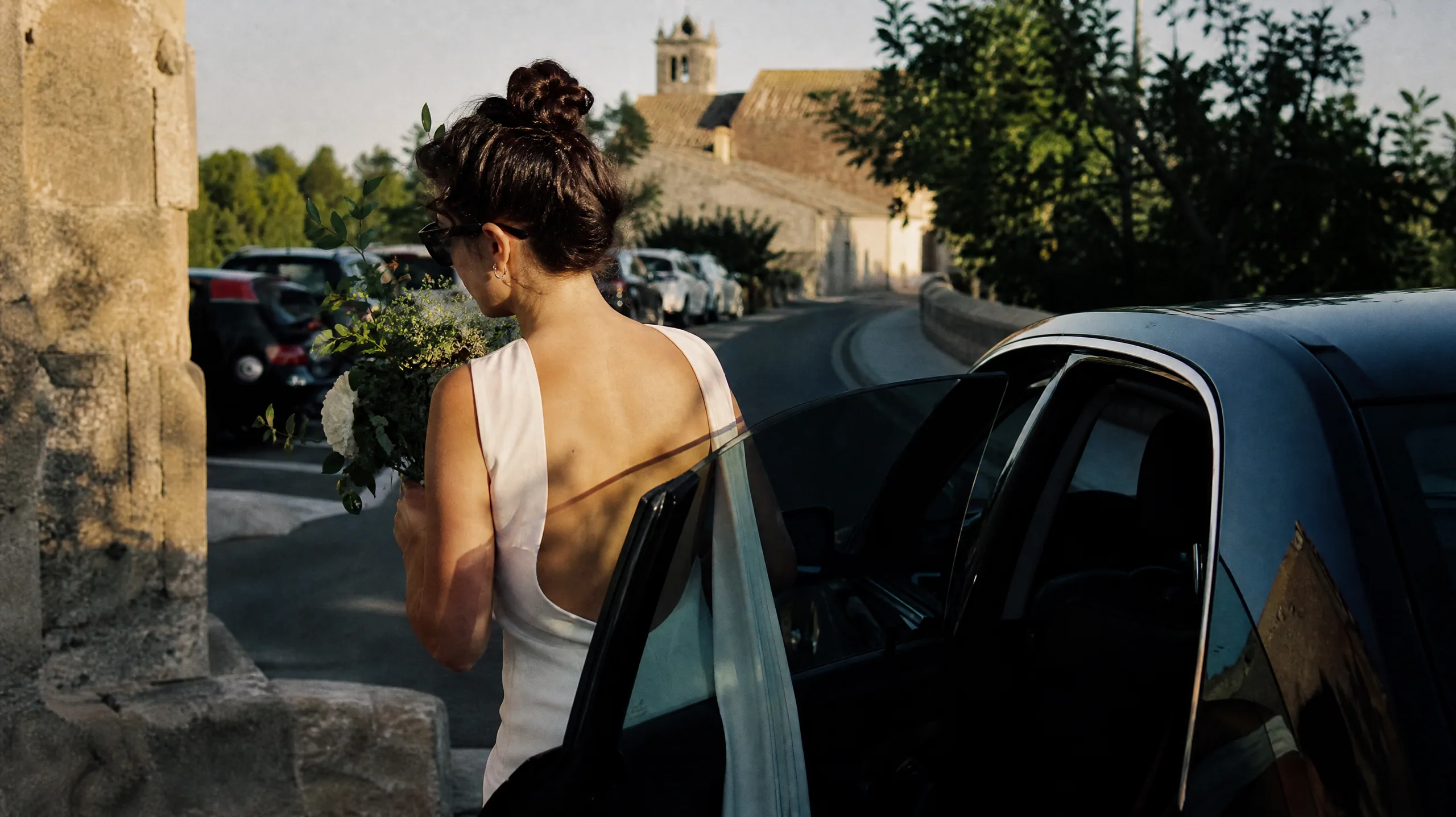
Documentary wedding films in Spain often follow guests between spaces: village streets, estate gates, cocktail courtyards, and dinner terraces. Confident footing keeps those transitions natural. Unstable shoes create cautious walking patterns, interrupted conversations, and fewer spontaneous moments on grass or stone steps.
Share the surface map with your photographer and videographer. They can choose portrait pockets with better footing, avoid forcing bridal party poses on hazardous slopes, and anticipate where guests will naturally pause. The goal is movement that looks effortless because the logistics already are.
Weather, Heat, and End-of-Night Footwear Fatigue
Spanish summer heat expands discomfort: swollen feet, straps that rub, and guests who underestimated walking distances between shaded areas. Evening temperature drops can make stone floors feel harder and longer paths feel colder in open shoes. Rain or irrigation turns polished steps and fine gravel into a different problem entirely.
Plan for late-night reality. After dinner and dancing, many guests want the most stable shoe they packed. Keep shuttle waits short when possible, light pathways clearly, and accept that elegant arrival shoes and midnight departure shoes may not be the same pair.
A Practical Footwear Checklist for Destination Couples in Spain
Before final guest messaging, confirm: primary surfaces from arrival to ceremony; cocktail and dinner flooring; dance floor edge transitions; any village or hotel walks that are part of the weekend look; heel-protector usefulness for your specific gravel; shoe-change location and staffing; elder and mobility routes; and whether bridal party shoes need a rehearsal test.
Then write one clear paragraph for guests, one note for the wedding party, and one logistics line for your planner or coordinator. When footwear is handled early, Spanish venue character stays romantic instead of becoming an obstacle course—and guests arrive at every moment of the day ready to enjoy it.