
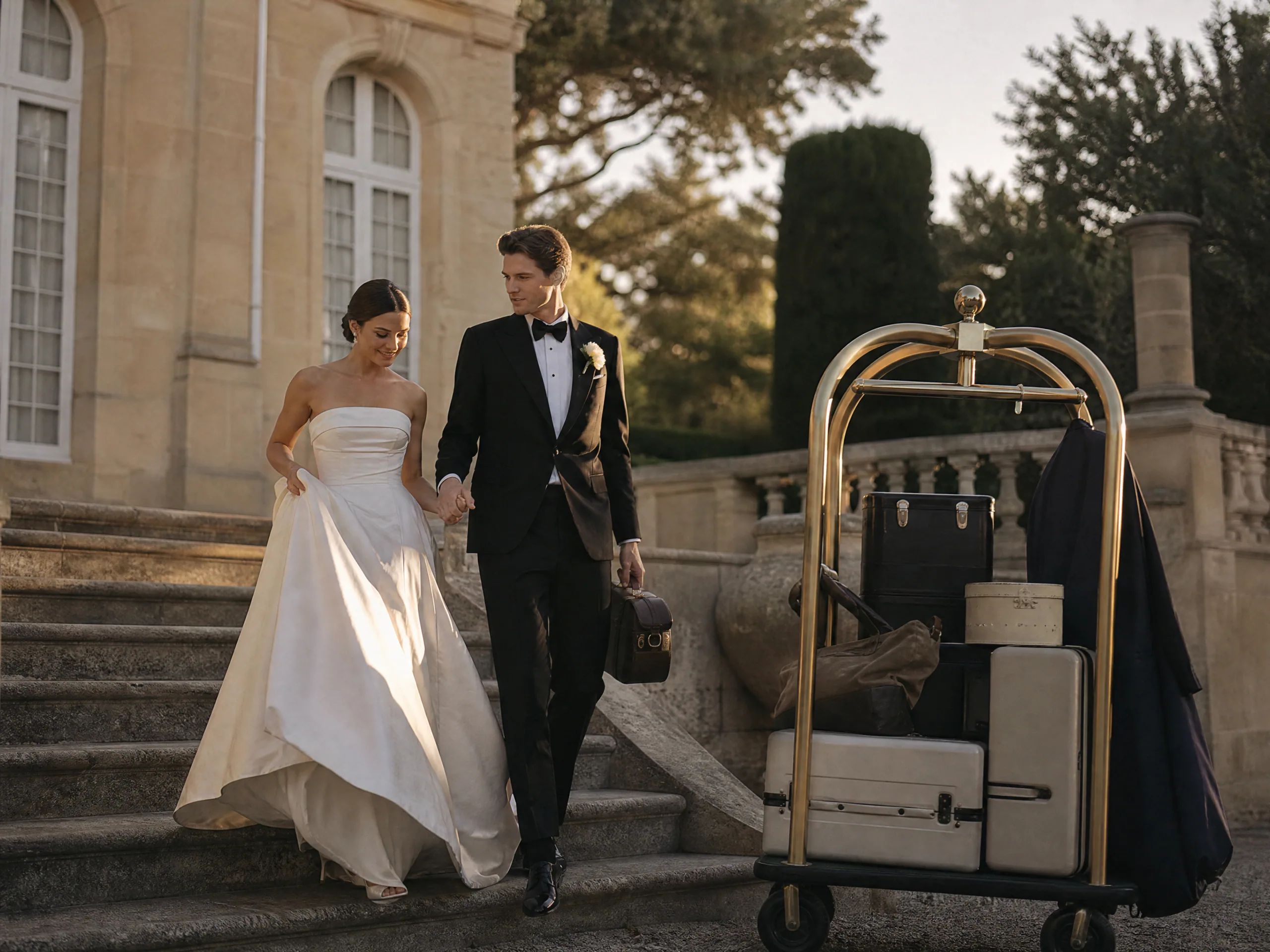
On a destination wedding Saturday in Spain, half the guest list may face the same awkward timeline: hotel check-out at noon, ceremony at six, dancing until late, and a flight or next hotel the following morning. Without a plan, guests drag suitcases into Uber trunks, stash bags in bathroom corners of the getting-ready suite, or interrupt the couple mid-hair-and-makeup asking where to leave a carry-on. Luggage logistics are invisible when they work—and instantly stressful when they do not.
At Kudrya Studio, we treat wedding-day check-out and bag holding as part of guest hospitality, not an afterthought for the front desk. This guide shows international couples how to plan hotel late check-out, secure luggage storage, rural venue transfers, and calm late-night retrieval so the celebration stays focused on people, not suitcases.

Why check-out timing collides with Spanish wedding schedules
Spanish wedding days often run long: afternoon getting-ready, golden-hour ceremonies, late dinners, and after-parties that push past midnight. Standard hotel check-out rarely matches that rhythm. Guests who arrived Thursday for welcome drinks may already be on night three of a room block when Saturday noon arrives—and many will not sleep in that room again before departing Sunday.
International travelers also carry more than a clutch. Weekenders bring formalwear steamers, gift bags, and packing cubes that do not fit neatly under a café table. Rural fincas and coastal estates rarely have a bell desk. If you do not design a holding plan, guests invent one—and those improvisations usually land in the wrong rooms at the wrong hour.

Audit every hotel on the room block before you promise solutions
Start with a simple spreadsheet: hotel name, standard check-out time, late check-out fee or cut-off, whether complimentary luggage holding exists after check-out, holding-room hours, and whether staff will release bags to a named coordinator after midnight. Ask each property the same questions in writing. A boutique masia hotel and a city business hotel will give very different answers.
Clarify identity rules. Some hotels will only release stored luggage to the guest who checked out; others will accept a signed authorization for your planner. Get that policy early. The night of the wedding is the wrong moment to discover that a tired guest cannot reclaim a suitcase without the original room key packet.
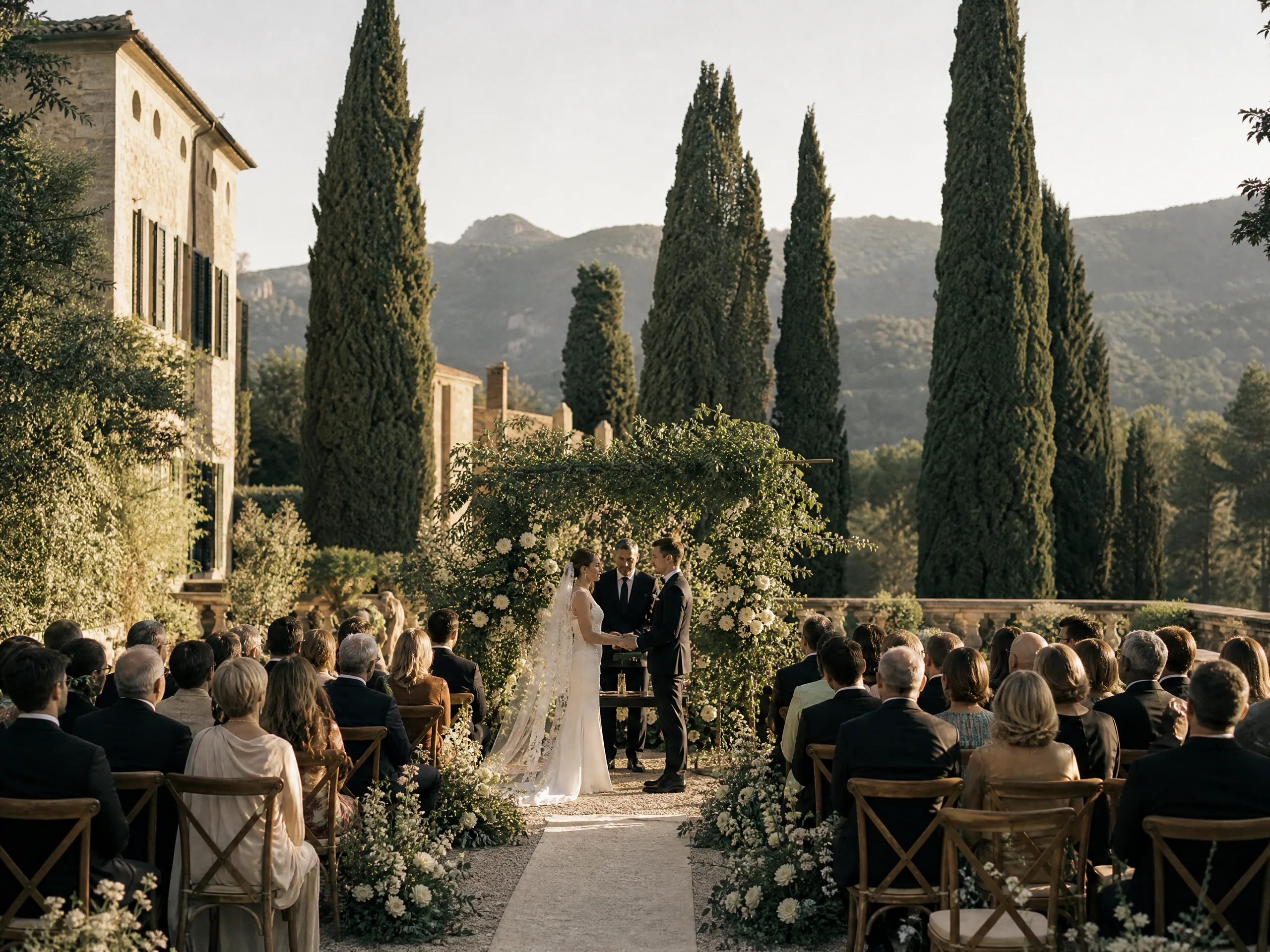

Negotiate late check-out where it actually reduces chaos
Late check-out is powerful for the couple, parents, and wedding party—the people who need rooms as dressing bases—but it is not always necessary for every guest. Prioritize extensions for getting-ready rooms, elderly relatives, and anyone hosting children. For the broader guest list, a reliable luggage hold plus a clear communication note often costs less and creates fewer room-inventory conflicts during peak season.
When you do buy late check-out, confirm the exact hour and whether it applies to specific room categories. Spanish hotels in high season may approve 14:00 for some rooms and refuse 16:00 for others. Put approvals on the rooming list so your coordinator is not renegotiating individually on Saturday morning.

Design a luggage-holding system guests can understand in one sentence
The best systems are boring and explicit: “After check-out, leave bags at Hotel X luggage room; reclaim with your name card after the party, or we transfer them to Sunday brunch.” Publish that sentence on the wedding website, in the welcome WhatsApp or email, and on a small card at the welcome desk. Ambiguity creates lobby crowds.
Provide labeled luggage tags or simple name stickers at welcome check-in on arrival day, not on Saturday morning. Guests should attach tags while they are calm and caffeinated. Include a phone contact for the coordinator handling bag release—not the couple’s personal number.
Plan for rural venues without a hotel lobby
When the ceremony and reception are at a private estate, bags cannot sit in a gravel courtyard. Options usually include: holding at the guest hotels until a timed transfer, a locked production van managed by the planner, a discreet storage room on the estate if the venue allows it, or a hybrid where city-hotel guests keep bags downtown and only overnight guests near the venue use on-site hold.
Venue permission matters. Ask the estate what they will store, where, who has keys, and what liability looks like for passports and electronics. Never assume a “quick corner in the staff kitchen” is acceptable. If the venue declines on-site storage, build hotel holding into the transportation plan instead of hoping for a closet that does not exist.
Coordinate transfers so suitcases never share the dance floor
If bags move from hotel to venue, schedule a dedicated luggage run with a clear window—often late afternoon while guests are already on property for the ceremony. Use a separate vehicle from guest shuttles when volume is high. Mixing twenty suitcases into the cocktail-hour shuttle is how heels get scratched and welcome drinks get delayed.
Create a chain of custody: hotel staff hand bags to a named runner; the runner checks count against a list; the venue or holding lead confirms receipt. Photograph the stacked load if that helps your team. Counts prevent the 01:30 conversation about a missing navy hard-shell.
Protect valuables without turning hospitality into airport security
Advise guests in advance to keep passports, medications, jewelry, and electronics in a small personal bag they retain all day. Luggage hold should be for clothing and larger cases, not for irreplaceable documents. Say this kindly in the FAQ: storage is attended or locked to the best of the hotel/venue system, but valuables stay with you.
If your guest list includes many international travelers on early Sunday flights, remind them to keep boarding passes and chargers accessible. A beautiful reception ends poorly when someone cannot find a passport buried in a held suitcase behind three other families’ bags.
Staff the reclaim window like a real guest touchpoint
Decide when and where bags come back: hotel lobby after the last shuttle, estate exit with a supervised table, or Sunday brunch venue. Staff it. A reclaim moment without a host becomes a pile of identical black suitcases and rising voices. Use the name tags you issued earlier and a printed list; call names or check IDs only as the hotel requires.
For after-parties that end late, align reclaim with shuttle waves. Guests leaving at midnight should not wait thirty minutes for a locked storage room key. Brief the DJ or coordinator to announce the luggage plan once near the end of the night so people do not wander into vendor zones looking for bags.
Budget the real costs and assign ownership
Late check-out fees, porter tips, van hire, and overtime for a runner add up—but they are cheaper than damaged formalwear and frustrated guests. Decide what the couple covers versus what guests handle individually. Many hosts cover hotel holding and one luggage transfer as part of weekend hospitality, while guests tip porters directly.
Name one owner: usually the wedding planner or day-of coordinator. Hotels should know that person’s name and WhatsApp. Vendors should know not to accept random bags into floral vans. Clear ownership is the difference between a system and a rumor.
A practical timeline from ten days out to Sunday morning
Ten days out: confirm each hotel’s check-out, holding, and release policies in writing. Five days out: publish the one-sentence luggage plan to guests and issue tag instructions. Day before: print reclaim lists and confirm runner plus vehicle. Wedding morning: post a reminder at the welcome desk or in the guest chat; verify holding rooms are open. Evening: execute transfers and staff reclaim with the final shuttle. Sunday: do a final sweep for unclaimed bags before anyone goes to the airport.
When wedding-day check-out is planned with the same care as transport and catering, guests move through Spain’s long celebration hours feeling looked after. Suitcases stay out of portraits, out of the aisle, and out of the couple’s getting-ready room—exactly where they belong.