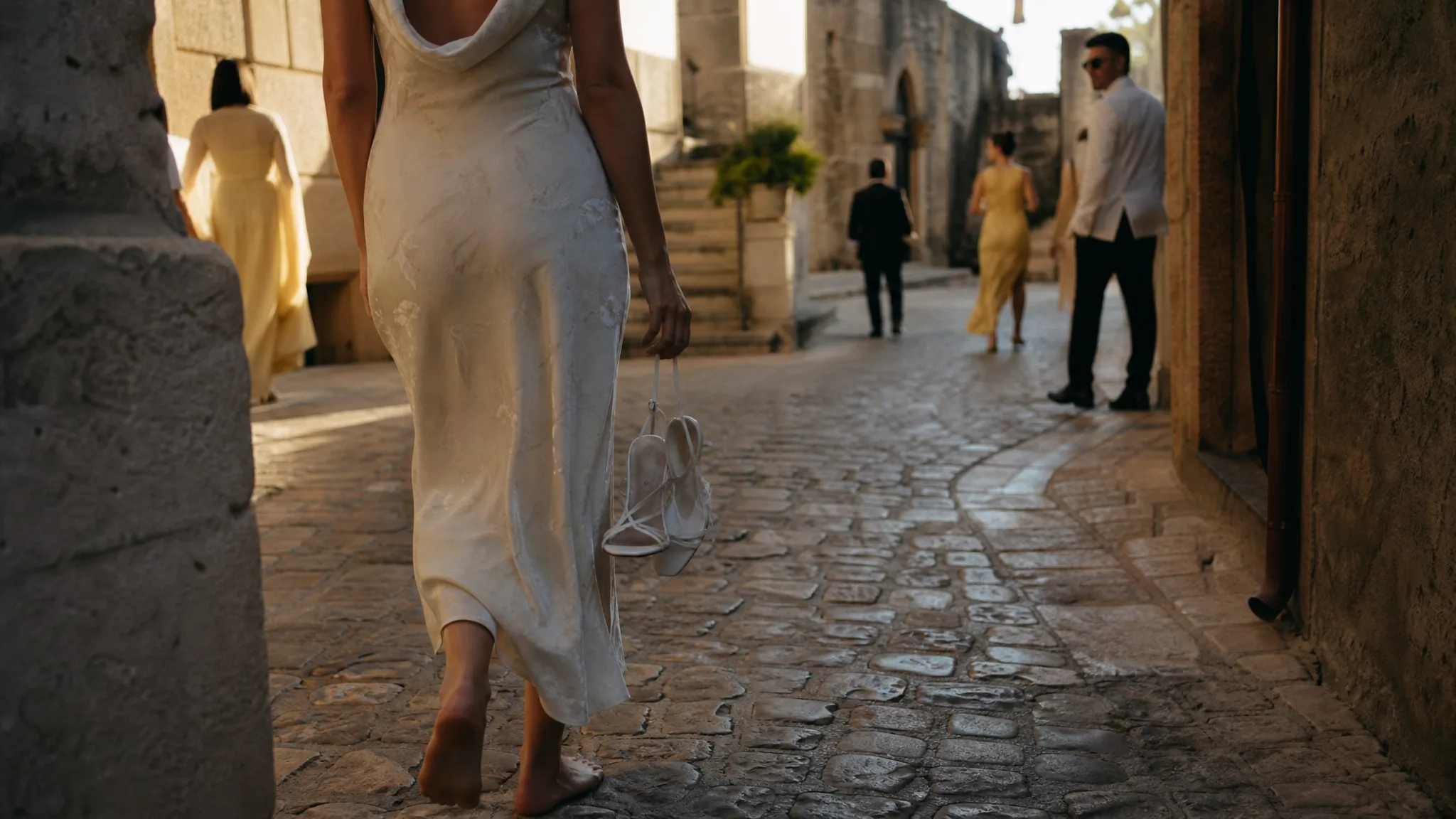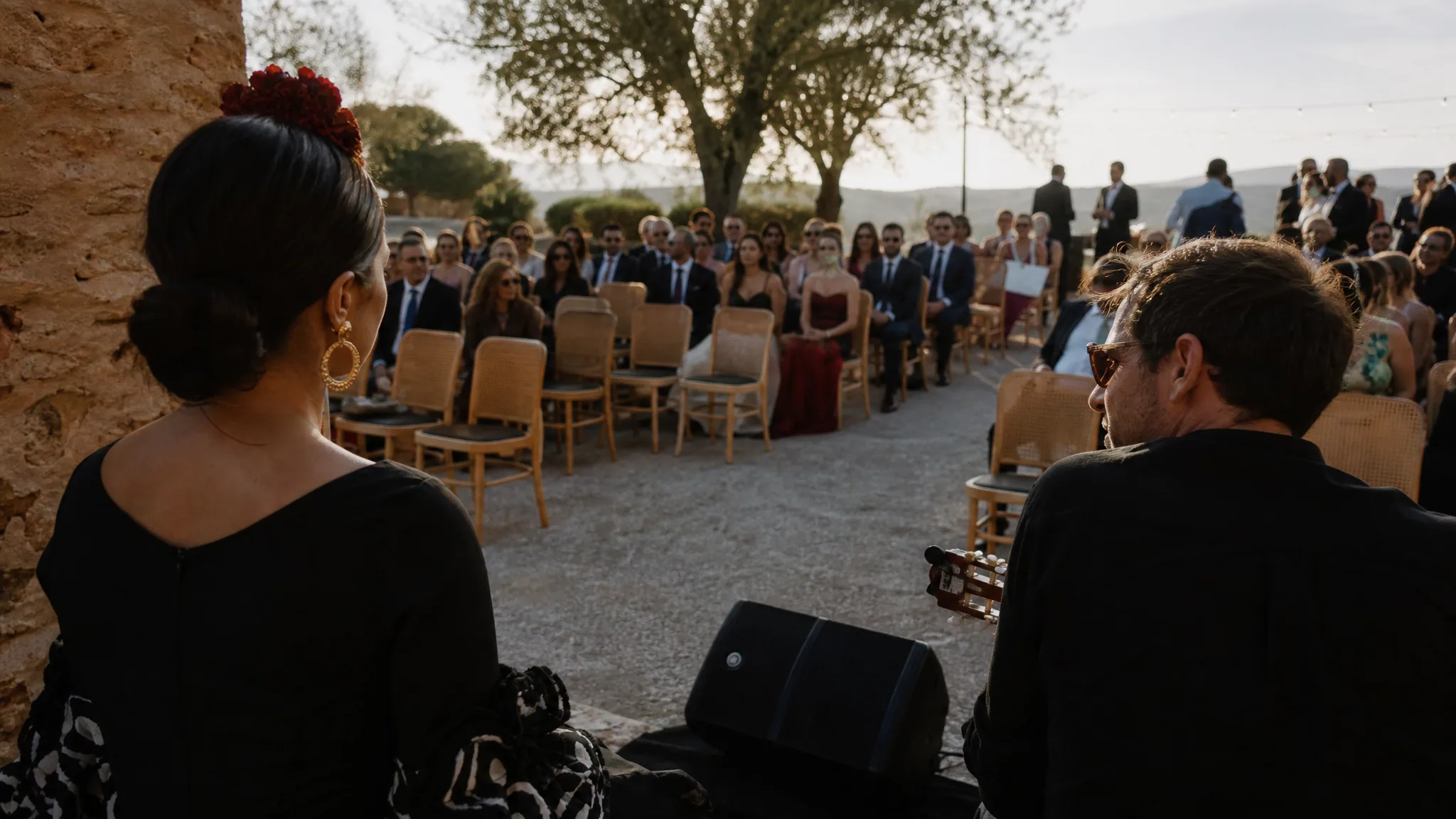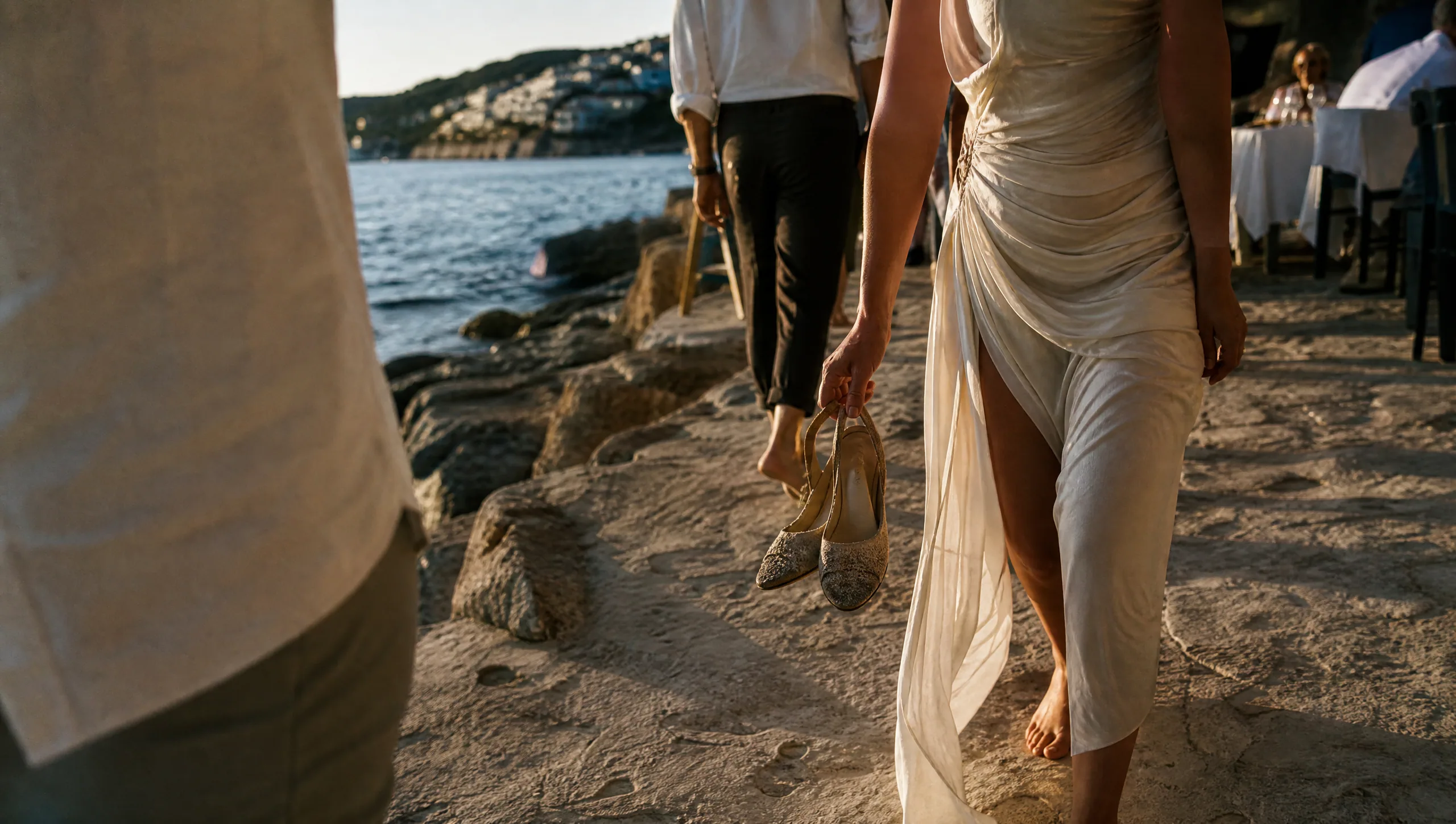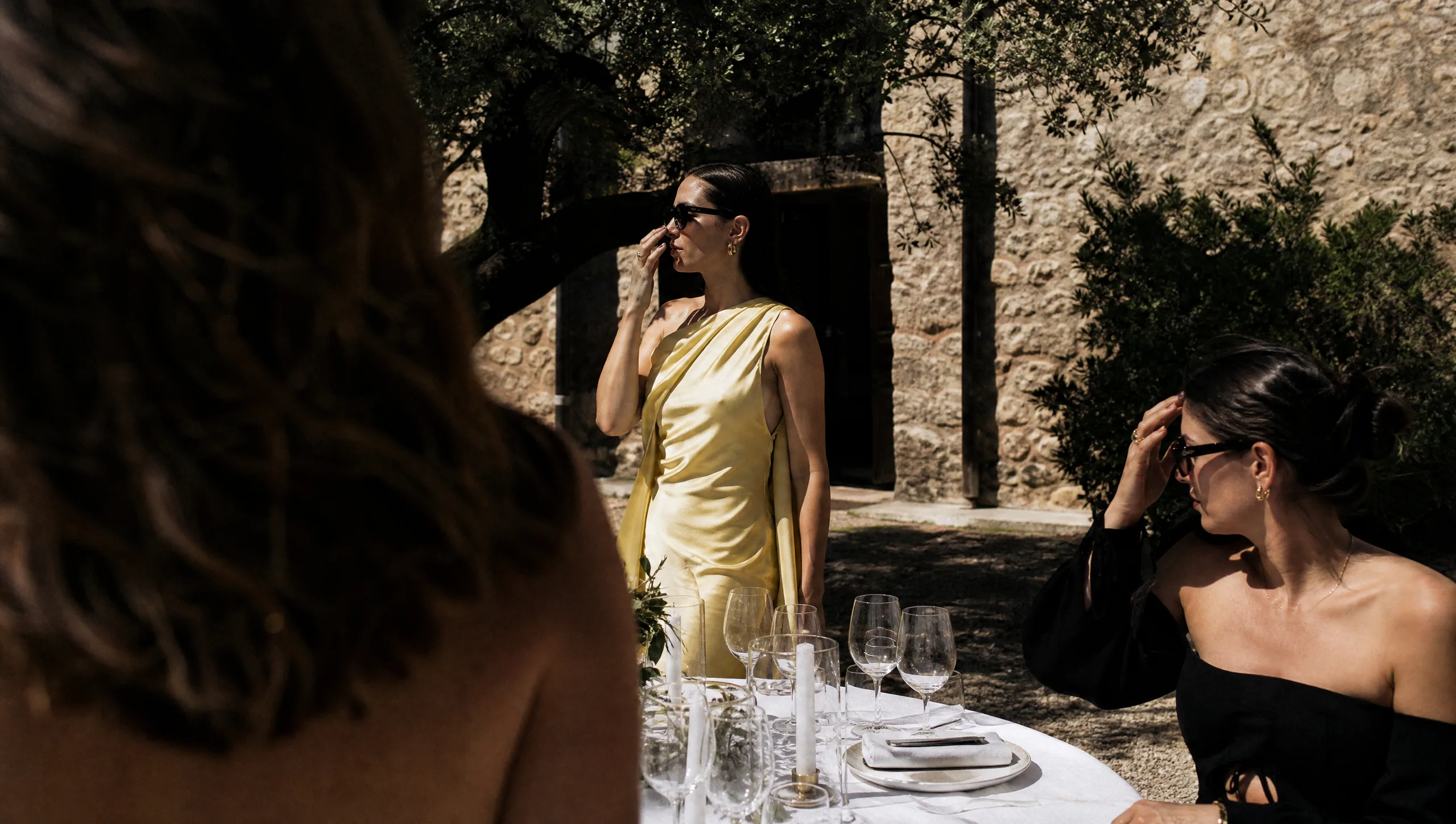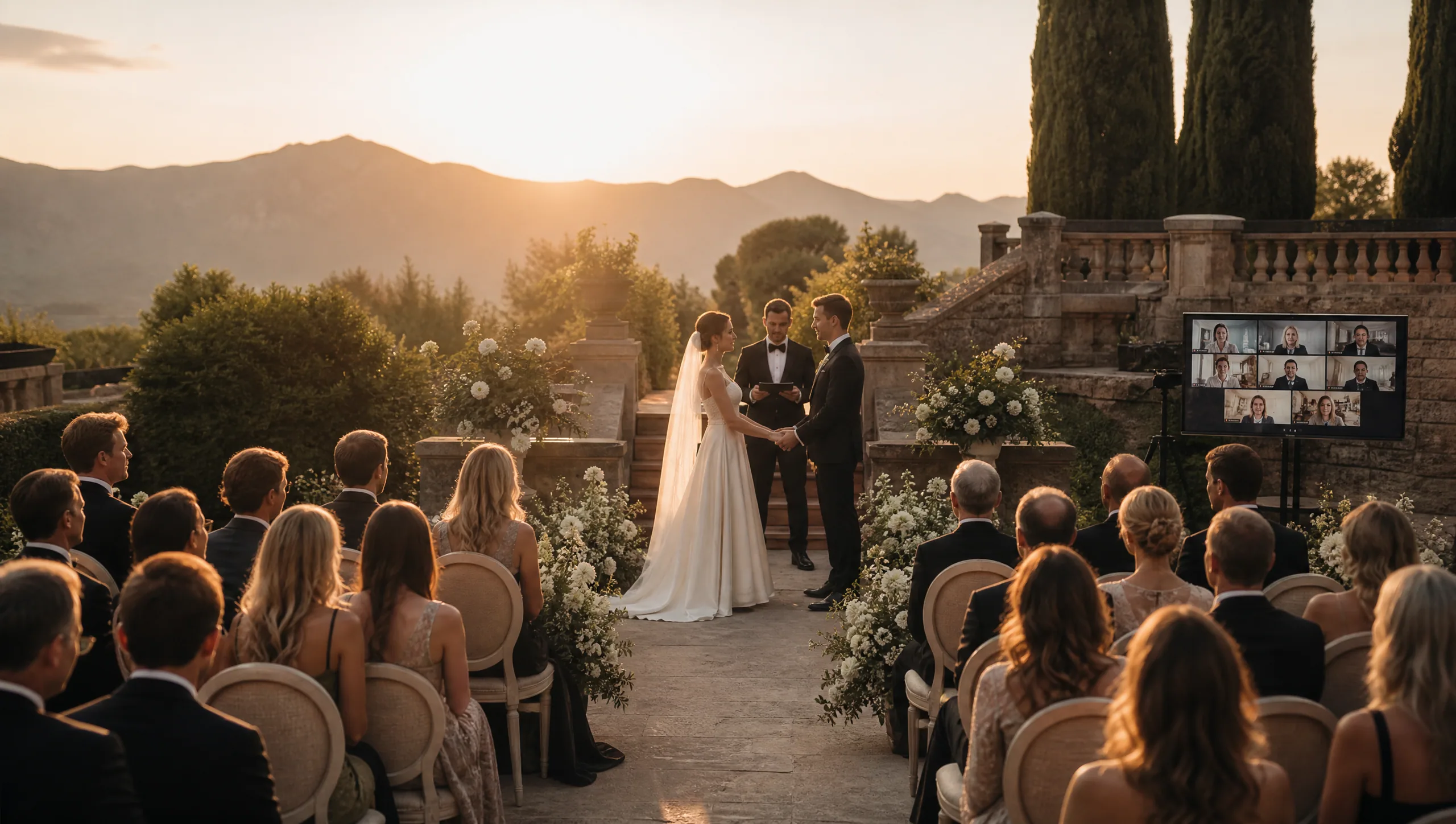

Not everyone who matters can fly to Spain for your wedding weekend. Visas, health, budgets, young children, and work calendars keep some of the people you love at home — even when the celebration itself is the trip of a lifetime for those who can attend. Live streaming and hybrid guest planning close that gap without turning the ceremony into a tech production.
For international couples marrying in Spain, a thoughtful stream is less about broadcasting everything and more about choosing the moments that matter, protecting the atmosphere in the room, and giving distant guests a dignified way to witness your vows. This guide covers what to plan, what to ask your venue and vendors, and how to keep the experience warm rather than awkward.
Decide What Hybrid Means for Your Celebration
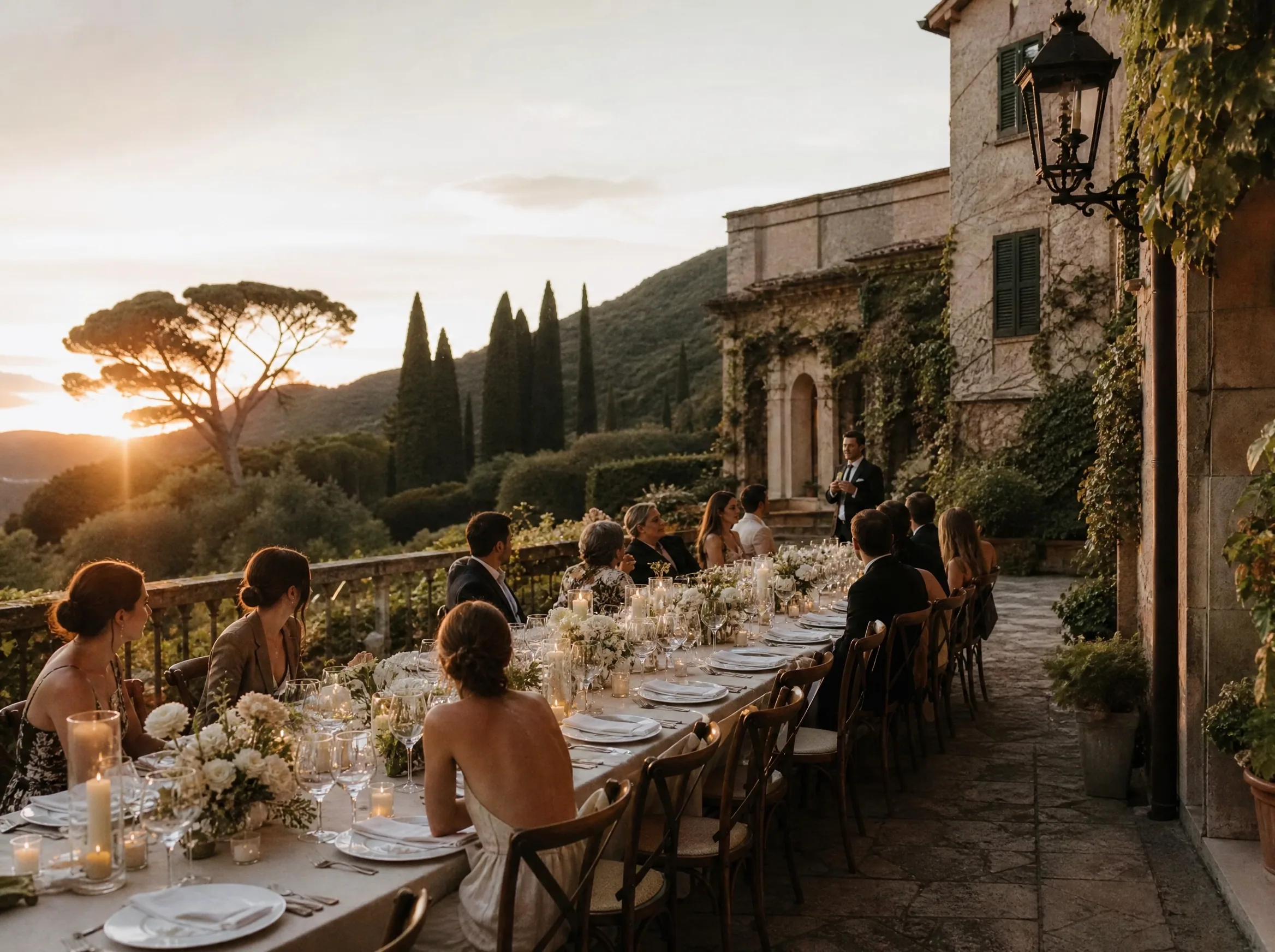
Hybrid does not have to mean every event is online. Most couples stream the ceremony only, then share a short highlight later for the reception. Others add a brief welcome message the night before, or a private virtual toast with grandparents after dinner. Be clear about scope early: what is live, what is recorded, and what stays offline for the people in the room.
Write the decision down for your planner, videographer, and family leads. Ambiguity creates last-minute pressure — especially when relatives abroad assume the whole weekend will be on Zoom.
Choose Moments Worth Streaming
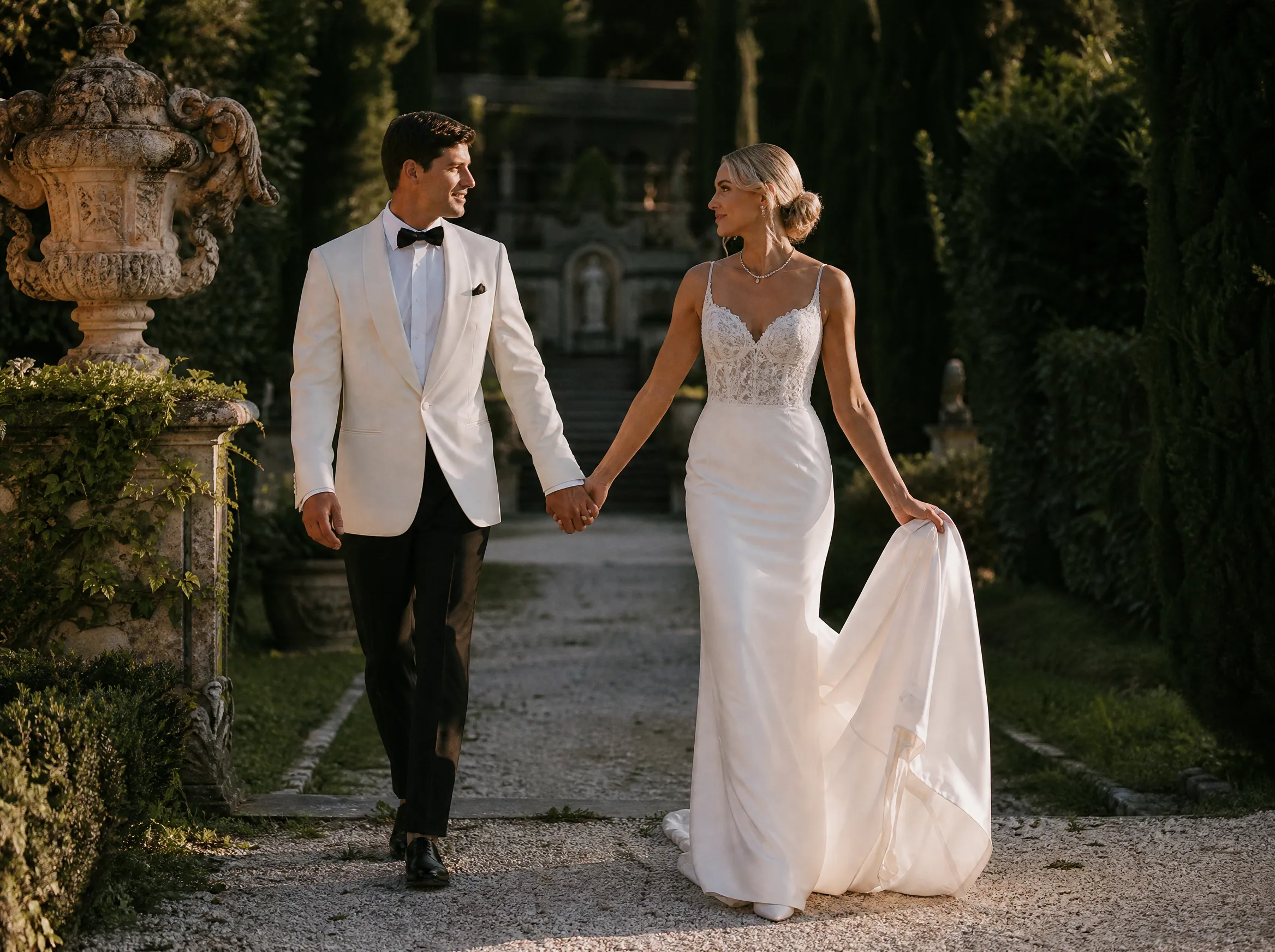
Ceremony vows, readings, and the walk back up the aisle are the core. Processionals and cultural rituals translate well on camera; long gap times, seating resets, and cocktail chatter do not. If your ceremony is outdoors at golden hour, confirm that the stream will start early enough for guests in different time zones to settle in before you appear.
Skip streaming speeches unless you have strong audio and a calm operator. A poorly miked toast frustrates remote guests more than silence. A beautiful ceremony stream plus a same-week film or photo gallery is often the kinder combination.
Venue Connectivity Reality Check
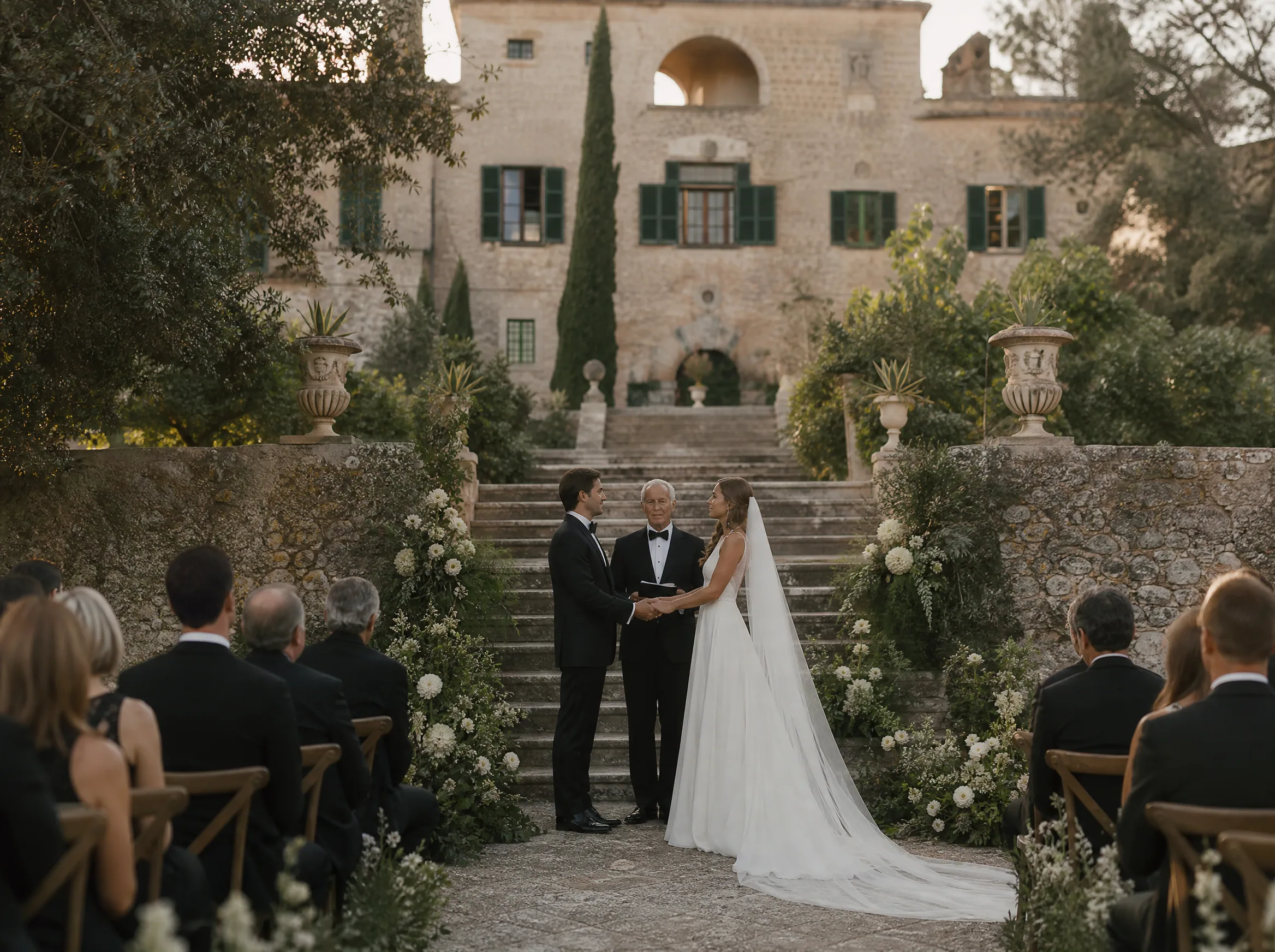
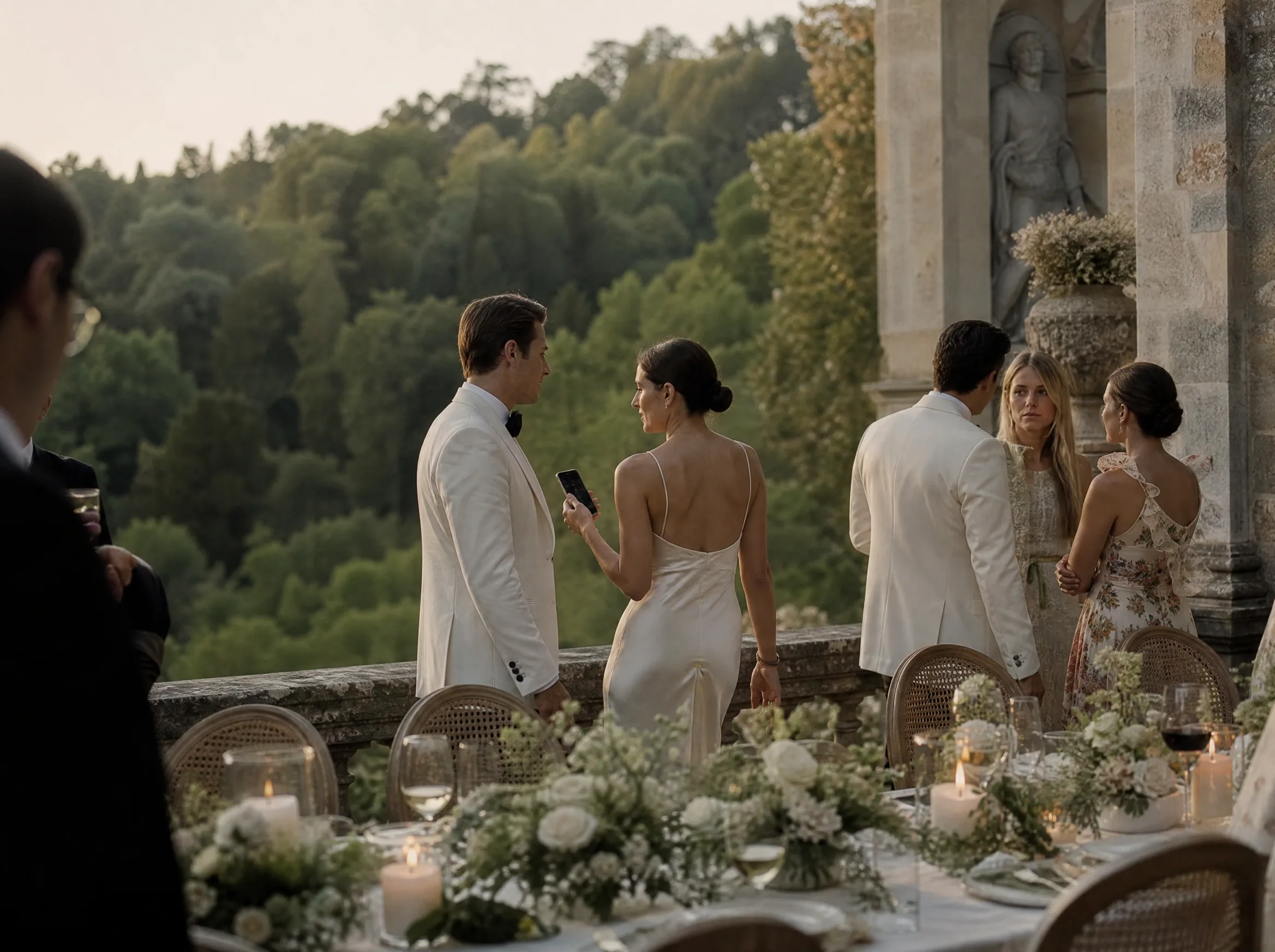
Spanish masias, castles, cliff estates, and garden venues are atmospheric — and often weak on Wi‑Fi. Do not trust a venue’s “we have internet” claim without a site test at ceremony time of day. Ask for: upload speed at the exact ceremony spot, whether the network is shared with guests, and whether a wired connection or dedicated hotspot is allowed.
Plan redundancy. A dual-SIM 4G/5G hotspot, a backup phone tether, and a local SIM purchased on arrival are inexpensive insurance. If the venue is remote, ask your planner about a temporary signal booster or a vendor who specializes in event streaming kits.
Audio Matters More Than Perfect Video
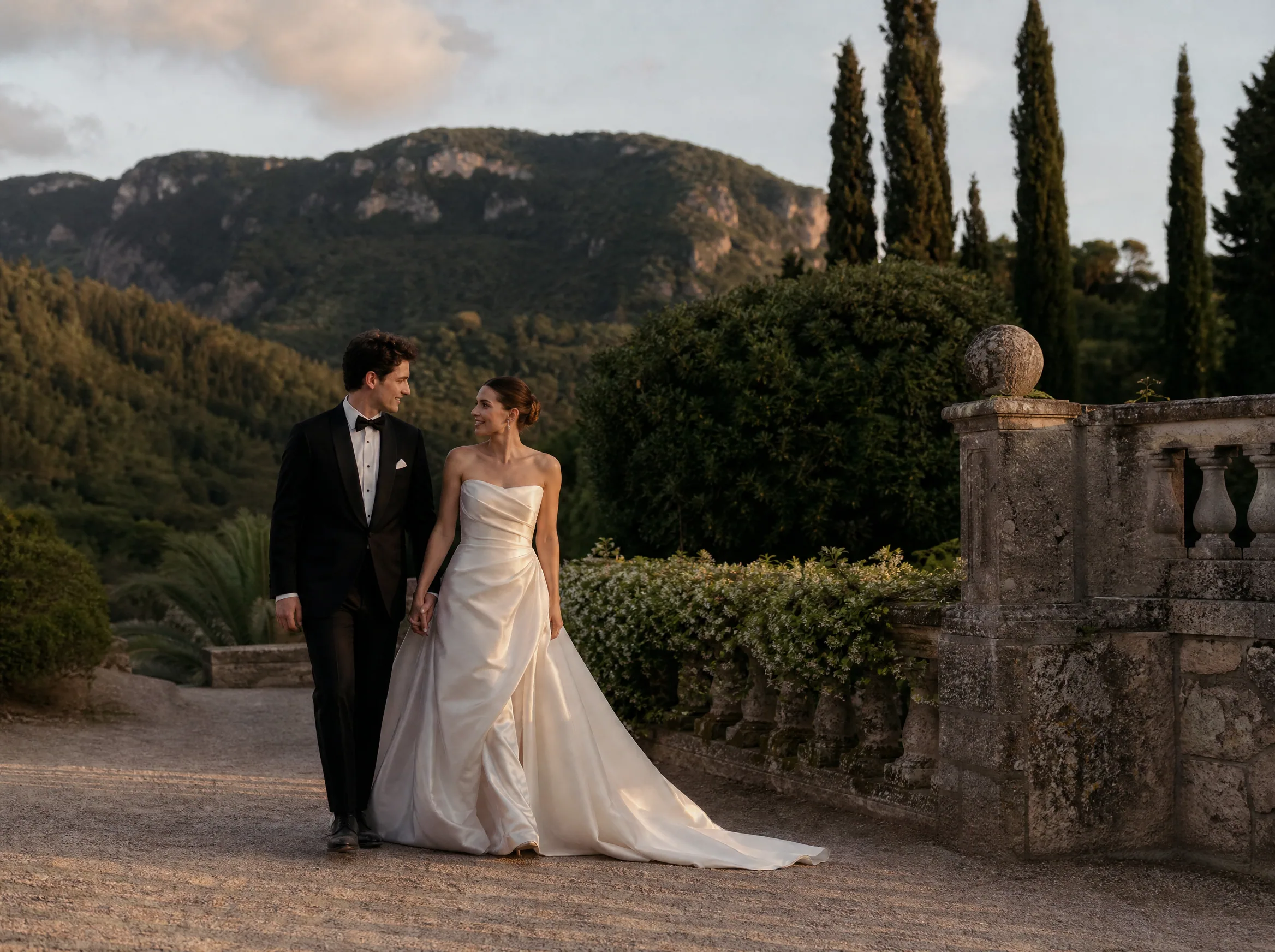
Remote guests will forgive soft focus faster than they will forgive unintelligible vows. Prioritize a clean ceremony audio feed: lapel or headset mics for you (if you are comfortable), a mic for the officiant, and a backup recorder. Outdoor wind is the enemy — ask about windshields and where speakers or musicians will sit relative to the mics.
If Kudrya Studio or your film team is already capturing ceremony sound for the wedding film, ask whether a parallel clean feed can support the stream. Align roles early so nobody is improvising cable paths ten minutes before guests are seated.
Framing, Privacy, and the Feel in the Room
A livestream camera should be discreet: one locked-off or gently operated angle from the back or side, not a second documentary crew roaming the aisle. Tell ushers and family that the stream exists so they do not block the lens — and so they do not perform for it.
Discuss privacy boundaries. Some couples stream only to a password-protected room for invited relatives. Others prefer no chat, no public link, and no recording by viewers. Decide whether remote guests may screenshot or save the stream, and say so in the invitation note.
Time Zones, Invites, and Soft Expectations
A 18:00 ceremony in Barcelona is morning on the US West Coast and late evening in parts of Asia. Send the stream link, password, start time in multiple zones, and a one-line “doors open” buffer (usually 10–15 minutes early). Tell people the estimated duration and what happens if the signal drops — for example, that a recording will follow within 48 hours if connectivity fails.
Set emotional expectations gently. Hybrid attendance is a gift, not a substitute for being there. A short message from you — “We wish you could be under this sky with us; thank you for watching our vows” — goes further than a complicated virtual reception.
Roles: Who Runs the Stream on the Day
Do not assign streaming to a parent who also has an usher role, or to your maid of honor mid-processional. Choose one calm person or a hired technician whose only job is connection, mute/unmute, and restart if needed. Give them a printed run-of-show, login details, a charged power bank, and your planner’s WhatsApp.
If your photographer and videographer are documenting the day, clarify that stream operation is separate unless you have contracted them for it. Documentary coverage and live broadcasting pull attention in different directions; combining them without a plan usually weakens both.
After the Stream: Recording, Highlights, and Care
Decide in advance whether the live recording will be saved, for how long, and who can rewatch it. Many couples prefer a private link that expires after a week, then rely on the professional wedding film for the lasting version. That protects intimacy and avoids an imperfect stream becoming the “official” memory.
Follow up with remote guests the next day: a thank-you note, a few phone photos, and the timeline for the film or gallery. People who watched at 5 a.m. in another country remember the courtesy as much as the ceremony.
A Practical Hybrid Checklist for Couples
Confirm venue upload speed at the ceremony location. Book audio support and a dedicated stream operator. Choose password protection and a no-public-link policy if you want privacy. Send time-zone-friendly instructions with a buffer. Align your planner, officiant, and film team on camera placement. Prepare a backup hotspot and a plan if the stream fails. Decide what is live versus what will be shared later as a crafted film.
Done well, live streaming is not a compromise — it is hospitality across borders. Your guests in Spain get the weekend you designed; your guests abroad get a clear, respectful window into the vows that brought everyone together.