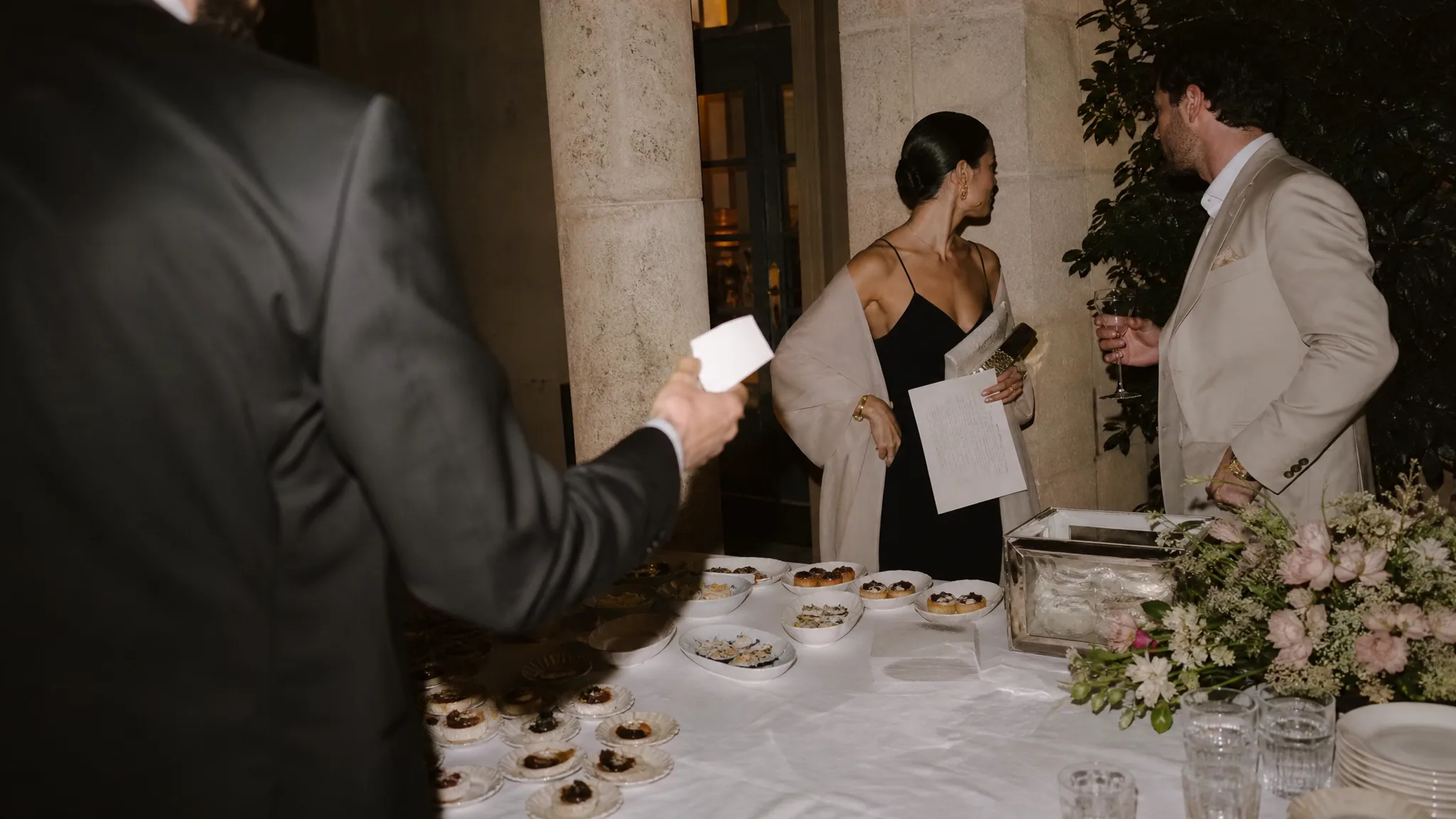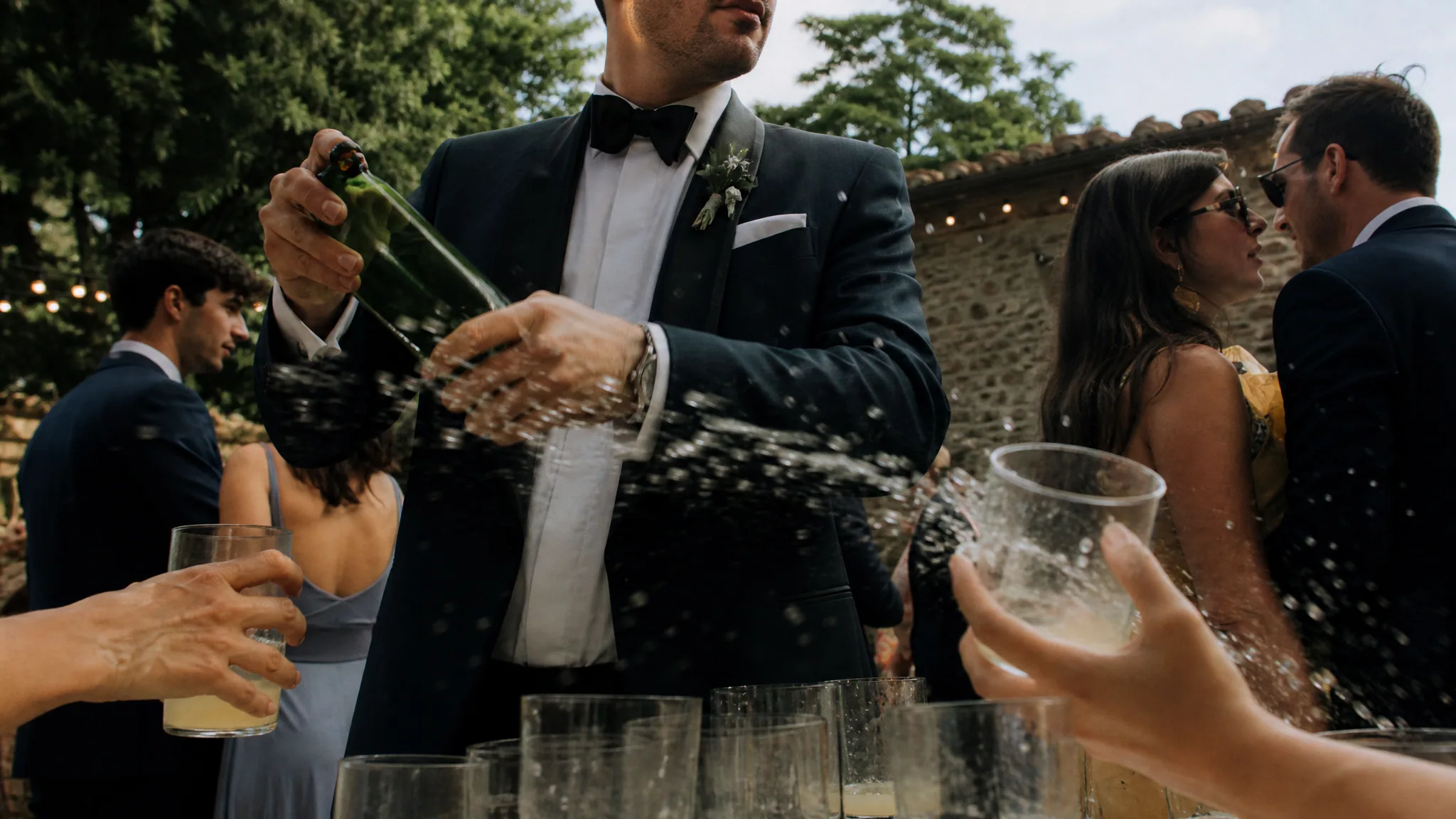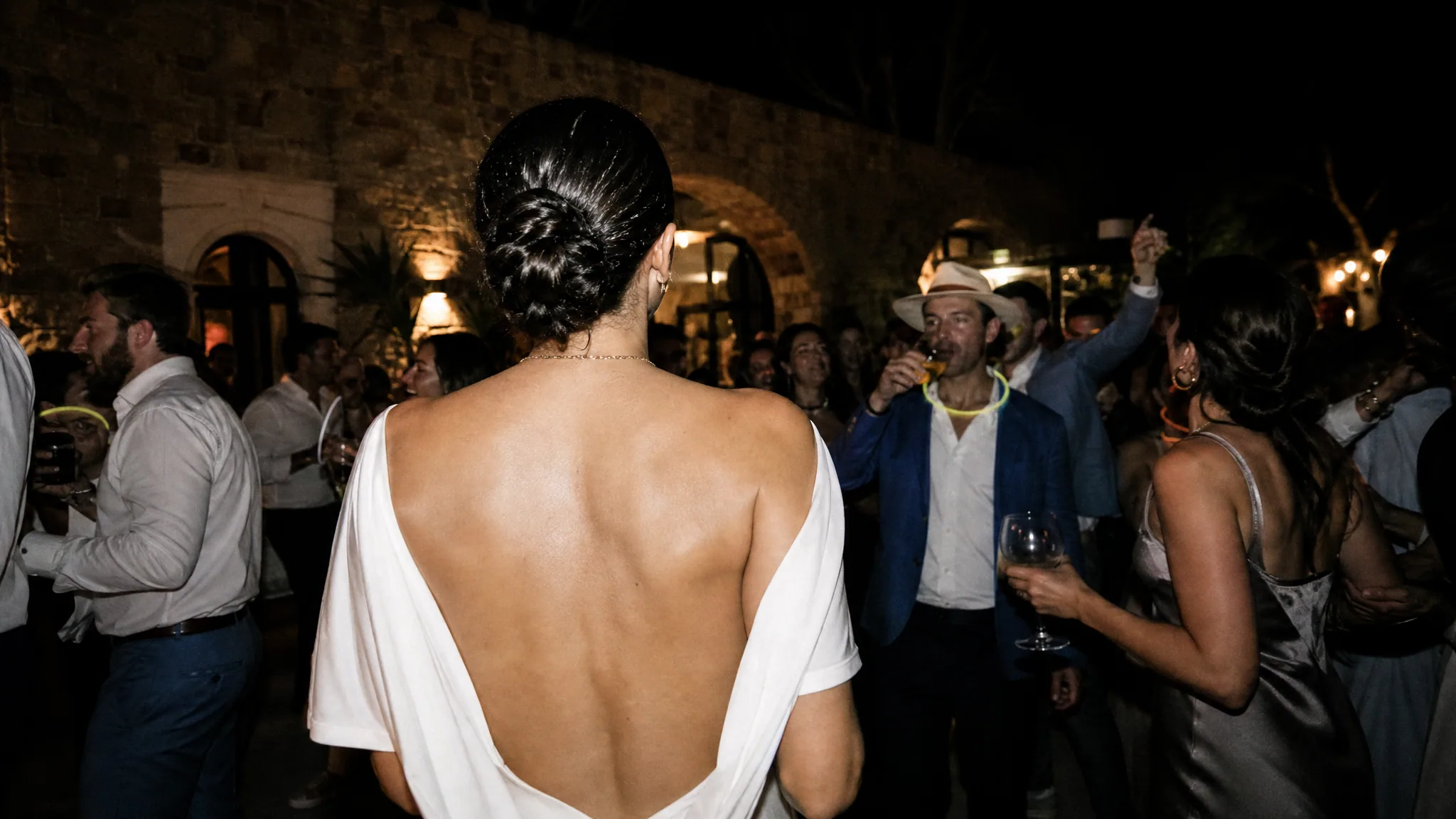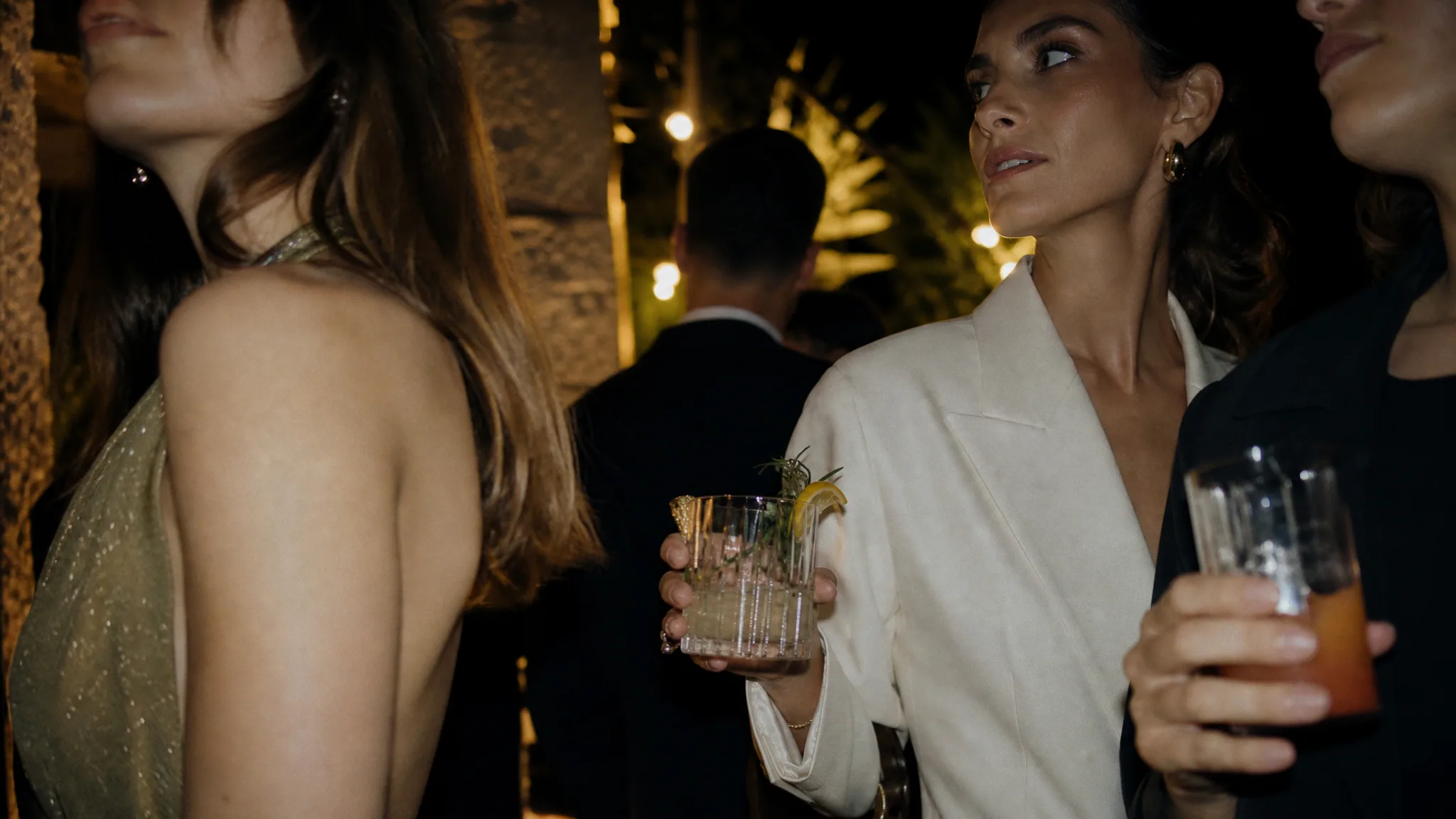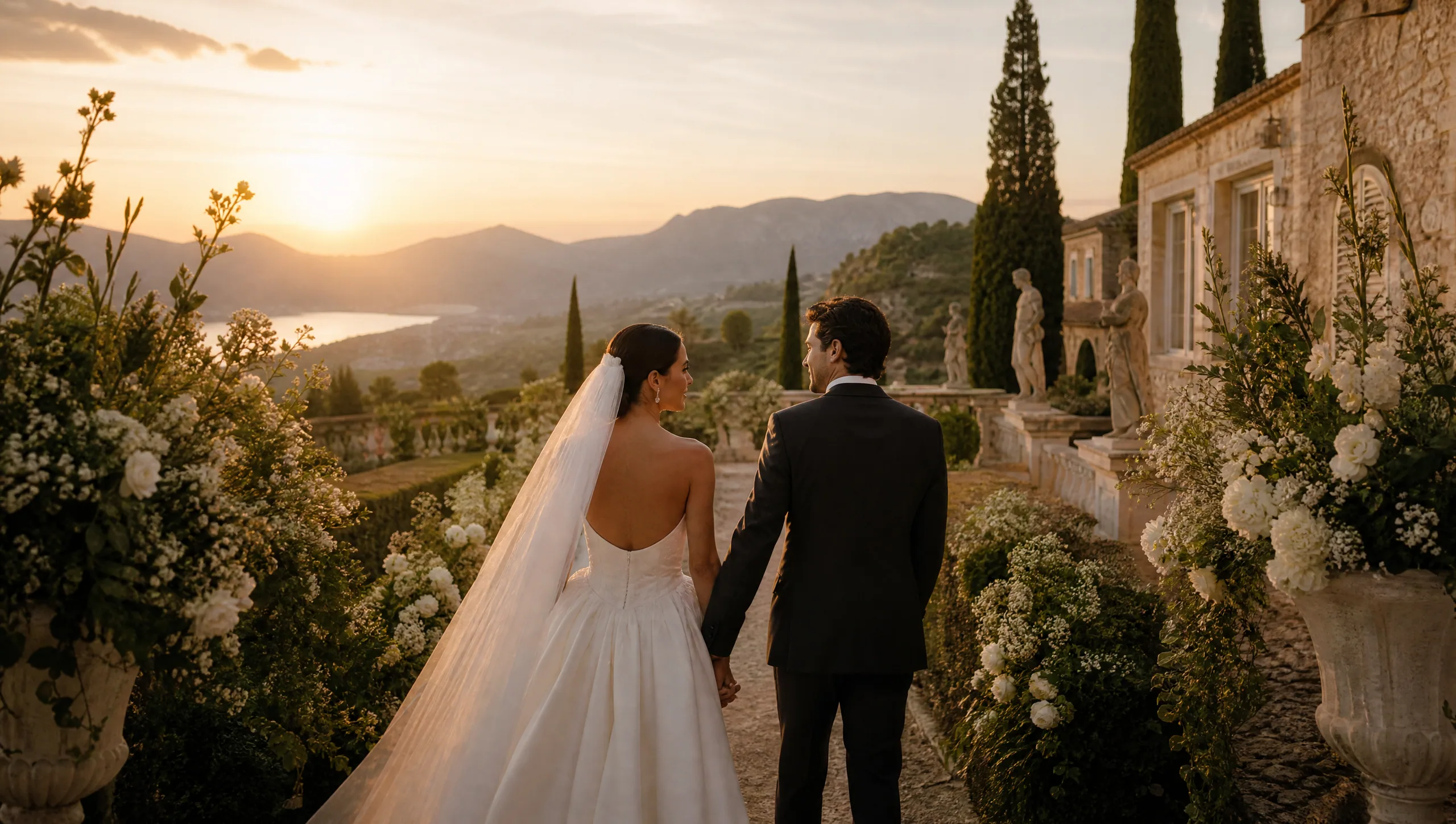
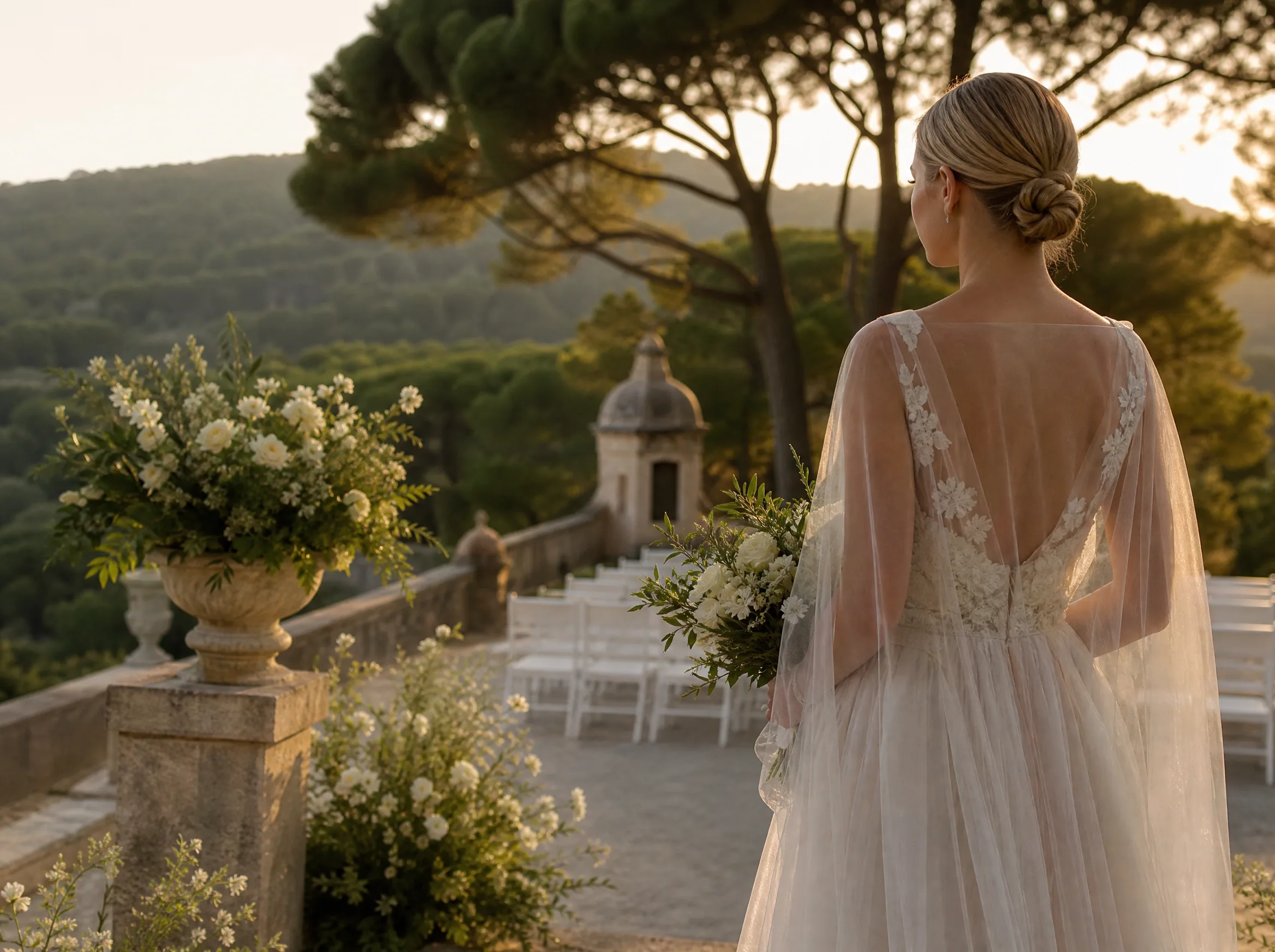
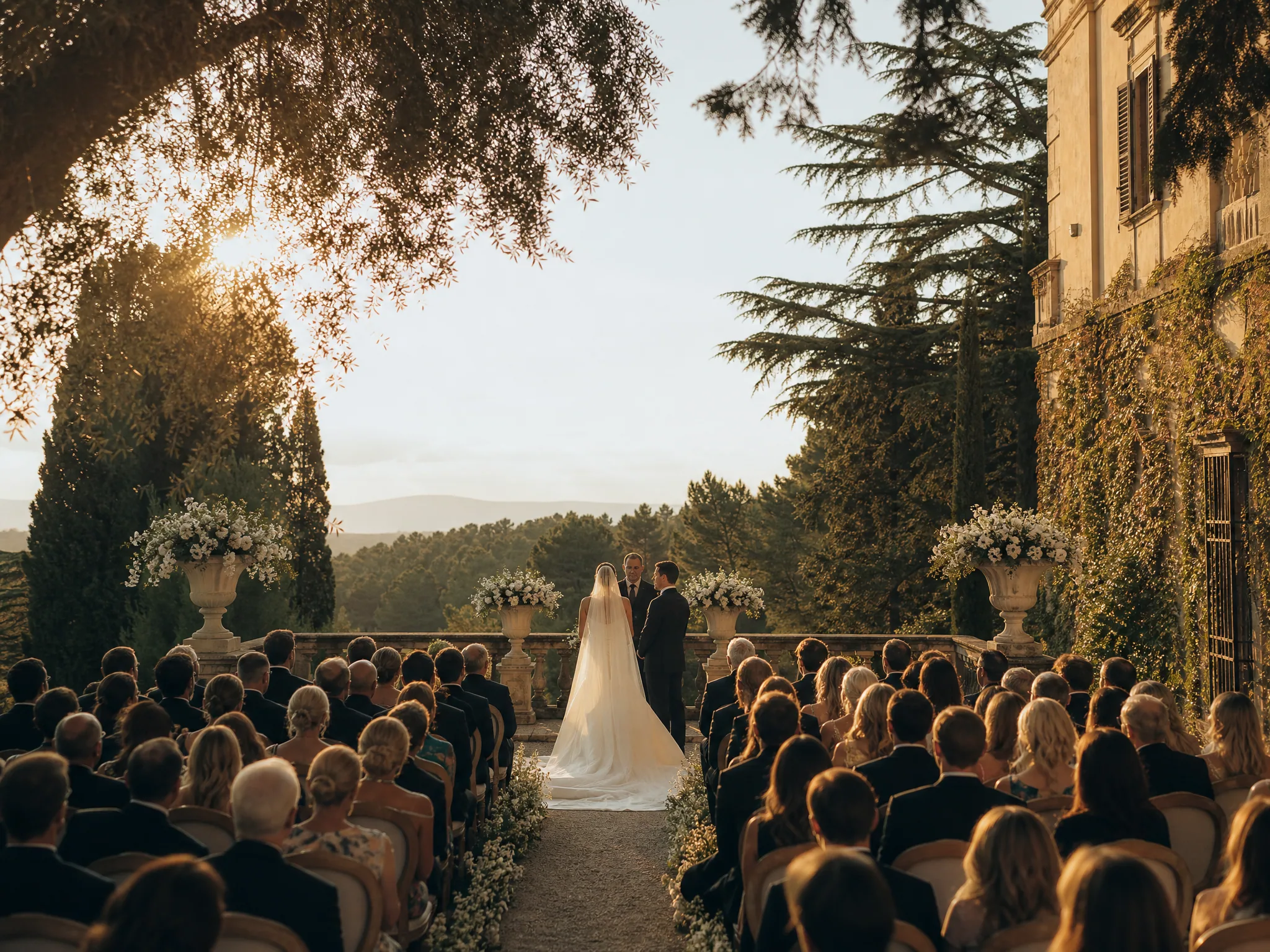
Many international couples picture their Spain wedding ceremony just as the sun softens — warm stone, long shadows, that last amber light across a courtyard or cliff. The idea is romantic. The execution is logistical. Sunset moves with season and coastline, Spanish wedding days often run later than guests expect, and a ceremony that starts ten minutes late can miss the window you flew across an ocean to catch.
This guide is for couples planning from abroad who want sunset timing that feels intentional rather than lucky. The goal is a clear light plan your planner, officiant, and film team can actually run — while guests stay comfortable and the day still breathes.
Why Sunset Timing Matters More in Spain Than You Think
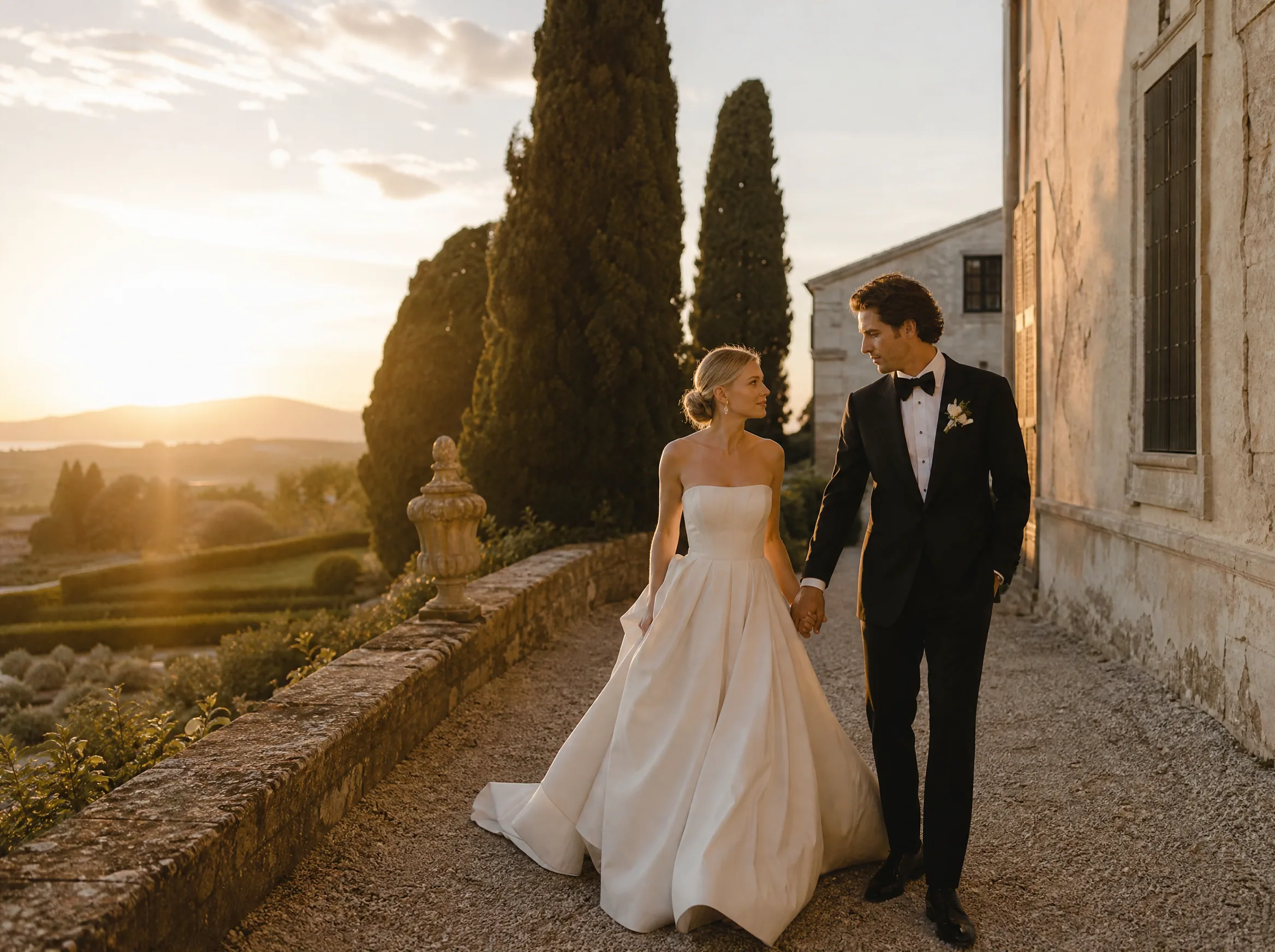
Spain rewards outdoor ceremonies: masia courtyards, Mallorca terraces, Catalan gardens, Andalusian patios. Those same spaces are unforgiving if the sun is still harsh or already gone. International guests often assume “sunset ceremony” means the vows begin at sundown. In practice, the best light usually arrives in the hour before official sunset, and the usable window can be shorter than a full processional, reading, and recessional.
Treat sunset as a production constraint, not a Pinterest label. When you lock a ceremony start time, you are also locking heat exposure, shade angles, wind on the coast, and how much buffer remains before cocktail hour. Couples who decide this early give vendors room to protect both atmosphere and comfort.
Map Golden Hour to Your Region and Season
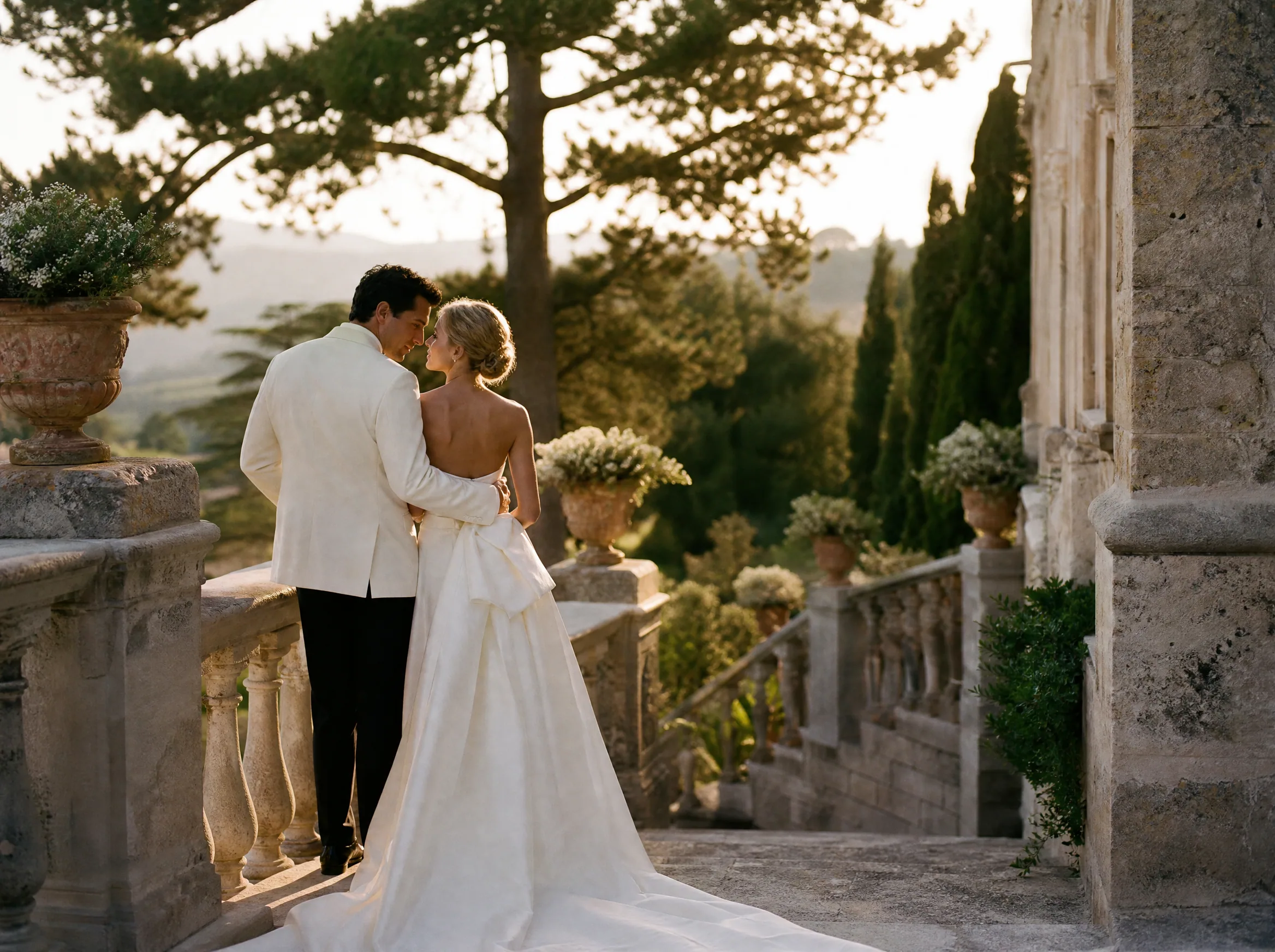
Golden hour in June near Barcelona does not behave like golden hour in October on Mallorca, and northern inland venues lose light differently than sea-facing terraces. Ask your planner for approximate sunset times for your exact wedding date and venue orientation — east-facing courtyards and west-facing cliffs need different start times even on the same evening.
Build a one-page light note into your planning folder: civil sunset time, preferred ceremony start, absolute latest start, and a cloudy-day alternative. Share it with anyone who can delay the day — hair and makeup leads, drivers, and the officiant — not only the people holding cameras.
Ceremony Length Versus Light Window
A bilingual ceremony, multiple readers, or a longer processional can quietly add fifteen minutes. That is often the difference between soft side light and deep blue dusk. Time a full rehearsal of the spoken ceremony, including translations and music cues, then place that duration inside your golden-hour window with margin.
If your ceremony naturally runs long, start earlier rather than hoping the light will wait. Guests would rather sit through the last bright minutes with a drink nearby than stand in near-darkness while microphones and aisle flowers become harder to manage.
Build Buffers for Spanish Wedding Rhythm
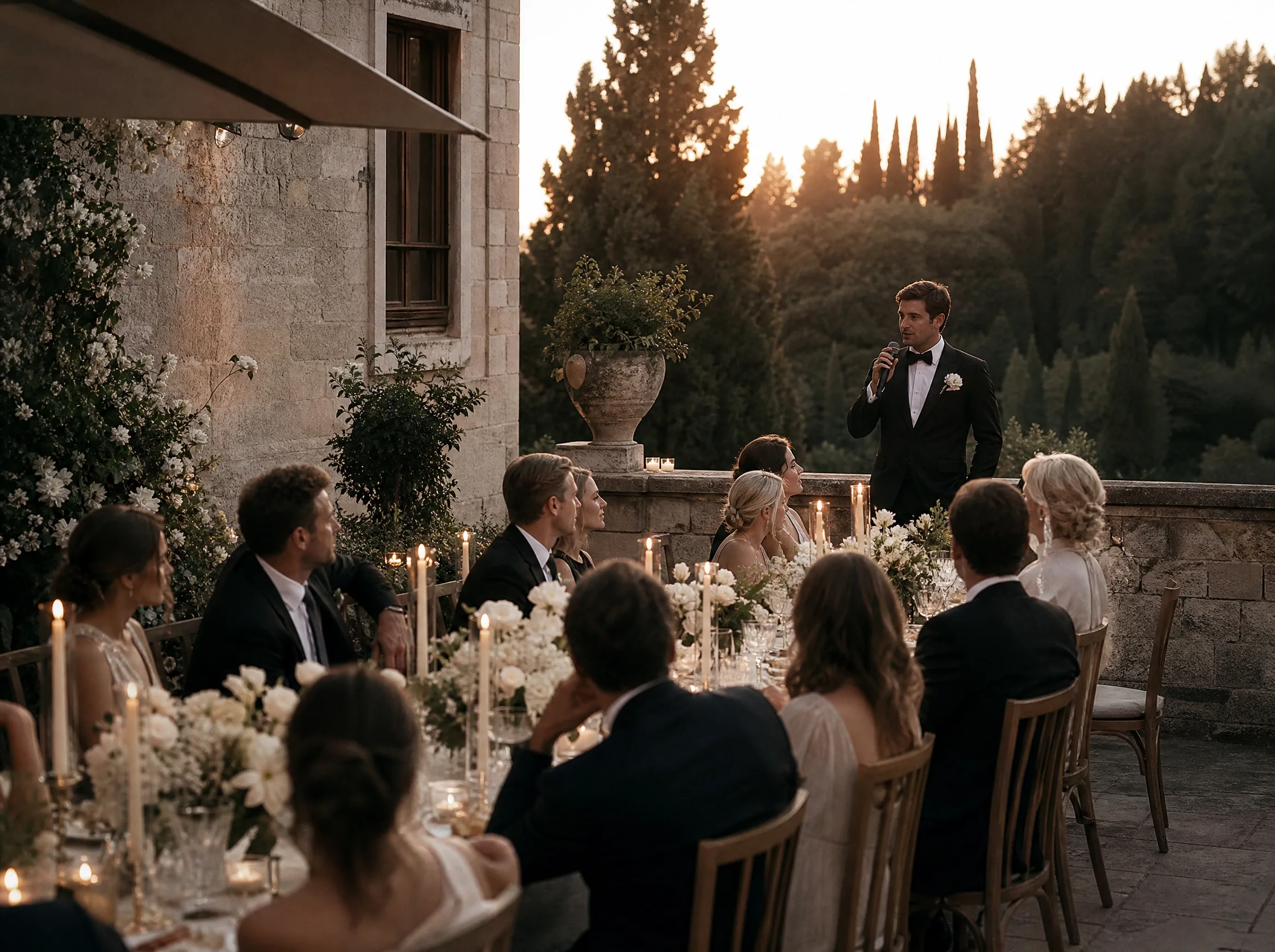
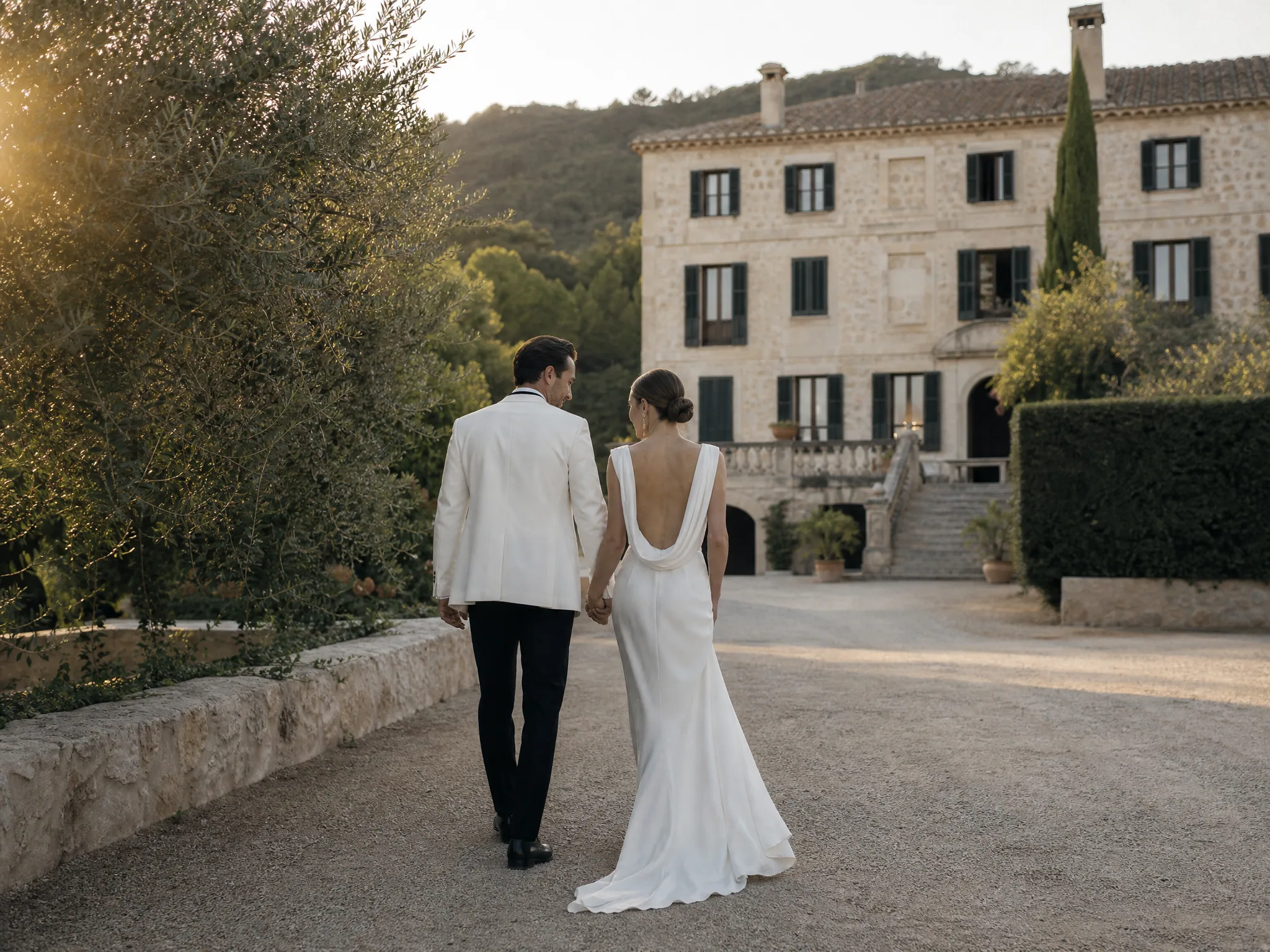
Spanish destination weddings often include late hotel transfers, welcome-drink linger time, and family photos that expand when relatives have not seen each other in years. Those soft delays are part of the culture of the weekend — and they are the most common reason sunset ceremonies slip.
Protect the light with hard buffers earlier in the afternoon: a non-negotiable guest call time, a closed getting-ready cutoff, and a designated person (planner or day-of coordinator) empowered to start the processional on schedule. Romance survives a firm cue better than a missed horizon.
Indoor-Outdoor Transitions and Shade Reality
Many Spanish venues offer a chapel, covered porch, or stone arcade a short walk from the “hero” outdoor aisle. Use that architecture. If August heat makes a pure outdoor hold painful, gather guests in shade and move to the open aisle only for the short ceremonial window when light is kind.
Walk the path at the same time of day as your ceremony during a site visit or ask for a timed video from the venue. Note where the sun hits eyes, where chairs become backlight silhouettes, and where a white dress will blow out in direct western sun. Small seating or angle changes often fix more than filters later.
Coordinate With Your Planner, Officiant, and Film Team
Sunset timing only works when the people who control pace share one clock. Your planner owns guest flow, your officiant owns ceremony length, and your film team knows when the light will collapse behind a ridgeline or building. A short joint call — even twenty minutes — prevents three separate “perfect” times that cannot coexist.
Agree in writing on the target start, the latest acceptable start, and what happens if the bridal party is late. Clarity here is kindness. It keeps the day calm when emotions are high and relatives are still finding their seats.
Guest Comfort When the Sun Is Still High
International guests flying into Spanish summer may underestimate glare and heat while waiting for a sunset vow. Provide water, parasols or a shaded hold area, and clear communication that the ceremony begins before the sun fully drops. A beautiful skyline is not worth dehydrated grandparents.
If your guest list includes older relatives or young children, prefer an earlier golden-hour start with soft light over a dramatic last-minute sundown that forces a long uncovered wait. Comfort reads on camera as much as color does.
Contingency Plans When Clouds or Wind Shift the Light
Coastal haze, sudden wind, or a grey Mediterranean evening can erase the postcard sunset without ruining the wedding. Decide in advance whether you will keep the outdoor aisle, shift under cover, or shorten the ceremony to chase a brief break in the clouds. Your planner should know which option you prefer without a group debate on the lawn.
Also plan a second “portrait light” moment later if ceremony light disappoints — a ten-minute couple escape during cocktail hour can recover the frames you care about without rewriting the whole timeline.
A Practical Sunset Timing Checklist for Couples Abroad
Confirm sunset time for your venue and date, choose a ceremony start with buffer, rehearse true ceremony length, assign one person to protect the cue, and brief guests on arrival and comfort. Share the light note with planner, officiant, beauty team, transport, and film crew at least two weeks before travel.
If you are planning from another country, ask for a short site video at the proposed ceremony hour and a backup covered location on the same property. Sunset in Spain is worth chasing — it just needs a schedule strong enough to hold it.