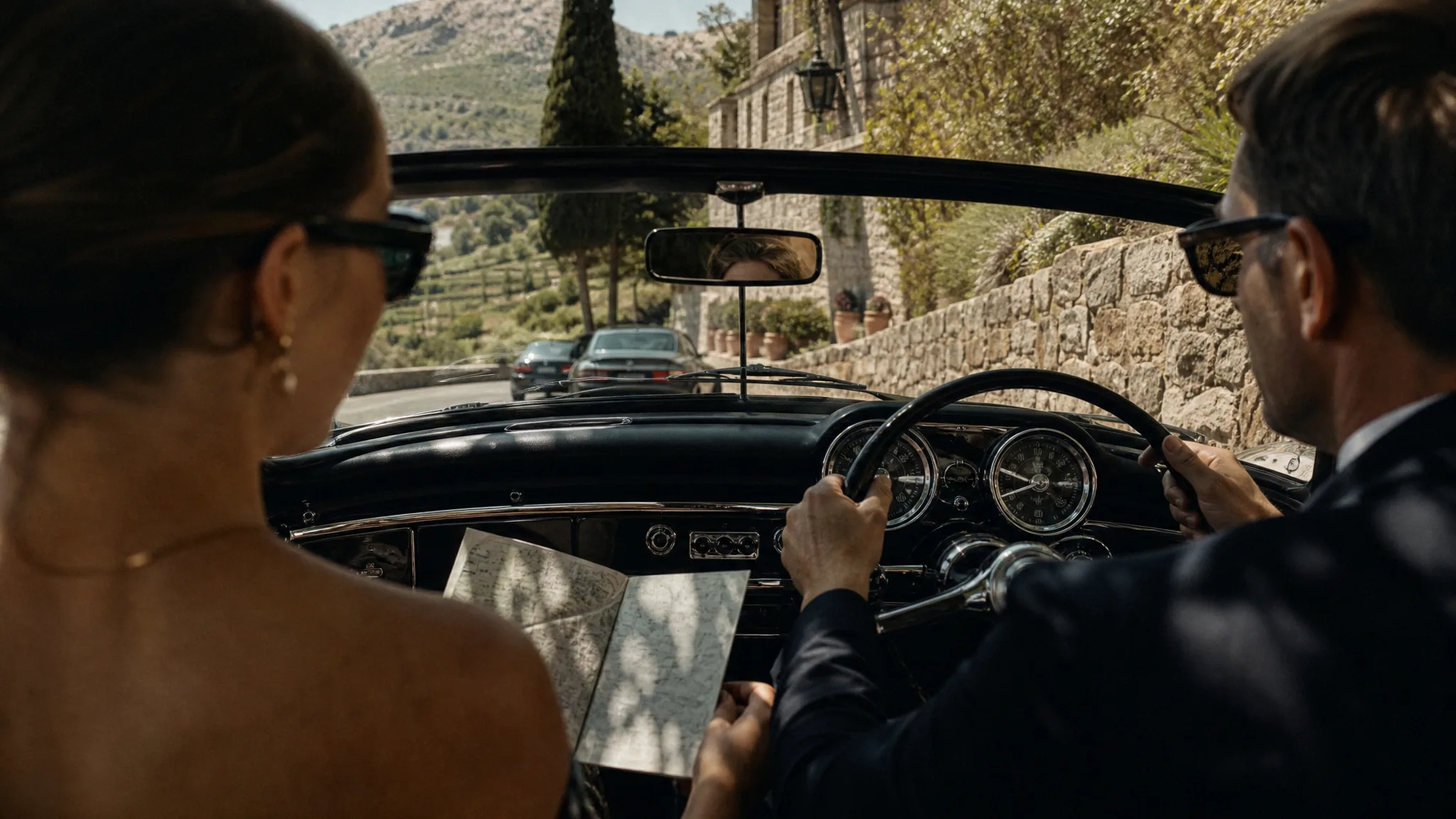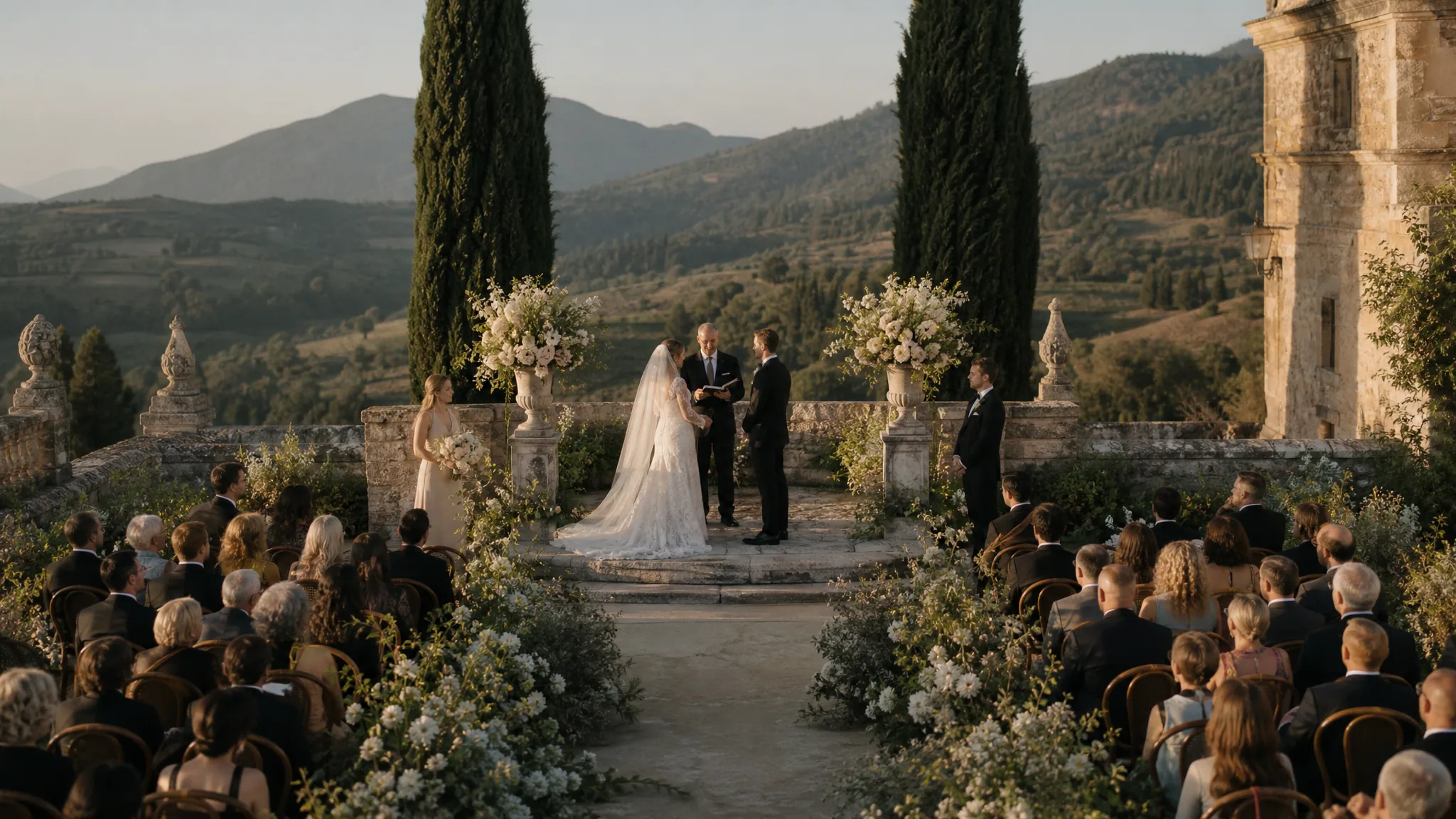
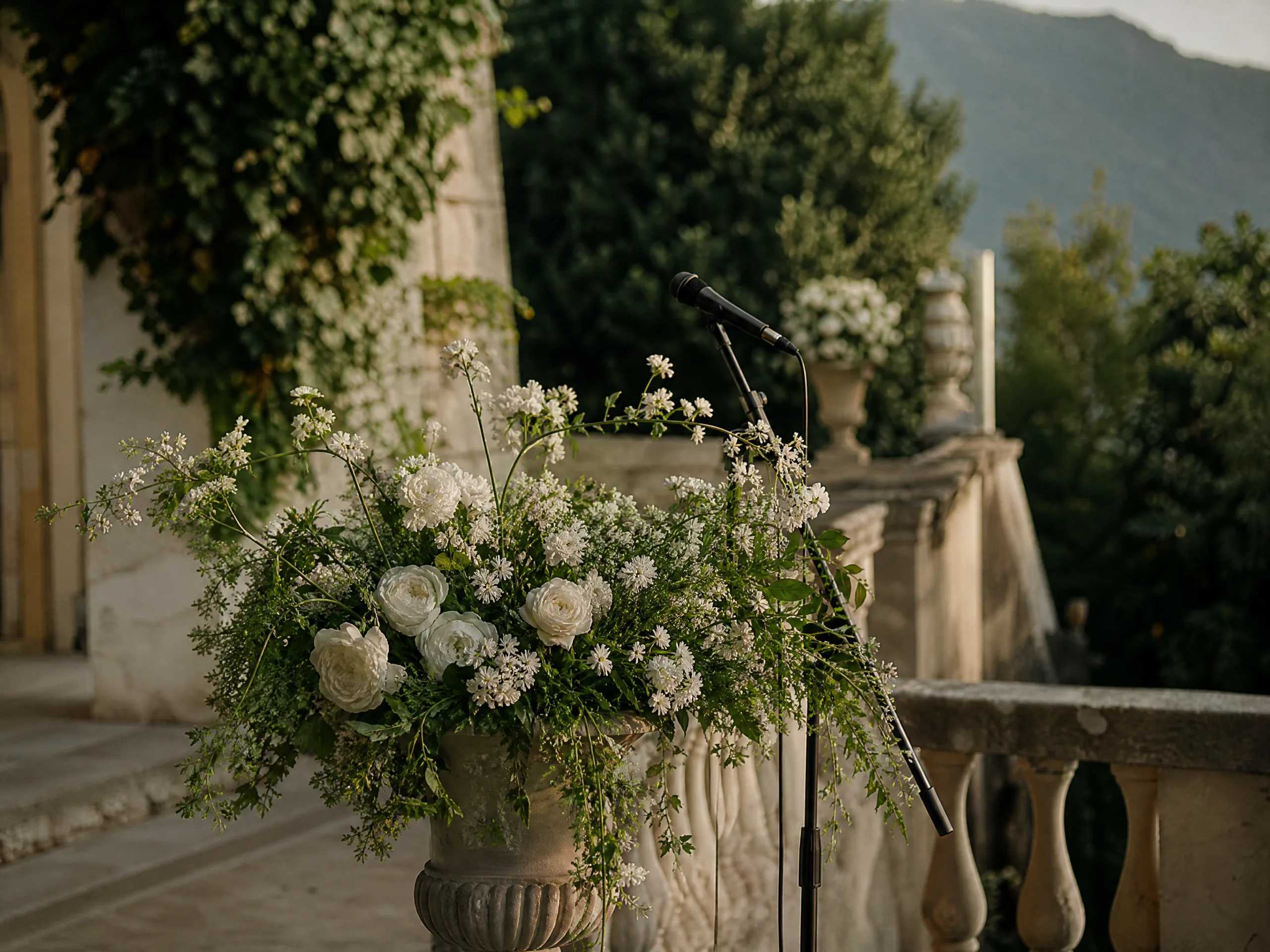
An outdoor Spanish ceremony can look perfect in photos and still feel broken in the moment if guests cannot hear the vows. Wind across a vineyard, stone courtyards that bounce sound unevenly, and rural venues with limited power all change what “simple microphones” actually means when you are planning from abroad.
This guide is for international couples who want ceremony audio that supports the emotional beats of the day — clear vows, natural readings, and a film soundtrack that does not rely on guests leaning forward to catch every word.
Decide What Guests Must Hear Before You Rent Gear
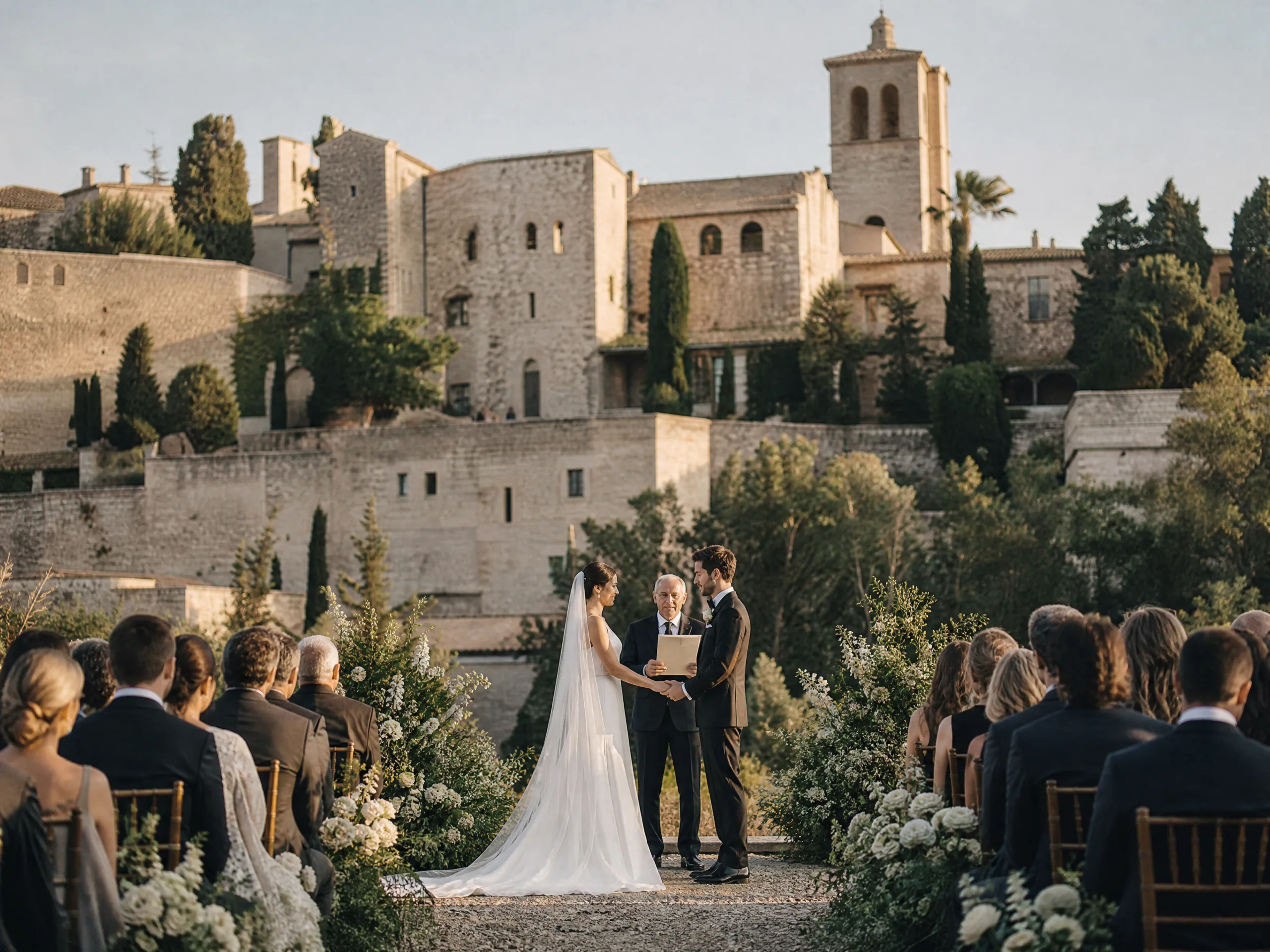
Start with the ceremony script, not a speaker catalog. List every spoken moment that matters: officiant welcome, personal vows, readings, ring exchange cues, and any bilingual transitions. If both of you speak, plan for two lavaliers or a shared handheld handoff that will not interrupt the pacing of the ritual.
Also decide whether musicians need a separate foldback or whether acoustic instruments will sit far enough from speakers to avoid feedback. Clarity for guests and a clean recording for your wedding film are related goals, but they are not always solved by the same mic placement.
Walk the Ceremony Site for Acoustics, Not Just Aesthetics
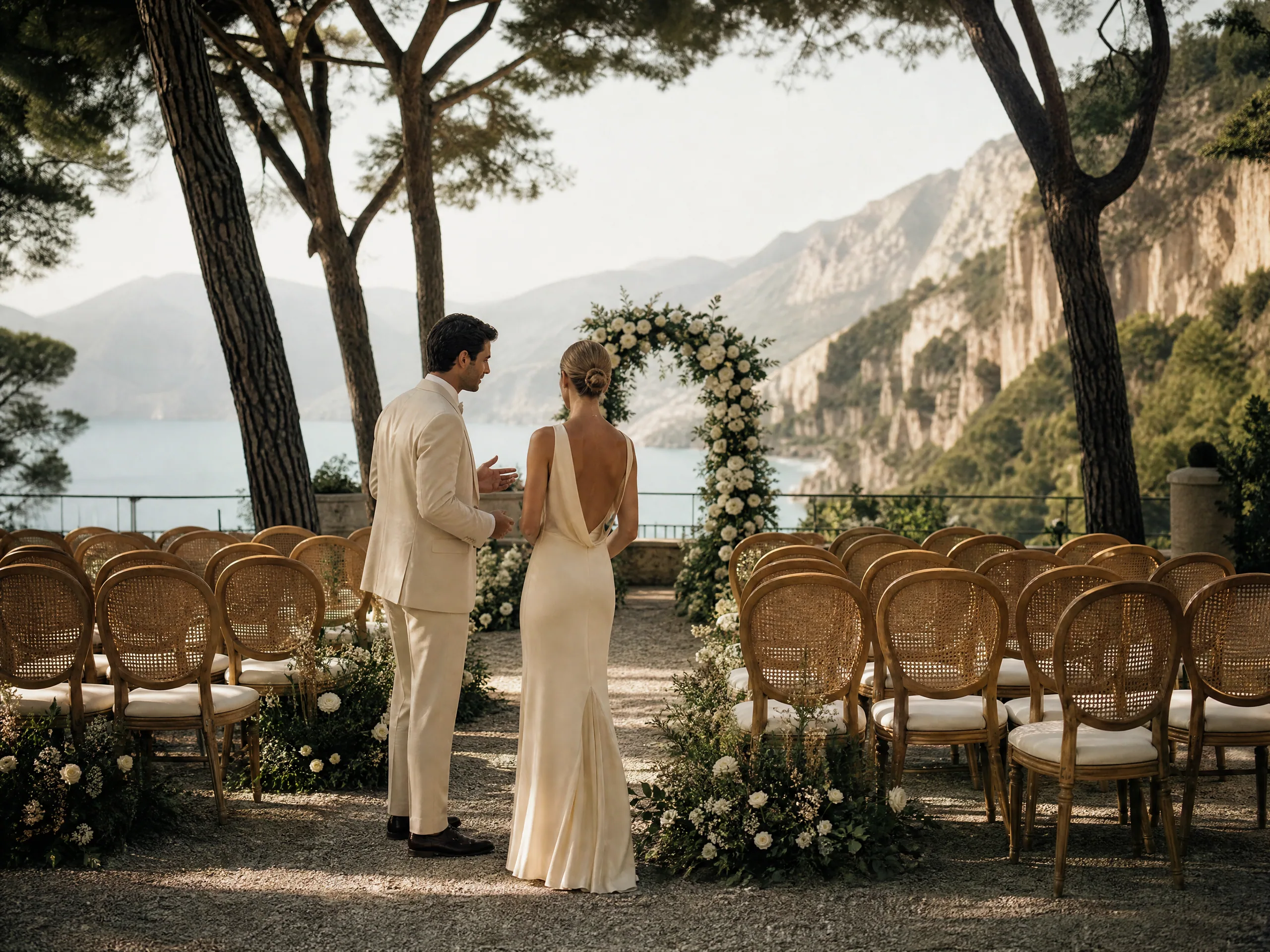
Ask your planner or venue contact for a short video at the exact ceremony spot during a normal afternoon. Listen for wind corridors, nearby roads, irrigation pumps, church bells, and restaurant terraces. Soft lawn, gravel, pool decks, and hard stone each behave differently once fifty or two hundred guests are seated.
If the aisle faces open countryside, assume more wind protection and a stronger speech system than a courtyard with three walls. Remote couples who skip this check often approve a “portable PA” that looks tidy in a quote and disappears under real outdoor noise.
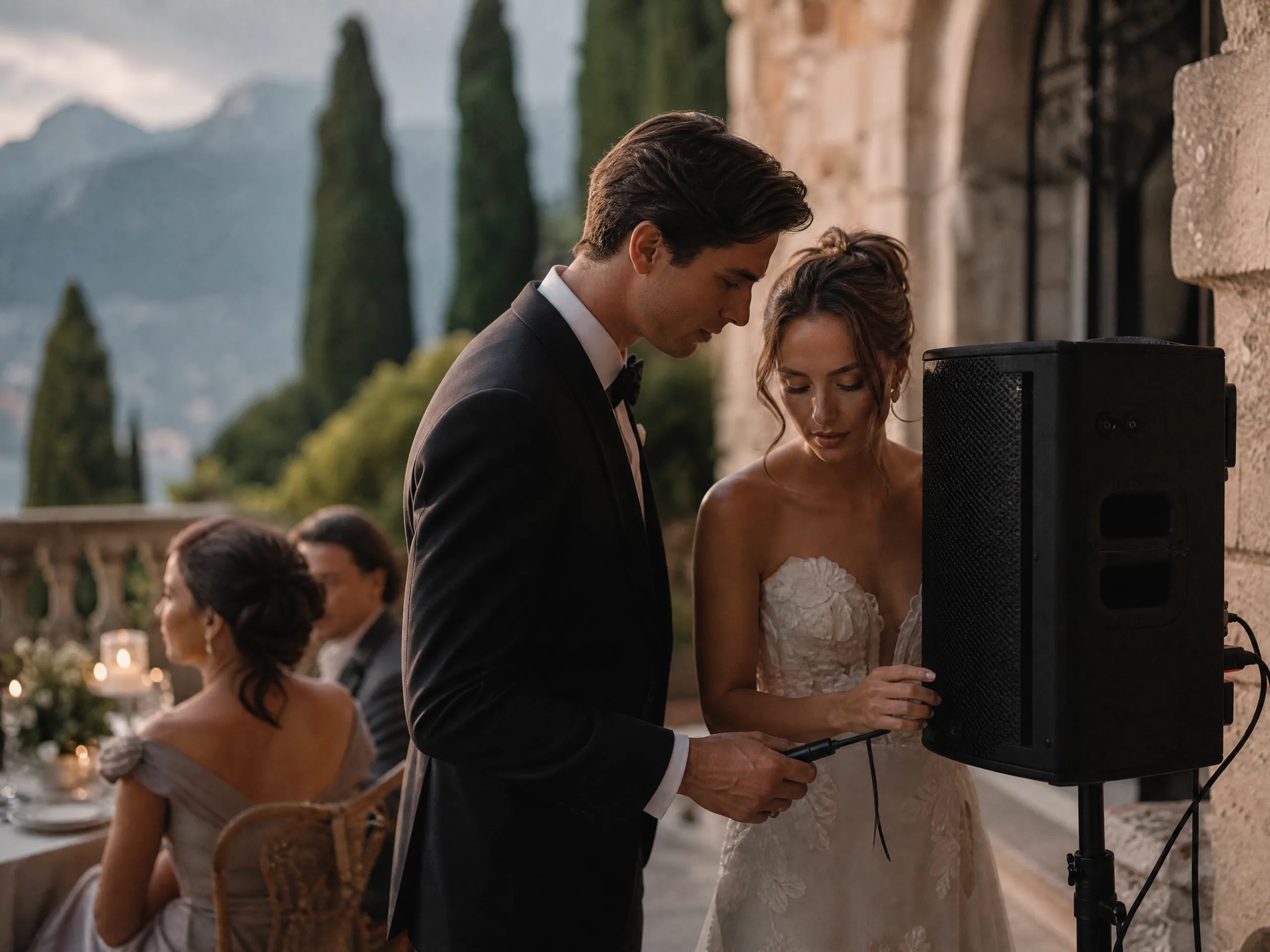
Confirm Power Before You Approve Any Sound Package
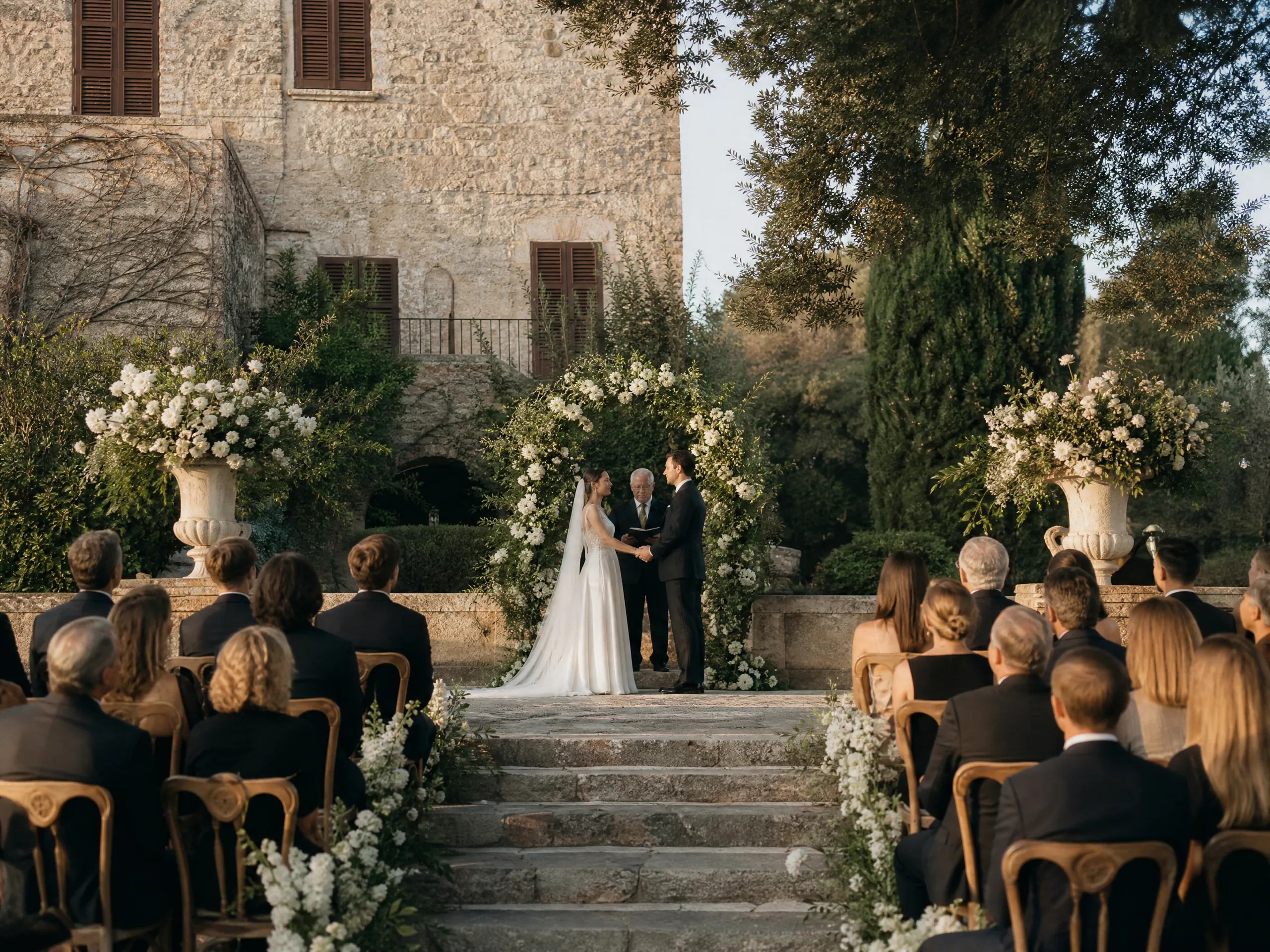
Many Spanish masías, fincas, and garden venues have limited outdoor outlets, long cable runs, or generator-only zones. Confirm where power lives relative to the altar, how long the run is, and whether cables must be matted for guest safety and accessibility.
If your evening reception later needs denser AV, ask whether ceremony and reception systems share the same circuit. A ceremony that works at 17:00 can still create a brownout risk when string lights, catering warmers, and DJ gear come online an hour later.
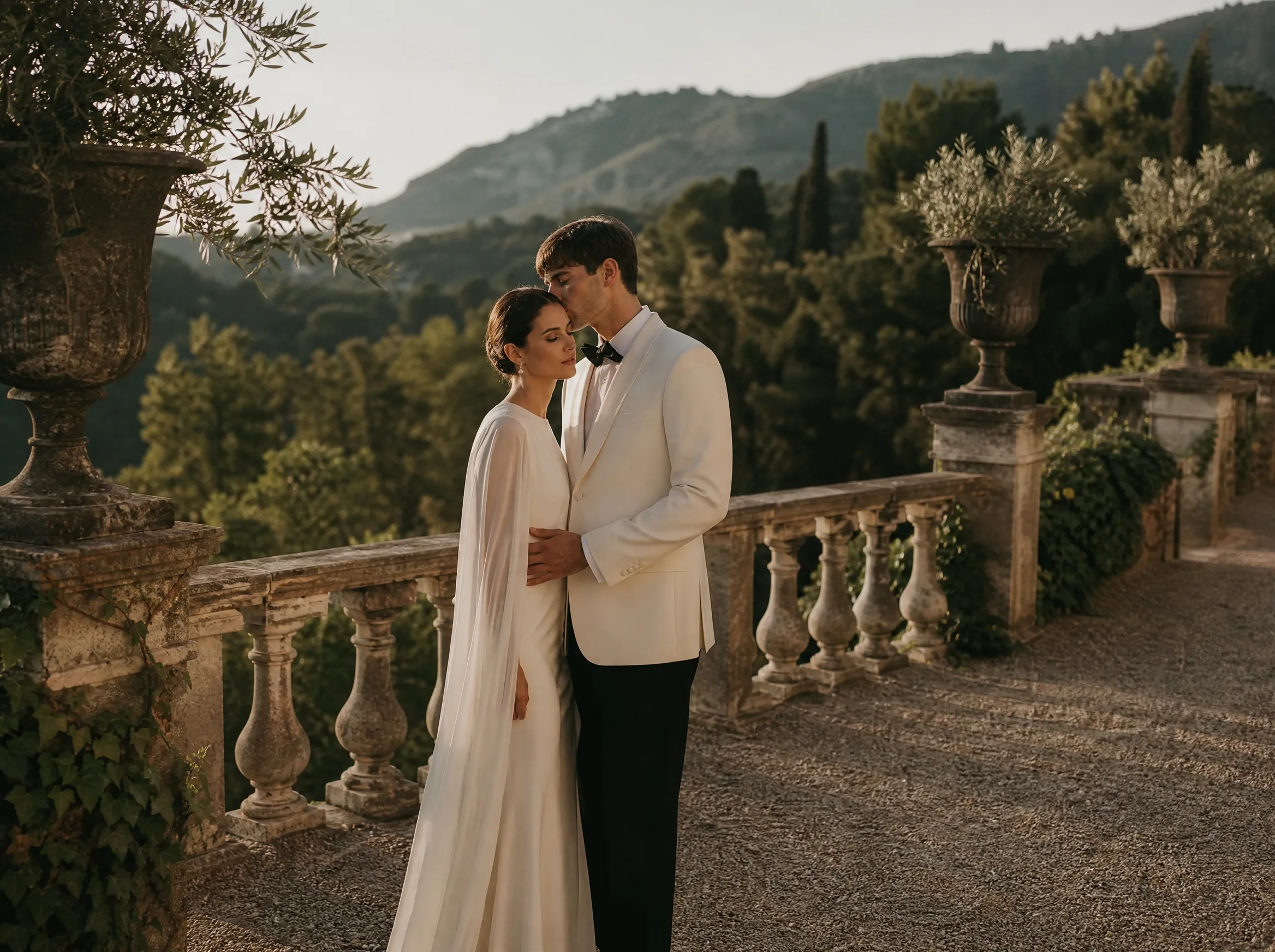
Choose Microphones for Voices, Wind, and Movement
For vows, discreet lavaliers usually look better on camera than a single handheld passed between people. For an officiant who moves or reads from notes, a headset or a stable lectern mic can be more reliable than a clip that shifts when a jacket moves.
Outdoor Spain almost always needs wind protection. Foam alone is often not enough in coastal or elevated sites. Ask the audio vendor how they handle gusts, and make sure your photographer and videographer know which mics must stay visible and which should disappear into attire.
Plan Bilingual Moments Without Confusing the Mix
Destination ceremonies often switch between languages for family members on different sides of the aisle. That is beautiful when the handoffs are planned. Assign who speaks into which microphone, whether translations are consecutive or summarized, and whether printed programs carry the second language so the spoken mix stays short enough for outdoor attention spans.
If a reader is nervous or soft-spoken, schedule a thirty-second soundcheck before guests are seated. Remote couples can put this on the day-of timeline even if they never meet the technician in person.
Coordinate Sound With Photography and Videography Sightlines
Speaker towers, mic stands, and cable runs can block aisle portraits, couple coverage, and guest reaction shots. Share your floor plan with both the AV lead and your film team early. Prefer low, dark stands that sit outside the primary camera angles rather than bright tripods beside the couple.
If you want a cinematic wide shot of the ceremony space, ask whether speakers can sit behind or beside the last guest row instead of flanking the couple like stage monitors. Good sound should support the images, not compete with them.
Build a Guest-Hearing Test Into the Rehearsal Window
Even a brief rehearsal is enough to test levels from the back row and from under any shade structure. Have someone stand where elderly relatives will sit. If your rehearsal dinner guests arrive late, ask the planner to run a five-minute audio check with the officiant alone before doors open.
Capture the final mic assignments in one shared note: who wears what, who holds what, and who is allowed to adjust volume during the ceremony. One owner on site prevents three people from “helping” and creating feedback mid-vows.
Prepare Contingencies for Wind, Delay, and Soft Voices
Have a backup handheld ready, spare batteries labeled, and a plan if wind rises right before sunset. If the ceremony starts late and temperature drops, remind readers to speak closer to the mic than they did at rehearsal. For very exposed sites, a short acoustic canopy or a repositioned couple placement can matter more than turning the volume up.
Also plan what happens if wireless interference appears. Rural venues are quieter on RF than city rooftops, but nearby production gear, guest hotspots, or vendor radios can still collide. Your AV contact should know the fallback before guests take their seats.
Close With a Remote-Friendly Audio Brief
Before wedding week, send one concise brief covering ceremony start time, speaking order, language switches, power location, speaker placement limits for cameras, and emergency contacts. Ask for confirmation that the same technician covering cocktail hour understands the ceremony cues.
When sound is planned with the same care as florals and seating, guests stay present for the vows — and your wedding film keeps the voices that made the day feel real.