Sooner or later every couple planning a destination wedding in Spain hits the same question: are we paying for our guests' rooms, or are they? It sounds like a small etiquette point. In practice it decides your budget, your guest list and how relaxed everyone feels when they land in Palma or Barcelona.
A recent destination-wedding thread put it bluntly. A couple planning a wedding for about twenty-three people said the venue and lodging alone came to half their budget, and asked whether they were expected to pay for everyone's stay. Close to a hundred replies followed. A second thread, about a venue that sleeps the whole party for a three-night weekend, drew even more. The answers were not unanimous, but a few clear rules came out of them, and they match what we see at weddings across Spain.
This guide turns those rules into a practical split of costs, then answers the other question hiding behind it: is a wedding in Spain actually cheaper than a wedding at home?
The default: guests pay their own travel, you pay for the wedding
Most people in both threads agreed on the baseline. At a destination wedding, guests normally pay for their flights and their accommodation. The couple pays for everything that is the wedding itself: the venue, the ceremony, food and drink at the events you host, music, flowers, transport you arrange, and the people you hire to plan and record it.
Several guests who had been to four or five destination weddings said they had always paid for themselves and never expected otherwise. If they could not afford it, they simply declined. That point came up again and again, and it is the honest trade-off: the more the trip costs, the more people will say no. A twenty-three-person wedding can quietly become a fifteen-person wedding.
So the real question is not what you are obliged to pay. It is who you cannot imagine the day without, and what it will take to get them there.
When the couple should pay for rooms
The strongest opinions were about one specific situation, and it is very common in Spain. Many fincas in Mallorca and masías near Barcelona are rented on an exclusive-use basis, and the price includes the bedrooms on site. You book the whole place for the weekend, and the rooms come with it.
The thread was close to unanimous here. If guests are required to stay at the venue, at a rate you set, for the nights you chose, the rooms are part of your venue cost, not theirs. Asking guests to chip in for a buyout felt to most people like asking them to subsidise the venue. One reply suggested a simple test, and we agree with it: can the room price be separated from the venue fee, and can each guest book and pay the venue directly for the nights they want? If not, you cover it.
Other practical points from the same discussion:
- Choice matters. Guests want to pick their own lodging and length of stay. A three-night programme is a lot to ask of anyone who is not family or a close friend, and some would rather explore the island than spend every hour at wedding events.
- Check the rooms. Shared bathrooms were a deal-breaker for several people. Ask the venue exactly what each room has before you assign them.
- Plan for the overflow. If more people come than the venue sleeps, give them a nearby hotel option and a way to reach every event.
If you are working with hotels rather than a venue with rooms, our guide to hotel room blocks for destination weddings in Spain covers contracts and release dates.
What couples usually pay for beyond the wedding day
Even when guests pay their own way, the replies listed a set of things that hosts commonly cover, because they make the trip easier and say thank you:
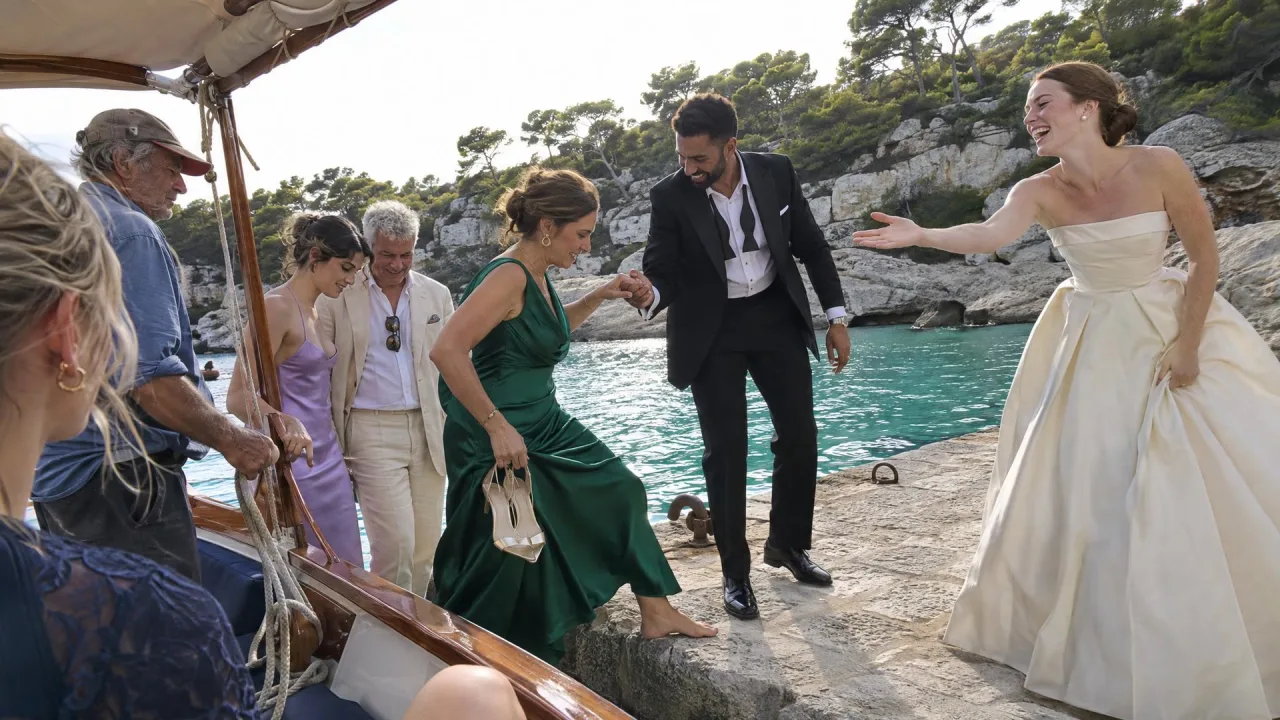
- Transfers between the hotel and the venue. A coach or shuttle on the wedding night is one of the most appreciated costs. Rural venues in Spain are often a winding drive from town, and nobody should be negotiating taxis at two in the morning.
- A welcome evening or a farewell brunch. Guests who paid for flights tend to remember a relaxed first evening more than the favours.
- Rooms for the people you cannot do without. Some couples pay for parents and grandparents. One reply described paying for friends but not family, because friends are the ones going to several weddings a year. Both work, as long as you are consistent and discreet.
- Information. A clear page with real costs, the airport, transfer times and one or two hotel options at different prices. Guests decide faster when they can see the numbers.
Gifts: travel is the gift
One opinion got a lot of agreement: if people are flying to Spain and paying for a room, do not expect a gift on top. Several guests said being asked for a present after the trip felt tacky. A short line on your website saying that their presence is the gift takes the pressure off, and most guests will still bring something.
Is a destination wedding in Spain cheaper than a wedding at home?
Sometimes, but rarely for the reason couples expect. In a related thread comparing a local wedding with a destination wedding, one couple said forty guests over three days abroad cost them about the same as a hundred guests at home. That is the pattern we see too. The saving comes mostly from the smaller guest list, not from Spain being cheap.
A rough way to compare the two:
- Guest count. Planners in the thread suggested expecting roughly half of invited guests to travel abroad, against most of them at home. Fewer guests is where the money is saved.
- More events. A destination wedding is usually a weekend: welcome drinks, the wedding, maybe a brunch. Each extra event eats into the saving.
- Your own travel. Planning visits, flights and your stay for the week add up.
- Local costs. Spanish suppliers quote in euros, usually plus 21% IVA, and some regions, including Catalonia and the Balearic Islands, add a tourist tax on hotel nights.
- Guests' costs. Even if they are not on your spreadsheet, they decide who comes.
For a detailed breakdown of venue, catering and supplier costs, see our destination wedding budget for Spain. If you are still deciding on a guest list, our guide to guest lists and travel logistics helps you size it honestly.
A fair split you can explain in one sentence
The couples who felt good about their decision could explain it simply. Some examples that worked:
- "We cover the wedding, transfers and the welcome dinner. You cover flights and rooms, and we have found options at three prices."
- "The venue is exclusive-use, so everyone staying there is our guest. If you prefer a hotel nearby, here are two."
- "We are paying for our parents' and grandparents' rooms. Everyone else books their own."
Whatever you choose, tell people early and tell them clearly. A save-the-date twelve months out with an honest cost estimate does more for attendance than any subsidy announced at the last minute. Our wedding weekend itinerary templates show how to lay out a weekend so guests can see what they are paying for.
Where the film fits in the budget
When the guest list is small and some people you love cannot travel, the film matters more. It is how a grandmother at home hears the vows, and how a friend who could not get time off sees the speeches. That is a good reason to keep sound and speeches high on the list, rather than adding another event.
A few honest notes on cost. Our documentary and cinematic wedding films in Spain start with Mini at €3,900 + IVA: up to six hours with one cinematographer, a 3 to 5 minute film, reels and the raw footage. Medium is €4,900 + IVA, Full €5,300 + IVA and Full+ €6,300 + IVA. Full and Full+ add a pre-wedding session, which suits a welcome evening, plus edited speeches and a teaser; only Full+ includes the full ceremony and the day after. In Full and Full+ you choose either one Super 8 reel, about three and a half minutes of film, or a VHS camera that moves between guests. Travel and accommodation for the crew are quoted separately. The full details are on our pricing page.
Quick checklist
- Decide who you cannot imagine the day without, and what it takes to get them there.
- If the venue includes rooms and guests must stay there, treat those rooms as your cost.
- Give guests a choice of lodging at different prices.
- Budget for transfers and one relaxed hosted evening.
- Skip the gift registry, or make it clearly optional.
- Compare costs on the same guest count, not on the venue price alone.
- Share real numbers early.
If you are planning a destination wedding in Spain and want to talk about how to film your weekend, check your date with us.