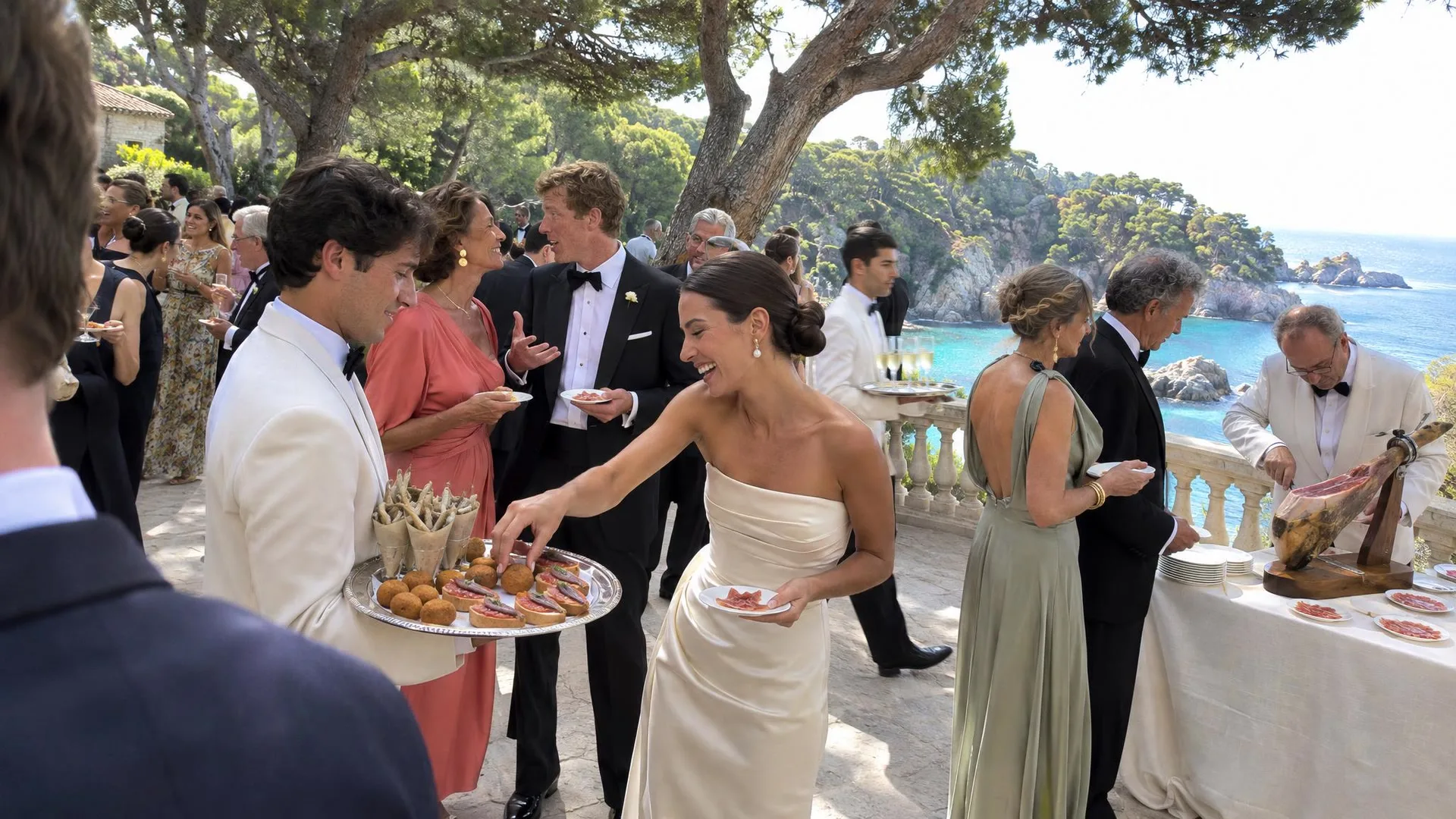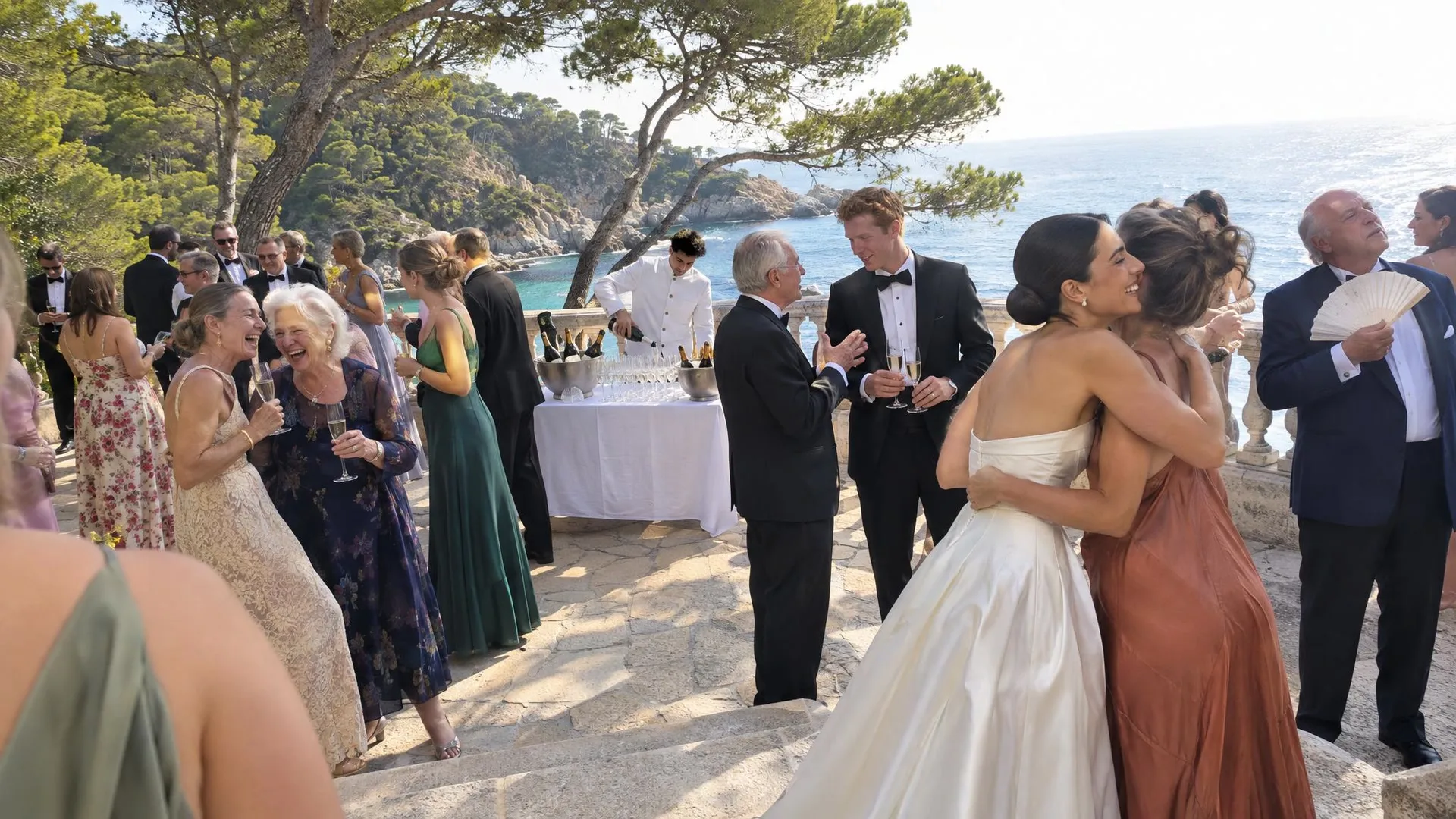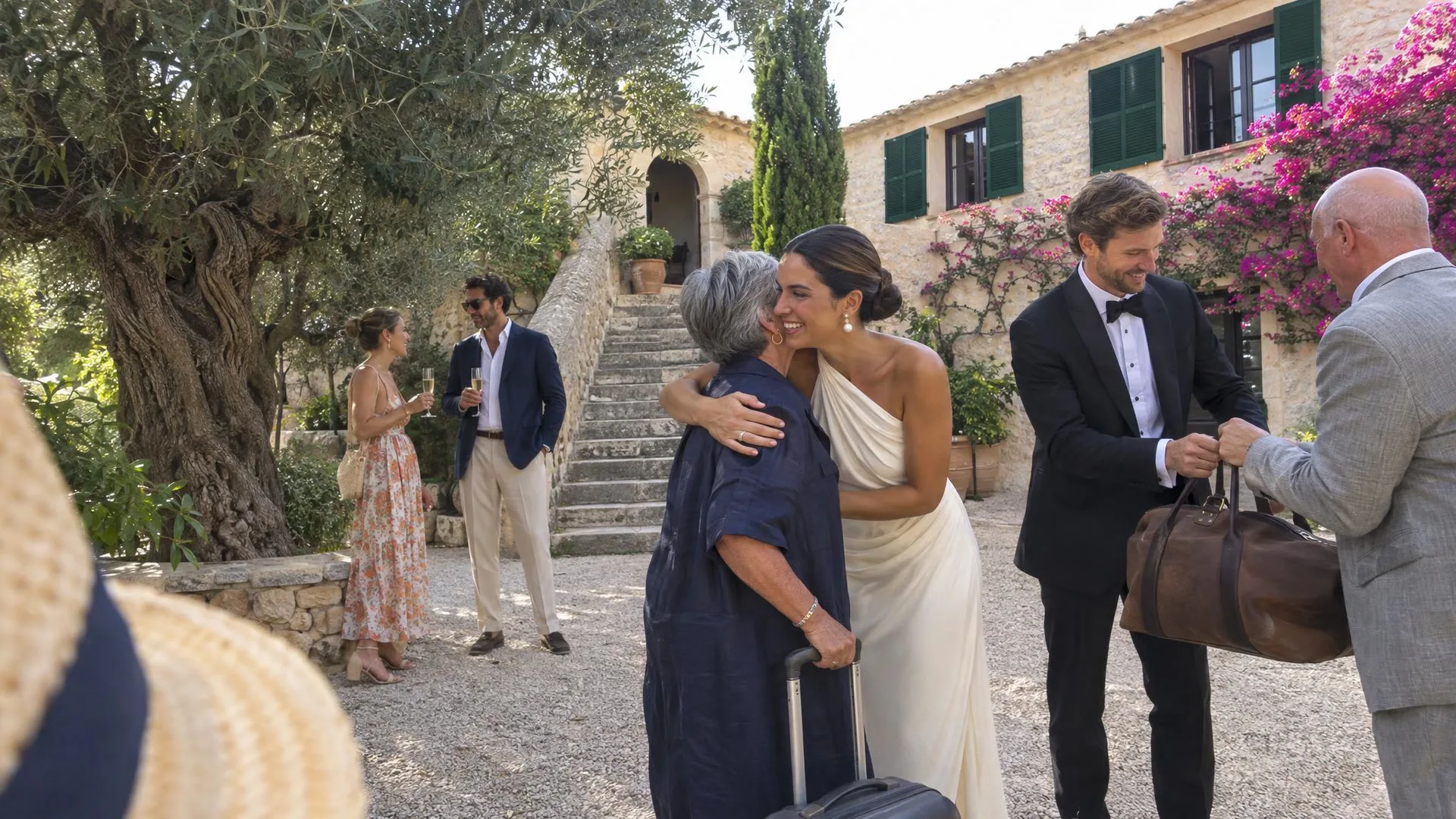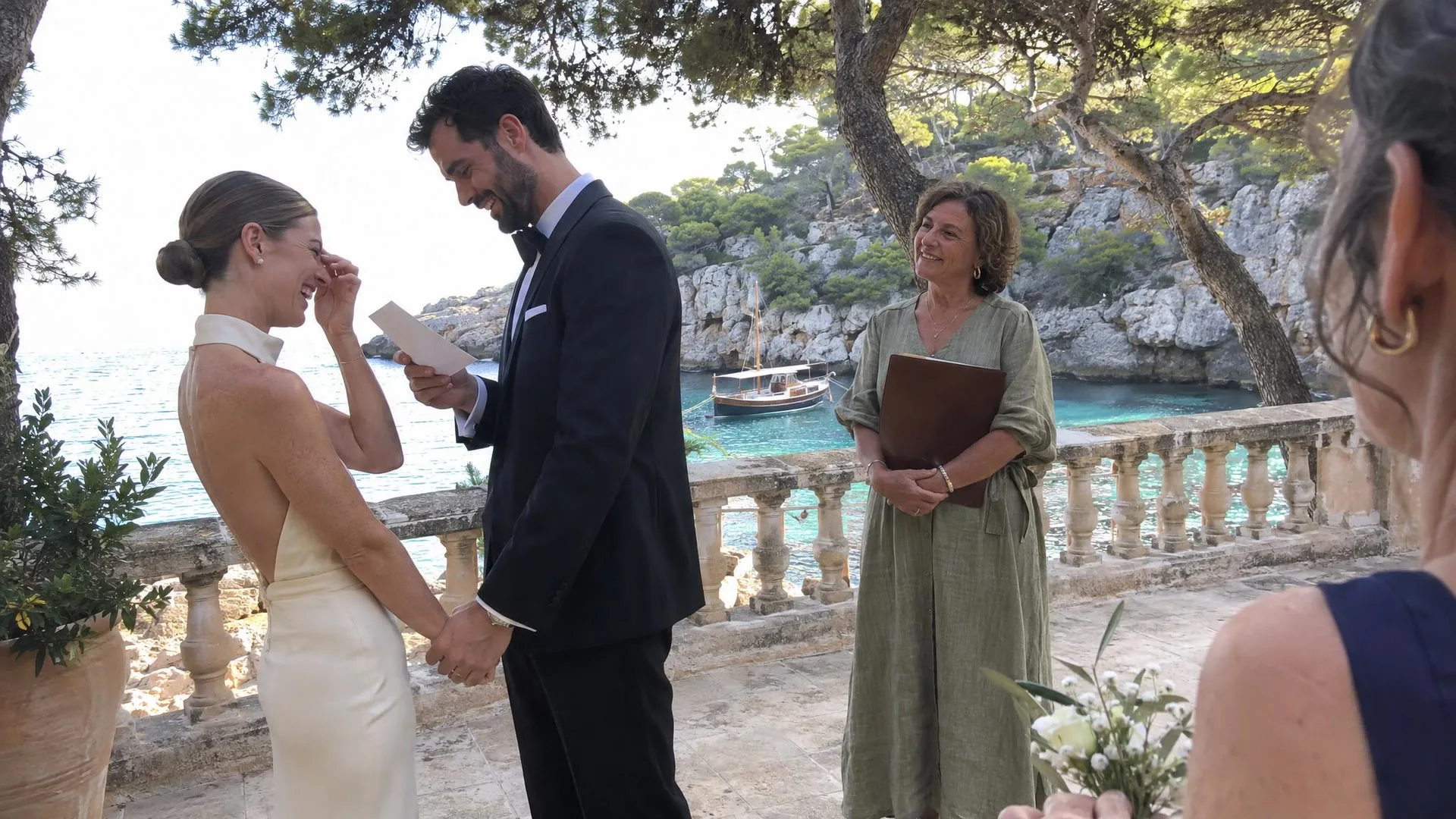
Many Spanish rental villas from the Costa Blanca and Valencia to Andalusia, Catalonia, and the Balearics keep a cinamomo—Melia azedarach, also called árbol del paraíso, chinaberry, or Persian lilac—in the front court, along the street line, or as a summer shade tree over the terrace. Guests hear “paraíso,” picture the orange bird-of-paradise flower from other guest notes, gather the yellow berries as décor, or sit under a heavy berry drop in pale clothes. It is not ave del paraíso / Strelitzia, not a lilac shrub, and not an edible fruit tree. A short briefing on flowers, berries, litter, and the confusing Spanish name keeps the weekend—and guest outfits—comfortable.
Why Cinamomo Belongs in the Guest Briefing
Melia is classic Mediterranean street and villa softscape: bipinnate leaves, lilac-to-mauve spring flower clusters with a sweet perfume, and round yellow berries that hang into autumn and winter. Destination-wedding houses use mature specimens as a driveway shade canopy, a morning-coffee marker by the gate, or a fragrant edge to the parking court in late spring. International visitors often assume every “paraíso” plant is the same, that the yellow berries are safe snack fruit, or that the purple blooms are fair game for boutonnières. Clarify the Spanish garden name early so guests know what they are looking at before they touch, taste, or rearrange it.
What Guests Are Looking At (And What It Is Not)
Cinamomo / árbol del paraíso is a deciduous shade tree with compound, fern-like foliage and clusters of small lilac flowers. It is not ave del paraíso (the orange-and-blue bird-of-paradise / Strelitzia plant covered in a separate guest note), not true lilac, not mimosa, not falsa acacia / Robinia, and not a citrus. If the WhatsApp note only says “paraíso by the gate,” spell out cinamomo / Melia so nobody looks for a tropical flower spike or a climbing jasmine.
Lilac Blooms, Season, and Photo Timing
Flowering usually peaks in late spring into early summer, depending on coast versus inland heat. The perfume can be strong in still courtyard air—beautiful for golden-hour portraits under the canopy, less ideal for guests with fragrance sensitivity seated directly beneath a heavy bloom load. For ceremony or welcome-drink photos, brief the couple on whether the tree is in peak flower that week so the film team can use it as a soft background rather than a surprise perfume zone beside the vows.
Yellow Berries, Toxicity, and Kids Logistics
After flowering, Melia sets hard yellow berries that often persist for months. They look ornamental and “snackable” to children and curious guests. Treat them as non-edible garden berries: say so plainly on the villa note, keep bowls of welcome fruit clearly separate from any decorative berry display, and ask parents to redirect toddler foraging under the canopy. Do not use the berries as place-setting décor unless your florist confirms a non-toxic, non-confusing alternative.
Fallen Leaves, Berries, and Outfit Logistics
Bipinnate leaflets and dropped berries can stain pale shoes, catch in heels, and litter terrace rugs. If welcome drinks or farewell brunch sit under the cinamomo, schedule a quick morning sweep, offer a hard path for heels, and warn guests that the “pretty yellow carpet” is berry litter, not confetti. Evening candlelight under the canopy looks cinematic; sticky berry mash on silk does not.
Fragrance, Pollen Sensitivity, and Seating Plans
Spring bloom perfume plus dusty leaf litter can bother fragrance- or pollen-sensitive guests. Prefer open terrace seating a few metres off the dripline for long speeches, and keep the densest shade canopy for shorter photo beats. If someone asks to move, treat it as logistics—not fussiness—especially on still, humid evenings when courtyard scent pools.
Cutting, Climbing, and Florist Temptation
Lilac flower clusters photograph well, but cutting Melia from a rental villa without permission can damage the tree and confuse the property’s garden plan. Climbing for “better angles” or berry garlands is a hard no—branches can be brittle, and the berries are the wrong prop for guest tables. Ask the planner or florist for approved local greenery instead of DIY harvesting from the gate tree.
How It Differs From Ave del Paraíso and Other Look-Alikes
Ave del paraíso (Strelitzia) is a bold orange-and-blue flowered perennial or clump—not a shade tree with yellow berries. Mimosa (Acacia dealbata) is the winter yellow pompon tree; falsa acacia / Robinia has white hanging pea-flower racemes and thorns; árbol de la seda / Albizia has pink powder-puff summer stamens. Cinamomo’s signature for guests is lilac spring clusters plus persistent yellow berries under a bipinnate canopy—and a Spanish name that sounds like paradise bird, not chinaberry.
What To Put On The Villa WhatsApp Note
Keep it short: “Gate shade tree = cinamomo / árbol del paraíso (Melia)—lilac flowers in spring, yellow berries later. Not the orange ave del paraíso plant. Berries are not for eating; please don’t cut branches or climb. Heels: use the swept path under the canopy.” Add one line if brunch sits beneath it, and link to the planner for décor questions. That is enough for international guests to enjoy the tree without tasting, styling, or confusing it with Strelitzia.