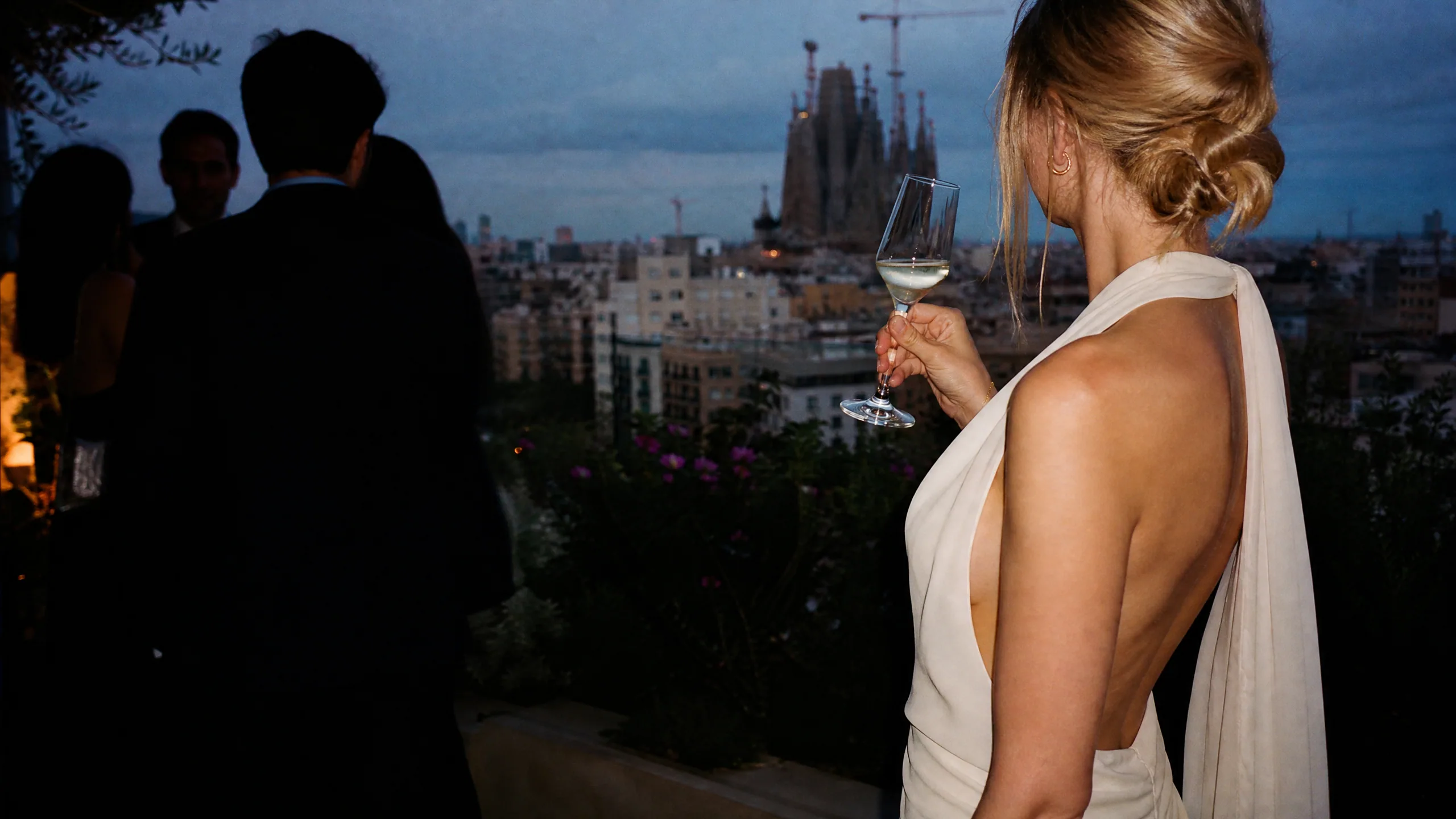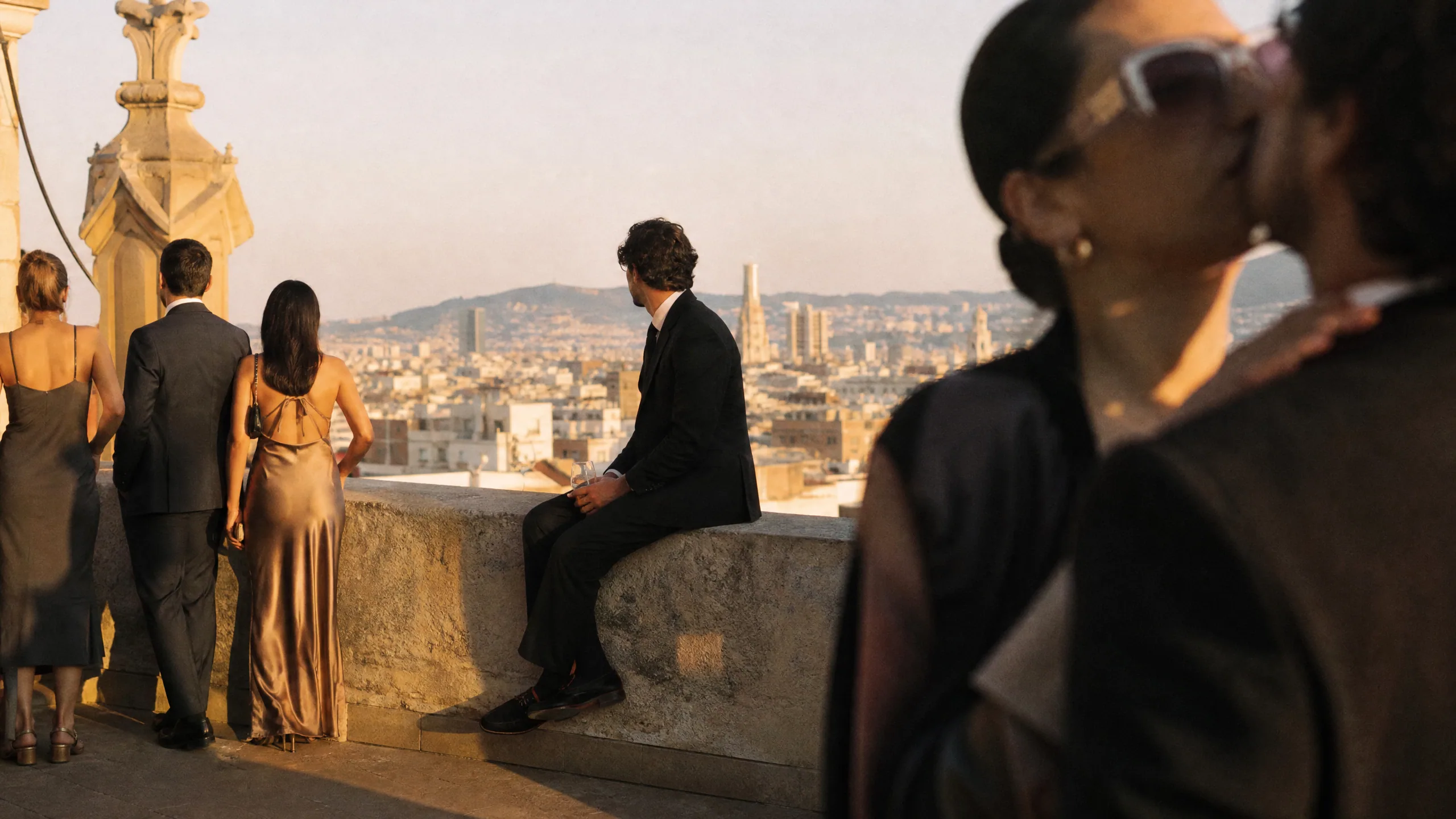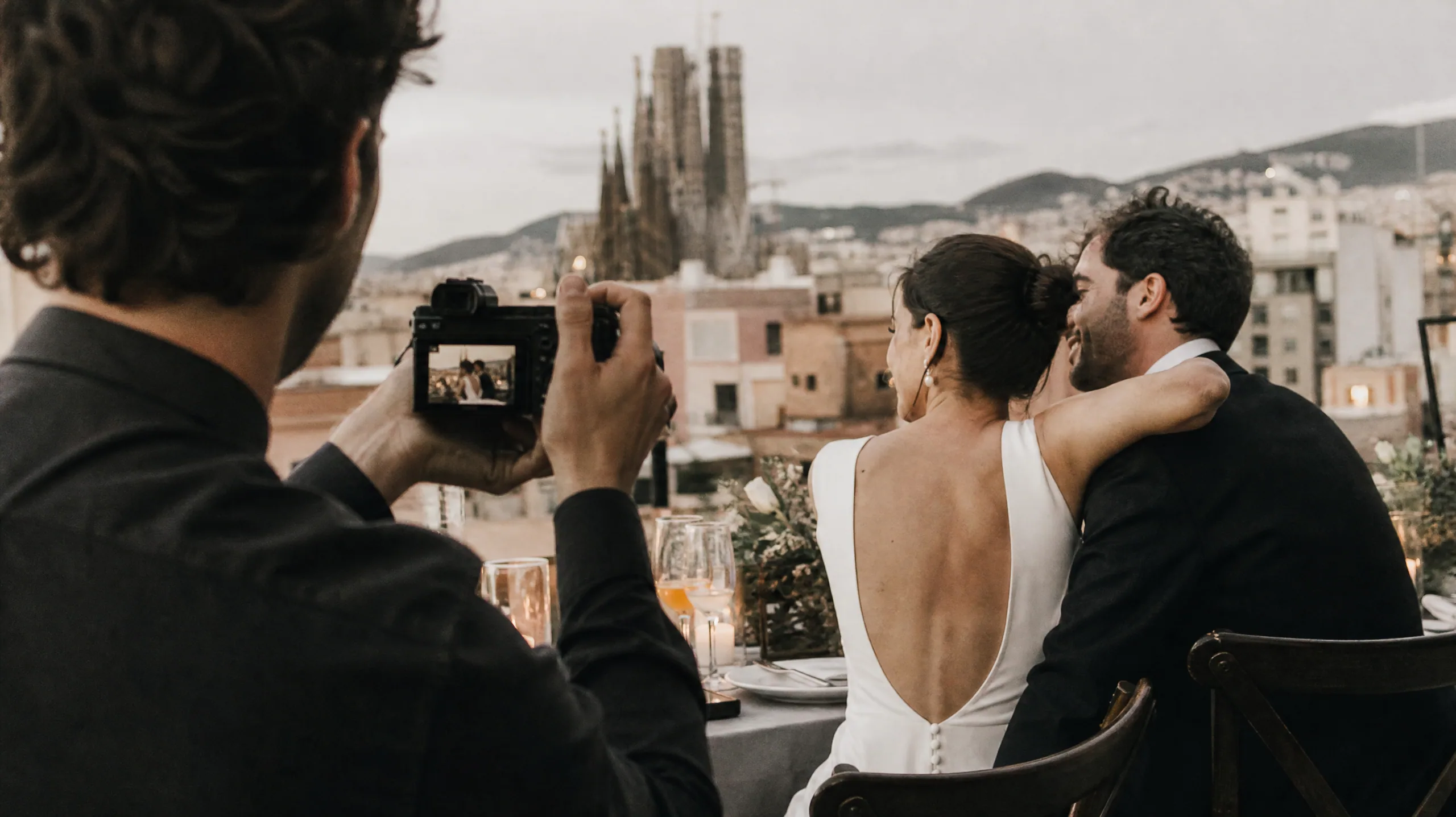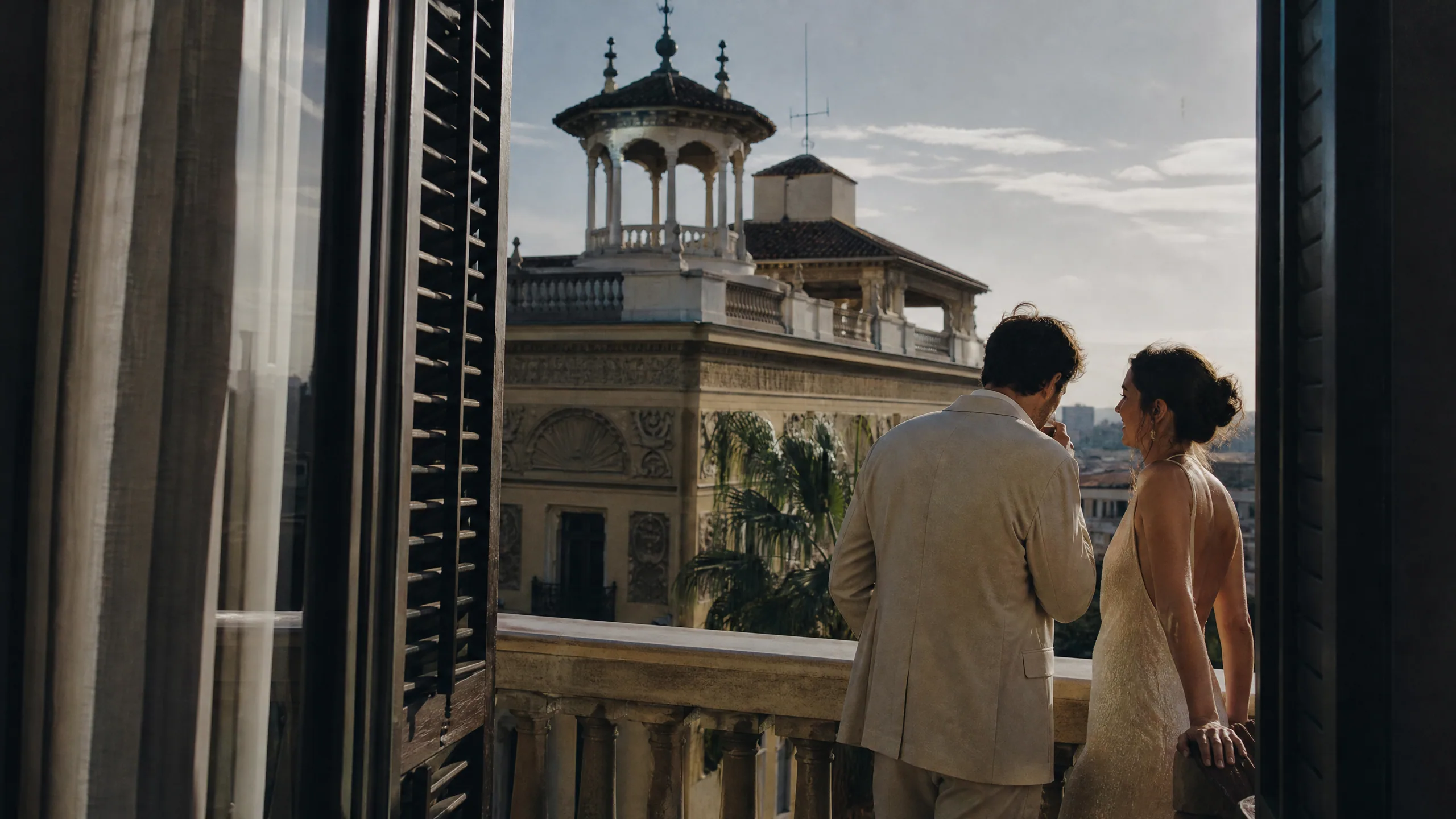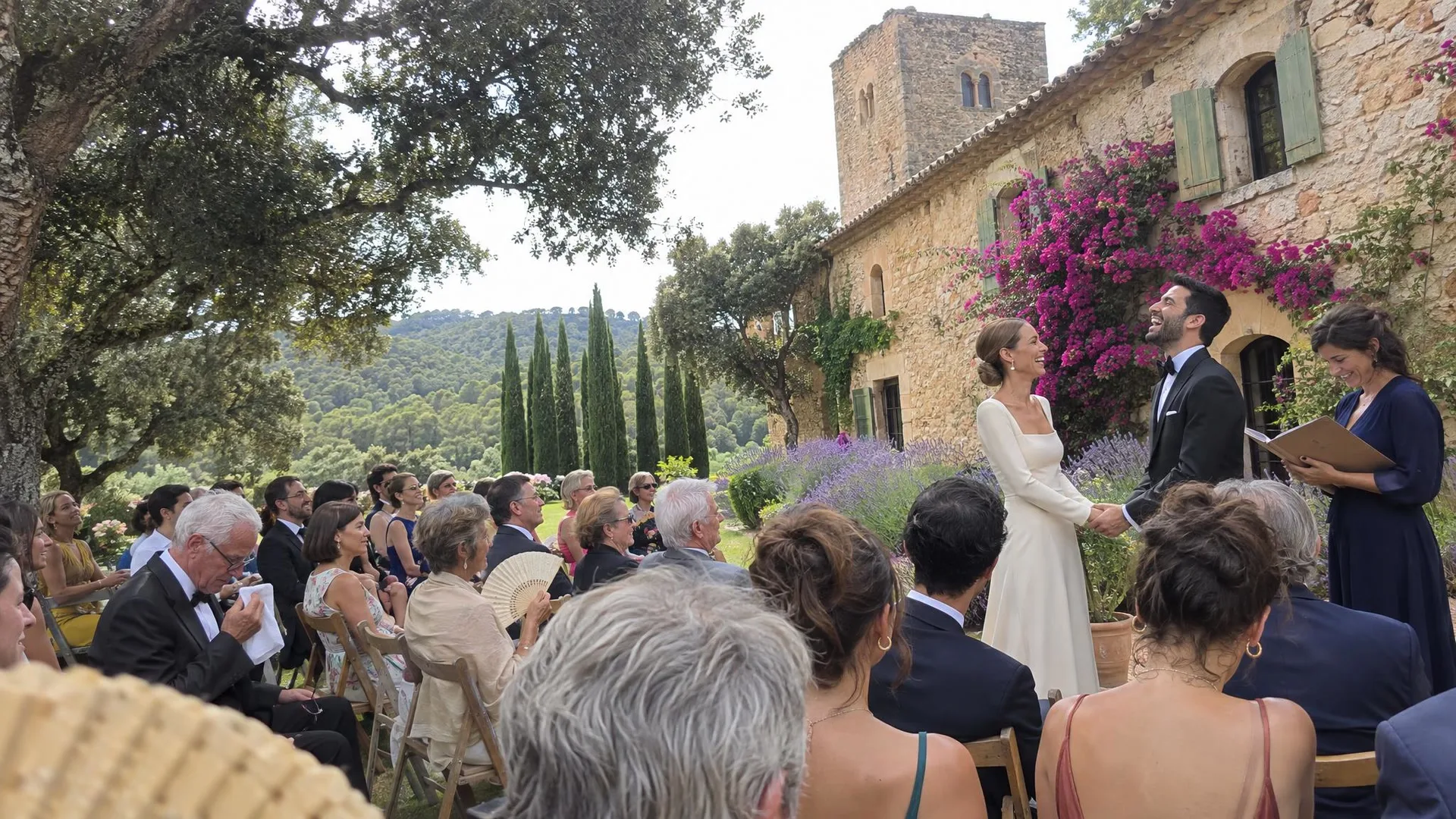
A rustic wedding venue near Barcelona usually means a masia: an old Catalan stone farmhouse with a courtyard, a few centuries of history and nothing around it but olive trees, oaks and fields. It is the image many couples fall for on the first site visit. The question that follows is less romantic: if the venue is forty minutes, an hour or more from the city, what does that mean for your guests?
That question keeps coming up in wedding planning communities. One recent discussion started with a couple whose favourite venue sat about 45 minutes outside their city. They asked whether it was fair to expect people to drive out for a rehearsal dinner, drive home, and come back the next day, and whether a brunch back in town the morning after was too much. More than fifty replies later, the advice was remarkably consistent. A second thread, from a couple marrying at a remote venue in Mallorca, reached the same conclusions with even stronger opinions, because their guests were flying in from another continent.
This guide turns that advice into a practical plan for a countryside wedding outside Barcelona.
What "rustic" means around Barcelona
In Catalonia, rustic rarely means a barn with hay bales. The typical countryside venue is a restored masia: thick stone walls, wooden beams, a tower or chapel, gardens, and often a modern hall added for dinner. Three areas hold most of them.
- Vallès and the hills towards Montseny (north). Wooded, green and a little cooler in summer, roughly 35 to 50 minutes from the city by car.
- Penedès (south-west). Wine country, with masias set among vineyards. We covered it in our guide to a vineyard wedding in Spain.
- Empordà (north-east, inland from the Costa Brava). The most rural option and the furthest, often well over an hour from Barcelona and closer to Girona airport.
The further you go, the more of the weekend happens at the venue, and the more the logistics matter.
How far is too far? What guests actually said
The most upvoted replies in the discussion were not about kilometres. They were about how many times you ask people to make the trip, and how they get home after a night of drinking.
One long drive is fine. Two in two days is not. Several guests said a 45-minute drive for the wedding itself is nothing. What they objected to was driving out for a rehearsal, back to the city late at night, and out again early the next morning, especially for the wedding party, whose day can start with hair and make-up at breakfast time.
The rehearsal does not need to be at the venue. This was the most repeated tip. A walkthrough of who walks in when can be done in a restaurant, a hotel lobby or a quick run-through on the day. Hold the welcome dinner where most people are staying and save the drive for the wedding.
Transport is not optional if there is an open bar. If guests have to drive back, they either drink and drive, or they stay sober and leave early. Neither is what you want. One couple in the thread arranged buses, asked about them in the RSVP and ran three departures through the night, around ten, midnight and two. That staggered schedule came up again and again as the reason guests relaxed.
Write it down. A short travel note on your website, with the distance, where to stay and how the shuttle works, removes most of the stress. Wording matters too: an "optional farewell brunch for anyone still in town" feels very different from another required event.
Someone will complain anyway. Plenty of guests reminded the couple that the people who love you will make the trip, and that no venue makes everyone happy.
The Mallorca lesson: do not strand your guests
The island thread added the destination wedding view. The couple had to choose between putting guests in rural fincas with nothing nearby, or in a walkable port town more than an hour from the venue by bus. Most replies disliked both. Guests remembered isolated rural stays without restaurants or air conditioning, and a long round trip after an international flight felt like a lot to ask.
The practical advice translates directly to Barcelona's countryside:
- Base most guests somewhere with restaurants and things to do, and keep the transfer reasonable.
- If the bus ride is long, make it part of the day: water, a drink, something to eat, good music.
- Run return buses more than once, so nobody is stuck until the last song.
- Be honest with yourselves about what you are asking of people who are already spending holiday days and money.
Two kinds of masia: with beds or without
Most countryside venues near Barcelona fall into one of two models, and the choice shapes the whole weekend.
Day venues close to the city. Can Ribas de Montbui in Bigues i Riells is a good example. On its own website it describes itself as a sixteenth-century Catalan farmhouse about 40 km north of Barcelona, around 35 to 40 minutes by car, with 32 hectares of gardens, olive groves and oak woodland facing Montseny. It lists a garden spot for civil ceremonies by the old tower, a cypress path to the main courtyard, glass-walled halls for banquets of up to 300 guests and a large car park with coach access. That last detail matters more than it sounds: guests can stay in Barcelona and arrive by coach. At that distance, the drive from the city is short enough for a single round of shuttles to work.
Weekend houses further out. Mas Terrats, near Pontós in the Empordà, works differently. Its website describes nine double rooms with private bathrooms, more than 100 hectares of grounds, and a typical stay of the whole weekend, three days and two nights from Friday to Sunday. It puts the house about 10 minutes from Figueres, 20 minutes from Girona and roughly 1 hour 20 minutes from Barcelona. Here the close family sleeps on site, and everyone else books nearby towns.
Neither model is better. A day venue suits a big guest list based in the city. A weekend house suits a smaller group that wants to spend two or three days together.
Questions to ask a countryside venue
Before you sign, get clear answers to these, ideally in writing:
- How long is the drive from central Barcelona and from the airport at the hour your guests will travel?
- Can coaches reach the door, and where do they park and turn?
- How many guests can sleep on site, and for how many nights?
- Are taxis realistic late at night, or do you need your own shuttles?
- Until what time can music play outdoors, and where does the party move after that?
- Where do the ceremony and dinner go if it rains or the wind picks up?
- Is there a quiet room for older guests and children when the night runs late?
For how transfers work in practice, read our guide to ceremony-to-reception transfers, and for the bigger picture of picking a place, see how to choose a wedding venue in Spain.
What a rustic venue gives your wedding film
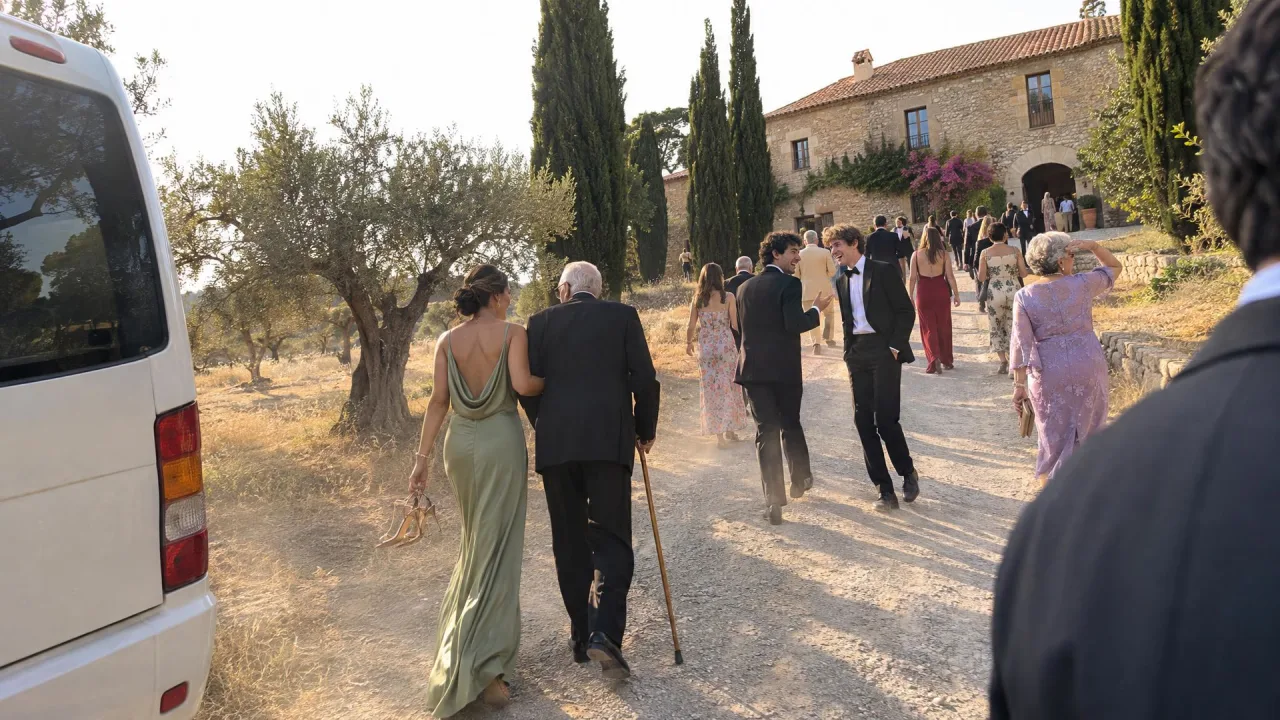
From behind the camera, a countryside masia is a gift and a puzzle. The stone, the trees and the long evening light give documentary and cinematic wedding films around Barcelona a texture that a city hotel rarely has. The arrival is often one of the best scenes of the day: guests walking up a dusty lane, someone carrying their shoes, the first view of the house.
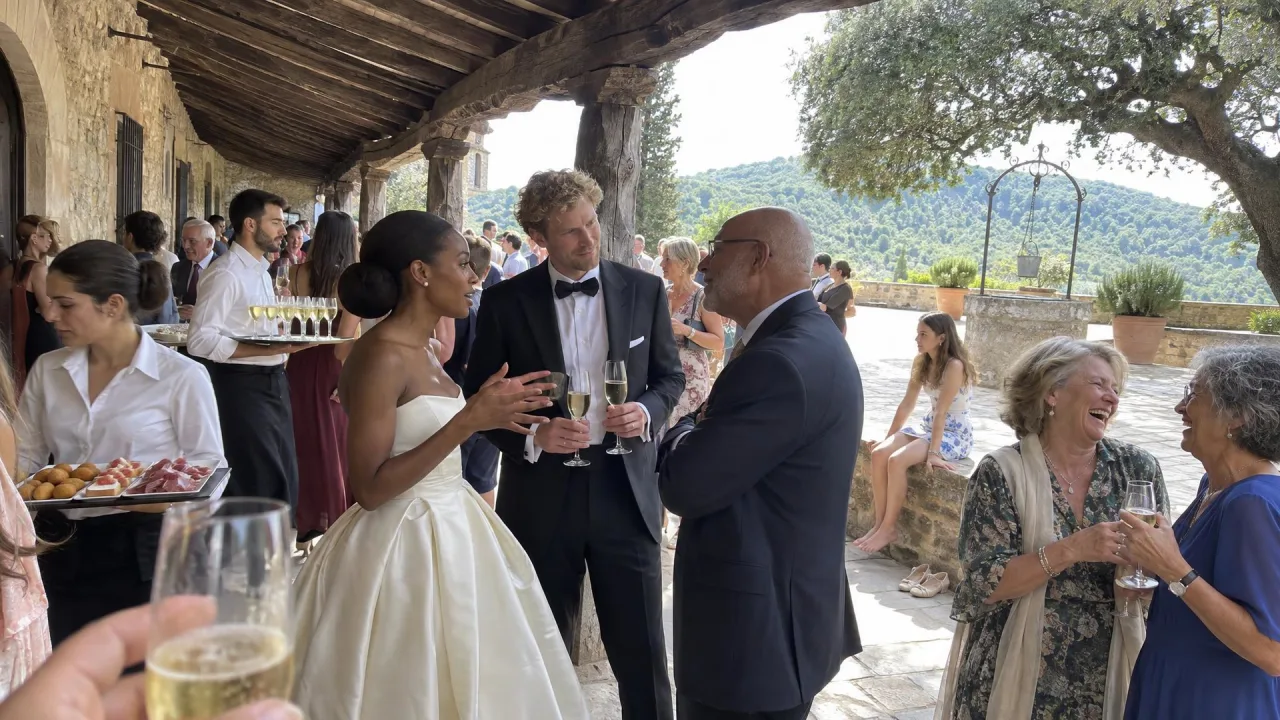
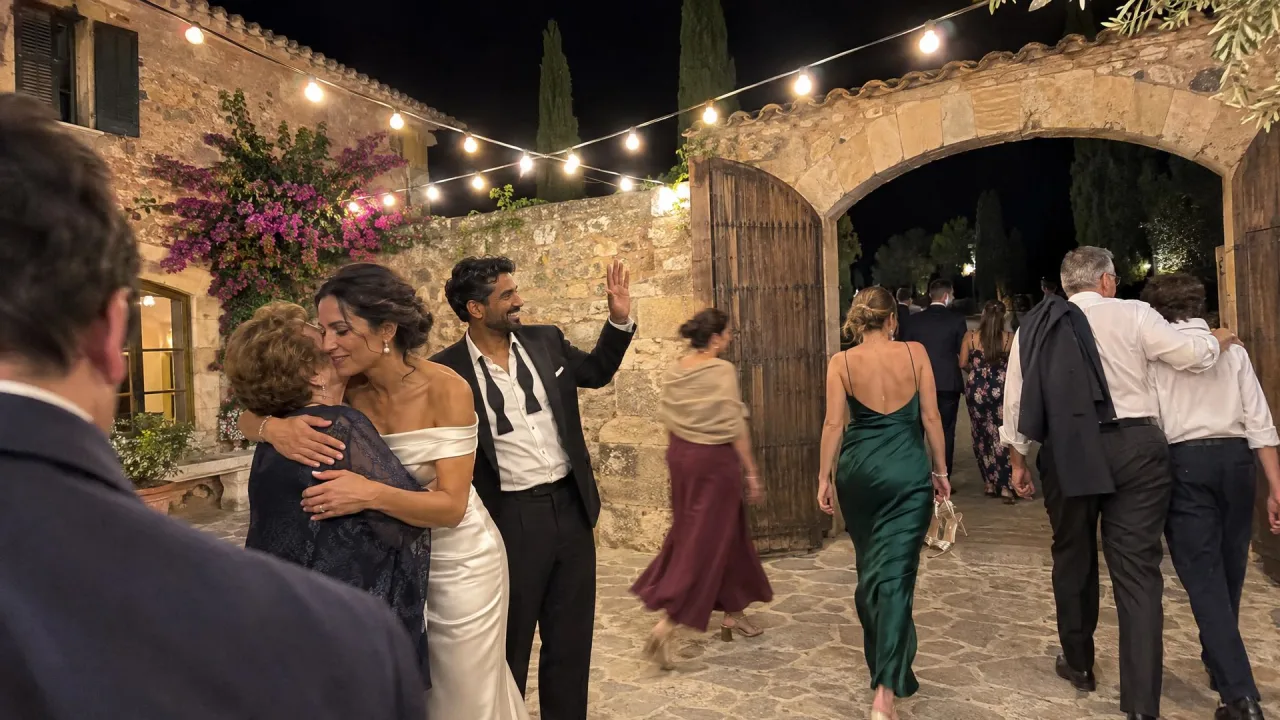
The puzzle is light and sound. Courtyards swing from hard sun to deep shade, so the time of the ceremony matters. A couple session about twenty minutes before sunset usually catches the softest light in the fields. Outdoors, wind and cicadas compete with your vows, which is why we rely on lapel microphones and a separate recorder rather than on-camera sound. And when the party moves inside a glass hall or under string lights, the film changes mood again. If you are comparing teams, our wedding videographer in Barcelona page shows how we work at venues around the city.
A simple plan that works
- Choose the venue you love, then design the weekend around one long trip, not three.
- Hold the welcome dinner or rehearsal where guests sleep.
- Book shuttles with at least two return times and ask about them in the RSVP.
- Put a clear travel note on your website early.
- Keep the morning-after plan optional and close to the hotels.
A countryside venue outside Barcelona is worth the distance when your guests never have to think about it. If you are planning a masia wedding and want to talk about the day on film, send us your date and venue.