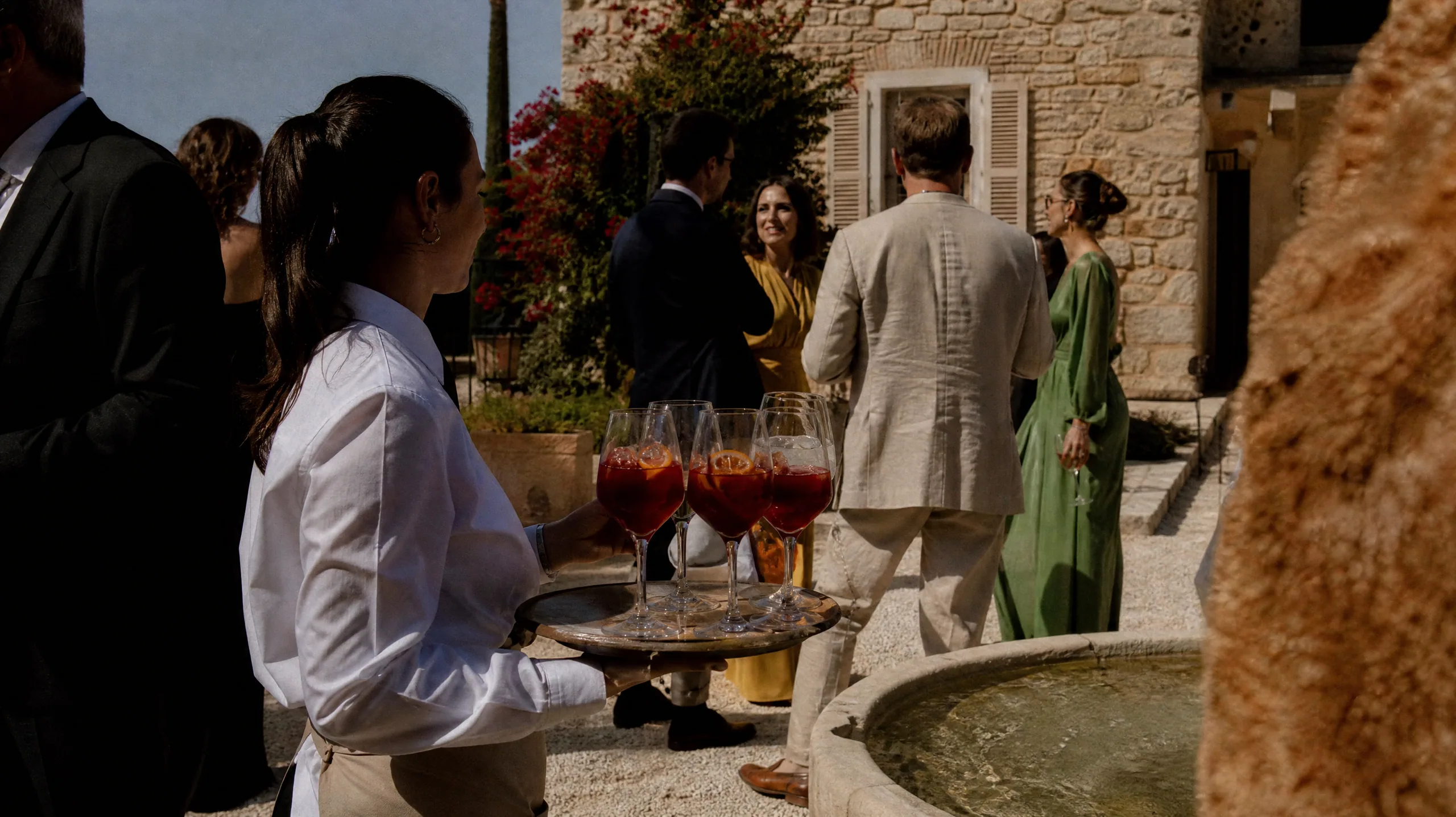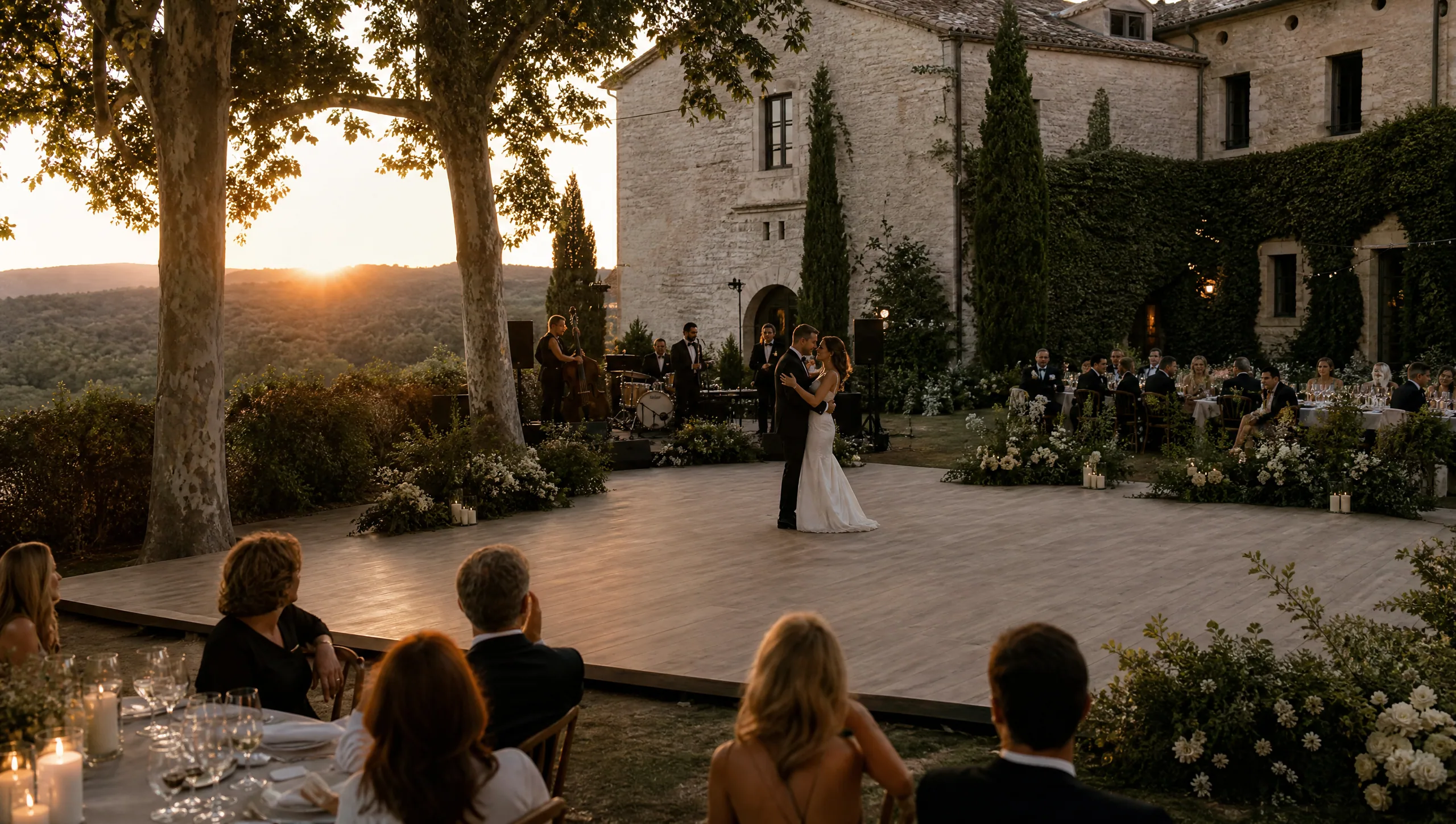
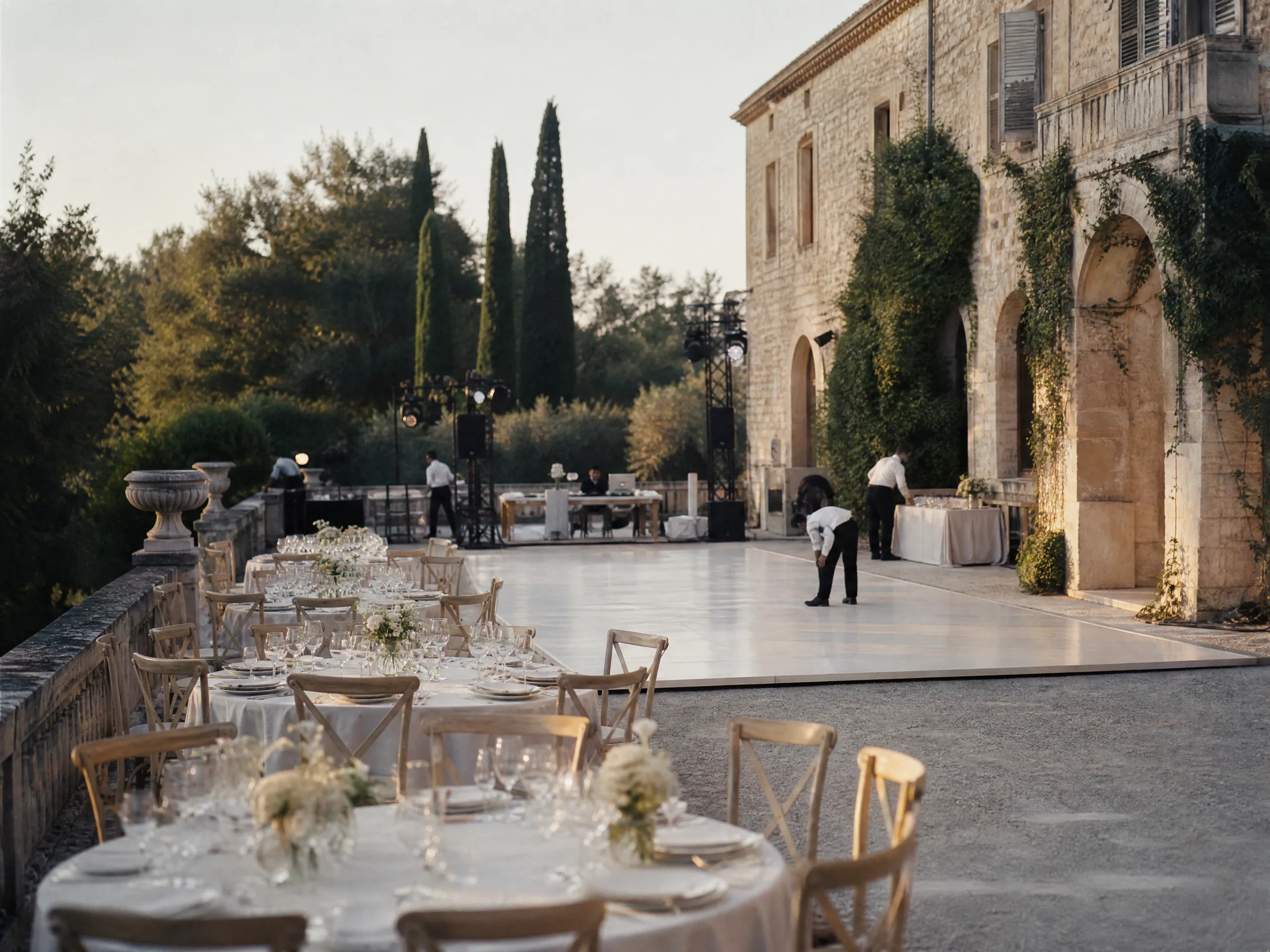
An outdoor Spanish wedding can look cinematic on gravel, grass, or a hillside terrace — until guests try to dance in heels and the DJ’s cables meet damp ground. Temporary flooring is one of those planning details that feels optional from abroad and essential on the day.
This guide helps international couples decide when you need a dance floor, how to size and place it at a Spanish finca or coastal venue, and how to keep power, guest flow, and film-friendly lighting aligned so the celebration feels intentional rather than improvised.
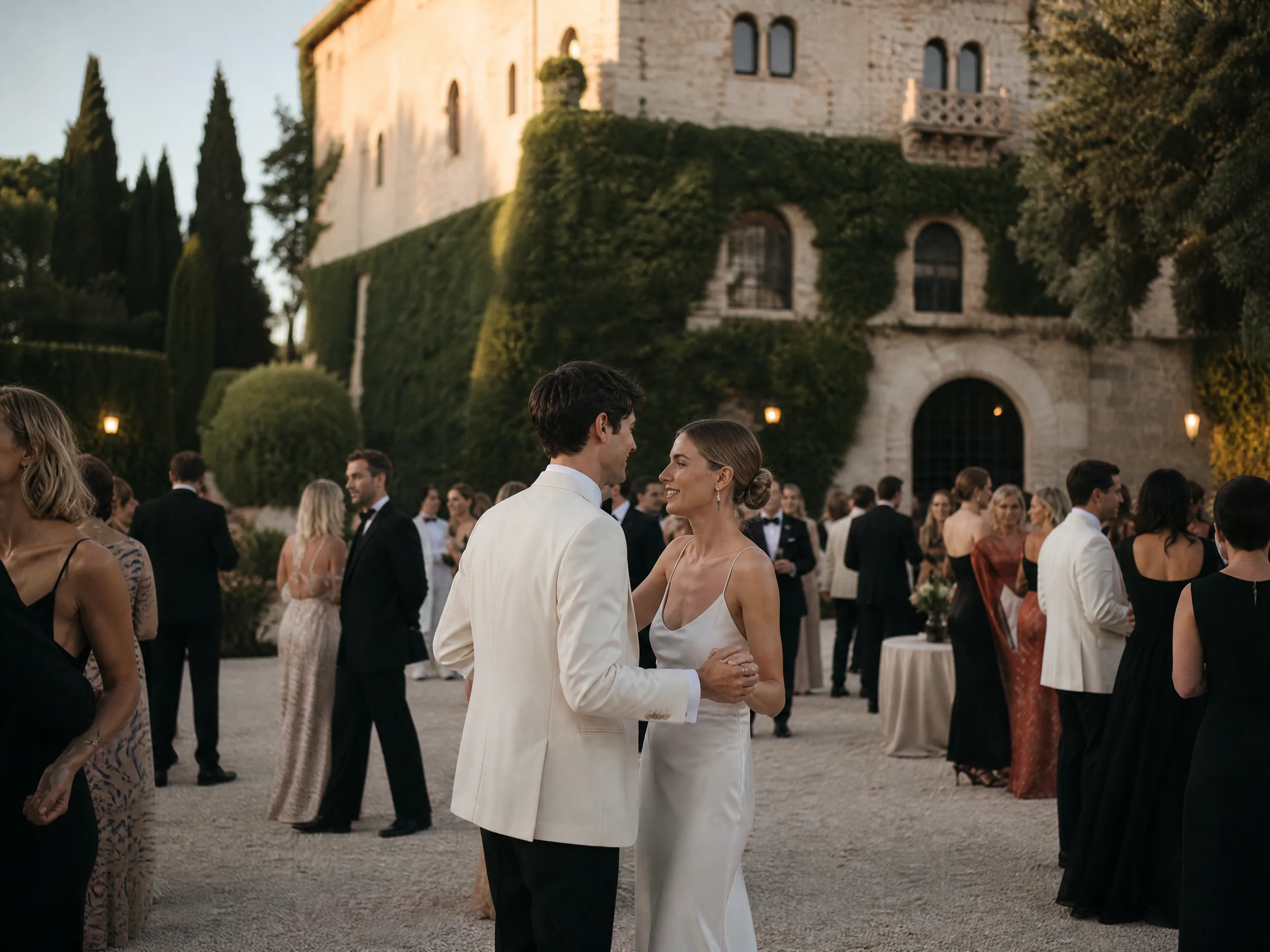
Decide Whether You Need a Dedicated Dance Floor at All
Not every venue surface works for dancing. Stone courtyards and polished terrace tiles can be excellent as-is. Soft lawns, pea gravel, sand-adjacent terraces, and uneven cobbles usually need a temporary floor if you want more than a short first dance.
Ask your venue for photos and a short note on what past couples used: full dance floor, small platform for the first dance only, or nothing. If the answer is vague, assume you need a rental and budget for it early rather than discovering the problem during a final walkthrough.
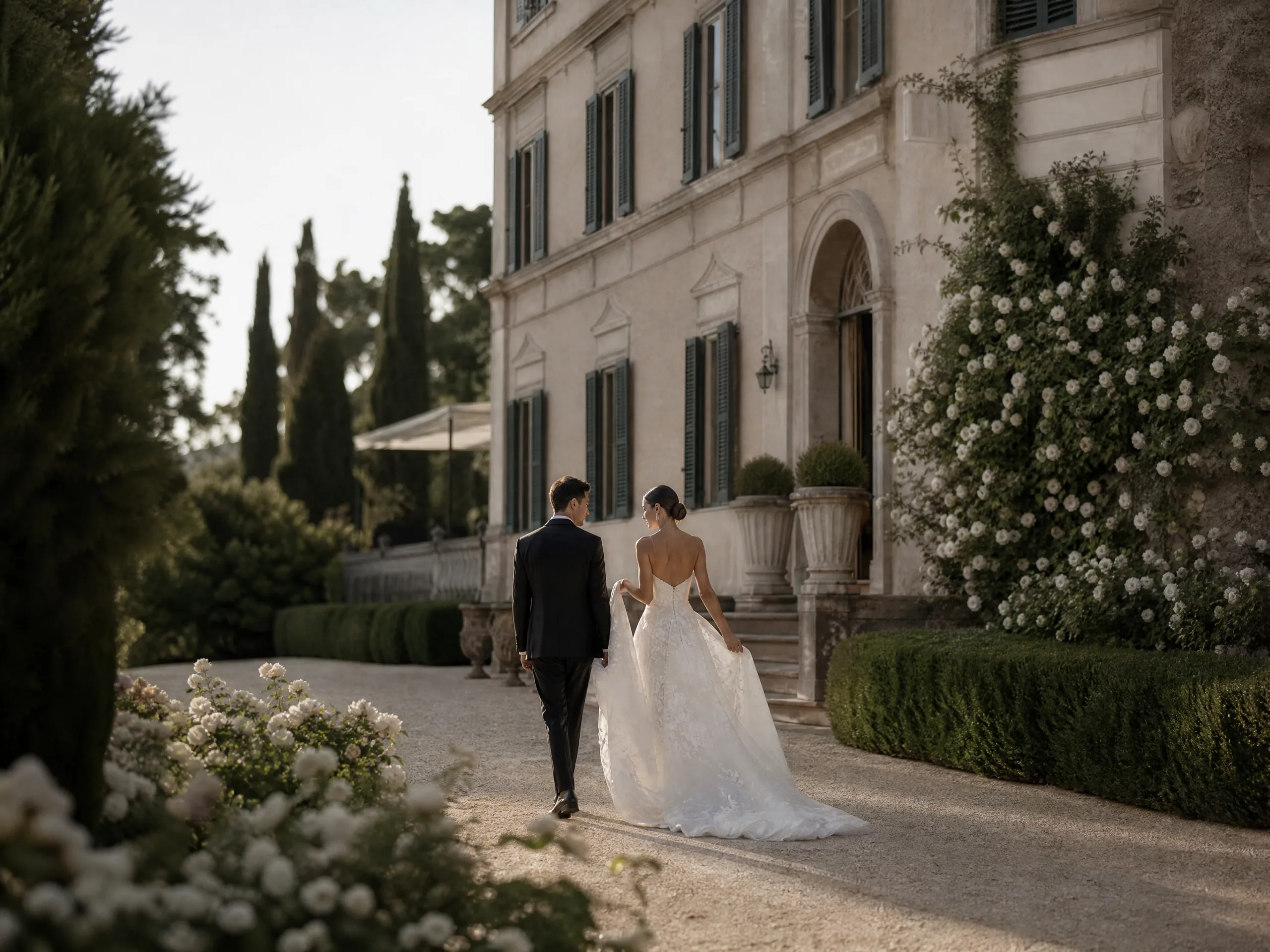
Match Floor Type to Ground Conditions and Season
Spanish outdoor venues vary more than hotel ballrooms. Grass can soften after spring rain; summer dust and dry heat can make lightweight floors shift; coastal humidity can leave evening surfaces slick. Tell your rental company the exact surface, slope, and month — not just “outdoor wedding.”
Common options include interlocking wood-look panels, modular stage decks, and carpeted platforms. Prioritize stability and edge safety over Instagram aesthetics. A beautiful floor that rocks underfoot will cut dancing short and create trip hazards your film team has to work around.
Size the Floor for Real Guest Behavior, Not Wishful Thinking
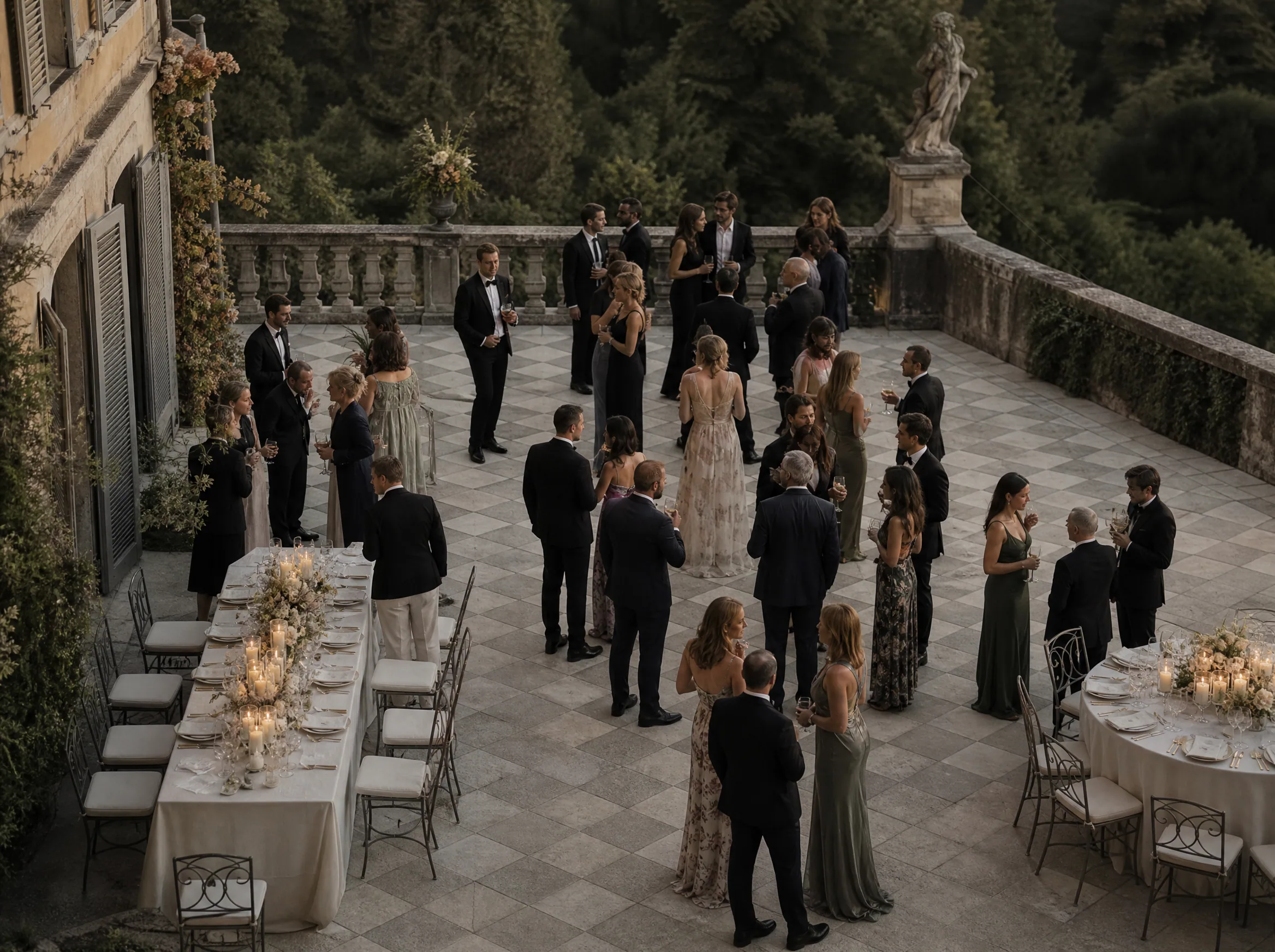
A floor that looks huge empty can feel tiny once forty people try to move. As a practical starting point for destination weddings in Spain, plan enough space for roughly one-third to one-half of seated guests to dance at once, then adjust for your crowd. Older guest lists and cocktail-style receptions often need less; young international groups often need more.
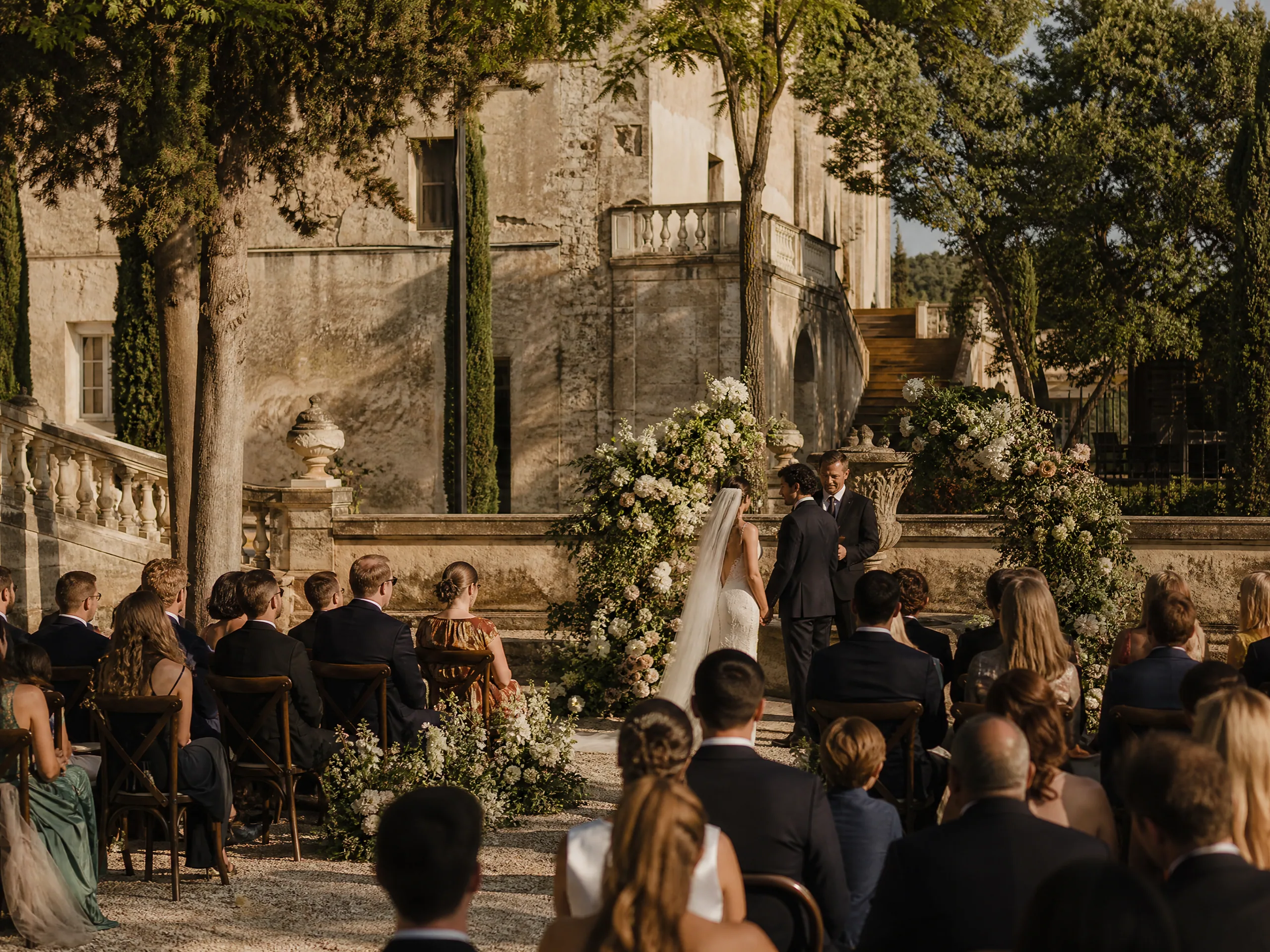
Also decide whether the first dance, parent dances, and open dancing share one surface. Many Spanish venues put ceremony and dinner in different zones; if dancing moves to a third area, confirm guests can find it without a scavenger hunt after dessert.
Place the Floor Where Power, Sound, and Guest Flow Already Work
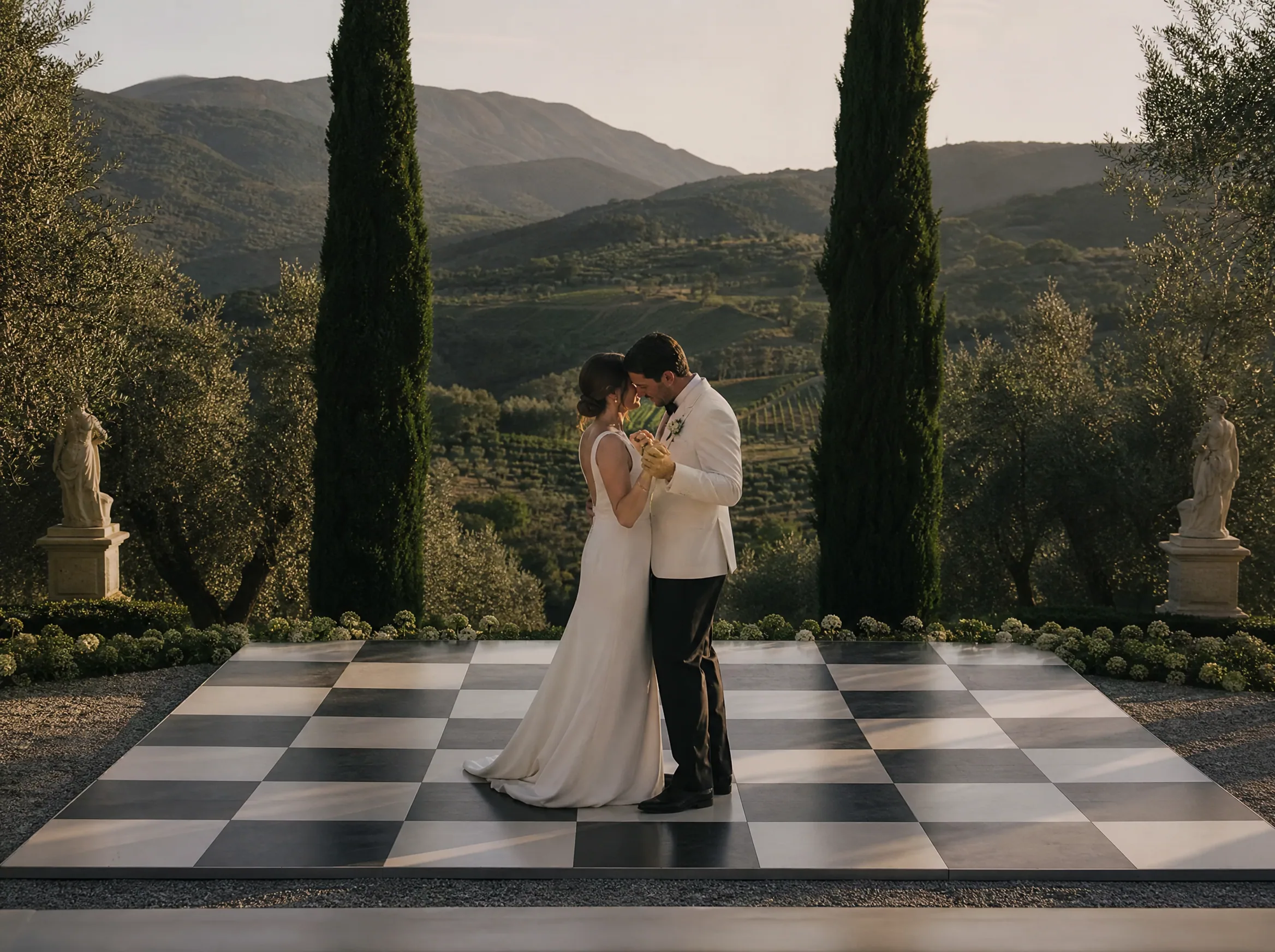
Do not place the dance floor first and reverse-engineer utilities later. Anchor placement to DJ or band position, speaker throw, cable runs, and the route from dinner tables. Rural fincas often have limited outdoor outlets; a gorgeous terrace with no nearby power can force long cable runs that look messy on camera and create safety issues after dark.
Walk the path guests will take with drinks in hand. Avoid pinch points near kitchen doors, bathroom queues, or pool edges. If the venue has a natural “party corner,” use it — fighting the architecture rarely wins.
Coordinate Load-In Access, Flat Transport, and Setup Windows
Temporary floors arrive as stacked panels and hardware. Ask whether a van or truck can reach the dance area, whether staff must carry panels up stairs or across gravel, and how long assembly takes before cocktail hour. Historic estates and hillside properties can add labor time that is not obvious on a Zoom walkthrough.
Put setup and strike times in writing with the venue and rental company. If your welcome dinner or rehearsal uses the same terrace the night before, confirm the floor will not block that plan — or that overnight placement is allowed and secured.
Plan Edges, Anchoring, and Accessibility Around the Floor
Open edges, raised lips, and abrupt transitions from grass to panel are where guests stumble. Request ramped or beveled edges where possible, especially if anyone in your party uses mobility aids or if the path from dinner crosses soft ground. Mark cable covers clearly; do not rely on “people will see them.”
In windy coastal or elevated venues, ask how panels are locked and weighted. A floor that lifts at the corner mid-reception is both unsafe and visually chaotic in photos and film.
Align Lighting and Film Cues With the Dance Surface
Dance floors become the emotional center of the night on camera. Soft overhead string lighting, a clean backdrop, and enough ambient light for faces matter more than colored wash alone. If you want a dramatic first-dance look, brief your videographer and DJ on where the couple will stand and whether fog, sparklers, or phone lights are allowed nearby.
Leave a narrow clear lane for the film team to move without crossing dancers constantly. The best dance-floor films feel intimate and continuous; that only happens when placement, light, and access were planned together — not improvised after load-in.
Build a Weather and Surface Backup Before Guests Arrive
Spain’s microclimates can turn a dry terrace damp in one evening storm. Decide in advance what happens if the primary outdoor floor becomes unsafe: move dancing indoors, switch to a covered porch, shorten the open-dance block, or use a smaller indoor platform for key dances only.
Communicate the backup to the venue, DJ, planner, and film team the same day you lock the primary plan. Guests forgive a location change; they do not forgive a slippery floor and confused instructions at midnight.
Close With a Remote-Friendly Dance Floor Checklist
Before you approve the rental from abroad, confirm in one shared note: surface type and slope, panel system, dimensions, power distance to DJ, setup and strike windows, edge treatment, overnight security if needed, weather backup zone, and who on site accepts delivery. Ask for a photo of the exact installation area with approximate floor outline marked.
When those details are settled early, the dance floor stops being a stressful surprise and becomes what it should be — a stable, well-lit place where your guests stop checking maps and start celebrating with you.