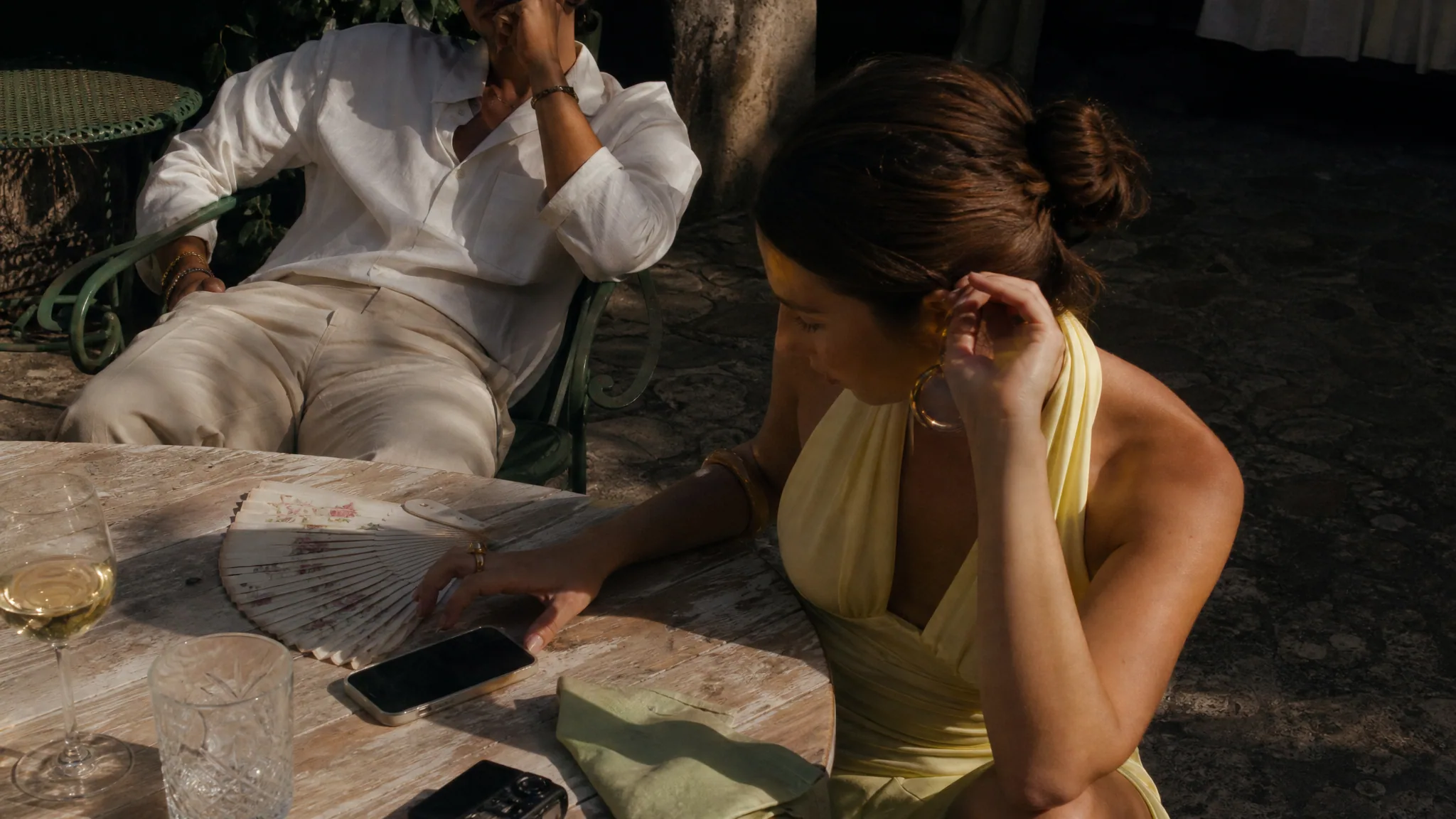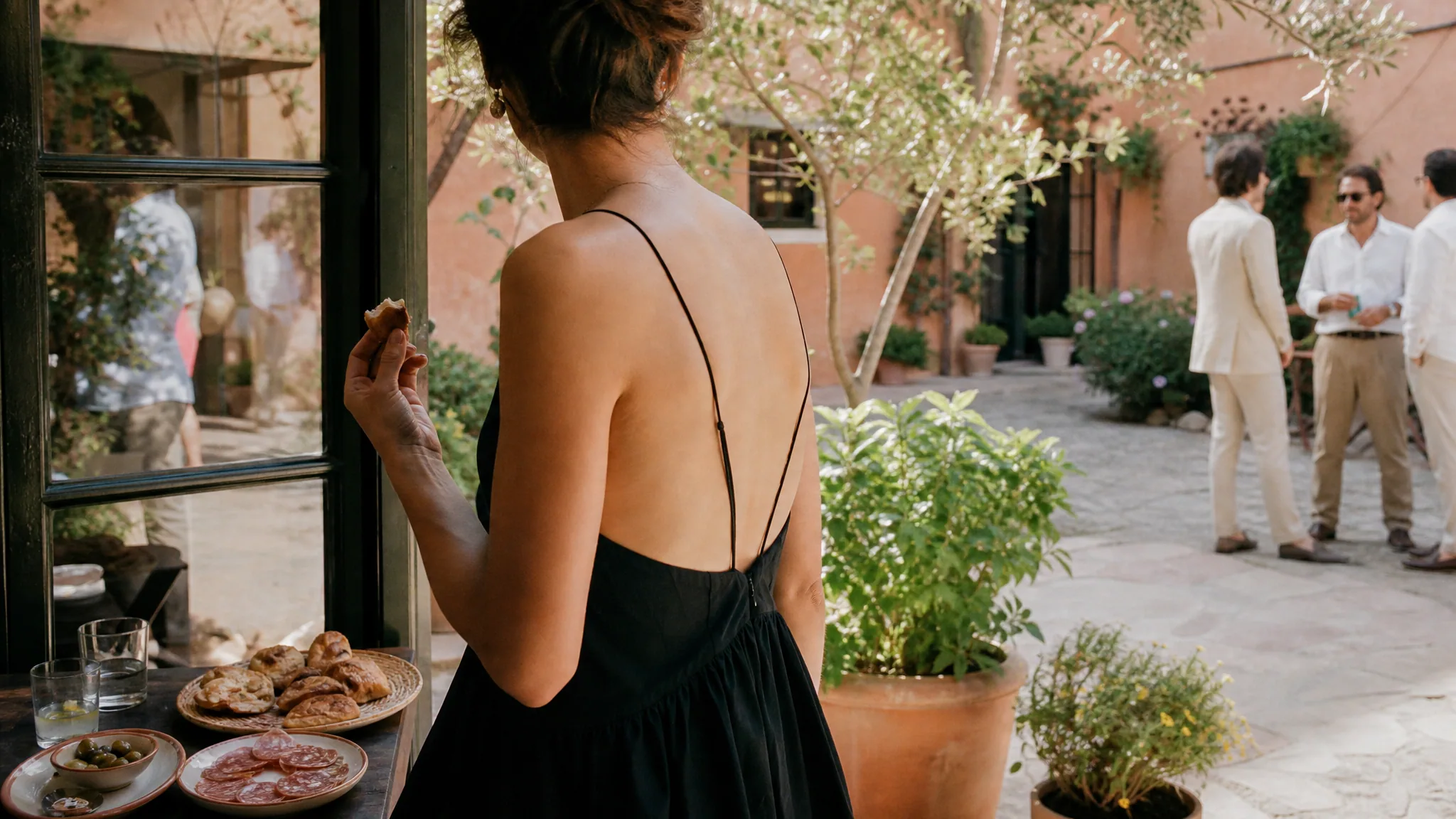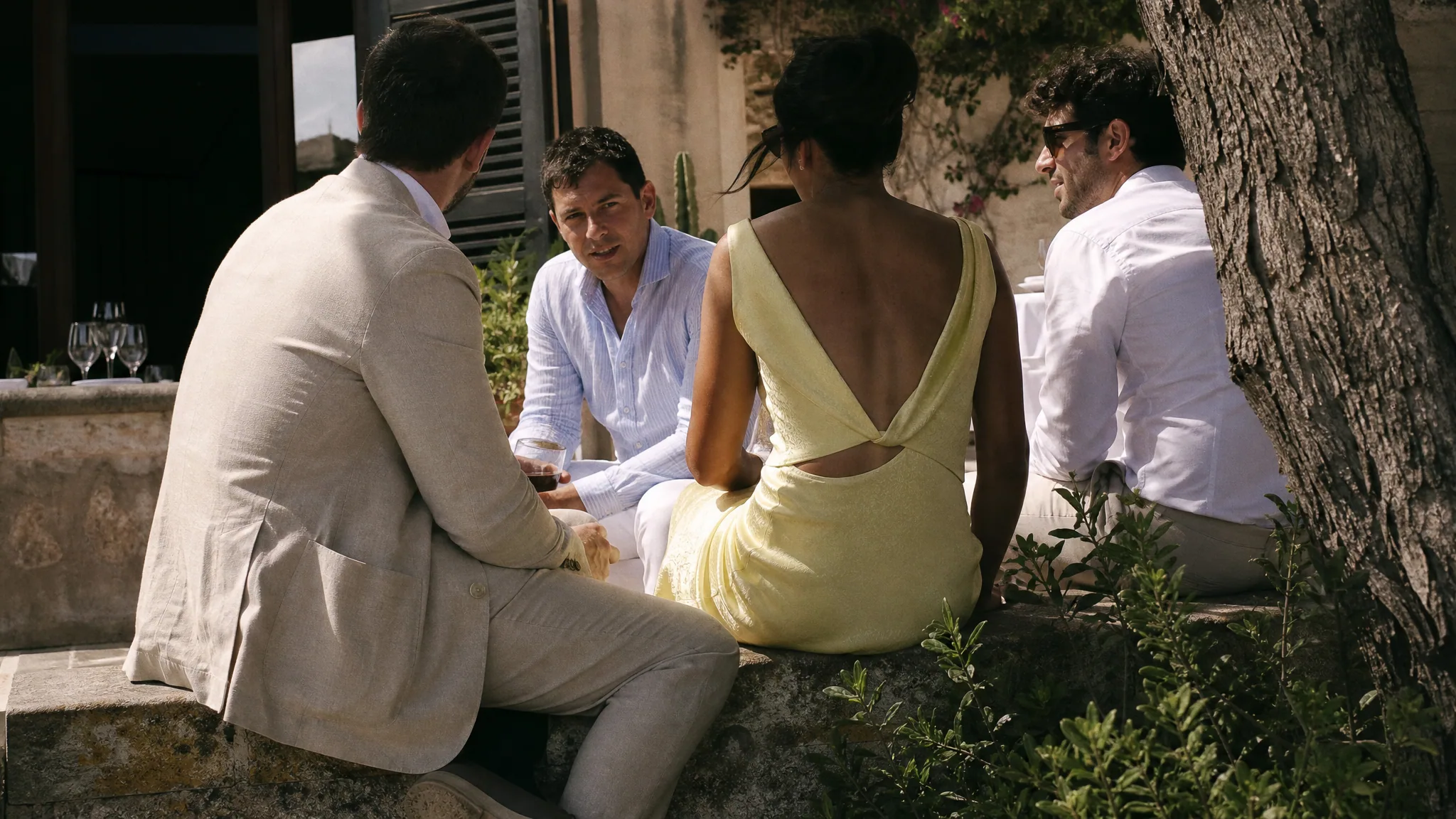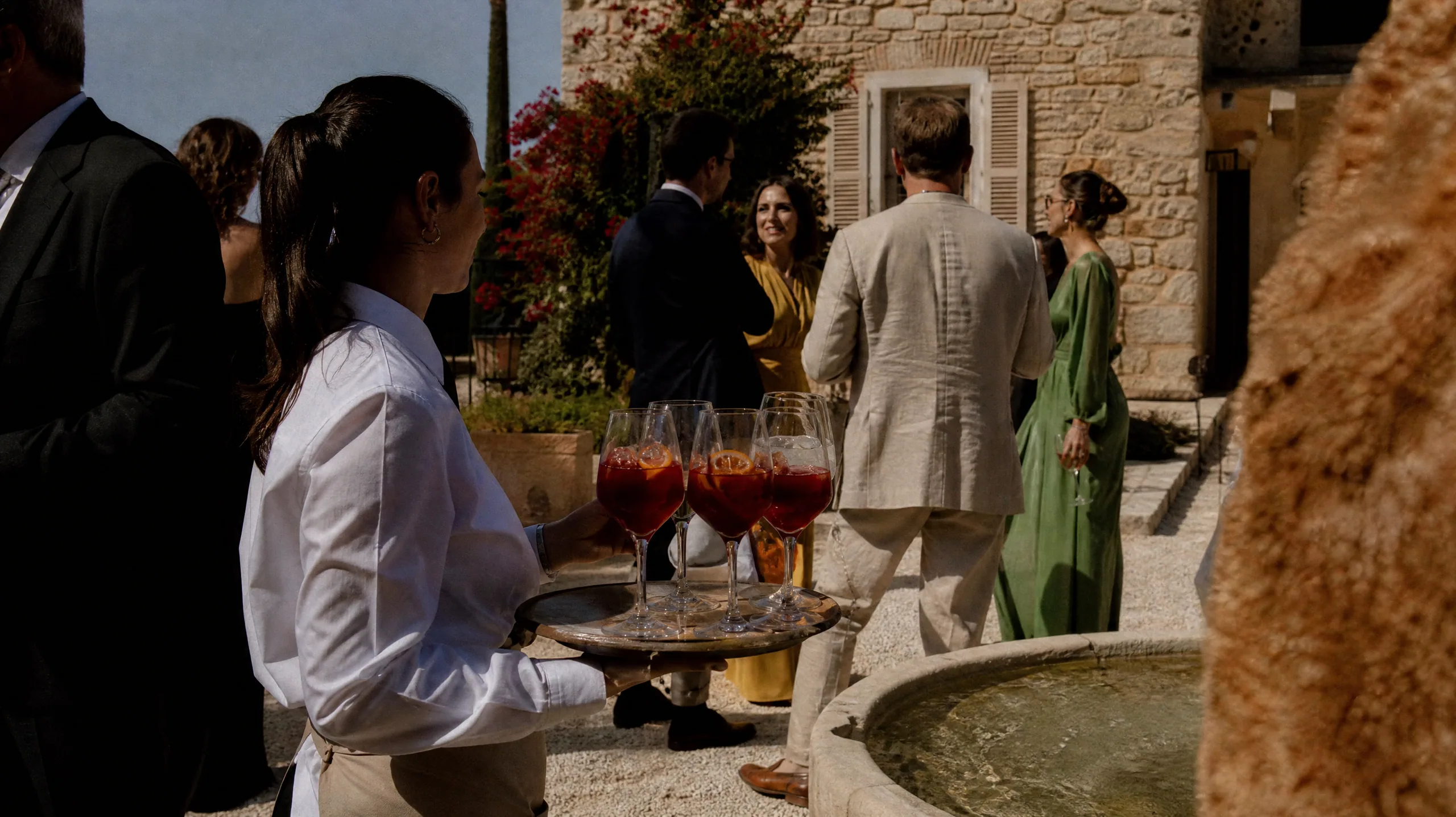
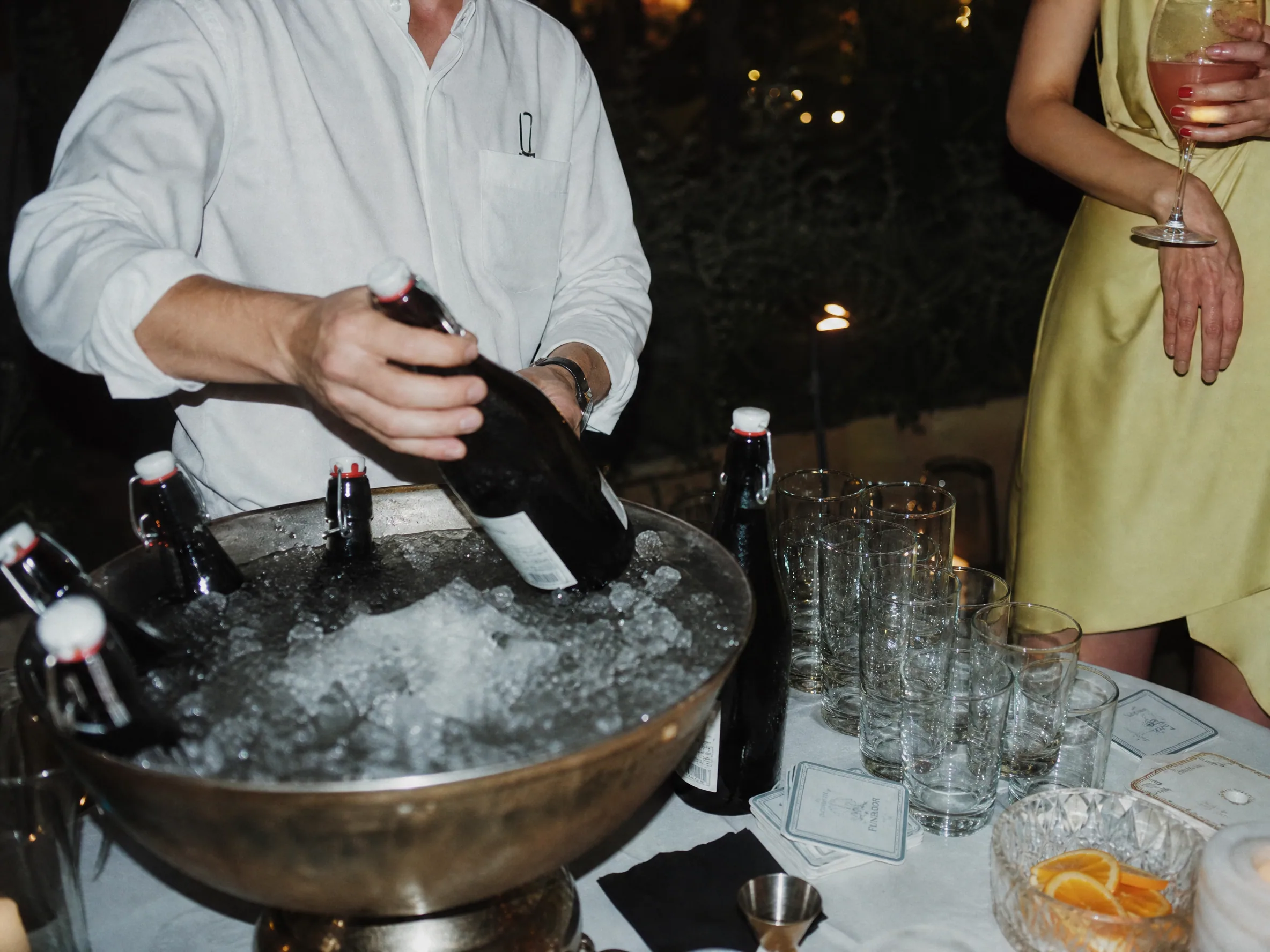
Spanish summer wedding weekends ask guests to hold heat, soft light, and long cocktail hours in the same breath. A well-run tinto de verano station—red wine lengthened with soda, ice, and citrus—gives international guests a local ritual that cools without rushing anyone toward a second gin and tonic. This guide shows couples and planners how to brief the bar, pace pours, and keep zero-proof guests equally cared for on estate lawns and terrace cocktail hours across Spain.
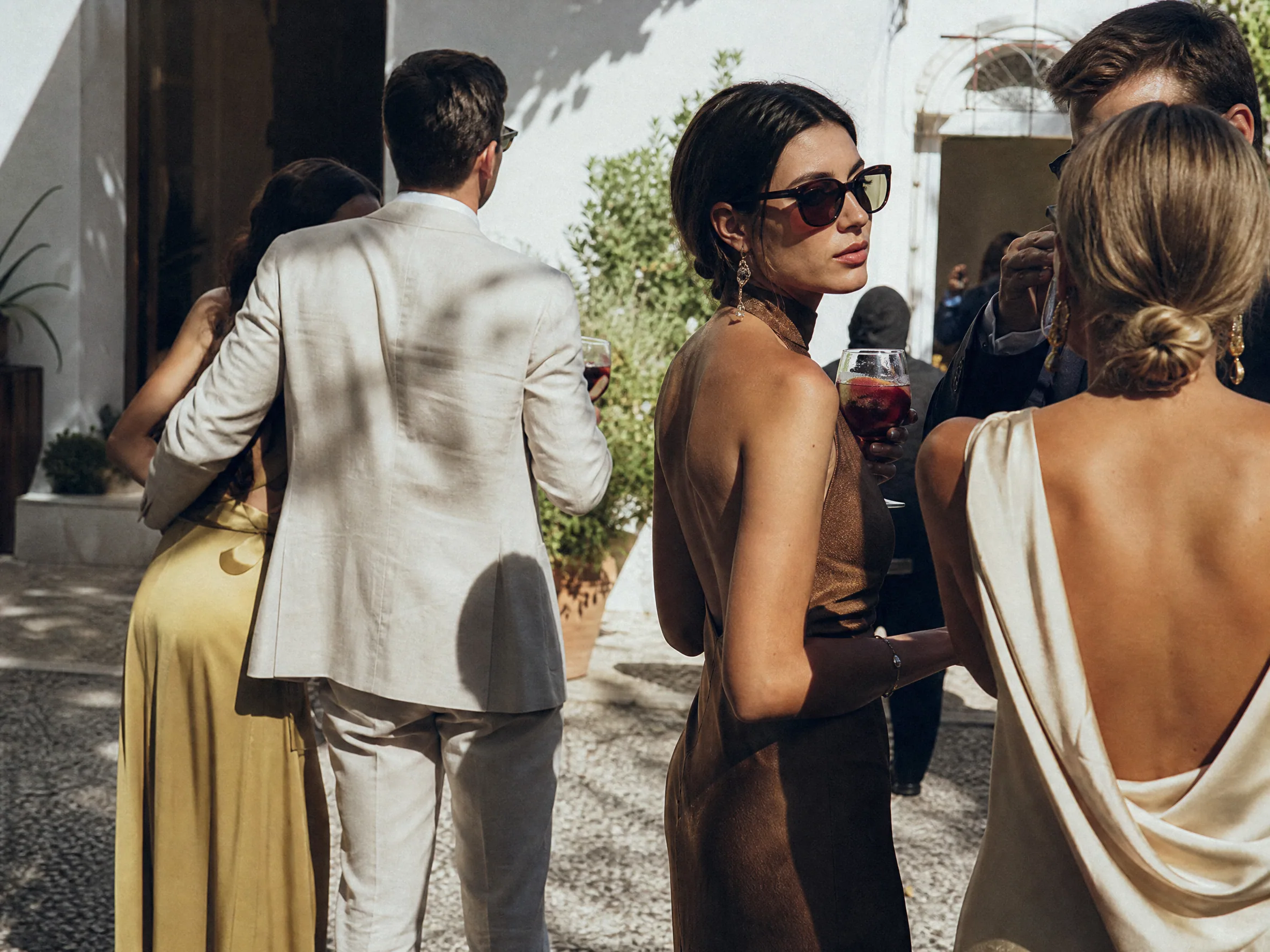
Why tinto de verano fits Spanish outdoor cocktail hours
Destination wedding cocktail hours in Spain often land in late afternoon heat or early evening glare. Straight spirits hit harder when guests have been in transit, on cobblestones, and under sun. Tinto de verano is culturally familiar to Spanish vendors, lighter than a heavy red pour, and easy to batch for large guest counts. It signals hospitality without copying a generic “spritz” menu that could belong anywhere. Position it as the welcome cooler: one signature glass that buys time before seated dinner, photo calls, and the later barra libre pace.
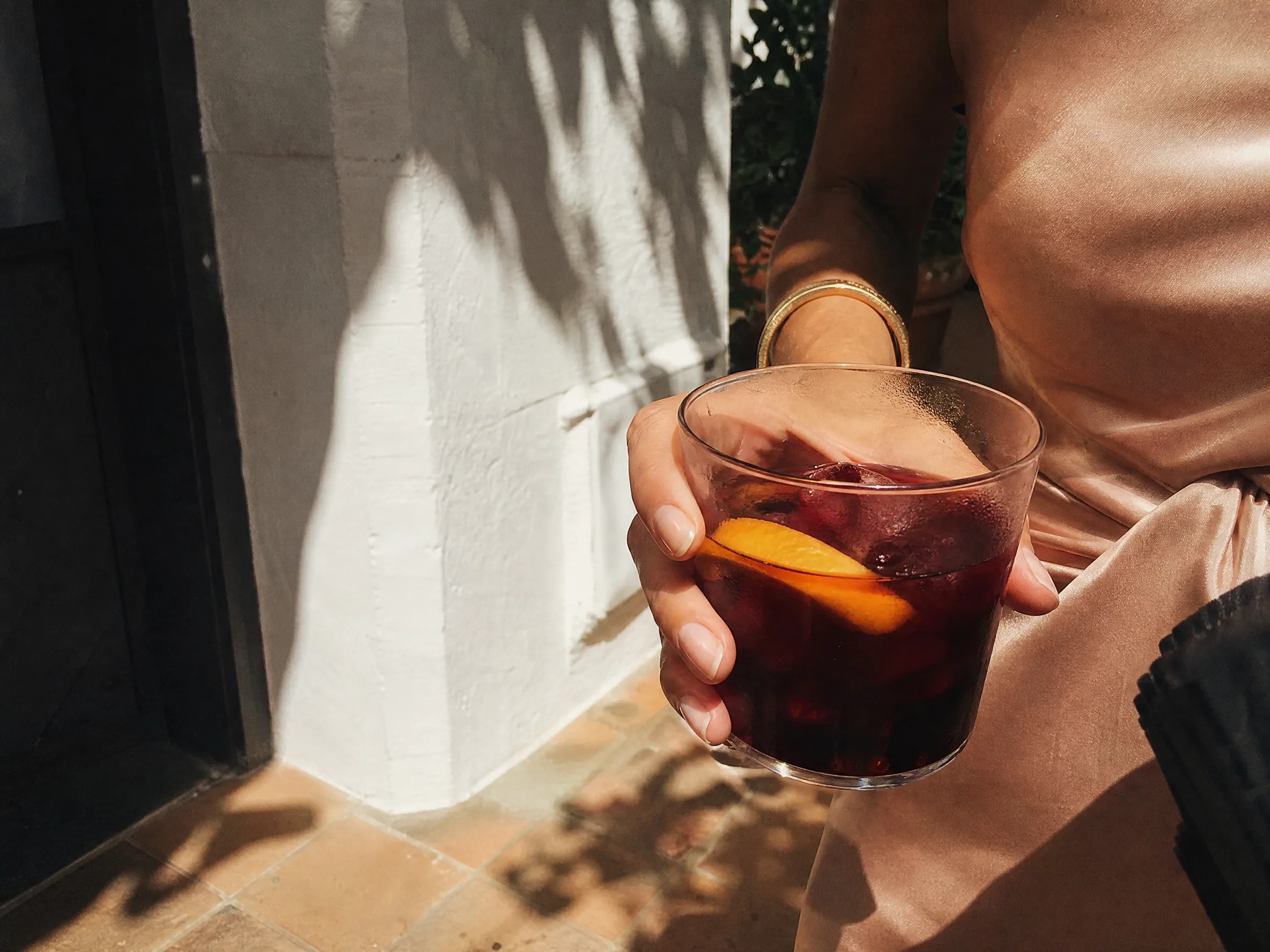
What guests should expect in the glass
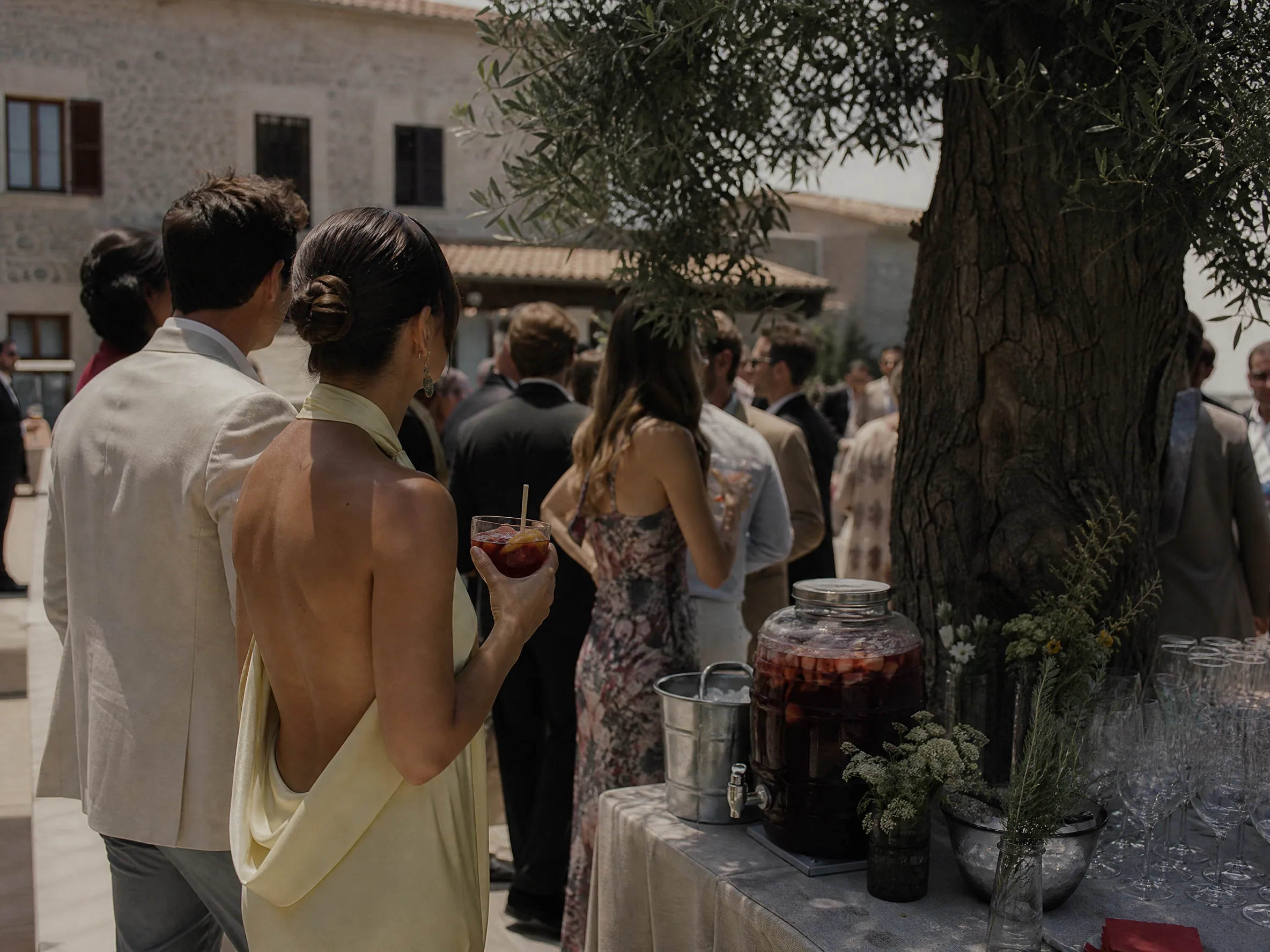
Brief guests that tinto de verano is not sangria theater and not a wine tasting flight. Classic service is chilled red wine topped with lemon soda or sparkling lemonade, plenty of ice, and a citrus wheel. Some bars offer a cola variant (tinto con Coca-Cola / calimocho-adjacent), but keep the wedding station focused on the lemon-soda classic unless your region expects otherwise. Publish ABV expectations in plain language: it drinks lighter than wine alone, so pacing still matters. Include a one-line tasting note on the bar card so US and UK guests are not surprised by the soda length.
Where to place the station on estate and terrace layouts
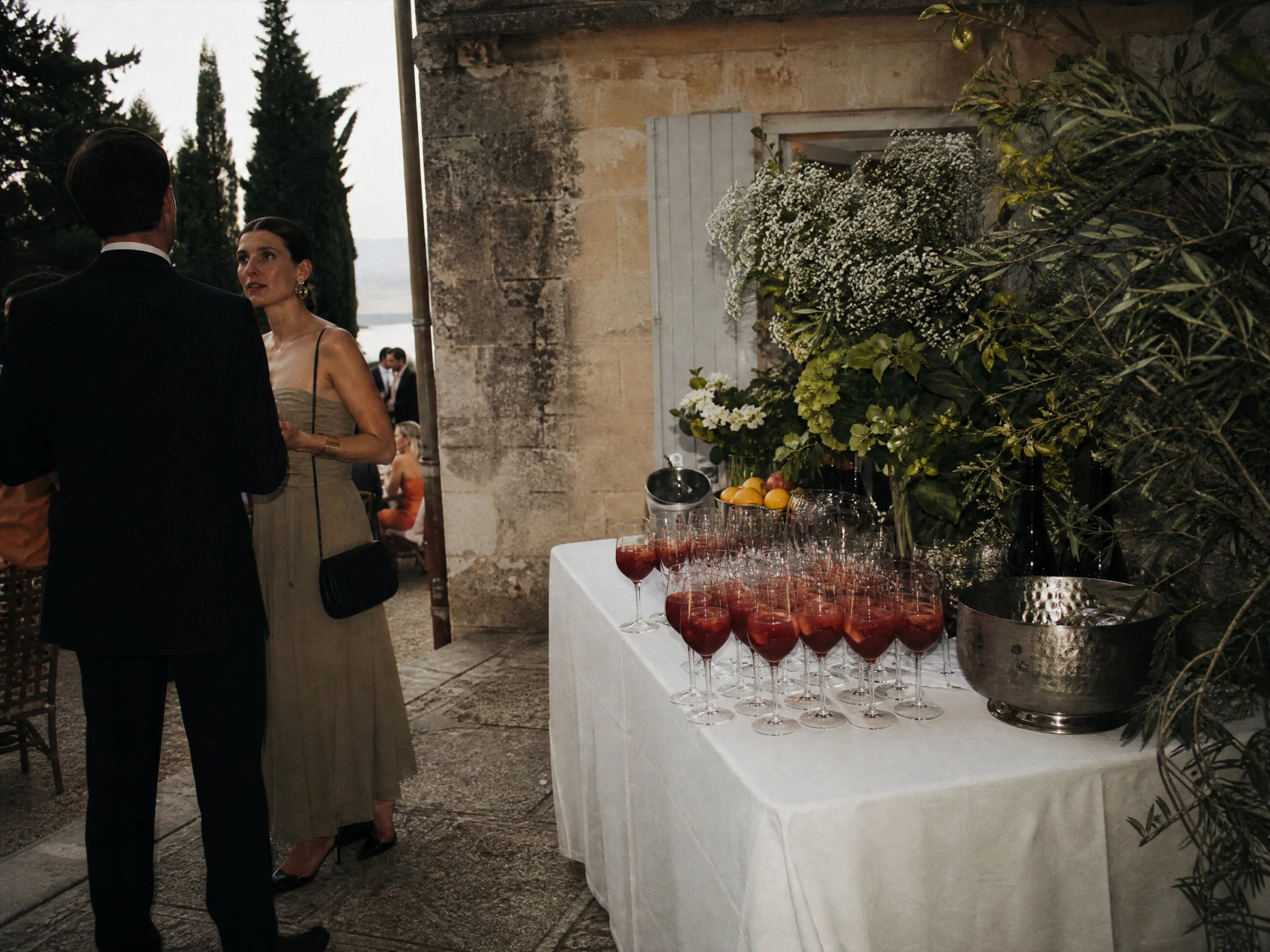
Put the tinto station in shade with airflow—under a pergola, along a north-facing wall, or beside the parasol line—not in the brightest center of the lawn. Guests should be able to grab a glass without blocking the photocall, ceremony exit path, or tray-passed canapé flow. If the estate has gravel or uneven stone, keep the ice bins and soda crates on level ground with a non-slip mat for staff. For beach or cliff terraces, weigh menus and citrus trays against wind; coastal cocktail hours punish lightweight paper cards and empty highball stacks.
Ice, citrus, and soda logistics that keep quality high
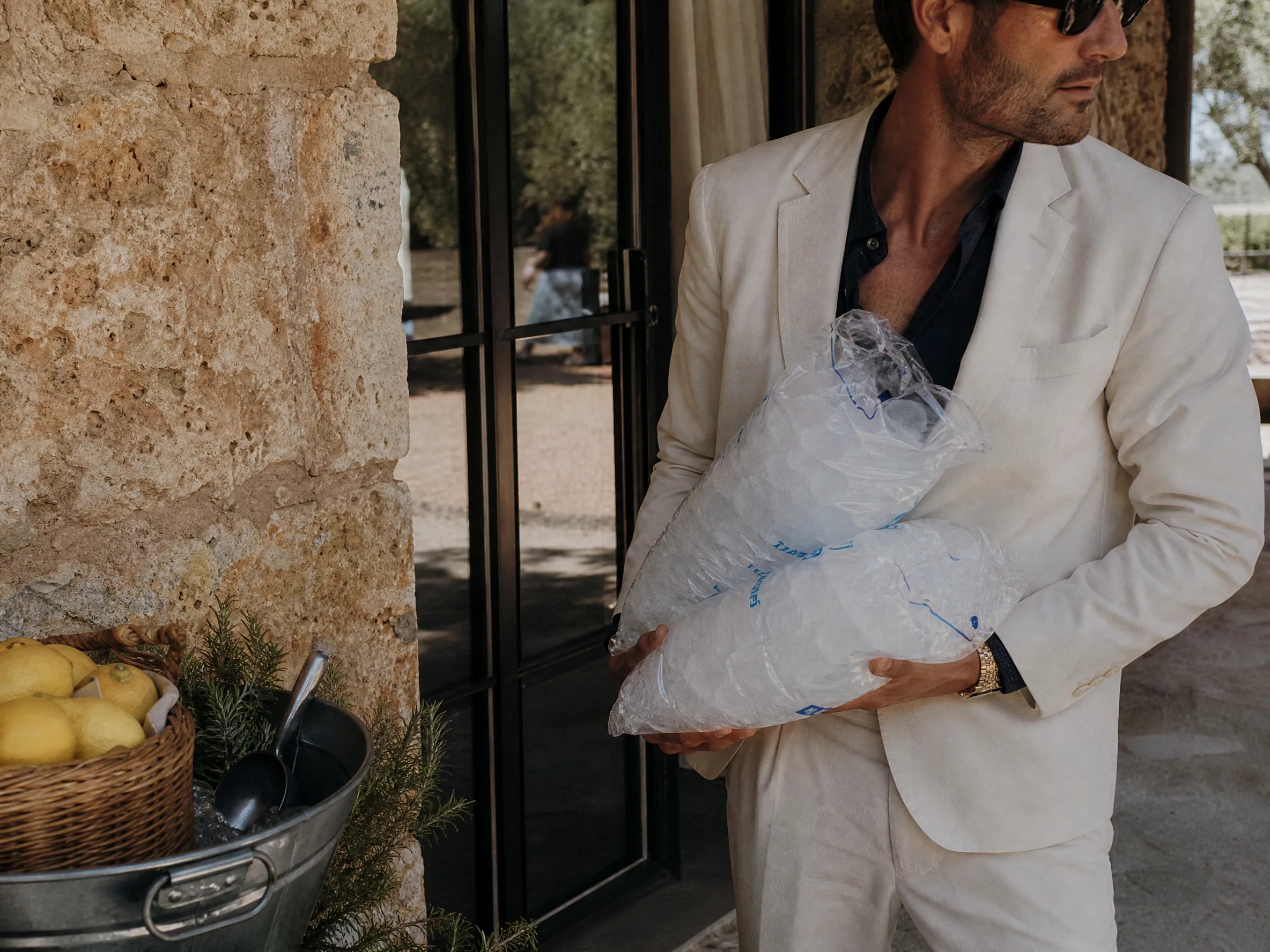
Tinto de verano fails when ice melts into warm wine-soda soup. Brief the bar on continuous ice top-ups, pre-chilled wine, and soda opened in waves—not all at once an hour before guests arrive. Citrus should be sliced close to service so wheels stay bright. Confirm refrigeration space at rural estates early; many venues have limited cold storage once florals and cake arrive. Assign a runner for ice between kitchen and station so bartenders never abandon the pour line during peak arrival after the ceremony.
Pacing pours so the cocktail hour stays elegant
Train staff to offer tinto as a first welcome, then read the room before automatic refills. A light spritz can encourage over-pouring if trays circulate without a pause. Set a soft rhythm: welcome glass on arrival, water within reach, second pour on request. Align this with your broader barra libre plan so guests who switch to gin-tonic or cava later are not stacking alcohol on an empty stomach. If speeches or family formals start soon after cocktail hour, keep the tinto line slightly away from the mic path so clinking glassware does not compete with toasts.
Zero-proof and low-ABV options that feel equal, not afterthought
International guest lists always include nondrinkers, pregnant guests, drivers, and anyone managing heat carefully. Mirror the tinto station with a zero-proof twin: chilled grape juice or dealcoholized red with the same soda, ice, and citrus garnish in the same glassware. Label both clearly in English and Spanish. Avoid hiding soft options behind the main bar where guests must ask twice. The goal is visual parity—same station architecture, same citrus, same ice sparkle—so choosing zero-proof never feels like a lesser welcome.
Allergy, wine, and soda cards for international guests
Even a simple spritz needs a short ingredient card: wine style (tempranillo, garnacha, house red), soda brand, citrus, and any sulfite note for sensitive guests. If you offer a cola variant, list caffeine. Keep dietary language calm and specific—no vague “house mix.” Place cards at eye level beside the ice well, and add the same lines to the digital itinerary for guests who plan around allergies before they reach the lawn. Vendors should know a backup pour (plain soda with citrus, or a named zero-proof) if someone declines wine entirely.
Staff briefing: batching, glassware, and Spanish bar rhythm
Give bartenders a written batch recipe per pitcher or per liter, not tribal knowledge shouted over music. Confirm glassware counts against guest headcount plus breakages—highballs disappear fast on grass. Agree whether service is pitcher-pour, build-per-glass, or a hybrid for VIP arrival waves. If your team is bilingual, standardize the guest-facing name as “tinto de verano” with a short English subtitle (“Spanish red wine spritz”) so servers and guests share one phrase. Rehearse the first fifteen minutes after ceremony when demand spikes.
What to put in the guest cocktail-hour brief
Add four lines to the weekend pocket itinerary: where the tinto station sits on the map, that a zero-proof twin is available in matching glassware, that water and shade are beside the pour line, and that cocktail hour ends at a hard call time for seating or portraits. If children are present, note that the station is adult-service only and where soft drinks live instead. Clear, short logistics keep the Spanish summer ritual charming—and keep guests cool, hydrated, and on time for everything that follows.