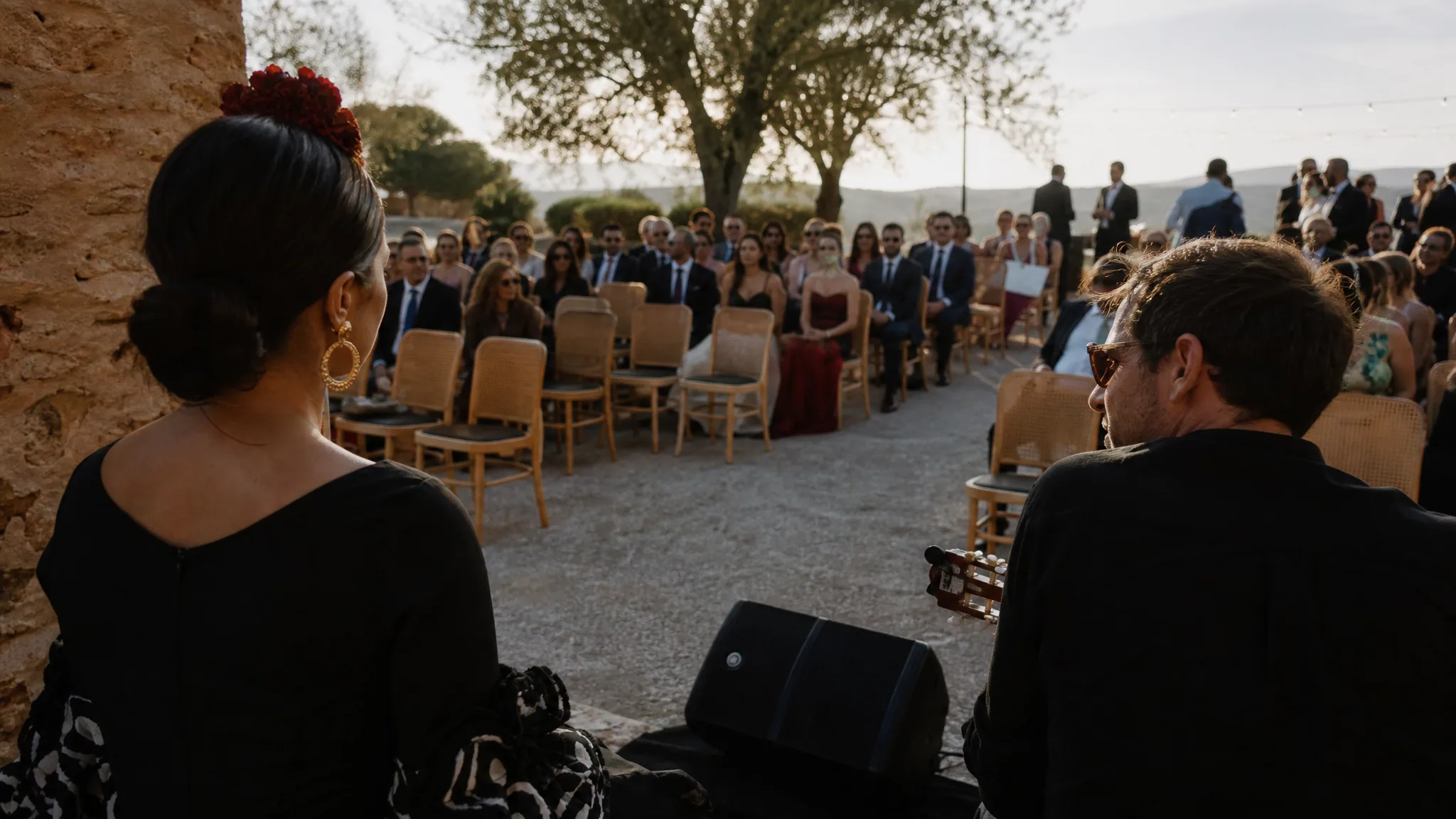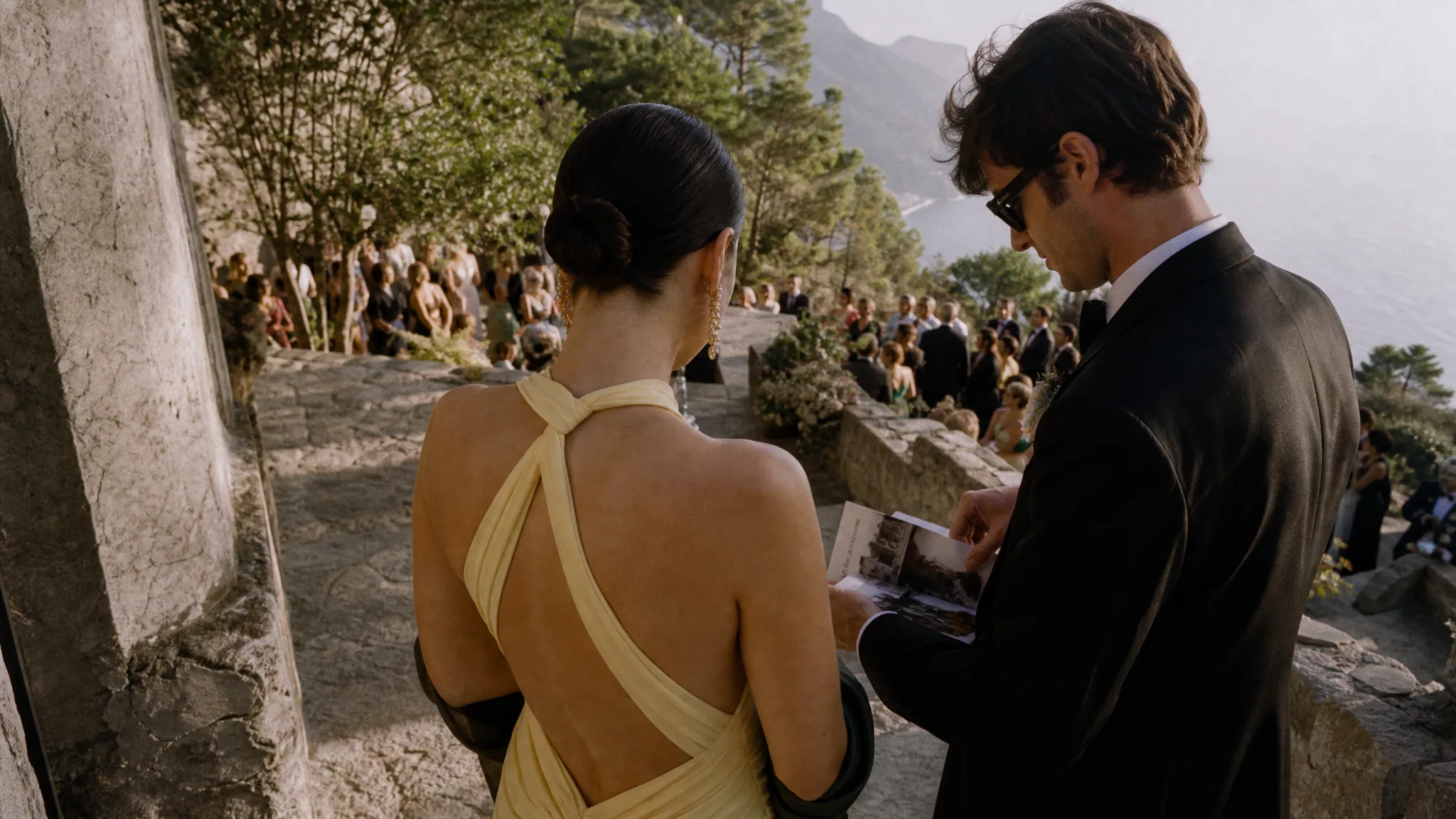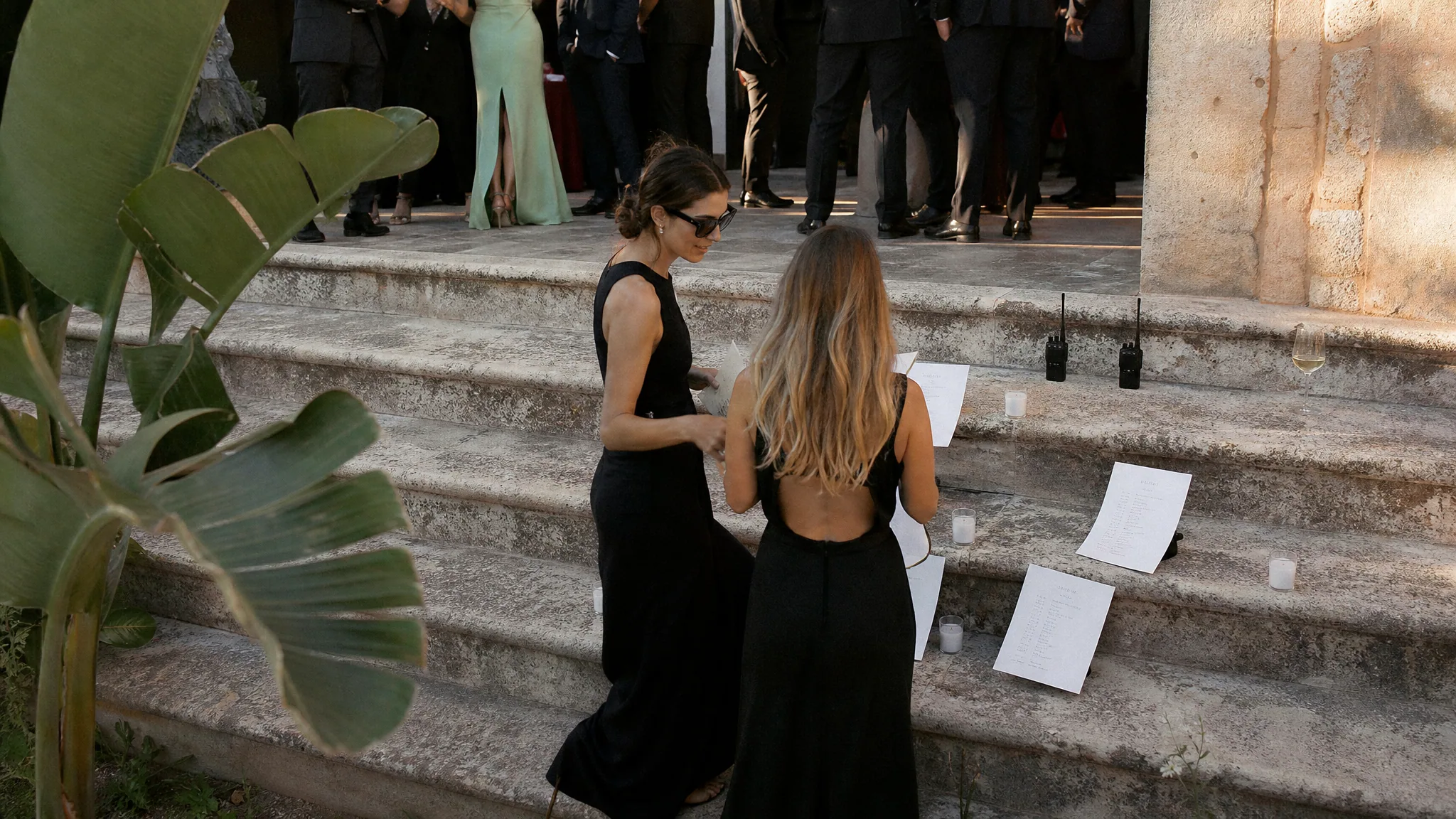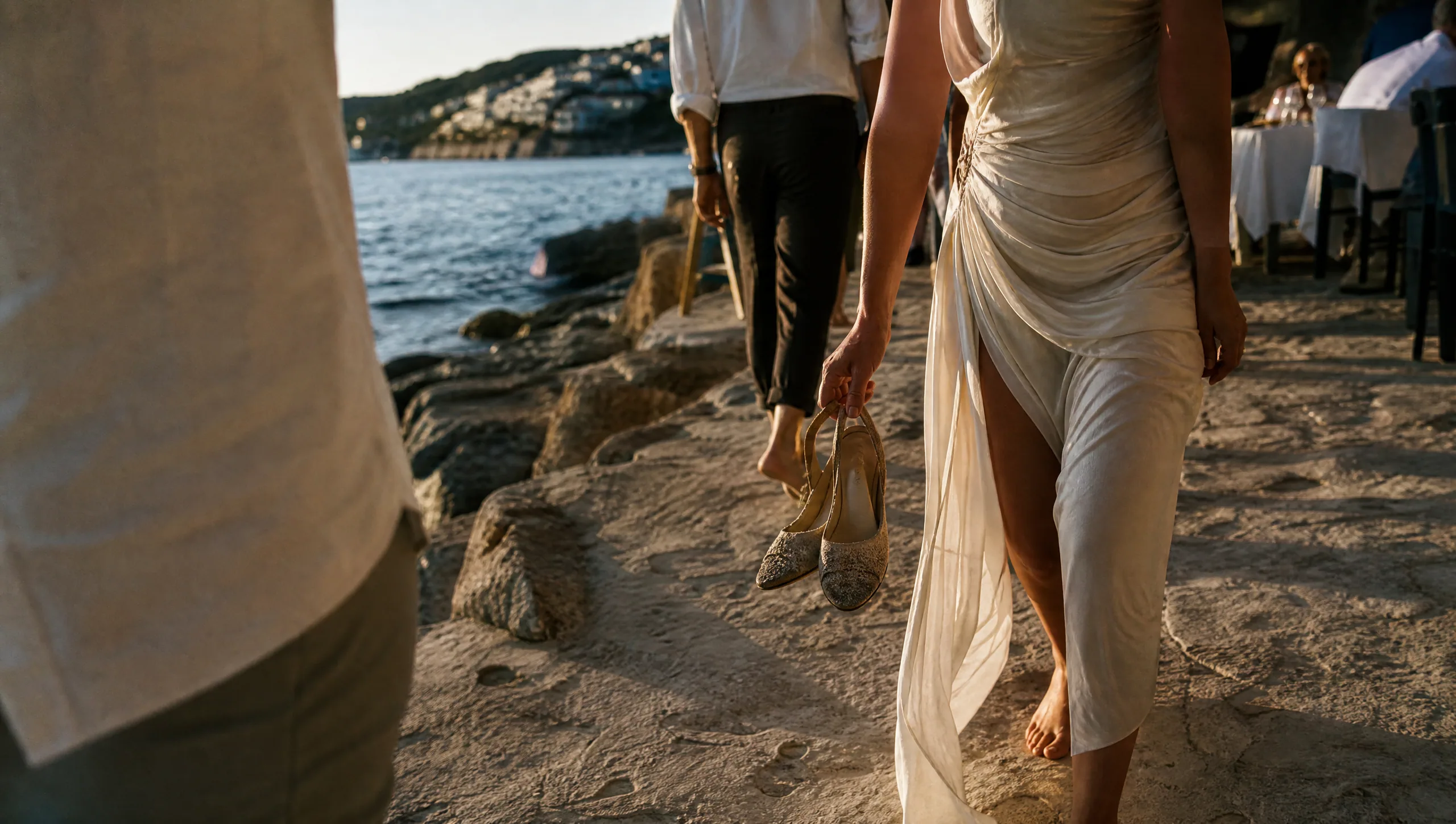
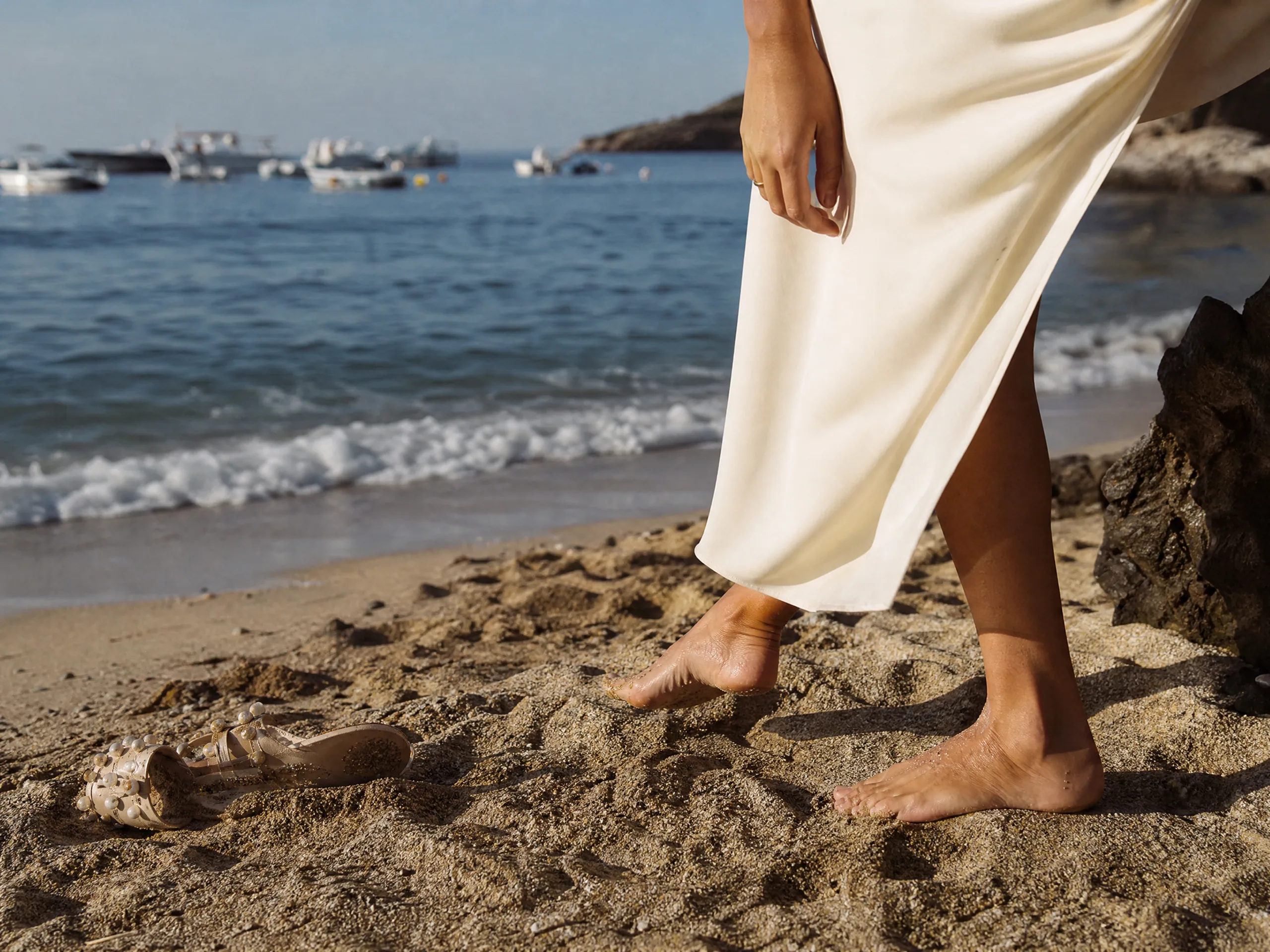
A Spanish beach ceremony looks effortless in the save-the-date photos. On the day, the shoreline is a moving stage: tides advance, sand softens, and guests in city shoes discover why coastal venues ask for a footwear plan. International travelers often pack for “beach formal” without understanding how Spanish Atlantic and Mediterranean tides, wind-driven spray, and soft dune paths actually behave.
A short, practical tide-and-footwear briefing protects dresses, suits, and the ceremony clock. Here is how to set expectations for destination-wedding guests without turning the coast into a hazard memo.
Why Spanish beach ceremonies need a tide window, not just a start time
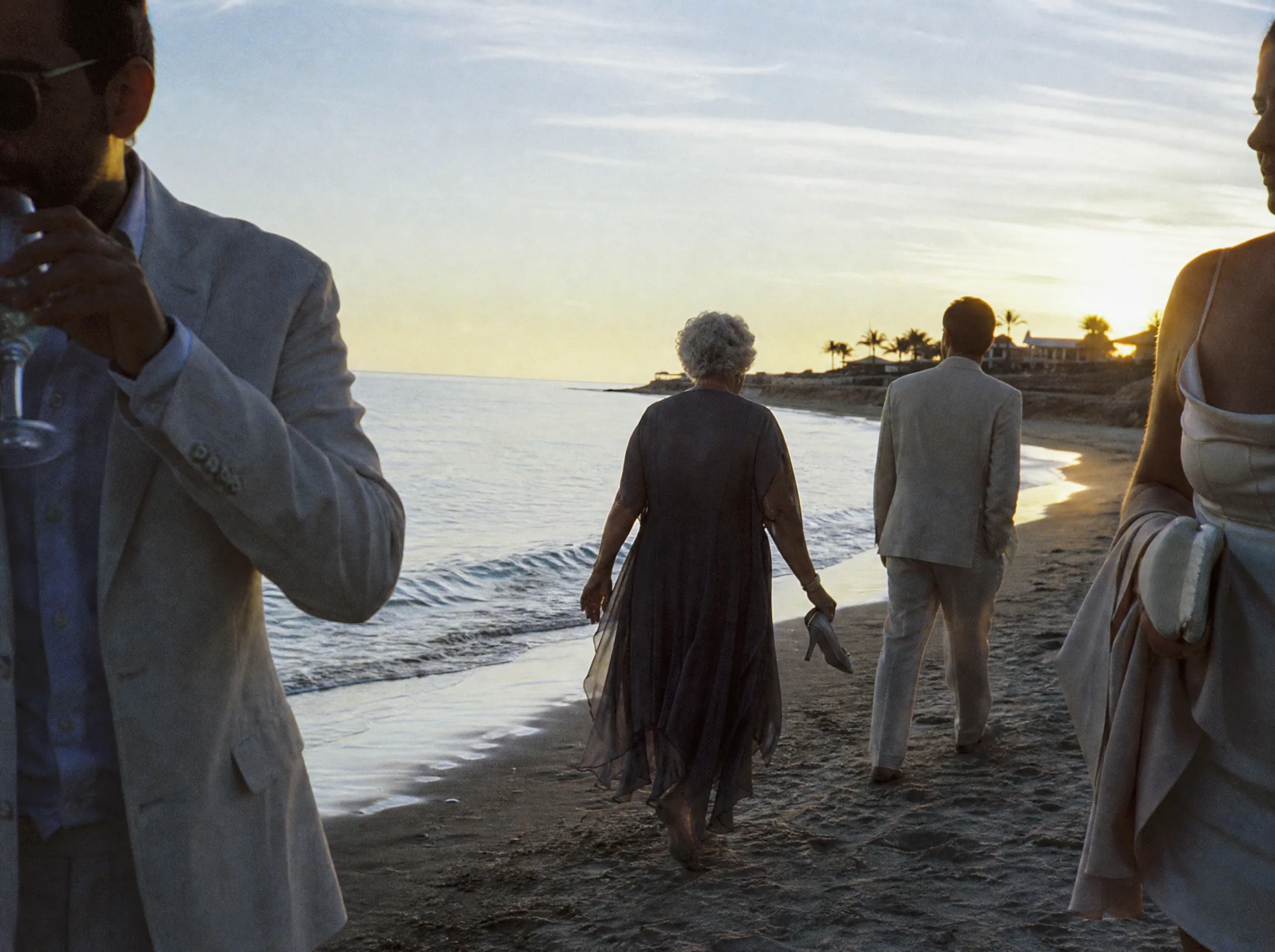
Spain’s coasts do not share one tide personality. Atlantic shores—Galicia, parts of Andalucía’s west, and many northern beaches—can swing dramatically between low and high water. Mediterranean beaches often look calmer, but wind, storm surge, and local sandbars still move the usable “dry aisle” by meters within an afternoon.
Publish a ceremony call time and a tide window. Guests should know whether they are walking on firm wet sand at low tide or climbing a temporary boardwalk above a rising line. Couples who only share “ceremony at 18:30 on the beach” create last-minute confusion when the photographer’s frame and the actual walking surface disagree.
Share a simple guest map from parking to sand
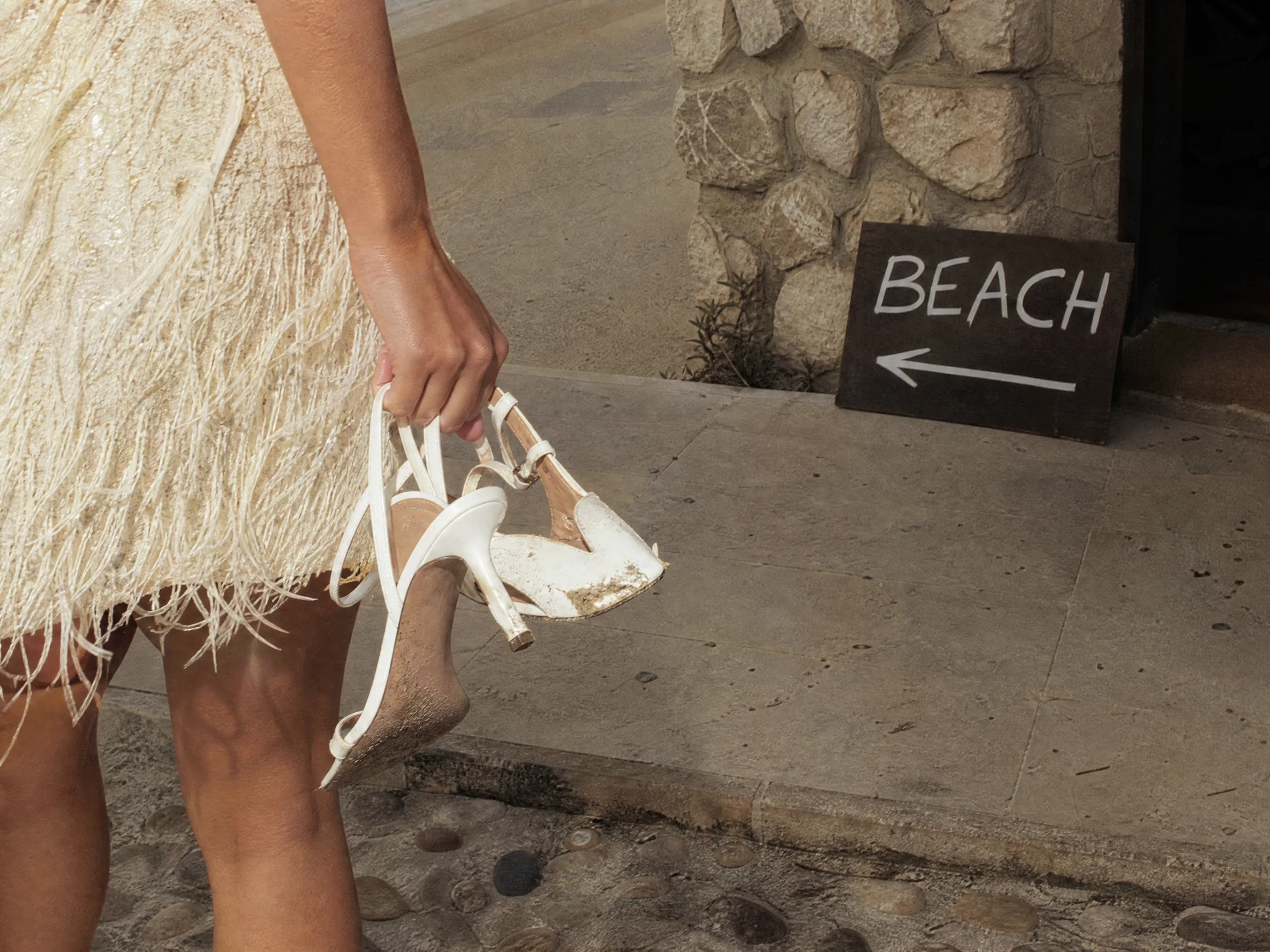
Beach venues rarely mean “step out of the car onto the aisle.” Guests may walk from a coastal road, a chiringuito lot, a hotel boardwalk, or a dune path with soft sand that swallows heels. Send a one-screen map: drop-off point, walking surface changes, estimated minutes on foot, and where the footwear station sits.
If elderly relatives or guests with mobility needs are attending, mark the firmest route and any golf-cart or shuttle stop before the soft sand begins. Accessibility planning for rural estates is different from beach access—treat the last 80 meters as their own logistics problem.
Set a clear footwear rule before anyone packs
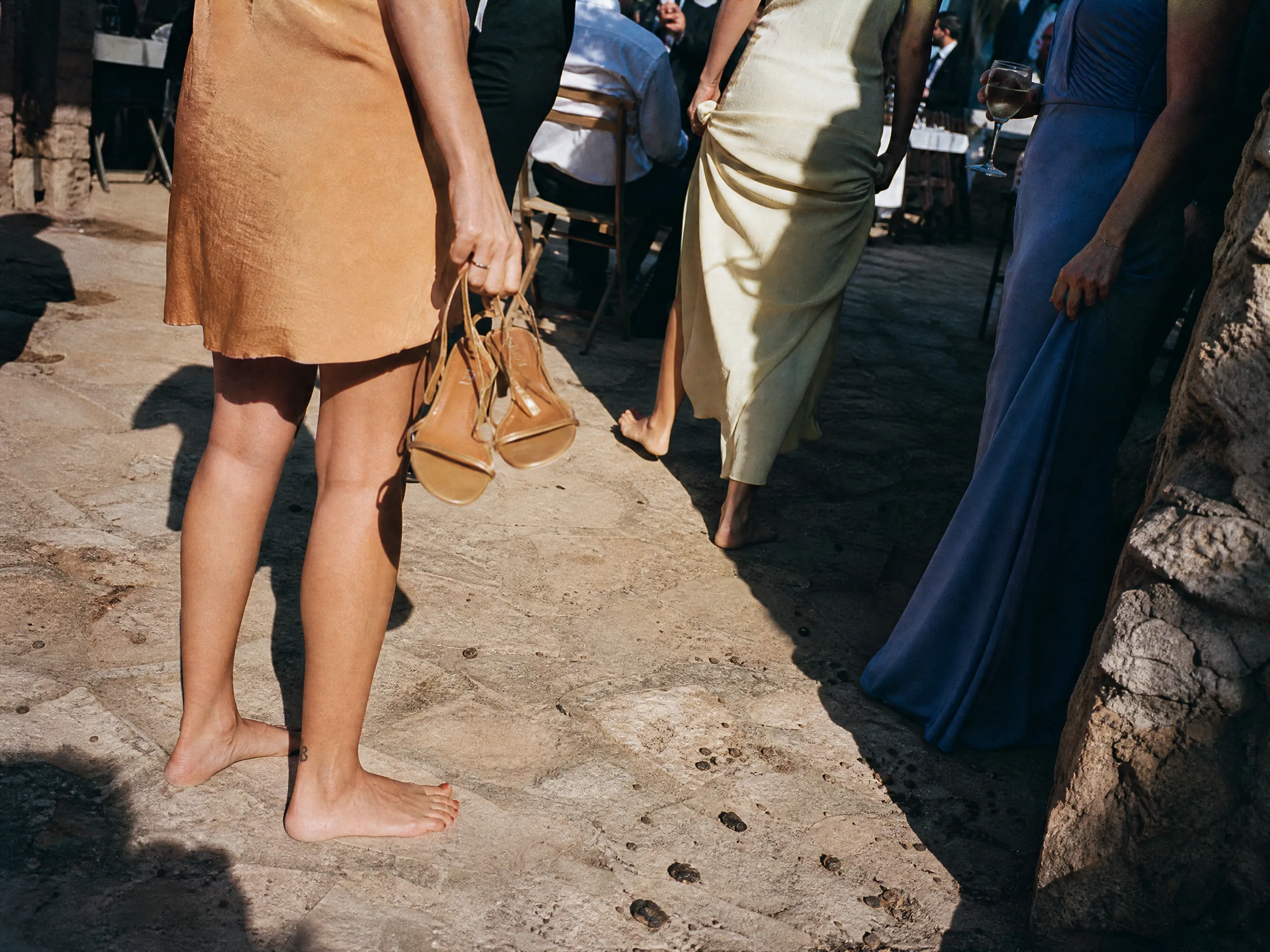
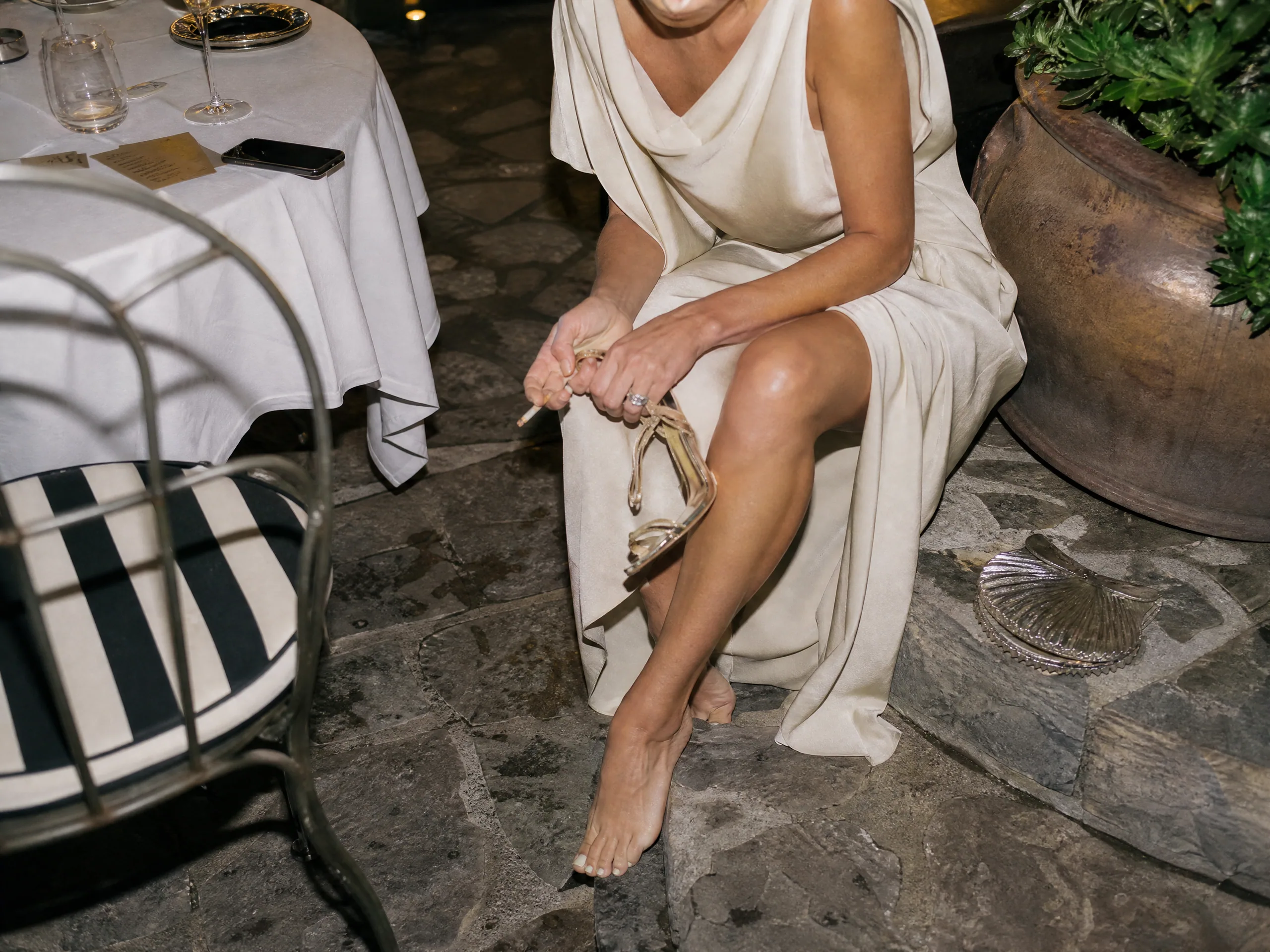
Decide the policy early and put it in the travel note: block heels on soft sand, wedges with caution, flats or barefoot preferred for the processional, and dress shoes only after the boardwalk. Many international guests assume “beach wedding” means decorative sandals that still fail in soft dunes.
Offer a heel-to-flat change station at the sand line—baskets, labeled bags, and a volunteer or usher who keeps the flow moving. Pair this with the same kindness you would use for cobblestone town centers: the goal is comfort and dignity, not a fashion critique.
Protect hems, suit trousers, and ceremony textiles
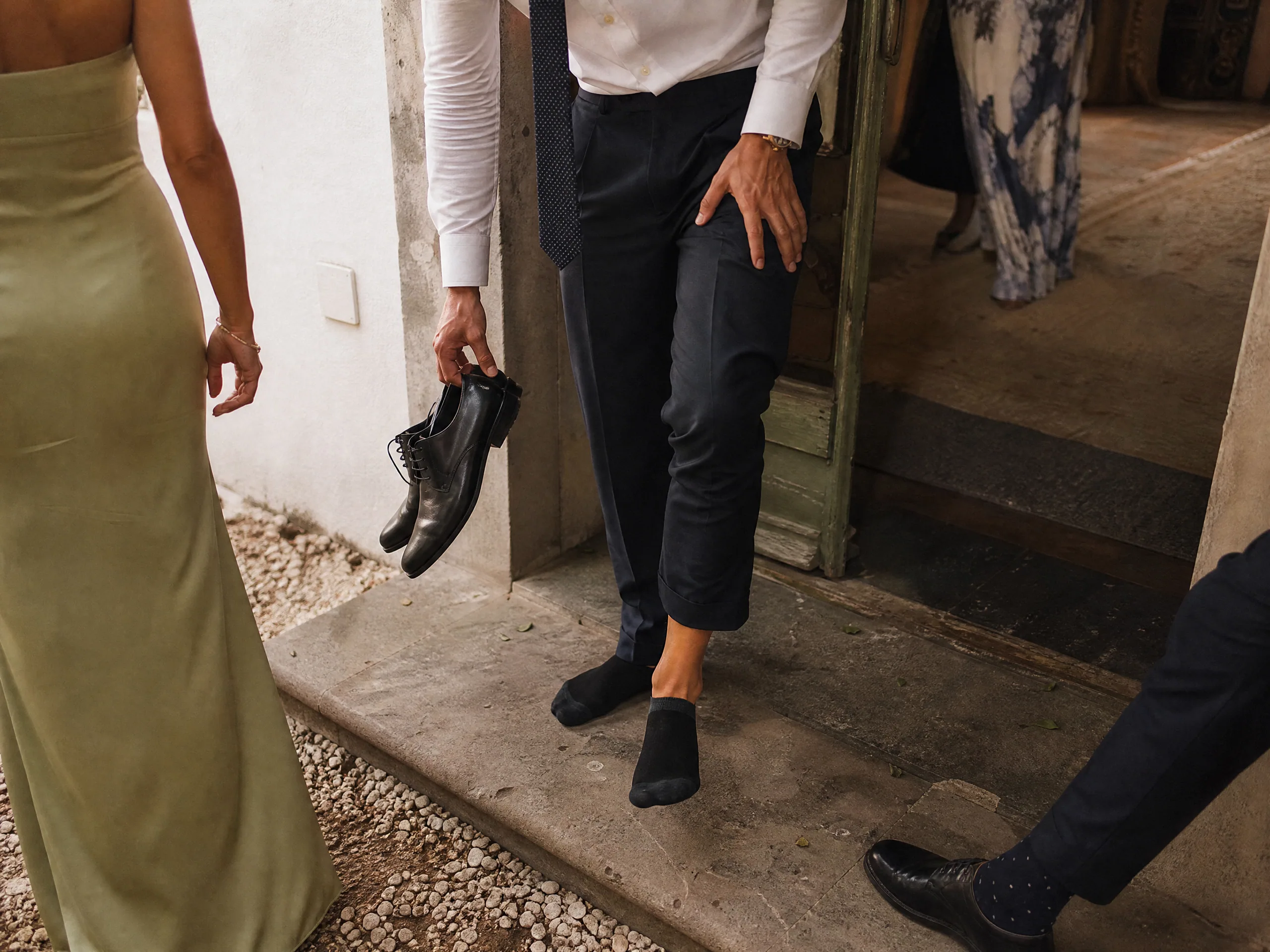
Wet sand stains silk, linen, and light wool faster than guests expect. Brief bridal-party and formal guests to pin or bustle long hems for the walk, or to use a temporary train hook until they reach firmer ground. For suits, suggest slightly shorter breaks or a quick cuff roll for the sand crossing, then reset for portraits.
If the ceremony includes an aisle runner on sand, tell guests not to treat it like indoor carpet—runners shift, gather grit, and become slippery when spray hits. Keep guest traffic on designated edges so the couple’s path stays photogenic and safe.
Build a tide-aware arrival buffer into the guest timeline
Coastal shuttles, narrow access roads, and summer beach parking inflate travel time. Add a buffer so guests are seated before the tide-sensitive setup finishes—chairs, arbors, and sound gear often cannot be placed until the water line cooperates.
Print the buffer on pocket itineraries: “Arrive at beach staging by 17:45; sand walk begins 18:05; ceremony 18:20.” When guests understand why the early call exists, they stop treating it as optional padding.
Plan for wind, spray, and a wet-weather sand alternative
Even on a sunny Spanish afternoon, onshore wind can push spray onto the first rows. Brief guests to bring a light wrap, secure hats, and expect that programs may need clips. If rain or rough surf forces a move to a terrace, lawn, or indoor backup, say so in the same message that covers the tide window—one coherent coastal contingency note beats three panicked WhatsApp updates.
Coordinate with your rain-plan messaging so the beach backup does not contradict earlier emails. Guests should see one source of truth for “where we stand if the Atlantic misbehaves.”
Staff a sand-line welcome with water, towels, and seat assignment
A small welcome point at the hard-to-soft sand transition solves half of beach friction: water for heat, a towel wipe for damp soles, seat-row reminders, and a place to leave shoe bags. Ushers can seat fragrance-sensitive or mobility-priority guests without forcing them to wander soft sand looking for numbers.
Keep the station elegant and quiet—woven baskets, linen signs, and bilingual cards beat plastic crates. If children are attending, add a quick “no running on the wet apron” line; slick packed sand near the water is where falls happen.
Brief hotels, drivers, and beauty teams on sand timing
Hotel desks, taxi drivers, and salon appointments control whether guests hit the tide window. Share the beach access note with the room block and any transfer company: exact pin, walking minutes, and the footwear station location. Ask beauty teams to avoid rigid updos that fight coastal wind, and to schedule so guests are not sprinting in heels across dunes.
If welcome bags include practical items, a compact shoe bag, blister pads, and a light linen scarf earn more gratitude than another branded trinket.
Sample guest message you can send this week
“We are marrying on the sand, and Spanish tides set our timing. Please arrive at the beach staging pin by [time]—there is a short walk from firm ground to the ceremony. Wear walkable shoes or plan to change at our shoe station; block heels struggle in soft sand. Bring a light wrap for breeze and spray. If surf or weather forces a move, we will update the WhatsApp group and hotel desk with the backup terrace location. We cannot wait to celebrate with you—with dry ankles and a calm processional.”
Send that note with a map screenshot and a photo of the footwear baskets. Clarity here is hospitality: international guests stop guessing, the aisle stays beautiful, and your Spanish beach ceremony keeps the ease it promised in the invitation.