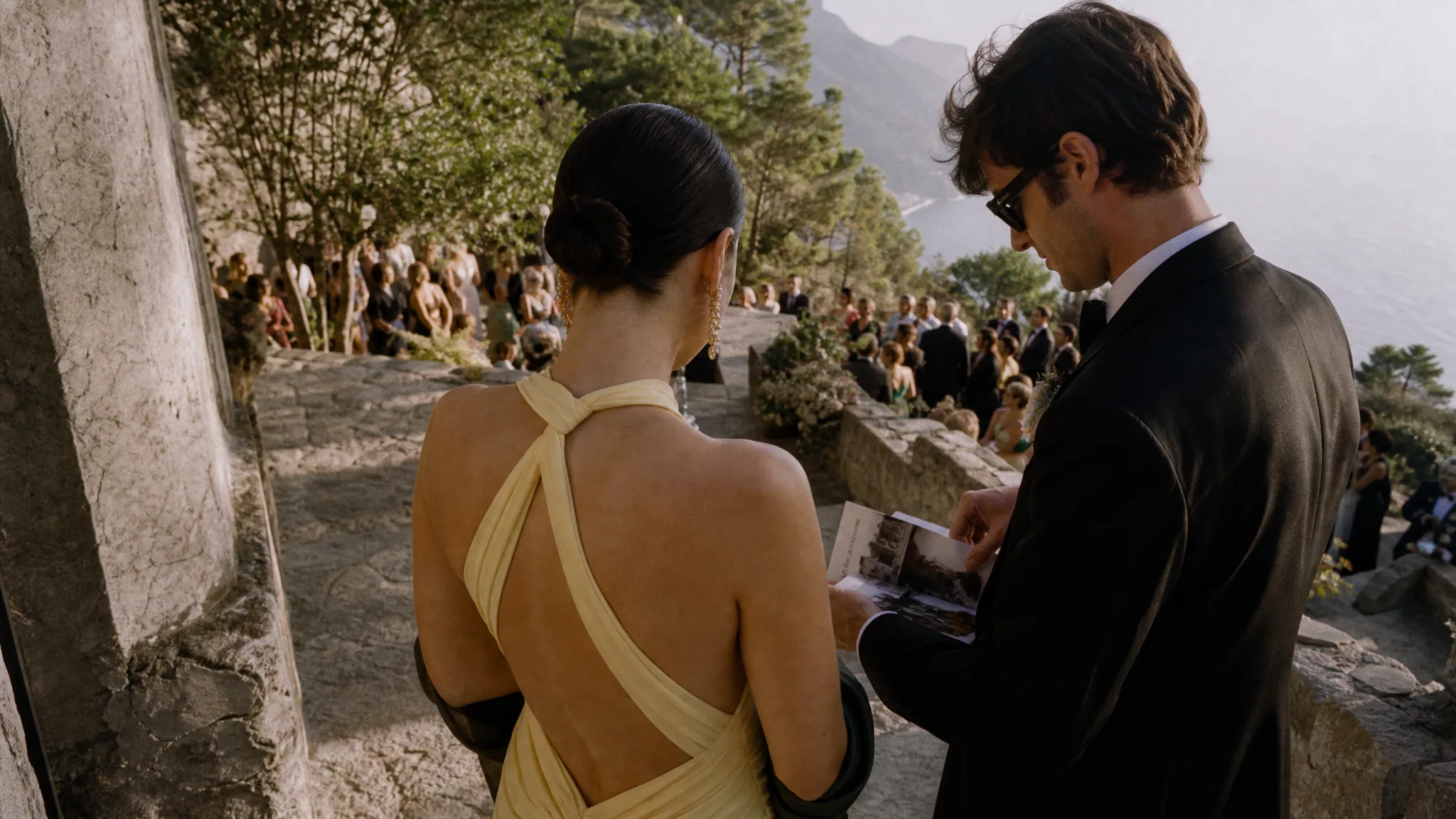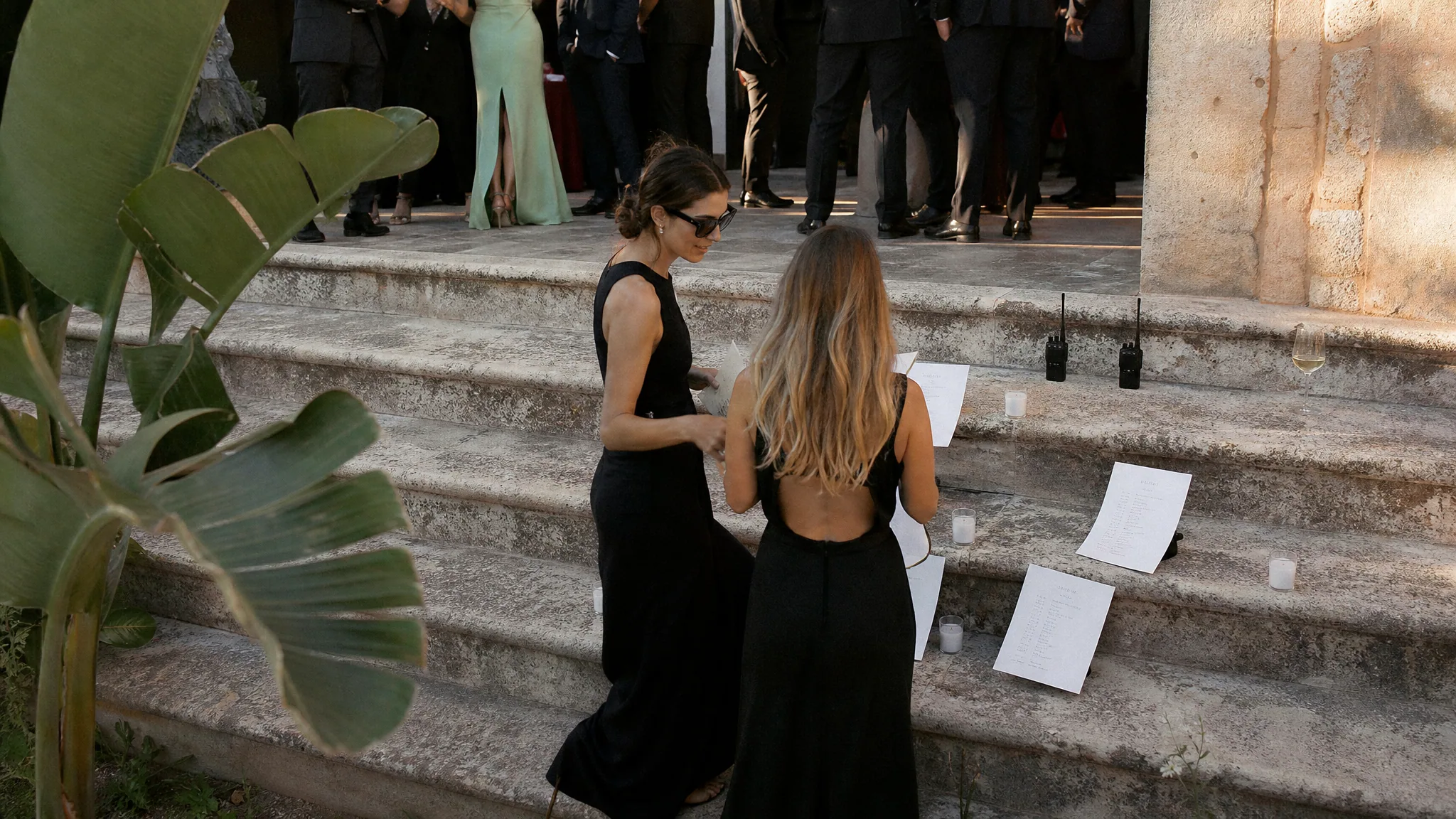
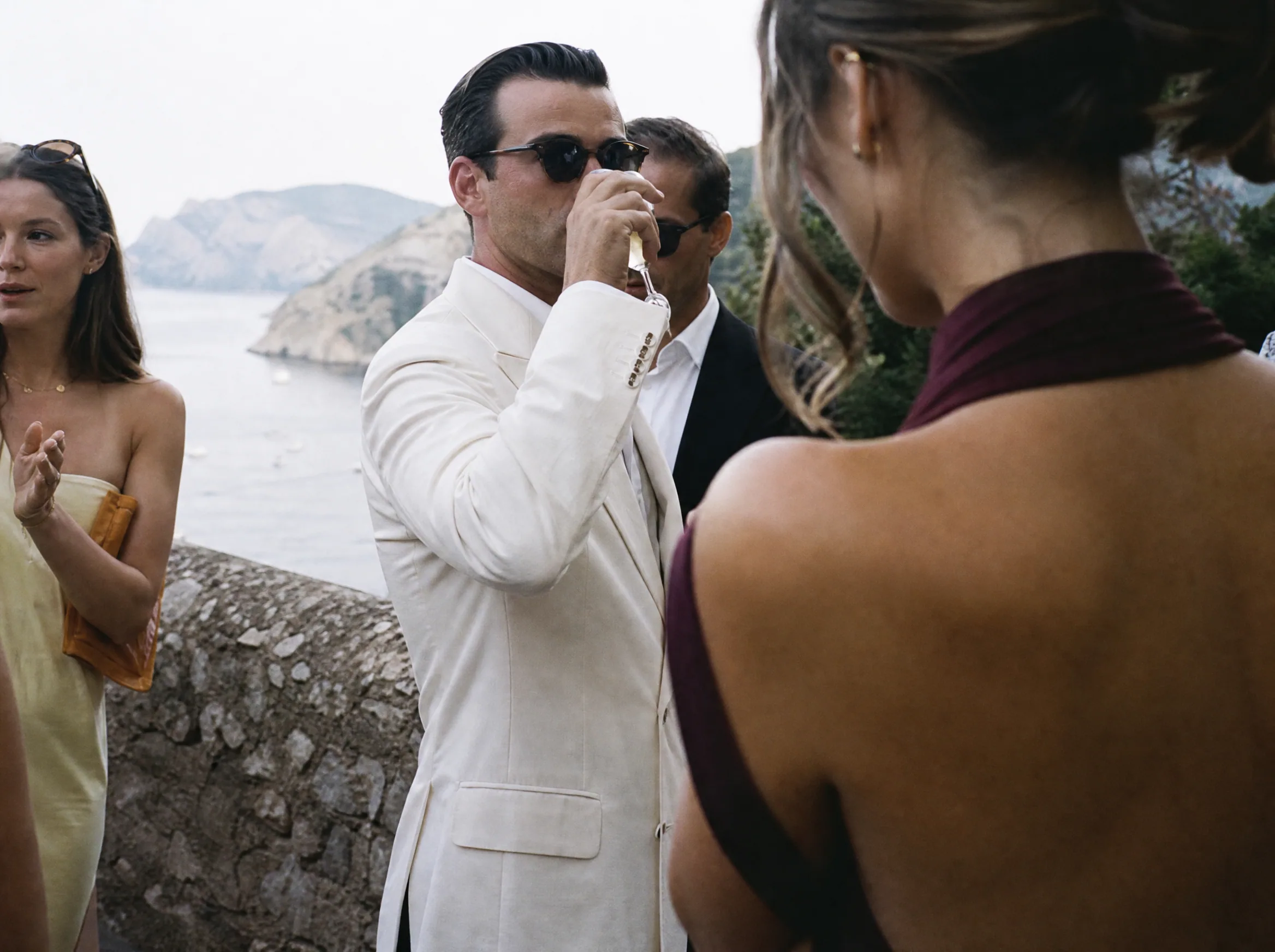
Destination weddings gather people who pack differently, travel differently, and often overdo perfume on celebration days. At a Spanish estate, a coastal terrace, or a stone courtyard, scents linger longer in still evening air—and a heavy cologne cloud can ruin the ceremony for someone with migraine, asthma, or chemical sensitivity.
A short, kind fragrance briefing protects the people who need it without shaming anyone who simply packed their favorite bottle. Here is how to set expectations for international guests before they spray.
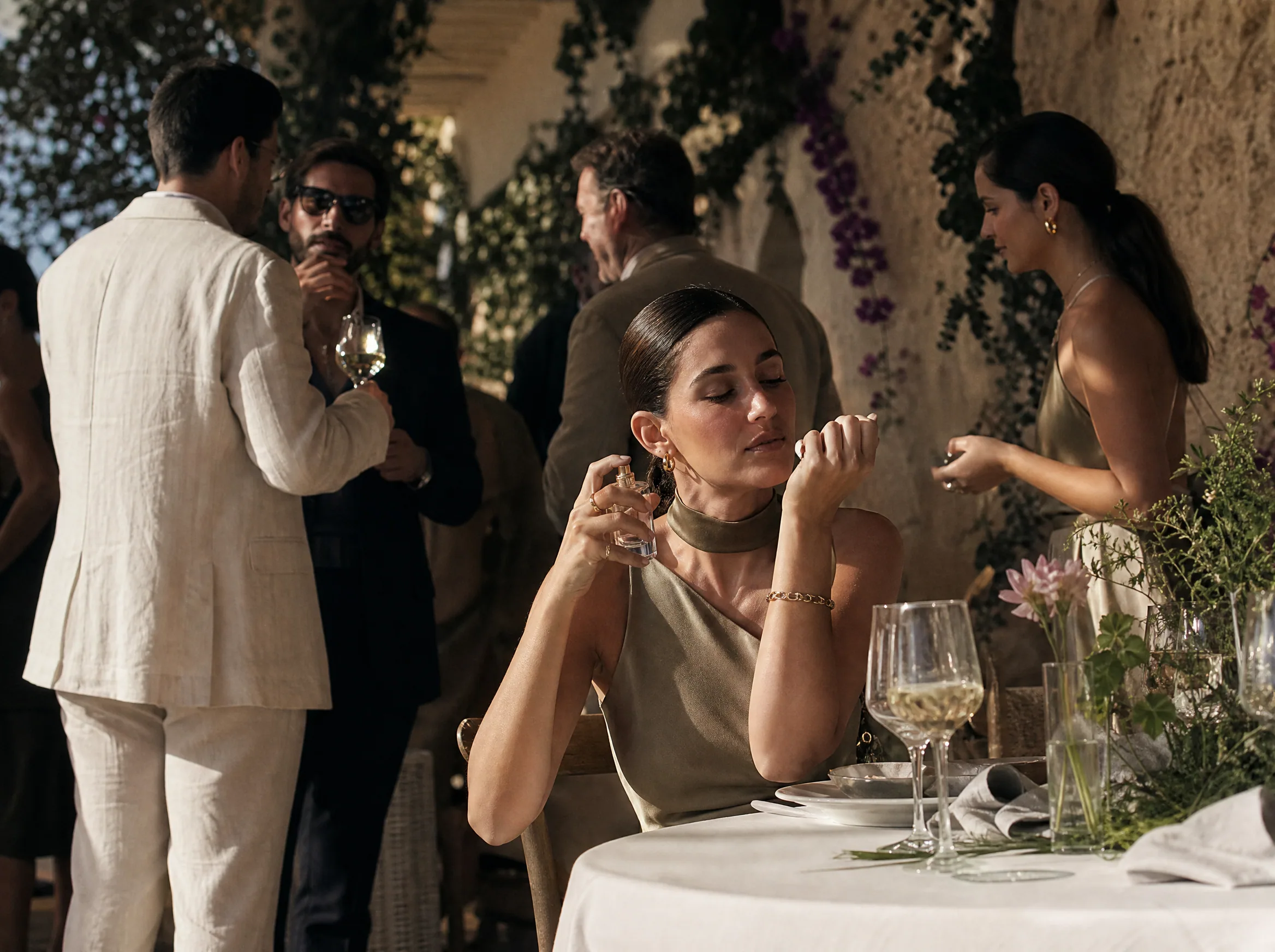
Why scent matters more at Spanish outdoor ceremonies
Heat, humidity, and enclosed stone spaces amplify fragrance. A product that feels subtle in a hotel bathroom can read as intense once guests stand shoulder-to-shoulder in a courtyard or chapel. Rural estates also trap scent under canopies and in shaded cloisters where air barely moves.
If grandparents, pregnant guests, or anyone with migraine history are traveling for the weekend, treat fragrance as a logistics item—same priority as shade, water, and seating.

Write the policy as a request, not a ban
Guests respond better to invitation language than prohibition. Use wording like “we’re keeping the ceremony scent-light for family with sensitivities” rather than “no perfume allowed.” Pair the request with a clear window: light or none from hotel departure through the ceremony; normal celebration scents are fine for cocktail hour and dinner if the venue airflow allows.
Put the note in the welcome WhatsApp, pocket itinerary, and hotel front-desk sheet so it is not buried in a long email.
Brief hotels and beauty appointments early
Many guests book blowouts, makeup, and barber appointments on wedding morning. Ask salons and hotel spas to skip heavily fragranced products for bridal-party and reserved-row guests when possible, or to offer fragrance-free finishing sprays.
Include a one-line note in room-drop cards: “Ceremony is scent-light—please skip cologne and perfume until after vows.” Front desks can reinforce this when guests ask about dress code or timing.
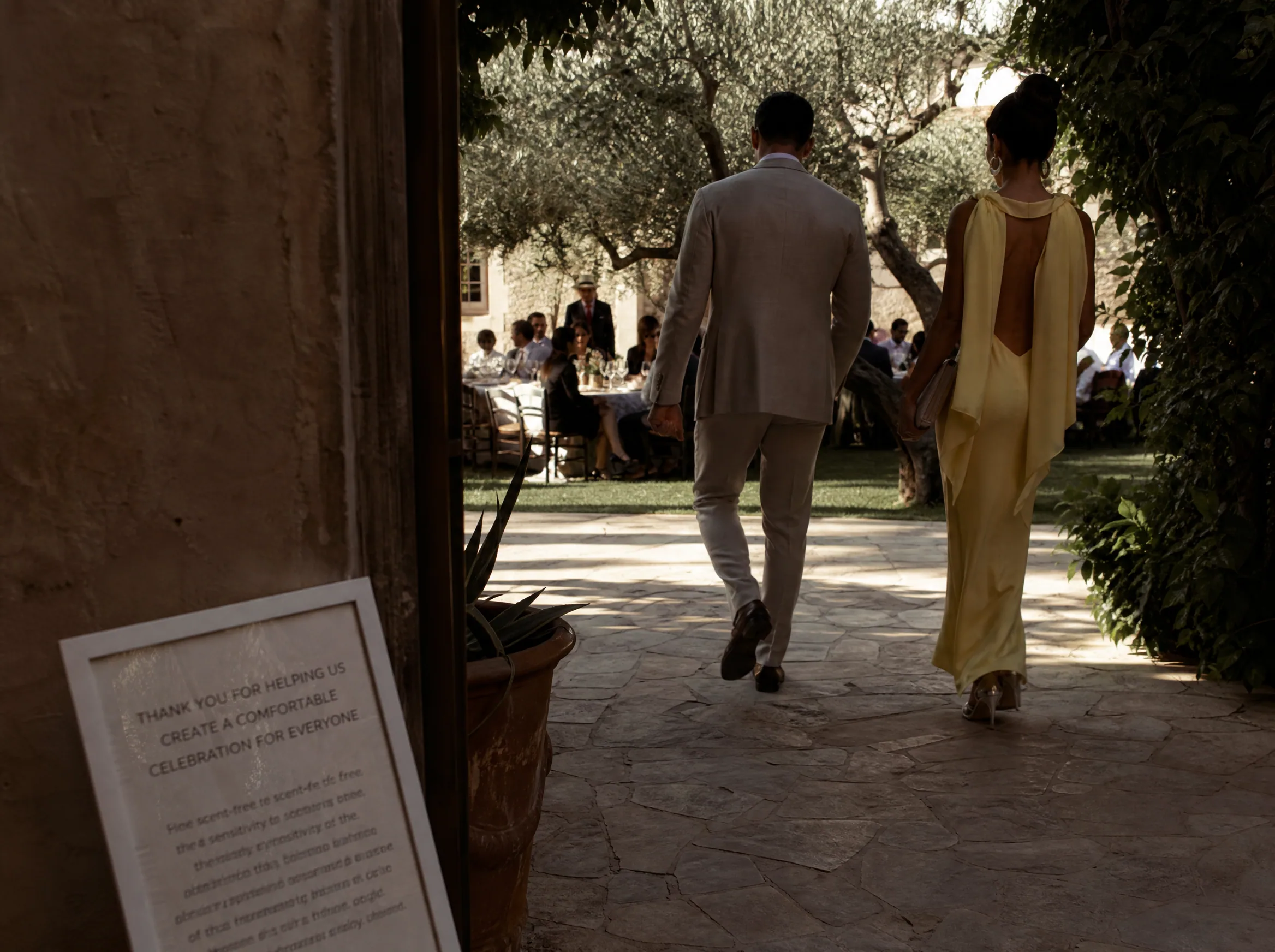
Create a fragrance-sensitive seating buffer
Reserved rows for parents and elders should also protect guests who flagged scent sensitivity on the RSVP. Place them upwind when possible, near open sides of a courtyard, and away from the aisle edge where perfume trails concentrate as people process.
Ushers need a quiet cue: “scent-sensitive seats” on the seating map so they can guide people without announcing medical details out loud.
Handle bridal-party products and floral scent load
Strong floral installations, incense, or scented candles can stack on top of guest fragrance. Coordinate with your florist and planner so ceremony florals are beautiful but not overwhelming, and skip oil diffusers in the seating area.
Ask bridesmaids and groomsmen to apply any fragrance after portraits if possible, or to choose light formulas for the processional. Keep touch-up kits fragrance-free in the getting-ready suite.
Pack a discreet comfort kit for the ceremony
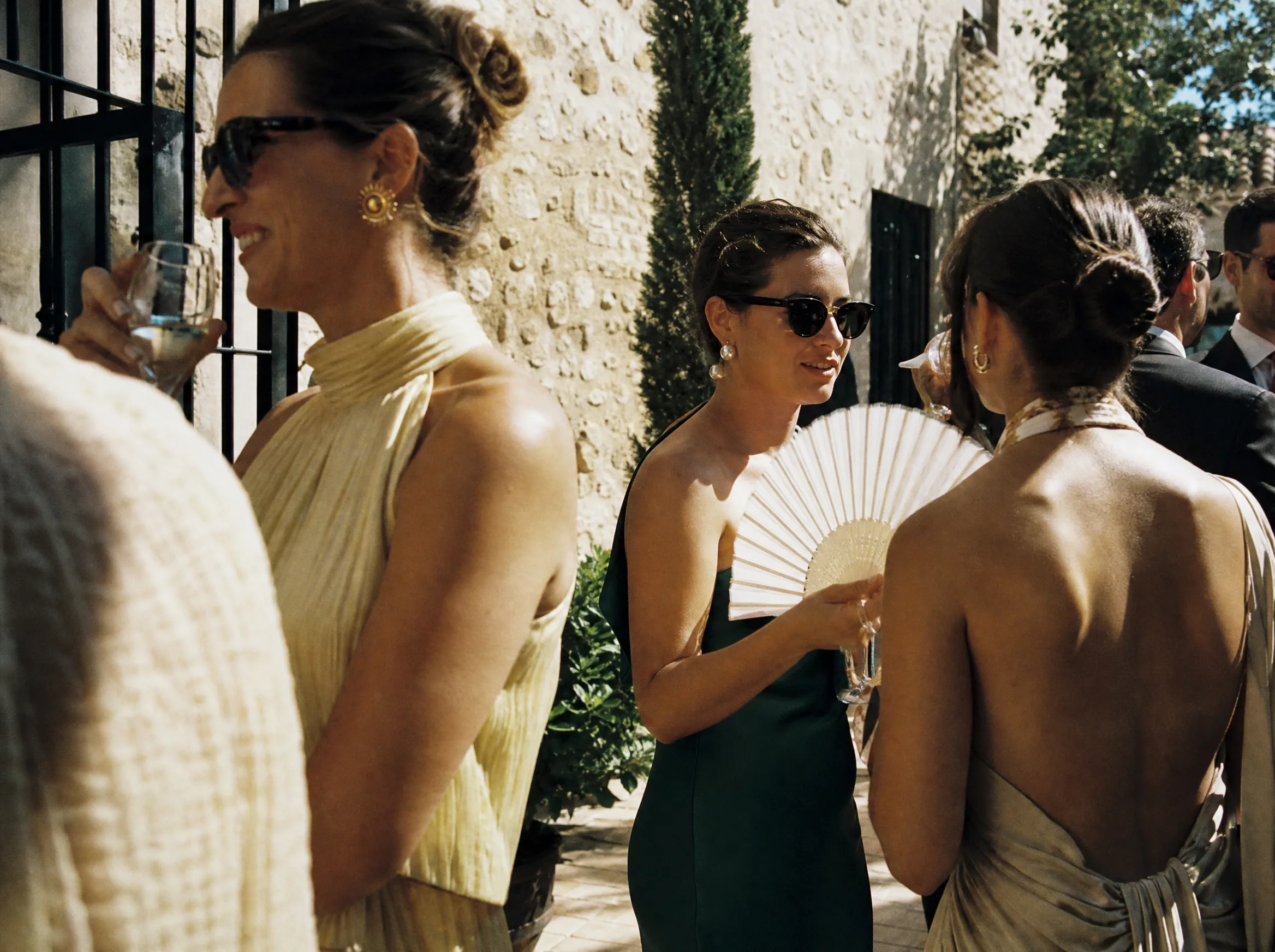
A small kit near ushers or the welcome desk helps without drama: unscented tissues, a handheld fan, bottled water, and a spare seat card for someone who needs to move mid-ceremony. If a guest feels unwell from scent, they should be able to step aside without walking through the entire crowd.
For multi-day weekends, note pharmacy hours nearby for saline sprays or antihistamines guests may have forgotten—without medical advice, just location logistics.
Coordinate cocktail hour and indoor reception transitions
After vows, guests often refresh fragrance before dinner photos. If the reception moves indoors or into a tent, keep a soft reminder that enclosed rooms concentrate scent again. Open doors, fans, and shade structures help more than another announcement.
If you are serving strong Spanish aperitifs, cigars, or a late-night hour, keep those zones separate from seating for scent-sensitive elders.
RSVP and accessibility questions that actually help
Add one optional RSVP line: “Any scent, smoke, or chemical sensitivities we should plan around?” Couples get clearer answers when the question sits next to dietary and mobility fields, not in a separate survey.
Share results only with the planner, ushers, and hotel liaison. Guests should never see a public list of who is “sensitive.”
Sample guest message you can send this week
“We’re so excited to celebrate with you in Spain. A few family members are fragrance-sensitive, so we’re keeping the ceremony scent-light—please skip perfume and cologne until after the vows. Thank you for helping everyone enjoy the moment comfortably.”
Short, warm, and specific beats a long etiquette essay. Send it 5–7 days before travel, then again in the morning-of timeline card.
Kudrya Studio plans destination wedding weekends across Spain with guest logistics built in—from ceremony seating and hotel briefings to the small comfort details that keep international families at ease. If you want a scent-aware guest plan woven into your weekend run-of-show, we can build it with your planner and venue team.