Outdoor lawns, stone courtyards, and chapel aisles in Spain look simple until two hundred international guests arrive at once—with no shared instinct for which side is whose, where grandparents sit, or whether the front rows are reserved. Without a clear usher plan, processions stall, photographers lose their clean frames, and elders end up standing in gravel while friends fill the best shade.
At Kudrya Studio, we treat ceremony seating as a guest-operations system: named ushers, marked reserved rows, one late-arrival rule, and bilingual cues that work whether the venue is a finca garden or a historic cloister. When guests know where to go before music starts, the processional feels intentional—and the celebration begins on time.
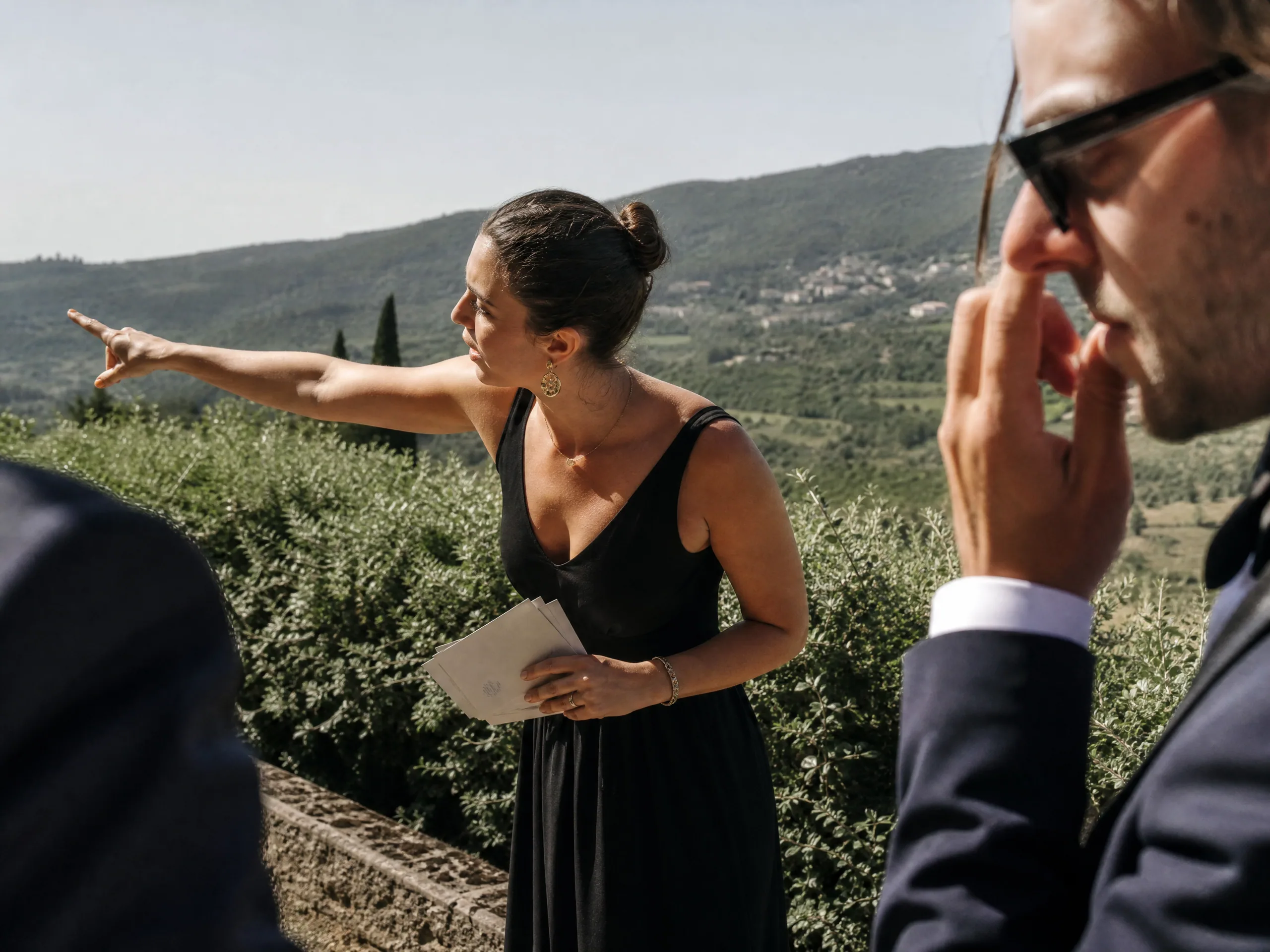
Name ushers and give them one job
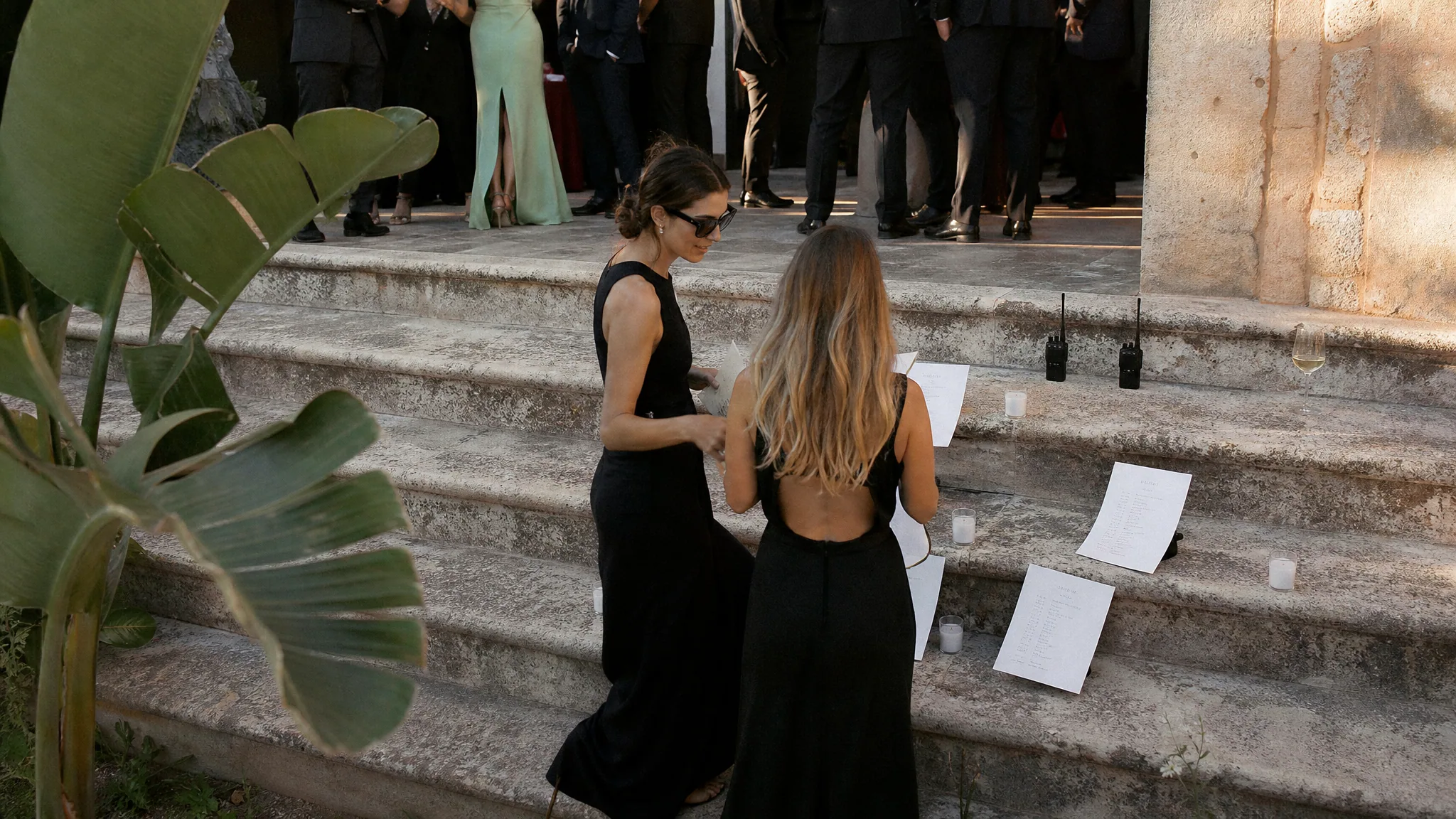
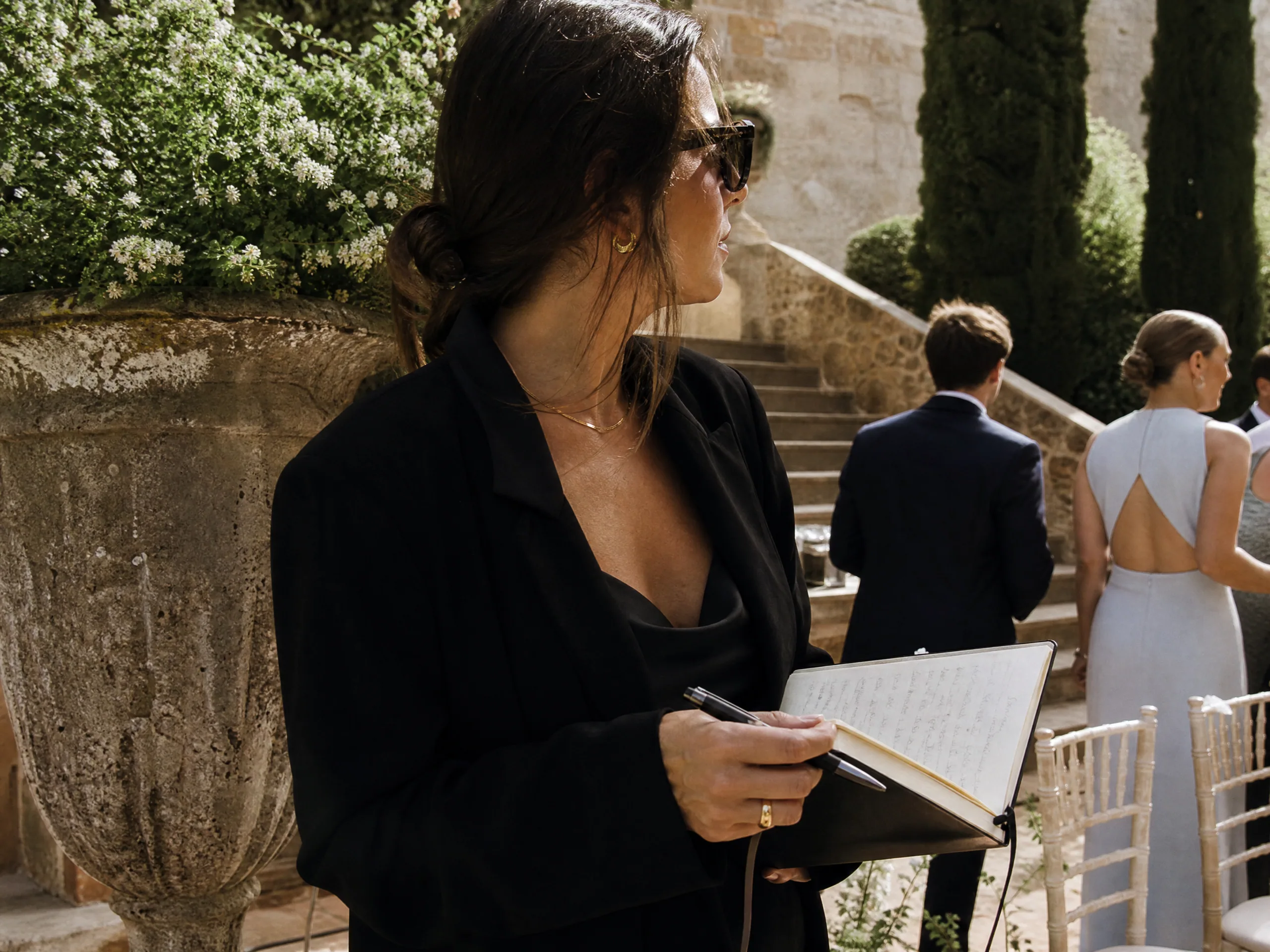
Assign two to four ushers who arrive early, know the couple’s families by sight or list, and have a single mandate: seat people calmly before the processional cue. Do not ask ushers to also manage shuttles, gifts, or photography. Give them a printed reserved-row map, a short VIP list, and a WhatsApp ping when doors (or garden ropes) open. Guests trust a confident welcome more than a vague “sit wherever you like” that collapses the front rows.
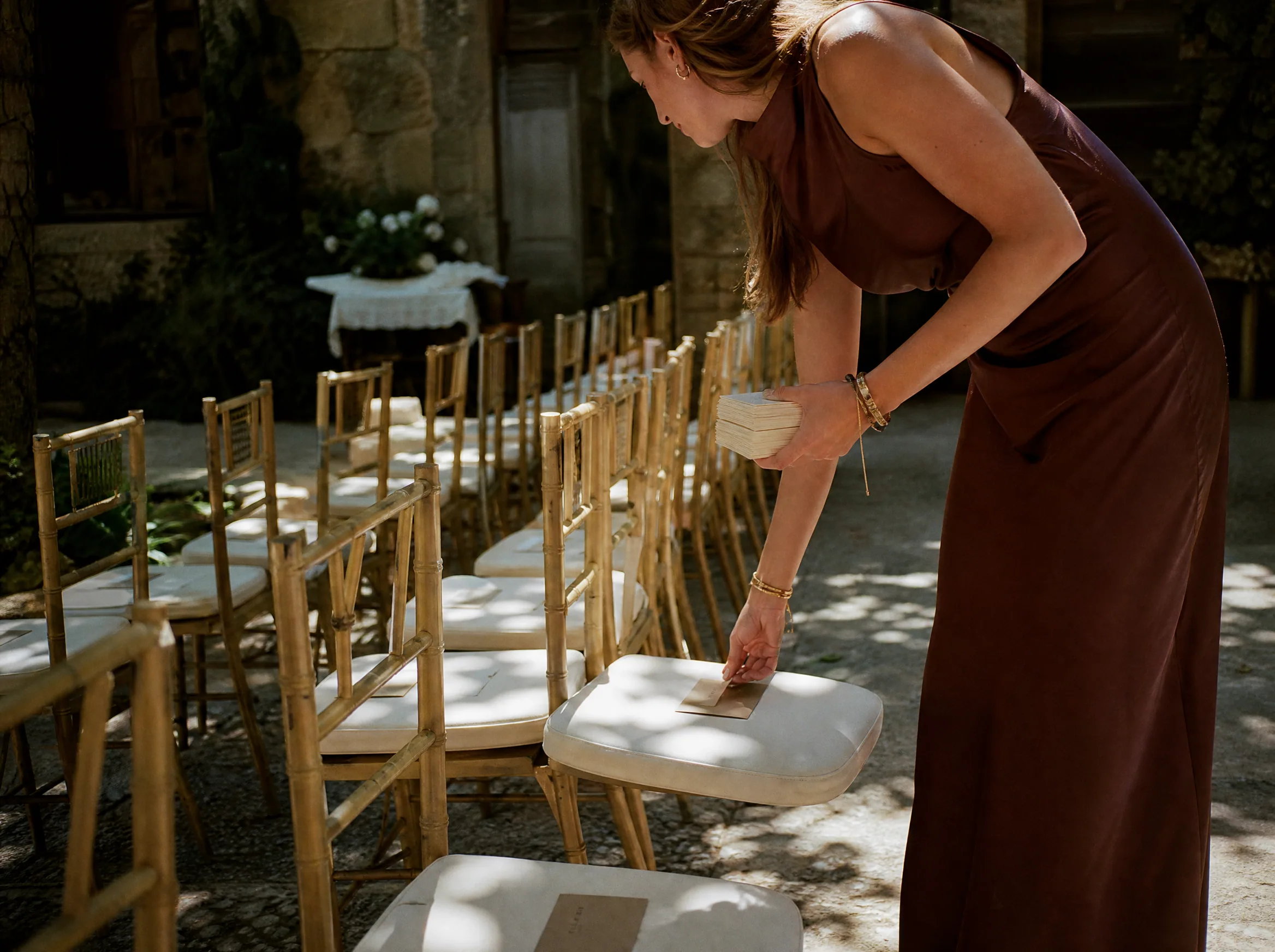
Mark reserved rows before guests arrive
Reserve the first rows for parents, grandparents, siblings, and anyone who must be on camera or near an aisle for cultural or accessibility reasons. Use discreet reserved cards in Spanish and English, or ribbon and chair signs that read clearly in bright sun. Brief ushers that reserved means reserved—even for close friends who arrive first. Clearing a row mid-processional is far more awkward than a polite redirect at the entrance.
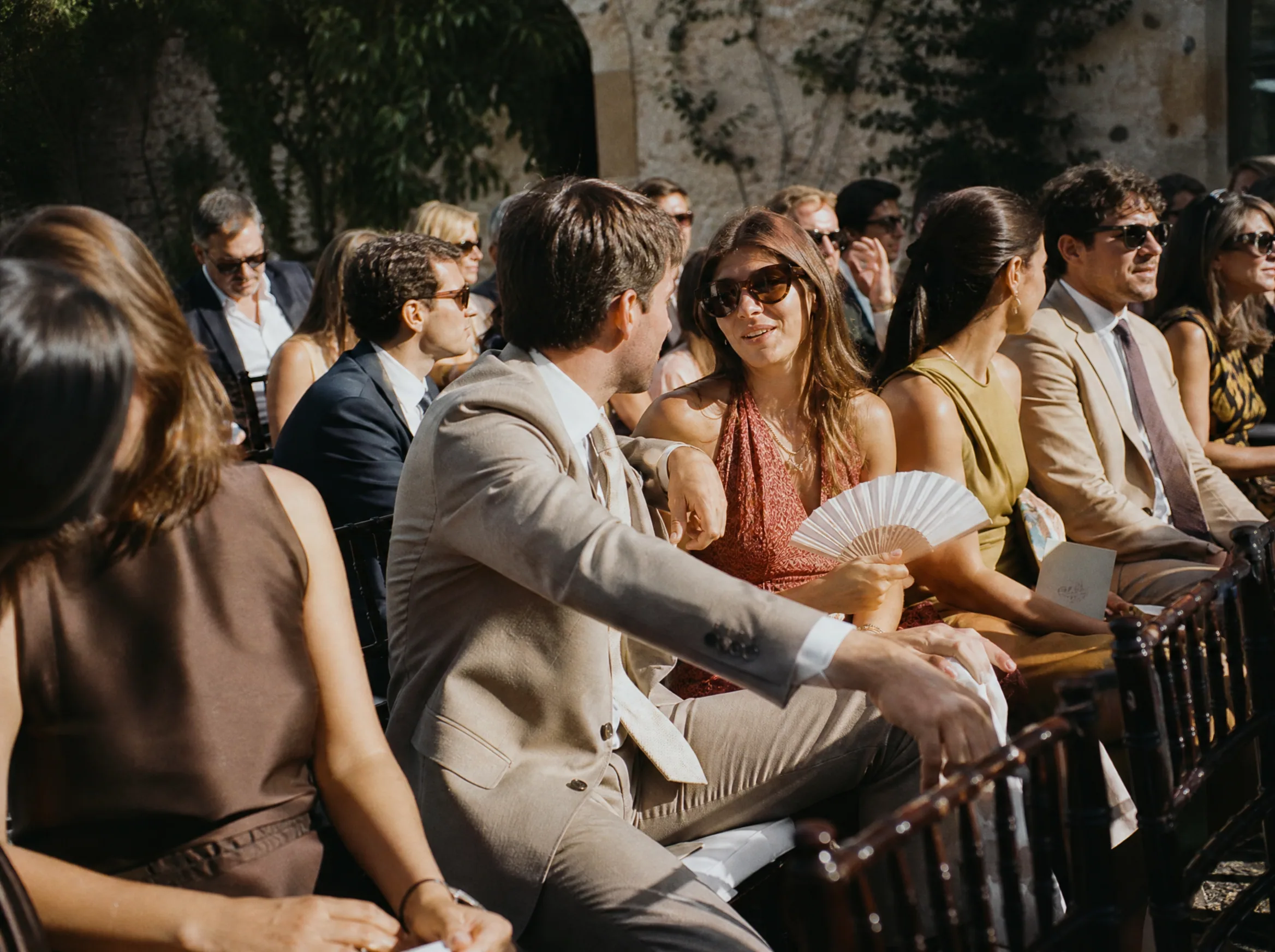
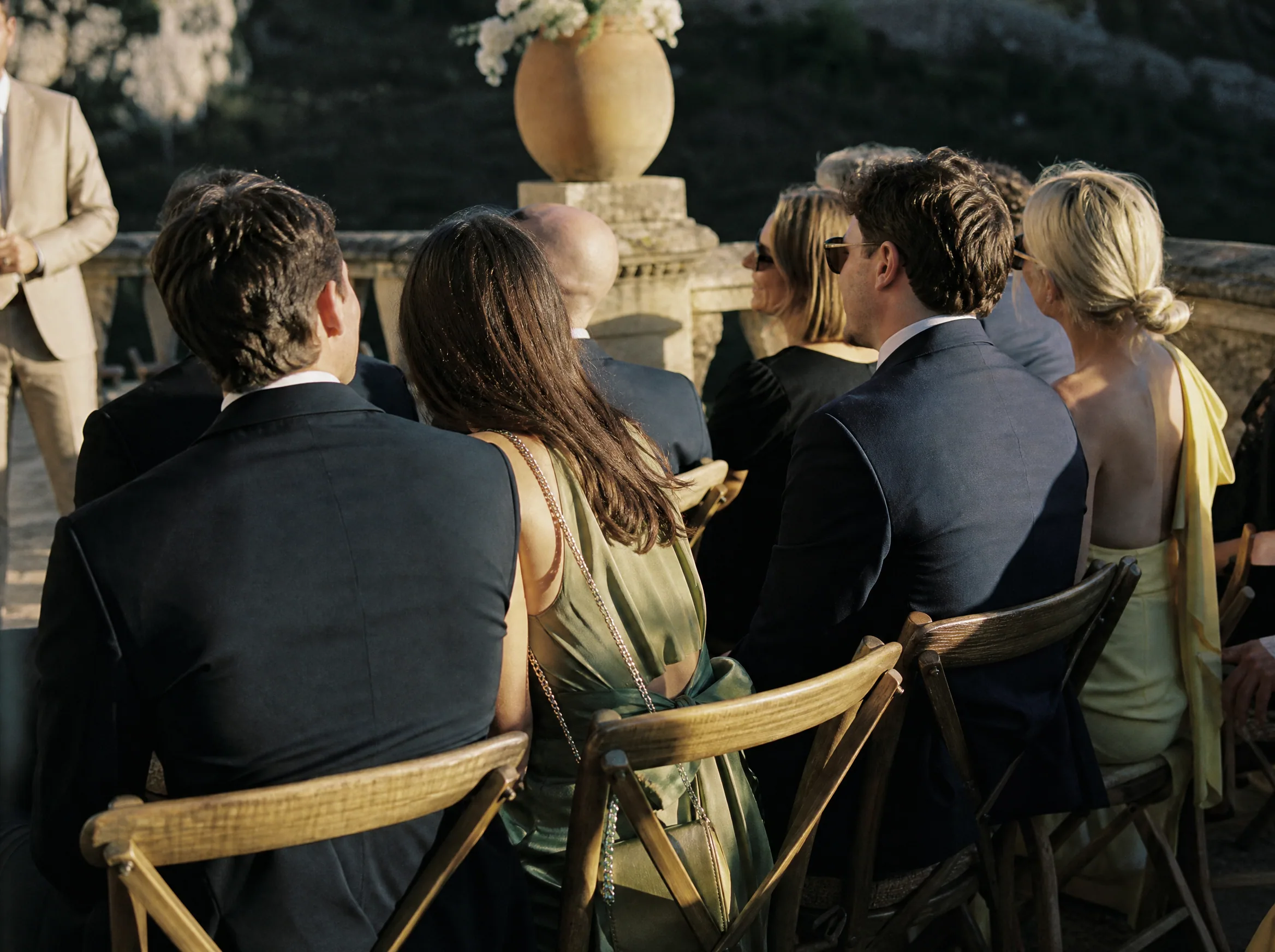
Explain sides, mixed seating, and cultural defaults
International guests often default to “bride’s side / groom’s side” even when the couple wants mixed seating. State the rule in the pocket itinerary: traditional sides, open seating, or mixed with family clusters only in the front. If one partner’s guests vastly outnumber the other’s, say so gently and invite balance toward the center. Clarity here prevents the empty-half look that photographs poorly and feels lonely for the smaller family.
Set a hard seating cutoff before the processional
Publish an arrive-by time that is earlier than the processional start, then enforce a soft close: once music or the first party walks, late guests hold at a designated side entrance or rear standing zone. Ushers should not walk late arrivals down the center aisle during vows. Put the cutoff in WhatsApp the night before so hotels and shuttle greeters can nudge stragglers without drama.
Brief aisle etiquette for outdoor and historic floors
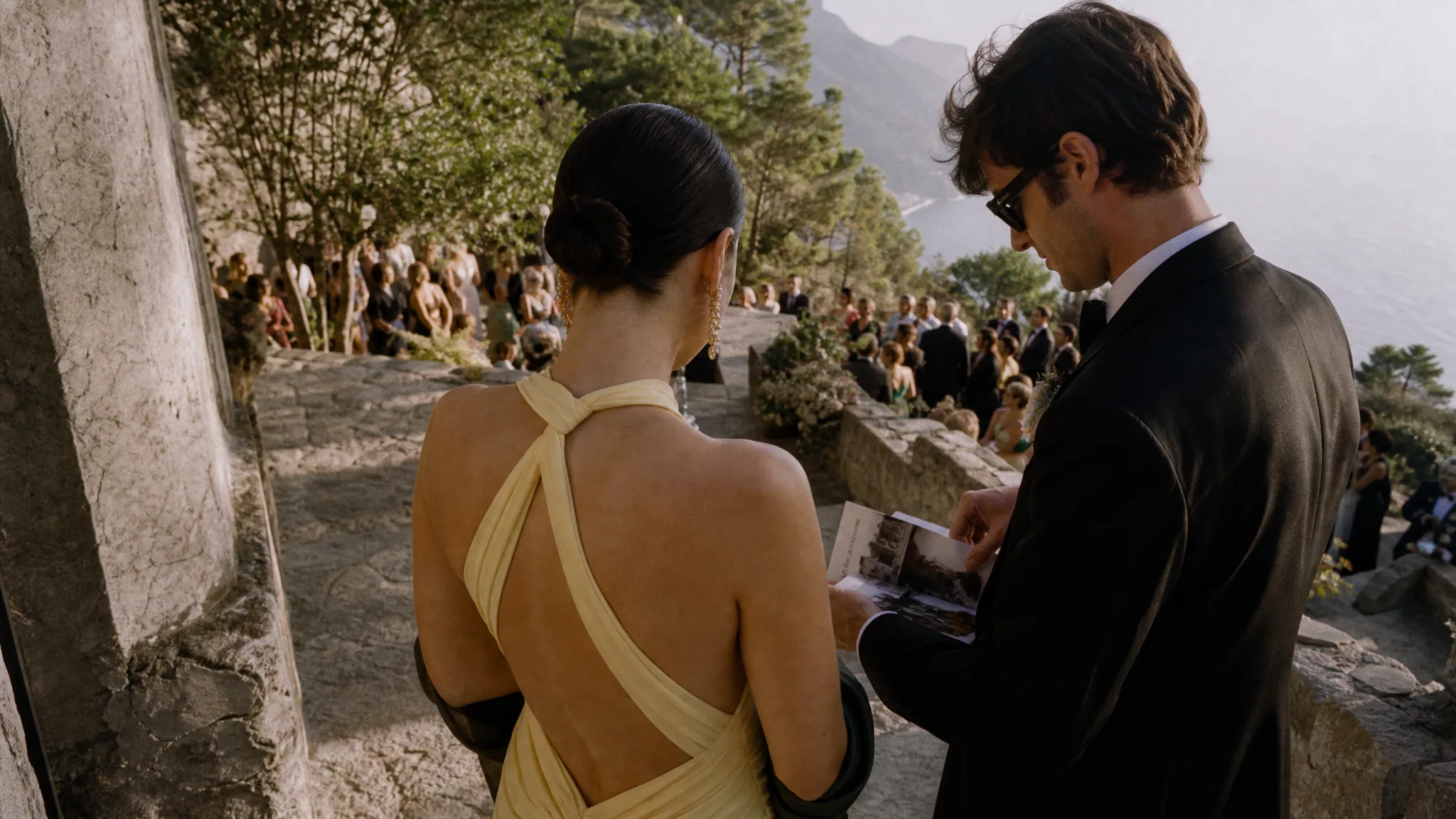
Spanish venues often mean gravel, grass runners, uneven stone, or narrow chapel aisles. Tell guests to keep bags and programs off the aisle path, to step fully into rows, and to leave a clear lane for the processional and for mobility aids. If heels will sink, pair this note with your footwear briefing. Ushers can quietly collect abandoned clutch piles and water bottles that block the photographer’s low angle.
Plan shade, heat, and accessibility in the seating map
Do not put elders or anyone with mobility needs in the hottest, most distant chairs “because they arrived late.” Pre-assign shaded or aisle-end seats, note step-free routes, and keep a few flexible chairs for last-minute needs. In summer, ushers should offer the cooler side of the lawn first; in cooler months, protect seats from wind corridors. Seating comfort is hospitality—and it keeps guests present for the ceremony instead of scanning for an exit.
Coordinate ushers with photography and music cues
Ushers need the same cue sheet the planner and photographer use: when seating closes, when family is pulled for a final row check, and when the processional music begins. A sixty-second radio or WhatsApp “seating locked” message stops well-meaning relatives from rearranging chairs after the aisle is dressed. Align ushers with the unplugged or phone rule so they can whisper reminders without becoming the ceremony police mid-vows.
Script bilingual welcome lines for ushers
Give ushers three short lines in English and Spanish: welcome, side or open-seating instruction, and where reserved rows begin. They do not need fluent speeches—just enough to seat a mixed guest list without pointing mutely. Print the lines on the back of the seating map. Multilingual confidence at the entrance sets the tone for a weekend where nobody feels like an outsider in the first five minutes.
Close the loop in welcome notes and WhatsApp
Repeat the seating block once in the welcome PDF and once the evening before: arrive-by time, open vs sided seating, reserved-row note, late-arrival holding point, and who the ushers are (first names are enough). Pin the message. When ushers confirm rows are settled, a single “ceremony seating is complete” update lets the couple and photographer start the processional without guessing whether Aunt María is still looking for a chair.