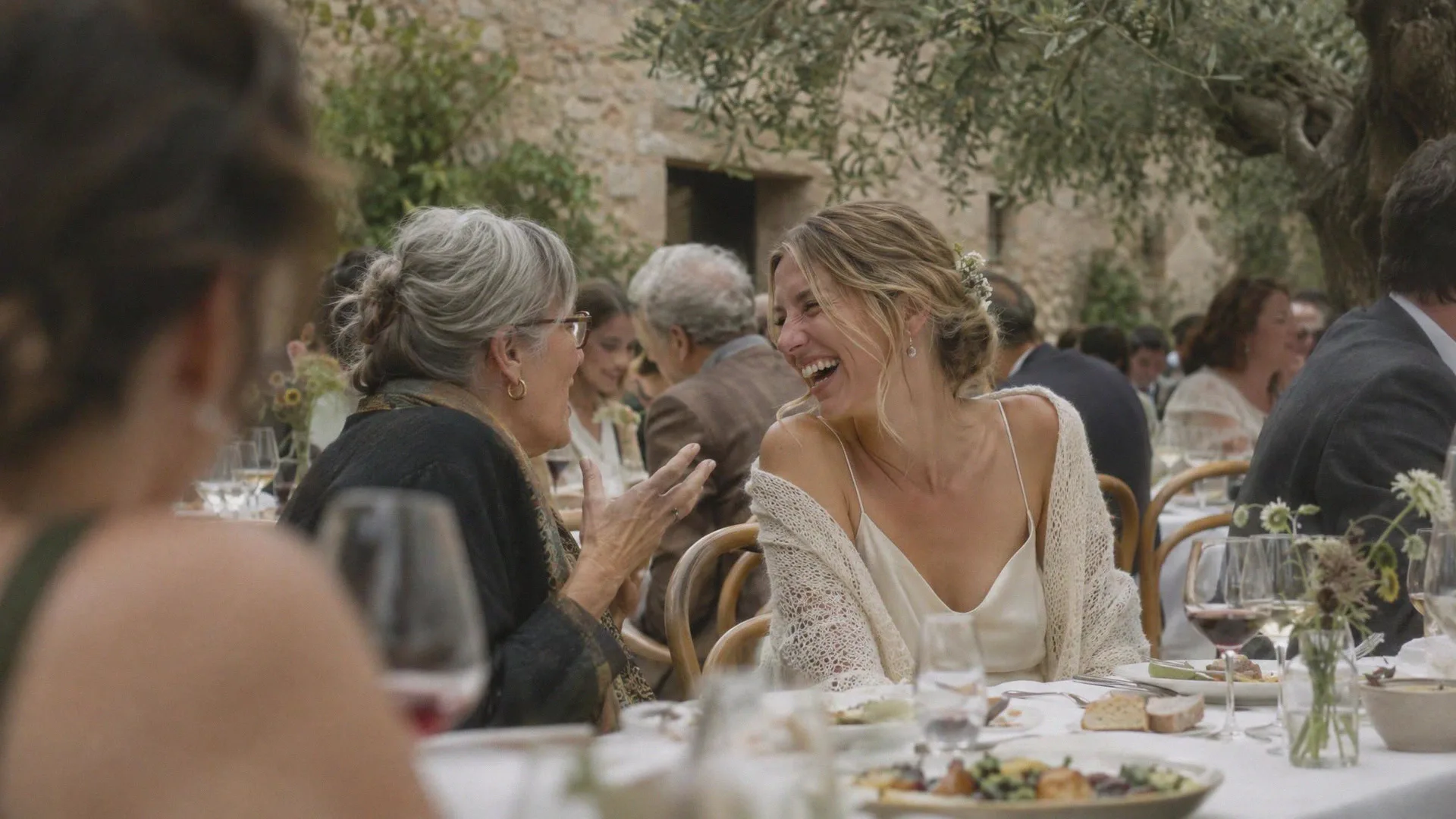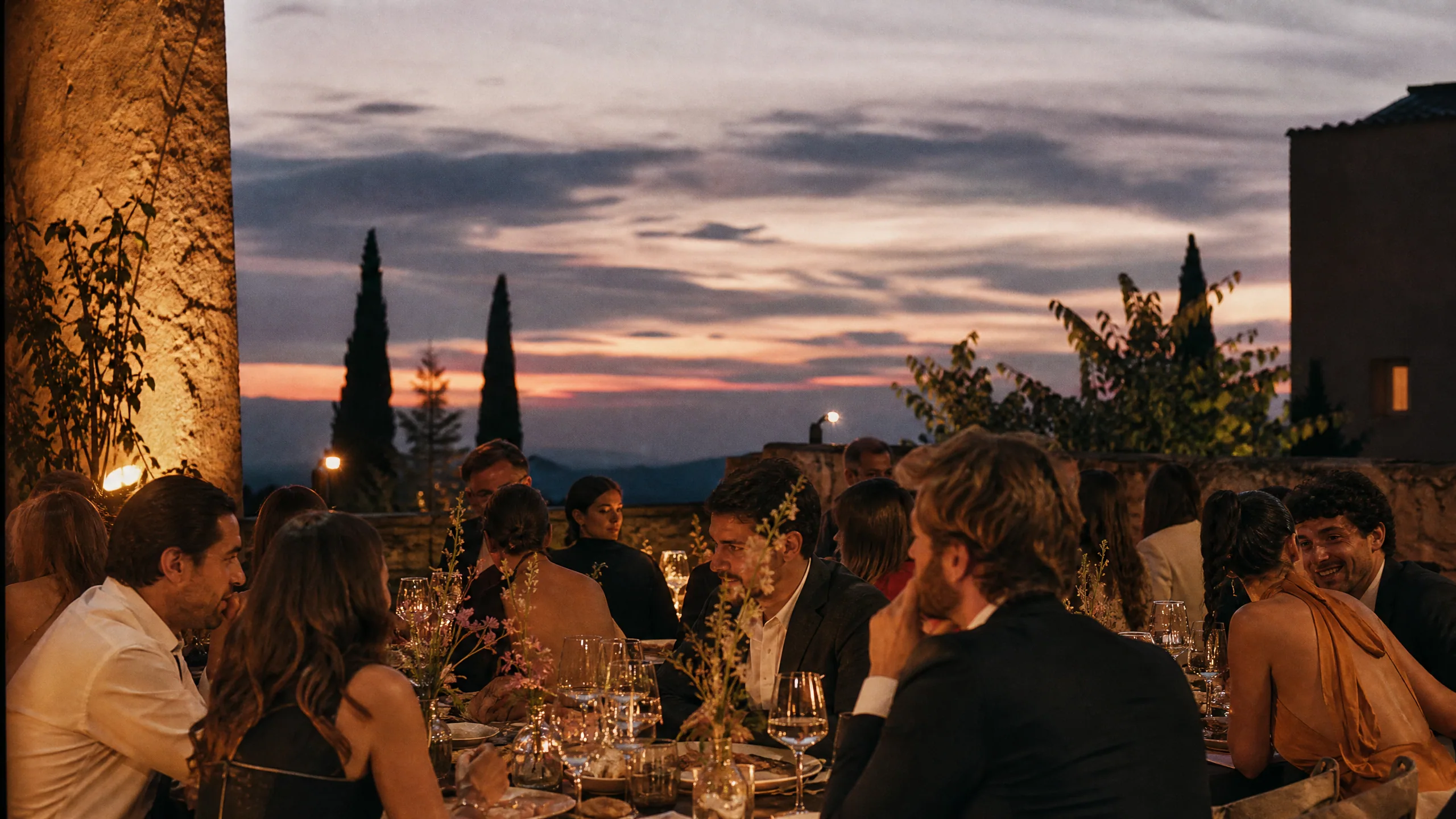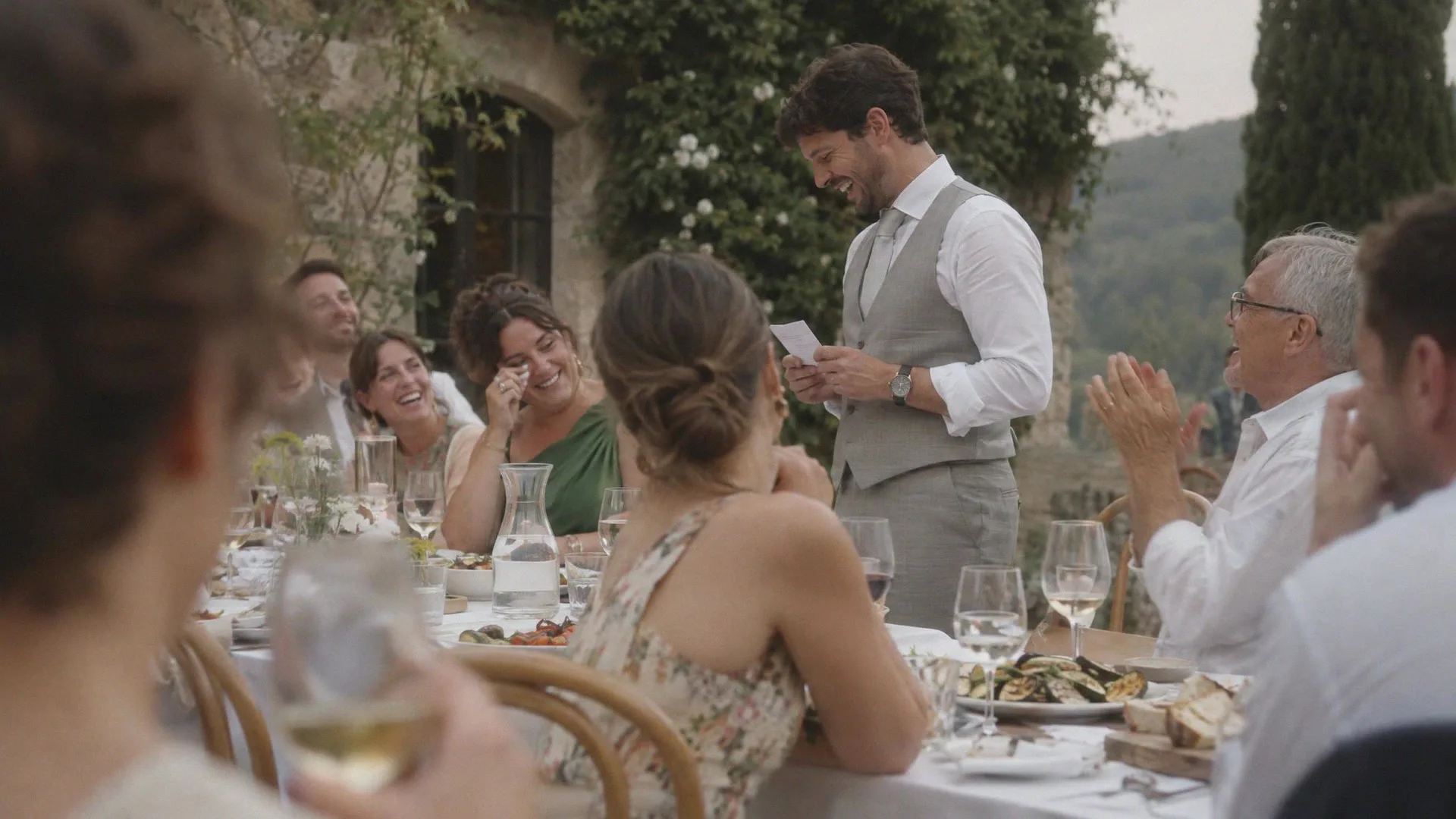
Ask people about the best wedding they have been to and you rarely hear about the centrepieces. You hear that the food was great and kept coming, that there was shade during the ceremony, that the speeches were short and funny, and that everyone danced until late. Ask about the worst one and the answers are just as practical: a long wait with nothing to eat, a hot ceremony with no water, a bus that never came.
A recent planning thread asked exactly this question: what made a wedding feel worth it from the guest's chair? The answers piled up quickly, and the list was surprisingly short. Generous food and drink. Enough seats. Shade outdoors. Speeches that end before people check their phones. Partners seated together. Time to talk and dance instead of a packed programme of activities. Almost nobody mentioned favours, signage or the colour of the napkins.
For a destination wedding in Spain that list matters even more, because your guests have spent money and holiday days to be there. Here is how to turn it into decisions, with the Spanish details that guides written for other countries tend to miss.
Food: nobody should feel hungry at any point
The single most repeated piece of advice was about food, and it is the easiest thing to get wrong in Spain, because the day runs later than many international guests expect. A typical schedule might put the ceremony at 18:30, the aperitivo at 19:15 and dinner at 21:00 or later. For a guest who ate lunch at noon on a plane, that is a long stretch.
Some simple fixes:
- Make the aperitivo a real meal. In Spain the cocktail hour is often the best part of the menu: jamón carved on the spot, croquetas, small plates of seafood, local cheese. Ask the caterer for more stations and fewer tiny canapés, and plan it for at least an hour.
- Tell guests what time dinner is. Put it in the welcome note or on your wedding website, so nobody arrives on an empty stomach expecting food at 19:00.
- Plan late-night food. After midnight a tray of bocadillos or a churros station gets more compliments than any dessert table.
- Feed yourselves too. Couples who skip dinner while greeting tables regret it. Ask the venue to set two plates aside for you.
Shade, water and somewhere to sit
From June to September an outdoor ceremony in Spain at 18:00 can still be well over 30 °C. Guests in suits and heels will forgive almost anything except standing in full sun for forty minutes.
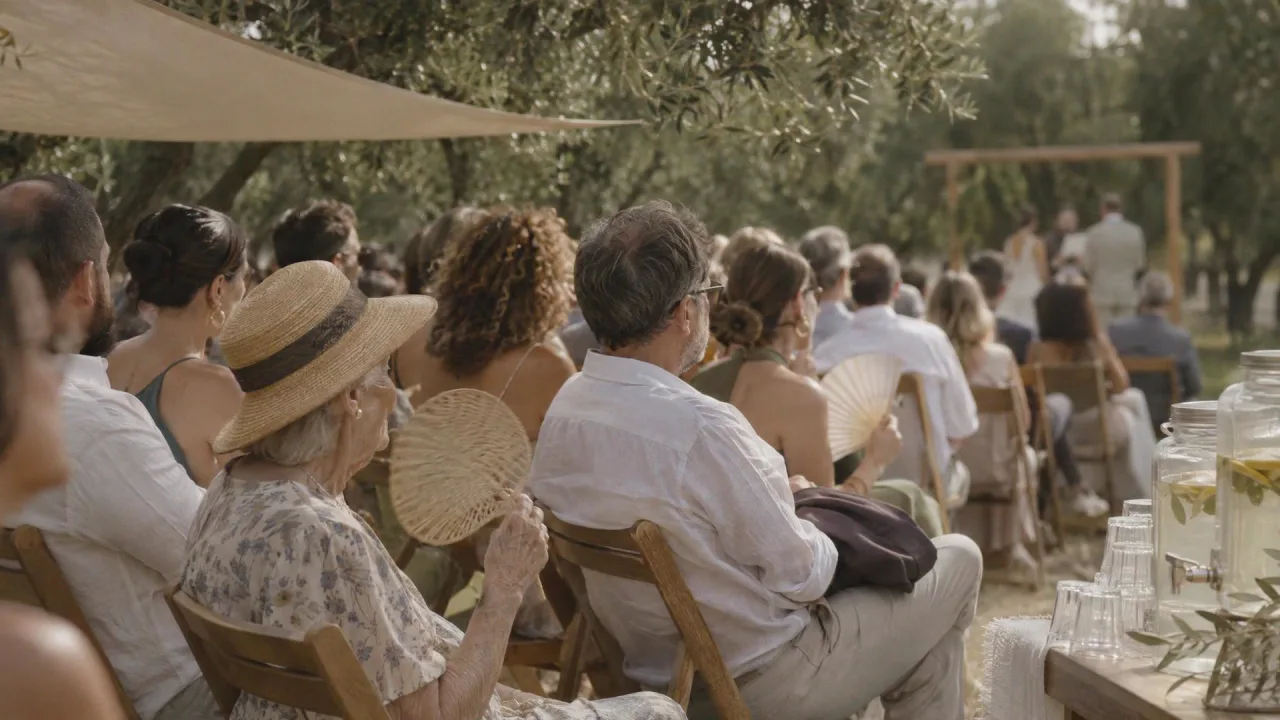
- Choose a ceremony spot with natural shade, or rent sail shades for the back rows.
- Put a water station with glasses at the entrance to the ceremony, plus fans on the chairs. Simple woven fans look good and people take them home.
- Keep the ceremony itself under thirty minutes if it is outdoors in summer.
- Make sure there are enough chairs at the aperitivo for older guests. A standing-only cocktail hour is tiring after a long day of travel.
Our article on timeline buffers for the Spanish summer heat goes through ceremony times month by month.
Shade helps the film as well. Under open shade faces look natural, nobody squints, and the guests' reactions are visible instead of hidden behind sunglasses.
Short speeches, placed well
Long speeches came up again and again as the thing guests dread. The fix is not to cancel them but to shape them:
- Limit the number of speakers to three or four.
- Give each speaker a soft time limit of three to five minutes, and tell them in advance.
- Schedule speeches between courses rather than all at once before the main course, when everyone is hungry.
- If half your guests speak English and half Spanish, ask speakers to add a few lines in the other language or print a short translation. Guests who understand nothing for twenty minutes will not remember a word.
Short speeches are also the ones that work best in a wedding film. Two minutes of a father's toast with real laughter cuts beautifully; fifteen minutes of inside jokes rarely makes the edit.
Clear logistics beat clever extras
Several guests said that confusion ruined the mood more than any detail of the décor. In Spain the typical weak spots are transport and timing:
- Transport. Many fincas and masias are outside towns and taxis are hard to find after midnight. Book a shuttle with fixed return times (for example 00:30, 02:00 and the last one at the end of the party) and share the schedule.
- One page with everything. Addresses, times, dress code, what the weather will be like at night, where to park. Our itinerary templates for international guests give you a format.
- Not too many events. A welcome drink, the wedding and maybe a relaxed brunch is plenty. Guests who flew in want time to see the town, swim or sleep. If you are deciding between formats, read welcome party vs rehearsal dinner.
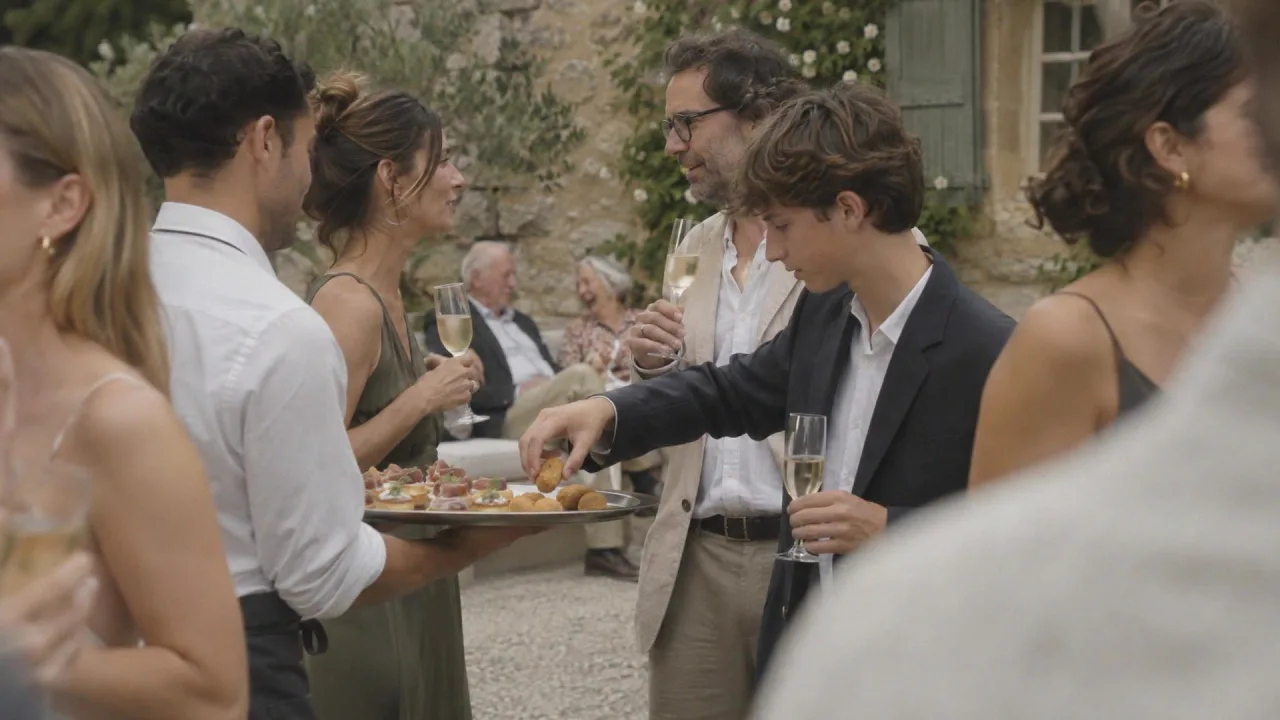
Small gestures guests do notice
The thread also made clear that guests remember being thanked. Not with expensive favours, but with gestures that show you noticed the effort:
- A short handwritten note in each room or at each seat.
- Going table to table during dinner, even for a minute.
- Seating couples together, and not splitting the wedding party from their partners at a separate head table.
- Thinking of families: a quiet room for young children, or a babysitter for the evening.
What guests forget
Being honest about this saves money and stress. In the thread, the items people barely noticed included personalised favours, elaborate signage, printed programmes, custom cocktail napkins and decorations beyond the main tables. That does not mean you should skip anything you love. It means that if the budget is tight, this is where to cut, and food, drink, comfort and transport are where to keep spending.
Music and the dance floor
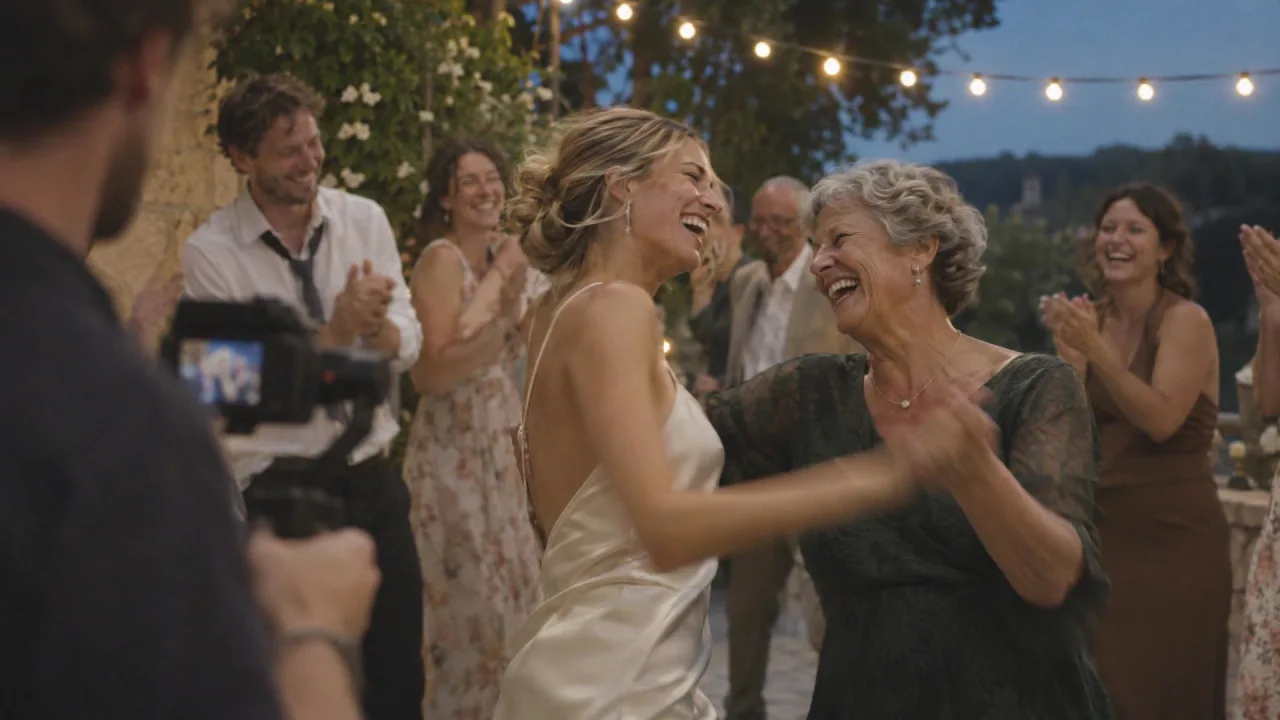
The weddings people talk about years later usually had a full dance floor. A few things make that more likely: start the dancing straight after the first dance instead of leaving a long gap; ask the DJ or band to read the room rather than follow a fixed list; and give older relatives a reason to join, such as a song from their generation early in the night. In Spain, parties often go on until 3:00 or later, so check the venue's music curfew before you sign.
Why this matters for your film
A wedding film is, in the end, a record of how people felt. When guests are fed, comfortable and relaxed, it shows: the laughter at the speeches is real, the dance floor is full, and nobody is fanning themselves in the background of the vows. When the day is rushed and guests are tired, no amount of editing hides it.
That is why, when couples ask us how to get a better film, we often talk about the guest experience first. A good timeline, enough shade and a dinner that arrives on time give your videographer the moments worth keeping. A documentary approach then captures them as they happen, without staging.
If you are starting to plan a wedding in Spain, our guide to wedding videographer costs in Spain explains what films cost (films from €2,900) and what affects the price. And if you would like to talk through your day, send us a message with your date and venue.