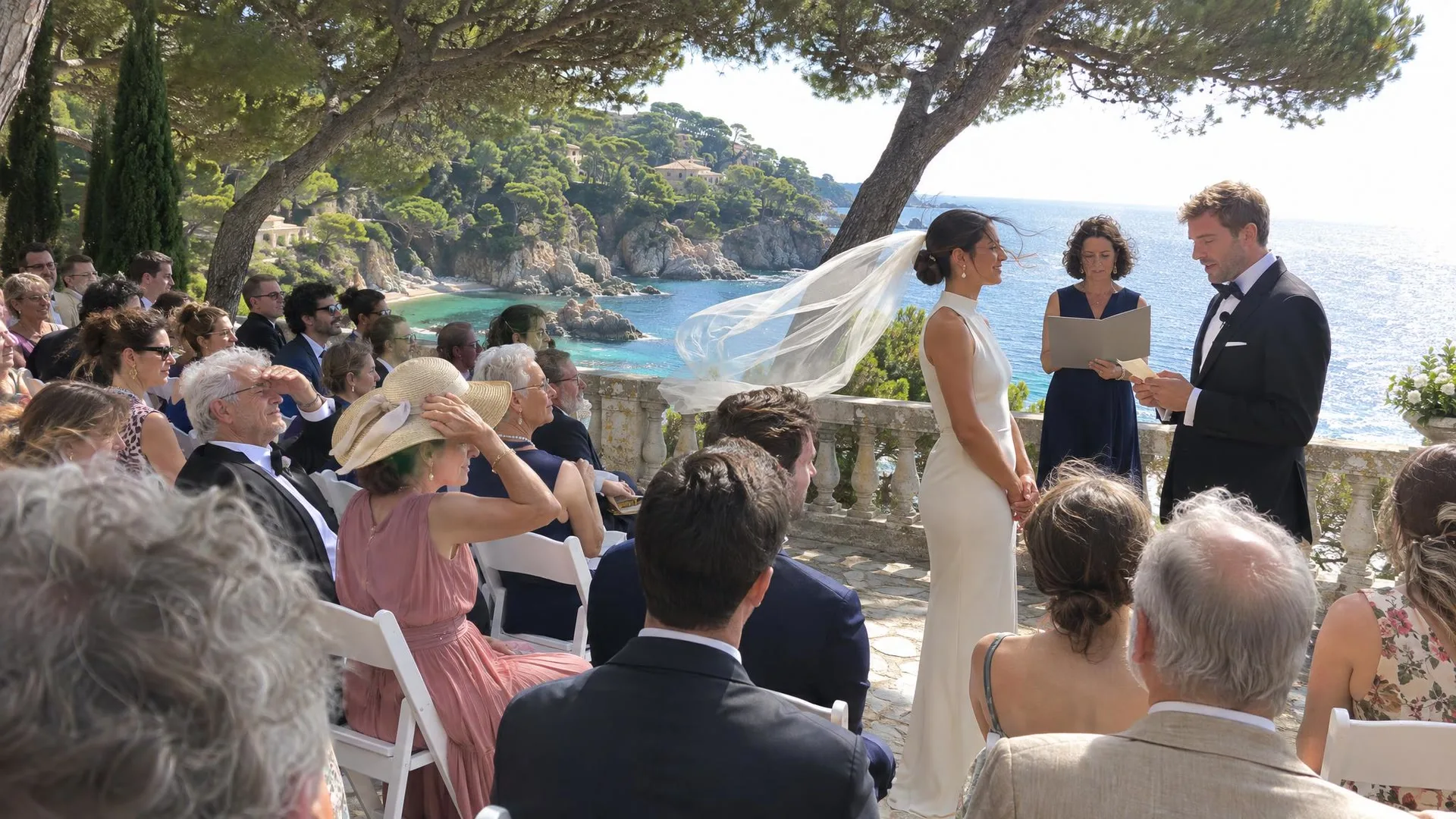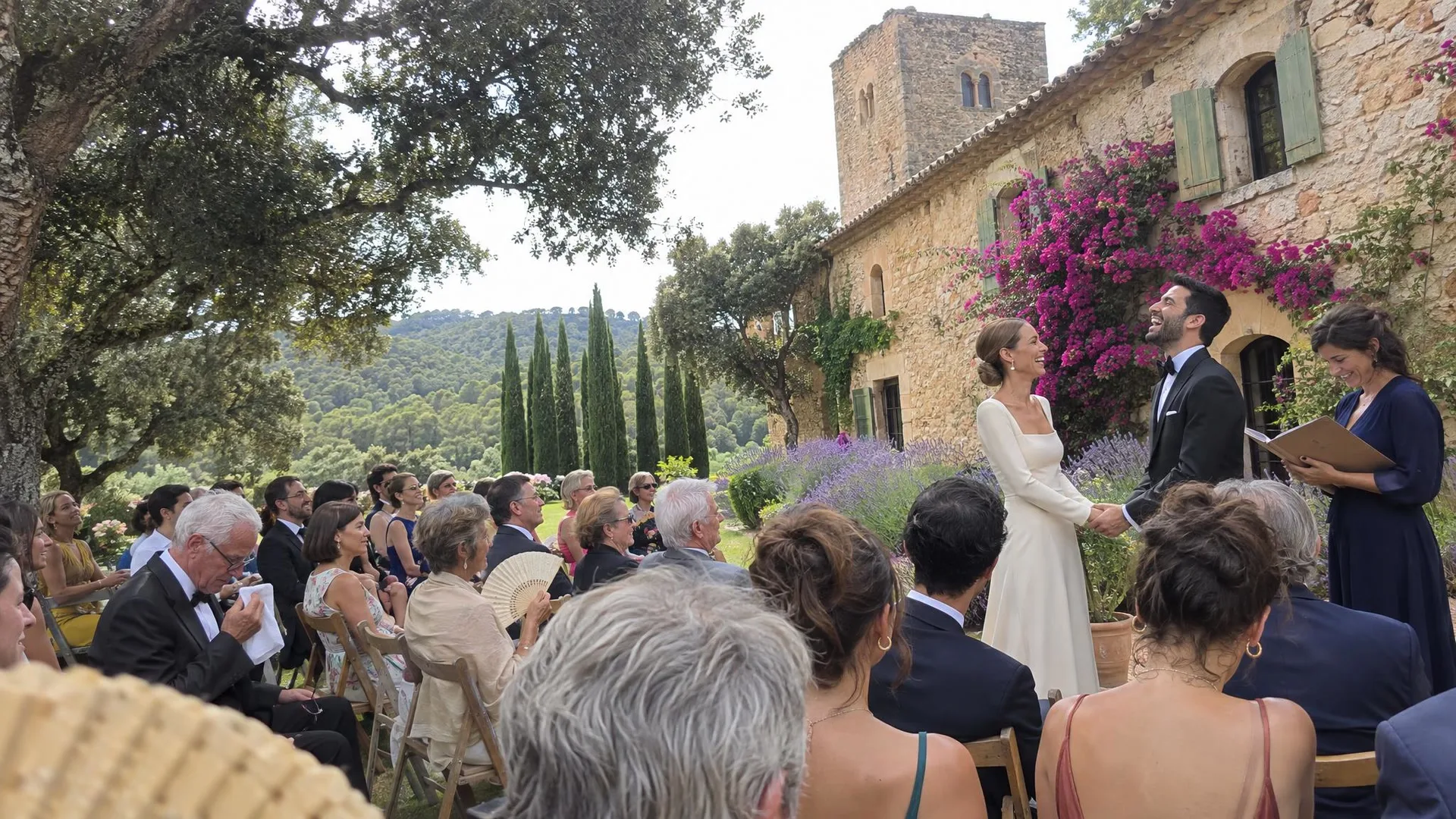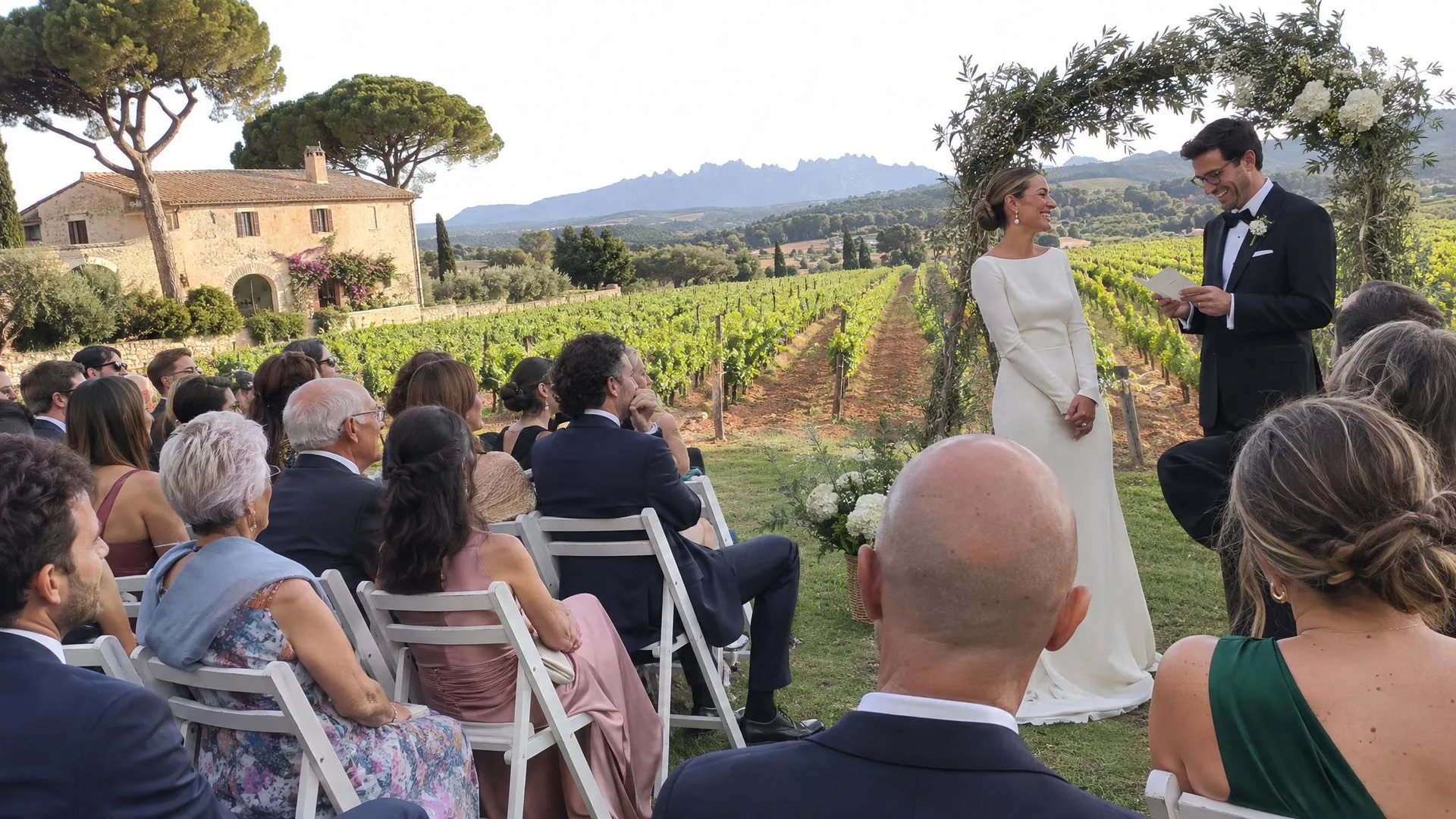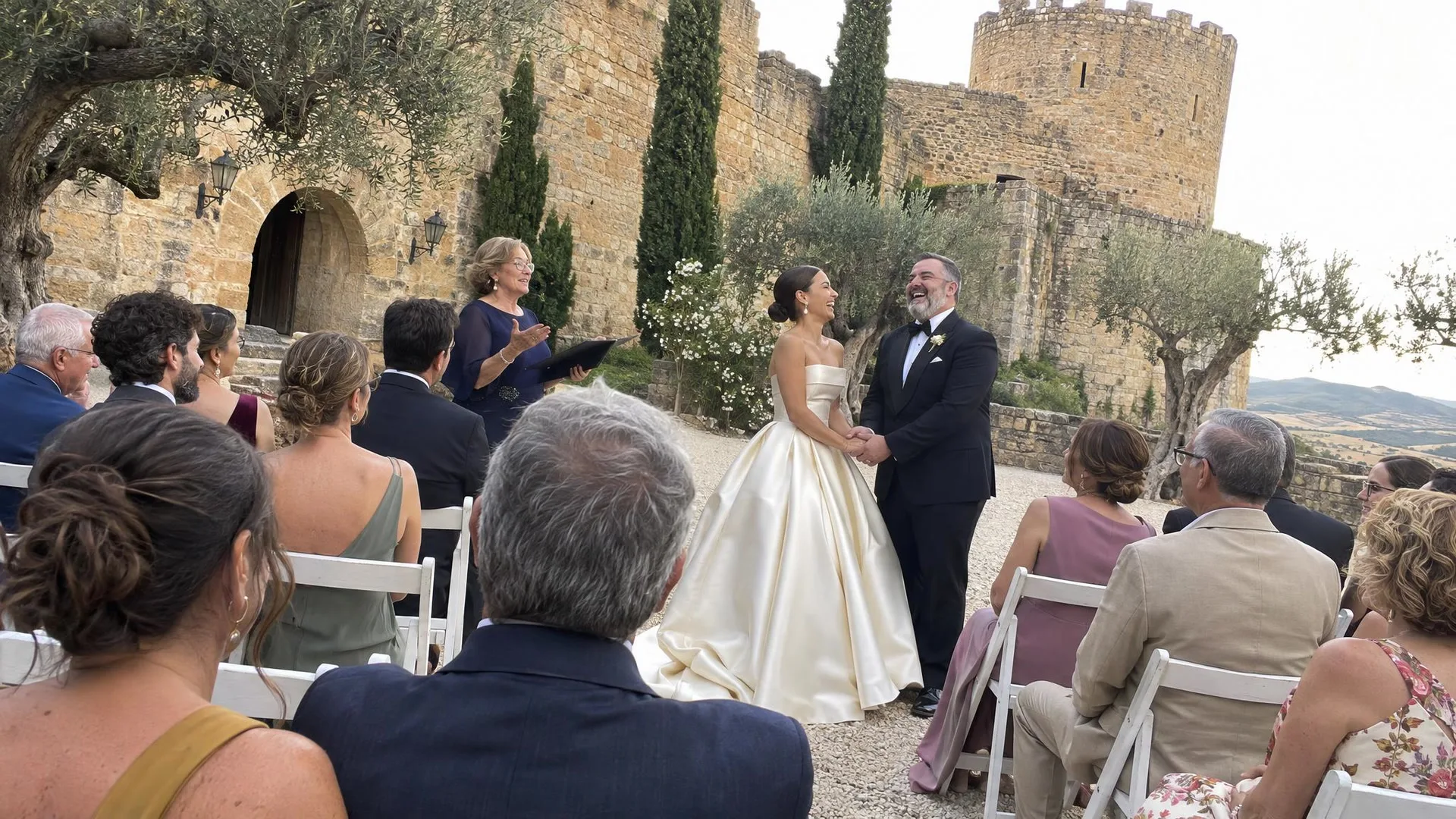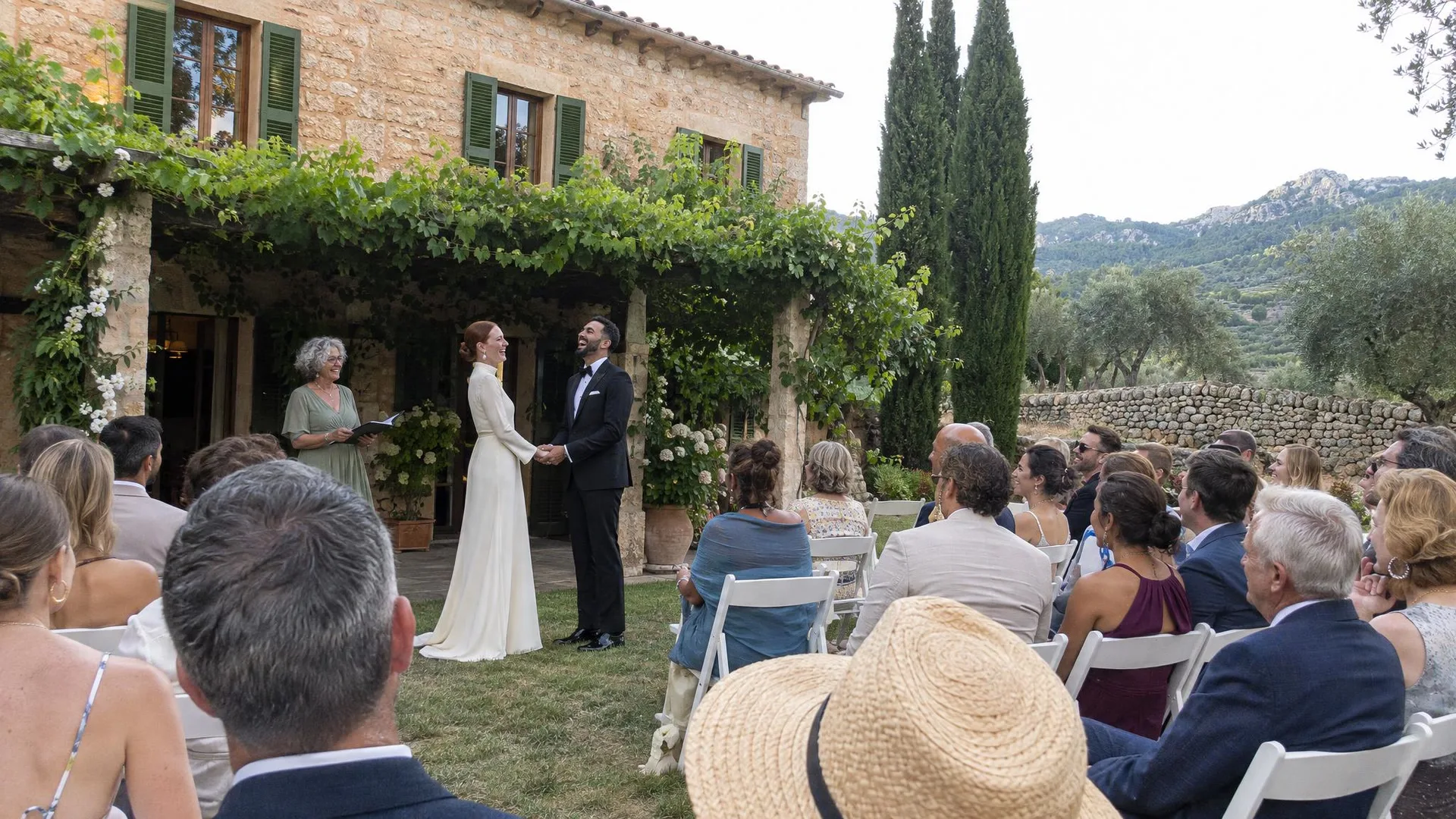
A villa wedding in Spain is the version of a destination wedding many couples picture first: one big stone house, a pool, olive trees, your favourite people under the same roof for three or four days, and a ceremony in the garden. No other weddings, no strict hotel timeline, nobody asking you to leave at midnight. Done well, it is one of the most relaxed ways to get married here. Done casually, it is the wedding where the police turn up at eleven and half your guests are sleeping in a hotel nobody organised.
The difference is almost never the house itself. It is the paperwork, the neighbours and the logistics you agreed to before you saw the place.
What the forums keep telling couples
A thread from a group of friends heading to a wedding asked a simple question: should a shared villa be split by room or by person? It drew around 150 replies and an unusually clear answer. Almost everyone said per person. Couples do not take up less space at the pool or the dinner table, and the single friend should not pay extra simply because she is not bringing anyone. Several people added the point that matters most for couples: this should be agreed before anyone books, not argued about in a group chat afterwards.
In a destination wedding forum, a couple who married at a villa near Barcelona with 33 guests staying on site rated it ten out of ten. Their one regret was booking the venue too quickly, before they had a local planner who knew the options. A former planner in another thread gave advice that comes up again and again: if the house is the venue, keep the people you trust most in that house and put everyone else in a second property or hotel nearby.
And in threads about holiday rentals as wedding venues, the same warnings repeat. Airbnb has banned parties and events on its listings since 2020 and made the ban permanent in 2022, so an owner's friendly "yes" on that platform does not protect you. A house that is not set up for events means bringing in everything: tables, chairs, lighting, a kitchen the caterer can actually work in, extra toilets. And unlicensed party houses tend to get shut down after complaints from neighbours, sometimes in the middle of someone's reception.
Event villa or holiday rental: know which one you are booking
In Spain, the word "villa" covers two very different things.
Event villas and estates. Properties that host weddings as a business. They usually have a dedicated area for the ceremony and dinner, a kitchen or space for caterers, toilets for guests, parking, a list of suppliers they know, and clear rules on music. Gran Villa Rosa near Sitges, for example, presents itself on its own site as a restored 1460 wine castle with 20 en-suite rooms and 45 beds, a chapel, an event hall, and partner hotels nearby for larger groups. That is the kind of property where a wedding is the plan, not a favour.
Holiday rentals. Beautiful houses listed for family holidays. Some owners will allow a small celebration; many cannot, because of the platform's rules, the community rules of the urbanización or the terms of their tourist rental licence. These houses can work for a micro wedding where everyone attending also sleeps there. For sixty guests with a DJ, they are a risk.
Ask the owner one direct question and get the answer in the contract: is this rental contract for a wedding with X guests, with outside suppliers and music until a stated time? If the answer is vague, treat it as a no.
Noise: the Spanish curfew is real
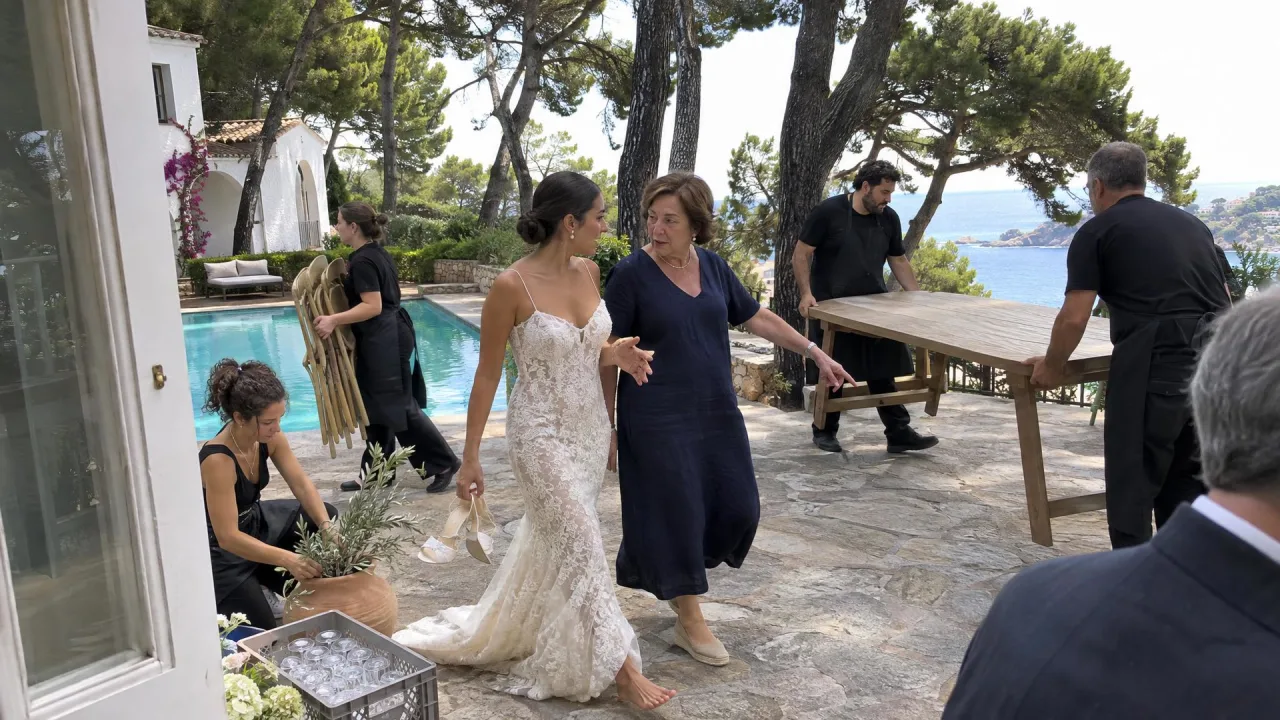
Spain is a late country, and couples often assume a party can run until three in the morning anywhere. Noise limits are set by each town hall, not by the owner, and they apply to private houses too. In residential areas and gated urbanizaciones, outdoor amplified music often has to stop or drop to background level well before midnight. Neighbours call the local police, and fines land on the owner, who passes them on to whoever signed the contract.
What works:
- Ask for the music cut-off in writing, outdoors and indoors, before you pay a deposit.
- Check the distance to the nearest neighbour. An isolated finca in the countryside and a villa in a hillside urbanización are different worlds.
- Plan the evening around the limit. Ceremony late afternoon, dinner outdoors while it is still warm, speeches before the cut-off, then the party moves inside with the doors and shutters closed.
- Keep the ceremony and dinner acoustic if you are close to other houses. A guitar duo at dinner is far less likely to bring a complaint than speakers on the terrace.
Our guide to Spanish quiet hours at villas goes into what guests should know as well.
Who sleeps where, and who pays
A villa that sleeps 20 does not mean a wedding of 20 is simple. Decide early:
- Who stays in the house. Usually the two of you, parents and the people who will help on the day. People who party late and people with small children rarely mix well under one roof.
- Where everyone else goes. A second house or a hotel close by, with transport planned for the late return, not left to taxis that do not exist in the countryside after midnight.
- How costs are shared. If the venue only comes with a full buyout of the rooms, many couples cover those rooms themselves and assign them. If guests contribute, per person is the split most people consider fair, and it should be clear before anyone transfers money.
- Who cleans and cooks. A house with housekeeping and breakfast runs like a small hotel. A house without it turns your bridesmaids into cleaners.
If your shortlist is in Mallorca, our guide to venues with accommodation in Mallorca covers buyouts in more detail.
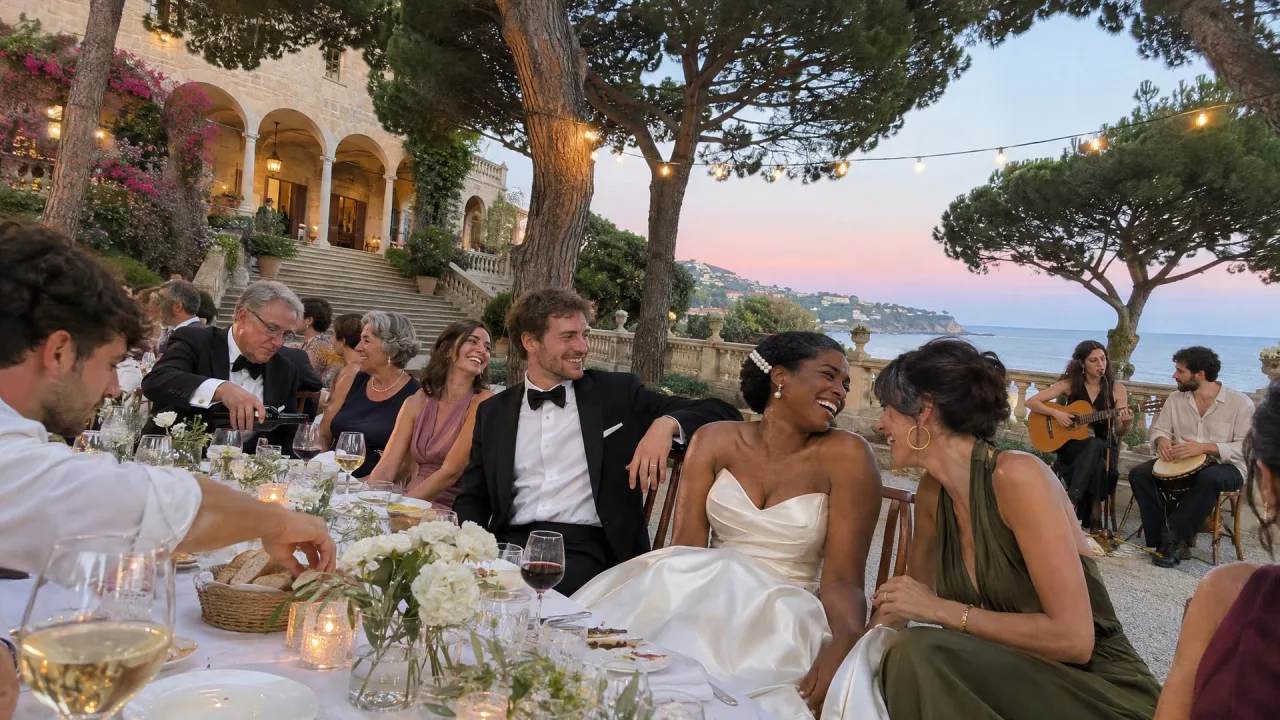
What a private villa needs that a venue already has
At a wedding venue, most of this is included. At a private house, someone has to own it:
- Power for the caterer, the band and the lights, and who supplies a generator if the house cannot cope.
- Toilets: a house with five bathrooms is not ready for eighty guests.
- A rain plan with room for everyone to sit, not just the living room.
- Parking or a shuttle, and an access road a coach can actually use.
- Insurance and a deposit for damage, and who is liable if something breaks.
- A coordinator on the day. Without a venue team, the person answering every supplier's question will otherwise be you.
For the broader shortlist process, see how to choose a wedding venue in Spain, and if you like the rustic feel, our piece on a masia wedding outside Barcelona covers travel time and guest transport.
How a villa wedding looks on film
From behind the camera, a villa gives a film a lot to work with. Because everyone stays together, the real day starts long before the ceremony: breakfast on the terrace, the caterers setting up, someone ironing a shirt by the pool. Documentary and cinematic wedding films near Barcelona and on the islands live on exactly those moments, and a private house gives you plenty of them.
Two practical notes. Light and sound in a house are less predictable than in a venue, so we look at where the ceremony will face at that hour and where the dinner table will stand. And if the party moves indoors for the noise limit, that room needs some light that is not only a ceiling lamp. For vows and speeches we use lapel microphones and a separate audio recorder, which matters even more when you are keeping the music down for the neighbours.
If you are planning a villa wedding near the city, our page for a wedding videographer in Barcelona shows how we work there.
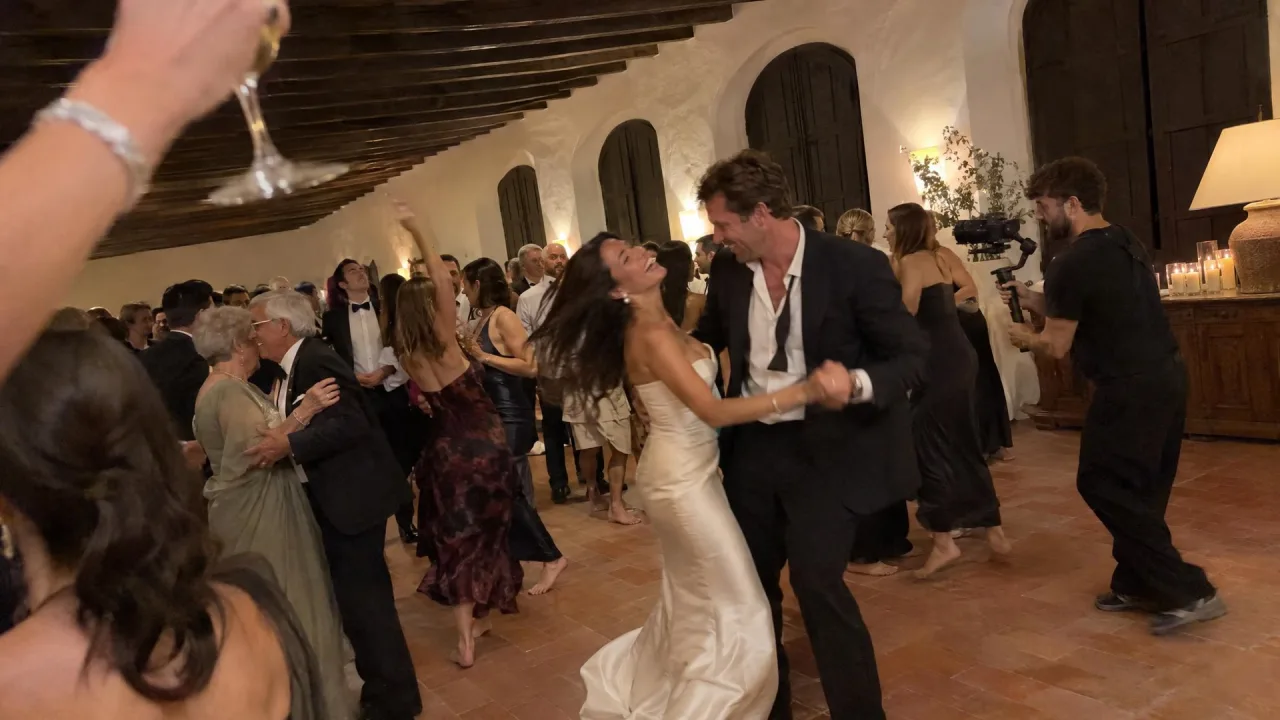
Eight questions to ask before you book a villa
- Does the contract name the wedding, the guest number and outside suppliers?
- What time does outdoor music have to stop, and what about indoors?
- How close is the nearest neighbour, and is the house inside an urbanización with its own rules?
- How many guests can sit for dinner indoors if it rains?
- How many toilets are there, and is extra power available?
- How many people sleep on site, and what is nearby for everyone else?
- Who handles damage, cleaning and the final check-out?
- Which suppliers have worked at the house before?
The short version
A villa wedding in Spain works when you book an event villa, or a house whose owner puts the wedding in writing, and when you plan the evening around the local noise limit instead of hoping nobody complains. Keep your closest people in the house, agree how costs are split before anyone pays, and bring in a coordinator. If you have a villa in mind and want to talk about filming the weekend, send us your date and the house.