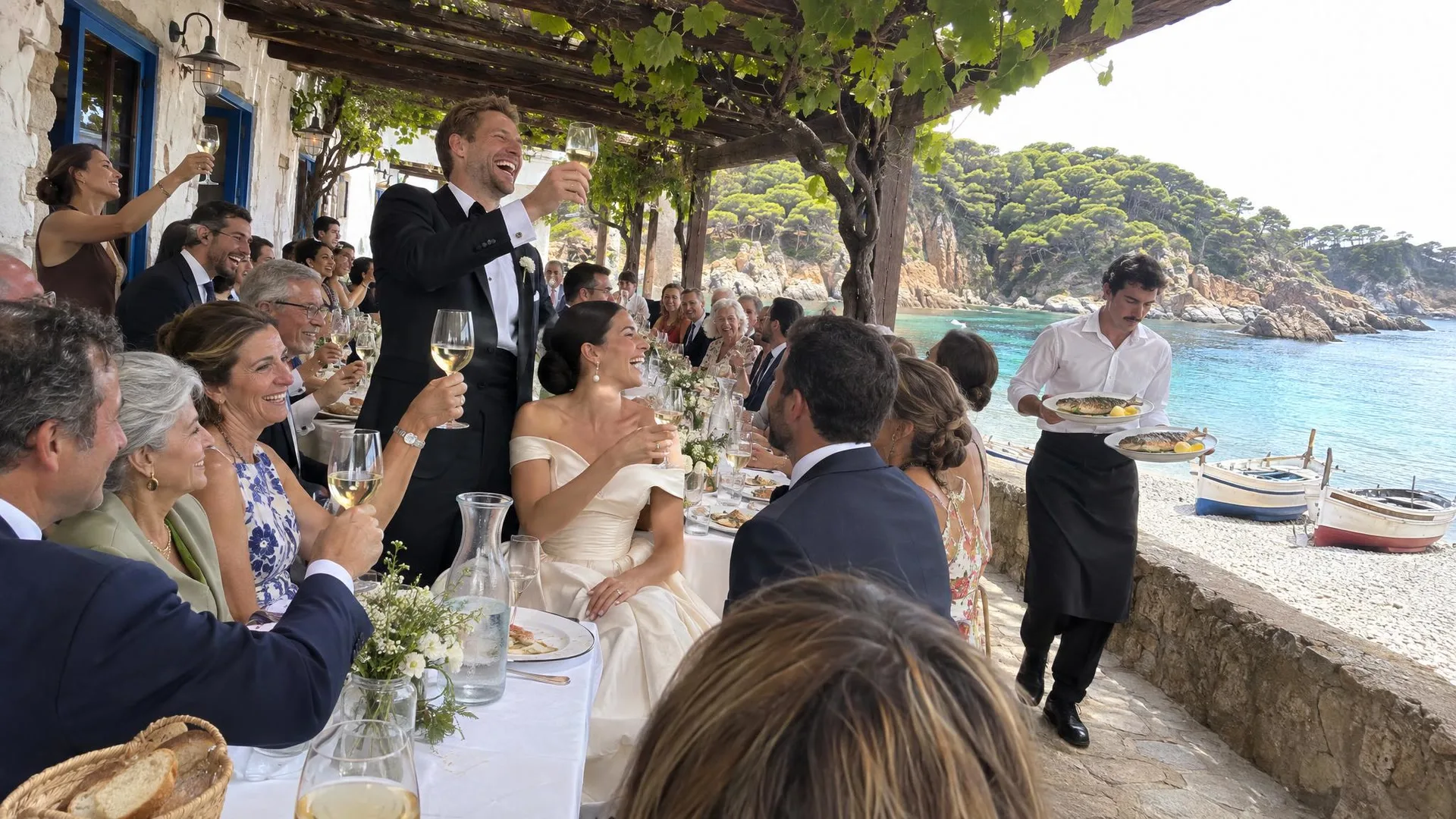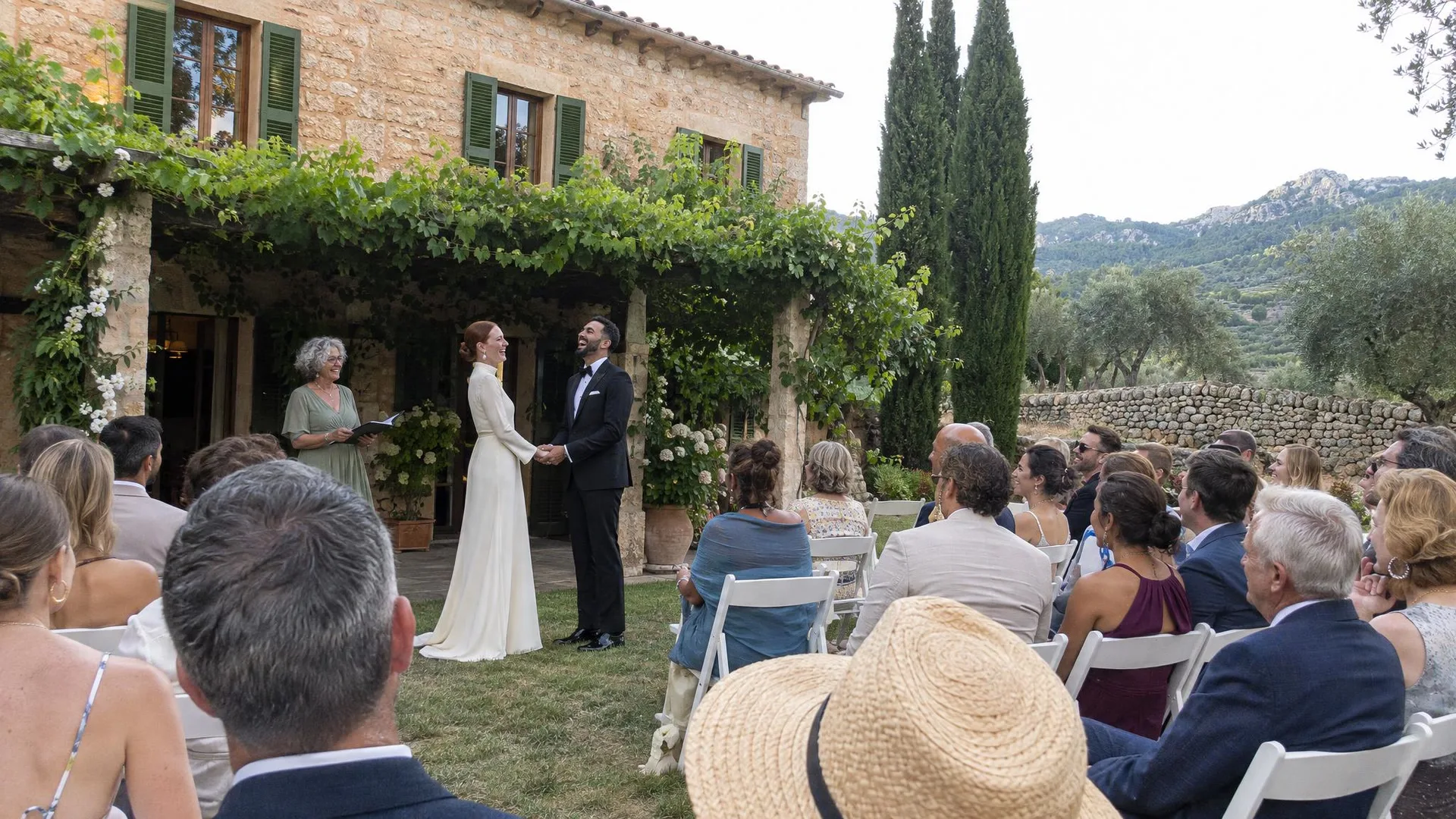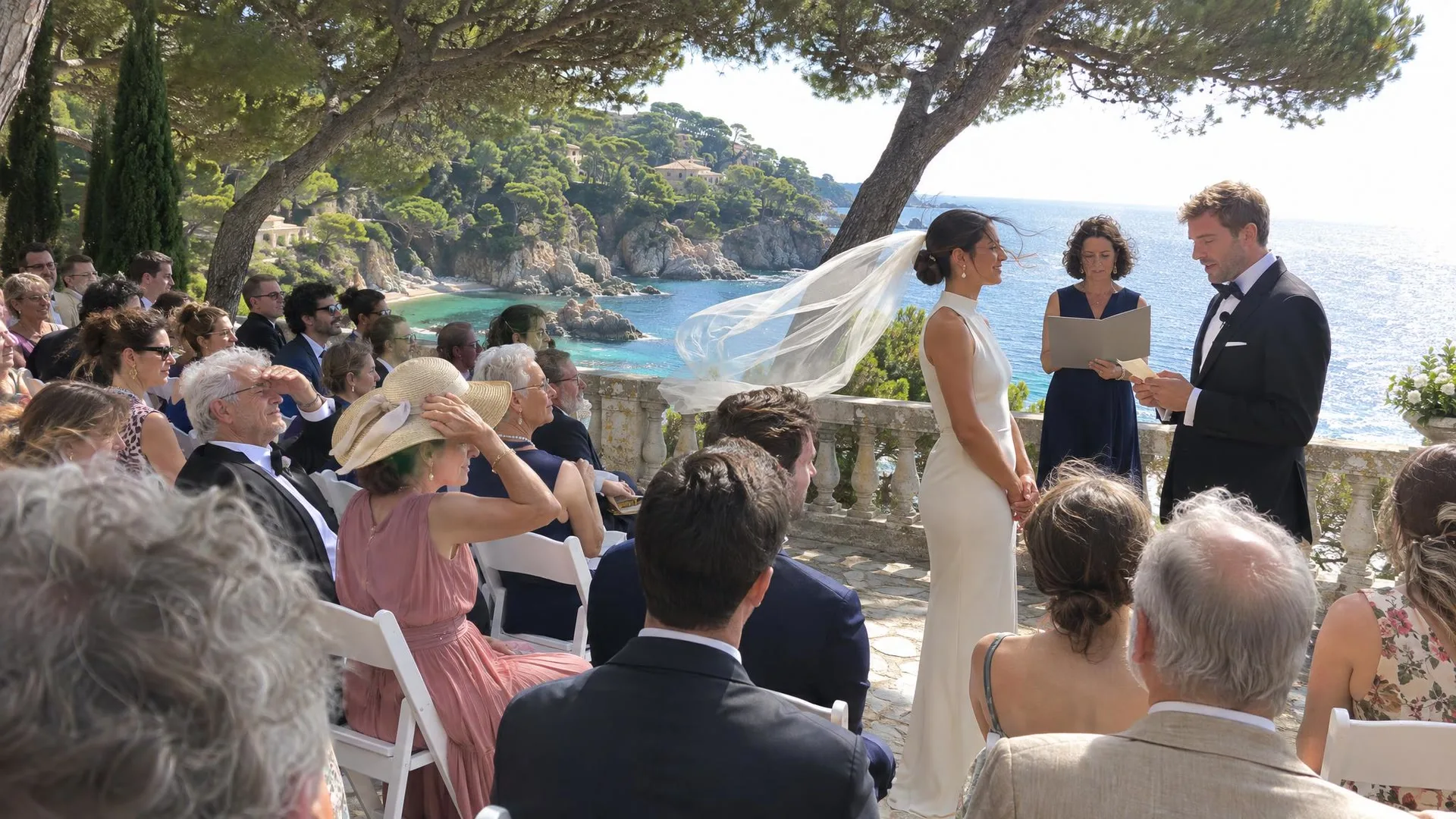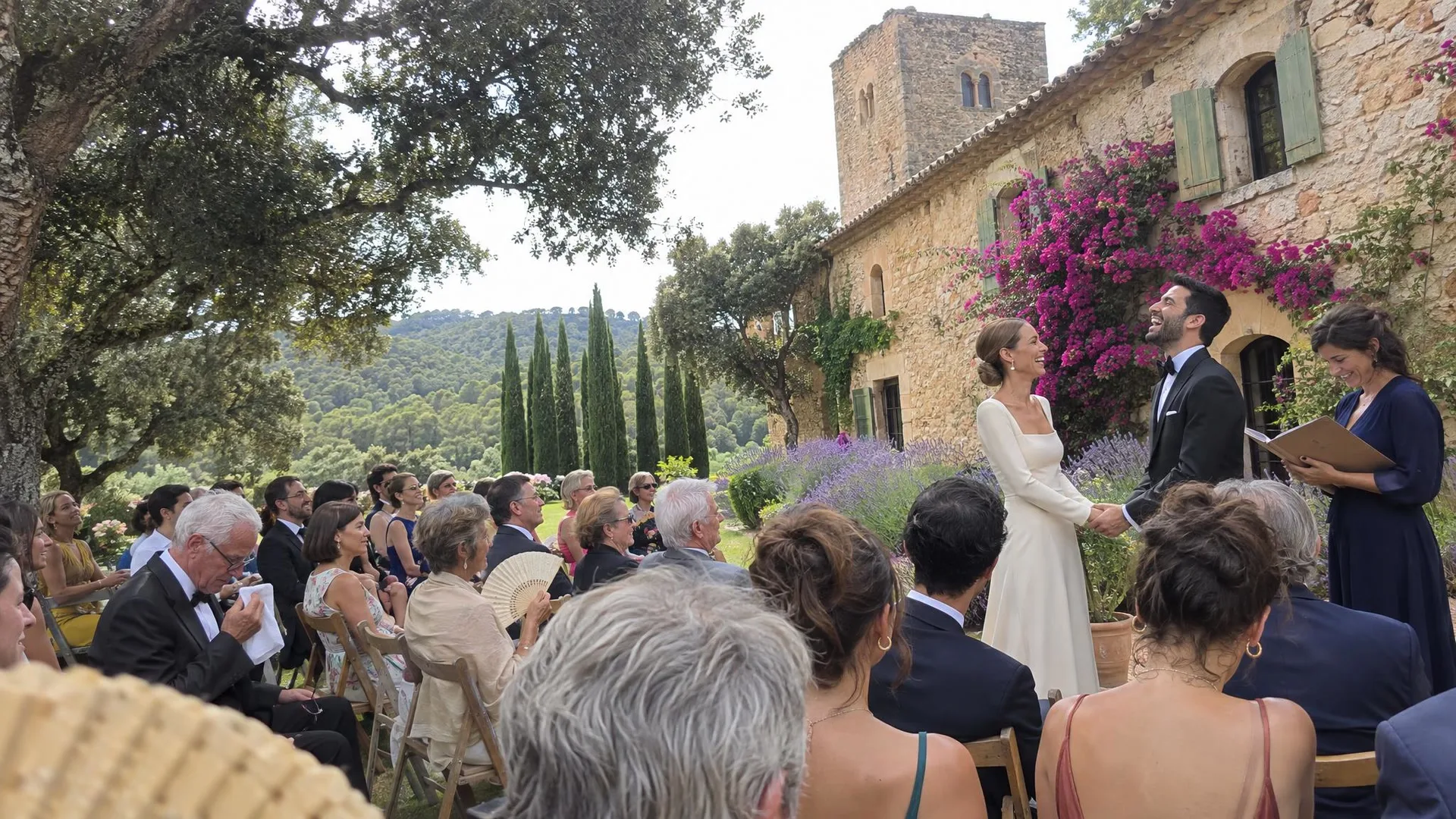
A hotel wedding solves the hardest part of a destination wedding in Spain before you start: where everyone sleeps. Guests walk from breakfast to the ceremony, nobody needs a taxi at two in the morning, and the bride can go upstairs to change shoes without leaving her own party. The question most couples ask next is whether a hotel can also feel like a place with character, not a conference centre with flowers.
That is where boutique hotels come in. Spain has hundreds of them: old manor houses in the Mallorcan countryside, Catalan masias turned into small hotels, whitewashed cortijos in Andalusia, townhouses with a courtyard in the middle of an old quarter. They sit somewhere between a hotel and a private venue, and their rules are different from both.
What a big thread about hotel ballrooms got right
A much-discussed venue thread earlier this year started with a simple complaint. A bride had toured a long list of hotels and every ballroom looked the same: beige walls, strangely patterned carpet, the feeling of a sales meeting. She wanted a room built for parties.
The top answer explained it in one line: most hotel event rooms earn their money from corporate events, so they are designed for corporate events. Other replies pushed back from the guest side. Once the tables are dressed and full of family, a ballroom looks very different, and many people simply love hotel weddings: proper bathrooms, air conditioning, a lobby to rest in, a bed upstairs. A third group gave the practical advice: if you want character, look for older, historic hotels, and expect to pay for it.
All three points apply in Spain, with a twist. Many Spanish hotels with real character are small. They do not have a ballroom at all, but a courtyard, a garden, a restaurant terrace and one or two historic salons. That changes how the day works.
Three kinds of hotel wedding in Spain
Before comparing prices, work out which model you are looking at:
- A large hotel or resort with event rooms. Several function rooms, a wedding team, packaged menus. Easy to plan, but the same property may host other events on your date.
- A boutique hotel booked for exclusive use. You take every room and every space for two to four nights. The house is yours, but so are the minimum stay and the minimum spend.
- A boutique hotel without exclusivity. Your wedding uses a patio or salon while holiday guests are in the pool and at breakfast. Cheaper, but you share the building and its rules.
The second model is the one most people mean by a boutique hotel wedding, and the one that needs the most careful reading.
A real example: what one Mallorca manor-house hotel puts in writing
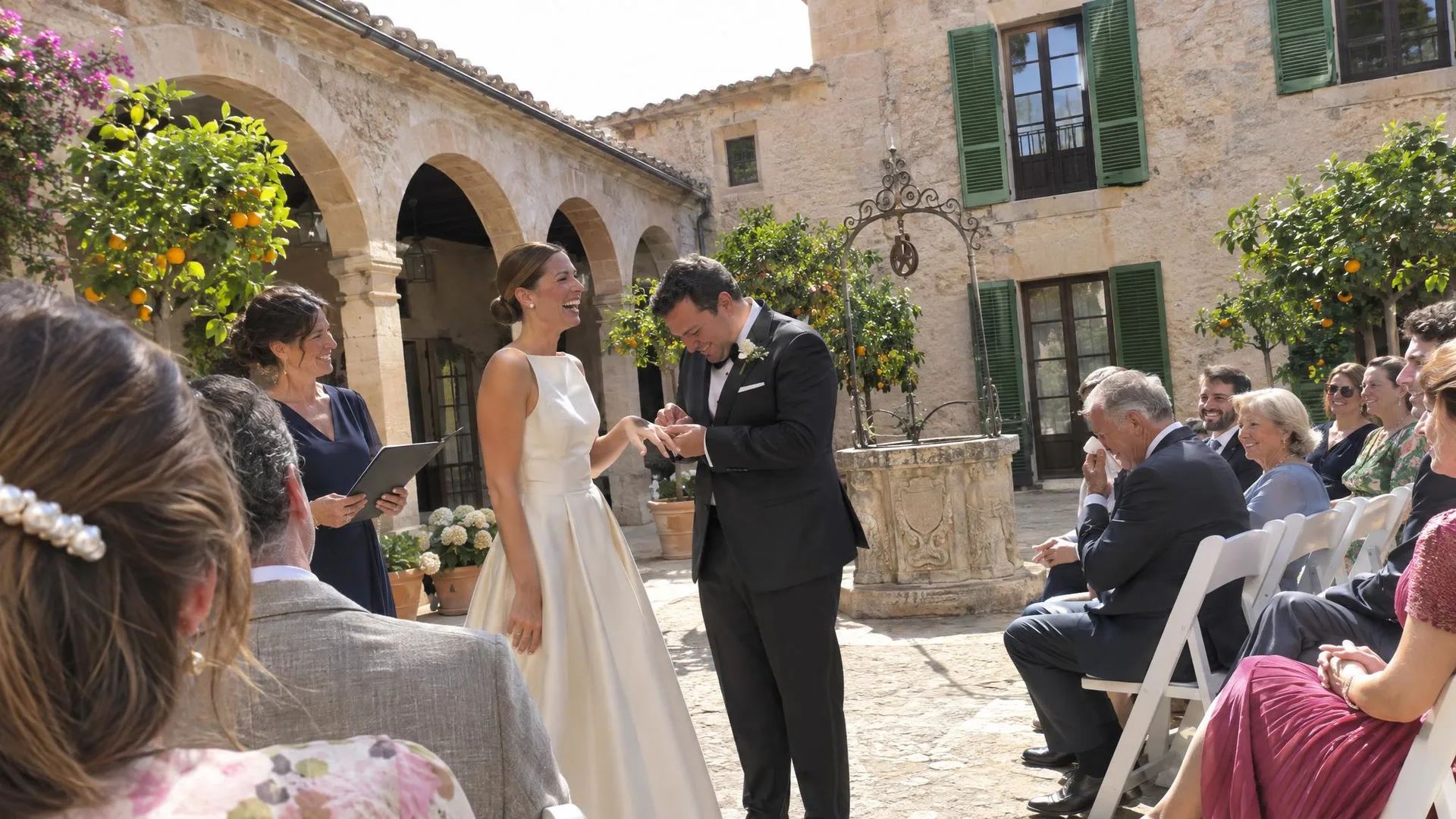
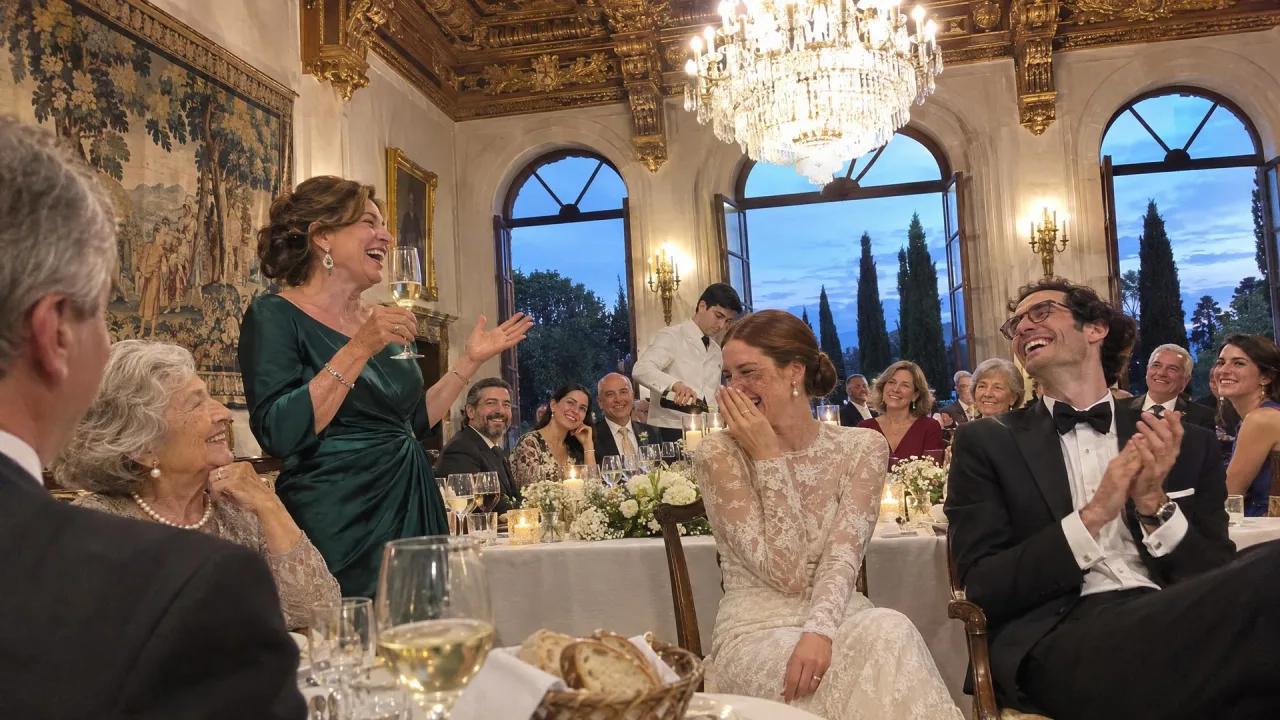
Son Julia Country House, near Llucmajor in the south of Mallorca, is a good example of how detailed these rules can be. According to the hotel's own current wedding dossier, it is a 15th-century manor house turned into a boutique rural hotel in 2006, with 32 rooms and suites, gardens around 300 years old, a patio of orange trees for ceremonies and cocktails, and a gilded salon with a large chandelier that seats roughly 80 to 110 guests for dinner. Its website places it about 15 minutes from the airport.
The dossier then sets out the house rules:
- Exclusive booking has a minimum stay that changes with the season: two nights in March and November, three in the main spring and autumn months, four in the first week of July.
- A separate food and drink minimum applies during the exclusive stay, paid in advance by the couple, on top of the nightly buyout price.
- No exclusive weddings in August.
- Outdoor music stops at 23:00, with a decibel limit and no DJ or live band outside. After that, the party moves indoors.
- Using the hotel's own furniture for the ceremony and dinner comes with a per-guest set-up charge.
None of this is unusual. It is simply written down, and that is what you want from any hotel. Prices and conditions change every season, so always ask for the current version before you plan around them.
The house rules that shape your day
Music and noise. In Spain, the end of outdoor music is often decided by the town and the neighbours, not by the hotel. A boutique hotel in the countryside may still have to stop music outside at 23:00 or midnight. Ask where the party continues after that and how many people the indoor space really holds standing. Our guide to noise curfews and after-parties explains the options.
Exclusive or shared. If the hotel is not exclusive, ask who else will be there: other guests at the pool during your ceremony, another event in the restaurant, breakfast service in your getting-ready rooms. None of it is a disaster, but it should not be a surprise.
Catering and outside suppliers. Most hotels insist on their own kitchen and bar. Some charge a fee for outside suppliers or keep a list of approved ones. Ask about florists, musicians, planners, photographers and videographers by name, and about set-up times for each.
Rooms and who pays for them. With exclusive use, the rooms are part of the venue cost. How to handle that fairly with guests is a topic of its own; our post on Mallorca venues with accommodation covers buyouts and room payments, and the guide to hotel room blocks in Spain covers the non-exclusive route.
Rain plan. A hotel usually has more covered space than a finca, which is a real advantage in spring and autumn. Ask to see the indoor plan set up, not described. If you are looking at Mallorca, our post on rain plans and indoor spaces in Mallorca lists what to check.
How to keep a hotel wedding from feeling corporate
The thread had good advice here, and it works even better in a small Spanish hotel:
- Choose spaces with daylight. A courtyard, a terrace or a salon with tall windows will always feel warmer than an interior function room.
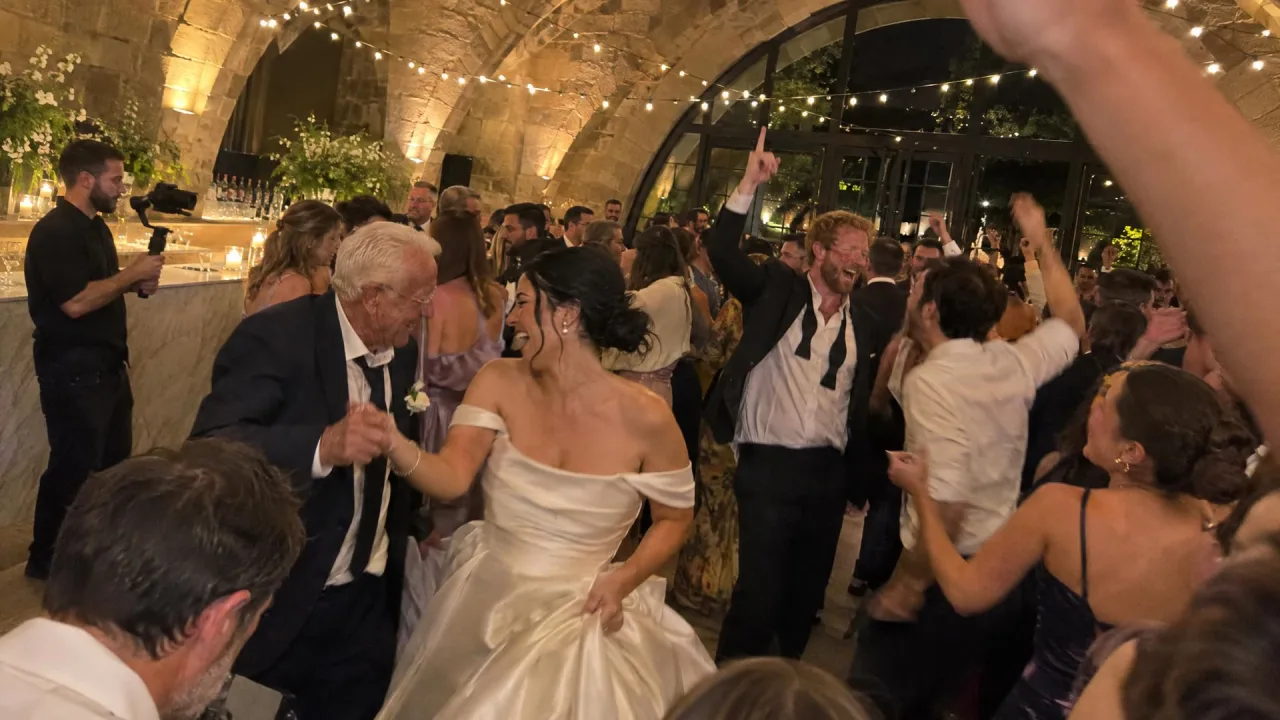
- Use the outdoor hours well. If outdoor music ends at 23:00, plan the ceremony, cocktail and dinner outside and keep the indoor room for dancing.
- Light it properly. Candles (if allowed), low warm lighting and fewer overhead lights change a room more than any decoration.
- Move the group around. Ceremony in the garden, drinks on the terrace, dinner in the salon, dancing in the bar. Each change feels like a new chapter.
- Keep the hotel's own character. Old tiles, beams and stone walls do more than rented backdrops.
Filming a boutique hotel wedding
For a film, a boutique hotel is one of the easiest settings in Spain. Everything happens within a few minutes' walk, the light changes from courtyard to terrace to candlelit salon, and guests are relaxed because their room is upstairs. We approach these days as documentary and cinematic films in Mallorca, Barcelona and across Spain: real moments first, then structure, sound and rhythm in the edit. If you are planning in Mallorca, you can see how we work as a wedding videographer in Mallorca.
A few things help on the day:
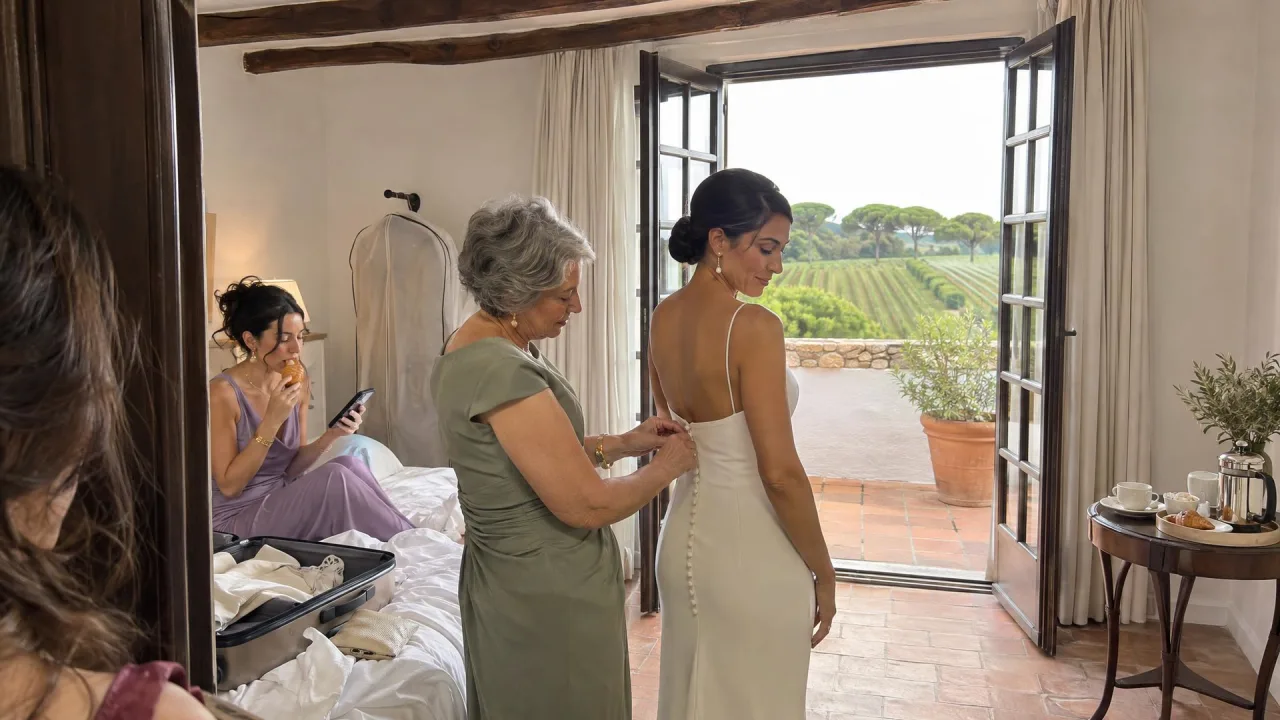
- Getting-ready rooms with windows. Small historic rooms can be dark. A suite with a terrace or a large window makes a visible difference.
- Speeches indoors if the outdoor music limit is early. A decibel limit also applies to microphones, so plan speeches where you can use proper sound.
- Tell us about other guests. In a non-exclusive hotel we keep holiday guests out of the frame and respect quiet areas.
- Ask about drones early. Hotels have their own rules, and properties close to an airport may have airspace restrictions.
Questions to ask a boutique hotel before you sign
- Is exclusive use possible on our date, and what is the minimum number of nights?
- Is there a food and drink minimum on top of the room price, and when is it paid?
- Until what time can music play outside, and where does the party continue?
- How many guests fit indoors for dinner and for dancing if it rains?
- Will any other event or outside guest be on the property that day?
- Which suppliers must come from the hotel's list, and are there fees for others?
- What is included in the set-up, and what is charged per guest?
- When can suppliers arrive, and when must everything be cleared?
- How are the rooms booked and paid, and by whom?
- Are there months when weddings are not accepted?
The short version
A boutique hotel gives you the comfort that guests praise in hotel weddings and the character that big ballrooms often lack. The price is a set of house rules: minimum nights, minimum spend, early outdoor music limits and in-house catering. Read them before you fall in love with the courtyard. For more on comparing venues, see our guide to choosing a wedding venue in Spain, and if you already have a hotel and a date, tell us about it.