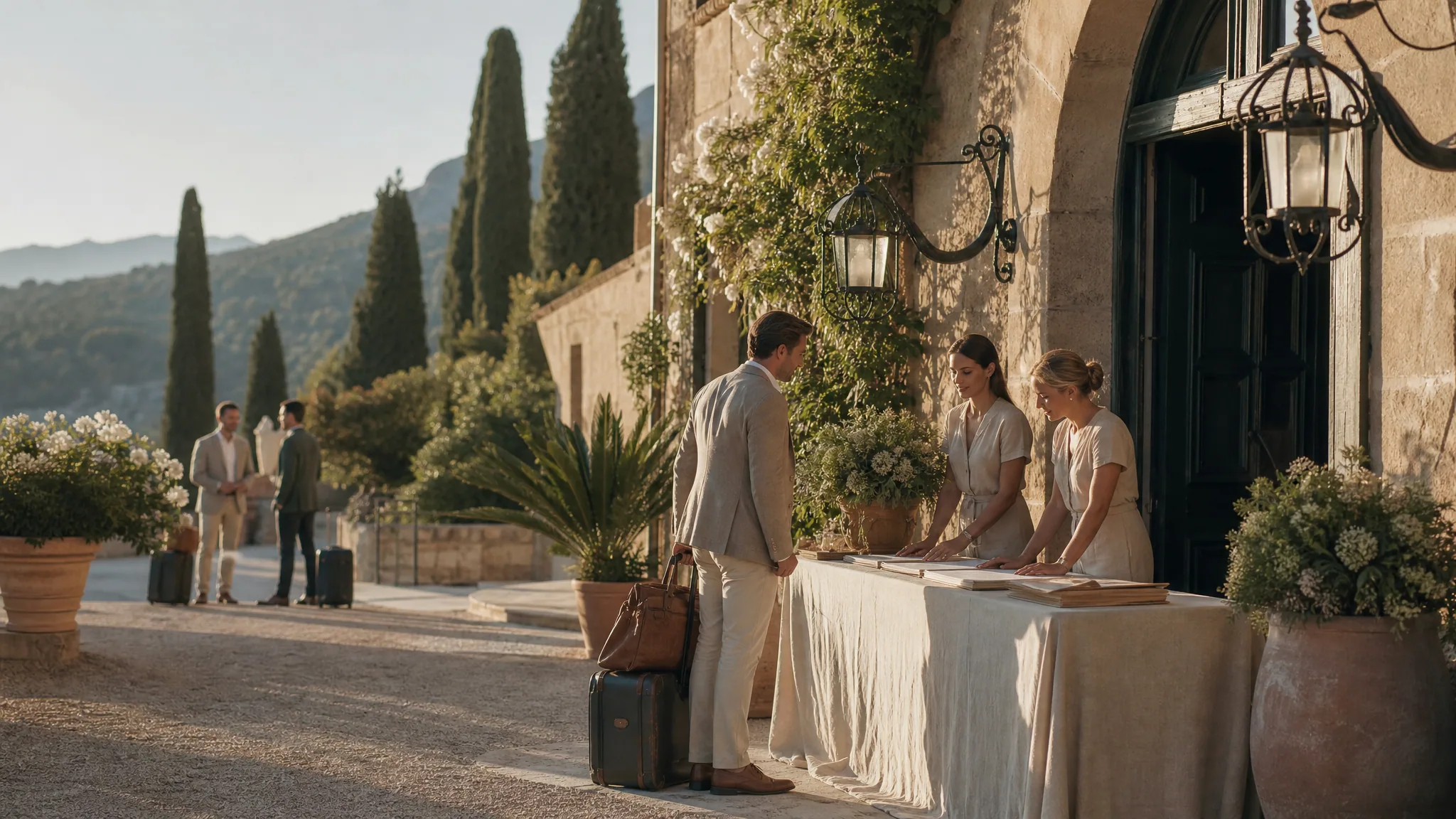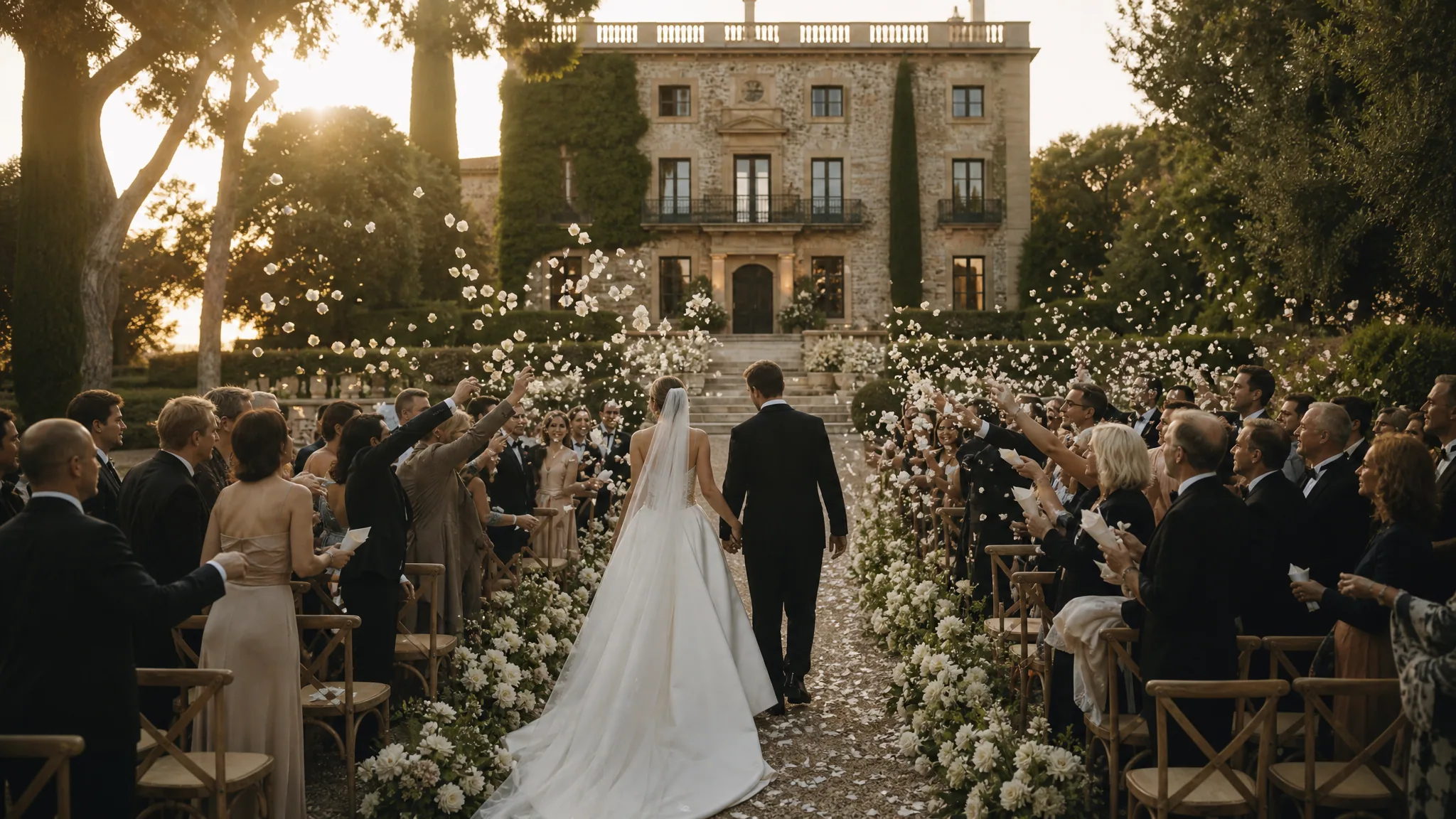
At destination weddings in Spain, the room is often a beautiful mix of languages, accents, and family names that no one has said aloud in the same place before. A warm MC can make that mix feel intimate. A rushed MC guessing at spellings can turn a toast into a flinch. For international couples, bilingual cue cards and a short pronunciation plan are one of the highest-leverage hospitality upgrades you can add—quiet, inexpensive, and remembered.
Kudrya Studio couples usually host guests from several countries at once. This guide shows how to brief an MC (professional or trusted friend), build phonetic cards that work under pressure, and keep ceremony and reception flow elegant in both English and Spanish.
Decide who speaks—and in which language when
Start with a simple speaking map: ceremony welcome, family introductions, dinner transitions, cake cue, and last-dance close. Mark each beat as English-first, Spanish-first, or fully bilingual. Guests should never wonder whether they missed an instruction. If your MC is stronger in one language, give them short, pre-approved lines in the other rather than asking for live improvisation.
Keep legal or formal ceremony wording with your officiant. The MC’s job is hospitality and timing—not rewriting vows. Clear ownership prevents awkward overlap at the mic.
Build a master name list before you write any cards
Collect full names for parents, wedding party, readers, and anyone who will be introduced or toasted. Ask each person for a preferred spoken form (“Alex,” not “Alexander”) and a short phonetic spelling in the language the MC will use. Do this in your planning group chat two weeks out—not on the morning of the wedding.
Include place names too: venue, town, hotel shuttle stops. Spanish place names trip English-speaking MCs as often as guest surnames trip Spanish-speaking ones. One shared spreadsheet keeps everyone aligned.
Write phonetic cue cards that survive nerves
Use large type, one name per line, and phonetics in parentheses—for example, “Małgorzata (mah-gor-ZHA-ta).” Avoid tiny fonts and decorative scripts. Laminate or sleeve cards if the estate is windy or dusty. Number cards to match your timeline so the MC can flip forward without hunting.
Add a one-line context note where useful: “bride’s sister / English toast / 3 minutes.” Context reduces blank moments better than a long script. Leave white space for last-minute ink corrections.
Brief Spanish and English versions without doubling the runtime
Full consecutive translation of every announcement slows dinner and drains energy. Prefer short bilingual pairs: Spanish instruction, then a compact English echo—or the reverse, depending on your guest majority. Reserve longer bilingual treatment for critical logistics: seating, transport departure times, and allergy or safety notes.
Pre-write those pairs. Improvised translation mid-toast is where meaning drifts and jokes fall flat. Your planner or bilingual friend can sanity-check tone so neither language feels like an afterthought.
Run a ten-minute pronunciation rehearsal
Schedule a quiet walk-through the day before—or early on wedding morning—with the MC, couple, and one family representative from each side. Read every difficult name twice. Record a quick voice memo of the trickiest surnames so the MC can replay it privately.
Practice the order of toasts and the handoff language between speakers. International weekends fail less often on content than on unclear “you’re next” cues. A calm rehearsal is the difference between polished and apologetic.
Plan mic etiquette for multilingual rooms
Ask speakers to face the room, not the couple alone, and to pause after names so applause can land. Provide a printed toast order at the MC station and a backup copy with the planner. If grandparents prefer to speak seated, set that expectation early so the MC does not force a standing mic moment.
For outdoor Spanish venues, test wind noise and have a handheld backup. Cue cards are useless if the first three words are lost to a gust.
Create a sensitive plan for blended and chosen families
International guest lists often include step-parents, chosen family, and friends who function as family. Confirm introduction wording privately with the couple—never invent hierarchy on the mic. Write the approved phrases on the cue cards exactly.
If someone should not be named, put a discreet “skip” note on the card rather than relying on memory. Graceful omissions are part of modern hosting.
Give guests a gentle way to help without correcting mid-toast
Include a tiny note in the welcome WhatsApp or day-of program: preferred name spellings for the wedding party are set, and corrections can go to the planner quietly. Public mid-ceremony coaching embarrasses everyone. A single point of contact keeps dignity intact.
After dinner, thank the MC and collect the cards. They become a useful archive if you film speeches or need accurate credits for your wedding film.
How Kudrya Studio helps you keep introductions elegant
When Kudrya Studio documents your Spain wedding weekend, clear name flow on the day makes storytelling cleaner later—fewer mismatched captions, stronger speech coverage, and calmer timelines for family formals. We encourage couples to treat pronunciation planning as part of hospitality design, not a last-minute MC favor.
Bring your bilingual cue plan into the same folder as transport, seating, and vendor contacts. Guests feel the care immediately: every name said correctly is a small welcome home in a country that is new to them.