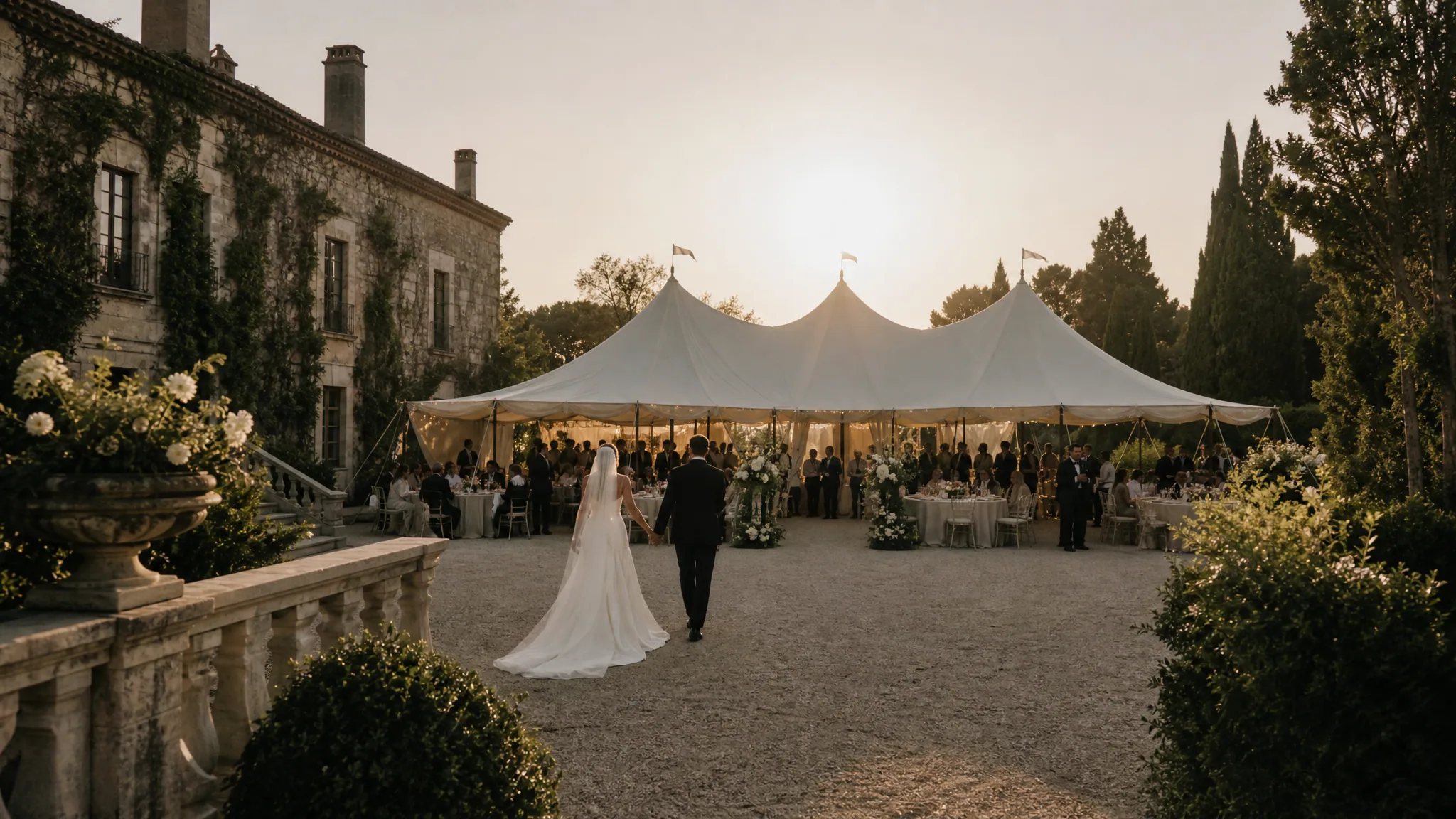
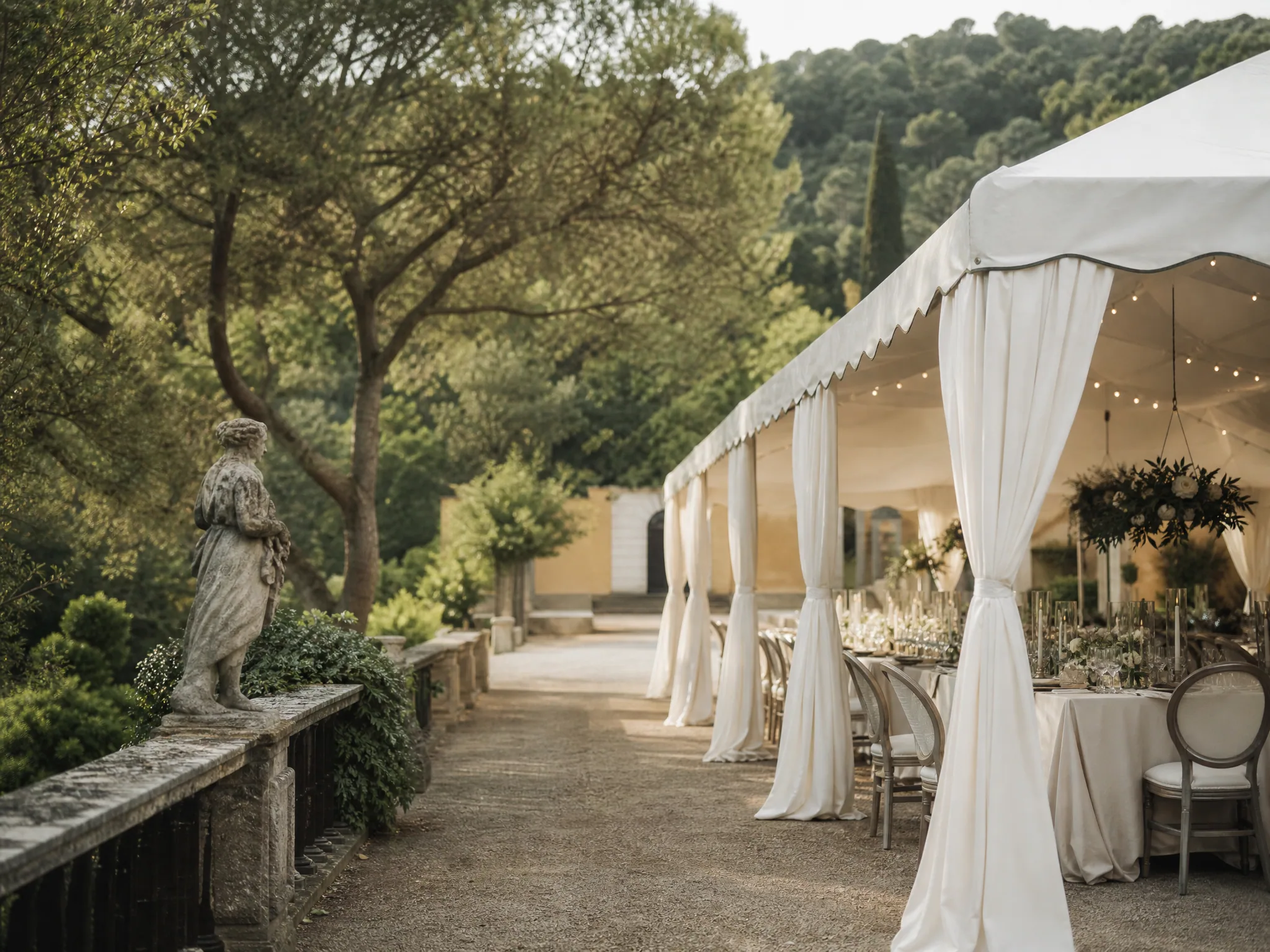
An outdoor Spanish wedding can look effortless until wind picks up, afternoon sun hits the dinner tables, or a coastal shower arrives during speeches. A marquee or tent is often the difference between a flexible plan and a scramble on the day.
This guide helps international couples decide when you need cover at a Spanish finca, vineyard, or coastal venue, how to size and place it, and how to align flooring, power, climate control, and film-friendly lighting so the structure feels intentional rather than like an afterthought.
Decide Whether You Need a Marquee at All
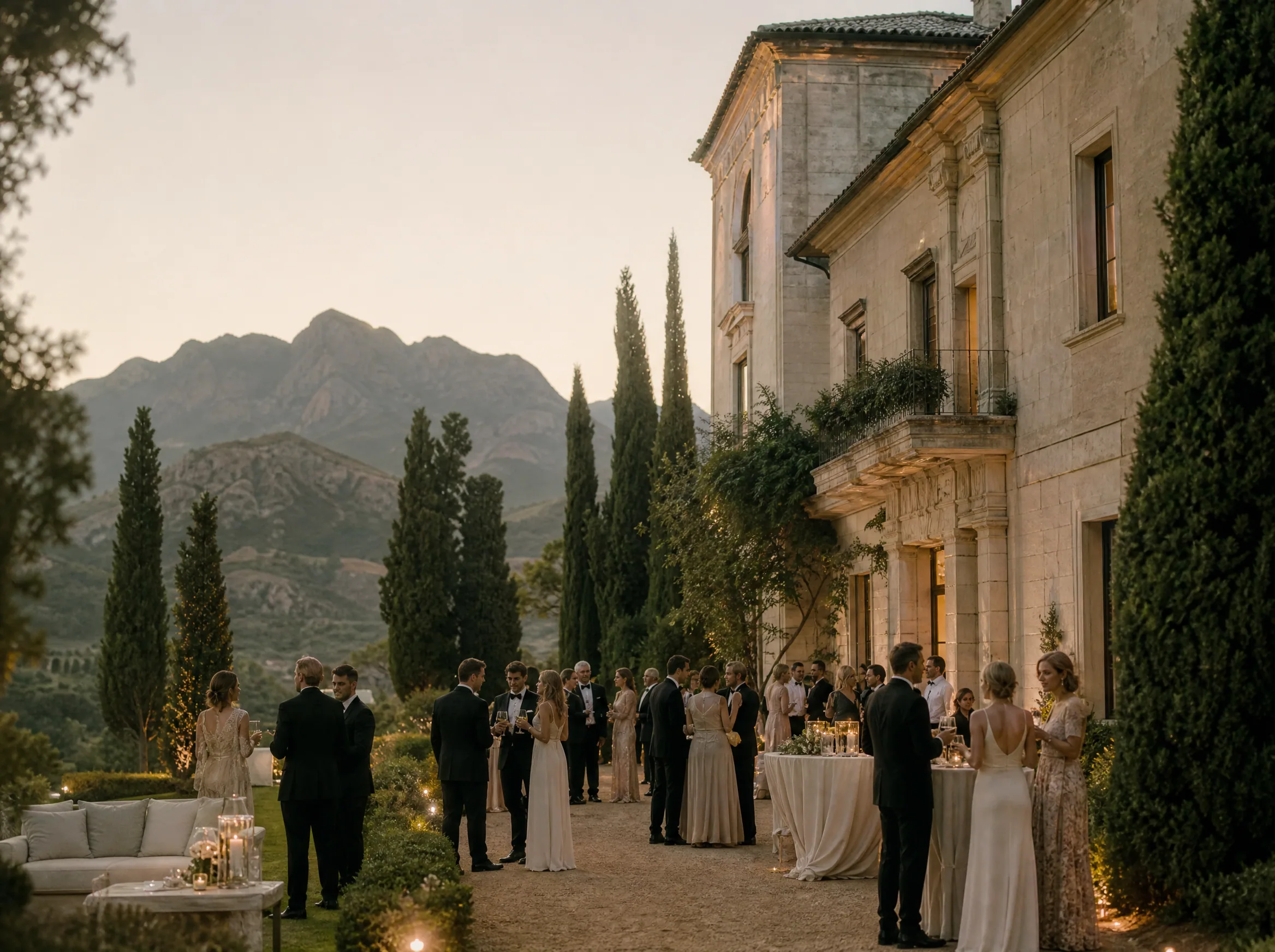
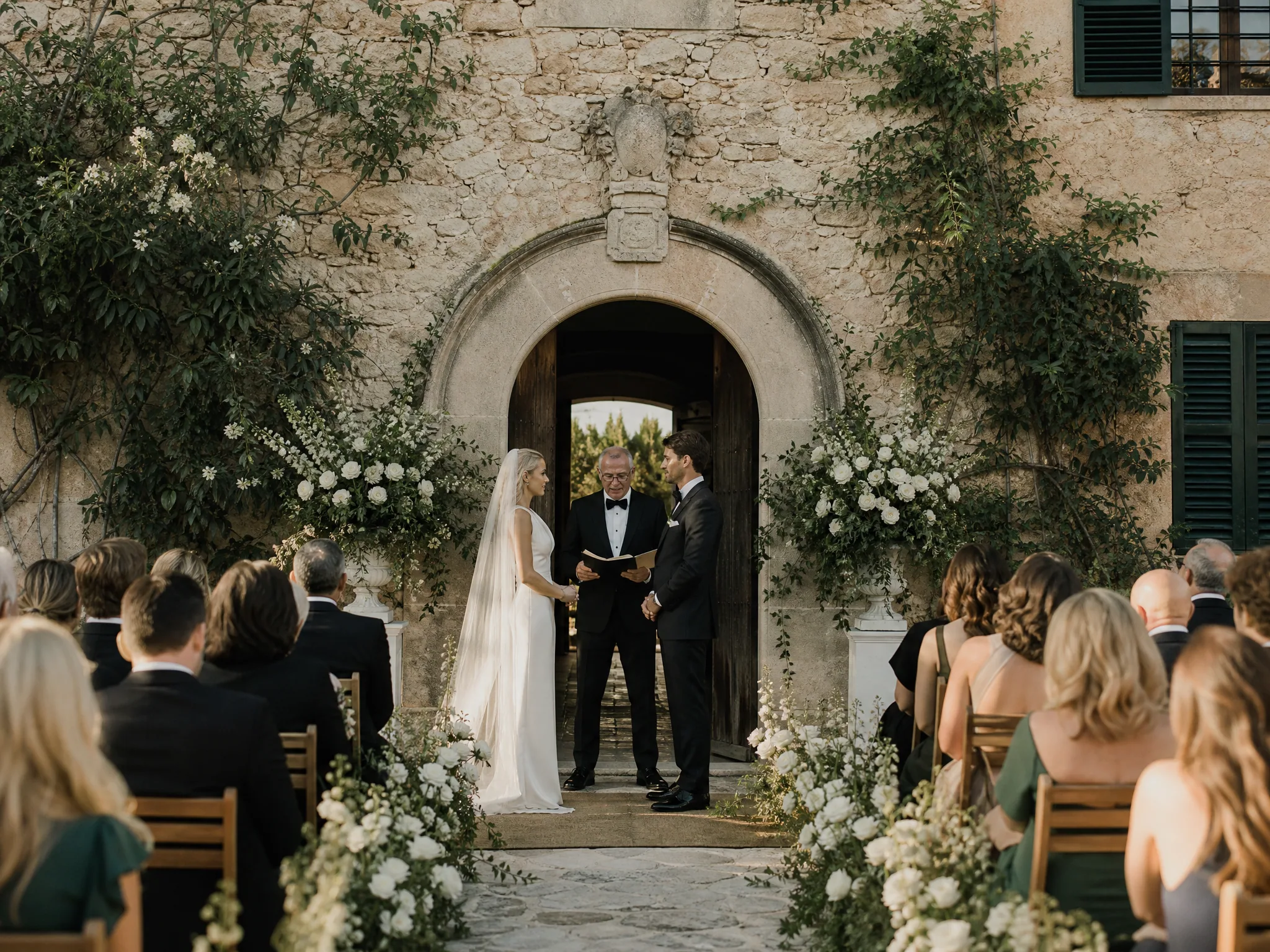
Not every outdoor venue needs a full tent. Some Spanish courtyards, covered terraces, and indoor-outdoor masías already give you shade, walls, or a solid rain backup. Others are open lawns, olive groves, or cliffside terraces with no reliable shelter.
Ask your venue what past couples used in your month: full marquee, partial sailcloth cover, market umbrellas only, or a nearby indoor room as Plan B. If the answer is vague, assume you need a rental quote early. Cover is harder to source last-minute in peak Spanish wedding season than most couples expect from abroad.
Match Tent Type to Venue, Season, and Guest Count
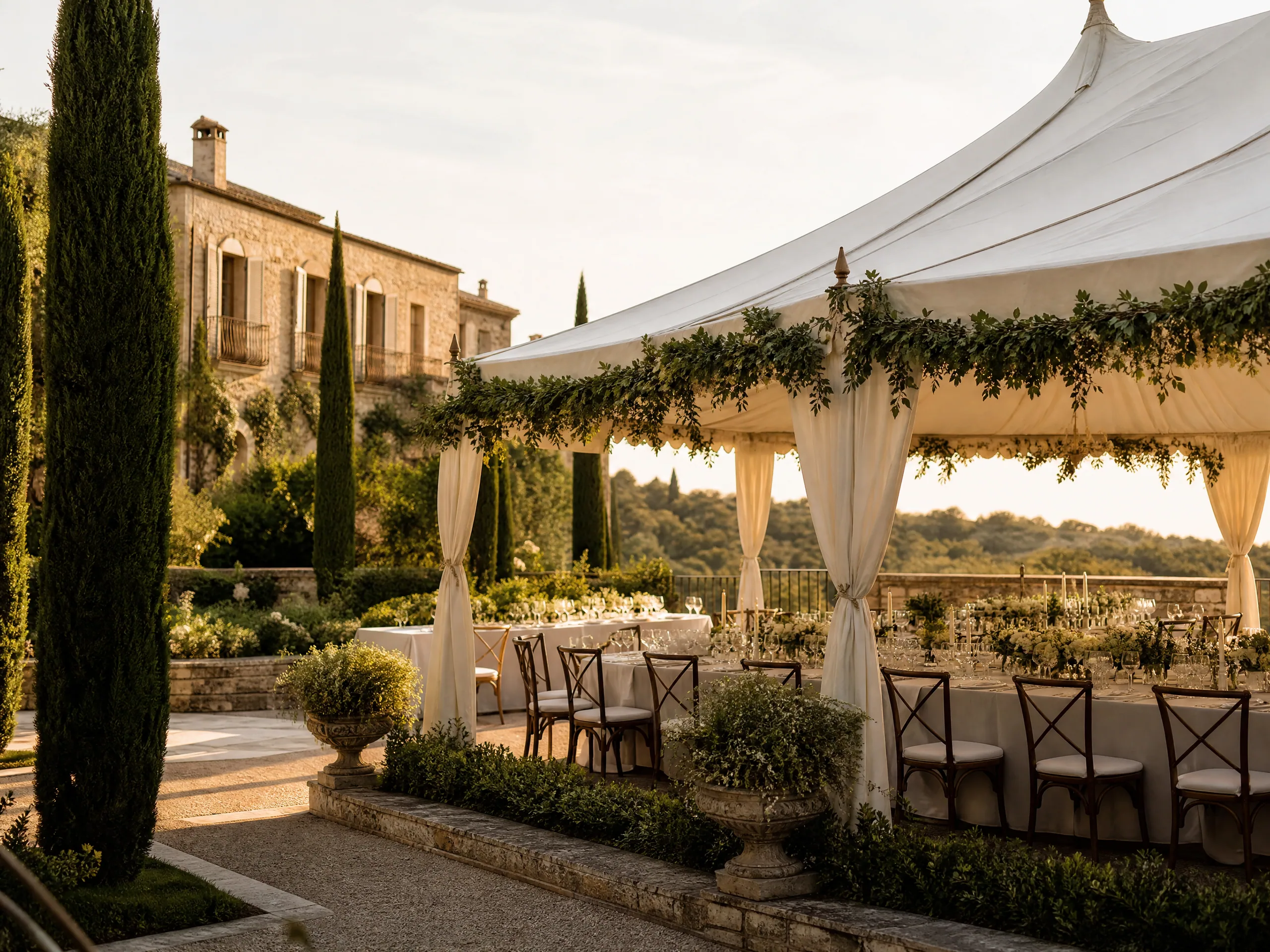
Spanish outdoor sites vary more than hotel gardens. A stretch tent can feel romantic over dinner under olive trees; a framed marquee may be safer on uneven ground or where staking is restricted; a clear-span structure may be better if you need hanging lights, fans, or heaters.
Tell the rental company the exact surface, slope, month, guest count, and whether the tent is for ceremony, dinner, dancing, or all three. Summer heat, coastal wind, and autumn rain each change the right specification. Do not order from a pretty Instagram photo alone.
Confirm Venue Permissions, Permits, and Ground Rules
Before you pay a deposit, confirm whether the venue allows tents, where they can be placed, and what is forbidden: deep stakes, generator placement, vehicle access across lawns, or structures near protected trees and walls. Some historic or rural Spanish properties have local rules that only appear once a supplier visits.
Ask who is responsible for municipal or event permissions if any are needed. Your planner or day-of coordinator should translate the venue’s constraints into a one-page brief your tent company can follow without a long email chain across time zones.
Plan Flooring, Power, and Climate Control Together
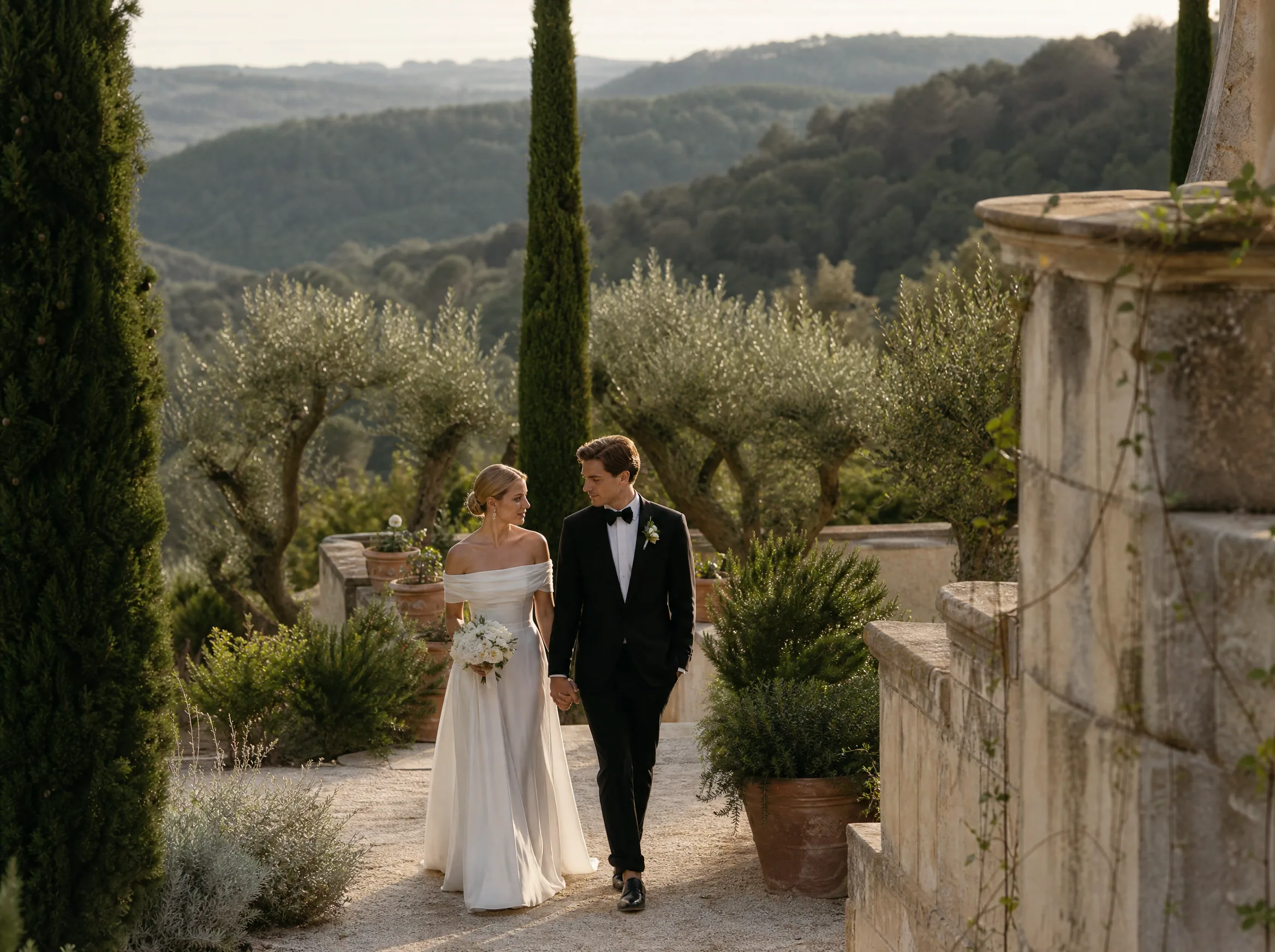
A tent without a floor plan can still leave guests cold, hot, or sinking into grass. Decide early whether you need temporary flooring under dining, a dance floor only, cable covers, heaters, fans, or misting. Those decisions affect power load, generator placement, and how close technical gear sits to guest seating.
Share one combined brief with the tent, rental, and AV teams: dinner layout, buffet or plated service path, DJ or band position, and where cables can run without crossing the main guest flow. Separate conversations create gaps that show up on the day.
Align Load-In Access and Install Timeline With Vendors
Marquee installs often need trucks, long setup windows, and clear vehicle access. Rural Spanish venues may have narrow lanes, soft ground after rain, or limited parking that conflicts with florist and catering load-in. Confirm the install day, strike day, overnight security if the structure stays up, and who is on site for delivery.
Build buffer into your weekend plan. If ceremony rehearsal, welcome drinks, or photography use the same lawn, the tent timeline must leave those moments usable. Put the install window in writing for every vendor who needs that space.
Design Guest Flow, Entrances, and Emergency Egress
A beautiful tent fails if guests cannot find the entrance, servers cannot circulate, or exits feel blocked once tables and a dance floor are in. Walk the plan for ceremony arrival, cocktail transition, dinner seating, and late dancing. Mark accessible routes for older guests and anyone with mobility needs.
Also plan side walls and openings for wind direction and service access. Fully closed walls can trap heat and noise; fully open sides can leave candles, menus, and hair vulnerable to coastal breeze. Your supplier should recommend a configuration for the forecast, not a one-size default.
Coordinate Lighting and Film-Friendly Ceilings
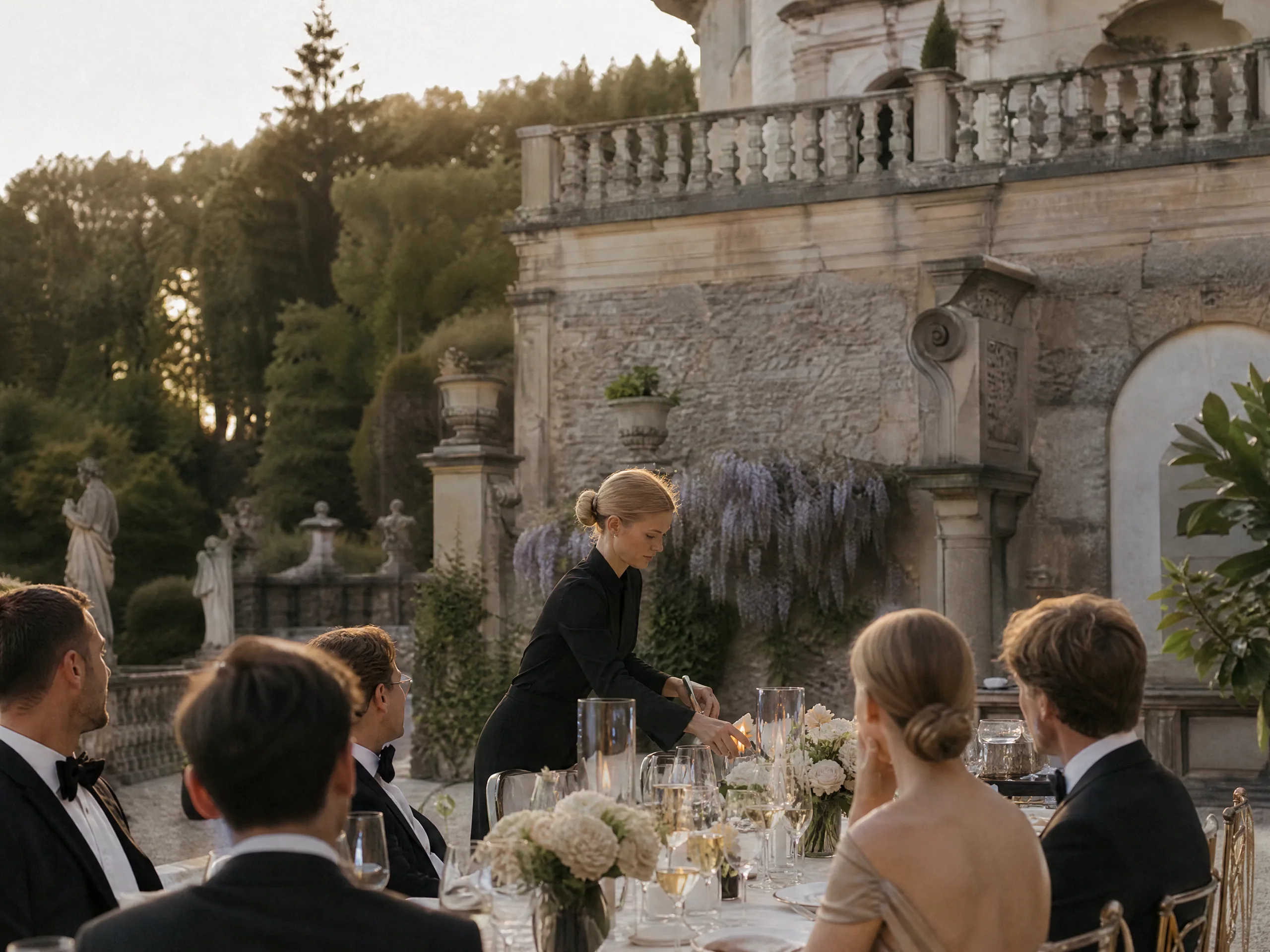
If you care how the dinner and first dance look on film, tent lighting is not decoration alone. Ask what can be hung from the structure: string lights, pendants, uplights, or nothing beyond portable stands. Dark marquees without a lighting plan often look flatter on camera than an open terrace at blue hour.
Share your videographer’s preferred approach with the lighting or rental team: warm practical lights near tables, enough fill to avoid pure silhouette, and no harsh mixed color temperatures over the dance floor. Confirm power circuits so lighting and sound are not fighting one overloaded line.
Build a Weather and Contingency Plan Before Peak Season
Spain’s microclimates surprise couples who only checked the monthly average. Coastal wind, inland heat spikes, and sudden showers all change how a tent should be dressed and whether ceremony cover is required separately from dinner. Decide in advance what triggers side walls, a ceremony move, or a shortened outdoor cocktail hour.
Give guests a simple communication plan through your wedding website or WhatsApp group: where to gather if weather shifts, what footwear still works on temporary flooring, and whether shawls or bug spray matter that evening. Clear instructions reduce anxiety more than last-minute optimism.
Budget, Deposits, and What to Confirm From Abroad
Tent packages in Spain may quote structure only, or include flooring, lighting, delivery, install, and strike. Ask for a line-item quote in writing, payment currency, deposit timeline, cancellation terms, and who pays if ground conditions force a redesign after a site visit.
From abroad, request a marked site plan, recent photos of the exact install area, and a short video walkthrough if you cannot visit. Approve the final layout once table count, dance floor size, and vendor positions are locked. A marquee should support the celebration you planned — not force last-minute compromises because the structure arrived as a generic rectangle in the wrong place.