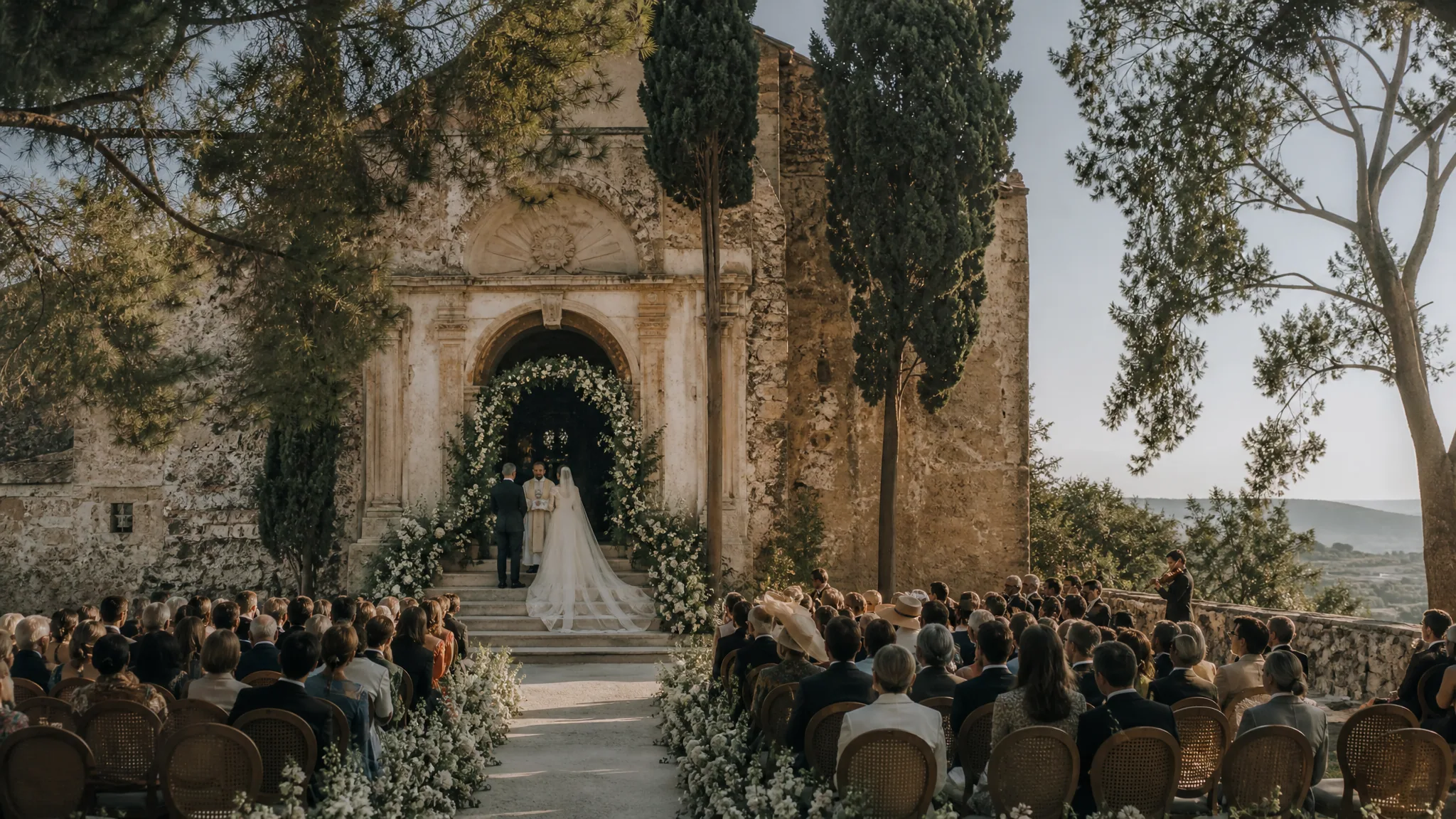
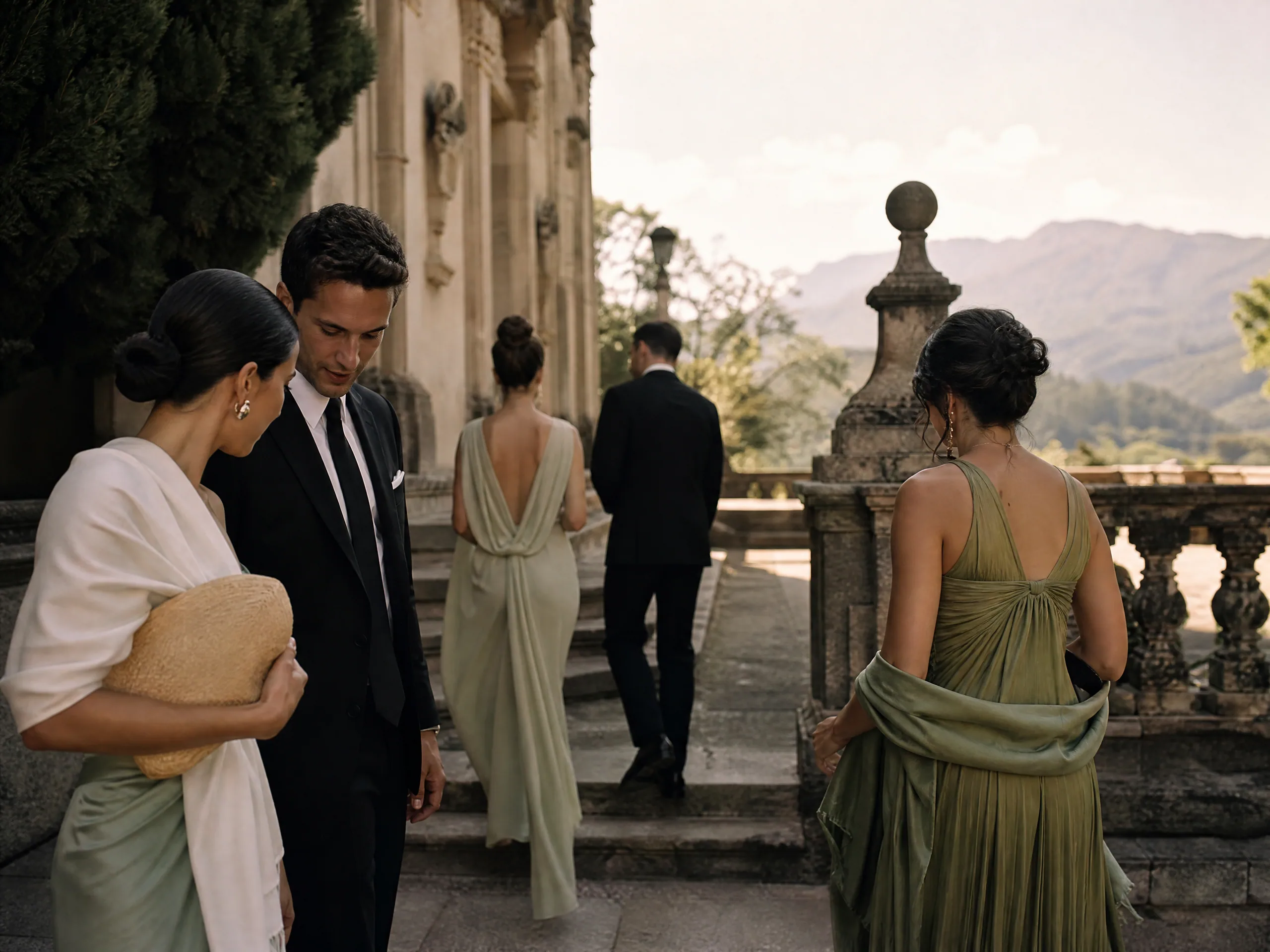
Many destination wedding weekends in Spain still include a church or cathedral ceremony—historic parish churches, hillside chapels, or grand cathedrals with tourist foot traffic just outside the doors. International guests often arrive with hotel-ballroom habits: phones out, shoulders bare, late arrivals slipping into front pews. A short etiquette brief protects the couple’s moment, respects the parish, and keeps your guest list from accidentally becoming the story.
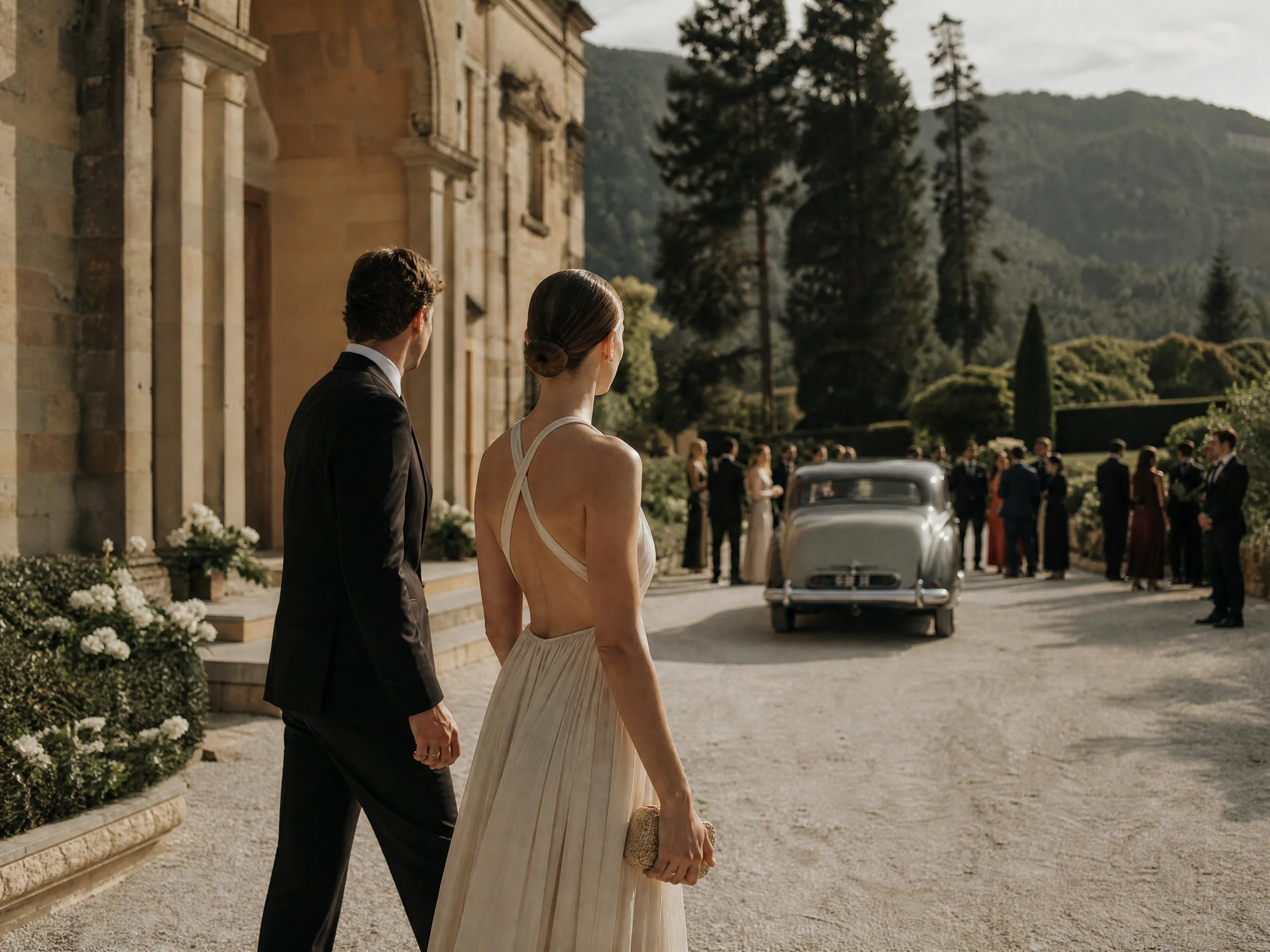
Why Spanish church venues need a guest brief
Religious venues in Spain are active places of worship, not blank event halls. Sacristans, parish rules, and local custom set the tone before your planner ever places a program. Guests flying in from secular venues abroad will not know those norms unless you spell them out early—on the wedding website, in the welcome note, and again in the morning-of timeline card.
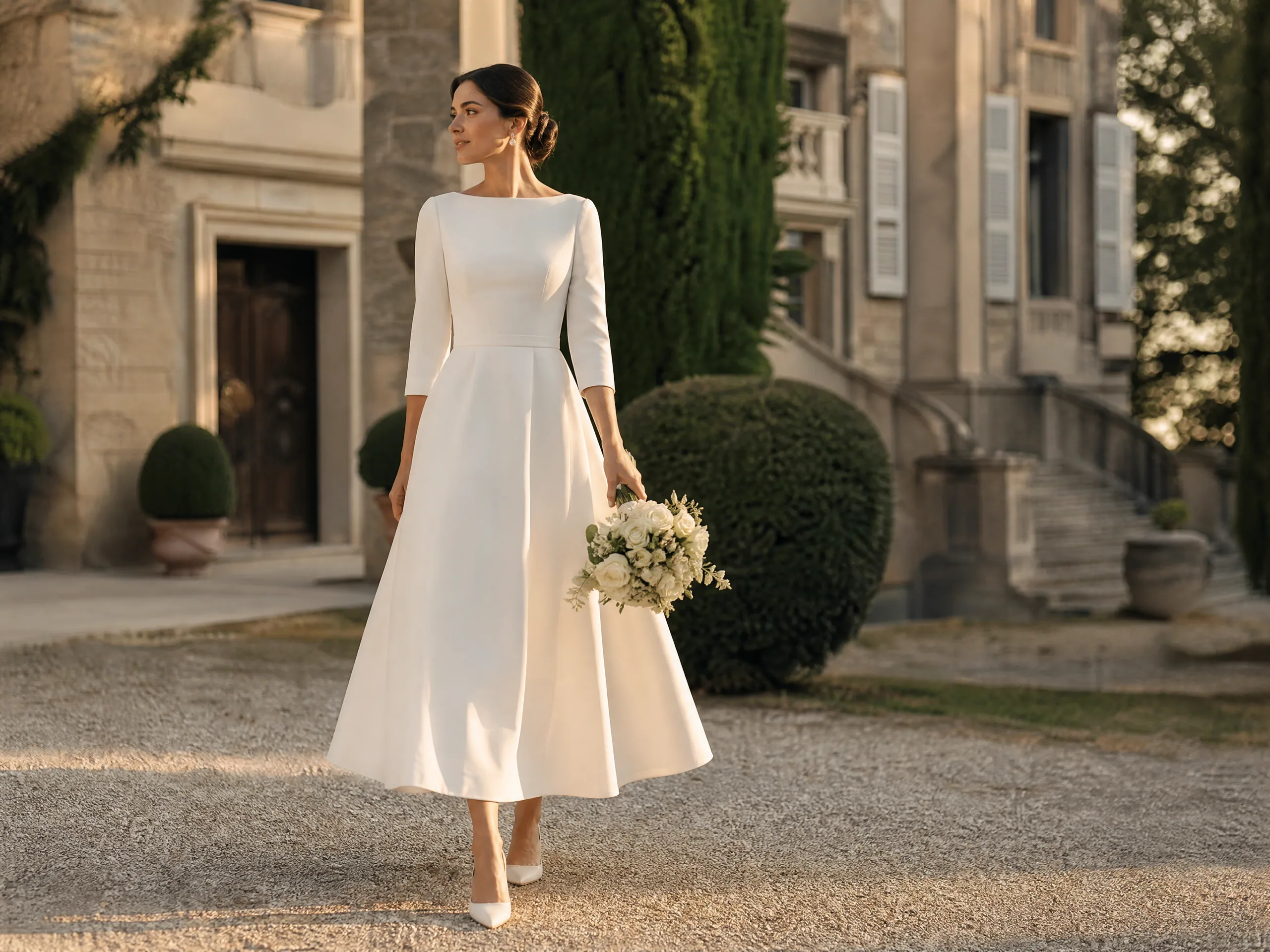
Dress: cover shoulders, choose modest length
Ask guests to bring a wrap, shawl, jacket, or light shrug for the ceremony—even in midsummer heat. Bare shoulders, deep necklines, and very short hems can clash with parish expectations and make ushers uncomfortable enforcing rules at the door. Men should plan a jacket or at least a collared shirt; baseball caps and sport sandals read as tourist wear, not ceremony attire. Put the dress note next to the overall dress code so no one treats it as optional fine print.
Arrival windows beat last-second dashes
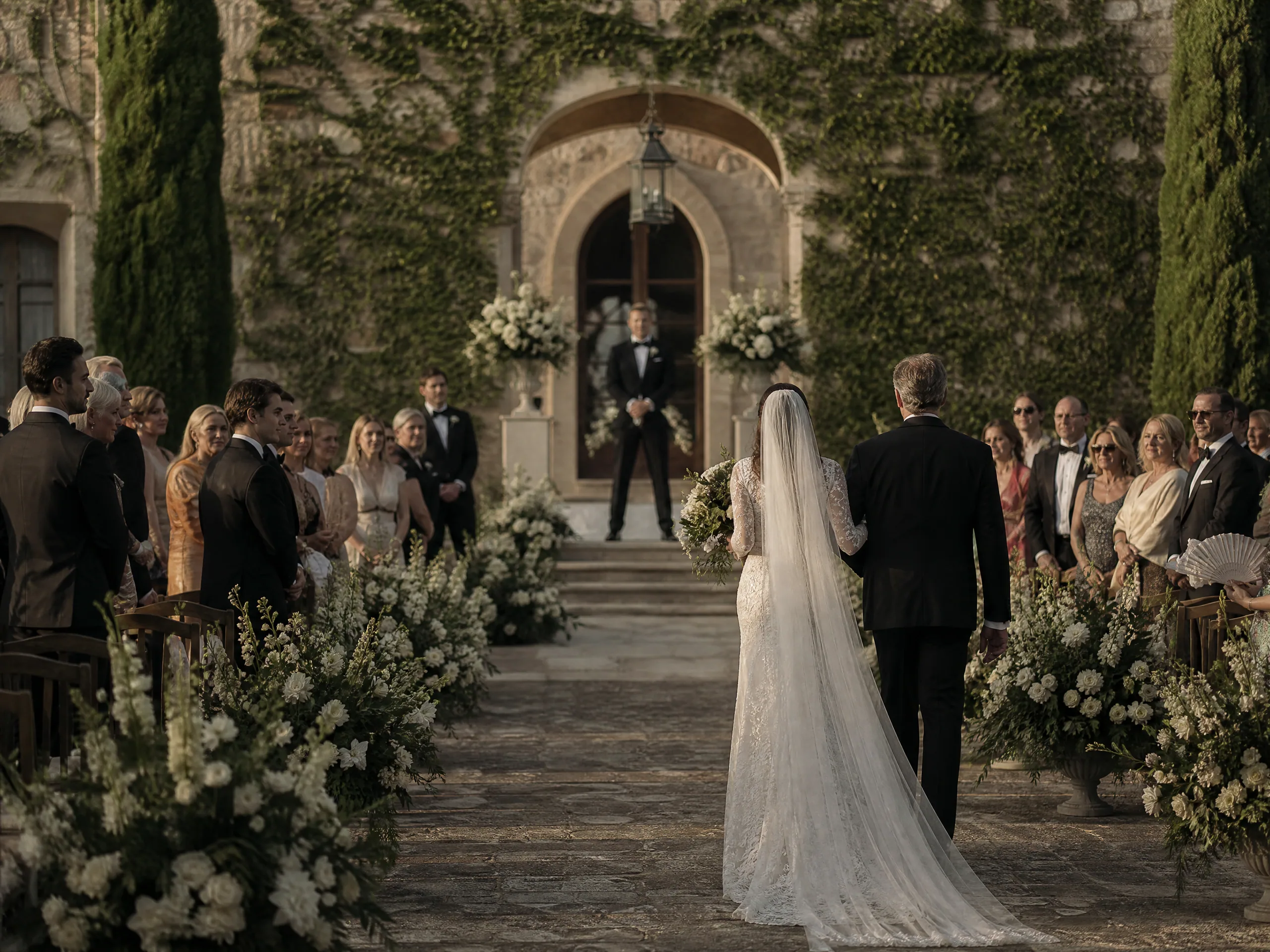
Historic churches often have limited parking, narrow access lanes, and security checks for larger cathedrals. Publish a firm “be seated by” time—usually fifteen to twenty minutes before the processional—and pair it with shuttle or walking directions from the hotel block. Late guests should enter only through the designated side door and take seats at the rear; never stage a whispered scramble up the center aisle once music has started.
Silence, phones, and unplugged vows
Ask guests to silence phones before they enter and keep them pocketed through the blessing or exchange of vows. Flash photography, video arms held high, and live social posts can violate parish rules and block sightlines in tall naves. If you want an unplugged ceremony, say so plainly on a small card at the door and assign one usher to smile-and-redirect rather than scold.
Seating: family rows, accessibility, and tourist spillover
Reserve front pews for immediate family and wedding party with clear markers in both English and Spanish. Keep an accessible aisle-end seat plan for elders and anyone with mobility needs—many Spanish churches have stone steps, uneven flooring, and limited ramps. In tourist-heavy cathedrals, confirm with the parish whether the space is closed to visitors during your ceremony; if not, post discreet ushers so curious walk-ins do not fill guest seats.
Children, communion, and non-Catholic guests
Tell guests whether the Mass or liturgy includes communion and that non-Catholic guests may remain seated with a quiet bow of the head—no one needs to invent participation. Brief parents on whether children should stay for the full service or step out to a quiet side space if restlessness rises. A one-line FAQ on the wedding site prevents awkward mid-aisle questions.
Programs, translations, and name cues
Bilingual programs help international guests follow readings, responses, and music cues without whispering for translations. Include phonetic spellings for clergy and family names the officiant will say aloud. Keep programs slim—paper rustle carries in stone acoustics—and place a few large-print copies at the back for elders.
Exiting with reverence, then celebration
Confirm whether rice, confetti, petals, or sparklers are allowed on church grounds; many parishes forbid them at the doors. Plan the recessional photo moment just outside the threshold if the nave must clear quickly for the next Mass or tourist opening. Once guests are fully outdoors and clear of the entrance, the celebration volume can rise—cheers, music cues, and group photos belong on the plaza, not in the vestibule.
Put etiquette in three places guests will see
Website FAQ, welcome-bag card, and morning timeline message: repeat the same short list—cover shoulders, arrive early, phones away, follow ushers, celebrate outside. Consistency beats a long lecture. When guests know the rules before they reach the stone steps, the ceremony feels calm, the parish feels respected, and your Spanish destination wedding starts with the tone you intended.