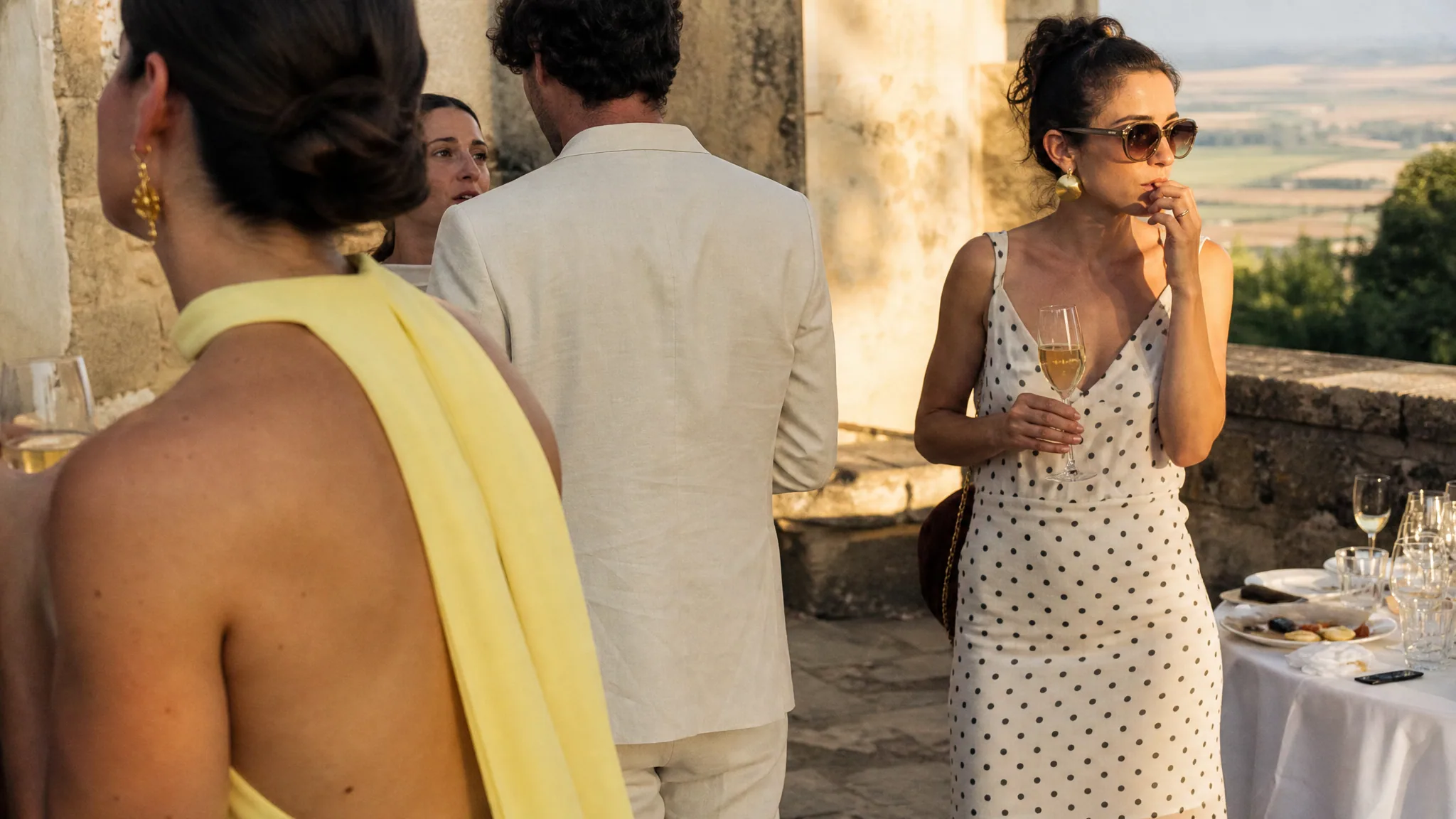
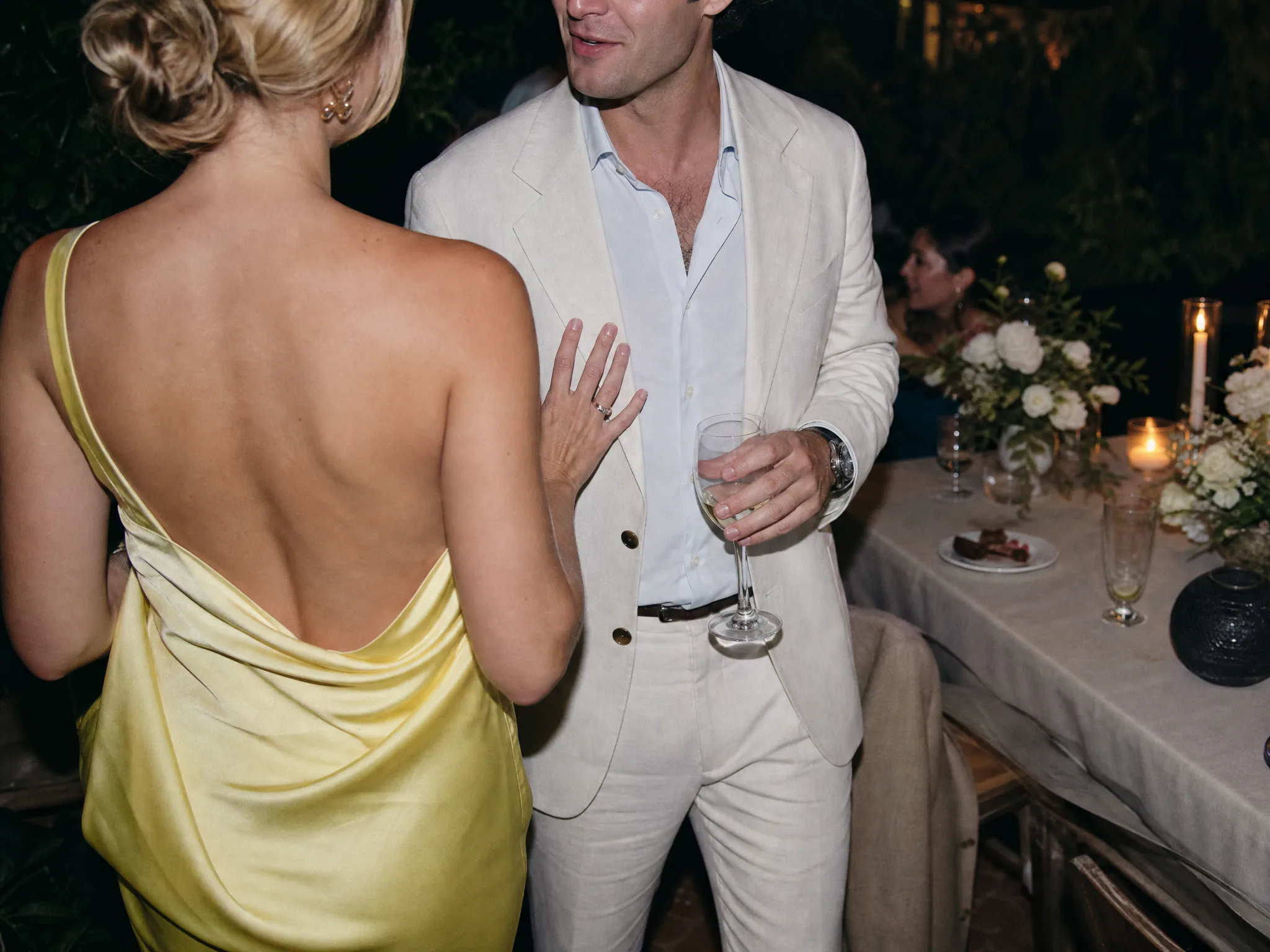
A live cortador de jamón is one of the most photographed moments of a Spanish destination wedding cocktail hour—and one of the easiest to mismanage for international guests. Travelers who know jamón only from airport gift shops often do not expect the pacing, the standing queue, the bone-in presentation, or the subtle etiquette around tasting slices before dinner.
A clear guest briefing keeps the carving station elegant instead of chaotic: people know when to approach, how much to take, what to ask for, and how to leave room for the seated banquet that follows. Here is how to set expectations for destination-wedding guests without turning Iberian pork into a lecture.
Explain what a cortador station actually is
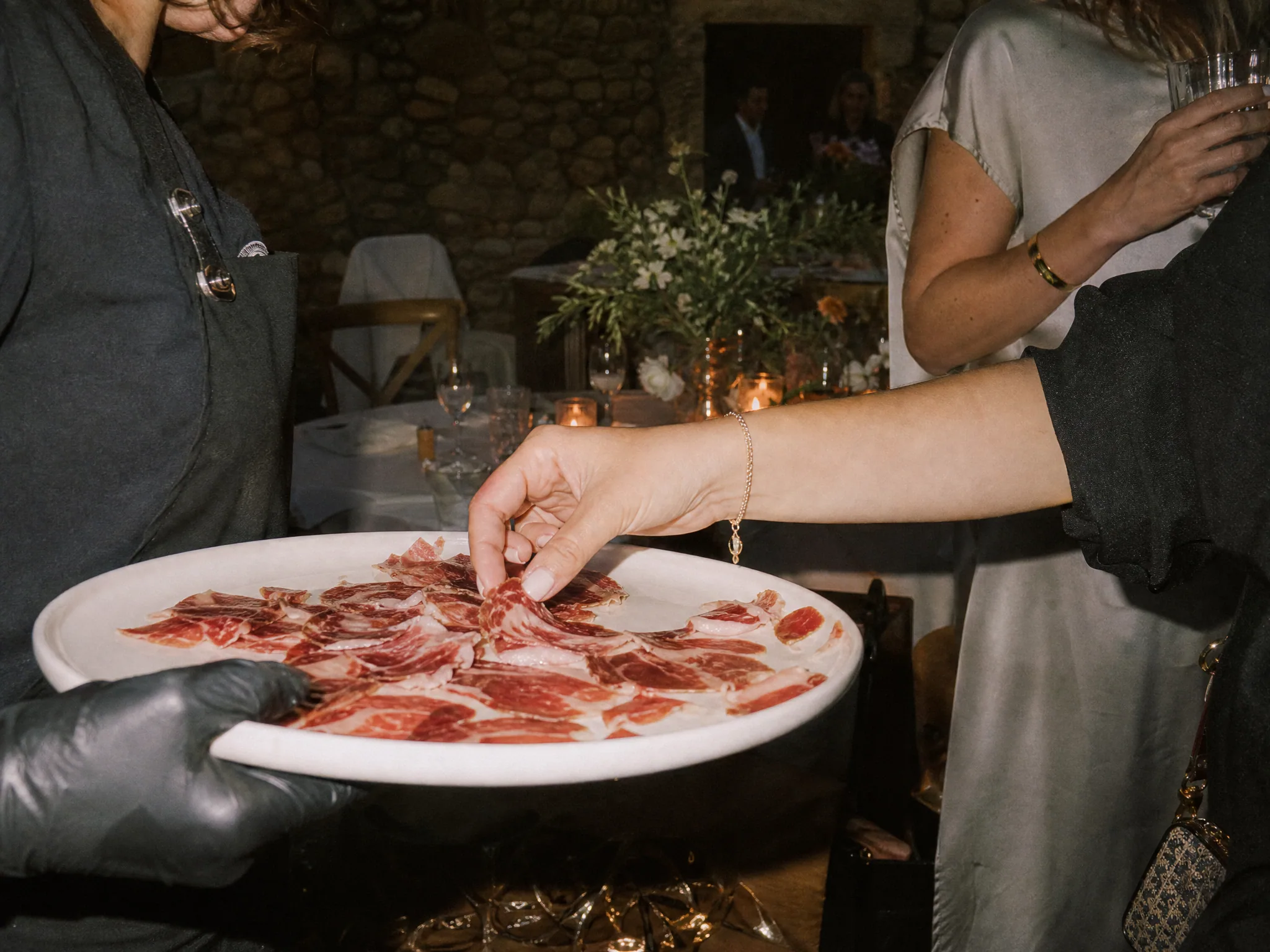
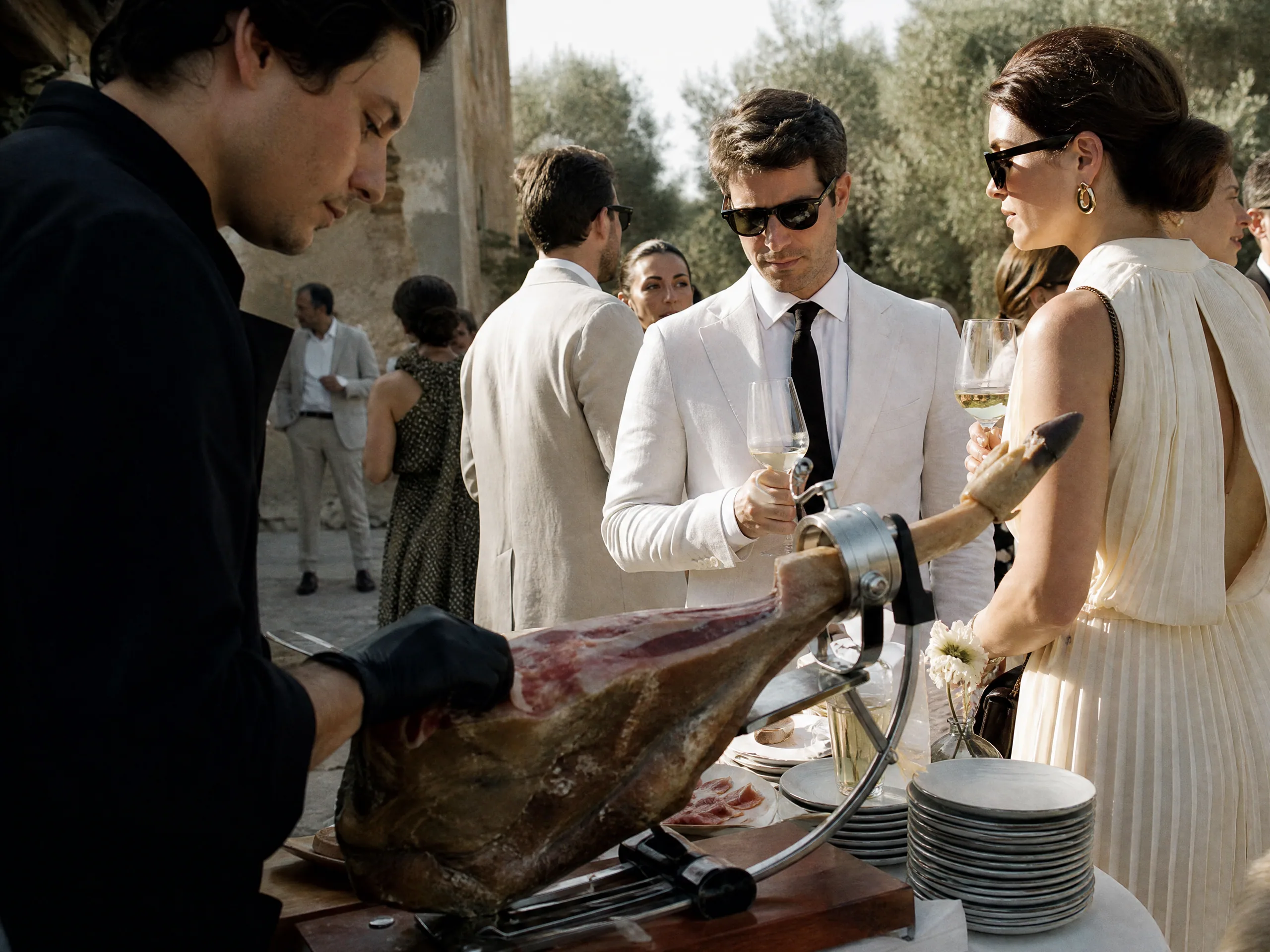
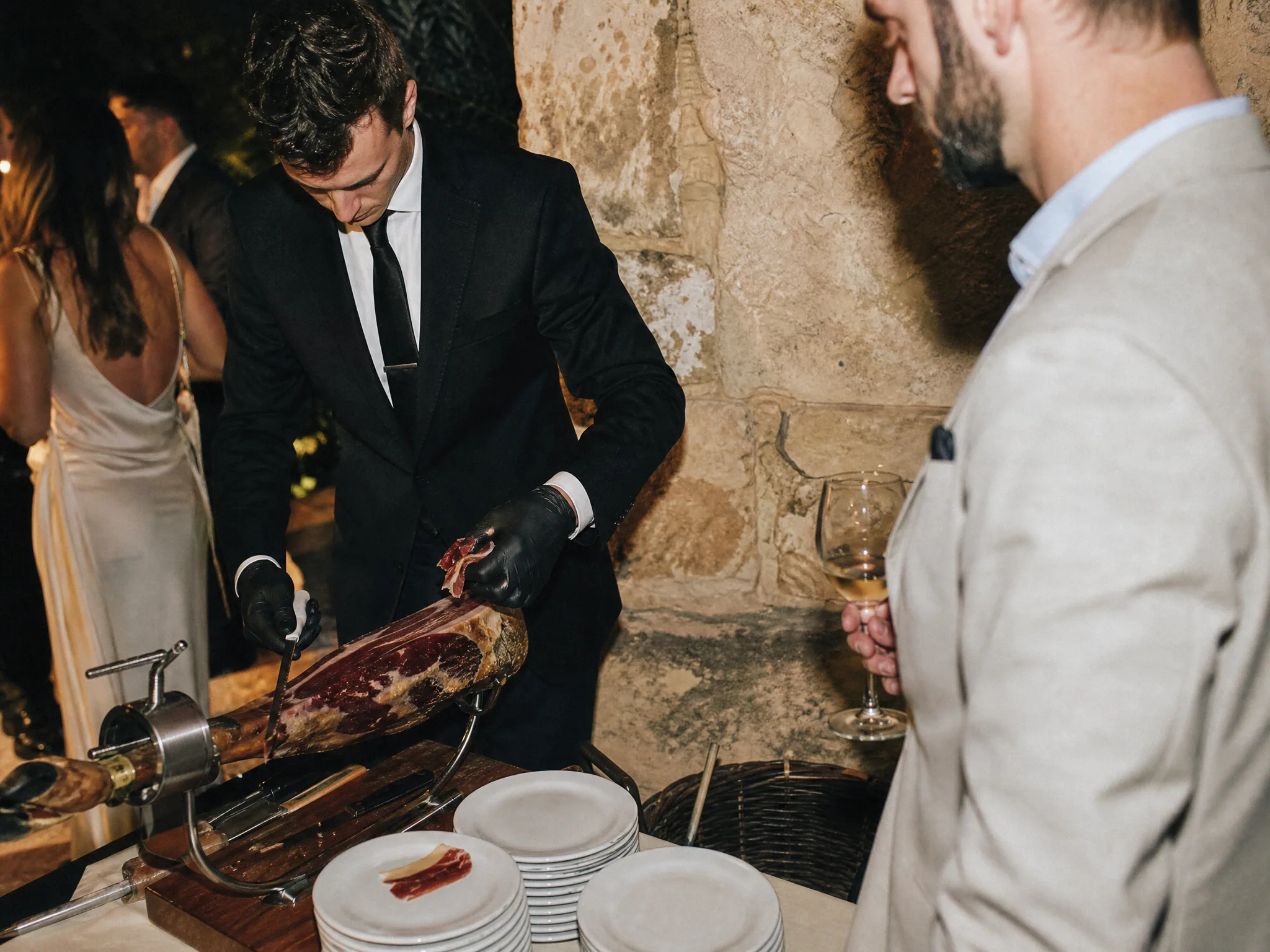
Tell guests they will see a trained carver working a whole leg on a stand (jamonero), slicing paper-thin pieces to order. This is not a buffet tray that sits out for self-service. The craft is part of the hospitality: guests watch, taste a few slices, and move on. Mention whether the station is jamón ibérico, jamón serrano, or a mix, and whether acorn-fed (bellota) product is being featured so food-curious guests understand the hierarchy without crowding the carver with basic questions.
Place the station where queues will not block the bar
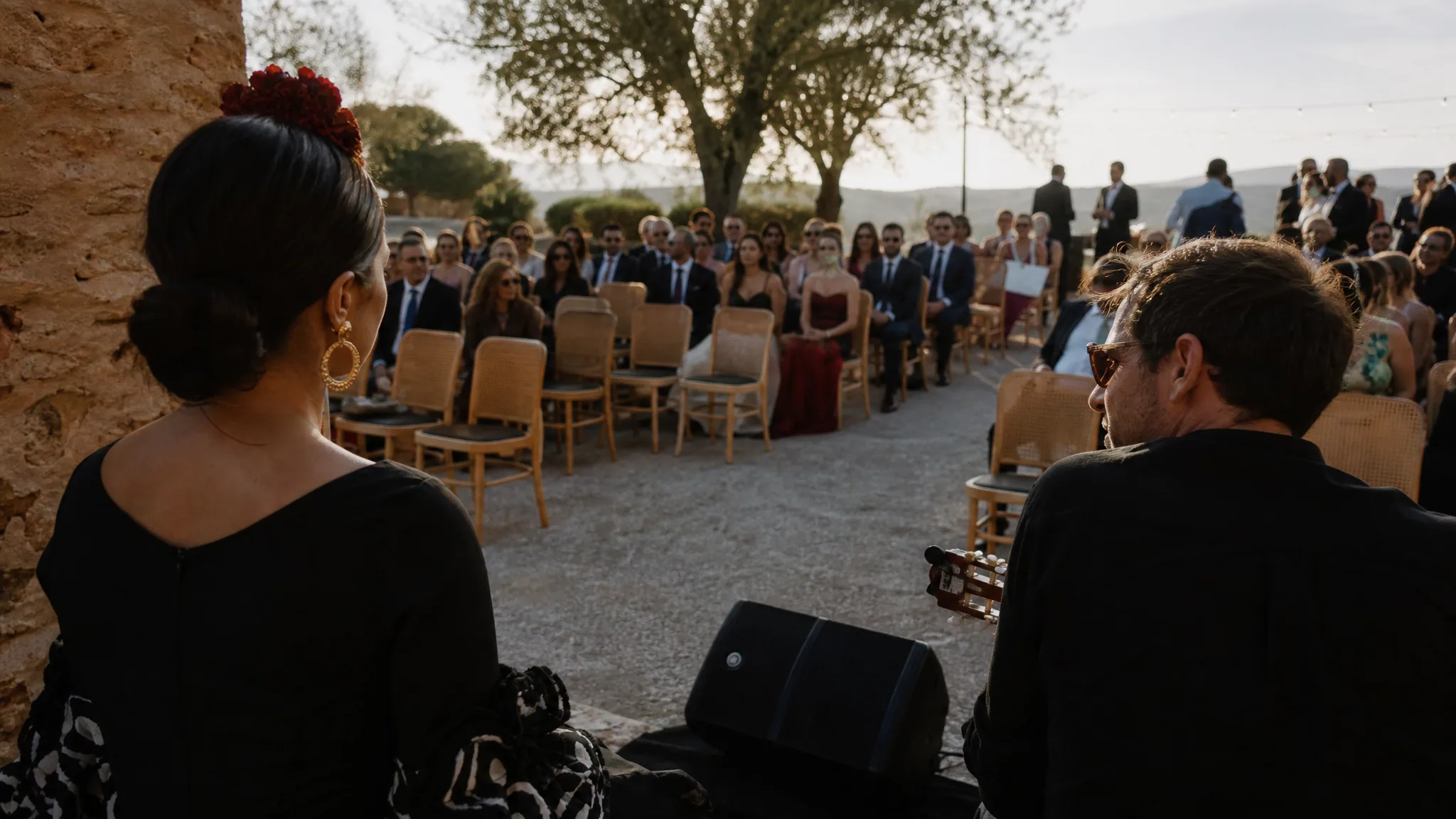
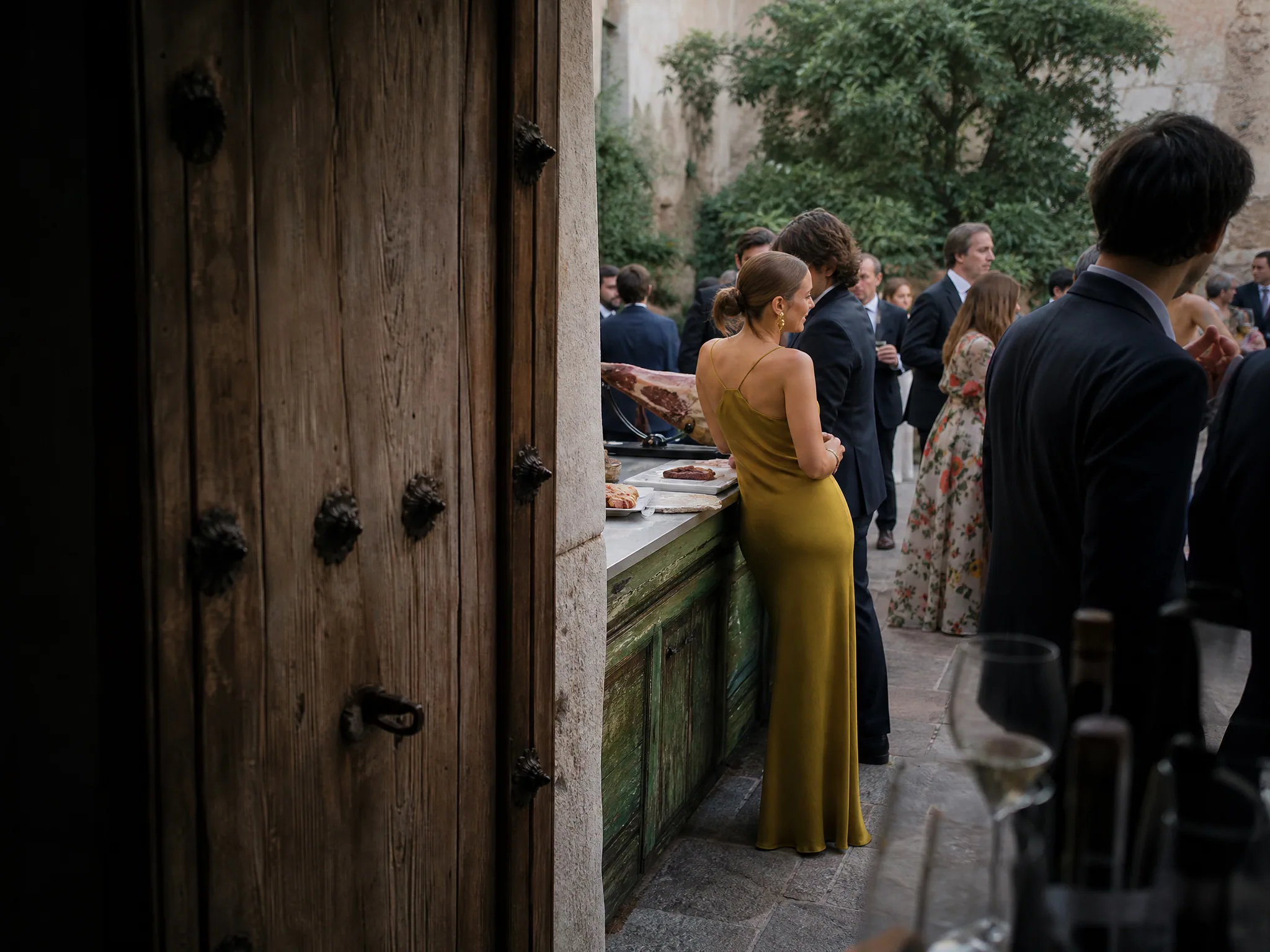
Carving draws a natural line. Position it off the main circulation path between entrance, drinks, and restrooms so the queue does not collide with champagne service or family greetings. On finca courtyards and terrace cocktail hours, leave shade for the carver and a small landing zone for plates—never force guests to hold slices over white linen or silk while chatting in full sun.
Set a tasting portion rule before doors open
International guests may treat the station like dinner. Brief them: cocktail-hour jamón is a welcome tasting—typically a few slices per visit—not a full plate before the banquet. If you want a second pass later, say so. Printed or WhatsApp wording such as “a few slices to share, then mingle” prevents the carver from becoming a bottleneck and protects dinner appetite for the seated menu.
Offer clear allergen and dietary flags
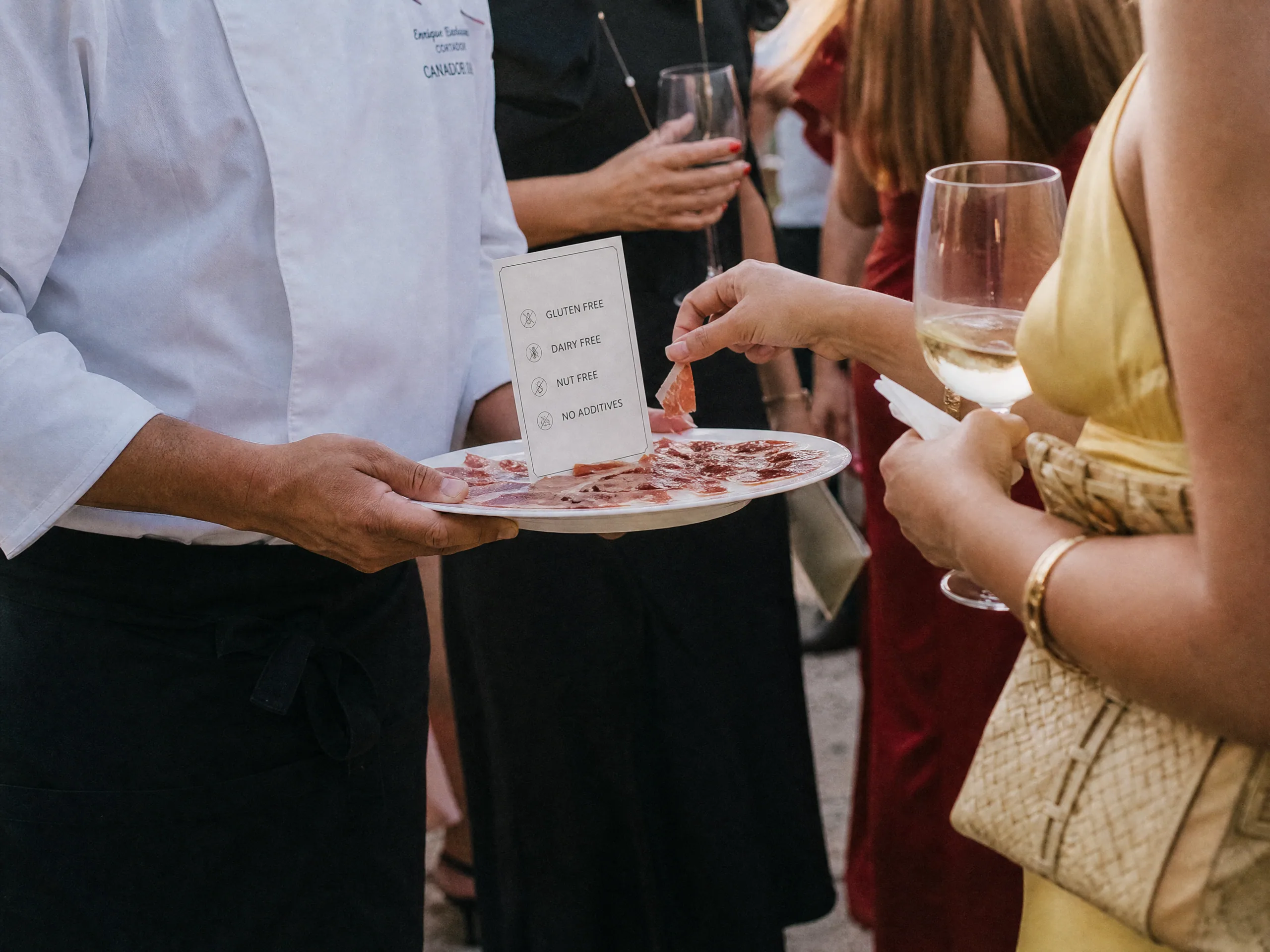
Pork is obvious to some guests and invisible to others scanning a Spanish cocktail hour. Label the station in English and Spanish, note any gluten in accompanying breadsticks or picos, and flag curing-related sodium for guests who ask. Provide a parallel non-pork bite nearby—cheese, olives, or vegetable pintxos—so guests who do not eat pork still have a signature Spanish moment without hovering awkwardly at the jamón line.
Brief servers on plate, napkin, and olive-oil extras
Thin slices need a small plate or napkin, not bare fingers over silk. Decide whether olive oil, tomato rub (pan con tomate), or crostini are offered beside the carver, and keep those props tidy. Train staff to refresh napkins, clear discarded toothpicks, and gently redirect guests who try to touch the leg—an instinctive tourist move that every professional cortador prefers to avoid.
Time the carving window against speeches and seating
Open the station after welcome drinks have started, not during the couple’s private portraits if the courtyard doubles as a photo lane. Close or pause carving ten to fifteen minutes before guests are called to dinner so the final queue does not collide with seating. If your Spanish banquet runs late, a short second carving moment after the first course can feel generous—only if kitchen timing and the cortador’s contract allow it.
Prepare hotels and drivers with a one-line guest tip
Cocktail-hour stations work best when guests arrive fed enough not to raid the jamón like a meal replacement after a long transfer. Ask hotels to mention a light afternoon snack or merienda in the welcome note, especially for overseas flights landing midday. Drivers and welcome-desk staff can repeat one sentence: tasting station at cocktail hour, full dinner to follow.
Photograph without blocking the knife
Guests will film the cortador. Create a marked photo spot to the side so phones do not lean over the blade line. Ask your wedding photographer to capture the craft early, then keep the working radius clear. A short unplugged or “no flash over the station” note protects both safety and the carver’s concentration.
Sample guest message you can send this week
“Cocktail hour includes a live Spanish jamón carving station. Come taste a few thin slices, leave room for dinner, and give the cortador space to work—plates and napkins will be ready beside the stand. If you do not eat pork, we have other Spanish bites nearby. See you in the courtyard.”