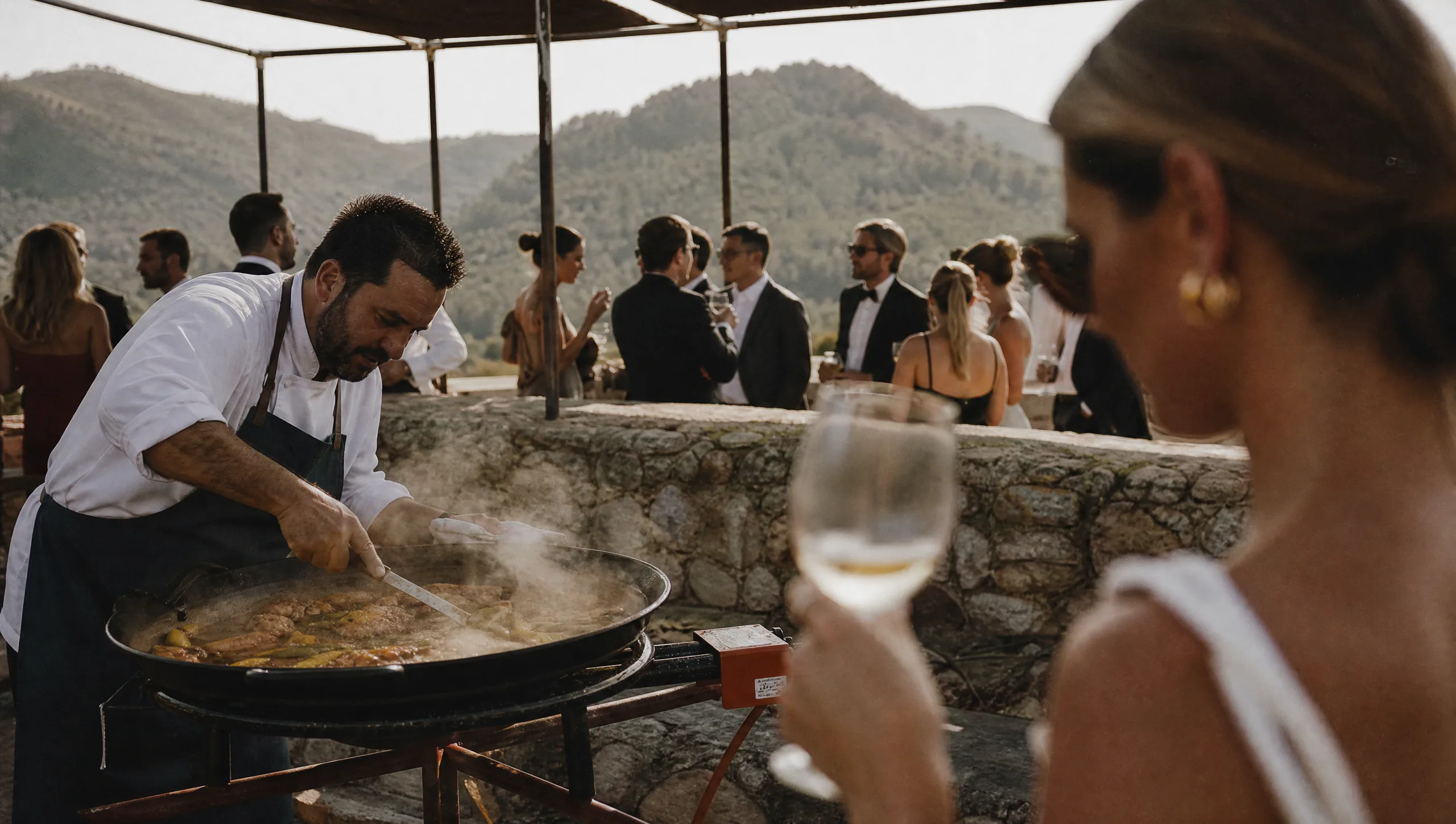
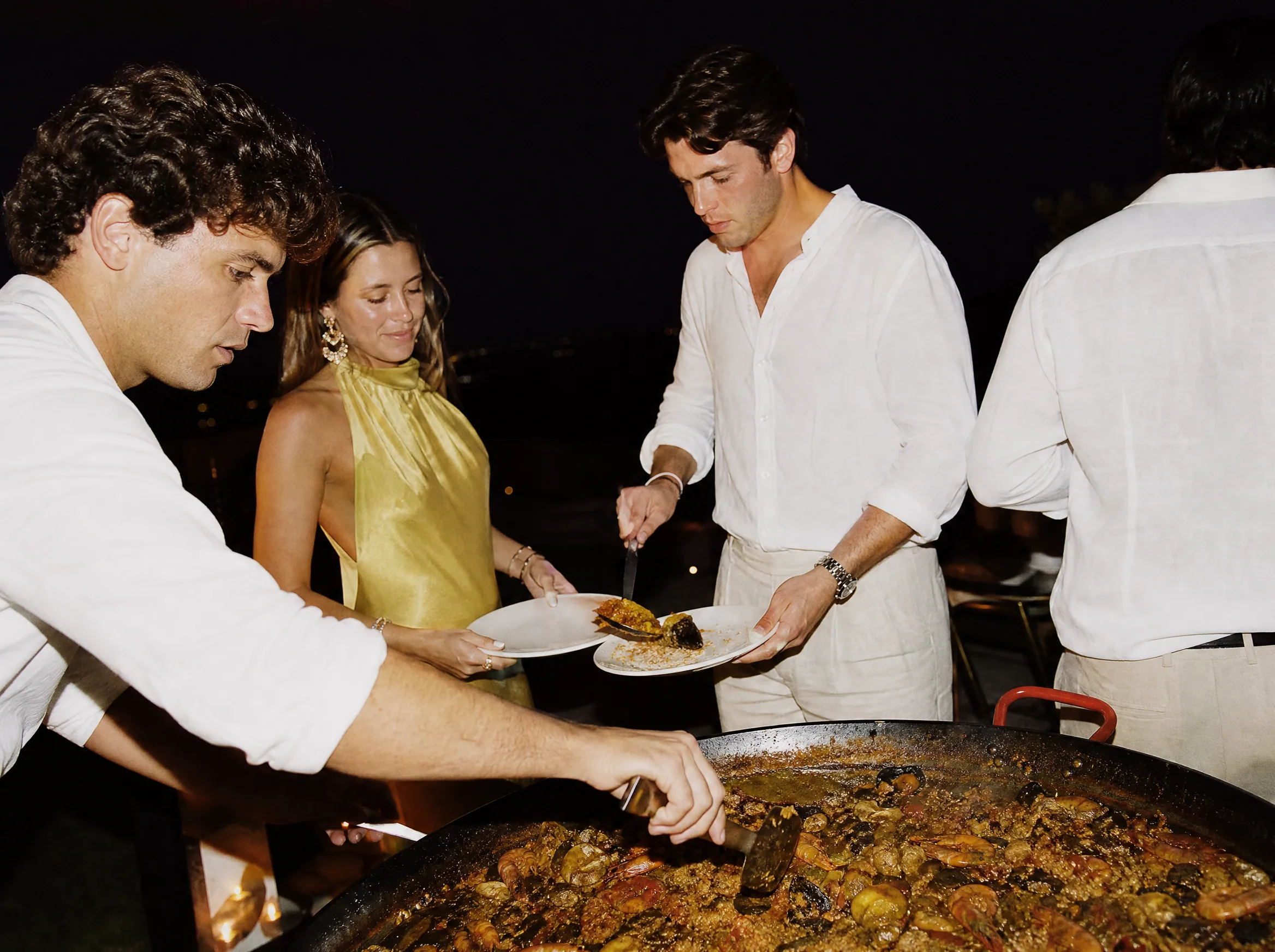
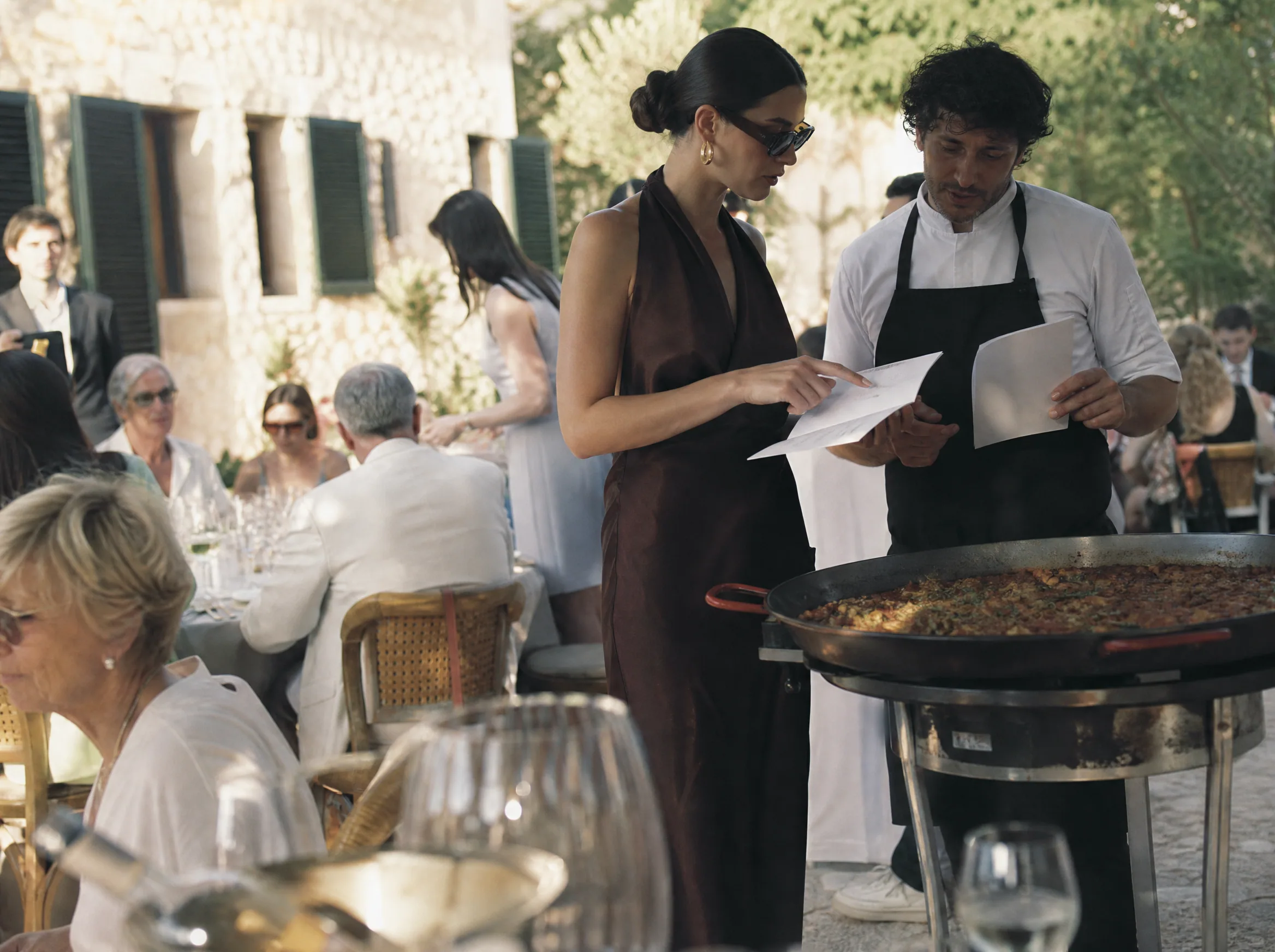
A live paella show-cooking station is one of the most cinematic food moments at a Spanish destination wedding—and one of the easiest to mismanage for international guests. Travelers who know paella only from airport restaurants often do not expect the wide pan, the standing wait, the communal scooping style, or the etiquette around the prized socarrat crust before a seated banquet.
A clear guest briefing keeps the spectacle elegant instead of chaotic: people know when to watch, when to taste, what allergens to ask about, and how to leave appetite for the meal that follows. Here is how to set expectations for destination-wedding guests without turning Valencian rice into a lecture.
Explain what show-cooking actually is
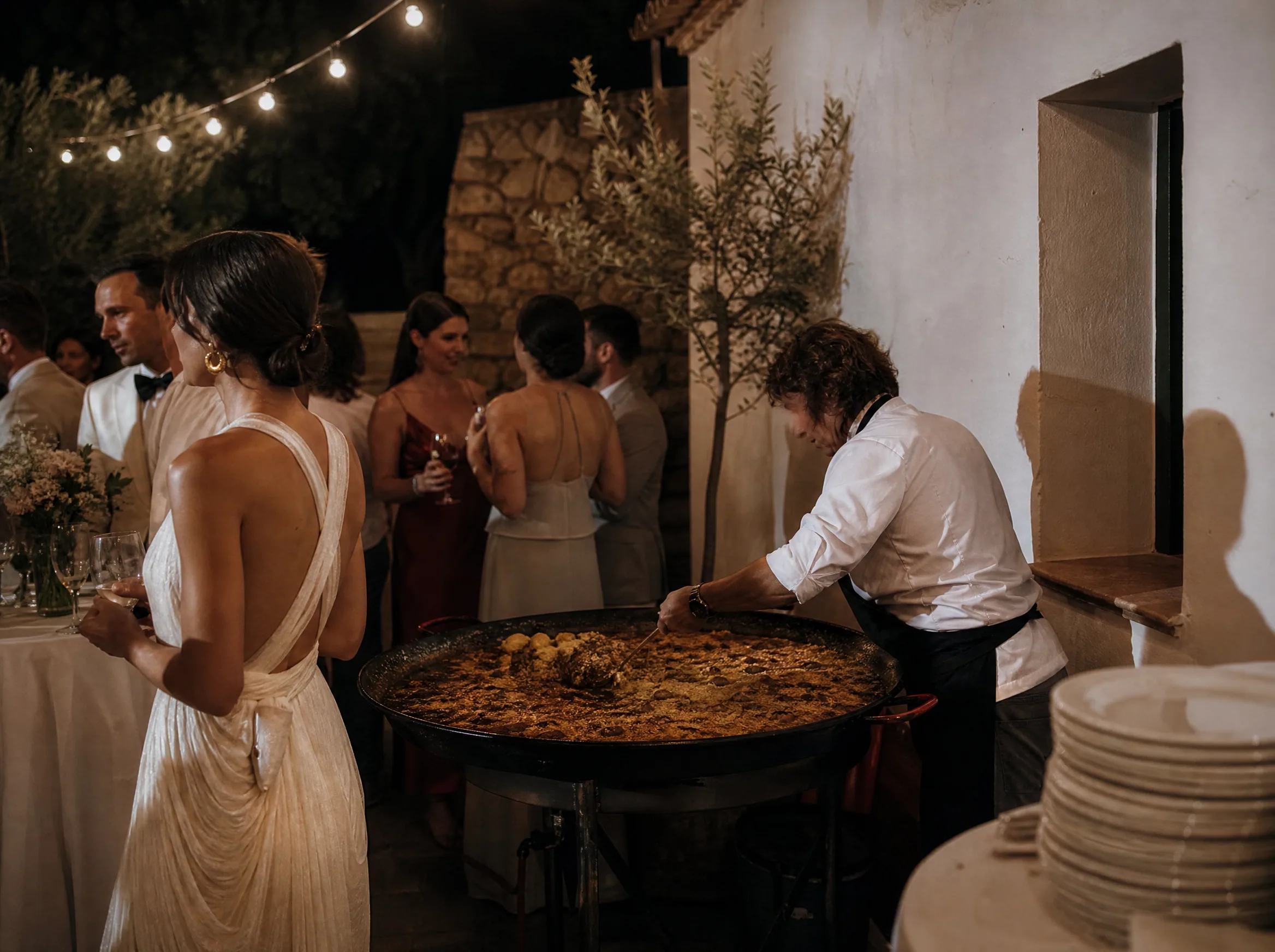
Tell guests whether they are watching a demonstration with a later plated course, tasting small scoops from the open pan, or receiving their main rice course directly from the paellera. International guests often assume “paella station” means buffet self-service; Spanish wedding teams usually mean a chef-led fire pan with controlled portions. One sentence in the welcome note—“watch first, then receive a plated scoop from the chefs”—prevents guests from hovering with empty plates too early.
Place the pan where heat and queues will not block the bar
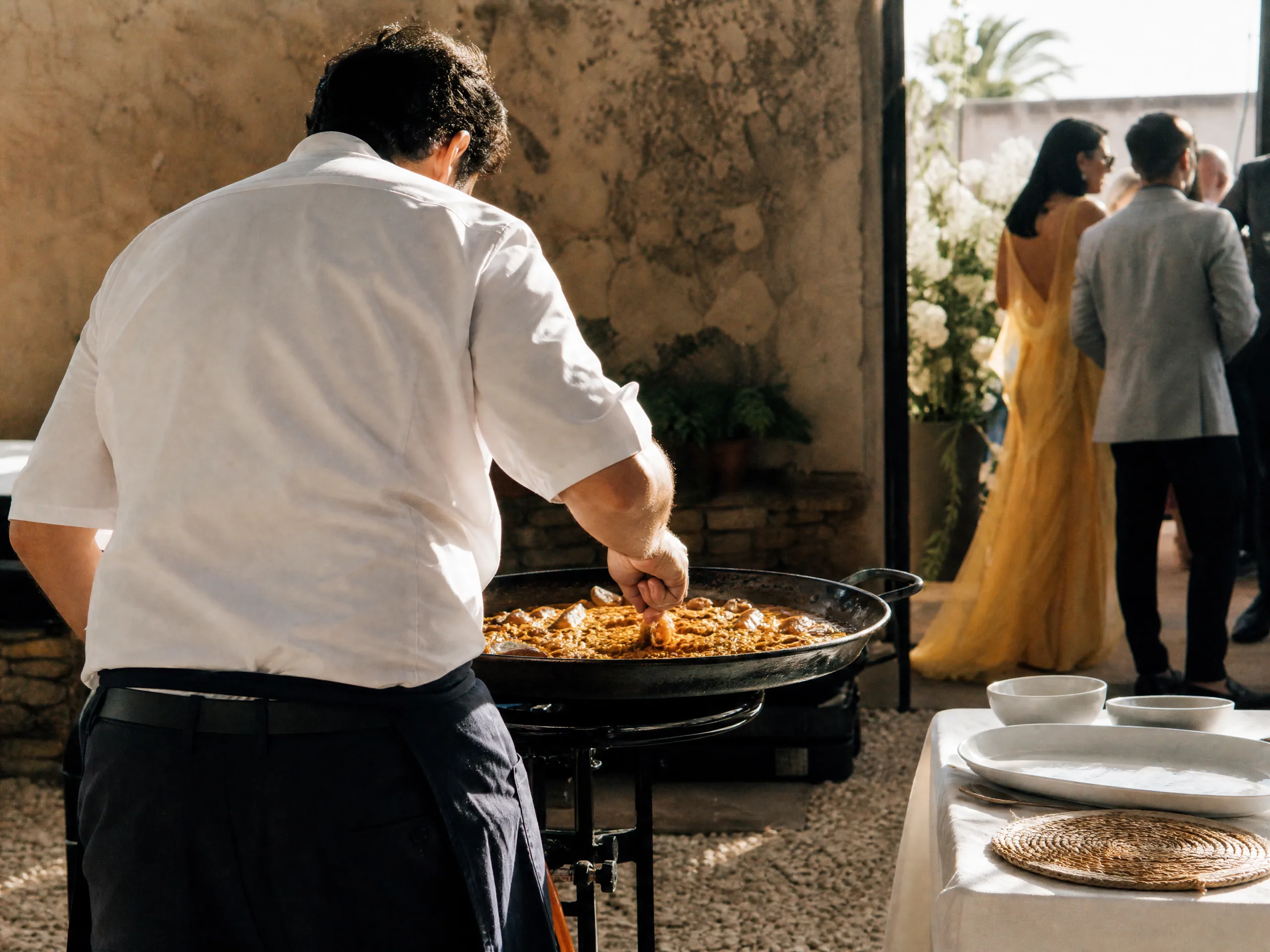
Live paella needs ventilation, stable ground, and a clear safety ring around the burner. Brief guests that the cooking zone is for viewing from a marked perimeter, not for crowding the flame for photos. Keep the bar, restrooms, and ceremony exit paths clear of the queue so cocktail-hour flow does not collapse into a single bottleneck around the pan.
Set tasting versus plated-service rules before doors open
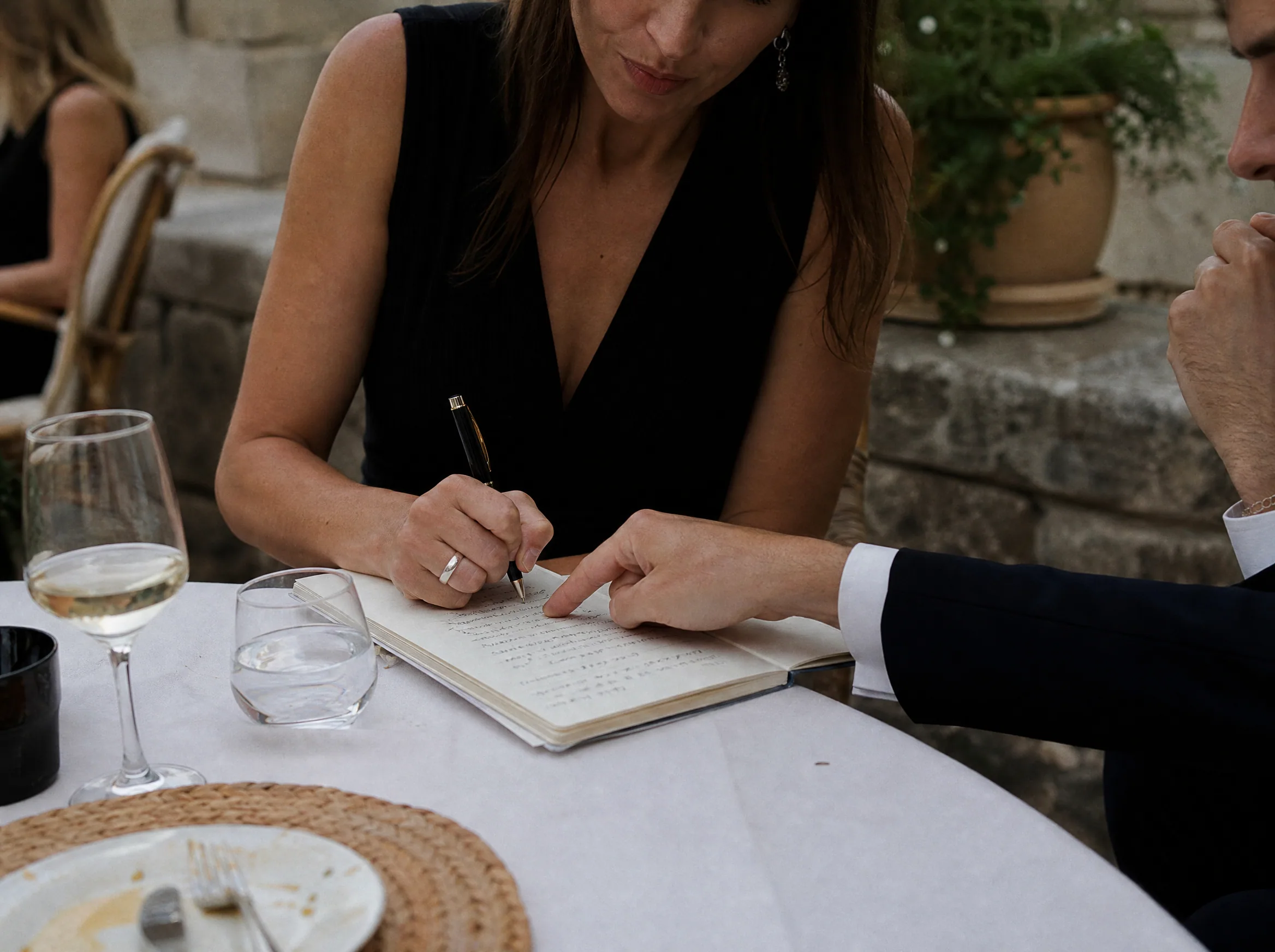
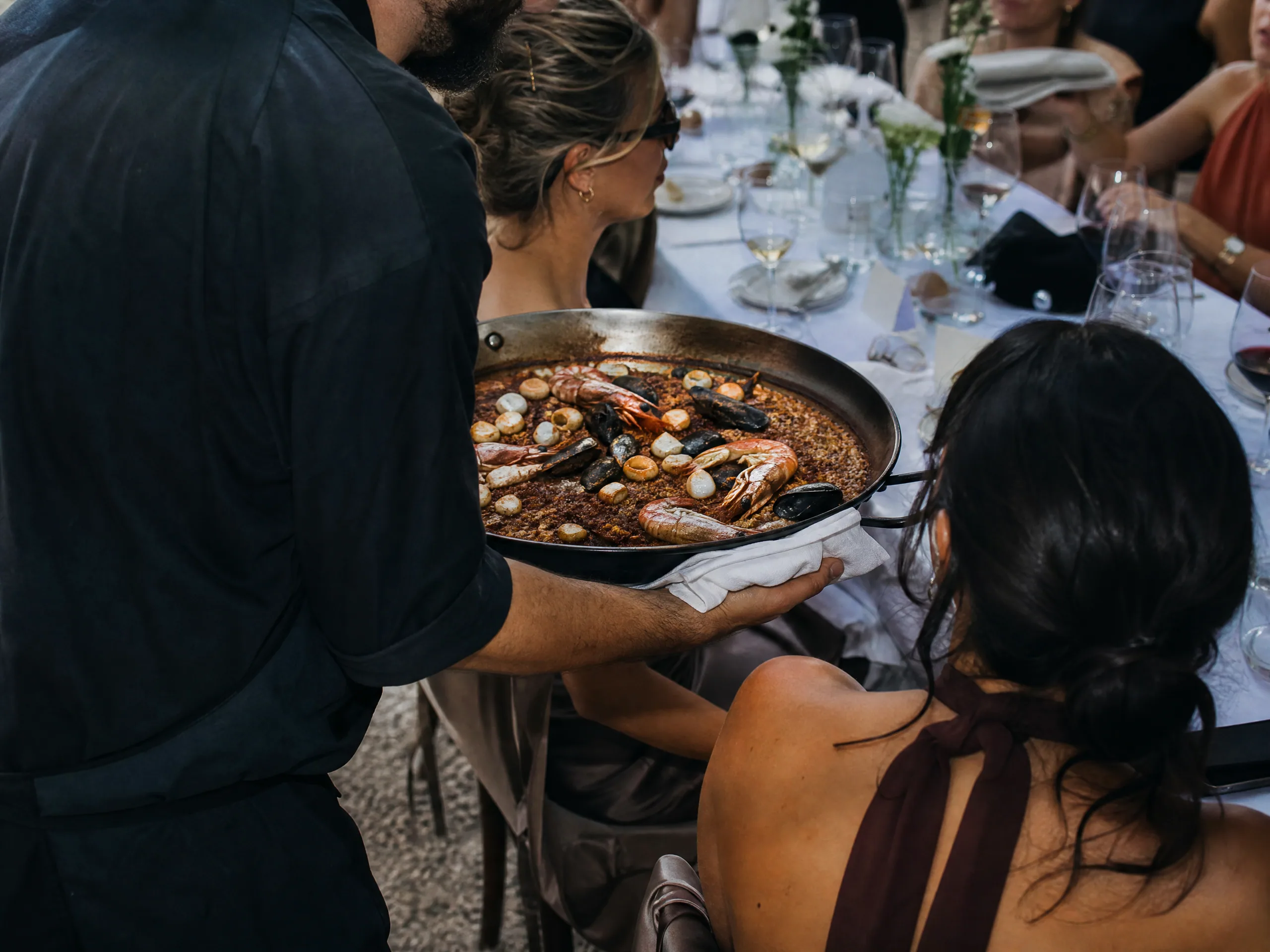
Decide in advance: tasting spoons only, half-portions at cocktail hour, or full main-course service from the pan. Publish that rule to hotels and ushers. Guests who fill up on early scoops may struggle with the banquet that follows; guests who wait politely may miss the warm center if service ends abruptly. A timed window—“first scoops at 19:40, last call at 20:10”—keeps fairness visible.
Offer clear allergen and dietary flags
Classic seafood, mixed, or vegetarian paellas look similar from across a lawn. Label each pan for shellfish, gluten-related cross-contact, sofrito bases, and vegetarian stock. Train servers to answer “is there shrimp stock in the vegetarian pan?” without improvising. International guests with allergies should not have to decode Spanish menu slang mid-queue.
Brief servers on plates, lemon, and aioli extras
Show-cooking stations often attract lemon wedges, aioli cups, and bread that multiply napkin waste and sticky hands before speeches. Pre-stage plates, forks, and wipe stations downwind of the smoke. Tell guests whether lemon and sauces are self-serve or passed—small details that keep formalwear cleaner during golden-hour photos.
Time the cooking window against speeches and seating
Paella needs uninterrupted heat; speeches need quiet attention. Align the chef’s final stir with your timeline so the dramatic reveal does not collide with welcome toasts or family formals. If seating begins while the last scoop is still hot, assign one runner to finish plating quietly rather than announcing last call over the microphone.
Prepare hotels and drivers with a one-line guest tip
Room-block desks and shuttle captains get the same questions: “Do we need to rush to see the paella?” Give them one line—“Arrive for cocktail hour by 19:15 if you want to watch the pan finish; plated scoops continue until 20:10.” Consistent messaging reduces WhatsApp panic across language groups.
Photograph without blocking the flame
Guests will want the wide-pan shot and the chef-ladle close-up. Mark a photo arc opposite the burner and ask ushers to keep phones out of the safety ring. Your photographer can capture the drama; guests can take secondary shots from the viewing line without delaying service or risking a trip near hot oil.
Sample guest message you can send this week
“During cocktail hour we will have a live Spanish paella show-cooking station. Please watch from the marked viewing line—do not step inside the chef’s safety ring. Chefs will plate scoops for guests starting at 19:40 (last call ~20:10). Shellfish and vegetarian pans will be labeled; tell a server about allergies before tasting. Leave a little appetite for the seated banquet that follows—and save the phone photos for the photo arc so the pan stays safe and the line keeps moving.”