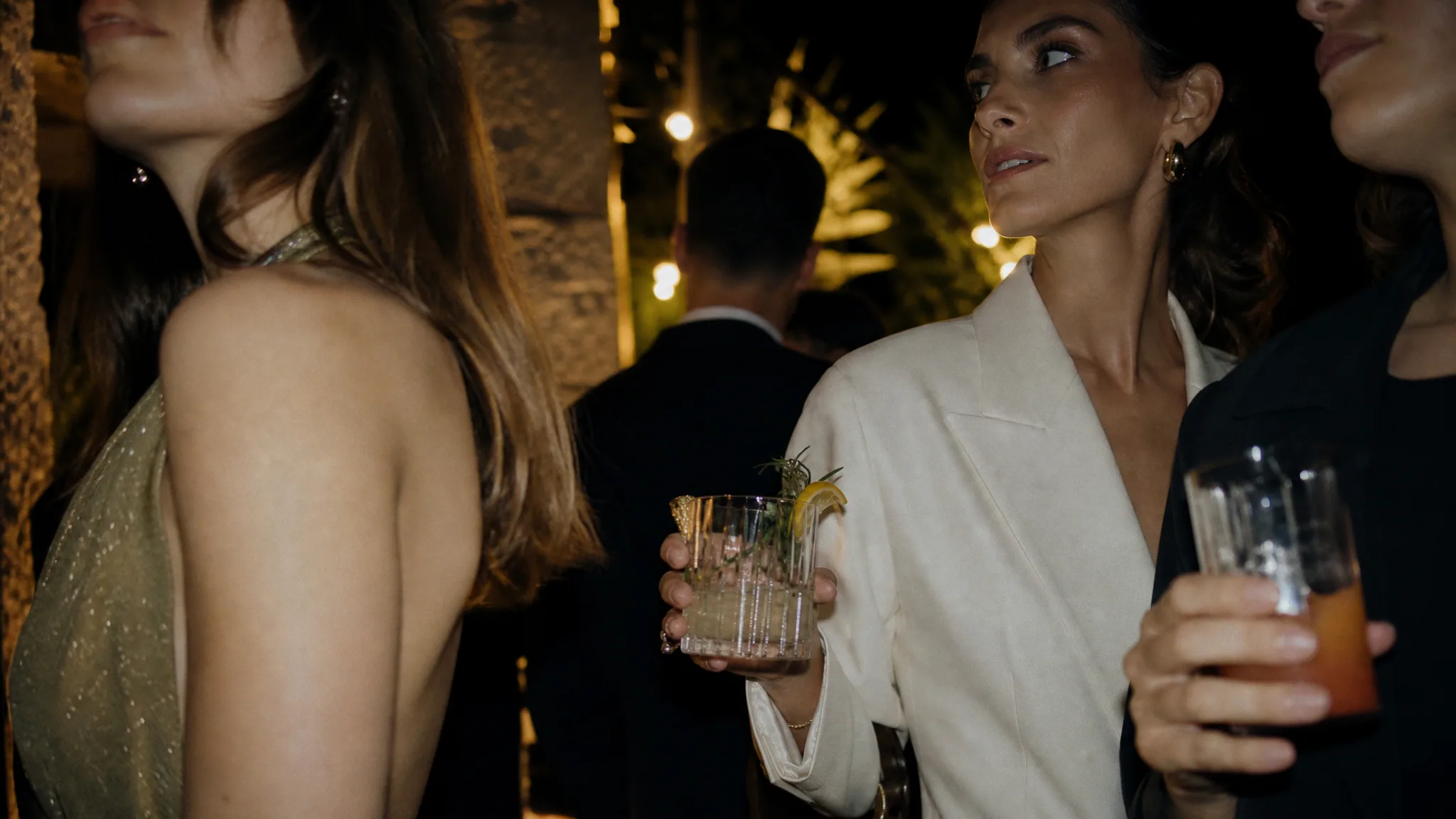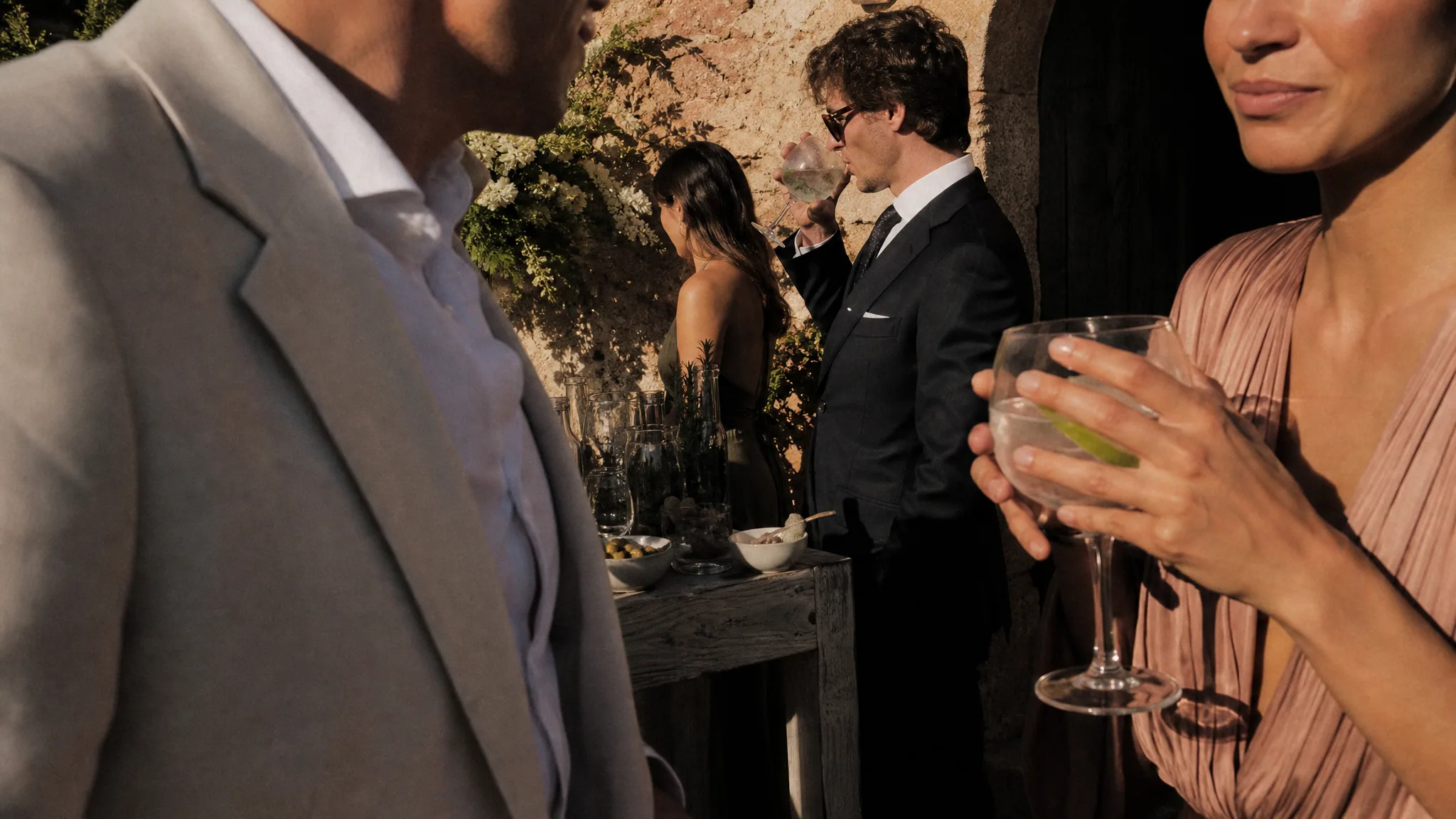
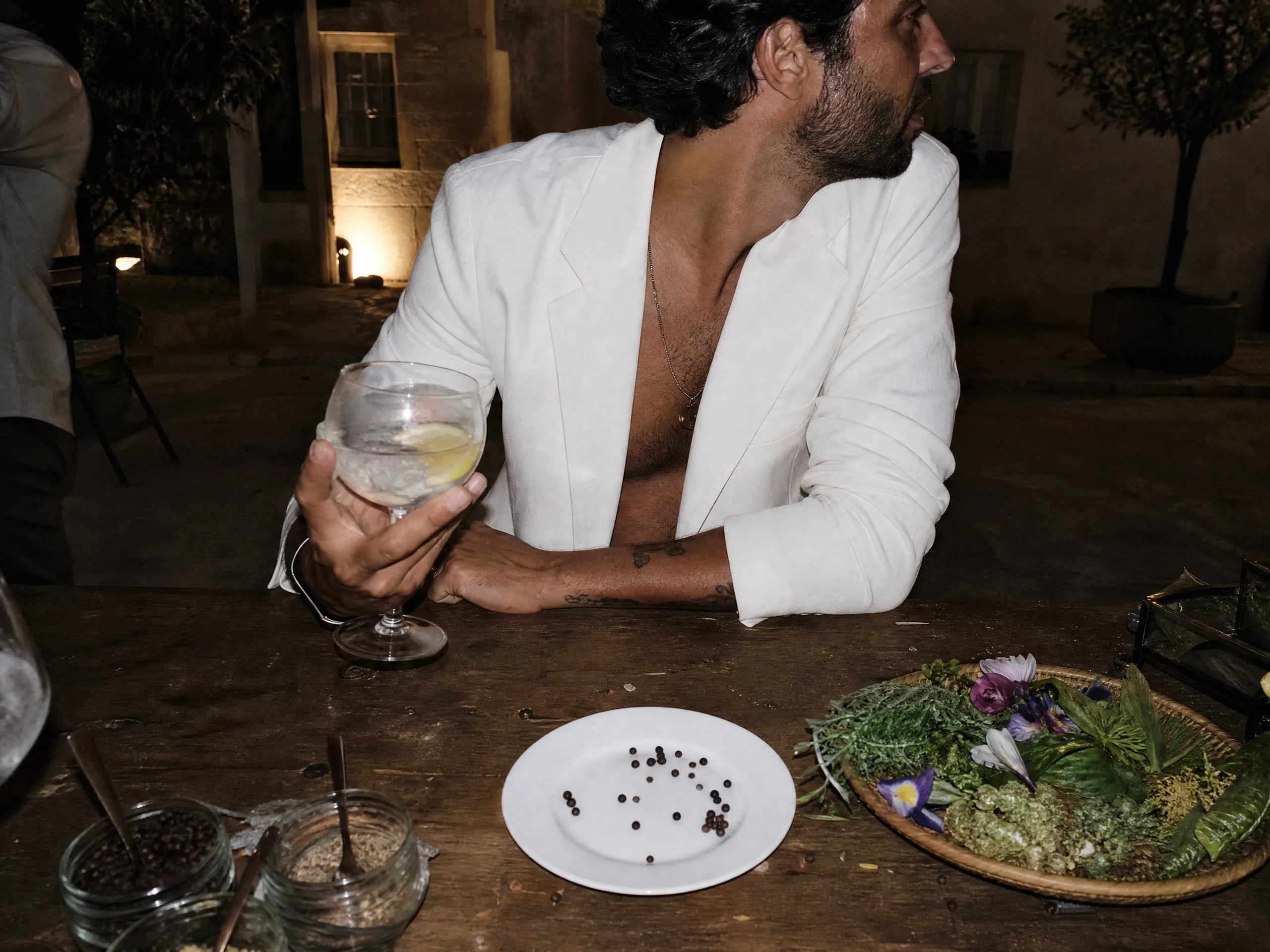
Spain did not invent gin and tonic, but it perfected the gin-tonic as a ritual: oversized balloon glass, lots of ice, a chosen tonic, and a garnish that matches the botanicals—not a random lime wedge dropped in for show. For destination wedding guests flying in from the US, UK, or Northern Europe, that difference is part of the weekend’s hospitality. Done well, a gin-tonic station becomes a conversation piece. Done poorly, it becomes a sticky queue in the sun.
This guide is for couples and planners hosting cocktail hours, welcome drinks, or after-dinner bars at Spanish destination weddings—coastal estates, city rooftops, vineyard terraces, or hotel courtyards—who want guests to understand the ritual without a bartender lecture every thirty seconds.
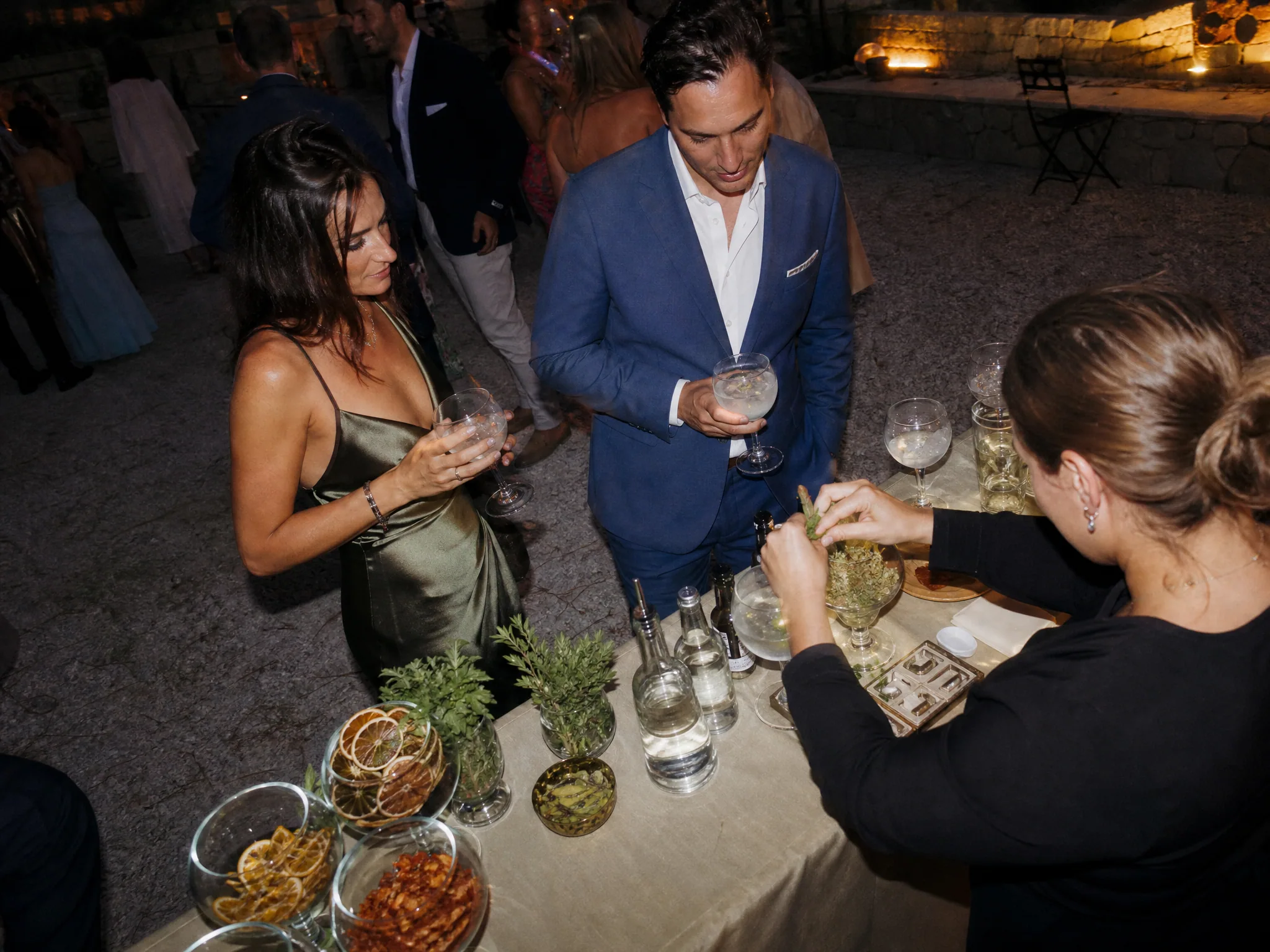
Why Spanish gin-tonics need a guest brief
International guests often expect a standard G&T: small glass, one tonic, lemon or lime. Spanish service is slower by design—ice first, gin measured, tonic poured gently down a bar spoon, garnish placed last. Without a brief, guests may think the bar is “behind,” tip poorly, or abandon the line for wine. A short message sets expectations: this is a craft station, not a speed rail.
Also brief dietary and preference reality: many Spanish gins are juniper-forward or citrus-led; some guests want lower ABV; others need a zero-proof twin that still feels ceremonial. Saying “we have a gin-tonic station” without those options creates quiet frustration.
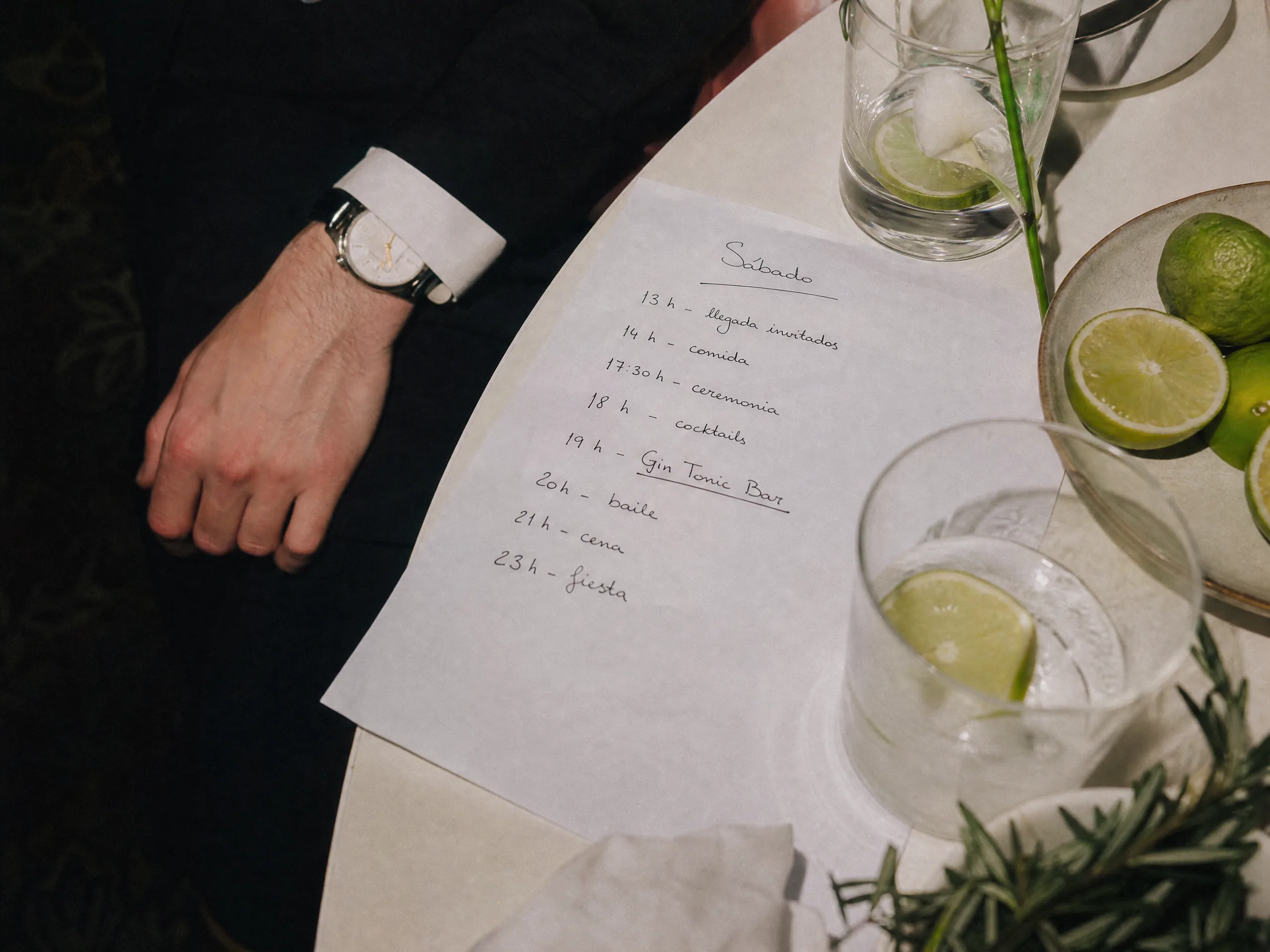
Place the station in the weekend timeline
Gin-tonic stations work best as a focused window, not an all-night open bar masquerading as craft. Typical fits:
- Welcome-night terrace drinks (45–75 minutes)
- Ceremony-to-dinner cocktail hour (60–90 minutes)
- A short post-dinner “second wind” before dancing (20–30 minutes)
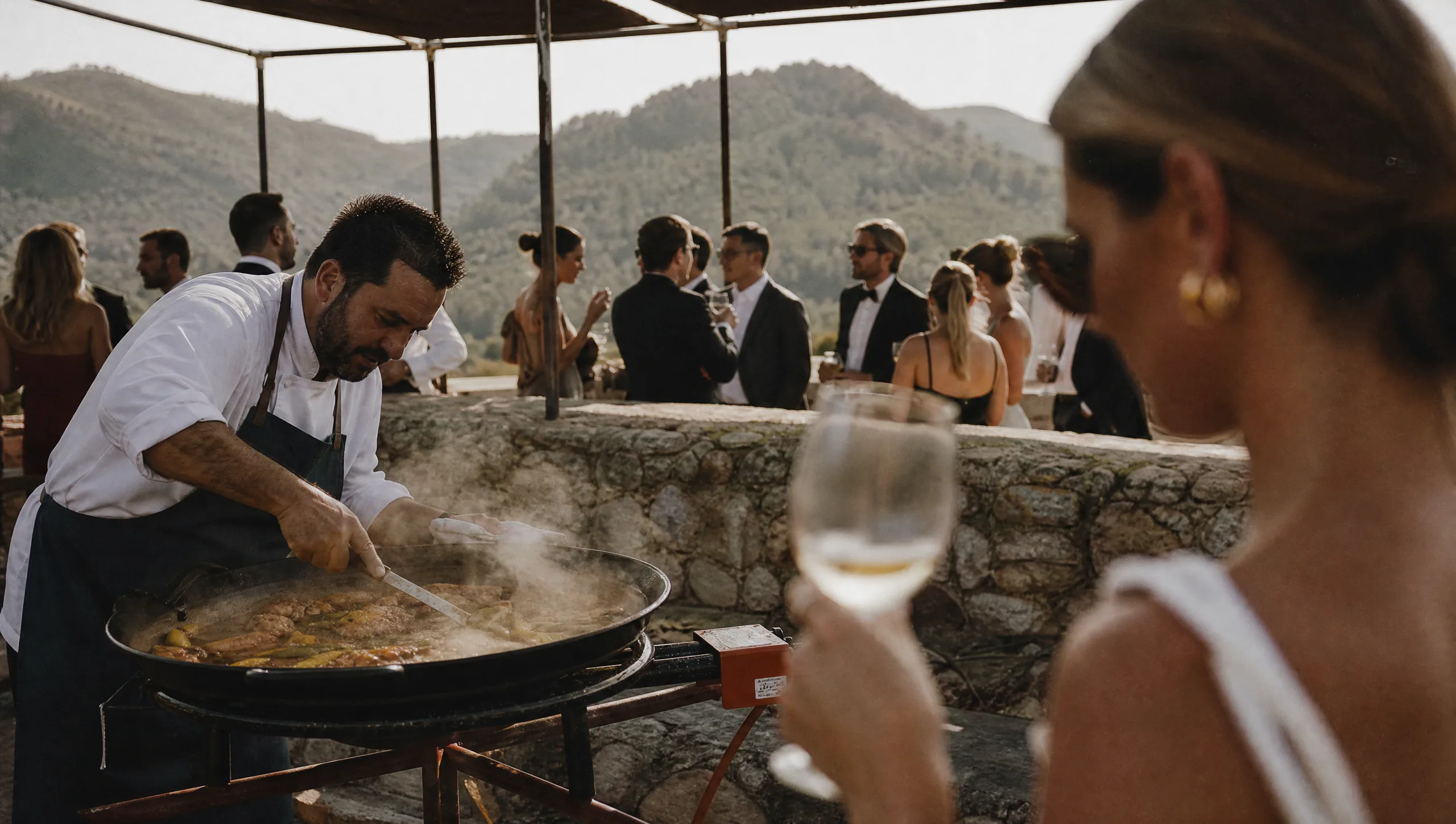
Avoid launching a full botanical station immediately after a heavy lunch or during peak sun with no shade. Heat plus gin plus standing queues is how you lose guests before dinner. If your outdoor cocktail hour is midday-adjacent, prioritize shade, water, and a shorter gin window—or move the station to golden hour.
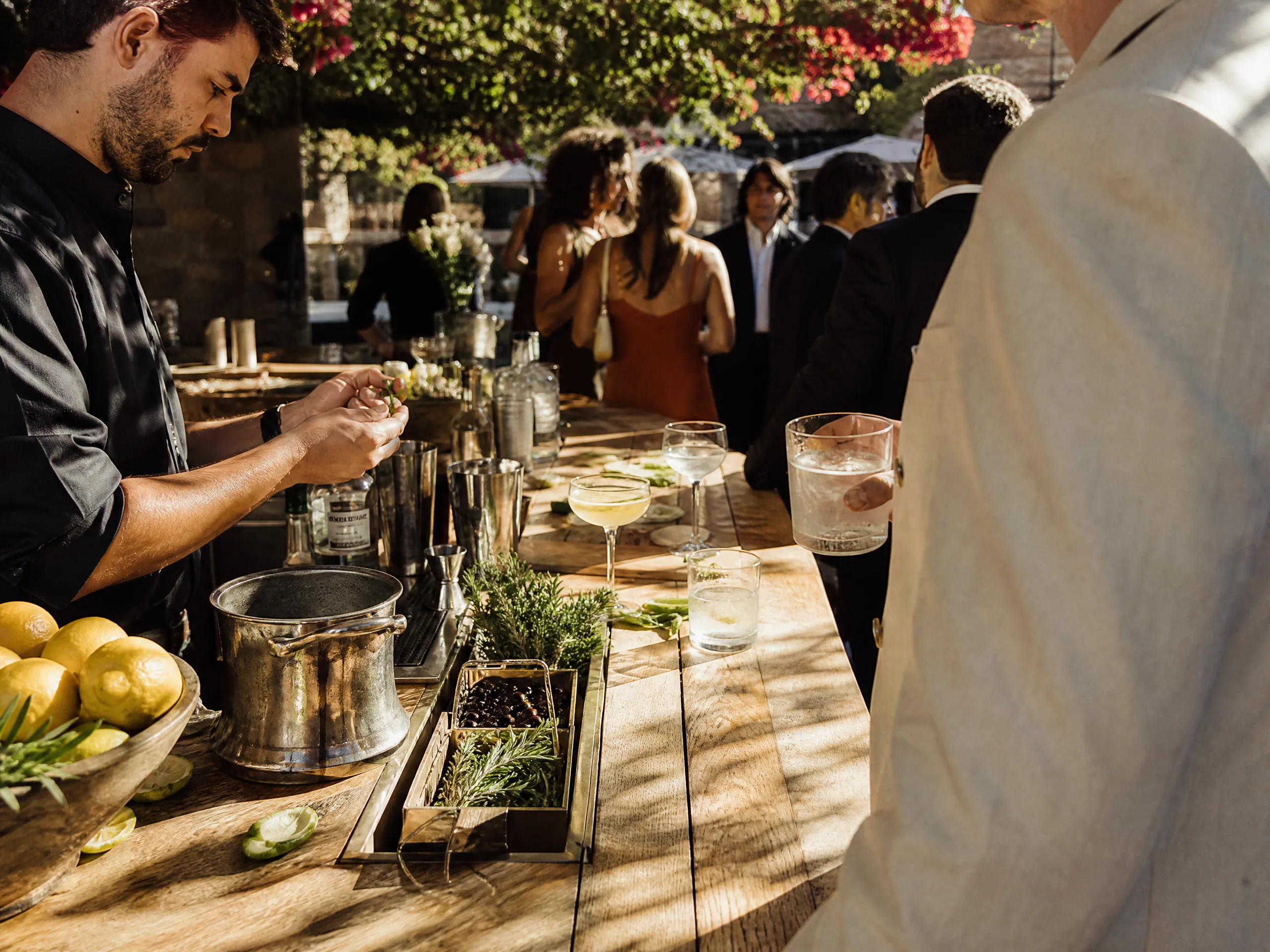
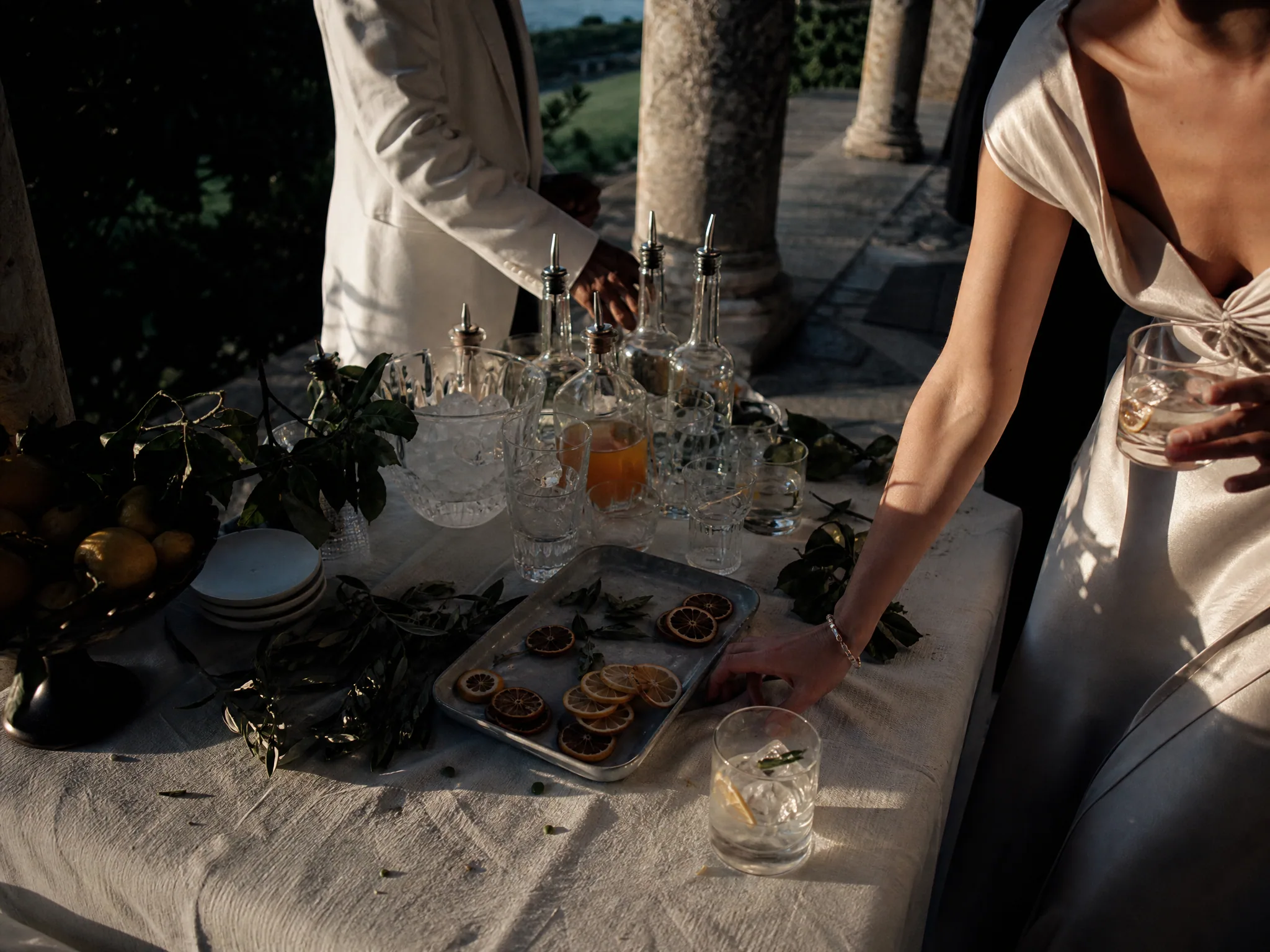
Design the station like a vendor, not a hotel minibar
Ask your caterer or mobile bar for a Spanish-style setup:
- Balloon glasses (or a clear backup if glassware counts are tight)
- Abundant ice and a plan to replenish it mid-service
- 2–4 gin options with distinct botanical profiles (citrus, floral, classic juniper, maybe a local Spanish label)
- 2 tonic styles (classic and a lighter/floral or Mediterranean tonic)
- Garnish mise en place: citrus peels, rosemary, thyme, juniper berries, cucumber, pink peppercorn—matched to each gin
- A small printed “pairings” card in English (and Spanish if your bar team prefers)
Confirm whether the station is bartender-served only or includes a guided self-serve garnish step. Mixed models confuse guests; pick one and brief it.
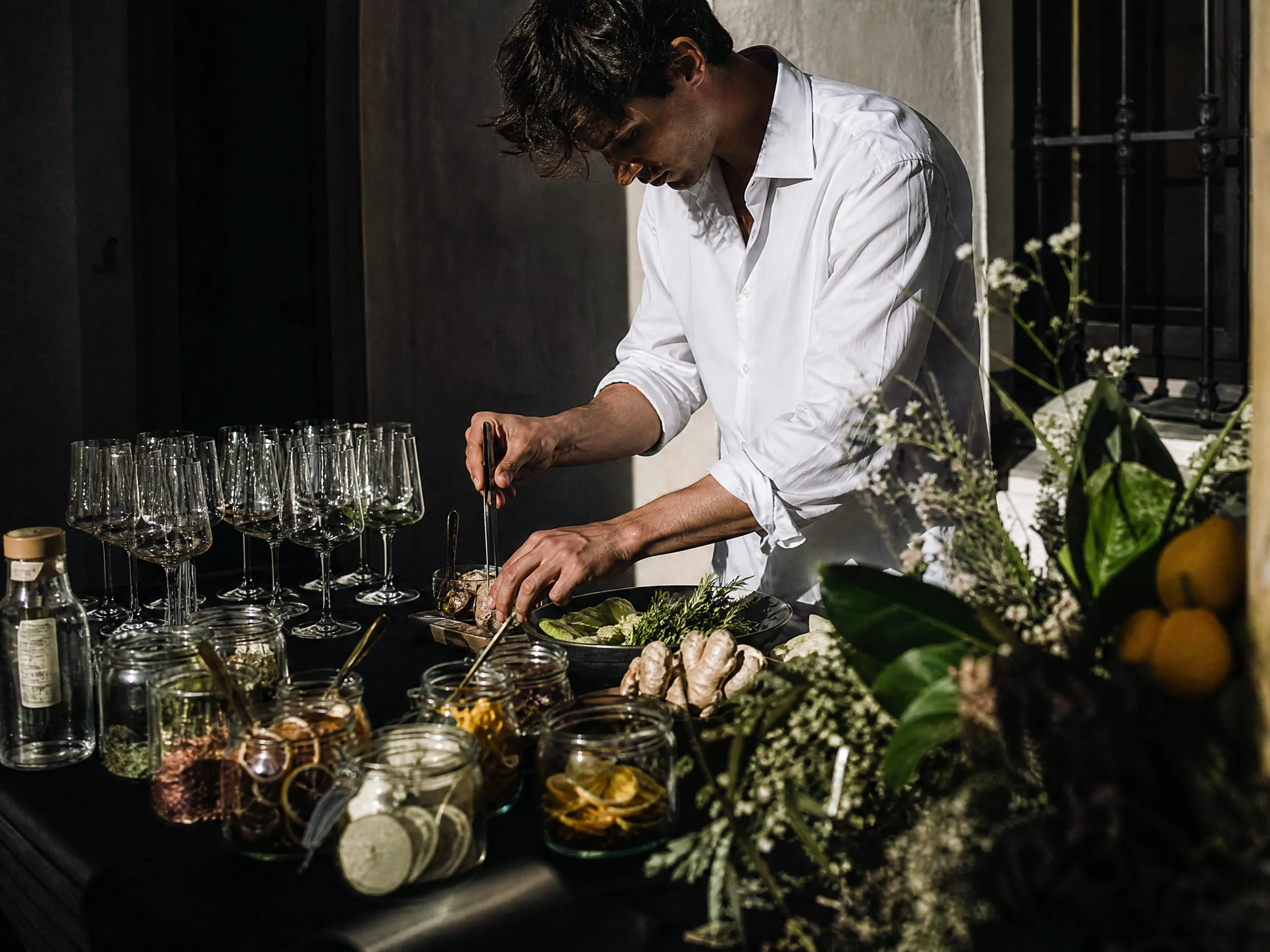
Brief the garnish ritual before guests arrive
Guests do not need a masterclass—they need three lines:
- Choose a gin (or ask the bartender for a recommendation).
- Choose a tonic.
- Accept the suggested garnish; don’t invent a fruit salad.
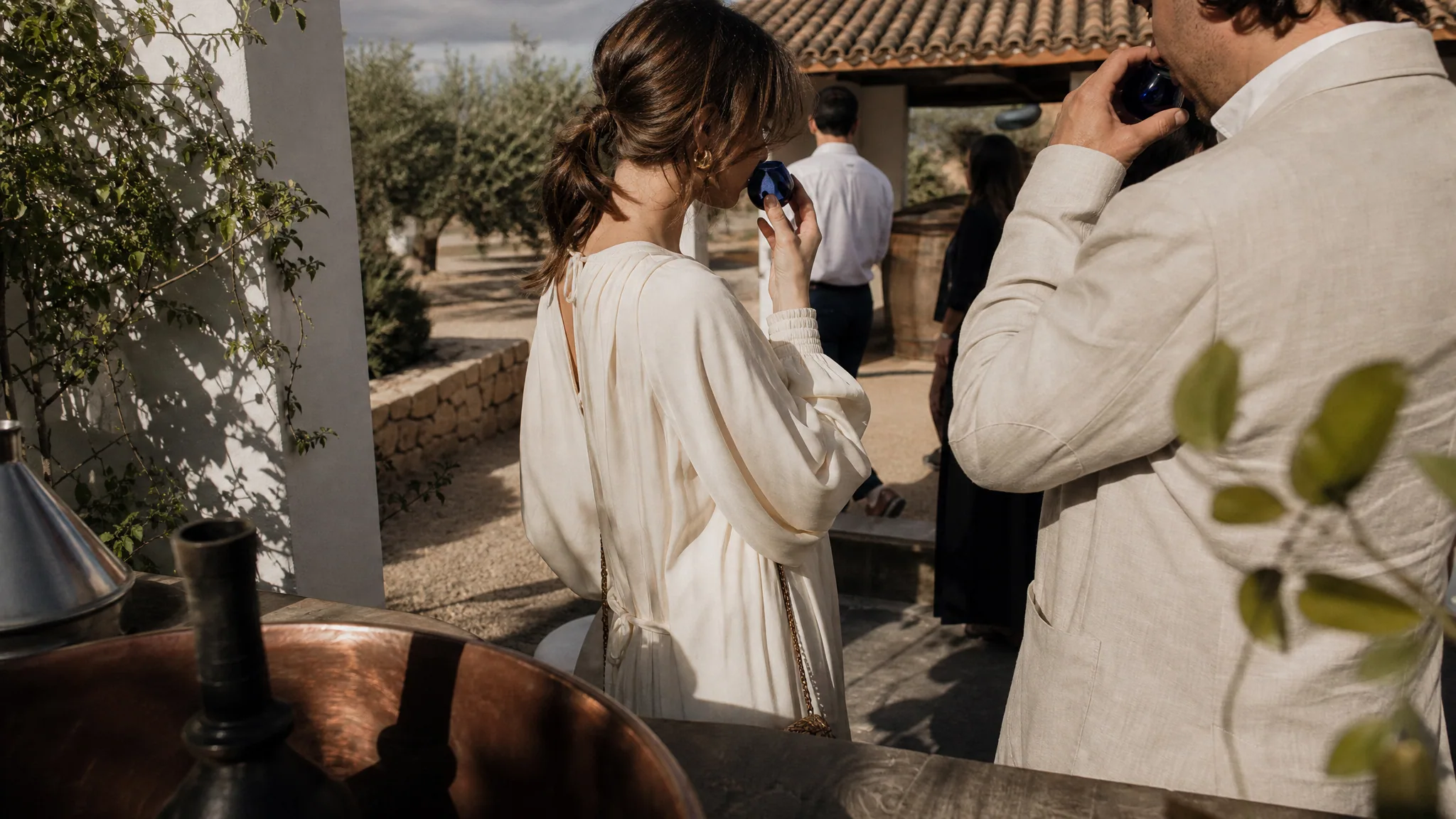
If you want interaction, invite guests to smell a garnish sprig before it goes in the glass—simple, photogenic, and very Spanish gin-bar energy. Discourage squeezing every citrus wedge into the drink; oils from a peel express differently than juice, and bartenders will thank you.
Heat, ice, and outdoor service practicalities
Spanish late-spring through early-autumn cocktail hours punish soft ice and thin glassware. Confirm:
- Ice volume for the full window (plus 20% buffer)
- Shade or misting for the queue, not only the VIP lounge
- Non-slip mats if condensation pools on stone terraces
- A water or soft-drink side station so hydration isn’t competing with the gin line
If wind is common at your coastal venue, skip feather-light garnish leaves that blow away and choose anchored peels and sturdy herbs. Coastal wind briefs and outdoor seating logistics belong in the same planning conversation as bar placement.
Zero-proof twins and pacing for mixed guest lists
A Spanish gin-tonic station that ignores non-drinkers feels exclusive. Spec a zero-proof “botanical tonic ritual” with the same glass, ice, garnish theater, and a quality non-alcoholic spirit or house cordial. Announce it on the pairing card—not only when someone asks awkwardly.
Pacing matters as much as product. If dinner is late (common in Spain), cocktail-hour gin can stack hard. Consider a soft two-drink guidance in the guest WhatsApp, or train bartenders to offer a tonic-forward pour and water chasers. Your open-bar pacing plan and zero-proof strategy should match—don’t invent conflicting rules between stations.
Line management, photo moments, and accessibility
Balloon-glass service is slower than beer-and-wine rails. Plan for:
- Two bartenders once guest count exceeds ~60 at peak
- A “already decided” express lane vs. a “recommend me something” lane if staffing allows
- A photocall-friendly backdrop that doesn’t block the actual pour
- Seating within a few meters for elders and mobility-limited guests who cannot stand in a long queue
If you also have a jamón carving or cava toast moment in the same hour, sequence them—don’t open every hero station at minute zero.
Vendor coordination: glassware counts, waste, and close-down
Confirm with venue and bar:
- Glassware par levels and rinse/swap plan mid-service
- Garnish waste and composting rules (especially on eco-sensitive estates)
- Music volume near the station so guests can hear recommendations
- Hard stop time aligned with dinner seating or ceremony transitions
Close-down should include a clear last-call cue—Spanish cocktail hours can drift into sobremesa energy even before dinner if nobody rings the bell.
Ready-to-send guest message
Copy, adapt, and send the afternoon of cocktail hour:
Today’s cocktail hour includes a Spanish-style gin-tonic station. Expect balloon glasses, a short choose-your-gin / choose-your-tonic moment, and a garnish matched to the botanicals—not a rushed hotel pour. Zero-proof botanical options are available in the same ritual. Grab water nearby, mind the sun, and if the line looks thoughtful, that’s intentional. See you on the terrace at [TIME].
When guests understand the ritual, the station stops being a bottleneck and starts being one of the weekend’s most “we’re really in Spain” memories—exactly what a destination wedding cocktail hour should deliver.