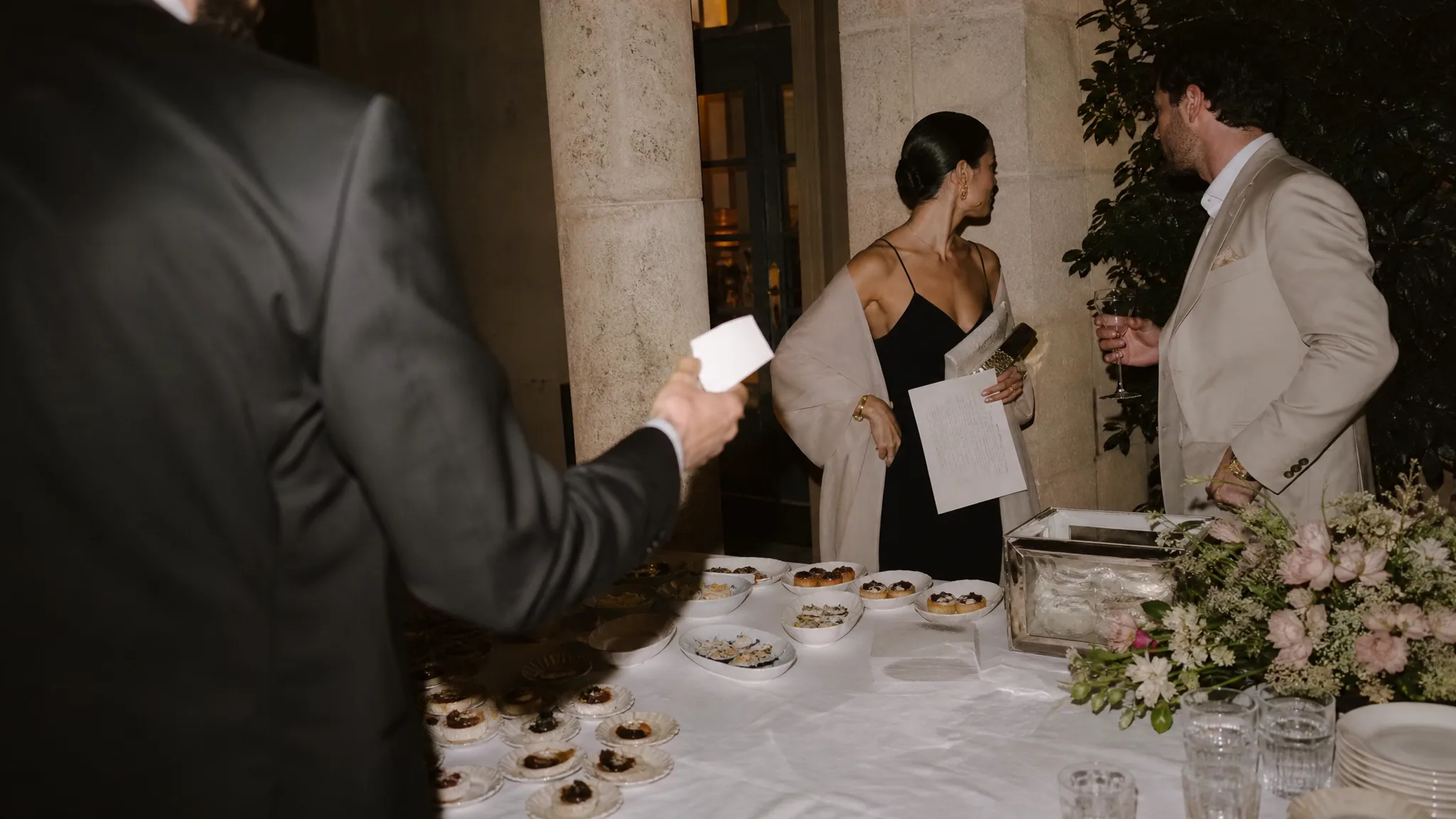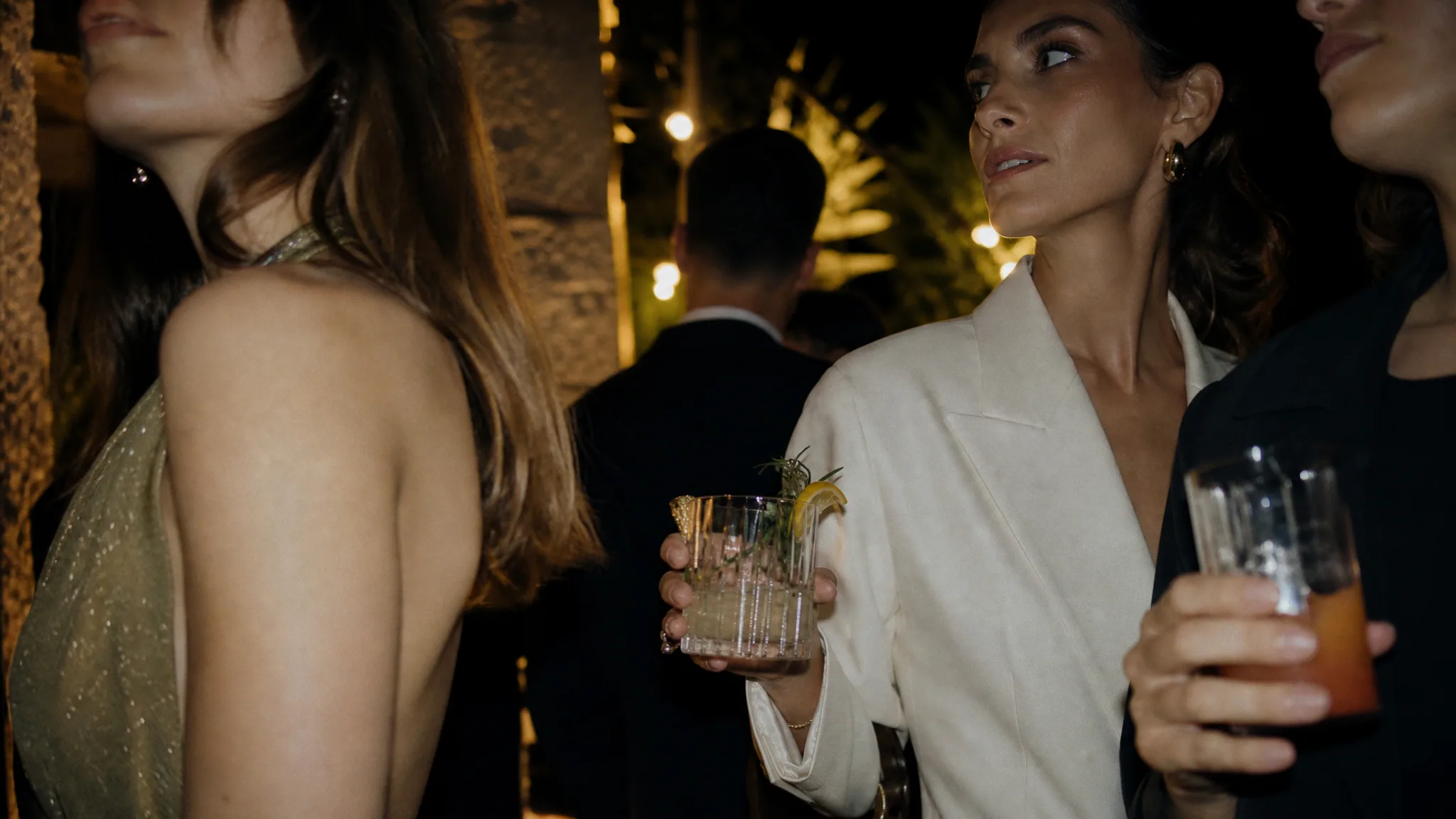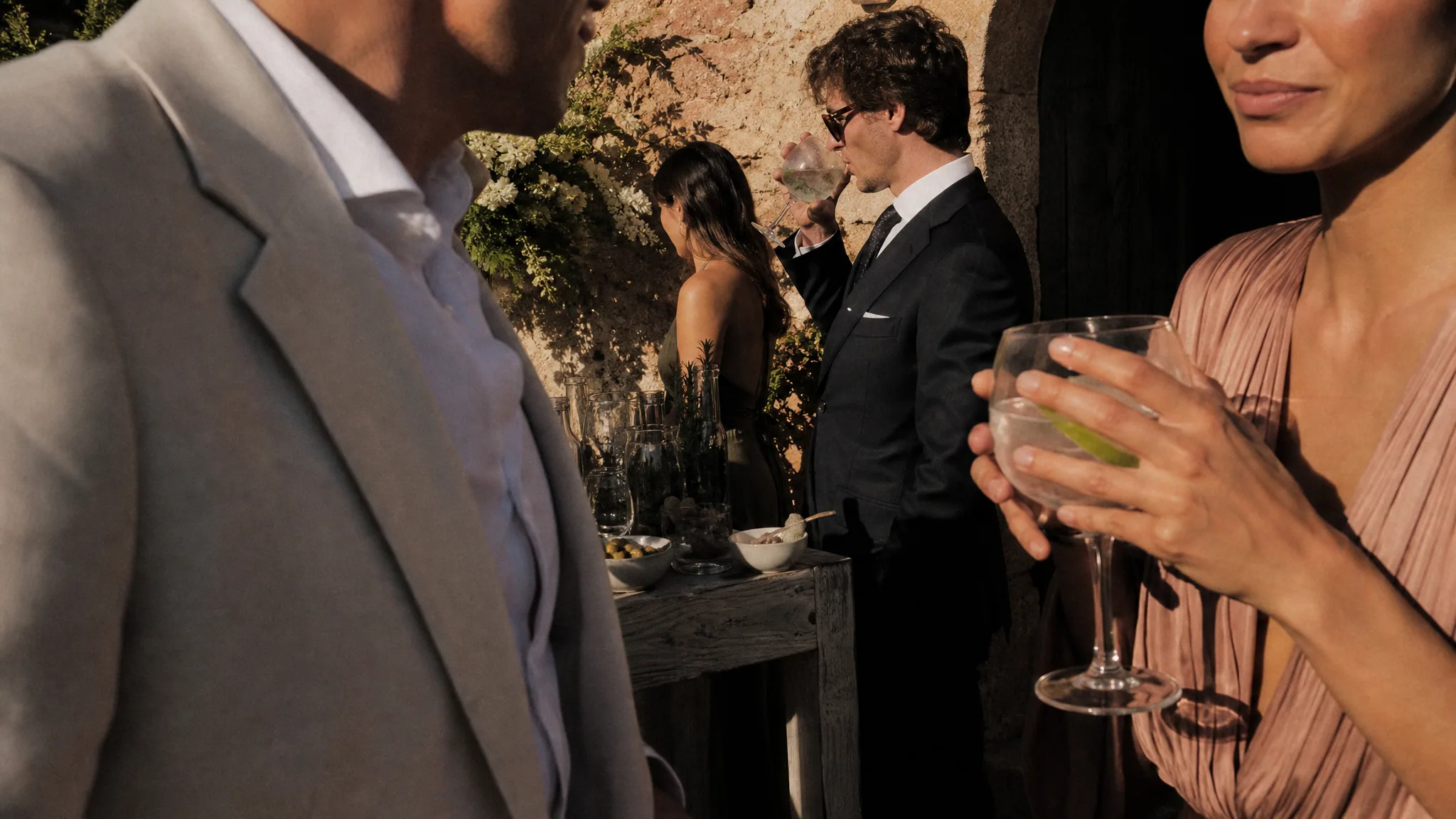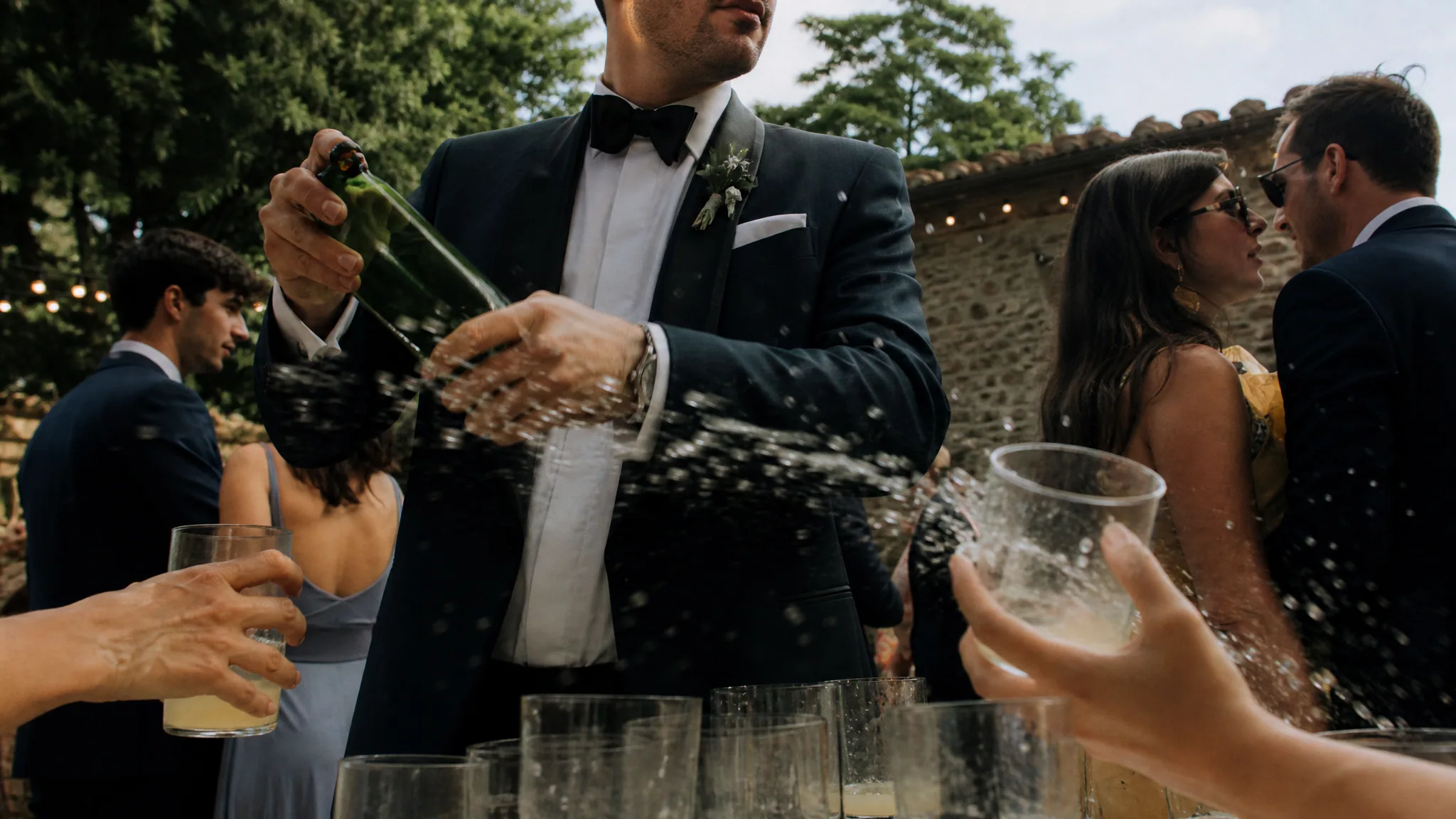
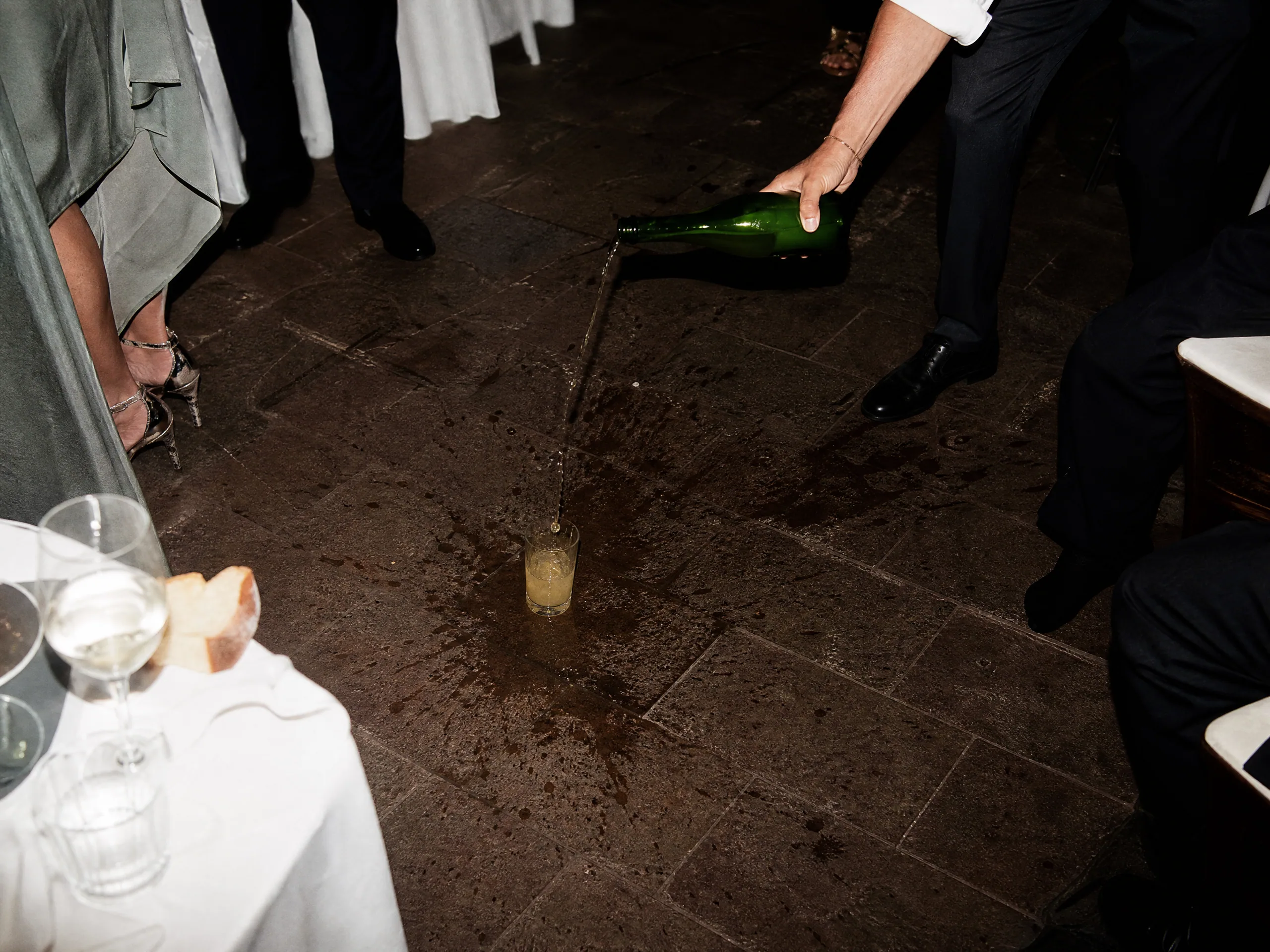
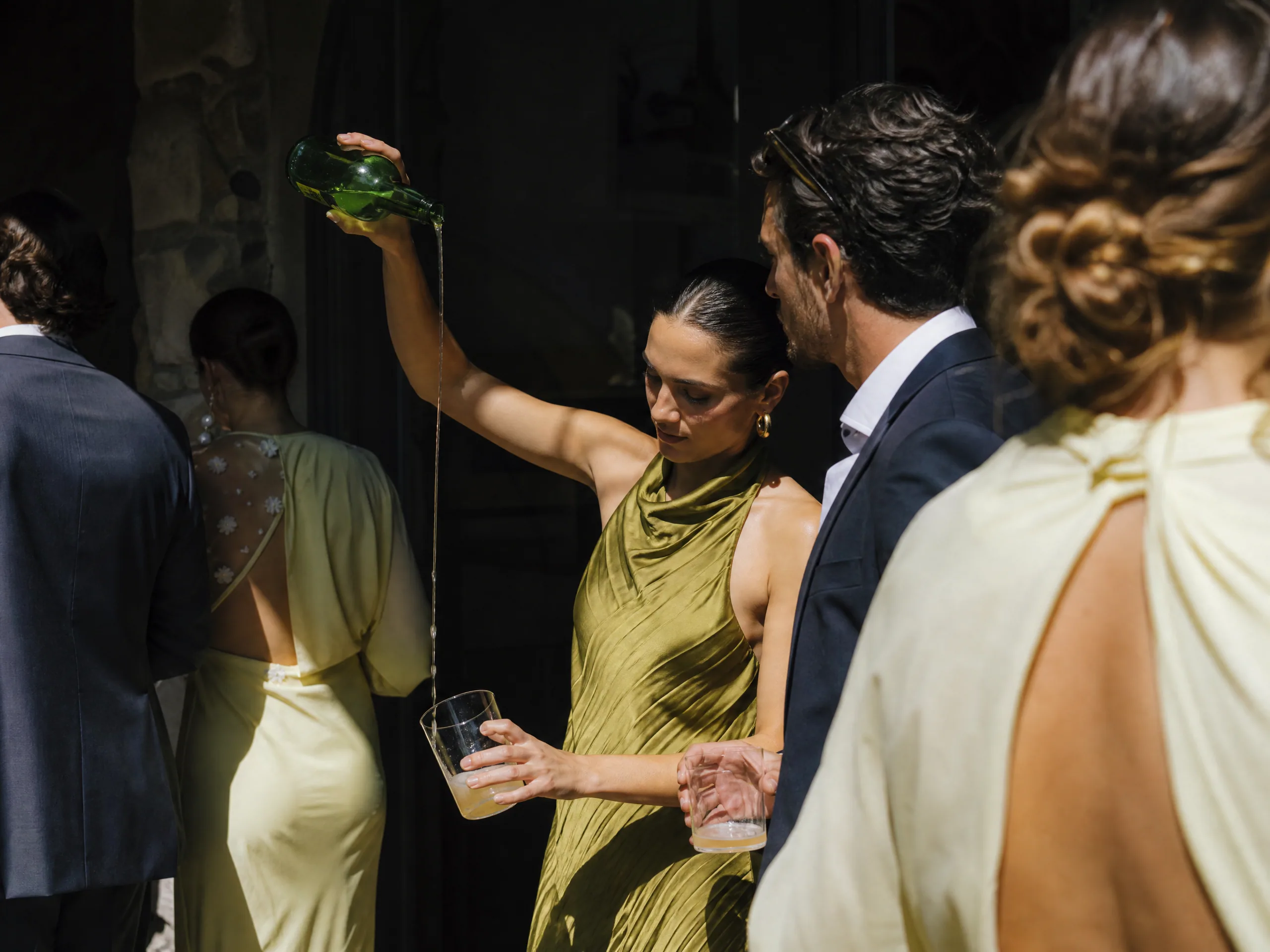
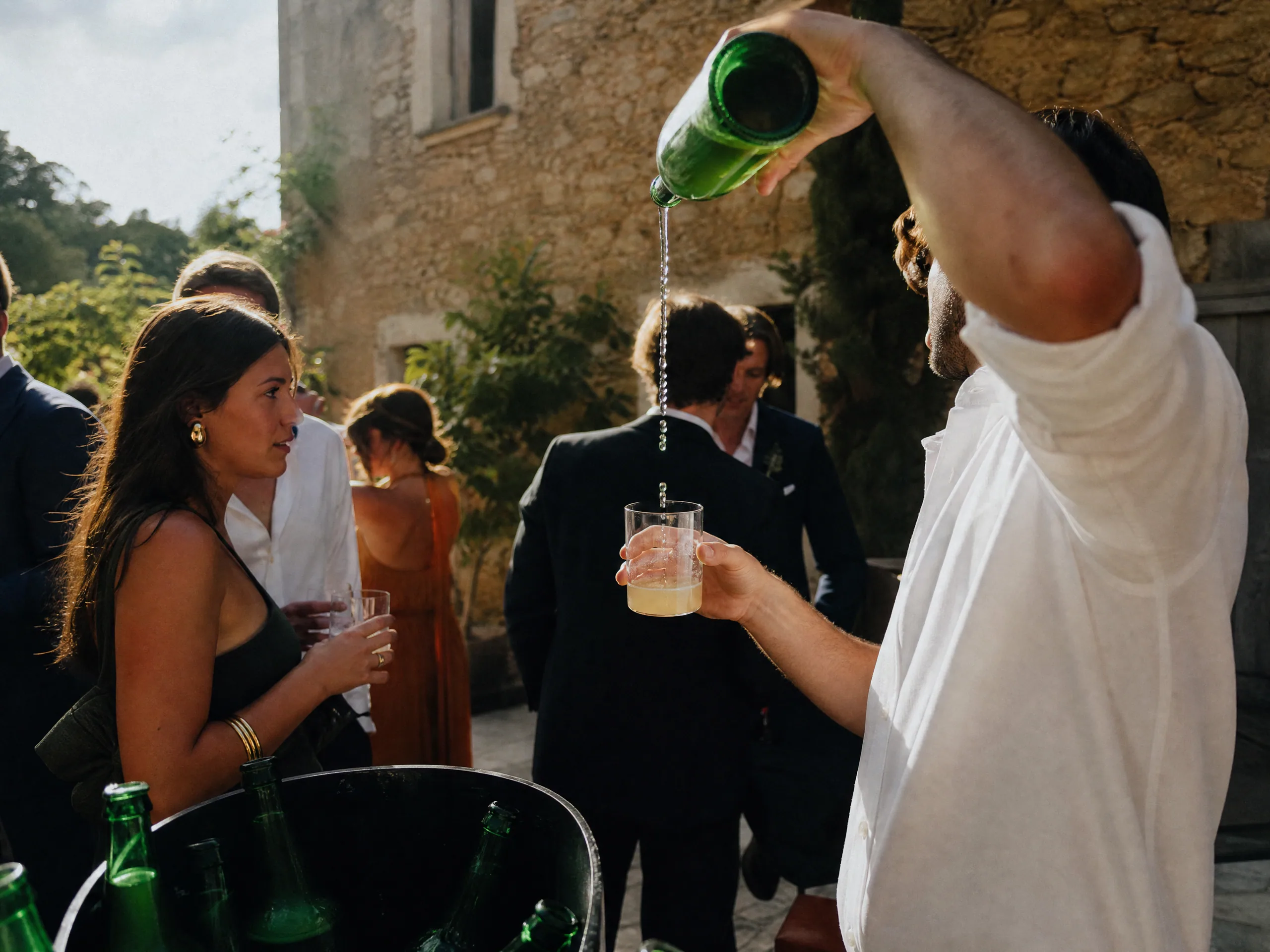
Spanish sidra is not “just cider.” In Asturias and parts of the Basque Country, pouring is a performance: the bottle held high, the glass held low, a thin stream aerating the drink in a ritual called escanciado. For destination wedding guests flying in from the US, UK, or Northern Europe, that moment is unforgettable—and easy to mishandle. Done without a brief, you get sticky sleeves, wasted bottles, and a line that stalls cocktail hour. Done well, a sidra station becomes one of the weekend’s most photographed hospitality beats.
This guide is for couples and planners hosting destination weddings in Spain who want a cider station that feels local, safe for formalwear, and clear for international guests who have never seen an escanciado pour.
Why Spanish sidra needs a guest brief
Most international guests associate cider with a still pint or a sweet canned drink. Spanish natural cider is often drier, lightly funky, and served in short pours meant to be finished quickly while the aeration still sings. Without context, guests either overfill glasses, tip the bottle like wine, or avoid the station entirely.
A short brief—what sidra is, why the pour is high, how much goes in the glass, and when to pass it back—turns curiosity into participation. Kudrya Studio treats the station like any other guest-facing ritual: design first, then message, then staffing.
Place the station in the weekend timeline
Sidra works best as a cocktail-hour or welcome-drink feature, not mid-dinner table service. Guests need standing space, a hard surface underfoot that can handle drips, and enough daylight or warm lighting for the pour to read in photos.
Avoid stacking the station immediately after a sandy beach ceremony or a dusty estate transfer—guests arrive thirsty and less careful with silk. Ideal windows: post-ceremony cocktail hour, welcome-night aperitivo, or a free-afternoon tasting before anyone changes into black-tie.
Design the station like a vendor, not a self-serve cooler
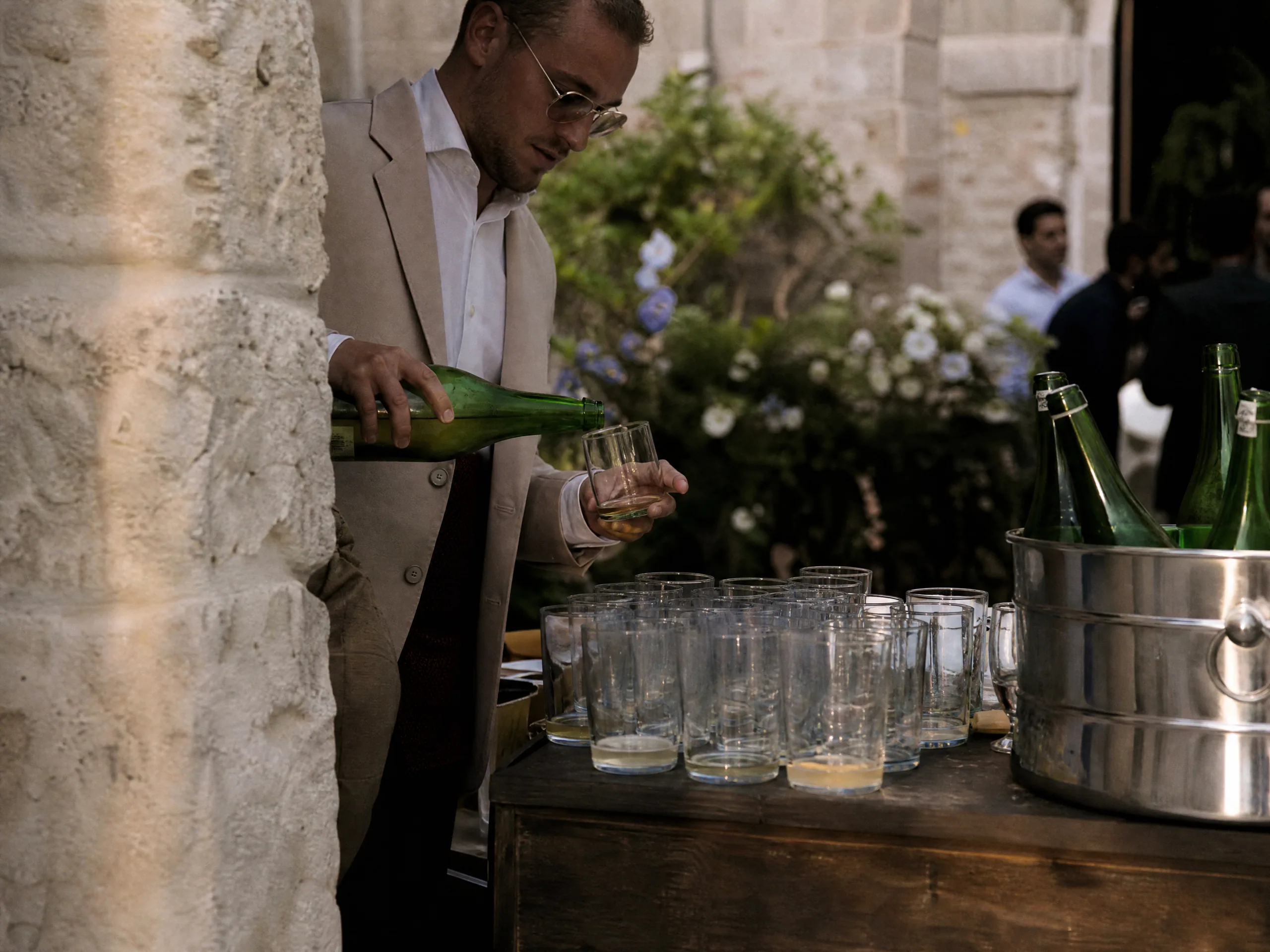
Build a proper service point: chilled bottles (not warm crates), a trained pourer or two, short traditional glasses (not balloon wine stems), a drip tray or grated deck, linen for spills, and a clear “watch the pour” viewing side so queues do not block the stream.
Label Asturian natural cider separately from sweeter commercial ciders or Basque sagardoa if you are offering more than one style. Guests appreciate knowing which bottle is bone-dry and which is softer. Keep a small tasting card with three bullets: origin, flavor note, and “short pours—ask for another.”
Brief the escanciado ritual before guests arrive
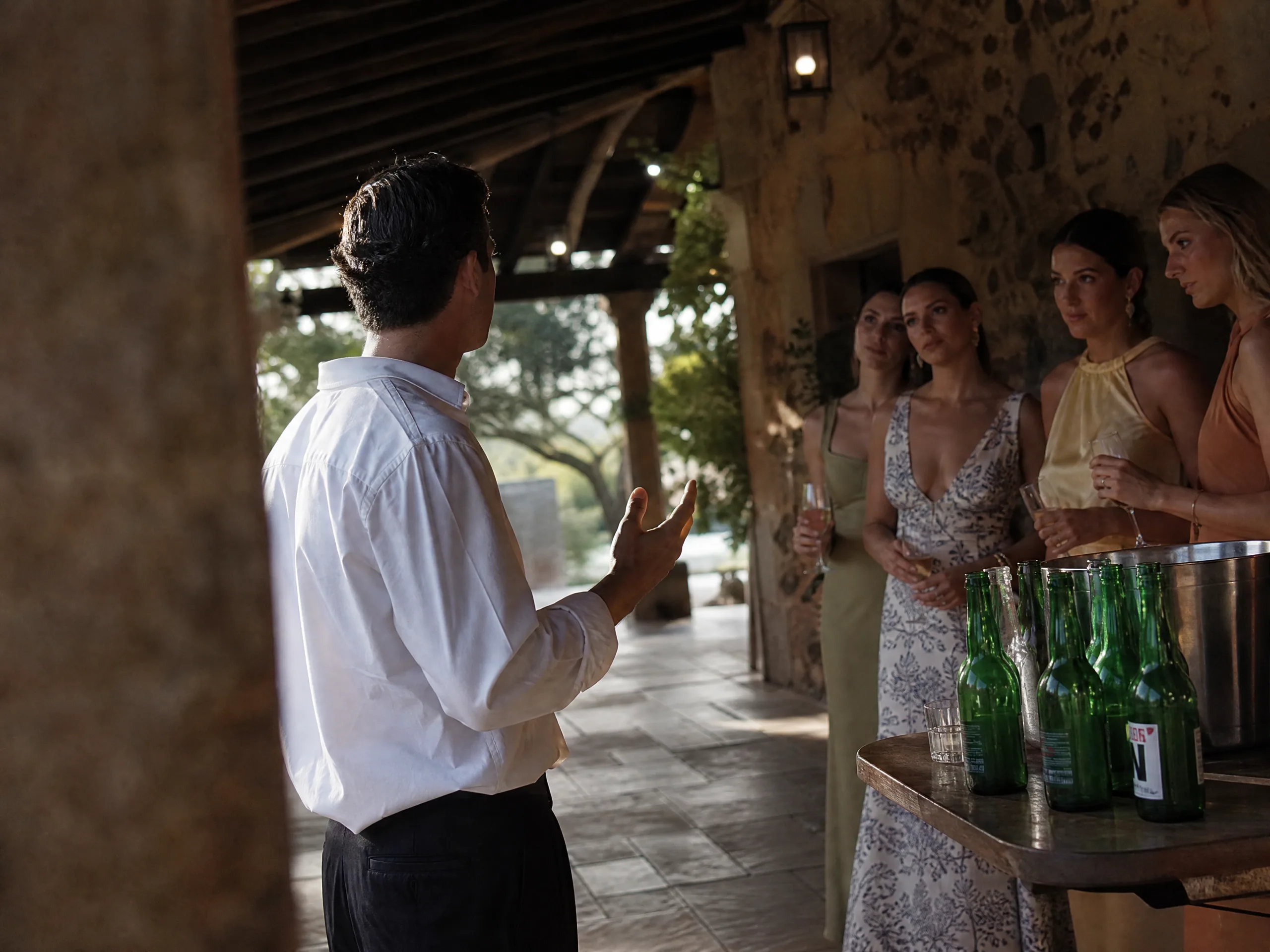
Explain the choreography in plain language: bottle high, glass low, thin stream, small amount in the glass, drink soon, return the glass for the next guest’s pour if that is your house style. Say whether guests may try pouring under supervision or whether only staff pour—mixed groups get messy fast without a rule.
Mention spill reality without apologizing for it. A good line: “This is a living tradition—expect a few drops, stand slightly aside if you are in silk, and we have napkins ready.” That sets tone better than a stern warning sign.
Formalwear, footwear, and spill control
Place the station on stone, tile, or decking—not a pale aisle runner. Offer a half-step back line so dresses and tuxedo trousers stay out of the drip zone. Stock cloth napkins and a discreet spot-clean kit with the coordinator, not at the bar front.
If the dress code is black-tie or pale linen, consider a “photo pour” lane (staff only) and a “taste lane” with slightly lower pours for guests who want to try. Heels on wet stone are a risk; keep the area lit and dry-mopped between rushes.
Heat, pacing, and outdoor service practicalities
Natural cider wants chill and short pours. In Spanish summer heat, rotate ice baths, shade the bottles, and never leave open bottles baking on a sunlit table. Pace service so the first wave of thirsty guests does not empty the photogenic bottles before grandparents arrive.
Hydration still matters: put water within two meters of the cider so guests do not use sidra as their only coolant. For long cocktail hours, plan a second iced case to appear after speeches or family formals, not all inventory on day-one display.
Zero-proof twins and inclusive guest lists
Not everyone drinks alcohol, and not everyone likes dry cider. Offer a zero-proof twin: chilled apple must, non-alcoholic cider, or a sparkling apple spritz in the same glass shape so the ritual still photographs generously. Brief bartenders to offer it without a side comment.
For guests who want alcohol but not the funk of natural sidra, keep a softer commercial cider or a light white as a quiet alternative at the main bar—not competing signage at the ritual station.
Line management, photo moments, and accessibility
Escanciado is a natural photocall. Give photographers a clear side angle and keep the queue on the opposite side. One pourer facing guests, one runner swapping bottles, and a coordinator watching for bottlenecking beats a single hero bartender drowning in requests.
Accessibility: offer a seated tasting option with a pre-poured short glass for guests who cannot stand in a queue or tip their head for a high pour demonstration. Wheelchair and cane users should not be forced into the drip zone to participate.
Vendor coordination: glassware counts, waste, and close-down
Count glasses for turns, not for one-glass-per-guest forever—sidra service thrives on rapid recirculation if that is your style, or on a higher glass count if hygiene rules require fresh glassware. Confirm with the venue which model they allow.
Close-down needs a plan: empty bottles removed before dinner fragrance shifts, sticky floors mopped before open-toe traffic, and leftover chilled bottles either returned to cold storage or gifted carefully (check luggage and travel rules before sending full bottles home with guests).
Ready-to-send guest message
We are setting up a Spanish sidra (natural cider) station during cocktail hour. The pour is part of the tradition—bottle high, glass low, small tastes meant to be enjoyed right away. Staff will pour unless you are invited to try under guidance. Stand a step back if you are in silk or pale linen; napkins are ready. A zero-proof apple option will be available in the same glasses. Come hungry for the ritual, not a full pint—there will be plenty of short pours to go around.
A sidra station succeeds when international guests feel invited into a Spanish ritual instead of corrected by it. Brief the pour, protect the clothes, pace the ice, and let the thin golden stream do what it does best: mark the weekend as unmistakably local.