
International couples planning a wedding in Spain often fly guests across six, nine, or even sixteen time zones. Jet lag is not a personality flaw—it is a logistics problem. Treat arrival recovery like shuttle timing or room-block cutoffs: decide it early, write it clearly, and protect the first twenty-four hours so people can show up present for the moments that matter.
This guide is for hosts and coordinators building guest briefings for US, Canadian, Australian, Middle Eastern, and Asian travelers landing for a Spanish destination weekend. The goal is simple: fewer foggy ceremonies, fewer early exits from dinner, and a calmer welcome night.
Map time zones before you lock the welcome timeline
List every major guest cluster by departure city and the gap to Spain (CET/CEST). A New York guest loses six hours; Los Angeles loses nine; Sydney can lose eight to ten depending on the season; Tokyo and Singapore often arrive after overnight flights that feel like two days compressed into one. Put those clusters next to your draft welcome-drink and rehearsal times. If half the room lands at 14:00 local and your welcome starts at 18:00 the same day, you are asking people to socialize at their 03:00 body-clock hour.
Share a one-line rule in the guest portal: arrive at least one full night before the first required event whenever the flight crosses five or more time zones. Couples who soft-require this for the wedding party and strongly recommend it for everyone else see fewer day-of absences.

Build a same-day landing buffer that does not feel like a schedule
Long-haul arrivals into Madrid, Barcelona, Málaga, Valencia, Sevilla, or Palma rarely move in a straight line from gate to villa. Immigration, bags, transfers, and rural last miles eat ninety minutes to three hours. Tell guests to treat the landing day as transit-plus-reset, not as a sightseeing slot. A realistic buffer looks like: land → transfer → hydrate and shower → optional twenty-minute outdoor walk in daylight → early, light dinner → lights out.
If your welcome drinks are non-negotiable on landing day, shorten them. Ninety minutes with seating, water on every table, and a clear end time beats a four-hour standing cocktail for jet-lagged travelers.
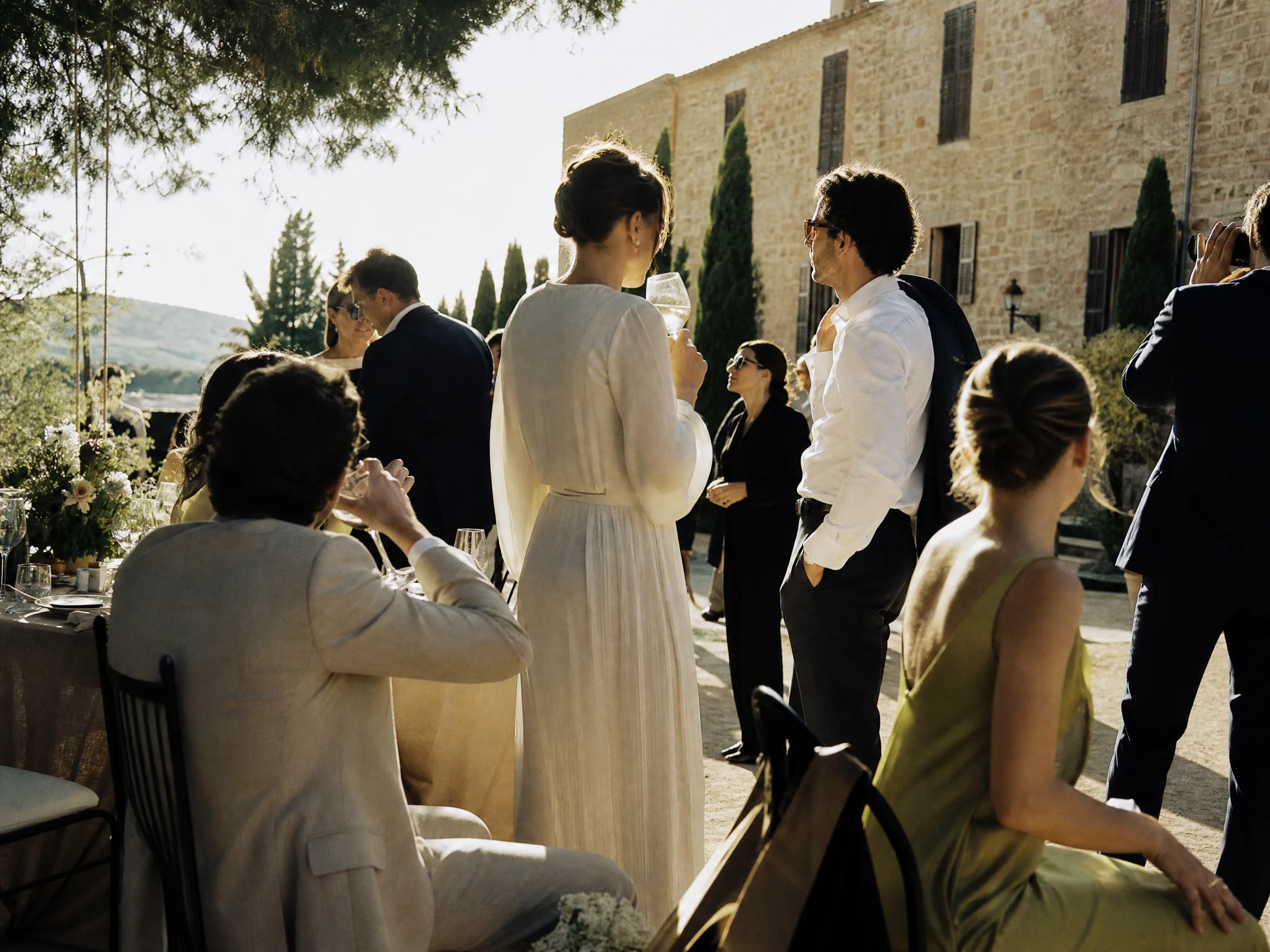

Use light, not only caffeine, as the recovery tool
Morning daylight after an eastbound flight helps the body clock advance; evening light after a westbound flight can delay it. For most North American guests flying east to Spain, a short outdoor walk the morning after arrival is more useful than a third espresso. Put that suggestion in the briefing: “If you landed yesterday from the Americas, take ten minutes of outdoor light before breakfast.”
Hotel curtains in Spain can be excellent blackout tools—mention that guests should open them in the morning even if they feel wrecked. For night owls arriving from Asia who wake at 04:00 local, provide a quiet lounge or lobby note so they are not pacing hotel corridors and waking others.
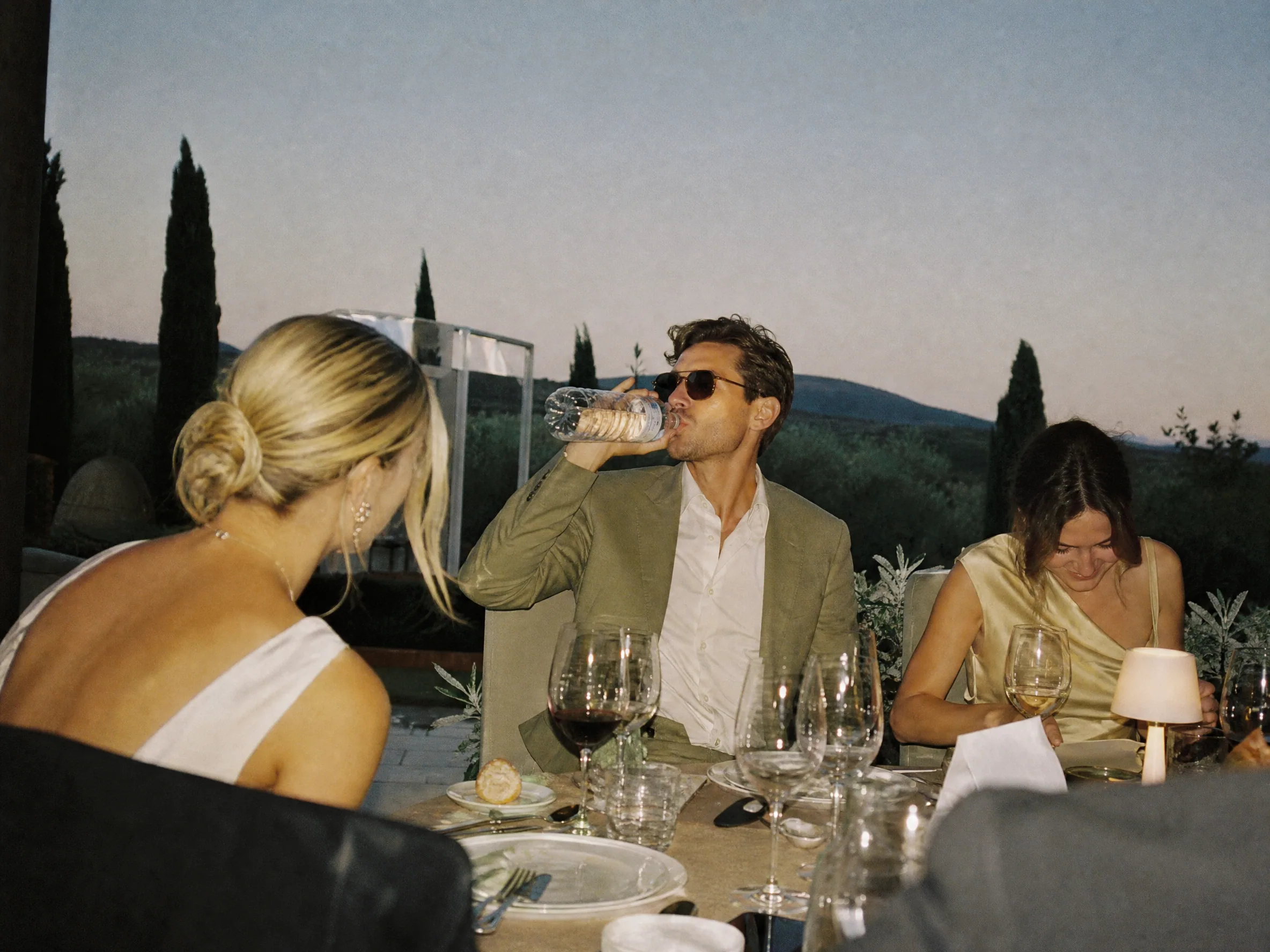
Hydration and meal timing beat heroic drinking on night one
Cabin air and Spanish summer heat stack dehydration fast. Brief guests to drink water on the plane and again on the transfer, and to eat a normal-sized meal rather than fasting until the welcome toast. Alcohol on landing night multiplies next-day fog. You do not need a lecture—add one sentence to the welcome card: “Water first; the open bar will still be there tomorrow.”
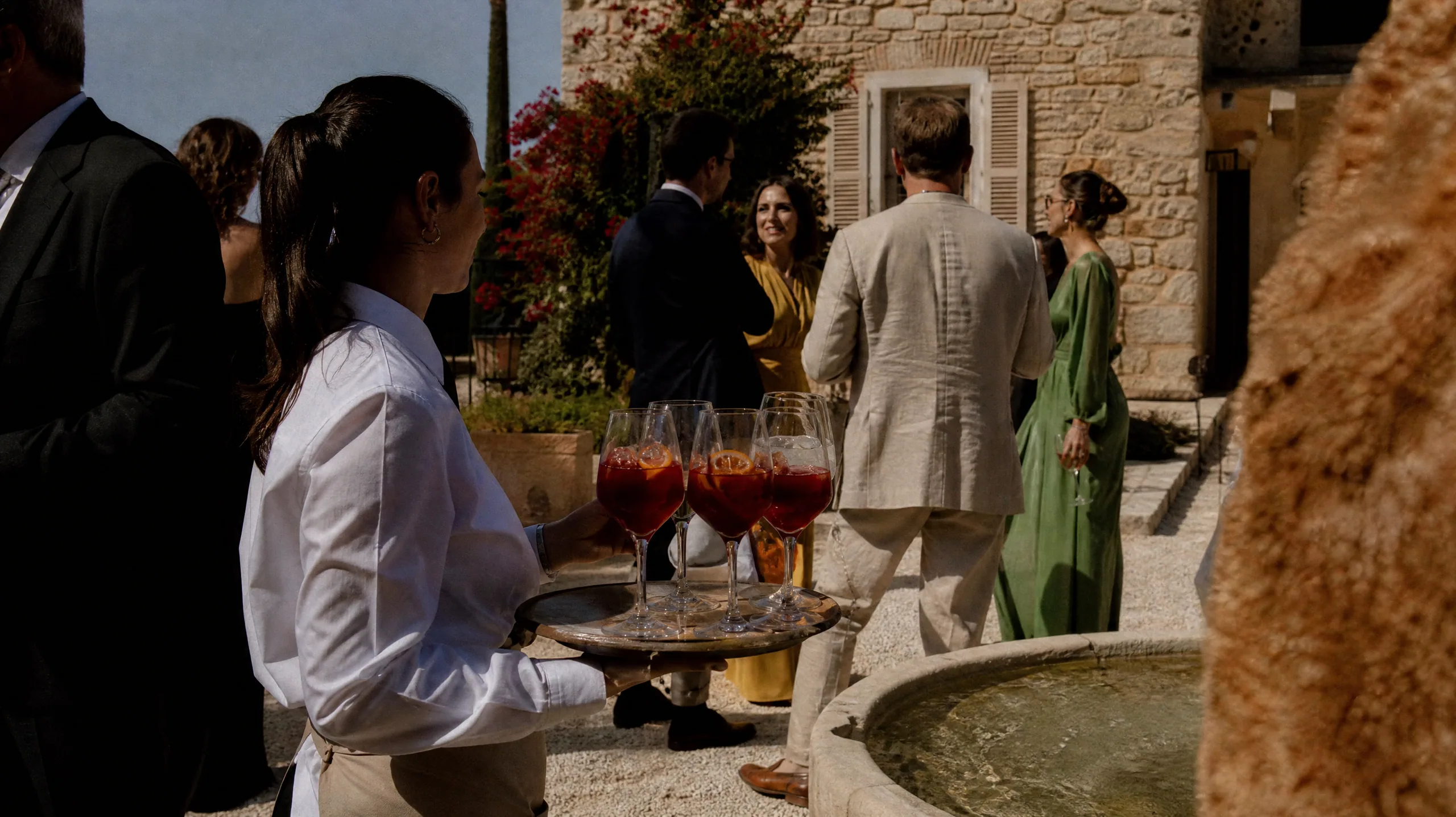
If you are offering Spanish aperitivo or a vermouth hour the evening guests land, keep a visible zero-proof option and serve food early. Protein and salt help more than champagne at body-clock sunrise.
Protect sleep windows around ceremony call times
Ceremony call times in Spain often sit in late afternoon or early evening, which can be a gift for eastbound travelers if they slept the night before. The danger zone is the afternoon crash. Suggest a ninety-minute nap ceiling on the wedding-day morning for long-haul guests—long enough to take the edge off, short enough to protect night sleep. Housekeepers and front desks appreciate a printed note when half the room block hangs “do not disturb” until noon.
For multi-day weekends, keep the day before the wedding intentionally light for guests who crossed oceans: one optional group lunch, not a packed cultural marathon.
Brief the wedding party separately from general guests
Bridal party and witnesses often have earlier call times for hair, formals, and civil paperwork. They need stricter arrival rules than Aunt Maria. Write a party-only note: arrive two nights early if flying from the US West Coast or Australia; confirm salon and rehearsal times in local Spain time in writing; and name one person who tracks who has landed.
Photographers and planners feel jet lag in the guest list as missed cues and late arrivals. A recovered wedding party keeps the processional calm.
Plan airport-to-bed logistics like a recovery pipeline
Publish the transfer plan in local time with a “go straight to the hotel” default. Scenic detours on landing day sound romantic and feel punishing. If some guests insist on exploring, give them a day-two window instead. Pre-stock welcome bags with electrolyte packets, a printed Wi‑Fi password, and the next morning’s breakfast hours so nobody is problem-solving at midnight.
Rural estates should add a signal note: download offline maps before leaving the airport Wi‑Fi. A lost transfer is jet lag’s favorite amplifier.
Set expectations for early nights and late Spanish dinners
Spanish wedding dinners often start later than North American guests expect. That clash is harder when body clocks are already wrong. Tell guests the dinner start time twice—once in the itinerary and once in a WhatsApp pin—and offer a quiet lounge or terrace for anyone who needs a twenty-minute reset between ceremony and meal. Seat long-haul elders with easy exit paths so leaving early does not require a parade past the head table.
If your weekend includes a late hora loca, make the night before the wedding the early one for international travelers. Recover first; dance second.
What to put on the one-page guest jet-lag card
Keep a printable card (and PDF) with: recommended arrival night; landing-day do’s and don’ts; daylight walk suggestion; water-first reminder; nap ceiling; ceremony and dinner times in local Spain time; hotel breakfast hours; and the coordinator contact. Translate the card into Spanish if local family is hosting details, but keep English clear for overseas guests.
Couples who treat jet lag as hospitality—not as guests “being difficult”—get better portraits, fuller dance floors, and fewer day-of surprises. Build the recovery window into the weekend the same way you build shuttles and room blocks: early, specific, and kind.