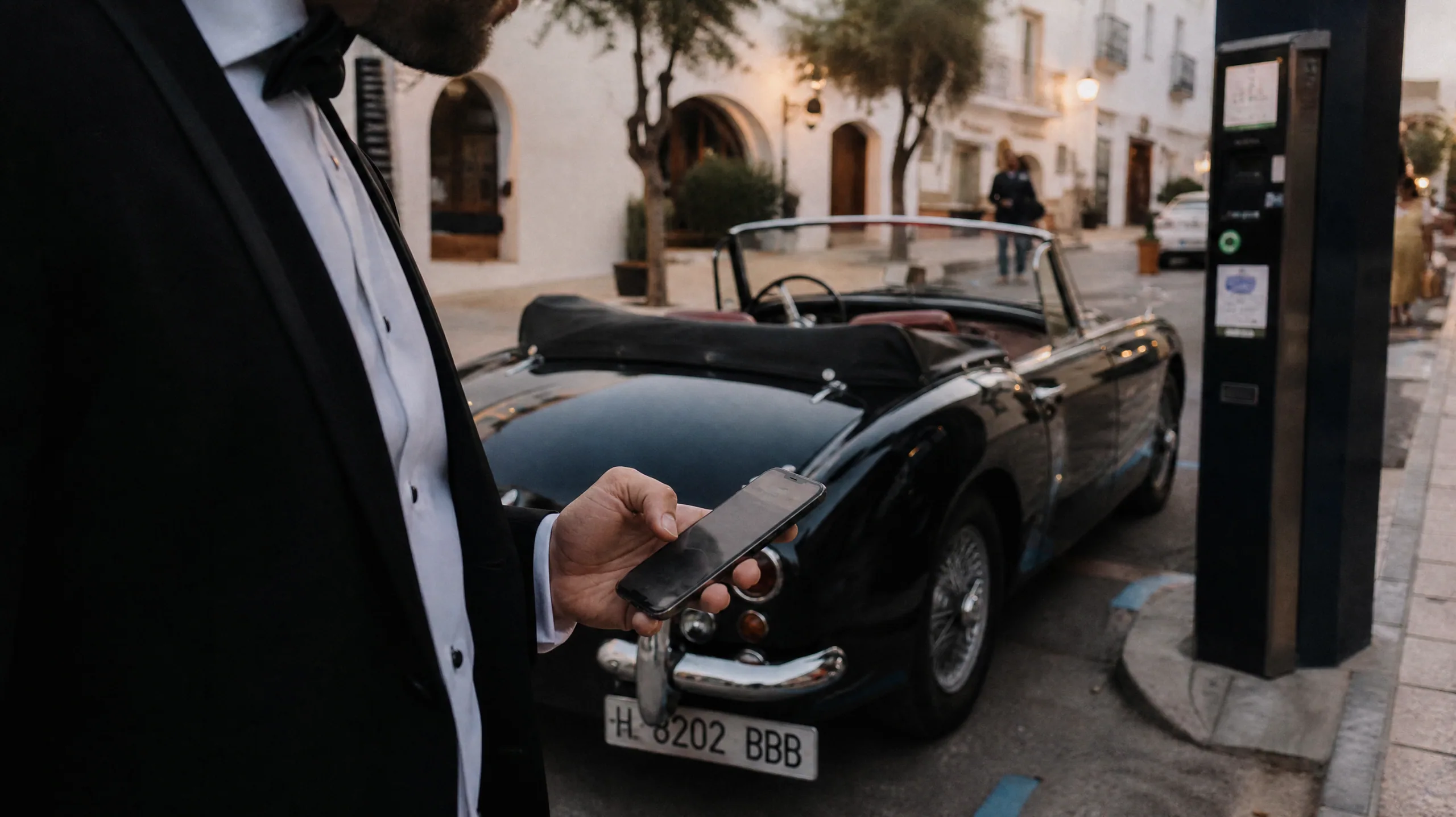
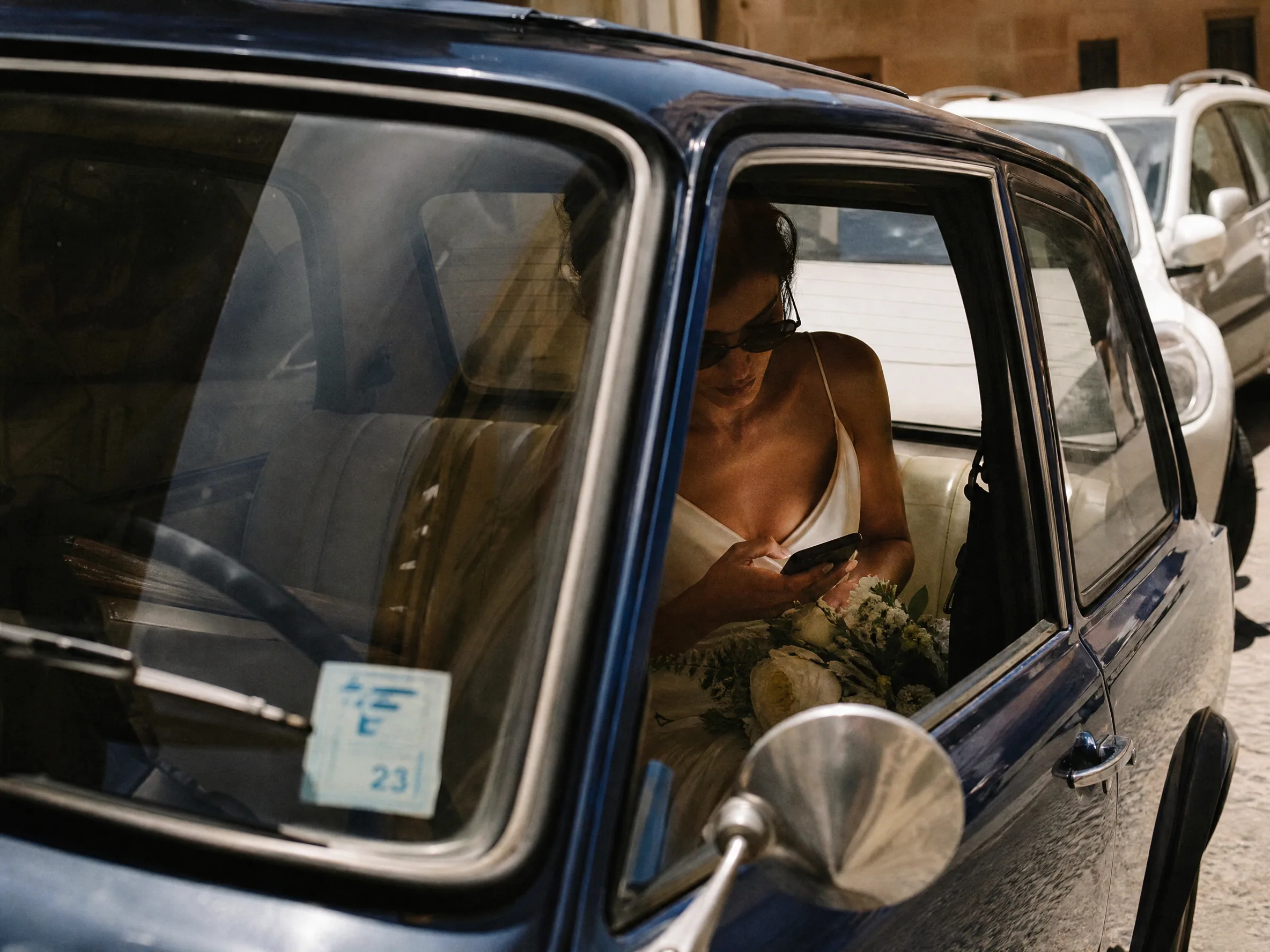
International guests who rent a car for a Spanish destination wedding weekend often meet their first real friction not on the highway, but on a painted curb. Zona azul—blue-zone regulated street parking—looks familiar from other European cities and still catches travelers who assume “empty space next to the venue hotel” means free all-day parking. A short briefing in your guest portal prevents wedding-morning ticket hunts, towing stress, and last-minute shuttle improvisation.
This guide is for hosts and coordinators writing logistics notes for US, Canadian, UK, Australian, and other international travelers. It covers curb colors, pay machines, mobile ticket apps, maximum stays, and how to map parking to ceremony call times—without turning your welcome email into a municipal traffic ordinance.
Explain zona azul in one plain sentence
Tell guests that blue-painted curb segments are time-limited, paid street parking during posted hours—not free overnight hotel spillover. White zones, green zones, loading bays, and resident-only stretches look similar from a moving car; a color key and a photo of the local sign panel saves more arguments than any generic “parking available nearby” line. If your block of hotels sits inside a historic center, assume regulated parking is the default Monday–Saturday daytime pattern unless your coordinator confirms otherwise.
Map curb colors to guest decisions
Give a simple decision tree: blue = pay and watch the clock; green (where used) often means short-stay visitor parking with tighter limits; white may be free or lightly regulated depending on the town; yellow usually means loading or restricted—do not treat it as guest parking; patterned resident bays are off-limits without a local permit. Pair the key with the two or three streets closest to the ceremony hotel and welcome-dinner restaurant so guests are not improvising from a translation app at the curb.

List the mobile ticket apps guests will actually need
Spain’s cities rarely share one national parking app. Note the local product by name—many towns use an ORA-style system, Telpark, EasyPark, Parkimeter, ElParking, or a city-branded app tied to the blue-zone machines. Tell guests to download and add a card the night before arrival, not in the taxi queue after check-in. Mention that some machines still prefer coins or Spanish SMS short codes that foreign SIMs mishandle; the app is the backup that keeps people on schedule.

Publish maximum-stay windows against ceremony call times
Blue zones often cap stays at one or two hours during regulated periods. If guests plan to drive to the ceremony hotel, park, change, and leave the car all afternoon, that plan fails the moment the maximum stay ends. Spell out which events allow street parking (quick drop-offs, short errands) versus which require hotel garage, private lot, or your shuttle. Put the regulated hours next to “hair and makeup call” and “shuttle boarding” so the conflict is visible in one scroll.
Brief rental-car guests on machines, tickets, and dash display
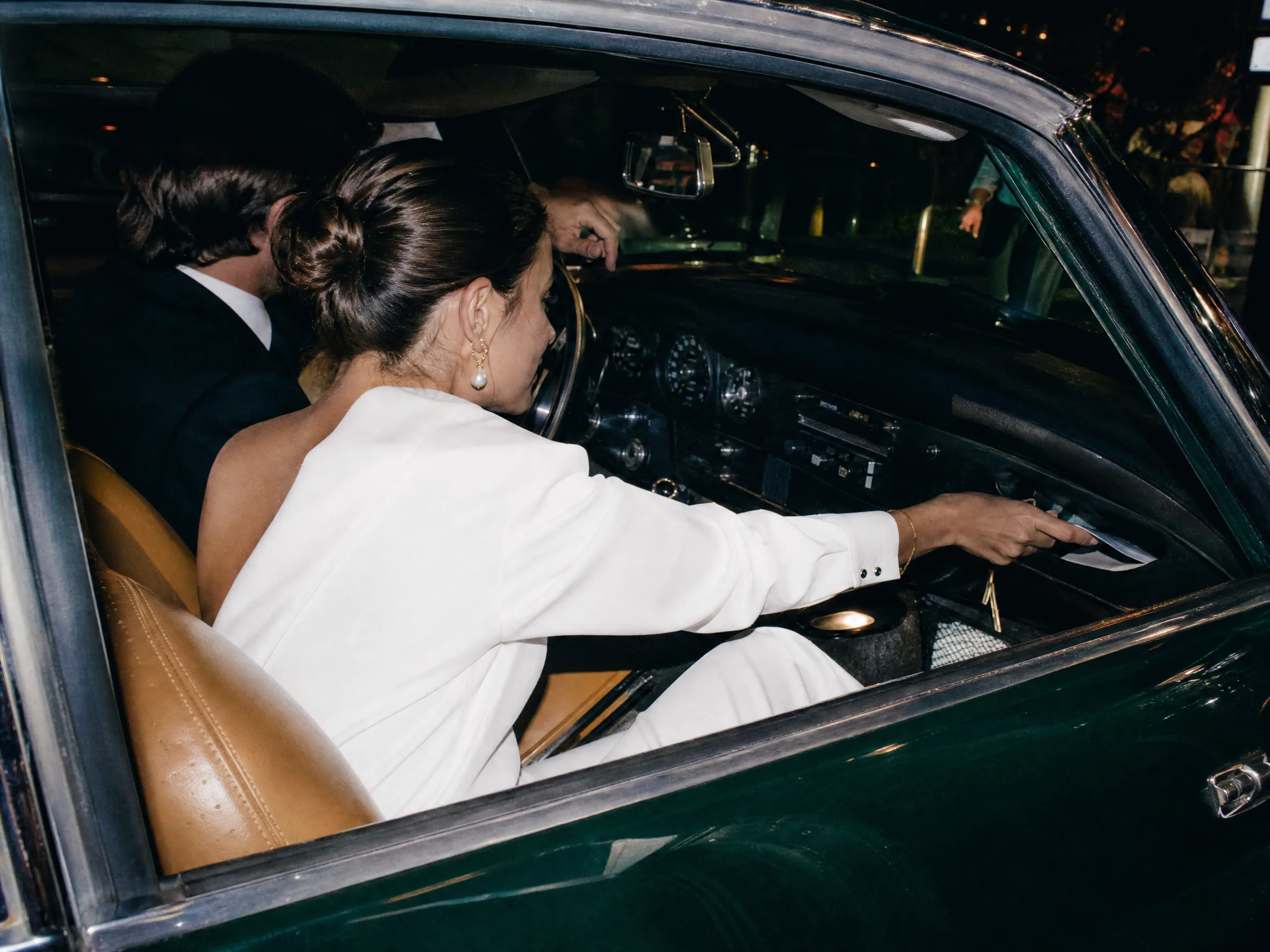
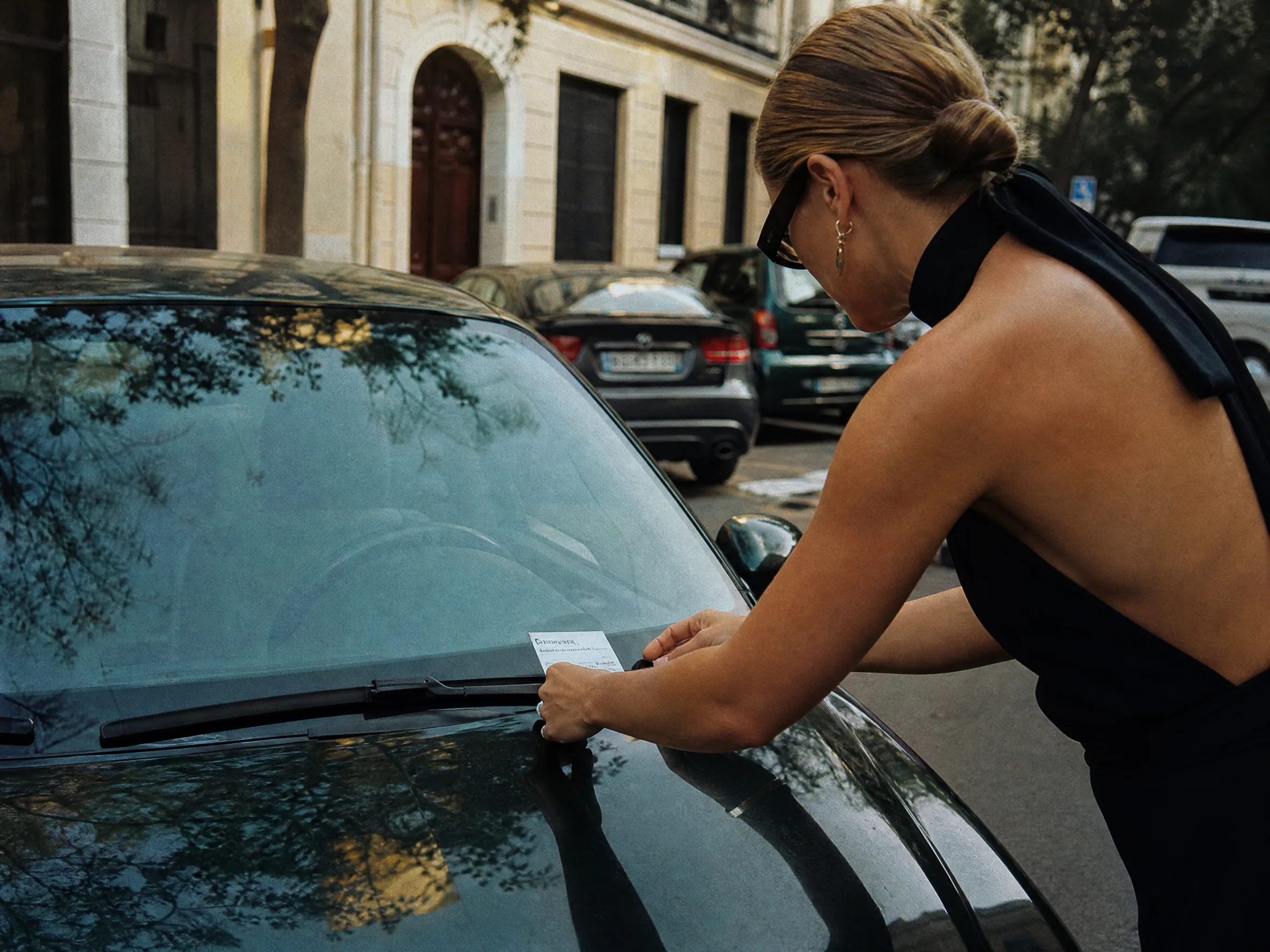
Walk through the physical flow: read the panel for start/end of paid hours, buy time for the plate on the car (not the driver’s home plate from another rental), place the ticket face-up on the dashboard when the machine prints one, and screenshot the app confirmation when it does not. Remind guests that electric or hybrid rentals still pay blue-zone fees unless the sign explicitly exempts them. A one-line note about keeping the rental agreement in the glovebox helps if a warden questions a foreign plate.
Separate hotel garage, venue lot, and street overflow
Your guest portal should never blur three different products. Hotel garage = booked or first-come with a nightly rate; venue or finca lot = coordinator-controlled and often shuttle-first; street blue zone = temporary only. If the welcome dinner restaurant has no dedicated lot, say so and offer a drop-off pin plus the nearest garage name. Guests who “just park on the street for dinner” are the ones texting you at 21:40 about a clamp.
Plan for Sundays, evenings, and local exceptions
Many Spanish blue zones pause in the evening and on Sundays or holidays—but “many” is not a plan. Confirm the local panel for your wedding dates, especially if a bridge holiday (puente) or feria changes enforcement. Coastal and historic towns sometimes keep summer evening restrictions that inland villages skip. Put the exception in writing: “On Saturday after 20:00, blue-zone payment on Calle X usually stops; do not assume the same rule on the Sunday farewell brunch block.”
What to do when a guest already has a fine or a tow risk
Include a calm contingency: photograph the ticket, note the payment URL or office hours, and do not abandon the car in a tow zone to make the processional. Your coordinator or hotel concierge can often explain whether the fine is payable online with the ticket number. For international cards, some municipal portals are awkward—hotel staff help beats a guest missing family formals. Keep towing and clamp scenarios in the same FAQ as delayed luggage: rare, stressful, solvable with one local contact.
Add parking lines to the guest-portal checklist
Close the briefing with five concrete fields: nearest garage name and walking time to the ceremony hotel; required parking app name with download link; blue-zone max stay on the key streets; shuttle-first events where street parking is discouraged; and the on-call contact if a machine rejects a foreign card ten minutes before boarding. When those five lines are filled, rental-car guests stop treating Spanish street parking as a mystery and start treating it as another timed wedding logistics window—exactly how the rest of your weekend already runs.