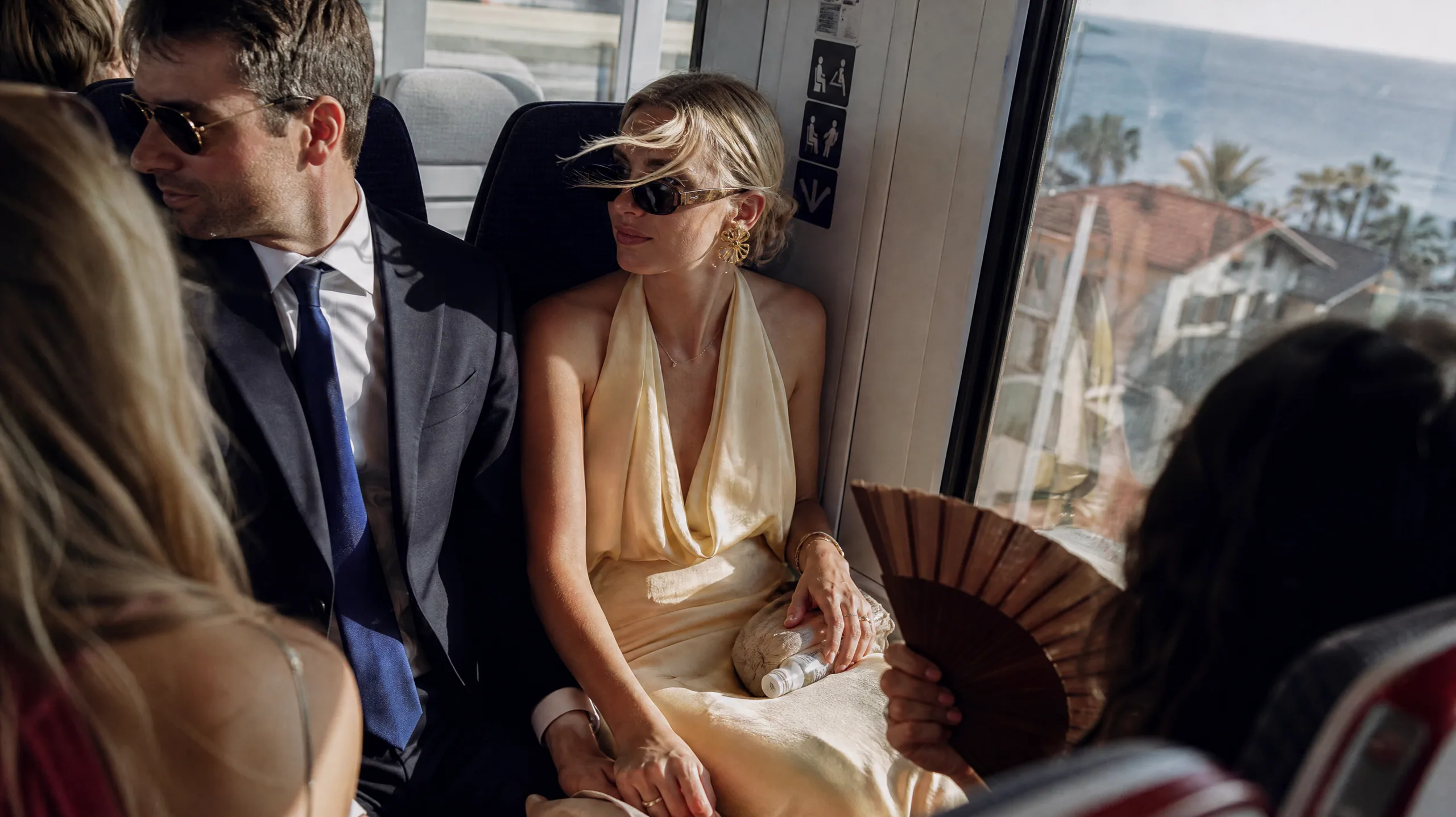

Destination wedding weekends in Spain often default to taxis, ride-hail apps, and rental cars. Those options work—until surge pricing hits after a late reception, until rural signal drops, or until a dozen guests all need the same airport transfer at once. In Madrid, Barcelona, Valencia, Seville, and other rail-served cities, Spanish Cercanías (suburban rail) and the local metro can quietly solve a large share of guest movement: airport links, hotel clusters, free-afternoon city hops, and next-morning returns.
This guide is for hosts and coordinators writing a short, practical briefing so international guests can buy the right day ticket, validate correctly, and arrive on time without treating public rail as a mystery.

Why Cercanías and metro belong in the wedding weekend brief
Guests flying into Barajas, El Prat, Manises, or similar hubs often land with jet lag and one question: how do we reach the hotel without a €60 taxi queue? Cercanías and metro lines are designed for exactly that rhythm. Publishing one map link, one ticket name, and one “buy before you leave the platform” note reduces WhatsApp chaos and keeps shuttle budgets for the rural estate legs that actually need private transport.
Name the system guests will see on signs
Spanish station signage rarely says “suburban rail.” Guests will see Cercanías (Renfe), sometimes Rodalies in Catalonia, plus the city metro brand. Put those words in the briefing with a one-line translation. If your weekend mixes city hotels and a countryside venue, say clearly which legs are rail-friendly and which legs still require the wedding shuttle or a pre-booked car.


Day tickets vs single rides for multi-stop weekends
Wedding guests rarely take one ride. They go airport → hotel, hotel → lunch, lunch → beauty appointment, then back for rehearsal drinks. A metro or combined day ticket is usually cheaper and calmer than buying singles each time—especially for pairs traveling together. Tell guests the ticket product name used in your city (abonamento/día, T-Casual equivalents where still relevant, tourist cards, or airport supplements) and whether the airport link needs an extra fare zone.
How to buy without Spanish-language panic
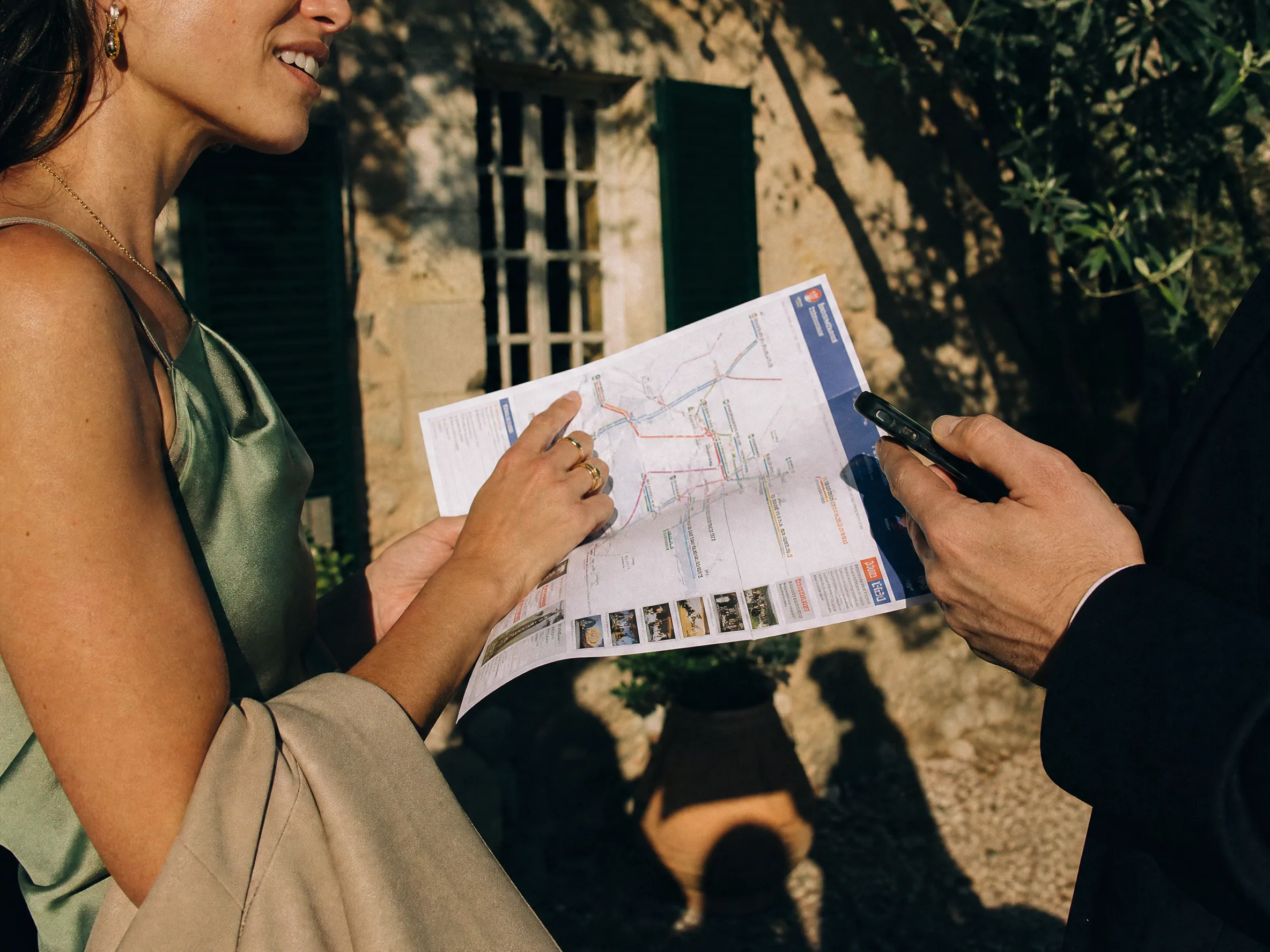
Most major stations have English menu options on ticket machines, contactless gates, and official apps. Still, guests freeze at the first screen. Your briefing should include: (1) which app or machine to use, (2) which product to select, (3) whether to tap a bank card or need a cardboard/QR ticket, and (4) a photo of the correct option if the UI is confusing. Add one backup: the station information desk or hotel concierge can complete the purchase in two minutes if a machine rejects a foreign card.
Validate, tap, and keep the ticket until you exit
The classic tourist mistake is buying a ticket and walking past the validator—or discarding a paper ticket before the exit gate. Spell out the flow: buy → validate/tap on entry → keep the ticket → tap or insert on exit if required. For contactless bank-card systems, remind guests to use the same card or device on exit that they used on entry, and to avoid double-tapping with a phone wallet and a physical card.
Time trains against ceremony call times
Rail is reliable until someone treats “every 10 minutes” as “we can leave when we feel ready.” Build a buffer: guests should aim to be on the platform 15–20 minutes before the train that already includes a cushion before shuttle boarding or hotel meetup. Publish the last sensible departure for ceremony call time, and a second “missed it—take this taxi plan instead” line so nobody improvises into a late processional.
Luggage, formalwear, and peak-hour reality
Cercanías is excellent with a carry-on; it is awkward with three hard-shell suitcases and a garment bag during rush hour. Suggest airport→hotel rail for light bags, and private transfer when guests land with full formalwear inventories. For free afternoons in cocktail attire, metro is usually fine—just warn about stairs, gaps, and crowded carriages near major hubs after work hours.
Accessibility and step-free routes
Not every historic station is step-free. If you have guests with mobility needs, strollers, or heavier medical equipment, mark which airport and hotel stations have elevators, and which journeys should stay on accessible taxis or the wedding shuttle. One honest sentence in the briefing prevents a stressful platform transfer in formal shoes.
What to put on the one-page guest card
Keep the public-transport card short: city system names, airport line number, day-ticket product, machine/app link, validate-on-entry reminder, last train before ceremony shuttle, and the coordinator WhatsApp for “gates won’t open” emergencies. Everything else—ZBE driving rules, Renfe AVE between cities, late-night taxis—belongs on separate notes so this page stays usable at 06:40 in an arrivals hall.
When Cercanías and metro are briefed as calmly as the shuttle manifest, international guests move through Spanish cities with less cost, less surge anxiety, and more punctual arrivals—exactly what a multi-day destination wedding needs.