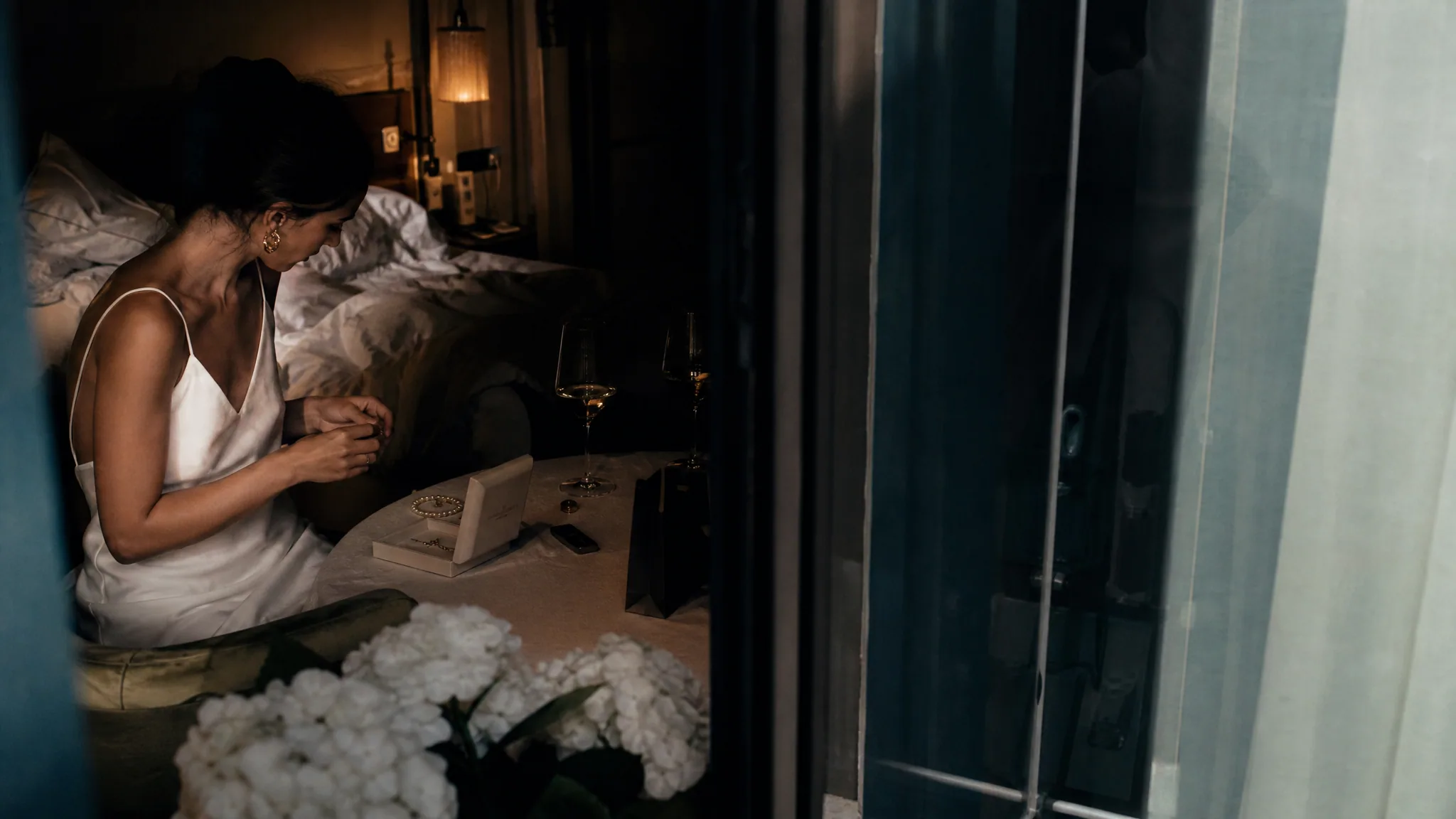
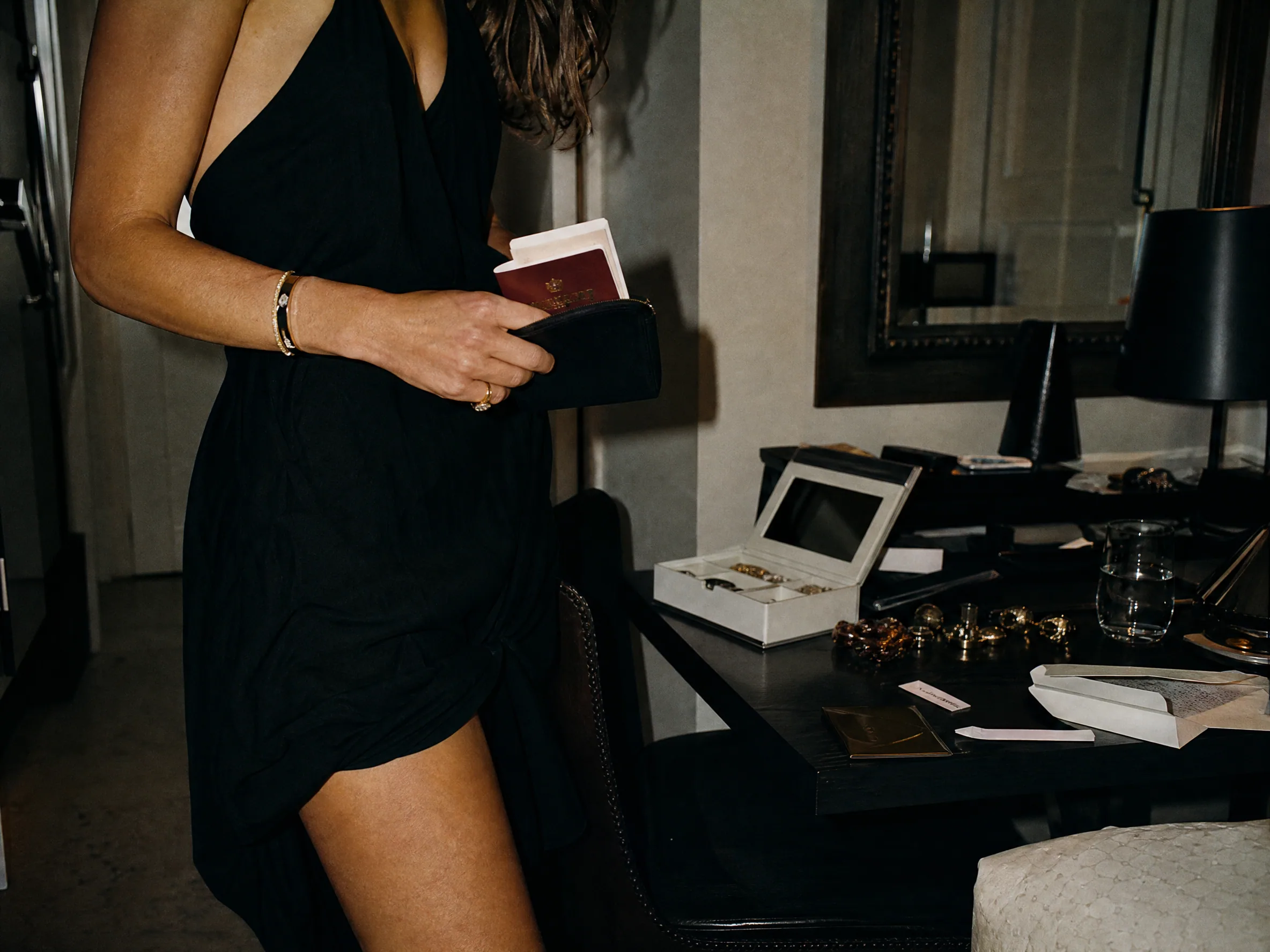
Destination wedding weekends in Spain ask guests to carry more than a weekend bag: passports for check-in, earrings for the ceremony, cash for taxis, and phones that hold boarding passes. Spanish hotels almost always offer a caja fuerte—an in-room safe—yet many international guests either skip it, forget the code before shuttle time, or leave valuables loose because "we will only be gone an hour." That hour is often the ceremony window.
This guide is for hosts and coordinators writing a practical guest note: how Spanish hotel safes usually work, what belongs inside on wedding day, and how to avoid the classic lockout that delays a formal photo call.
Why the caja fuerte belongs in the weekend brief
Travel insurance and hotel liability clauses rarely replace a calm wedding timeline. A missing passport before a same-day domestic flight, or heirloom jewelry left on a bathroom counter during cocktail hour, creates stress the couple should not absorb mid-celebration. A one-paragraph safe briefing in the welcome WhatsApp or hotel desk sheet prevents most of those moments.
Treat the caja fuerte like shuttle boarding: assume first-time Spain visitors need the local vocabulary and a default habit, not a vague "keep valuables secure."
How Spanish hotel room safes usually work
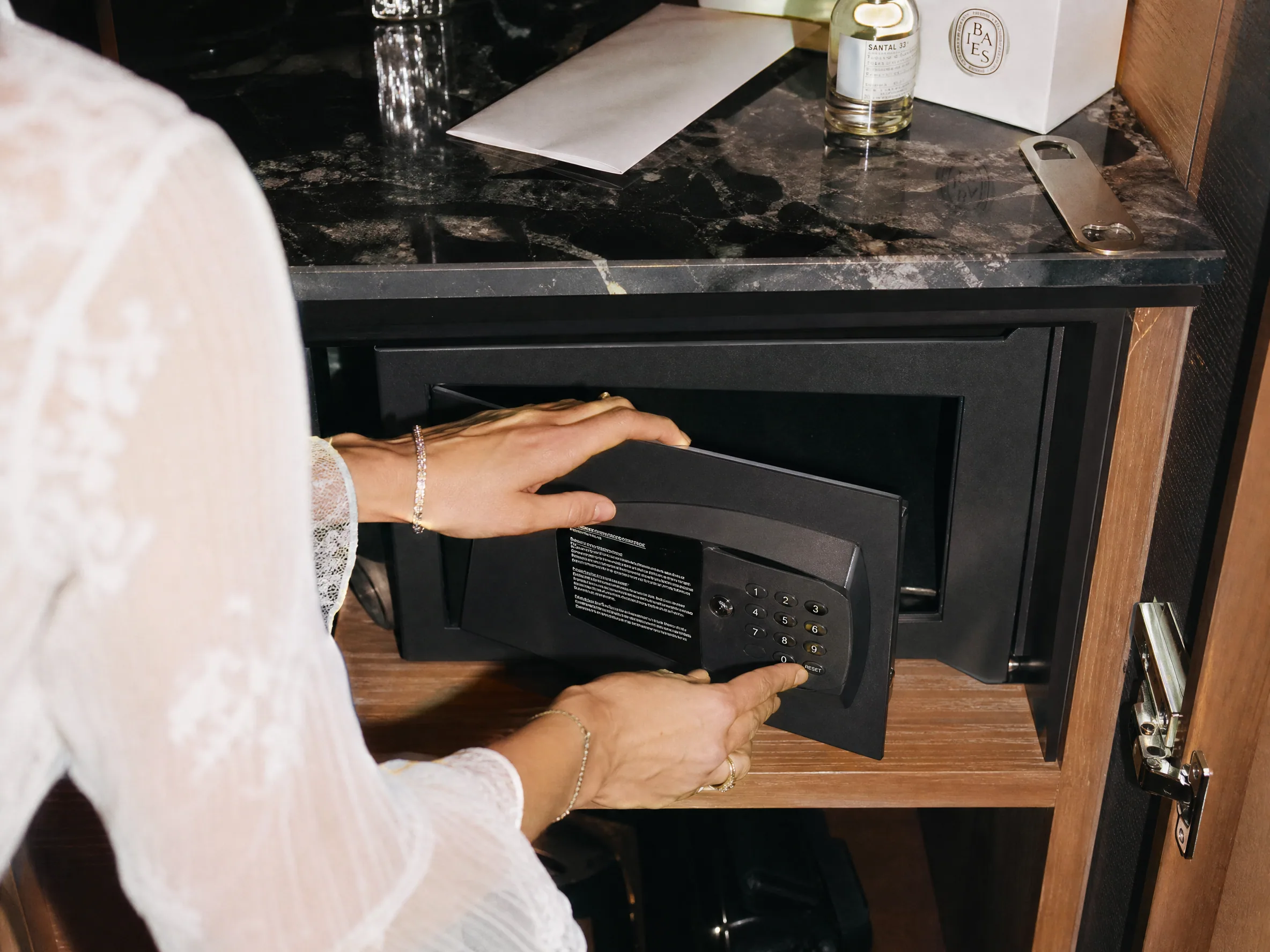
Most four-star and resort properties use a digital keypad safe bolted into the wardrobe. Guests set a personal PIN on first use; some older rooms still use a hotel-issued key or a front-desk override. Boutique and rural fincas vary—confirm whether rooms have safes at all before you promise guests they do.
On arrival day, ask guests to test the safe once while the front desk is staffed. A failed latch discovered at 17:00 when everyone is already dressed is harder to fix than a 14:00 desk visit.
What belongs in the safe on wedding day
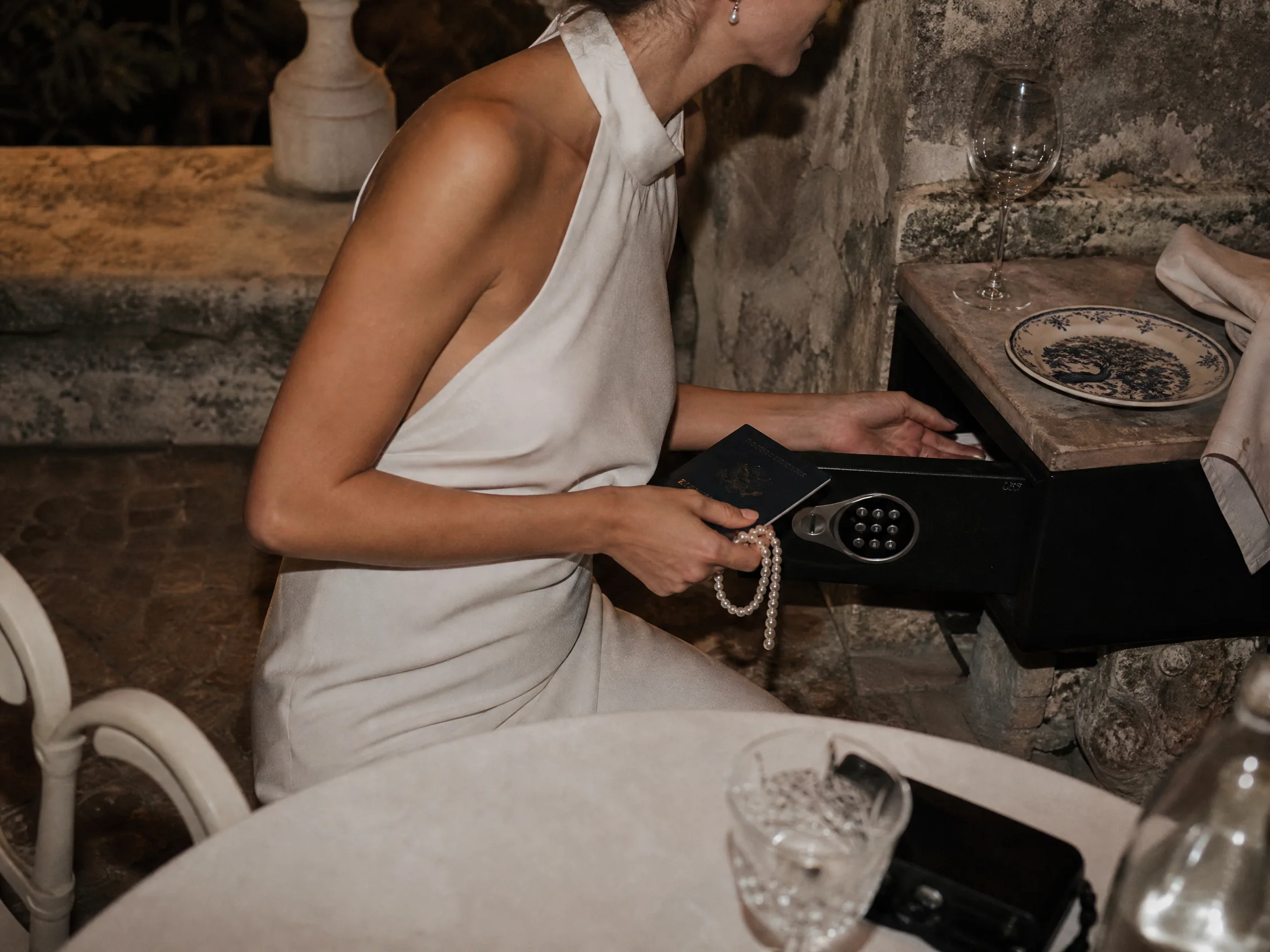
Default list for the ceremony-and-reception block: passports (or national IDs), spare cards, large cash, spare lenses or prescription glasses cases if not worn, and any jewelry not worn for that event. Phones usually stay with guests for maps and WhatsApp alerts—do not force phones into safes unless a guest prefers it.
Formalwear jewelry that will be worn later can stay in the safe until the pre-ceremony call time, then move into a labeled pouch in the hotel room or bridal suite kit. Keep one person responsible for that pouch so pieces do not scatter across three bathrooms.
Passports: check-in vs wedding-day storage
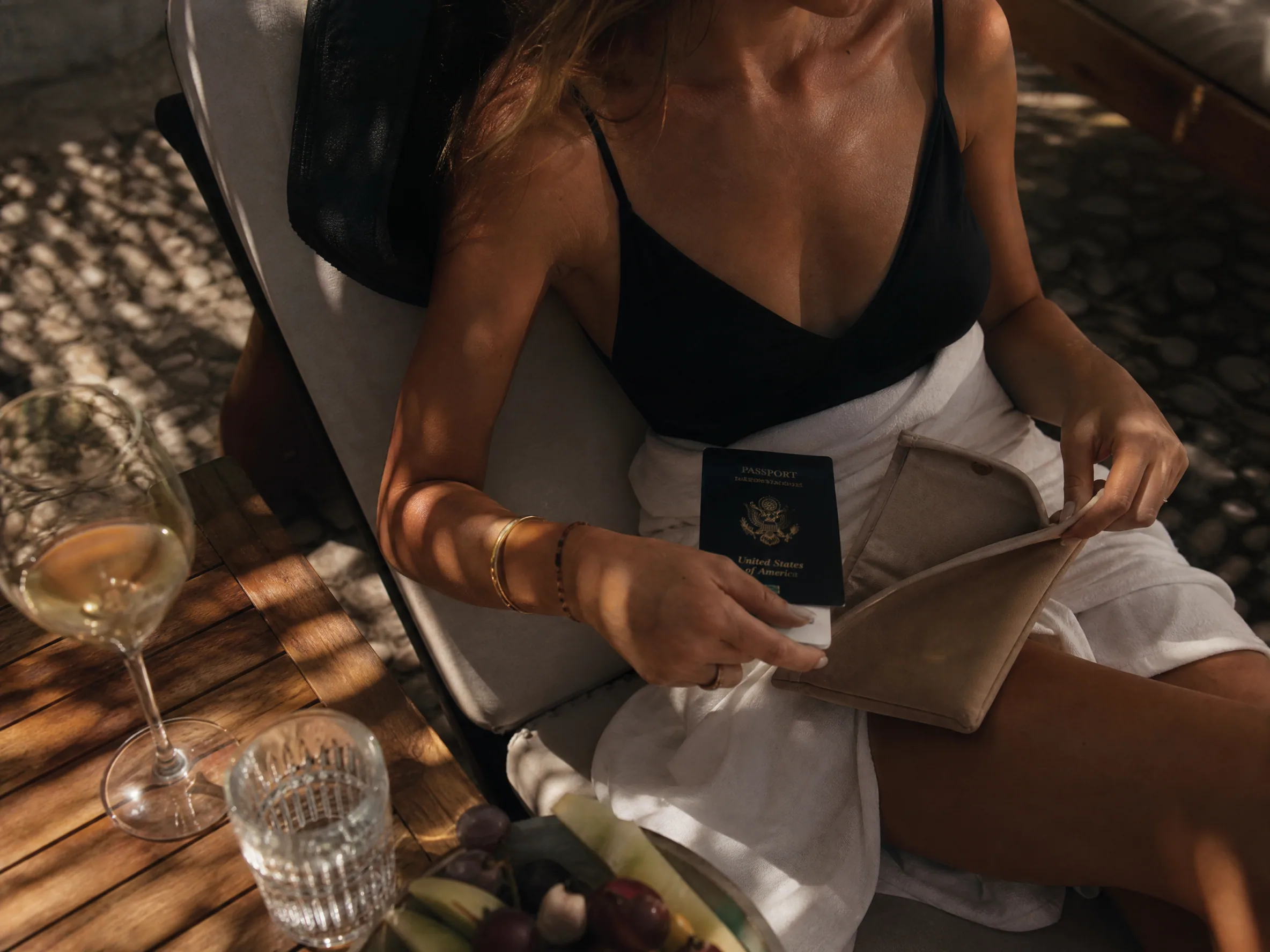
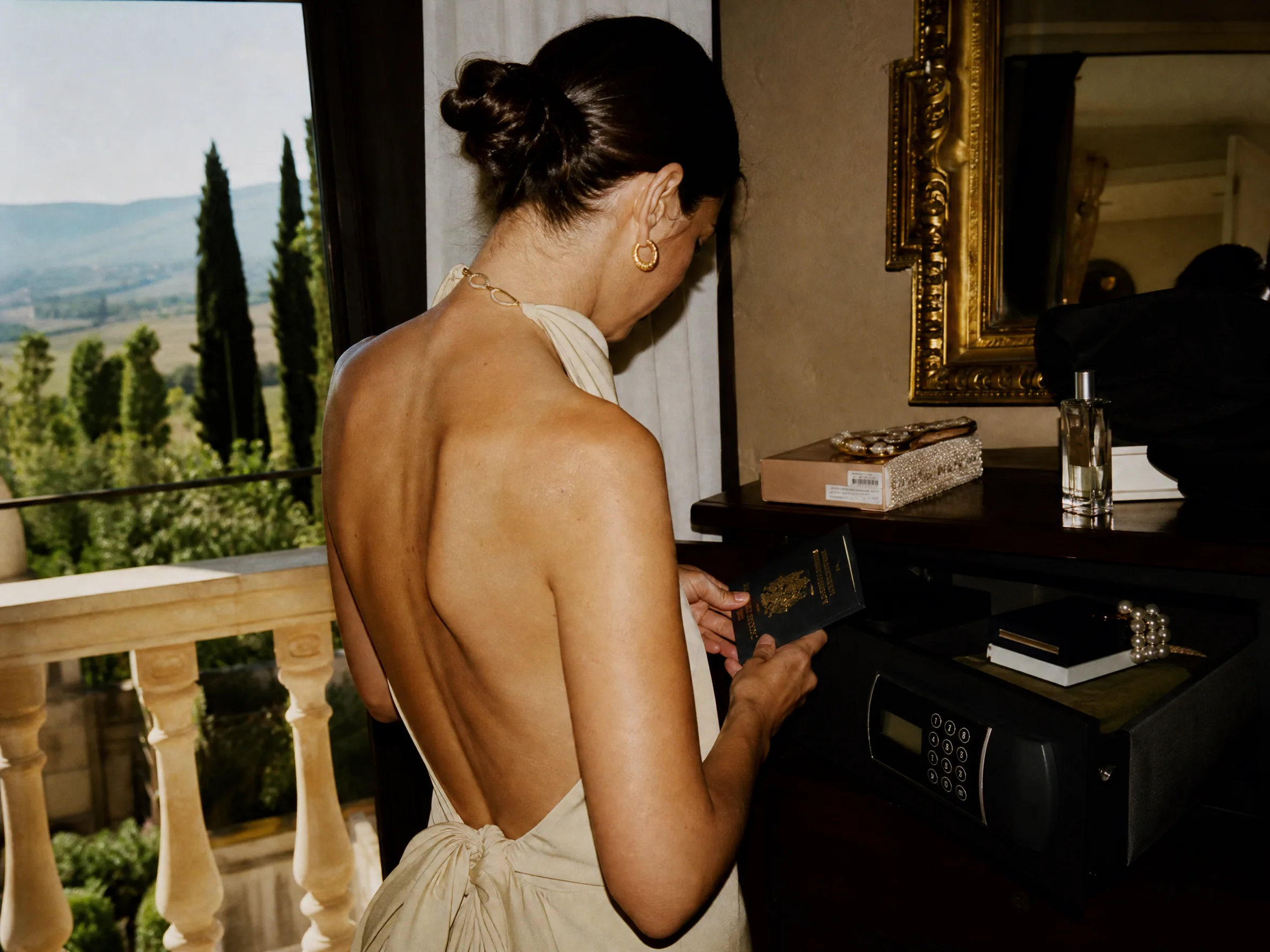
Hotels in Spain typically need a passport or ID at check-in and may hold a copy on file. After rooms are issued, guests should return originals to the caja fuerte rather than carrying them to every tapas stop. For multi-hotel weekends, remind guests to retrieve passports before checkout—not after the shuttle has left for the venue.
If a guest needs the passport for a same-day Renfe ticket control or car-rental desk, schedule that errand before dressing windows, then reseal the document in the safe.
Jewelry, watches, and formalwear changeovers
International guests often travel with statement pieces for ceremony photos and simpler options for dancing. The risky moment is the changeover: earrings on the sink while makeup finishes, a watch on the nightstand while cufflinks go on. Build a two-minute "safe before we leave the room" habit into the getting-ready timeline.
For estate venues without reliable room access mid-event, jewelry not worn should stay at the hotel safe, not in an unattended handbag under a reception chair.
Codes, lockouts, and front-desk overrides
Write the PIN in a place guests will actually find—phone notes labeled "hotel safe," not a scrap of paper in a jacket pocket heading to the dance floor. Never post the code in the shared wedding WhatsApp group.
If the safe locks guests out, Spanish front desks can usually override with ID verification. Build a 20–30 minute buffer into any schedule that depends on retrieving an item before shuttle departure. Do not open a locked safe with force; that becomes a damages charge on the incidental hold.
What not to leave loose in the room
Even in reputable hotels, housekeeping cycles and multiple room keys mean loose cash, AirPods cases, and jewelry trays are poor defaults. Laptops can stay in the room if needed for work travel, but passports and small high-value items belong in the caja fuerte.
Minibar receipts and room-charge disputes are separate from theft—still, a tidy room with valuables secured reduces "something is missing" panic during an already full wedding day.
Rural estates, fincas, and properties without in-room safes
Not every Spanish wedding block is a city hotel. Private villas and some countryside fincas may offer only a main-house safe or none at all. Ask the property early. Alternatives: a lockable coordinator kit in a supervised bridal suite, a hotel-day-room for guests staying on-site at the venue, or a pre-agreed front-office deposit for documents only.
Tell guests the truth in the briefing. Overpromising "every room has a safe" when half the inventory does not will create last-minute scrambling.
What to put on the one-page guest card
Keep it short: (1) Spanish name—caja fuerte—and where it sits in a typical room; (2) set-and-test on arrival; (3) passports and unworn jewelry go in before ceremony shuttles; (4) retrieve before checkout and before any travel-desk errands; (5) lockout help is the front desk with ID, not the WhatsApp group; (6) never share PINs in the wedding chat.
One calm paragraph beats a long security lecture. Guests remember habits that fit the timeline you already published.