International guests arriving for a destination wedding in Spain often bring tipping habits from home—especially the North American default of twenty percent on every check. Spanish propina culture is lighter, more situational, and easy to misread. Guests who overtip can feel awkward; guests who never tip can accidentally short-change drivers and housekeepers who went out of their way for the wedding weekend.
This guide is for hosts and coordinators writing a short, practical guest note: when propina is customary, when a rounded-up euro is enough, how cash vs card works, and what to say so relatives do not treat every café like a New York steakhouse—or leave nothing after a late private transfer.
Why tipping belongs in the guest brief
Wedding weekends multiply small service moments: hotel porters with garment bags, taxi drivers who wait through photos, waiters who reset a long table after sobremesa, and drivers who know the finca gate code at midnight. Guests copy whatever the couple models—or whatever their home culture taught them.
A four-sentence propina note prevents two failures at once: sticker shock at the end of a group dinner when someone insists on twenty percent for everyone, and invisible under-tipping of the people who make rural logistics work. You are not writing a finance lecture; you are setting a shared etiquette baseline.
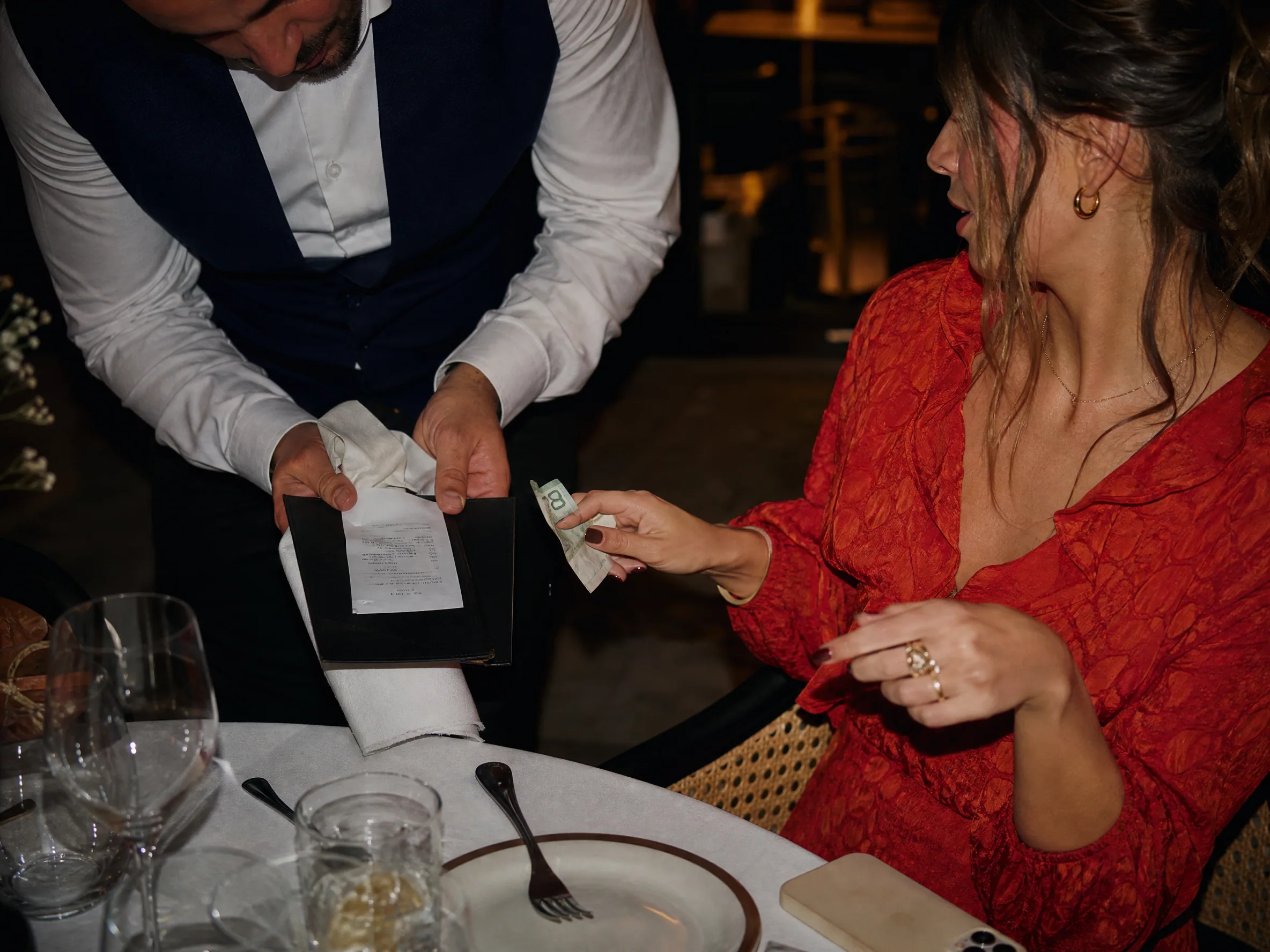
Restaurant propina norms (not the US twenty percent)
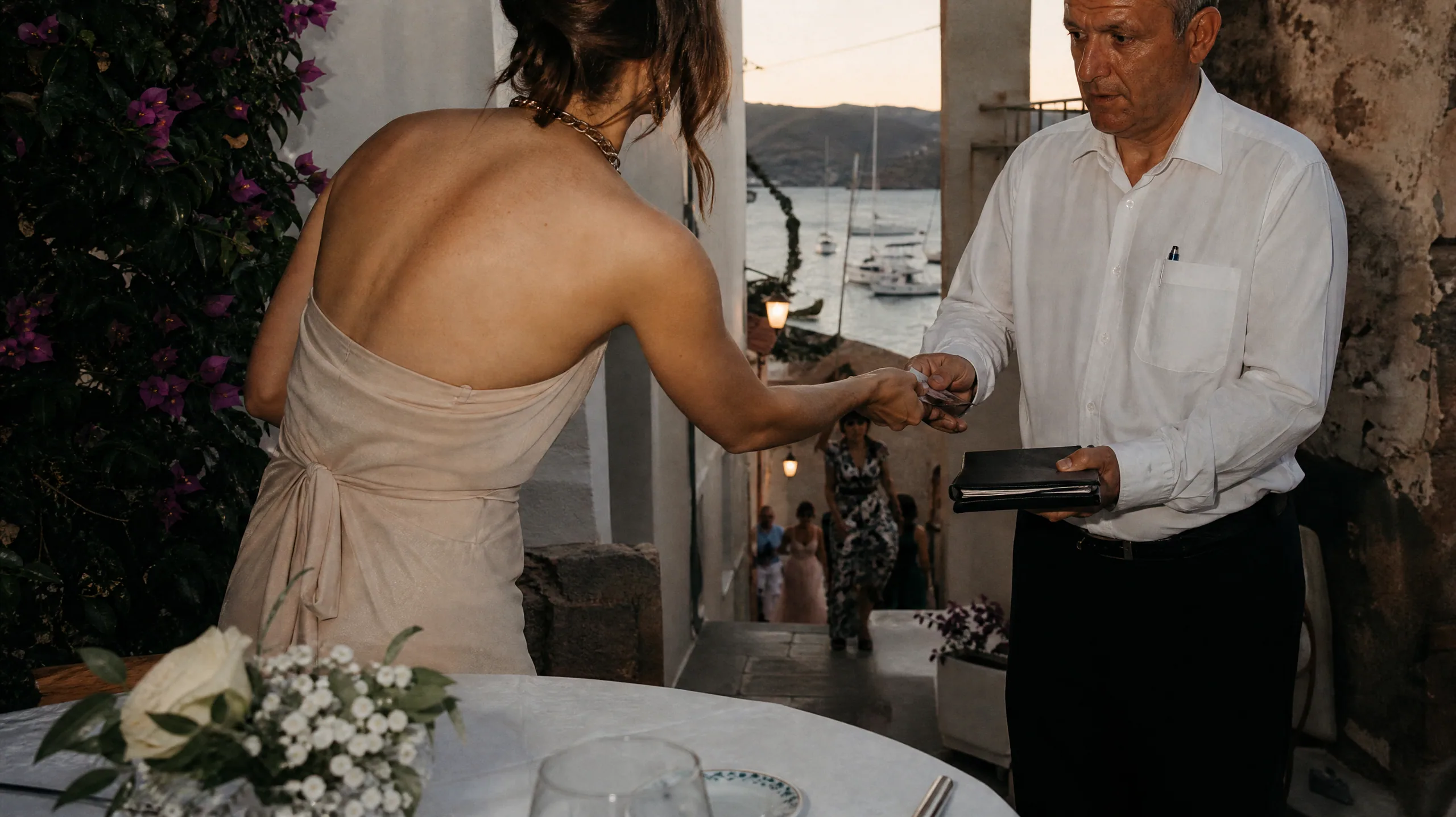
In most Spanish restaurants, service is already included in the prices. A customary thank-you is rounding up or leaving five to ten percent for genuinely good service—not a mandatory twenty. For a relaxed lunch of €40, leaving €2–4 or rounding to the next note is normal. For an excellent multi-course dinner, ten percent is generous appreciation, not a floor.
Tourist-heavy coastal spots sometimes expect more theatrical tipping; countryside estate restaurants often expect less. Tell guests: if the meal was fine, round up; if the team carried a large wedding table with grace, leave closer to ten percent in cash when you can.
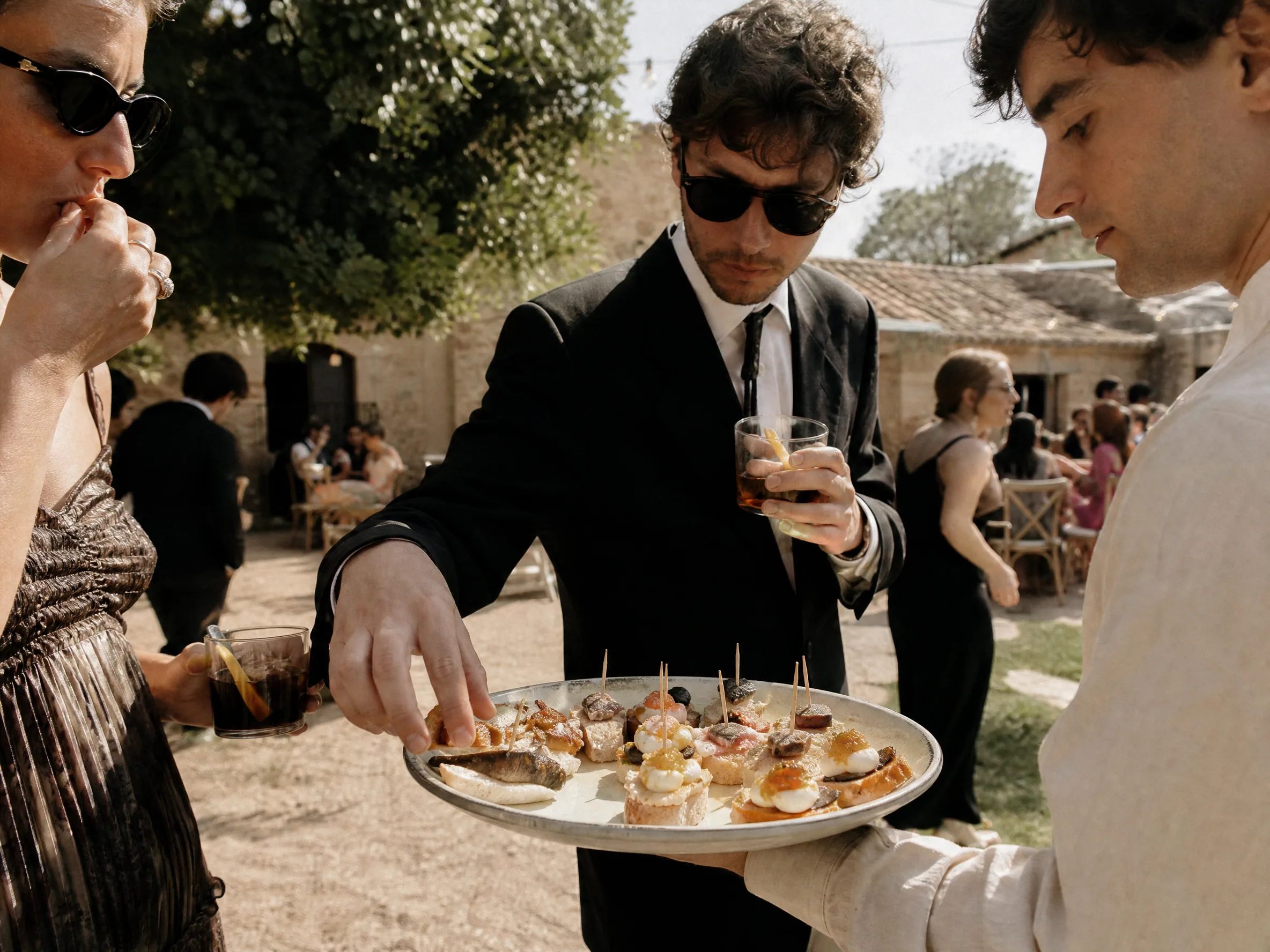

Bars, tapas counters, café, and vermouth hour
At the bar counter, leaving small coins on a café bill or rounding a vermouth round is friendly, not required. Standing tapas stops rarely involve elaborate tip math—round the total or leave the change. Table service in a sit-down bar leans closer to restaurant norms: a small cash leave after a long aperitivo is appreciated.
Clarify this for guests used to tip jars everywhere. A €1.40 espresso does not need a €1 tip. A long vermouth hour with attentive table service can take a couple of euros on the tray. Matching the scale of the interaction keeps the weekend feeling local rather than performative.
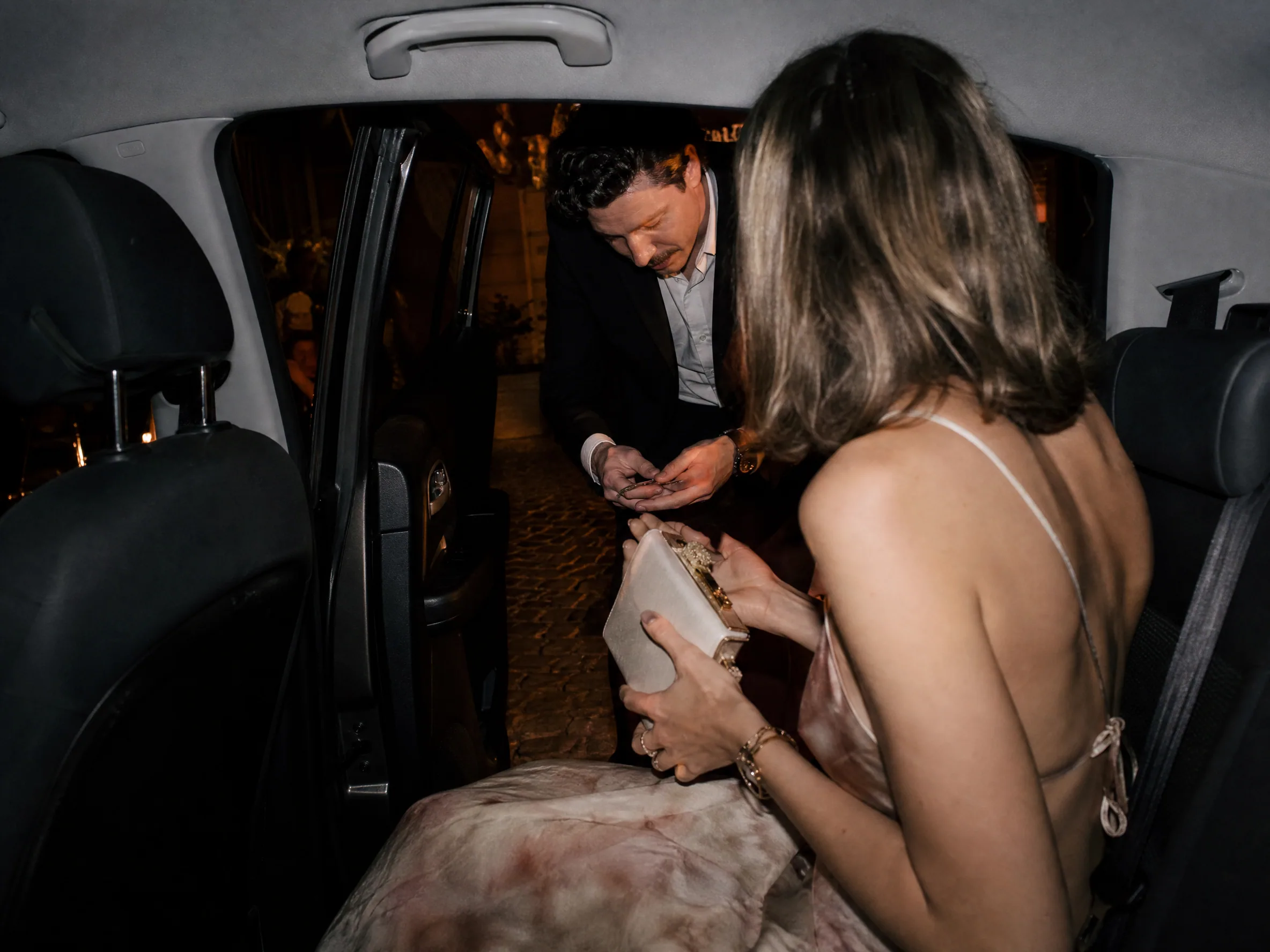
Taxis, ride-hail apps, and private wedding drivers
City taxis: rounding up to the next euro—or adding €1–2 for luggage help—is common and kind. You do not need US-style percentages on a €12 meter. Ride-hail apps vary; an in-app tip is optional if the driver waited, navigated a pedestrianized drop-off, or handled formalwear bags carefully.
Private wedding drivers and shuttle captains are different. When a driver holds for forty minutes of portraits, or makes a second pass for guests who missed the first bus, a cash tip shared among the riders (or arranged by the couple in the vendor tip pool) matters more than restaurant math. Put one line on the shuttle card: “Cash tip for private drivers is welcome; city taxis: round up.”
Hotels: housekeeping, porters, and front desk
Housekeeping tips of a few euros per night, left daily or at checkout, remain a thoughtful guest habit—especially when rooms turn over around beauty call times and late returns. Porters who manage multiple dress bags and steamer boxes deserve a euro or two per heavy run. Front-desk staff are not customarily tipped for ordinary check-in; a thank-you for extraordinary help (late luggage holding, last-minute restaurant reservas) can be a small cash note.
Multi-night wedding blocks create more room traffic than a leisure stay. Guests who understand a daily housekeeping leave will keep the floor team motivated through satin steamers, early wake-up calls, and messy post-party returns.
Venue staff, musicians, and on-site coordinators
Many couples pre-tip venue crews, chefs, and musicians through the planner. Guests should not assume they must tip the DJ or the ceremonial musician unless the couple’s note says so. Random cash pressed into a musician’s hand mid-set can feel confusing more than generous.
If you want guests to participate, say it plainly in the weekend FAQ: “Vendor tips are handled by the couple” or “Optional cash envelope for the late-night bar team will be at the welcome desk.” Ambiguity creates double tipping or none at all.
Cash vs card, ATMs, and when coins matter
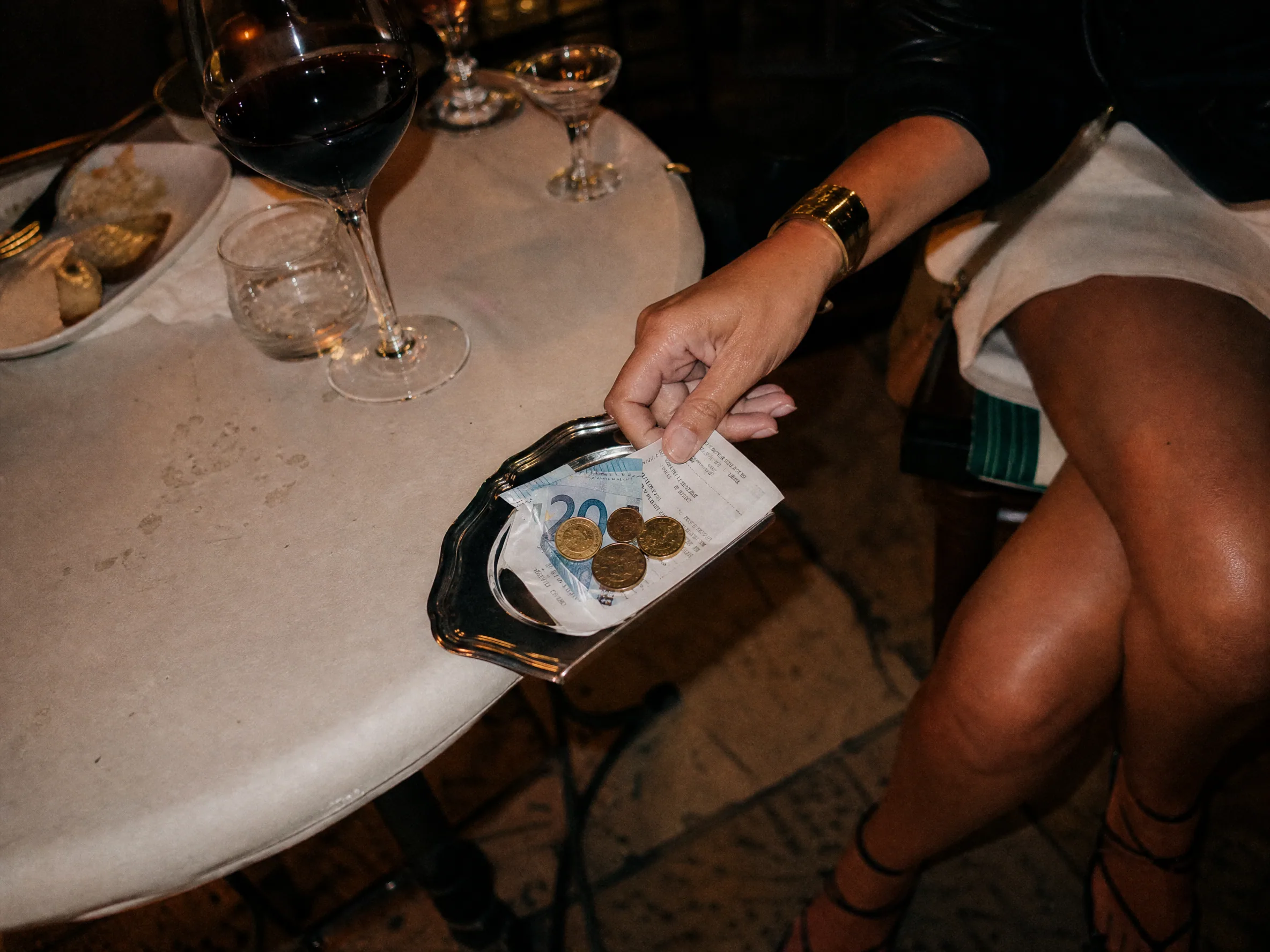
Card payments are ubiquitous in Spain, but small cash still solves tipping cleanly. A card tip field is not always available; leaving coins or a small note on the tray remains the most local gesture. Encourage guests to withdraw a modest euro float on arrival day—enough for taxis, café rounding, and housekeeping—without carrying large sums.
Remind them that some rural bars and estate kiosks prefer cash for tiny tabs. Pair this with your ATM briefing so the propina plan does not become a separate scavenger hunt the morning of the welcome dinner.
Group dinners, split bills, and avoiding tip arguments
Large guest dinners are where tipping cultures collide. One guest from New York proposes twenty percent; another from Madrid wants to round €3. Decide the host rule before the check arrives: either the couple covers a service thank-you, or the table leaves ~5–10% and rounds, or each sub-group handles its own.
Bizum and other split-bill tools settle the meal; they do not automatically settle propina. Assign one person to add the tip line before people start transferring exact entrée totals. Put the rule in the WhatsApp pin the afternoon of the dinner so the debate never starts at the table.
What to put on the one-page guest card
Keep the card short. Suggested lines: Spanish restaurant tips are optional appreciation (round up or ~5–10% for great service—not automatic 20%). Café and bar counters: small coins or round up. City taxis: round up; private drivers: cash tip welcome. Hotel housekeeping: a few euros per night. Vendor tips: handled by the couple unless noted.
Add one ATM sentence and one cash-vs-card sentence. Guests who skim a ten-line card still absorb the cultural shift. That is enough to keep the weekend generous without turning every receipt into a negotiation.